
Abrasives
The Complete 2×72 Attachments Guide
A 2×72 out of the box is a platform; the attachments are the machine. Every serious grinder task — flat bevels, hollow grinds, fullers, handle curves…
Abrasives
Small wheels grind what platens cannot: choils, fullers, recurves, hawk beards and sharpening notches, with wheel sizes, the radius rule and control.
2 min readWritten by Rich LinvilleFree to read
Every maker hits the same wall: the blade needs a curve the platen cannot reach — a finger choil, a fuller, the inside sweep of a recurve, the throat of a hawk’s beard. The small wheel attachment is the answer to all of them: interchangeable wheels down to fingertip sizes, running the same belt, reaching everywhere.
The working spread on a small wheel set: 2-3″ wheels blend transitions, radius ricassos and shape gentle inside curves; 1-1.5″ wheels cut finger choils and dropped sharpening notches; the sub-inch wheels handle tight fullers and detail work. The rule that sorts every job: the wheel’s radius must be SMALLER than the curve you are cutting — a 1″ choil needs a wheel under 1″, and forcing a bigger wheel widens the feature whether you meant to or not.
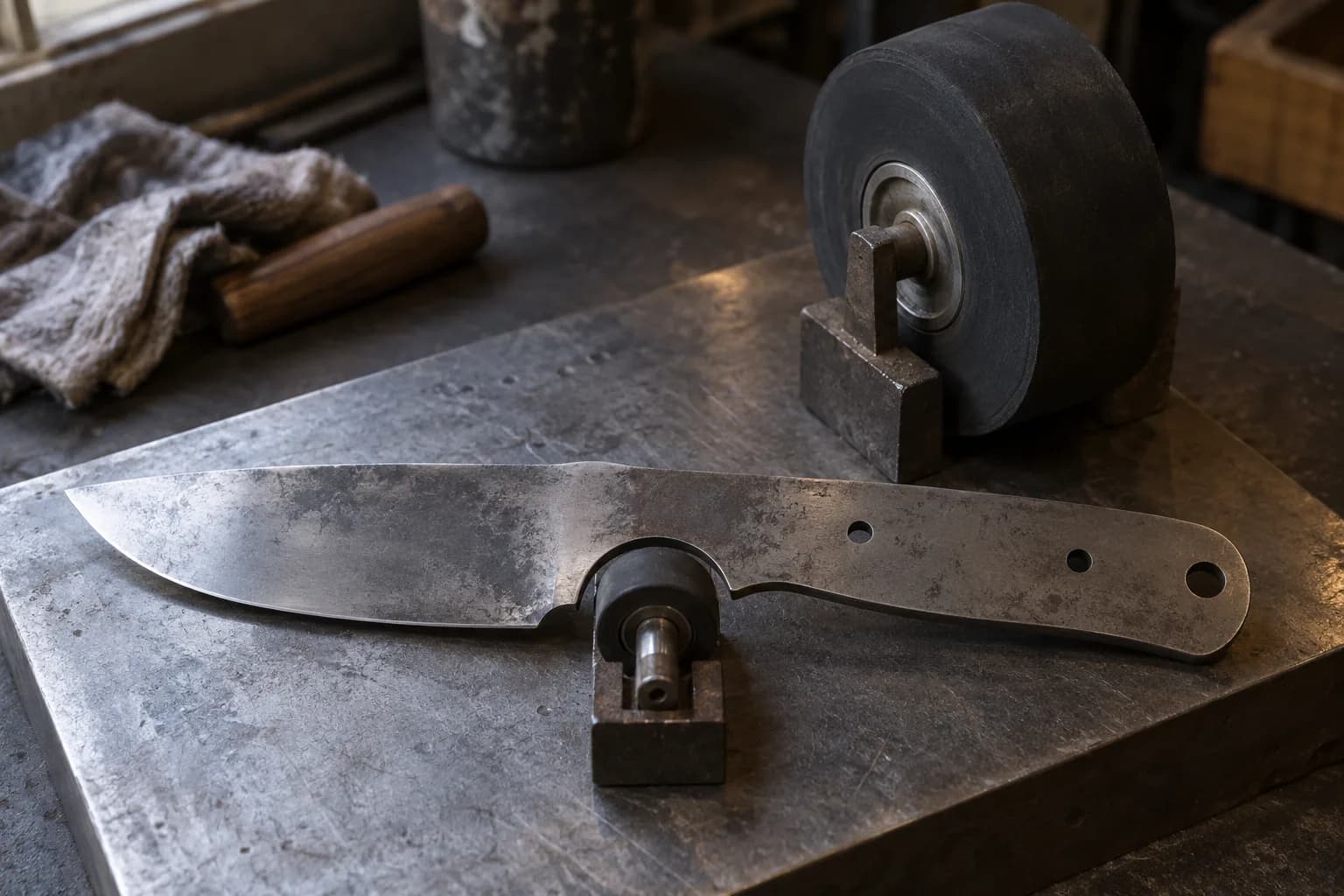
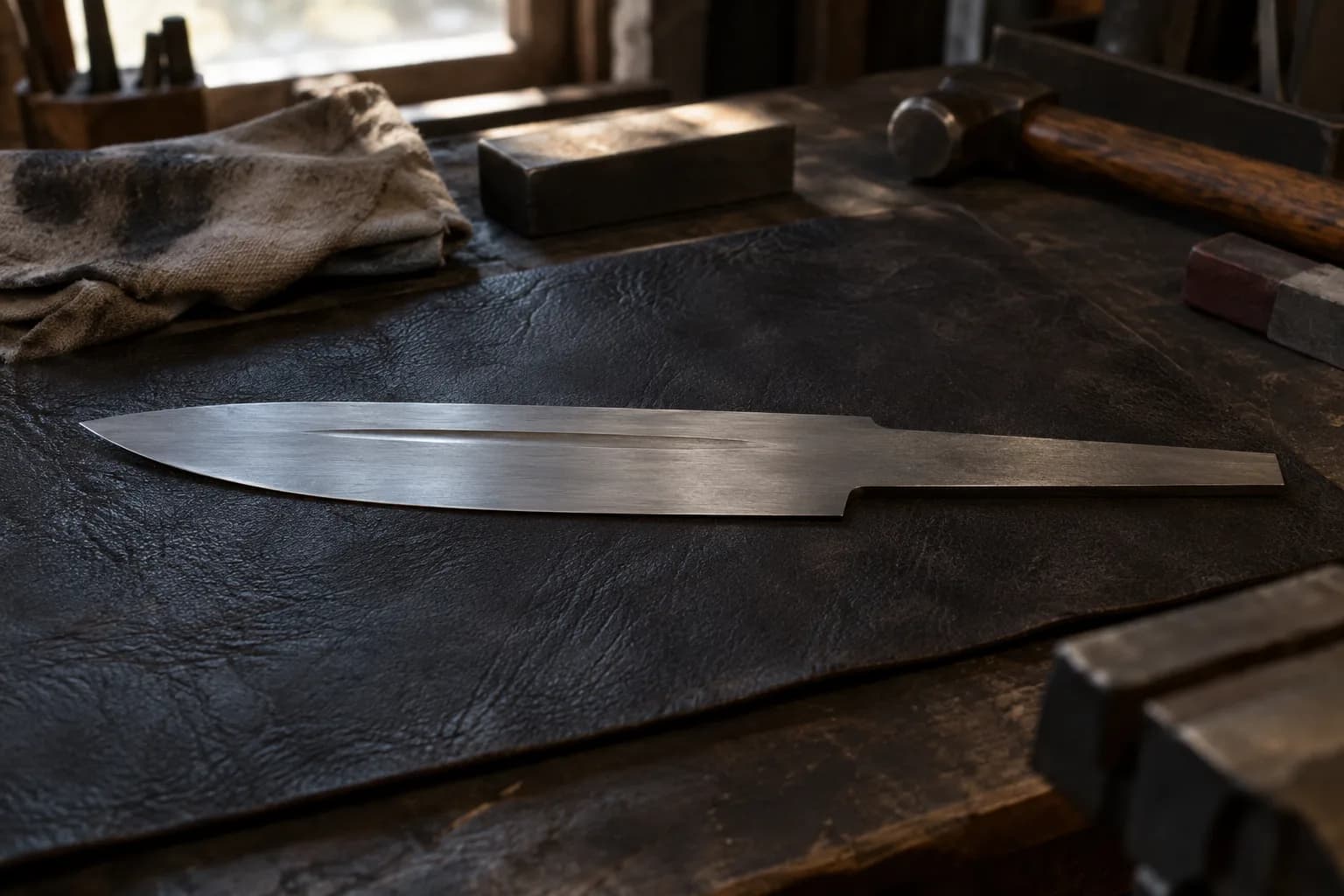
Finger choils: lay them out with a drilled hole at the choil’s end before heat treat, then true and finish on the matching wheel after — crisp, round, repeatable. Fullers: the sword-and-hawk classic, per the first-sword method — guided passes against a fence or jig, shallow bites, walked ends so the fuller feathers out instead of stopping in a ditch. Recurves and inside edges: the only clean way to grind and later re-sharpen them. Hawk beards and axe throats: the tomahawk build’s finish work. And dropped sharpening notches ahead of the ricasso — the tiny feature that makes a blade sharpenable to the heel, cut in seconds at the right diameter.
Pressure concentrates as contact area shrinks — a half-inch wheel under normal hand pressure grinds at several times the platen’s local rate and heats the same way. The disciplines: lighter hands than feel necessary, constant motion, fresh sharp belts (a worn belt on a small wheel is pure heat, per the burn rules), and features finished at slower speed off the speed chart. Small features also concentrate mistakes — one twitch prints permanently at choil scale — so rough close, then finish in whisper passes.
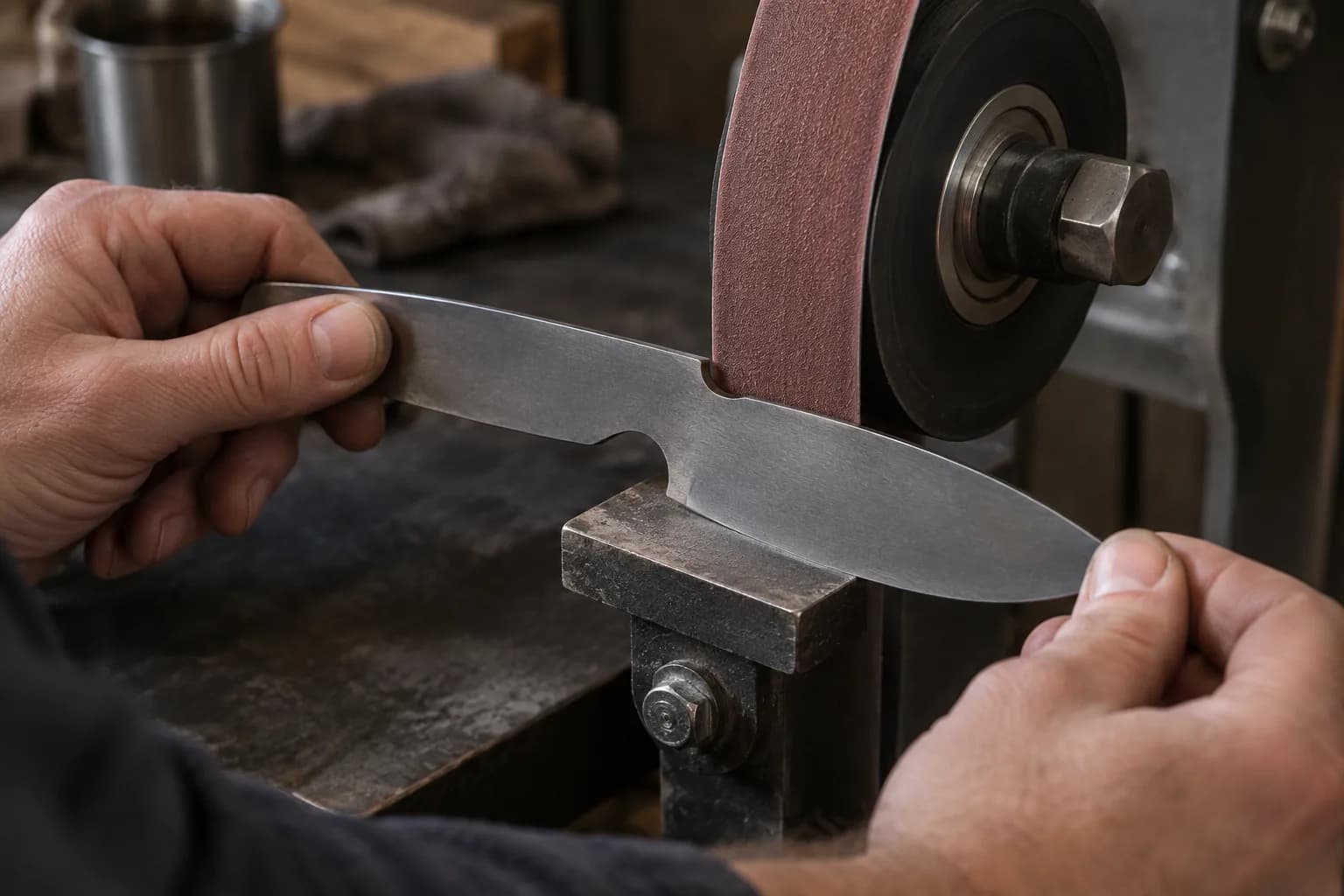
The small wheel is the third attachment most makers buy and the first they wonder how they lived without: every knife with a choil, every fullered blade, every recurve and every hawk on this site runs through one. Pair it with a spare tooling arm so it stays armed, and it becomes the detail department of the shop — permanently open.
Keep reading
Three more from the same bench.
A 2×72 out of the box is a platform; the attachments are the machine. Every serious grinder task — flat bevels, hollow grinds, fullers, handle curves…
A contact wheel is a simple promise — a perfectly round, rubber-faced reference — that unlocks a whole family of grinds the platen cannot touch. Two…
Every knifemaker’s customers eventually ask, and every knifemaker eventually wonders: could I make a sword? Yes — the 2×72 that grinds your knives grinds…
Same bench
I machine the parts, hand-assemble, track and test Torus grinders in Sterling, Illinois. Most orders ship in seven to ten business days from time of order.
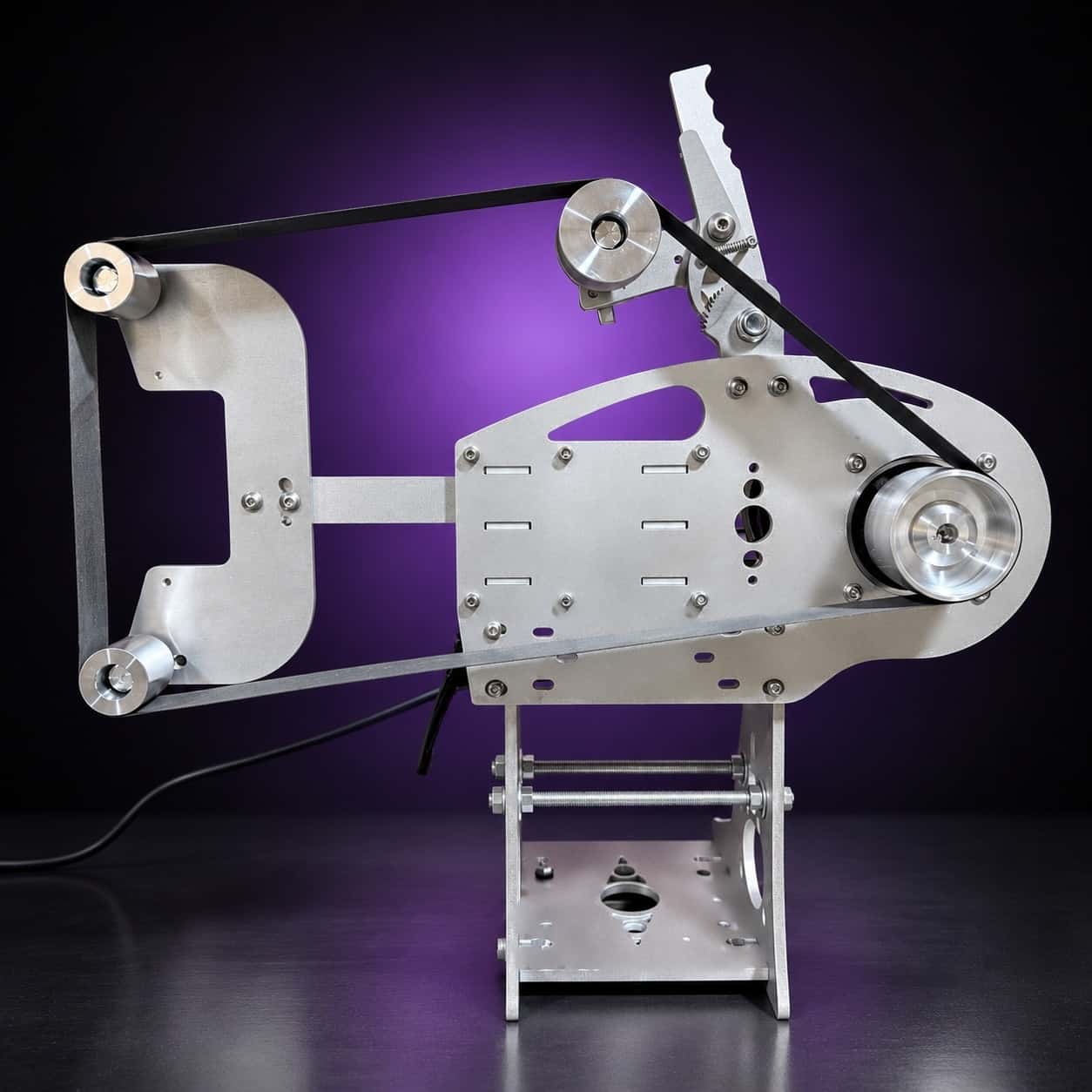
Current dual-axis platform with a fiber-laser-cut 6061 chassis and single-knob tracking.
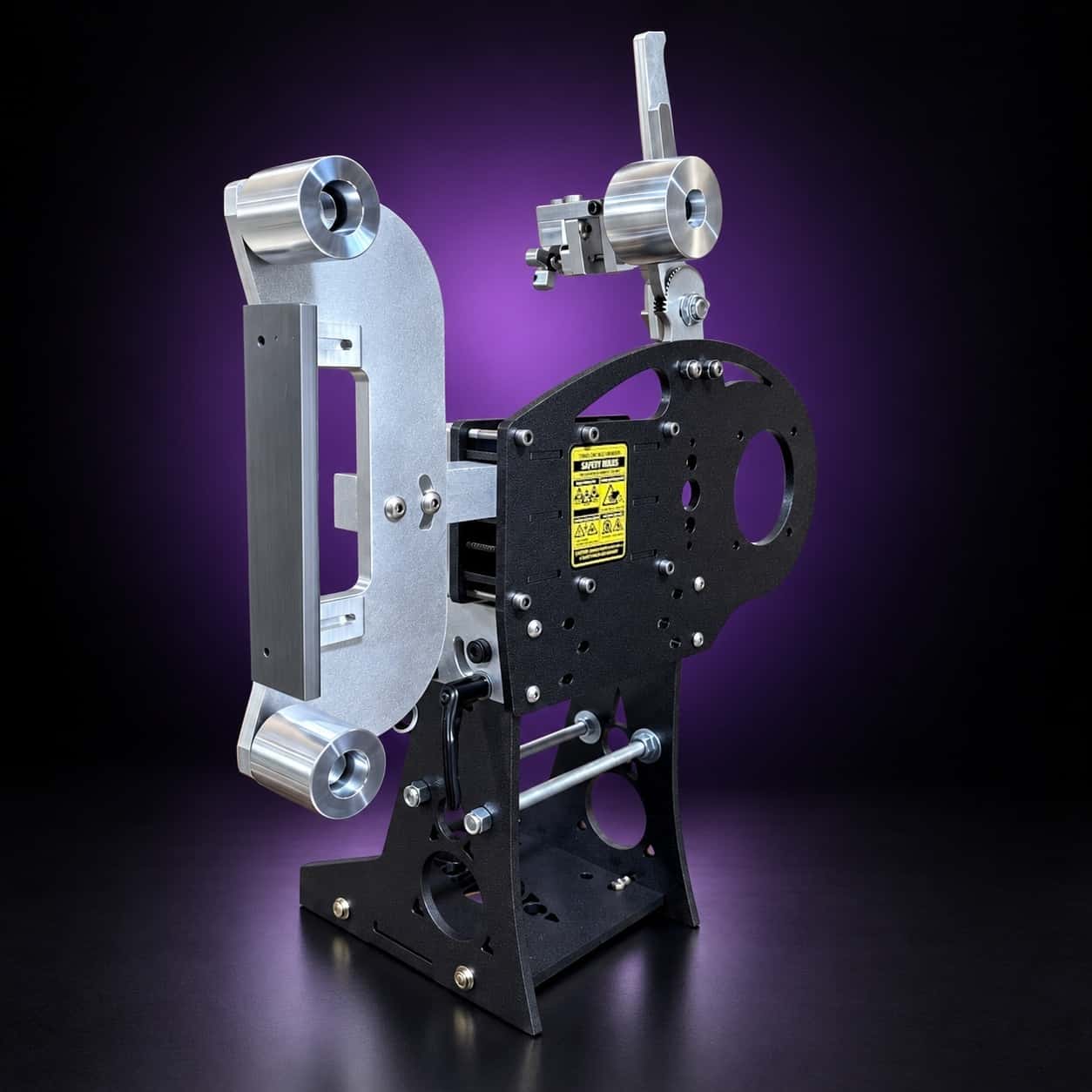
Current dual-axis platform with a steel chassis, more mass and less vibration.
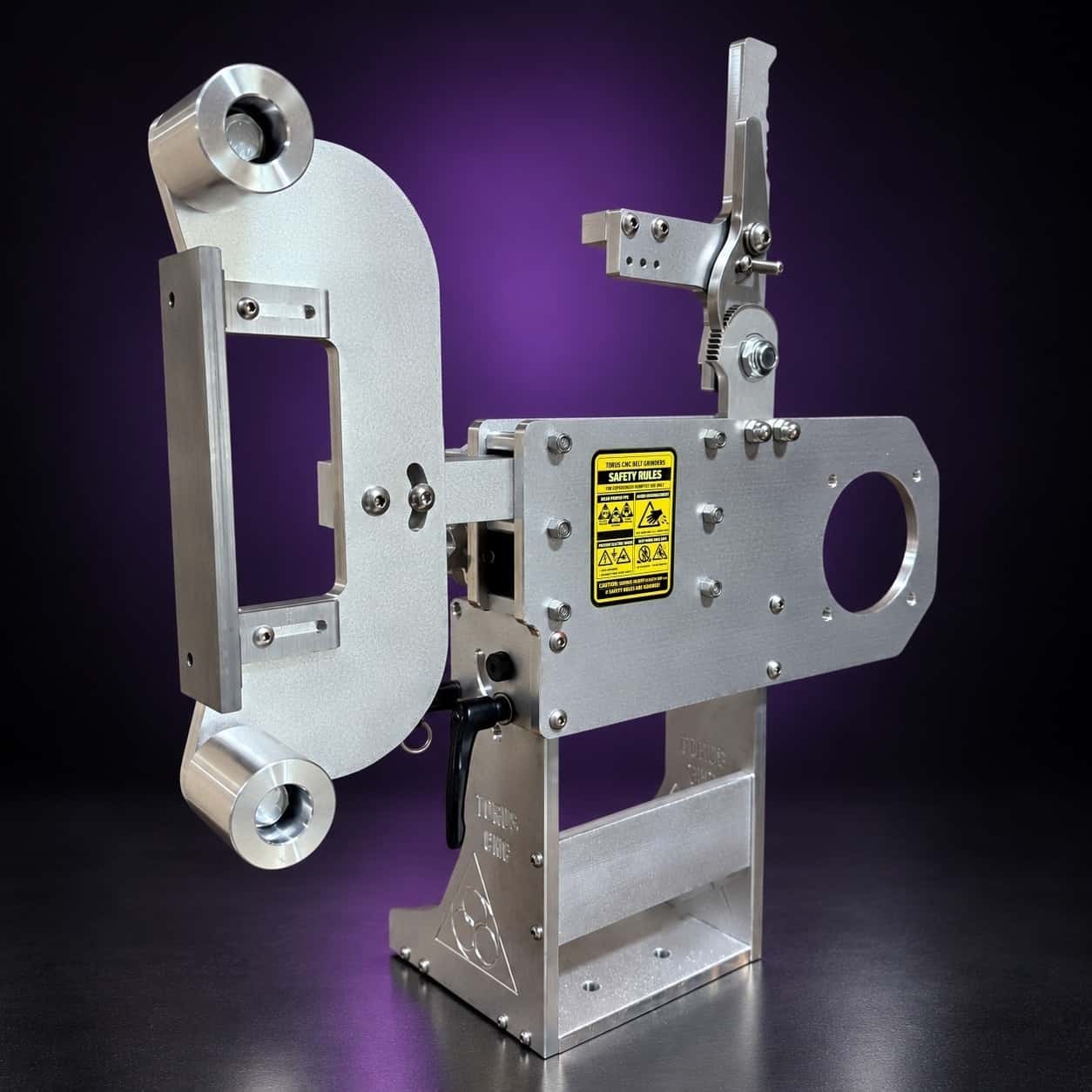
Prior-design aluminum chassis, 90-degree tilt and 1.5-inch tooling arms.
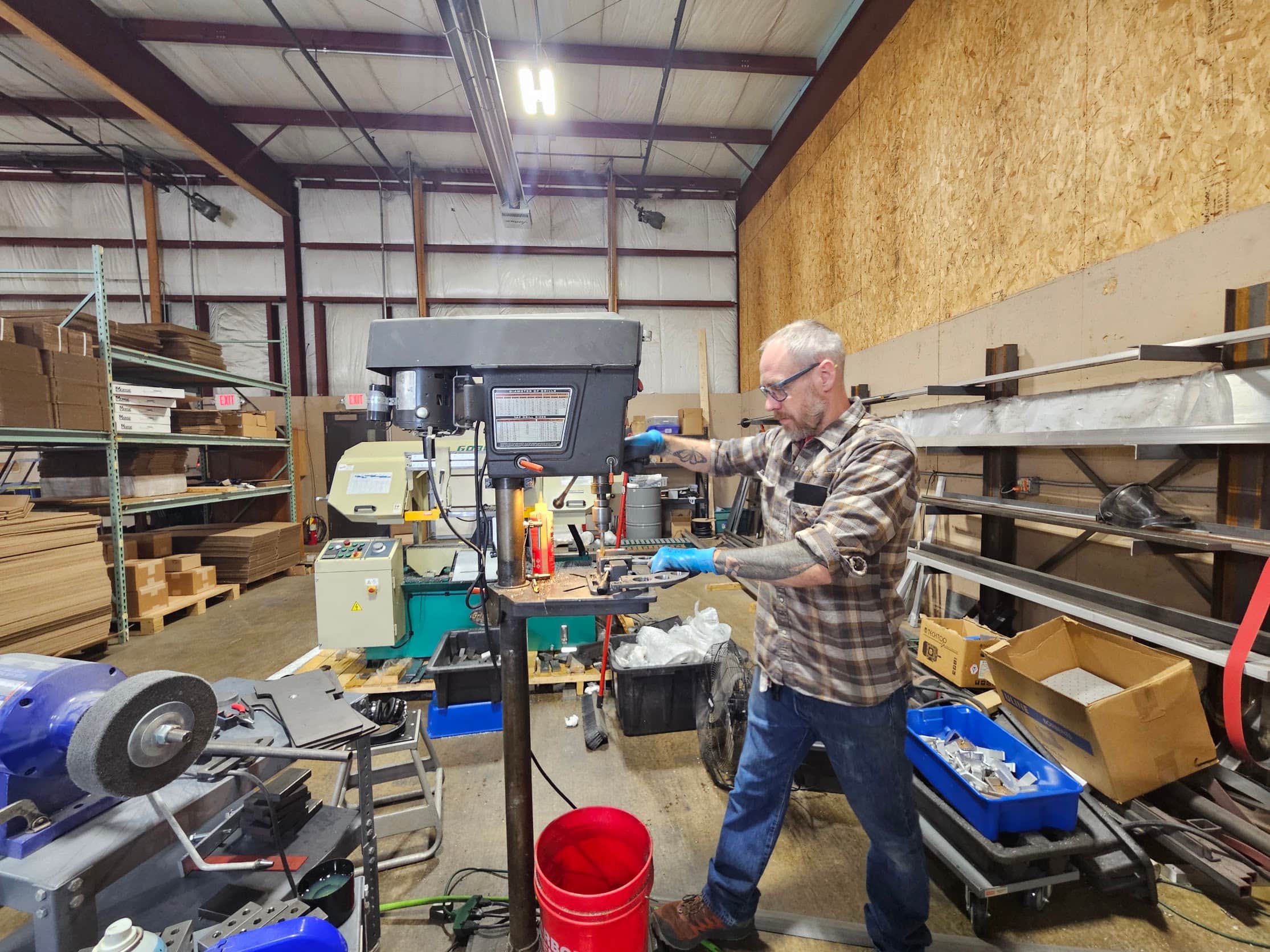
One-man shop
I answer my own email. Tell me the steel, the machine and what it is doing, and I will tell you what I would try next.