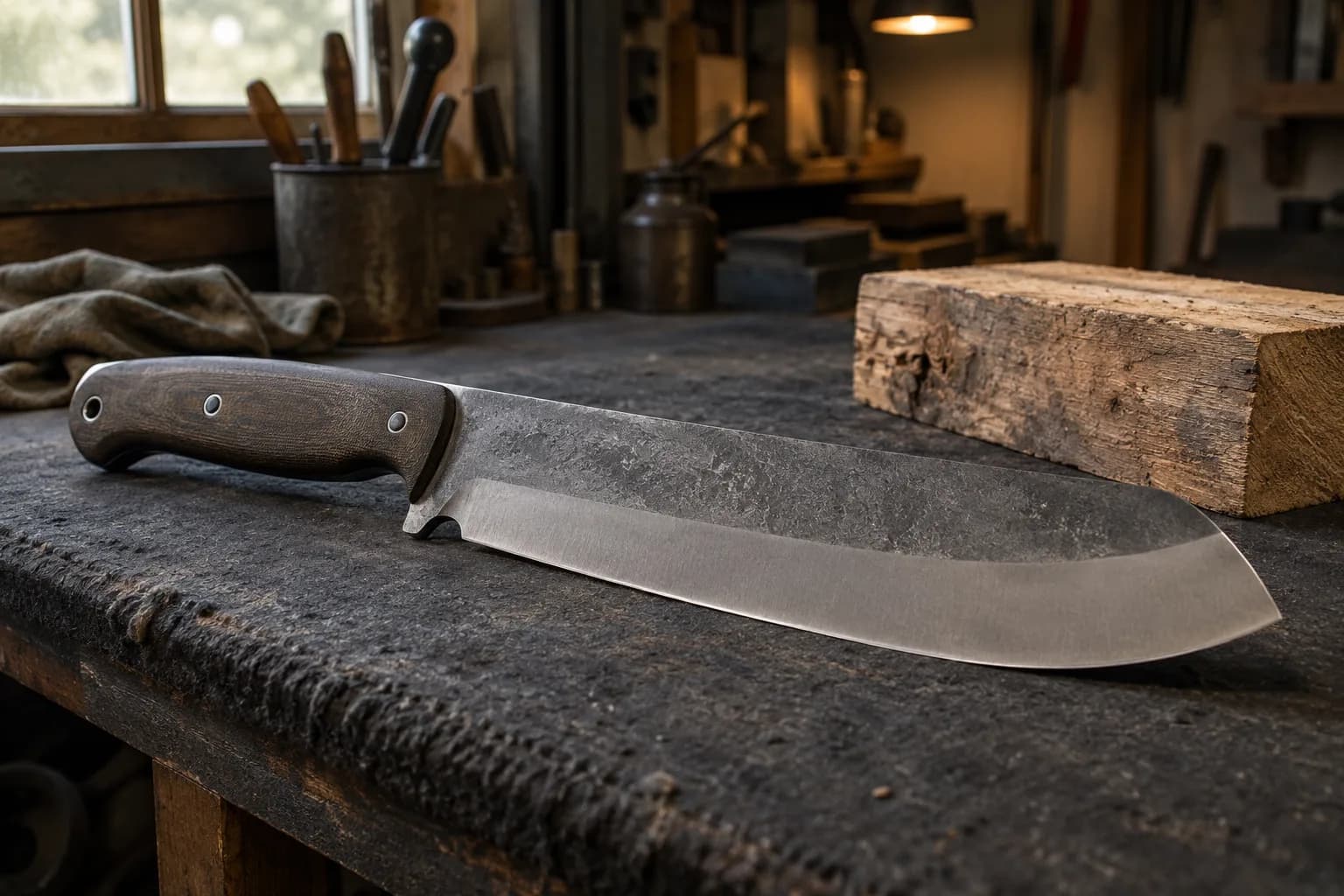
| Toughness | 4/5The reason makers pick A2: clearly tougher than D2 and other high-carbide tool steels at working hardness — the classic choice for choppers and hard-use blades that must not chip. Modern PM steels like CPM 3V exceed it, at a price. | 5/5Exceptional. CPM 3V is widely regarded as one of the toughest knife steels available, significantly outperforming D2, CPM M4, and A2 in impact testing at comparable hardness. It is the standard reference point makers use when toughness is the top priority. | 3V wins - it is among the toughest knife steels made, exceeding even A2's strong showing. Both survive hard use; 3V survives harder use. |
|---|
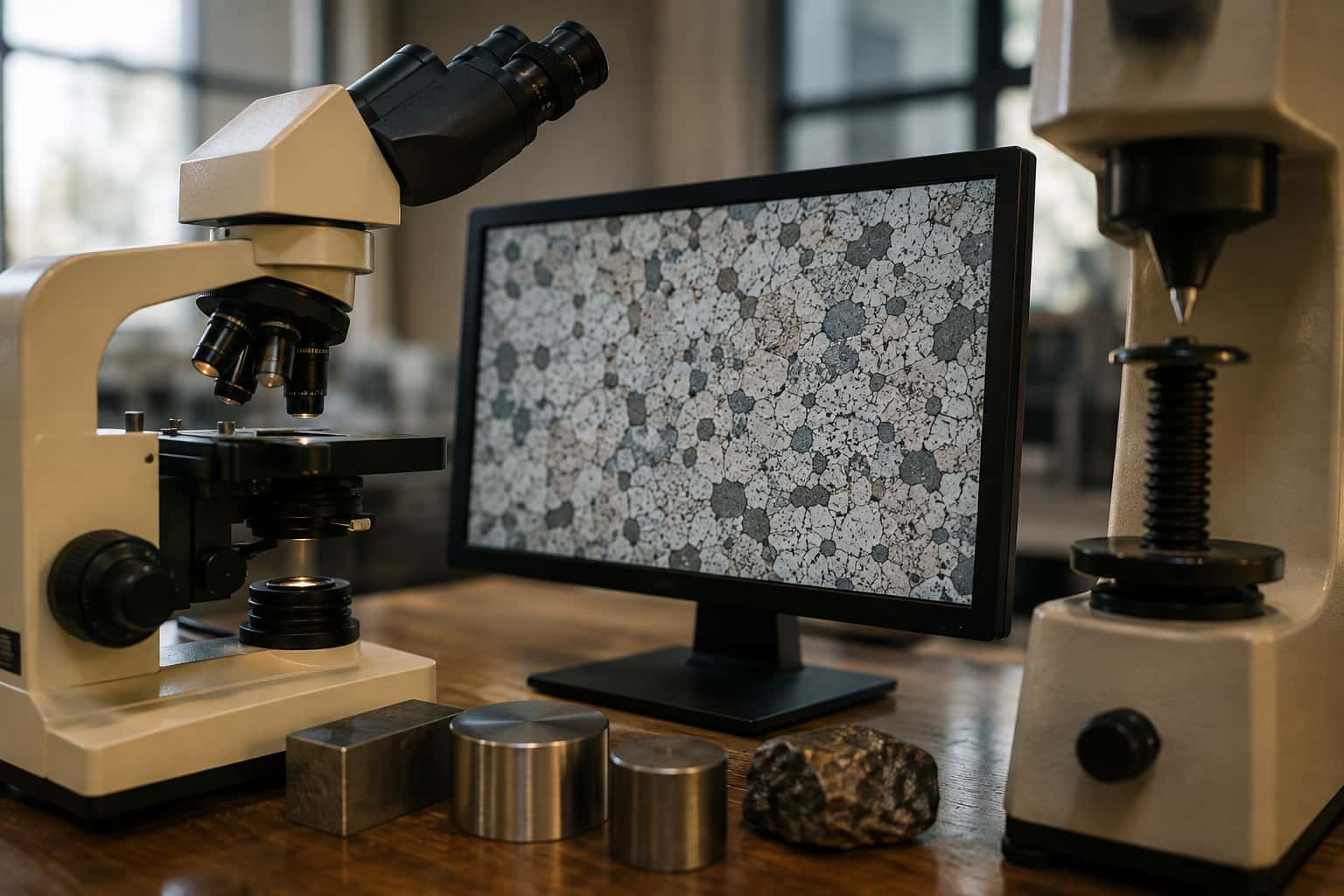
| Edge retention | 3/5Moderate carbide volume holds a solid working edge — above simple carbon steels, clearly below D2 and the CPM class. Takes a notably fine, keen edge for a tool steel thanks to its restrained carbide structure. | 3/5Moderate. 3V does not hold an edge as well as high-vanadium stainless steels like S35VN or S30V, but it outperforms D2 in CATRA edge-retention testing at 60 HRC. Edge retention takes a back seat to toughness in this steel's design. | 3V wins again: vanadium carbides give it wear resistance near D2 territory while staying tougher than A2. A2 holds a working edge; 3V holds it longer. |
|---|
| Corrosion resistance | 2/5About 5% chromium: slows rust slightly versus 1084/1095 but this is tool steel, not stainless. It patinas and will rust if neglected — oil it, dry it, and consider a forced patina on users. | 2/53V is not a stainless steel (chromium content is below the roughly 12-13% stainless threshold), so it will develop surface rust without care. Testing shows it resists deep pitting better than plain carbon steels even after prolonged exposure, but it still needs the same basic oiling and drying routine as any carbon tool steel. | Close to a wash - both are ~5-7.5% chromium tool steels that patina and rust without care. 3V is marginally better; neither forgives neglect. |
|---|
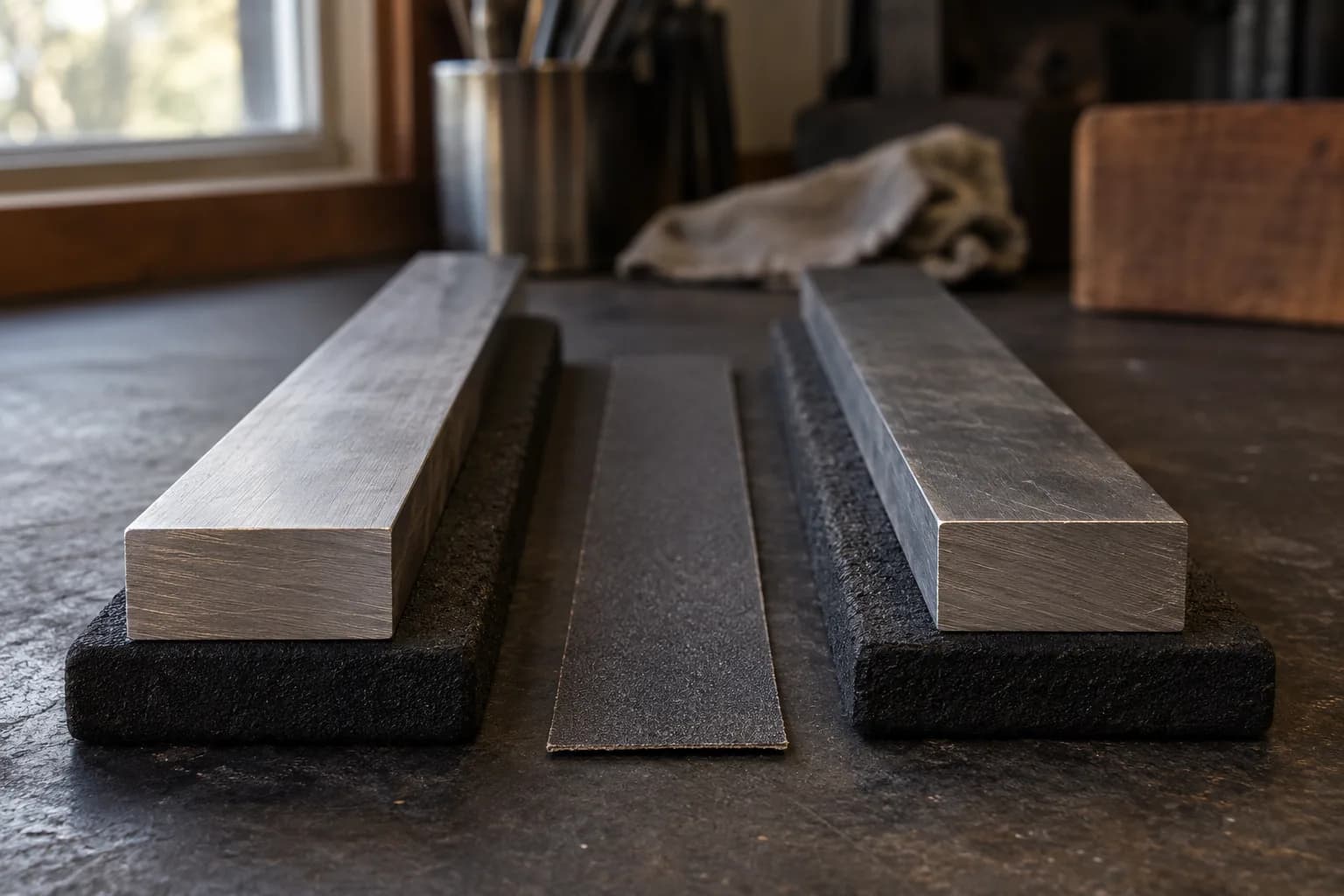
| Heat treat | Air hardening — kiln territory (or a heat-treat service). Foil-wrap, austenitize 1750–1800°F, soak 30–45 minutes, then quench in still air or between aluminum plates (plates keep thin blades dead flat — see our plate quenching guide). Cool below ~150°F, then double temper 2 hours each: ~400°F for 60–62 HRC, 450–500°F for 58–60 with extra toughness. Cryo treatment is a worthwhile optional step (Lie-Nielsen cryo-treats its A2). | Crucible's standard recipe: preheat 1500-1550 F, austenitize at 1950 F for 30-45 minutes, air or plate quench, then triple temper at 1000-1050 F for 2 hours each cycle. This targets 58-60 HRC, and the unusually high temper temperature is a secondary-hardening effect specific to this steel. Many knifemakers instead use an alternative recipe that is simpler and popular in small shops: soak at 1975 F for 30 minutes, fast plate quench (optionally followed immediately by a cryo treatment), then triple 2-hour temper at 400 F. This reaches 60-61 HRC with no meaningful loss of toughness and avoids the need for a 1000 F+ capable oven cycle. | Both are kiln steels with high soaks and plate-quench-friendly air hardening. 3V runs hotter (~1950F class) with stricter process control - another point where A2 is the forgiving elder. |
|---|
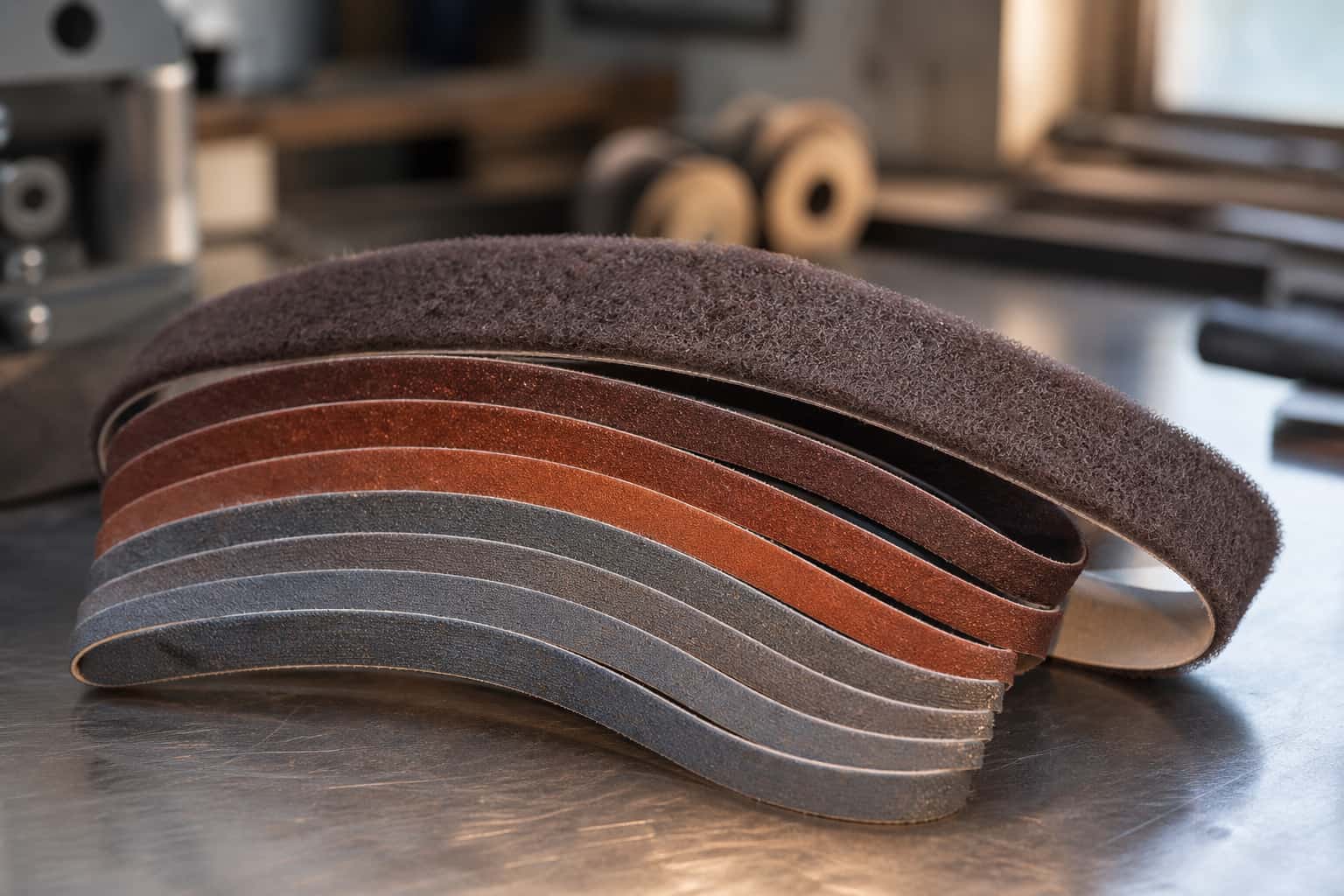
| Grinding | 4/5One of the friendlier tool steels on the grinder and under files when annealed; finishes and hand-sands more cleanly than D2 or the PM steels. | 3/5Moderately demanding to grind due to fine, hard vanadium carbides, though less extreme than higher-vanadium stainless PM steels. Standard ceramic or zirconia belts handle it well. | A2 wins the shop experience: it grinds and hand-finishes easily, while 3V's vanadium carbides eat belts and demand diamond abrasives for fine sharpening. |
|---|