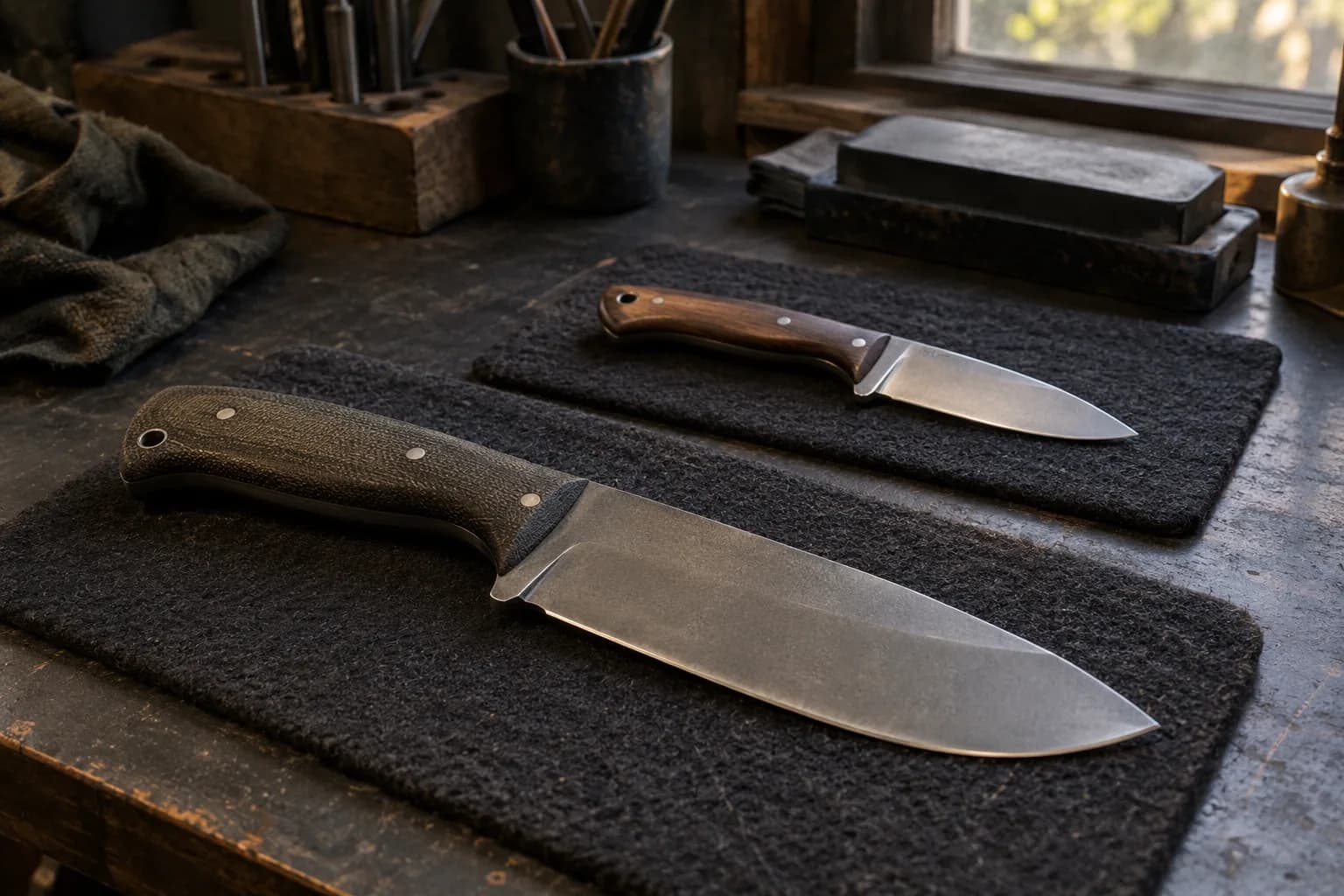
| Toughness | 4/5The reason makers pick A2: clearly tougher than D2 and other high-carbide tool steels at working hardness — the classic choice for choppers and hard-use blades that must not chip. Modern PM steels like CPM 3V exceed it, at a price. | 2/5The weak point of D2: its heavy carbide volume makes it more prone to chipping than most modern powder-metallurgy steels, and it has a reputation for being harder to sharpen back to a clean edge after damage. | A2 wins decisively - its restrained carbide volume absorbs impact D2 cannot. This is the core reason choppers and hard-use blades run A2 while D2 stays in slicers. |
|---|
| Edge retention | 3/5Moderate carbide volume holds a solid working edge — above simple carbon steels, clearly below D2 and the CPM class. Takes a notably fine, keen edge for a tool steel thanks to its restrained carbide structure. | 4/5Very good wear resistance thanks to a large volume of chromium and vanadium carbides, a big part of why it remained popular for decades before newer powder-metallurgy steels became common. | D2 wins on wear - roughly 12% chromium forms abundant carbides that out-slice A2 meaningfully. A2 holds a good working edge but resharpens sooner. |
|---|
| Corrosion resistance | 2/5About 5% chromium: slows rust slightly versus 1084/1095 but this is tool steel, not stainless. It patinas and will rust if neglected — oil it, dry it, and consider a forced patina on users. | 2/5Chromium sits right at the edge of the stainless threshold, giving it noticeably better rust resistance than plain tool steels, but it will still spot or stain without regular care, unlike true stainless steels. | D2 (~12% Cr, "semi-stainless") shrugs off stains A2 (~5% Cr) will take. Neither is stainless; A2 demands honest carbon-steel care. |
|---|
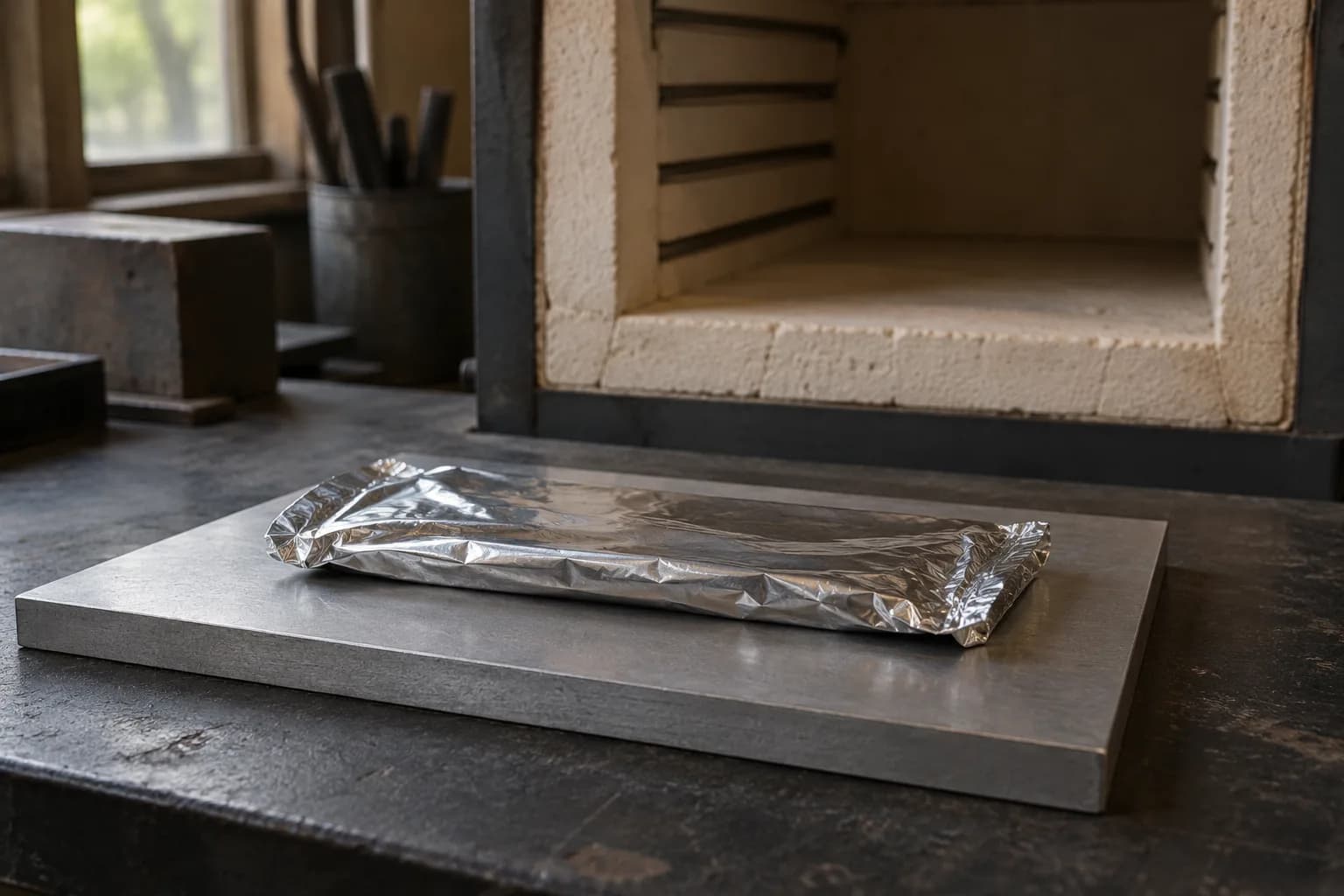
| Heat treat | Air hardening — kiln territory (or a heat-treat service). Foil-wrap, austenitize 1750–1800°F, soak 30–45 minutes, then quench in still air or between aluminum plates (plates keep thin blades dead flat — see our plate quenching guide). Cool below ~150°F, then double temper 2 hours each: ~400°F for 60–62 HRC, 450–500°F for 58–60 with extra toughness. Cryo treatment is a worthwhile optional step (Lie-Nielsen cryo-treats its A2). | Preheat at 450-500 C (842-932 F), equalize, then raise to a second preheat of 850-900 C (1560-1650 F). Austenitize at 1850-1900 F, holding 30-45 minutes for the first inch of thickness plus 15 minutes per additional inch. D2 is air-hardening, so quench in still air, which keeps distortion low. Temper between 300 and 500 F depending on the goal: 300-350 F favors maximum wear resistance (62-64 Rc), while 500-550 F gives a better balance of wear resistance and toughness (58-60 Rc). | Nearly identical workflow: foil pouch, high soak (A2 1750-1800F, D2 ~1850F), air or plate quench, double temper. Both are kiln steels - and both love a plate quench for flatness. |
|---|
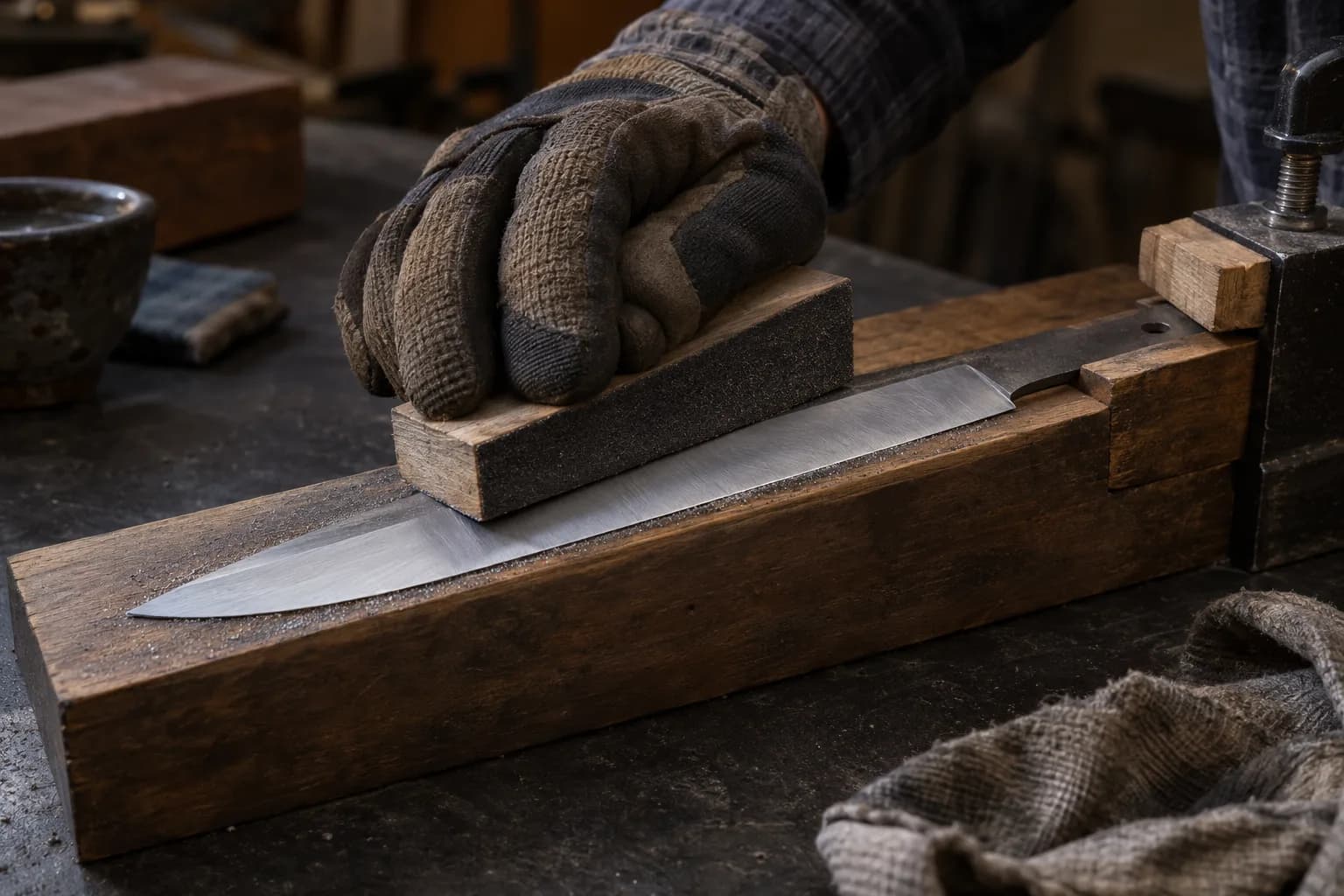
| Grinding | 4/5One of the friendlier tool steels on the grinder and under files when annealed; finishes and hand-sands more cleanly than D2 or the PM steels. | 2/5Hard on belts due to its heavy carbide load; grinds and sharpens more slowly than simpler carbon or basic stainless steels. | A2 by a wide margin: it grinds, files, and hand-sands like a cooperative tool steel. D2 fights belts and hand-sanding alike, and its big carbides limit how fine an edge polish is worth chasing. |
|---|