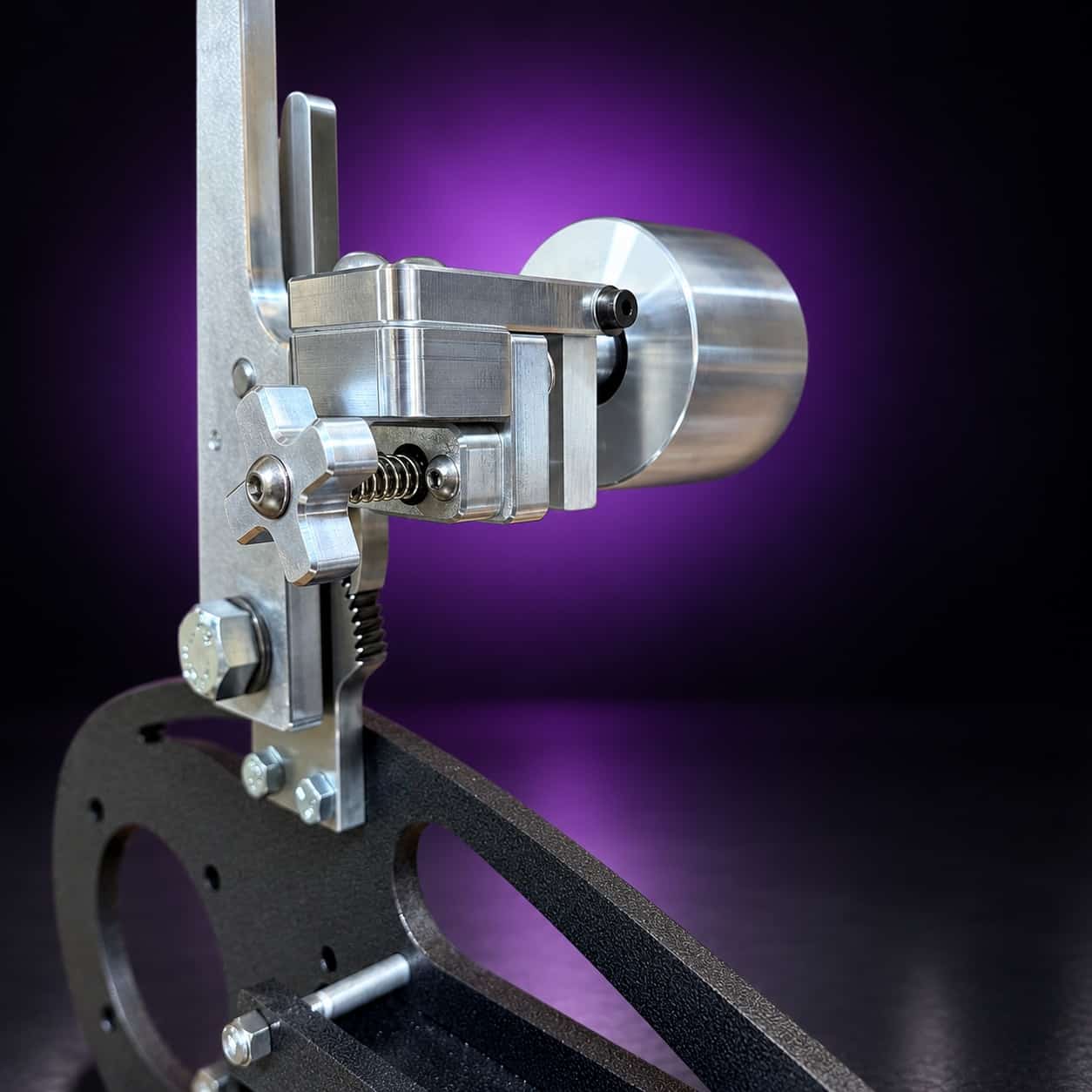

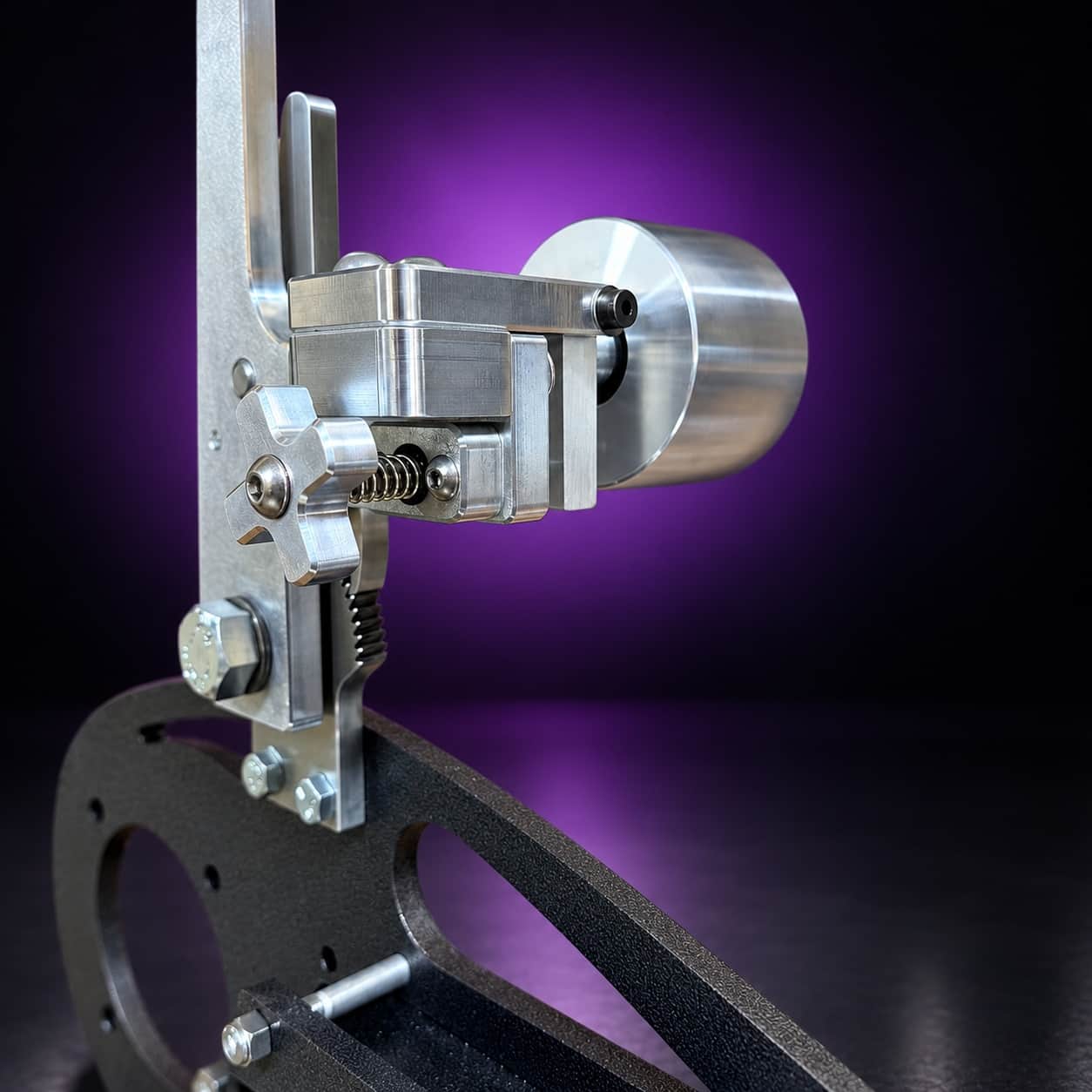
Nebula dual-axis tracking assembly: star knob, spring and idler wheel, close-up, on black with a purple glow

Troubleshooting

Blade Warped During Heat Treat

Work back from what it is doing to what caused it, then to the fix that addresses the cause. Nothing here needs a sign-up.
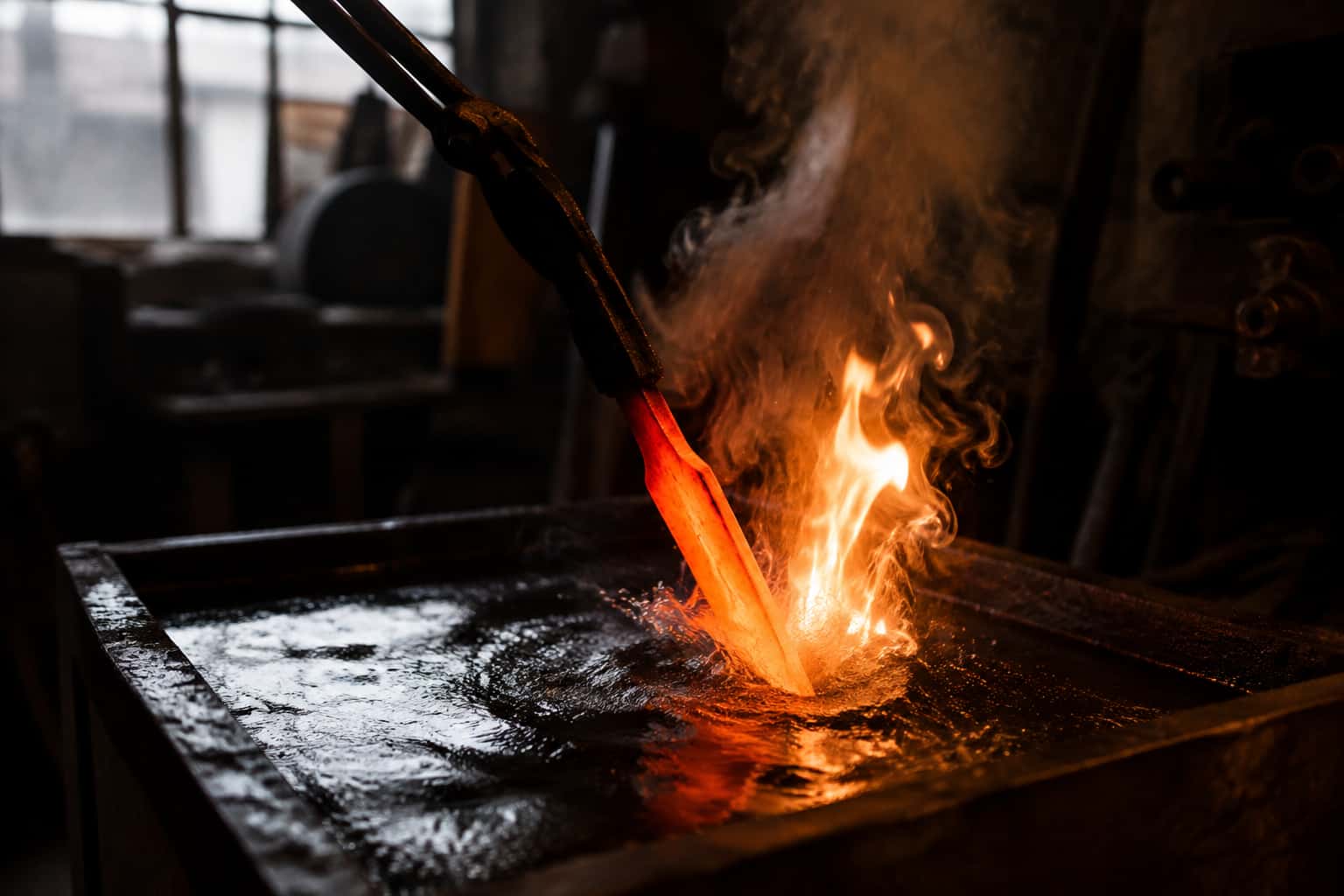
Knife steel heat treatment in a working knife shop
If a symptom appears mid-job, put the work down and check it before continuing.
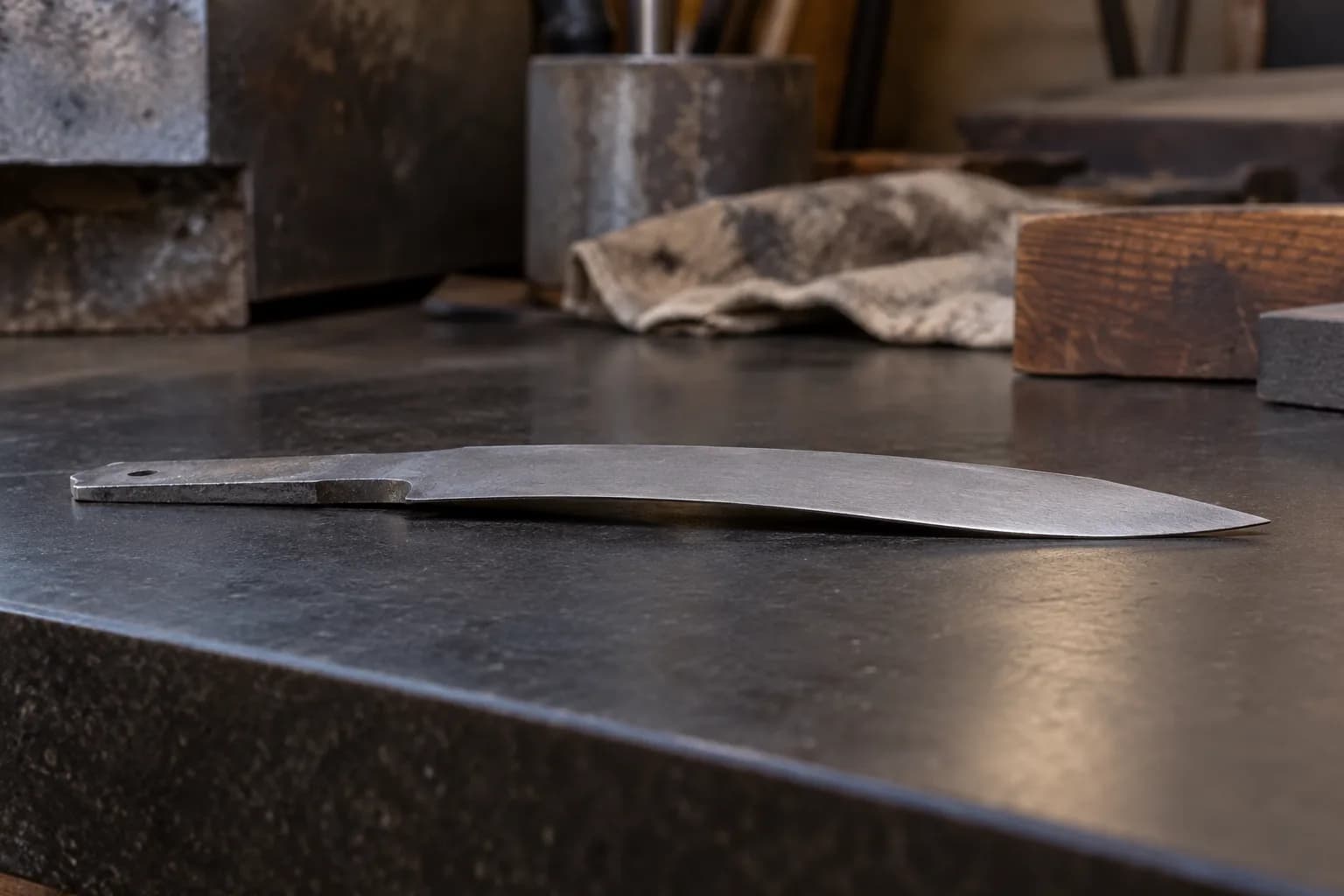
Cold gray knife blank lying on a dark flat plate, bowed lengthwise with a small gap under the middle and tip and tang touching.

The flow

Work it in this order

Causes first, then the quick checks, the fix, prevention and the stop-work point.
  1. Likely causes

    • Uneven heating before the quench, one side or end of the blade was hotter than the other
    • Asymmetric grind, more material removed from one side than the other before hardening
    • Blade entered the quenchant at an angle instead of straight down
    • Quenchant was moved too slowly or inconsistently around the blade
    • Grinding a full bevel before heat treat instead of leaving extra thickness for post-heat-treat cleanup
  2. Quick checks

    • Check the blade for even color and scale after normalizing or preheating; uneven color often means uneven heating
    • Lay the pre-hardened blade on a flat surface and check for any pre-existing warp before it ever reached the quench
    • Confirm the quenchant was at the correct temperature and depth for full blade coverage
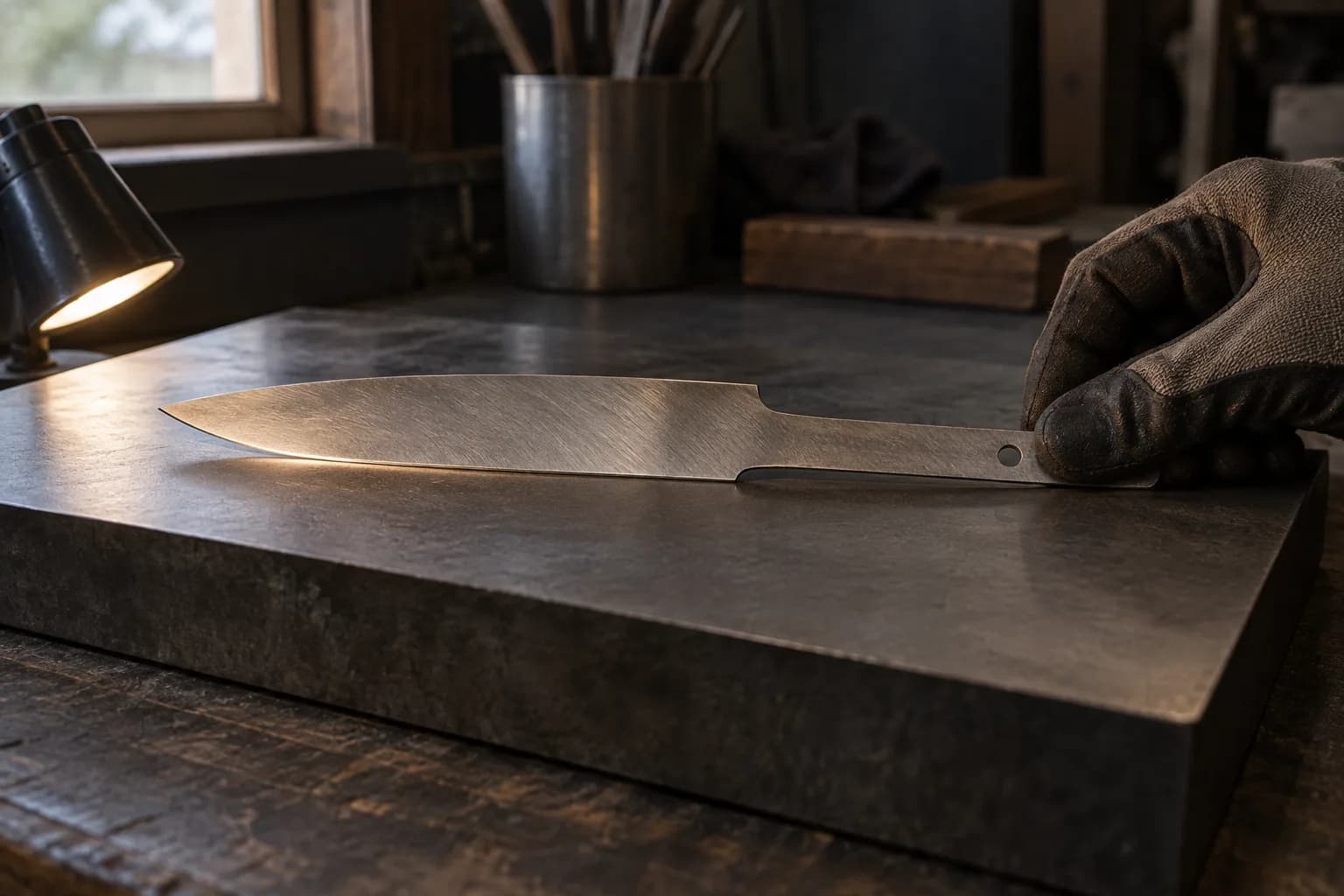
Gloved hand steadies the tang of a bare knife blank lying flat on a steel plate, lit by a small shop lamp.
  1. Fixes

    • For a straight-forward quench-warp, straightening the blade while still warm from tempering (before it fully cools) is often possible with careful, gradual pressure
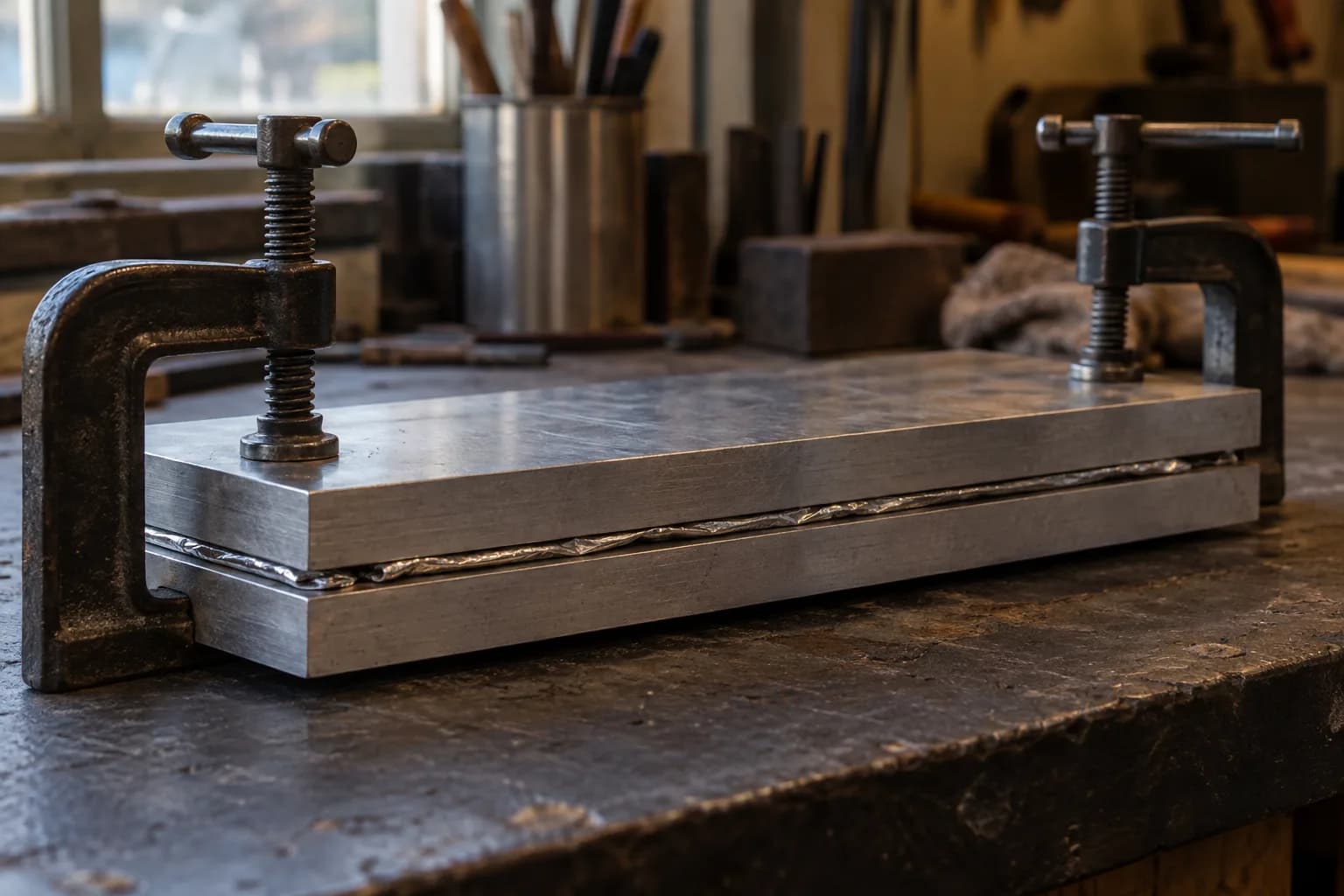
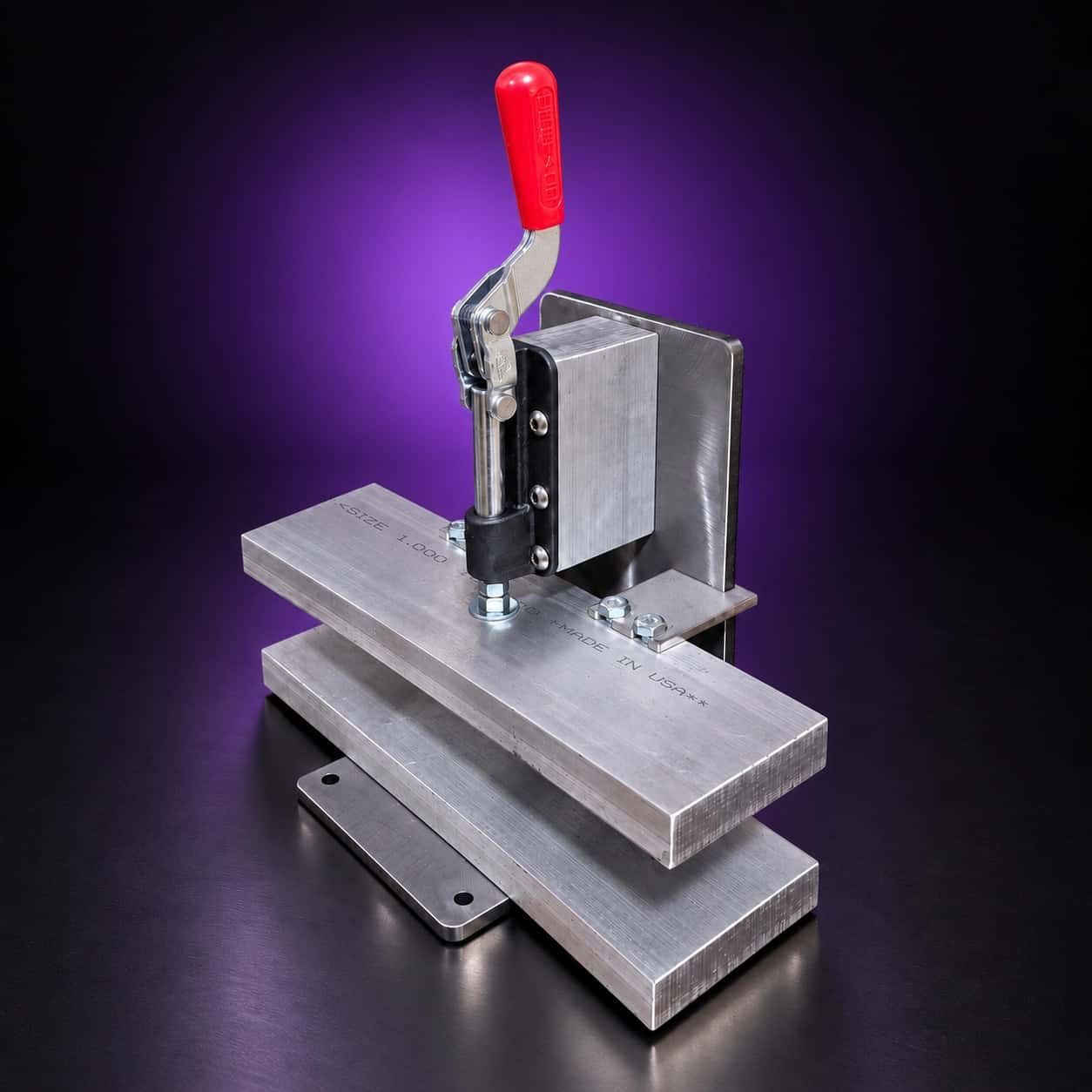
    • A dedicated quench plate system holds the blade flat and controls warping during the quench itself, especially valuable for thin stock
    • For stubborn warps, a second, more even normalize-and-reharden cycle can sometimes correct the problem
Two flat aluminum plates clamped together with iron C-clamps on a workbench, crinkled foil showing between them.
  1. Prevention

    • Normalize evenly and check for straightness before ever hardening
    • Enter the quenchant blade-first, straight down, with a smooth, consistent motion
    • Leave extra material thickness before heat treat rather than finish-grinding to final dimensions first, giving room to correct minor warp afterward
    • Use a quench plate system on thin stock to physically control warping during the quench
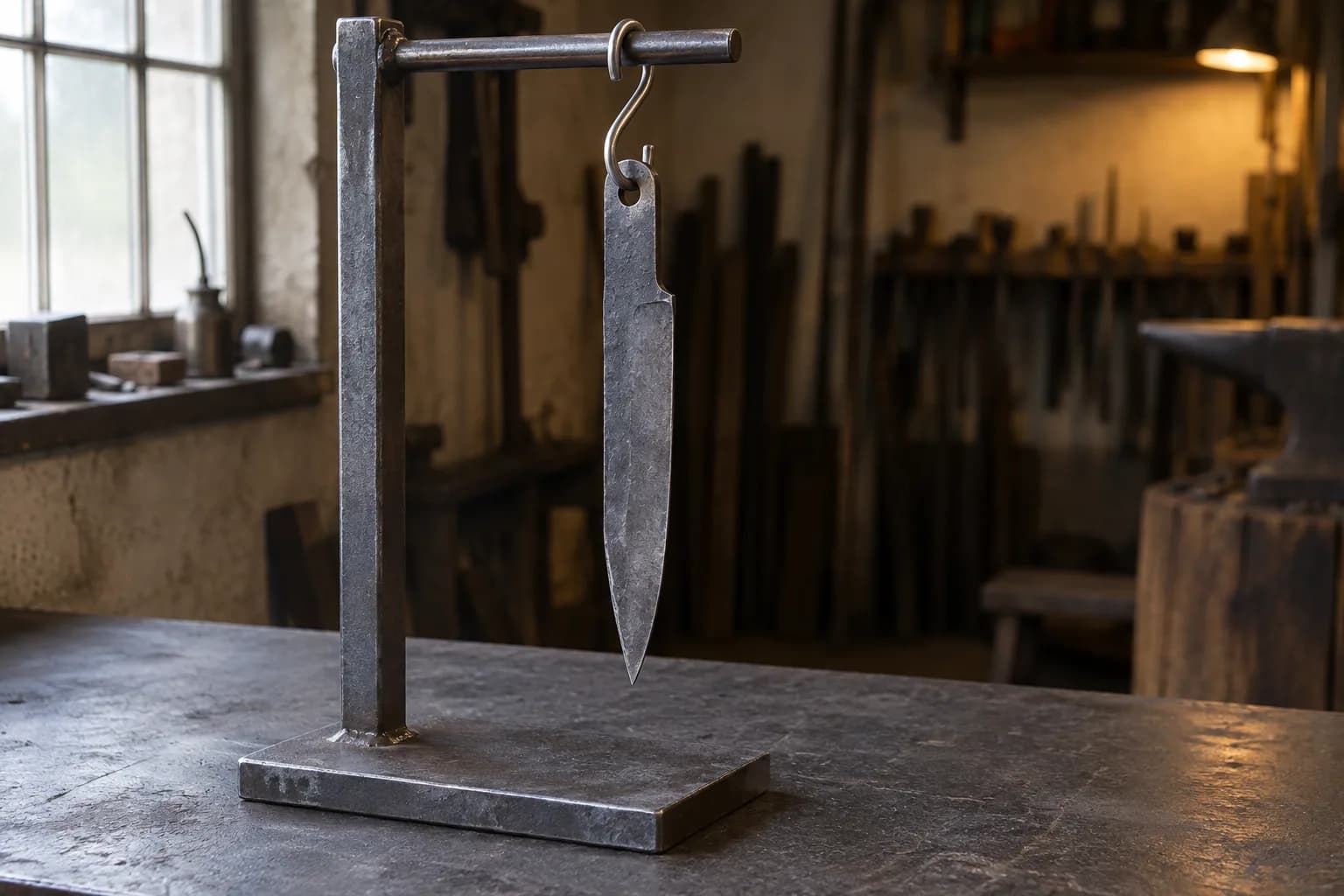
Straight rough-forged knife blank hangs point-down from an S-hook on a steel crossbar stand in a dim shop.
  1. When to stop

    If a blade develops a warp during the actual heat treat cycle and correction attempts are not working, stop before forcing it further; over-stressing a hardened, untempered blade while straightening can crack it.

Keep reading

Guides that cover the cause

The long-form version of the fix above, written from the same bench.

Same bench

When the machine is the cause

Flex, a soft platen or a tracking knob that will not hold can show up as a bad grind. I machine the parts, hand-assemble, track and test each Torus grinder in Sterling, Illinois.
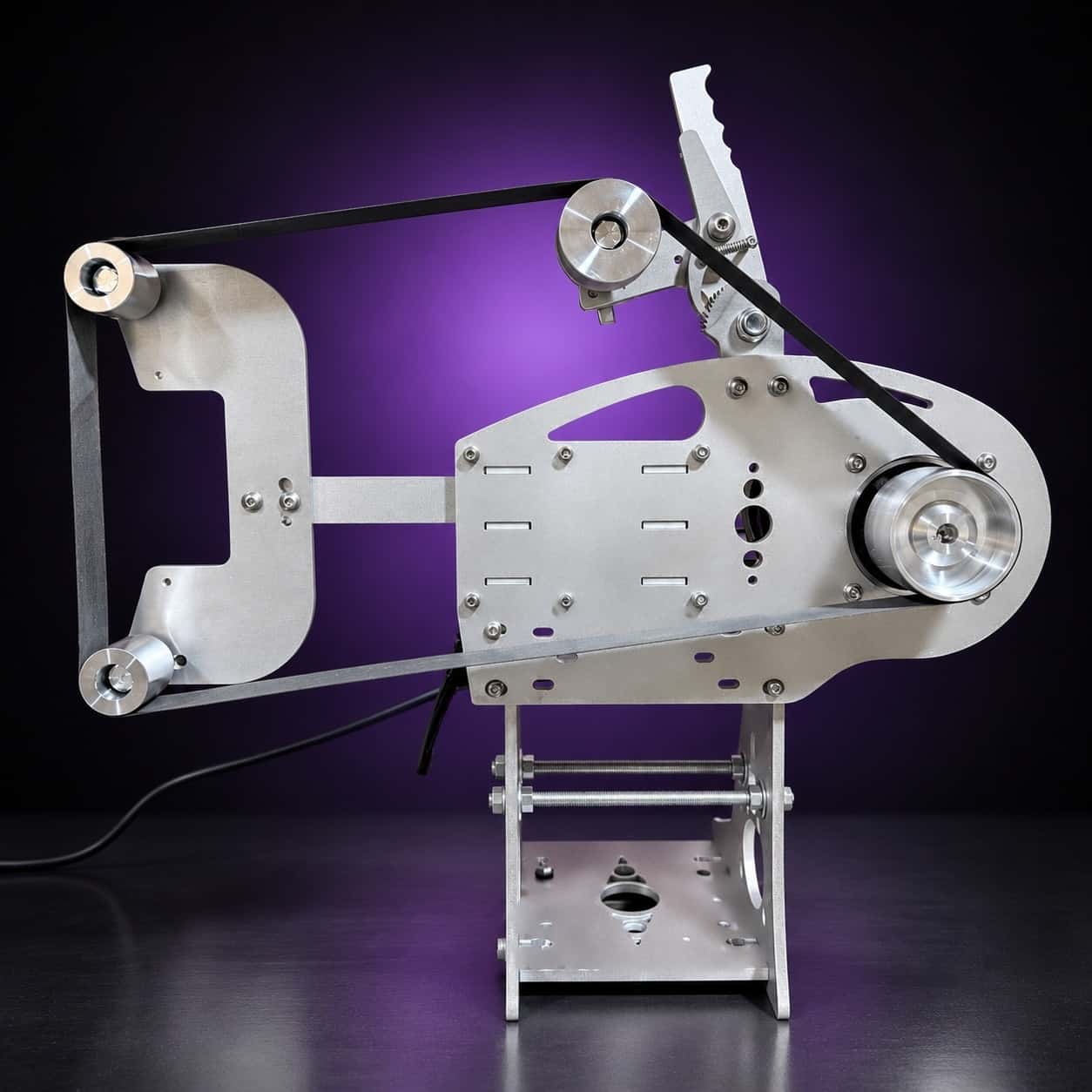
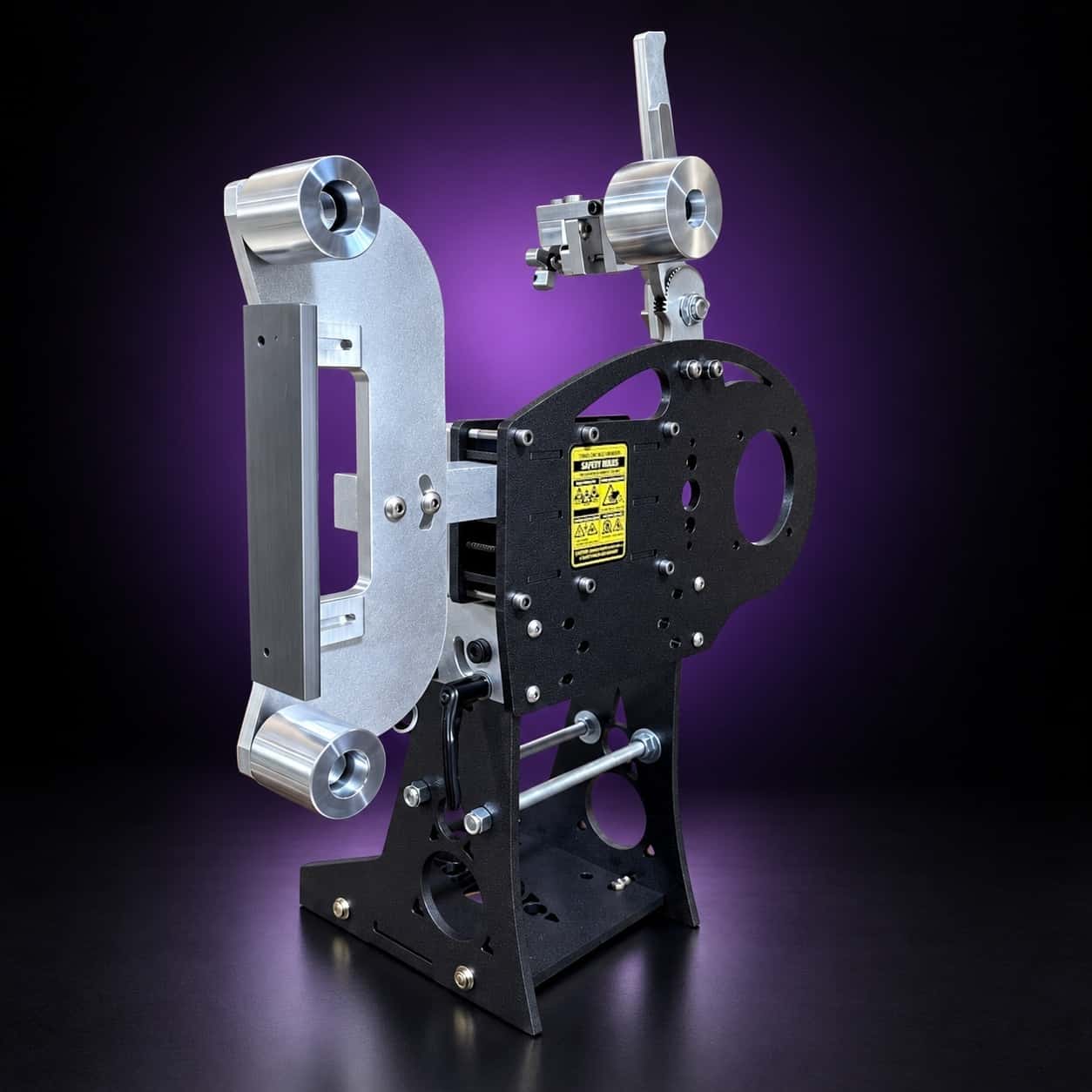
  • Nebula 2x72 grinder, front three-quarter view: aluminum arm, black plate, Safety Rules label, on black with a purple glow

    Nebula 2×72 Steel Belt Grinder

    Current dual-axis platform with a steel chassis, more mass and less vibration.
    Starts at$1,295View

One-man shop

Not sure which cause you have?

Send me a photo and describe what happened before it went wrong. Include the machine, belt and steel when they are relevant.