
Heat Treat
Heat Treating Knife Steel: Complete Guide
Heat treating is what turns a piece of flat bar stock into a functional knife blade. Done correctly, it transforms the steel’s internal crystal structure…

Metallurgy
What happens inside knife steel at each step: ferrite and pearlite, austenite, martensite, tempering and normalizing, explained in plain language for makers.
4 min readWritten by Rich LinvilleFree to read
The Heat Treating Guide covers the practical steps: normalize, austenitize, quench, temper. This guide covers what’s actually happening inside the steel at each of those steps, and why the process works the way it does.
Steel isn’t a uniform substance, its iron atoms arrange into different crystal structures depending on temperature and cooling speed, and each structure has different properties. Heat treating a knife is really just deliberately manipulating which crystal structure the steel ends up locked into.
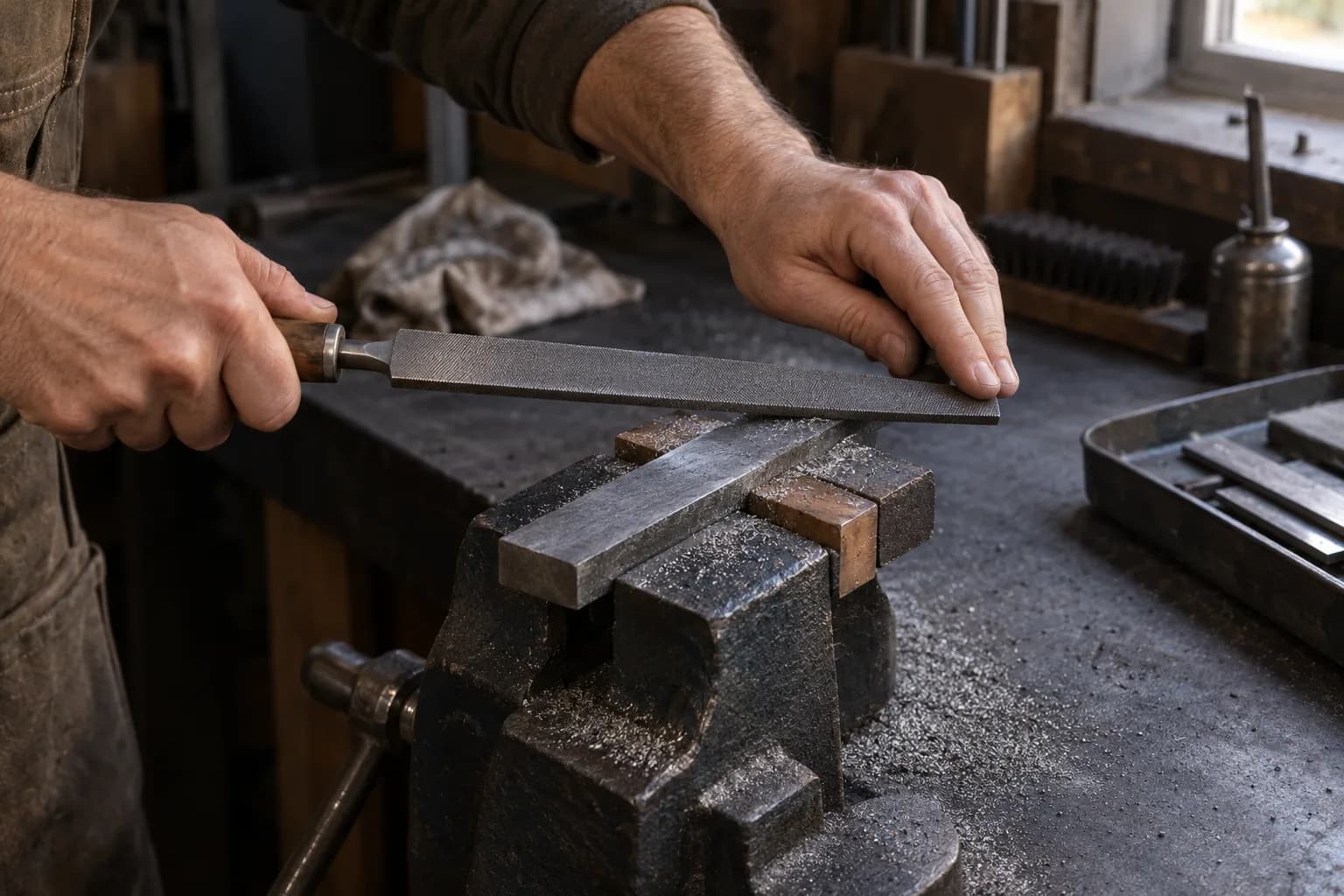
At room temperature, untreated steel is mostly ferrite (soft, relatively pure iron structure) and pearlite (a layered mix of ferrite and iron carbide). This is the soft, machinable, grindable state steel arrives in as stock, and the state it needs to be heated out of to harden.
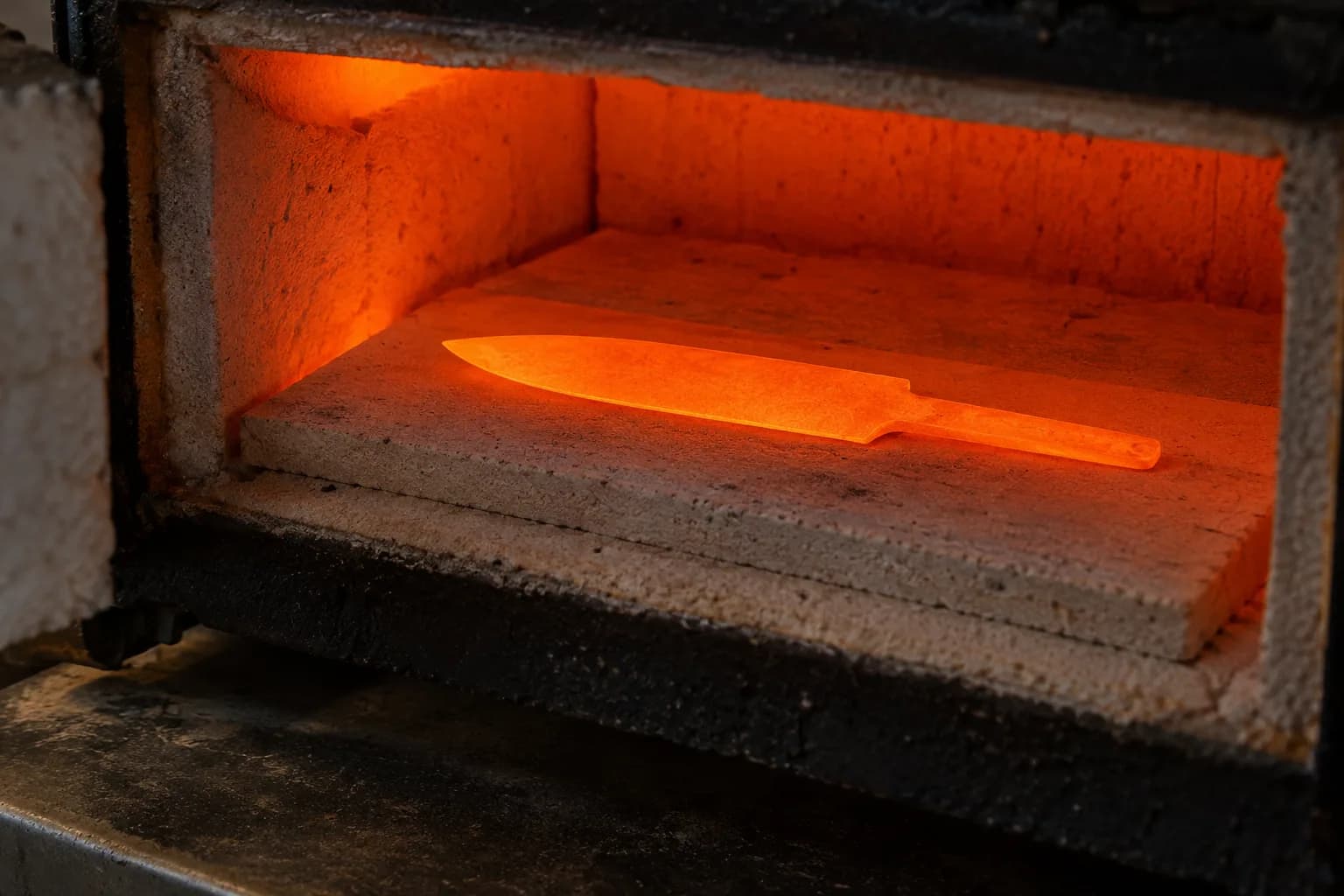
Heating steel above its critical temperature (specific to each alloy, typically in the 1,400-1,600°F range for knife steels) transforms the structure into austenite, a different crystal arrangement that can hold much more carbon in solution than ferrite can. This is the step called austenitizing, and it’s the essential precondition for hardening: steel that hasn’t fully transformed to austenite can’t harden properly no matter how it’s quenched.
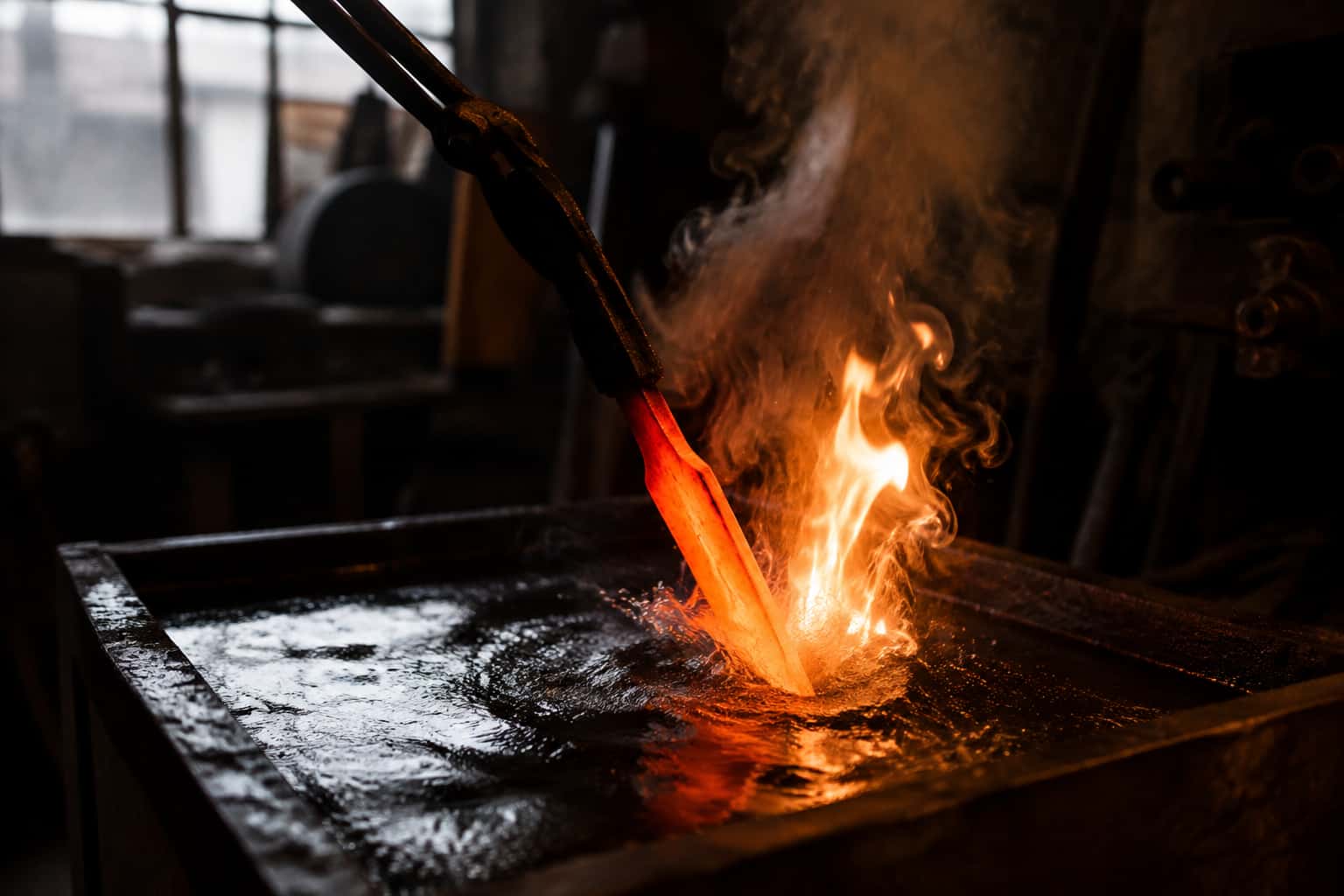
Quenching, rapidly cooling the austenitized steel, doesn’t give the carbon time to move back out of solution the way it would with slow cooling. Instead, the crystal structure gets trapped in a highly strained, needle-like arrangement called martensite. Martensite is what makes a quenched blade hard, and also what makes it dangerously brittle in its immediately-quenched state, before tempering.
Different steels need different cooling speeds to fully convert to martensite before the structure has a chance to transform into something else (like softer bainite or pearlite) instead. This is why simple carbon steels typically need a fast water or brine quench, while more heavily alloyed steels use oil, and modern air-hardening steels can reach full hardness with just still air, their alloy content slows the critical transformation enough that extreme cooling speed isn’t necessary. Using the wrong quench speed for a given steel is one of the most common causes of a blade that doesn’t reach full hardness, or that cracks from the stress of an unnecessarily fast quench.
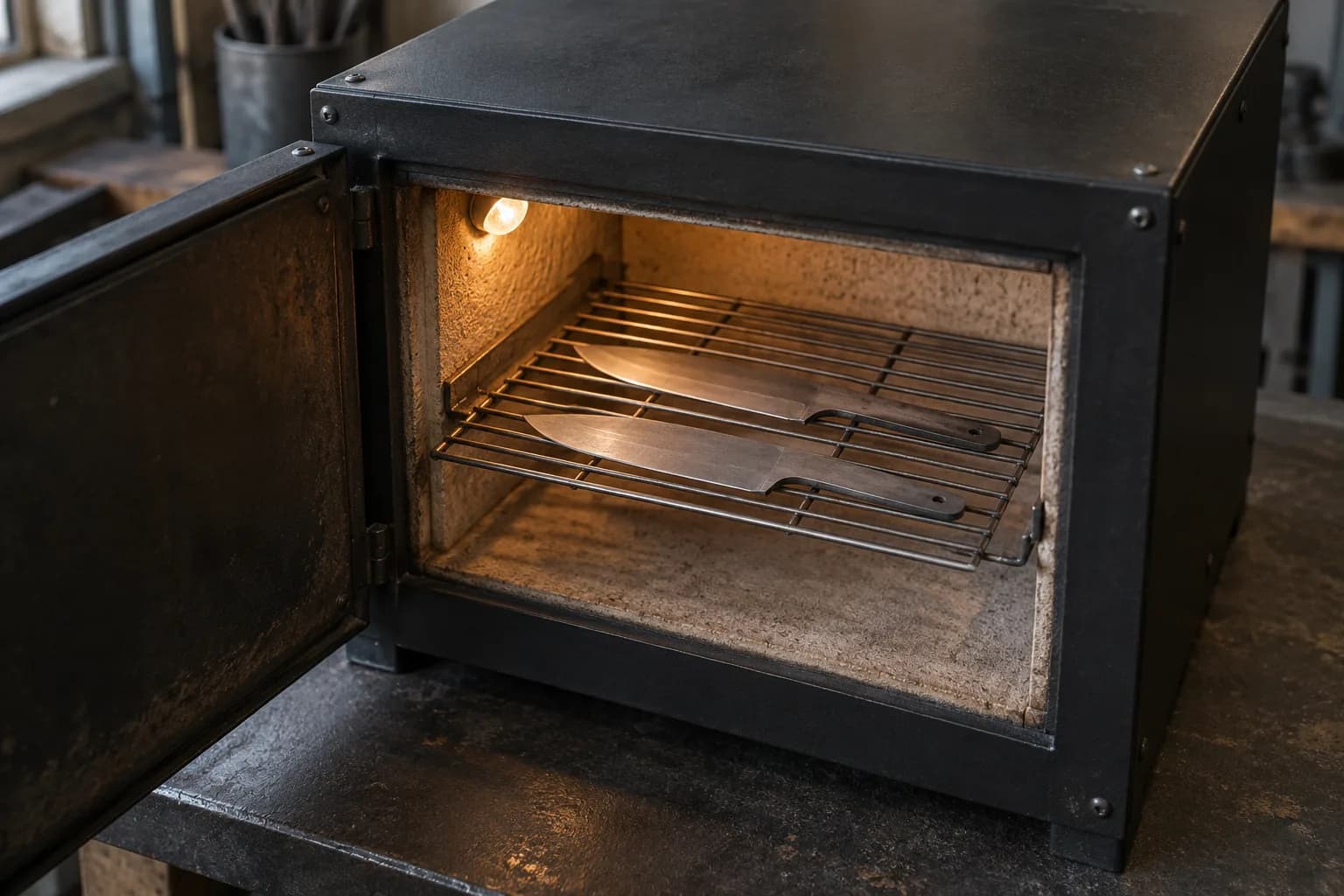
Freshly quenched, fully-martensite steel is hard but also full of internal stress and dangerously brittle, prone to cracking or even shattering under load. Tempering, reheating to a lower temperature (typically 350-450°F for most knife steels) after quenching, relieves some of that internal stress and converts a small amount of the martensite into a slightly softer, tougher structure. This trades a small amount of maximum hardness for a large gain in toughness, which is why every quenched blade needs to be tempered before use, skipping this step leaves a blade that can fail catastrophically rather than just dulling with use.
Before any hardening cycle, normalizing (heating above critical temperature and air-cooling) refines the grain structure left over from how the steel was originally forged or rolled at the mill, and relieves stress from stock removal or forging. Steel with large, uneven grain structure from skipping normalization will harden less predictably and can be more prone to cracking, even if every other step is done correctly.
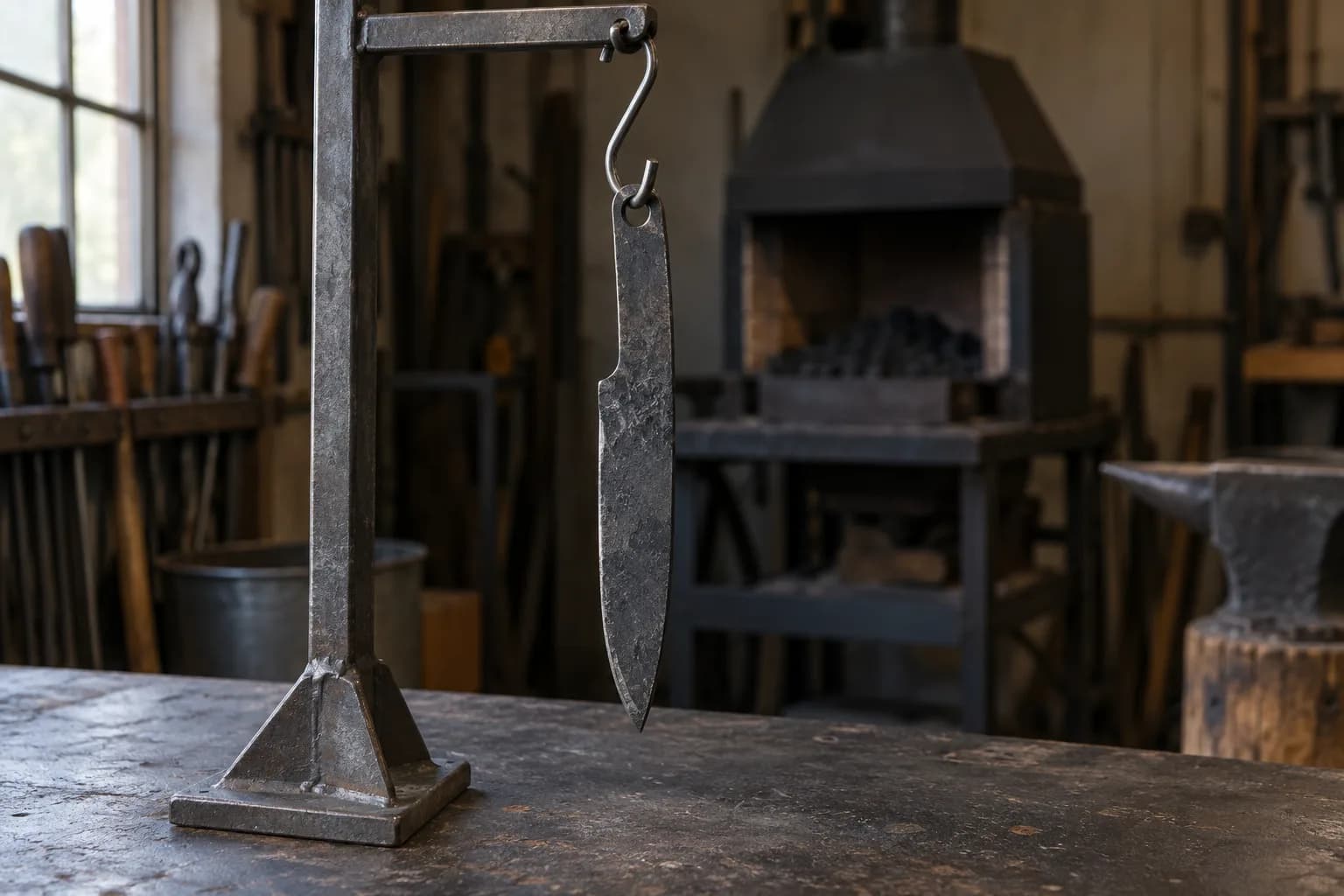
Each time steel is heated through its critical temperature and cooled, its grain structure has a chance to reform, and controlled, repeated cycles (as used in some normalizing sequences) progressively refine that grain to be finer and more uniform. Finer grain generally means better toughness and a cleaner-sharpening edge, which is part of why some heat-treat recipes call for multiple normalizing cycles rather than just one.
“Hard enough” isn’t the same as “safe to use.” An untempered, fully-martensite blade can be hard enough to pass a file test and still shatter under a load a properly tempered blade would easily handle, because the internal stress and brittleness haven’t been relieved yet.
Alloying elements slow down how fast the austenite-to-other-structures transformation can happen, so more heavily alloyed steels don’t need as fast a quench to still convert fully to martensite. A quench that’s too slow for a simple carbon steel might work perfectly for a more alloyed air-hardening steel.
Not reliably. Grain structure and internal stress aren’t visible to the eye, a blade can look perfectly fine and still have coarse grain or residual stress from stock removal that normalizing would have corrected, and that only shows up later as reduced toughness or unpredictable hardening.
Keep reading
Three more from the same bench.
Heat treating is what turns a piece of flat bar stock into a functional knife blade. Done correctly, it transforms the steel’s internal crystal structure…

Every knife steel is iron plus a specific recipe of other elements, and each of those elements pulls the steel’s behavior in a particular direction…
“Carbon steel,” “stainless steel,” “tool steel,” and “powder metallurgy steel” get used as if they’re four completely separate categories, but they…
Same bench
I machine the parts, hand-assemble, track and test Torus grinders in Sterling, Illinois. Most orders ship in seven to ten business days from time of order.
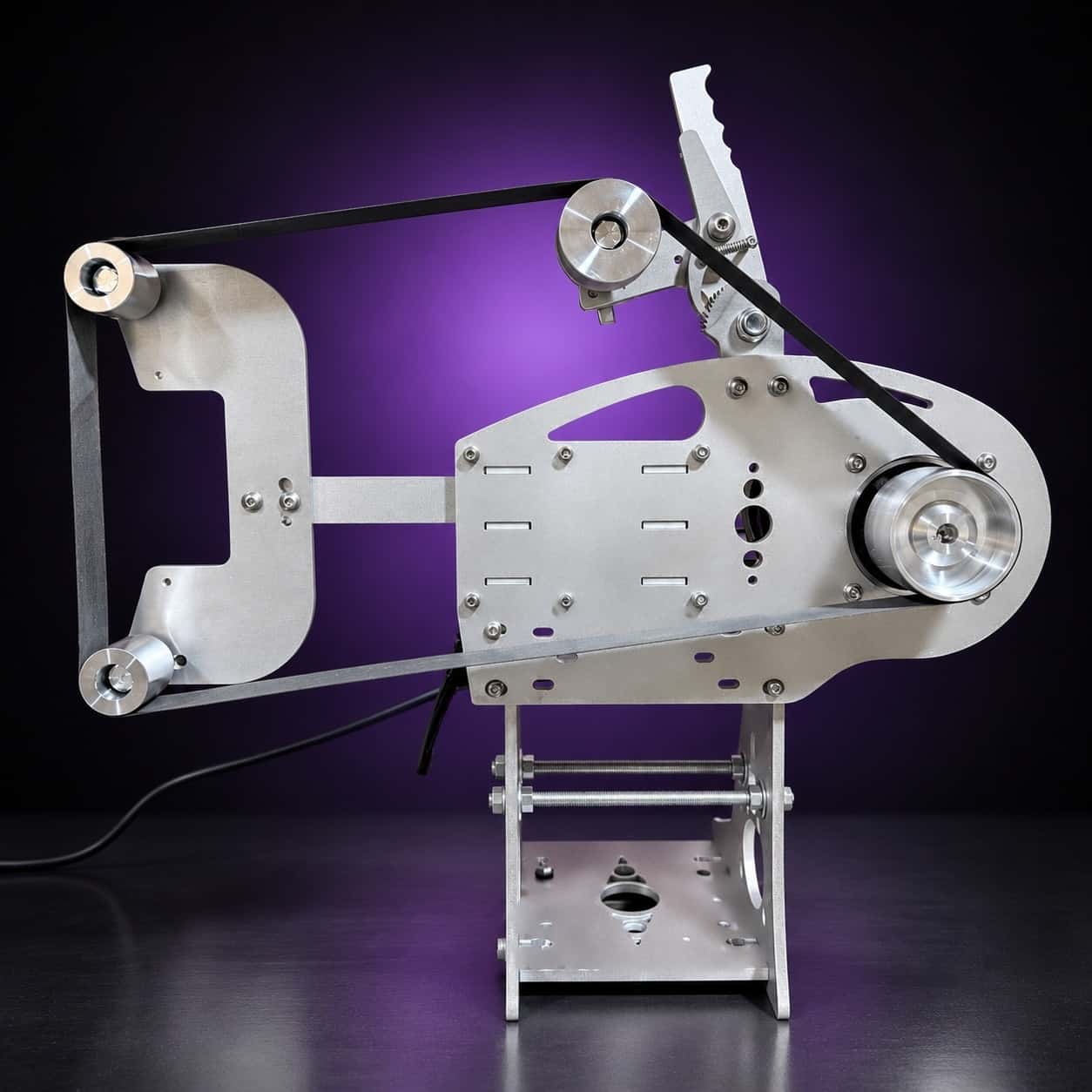
Current dual-axis platform with a fiber-laser-cut 6061 chassis and single-knob tracking.
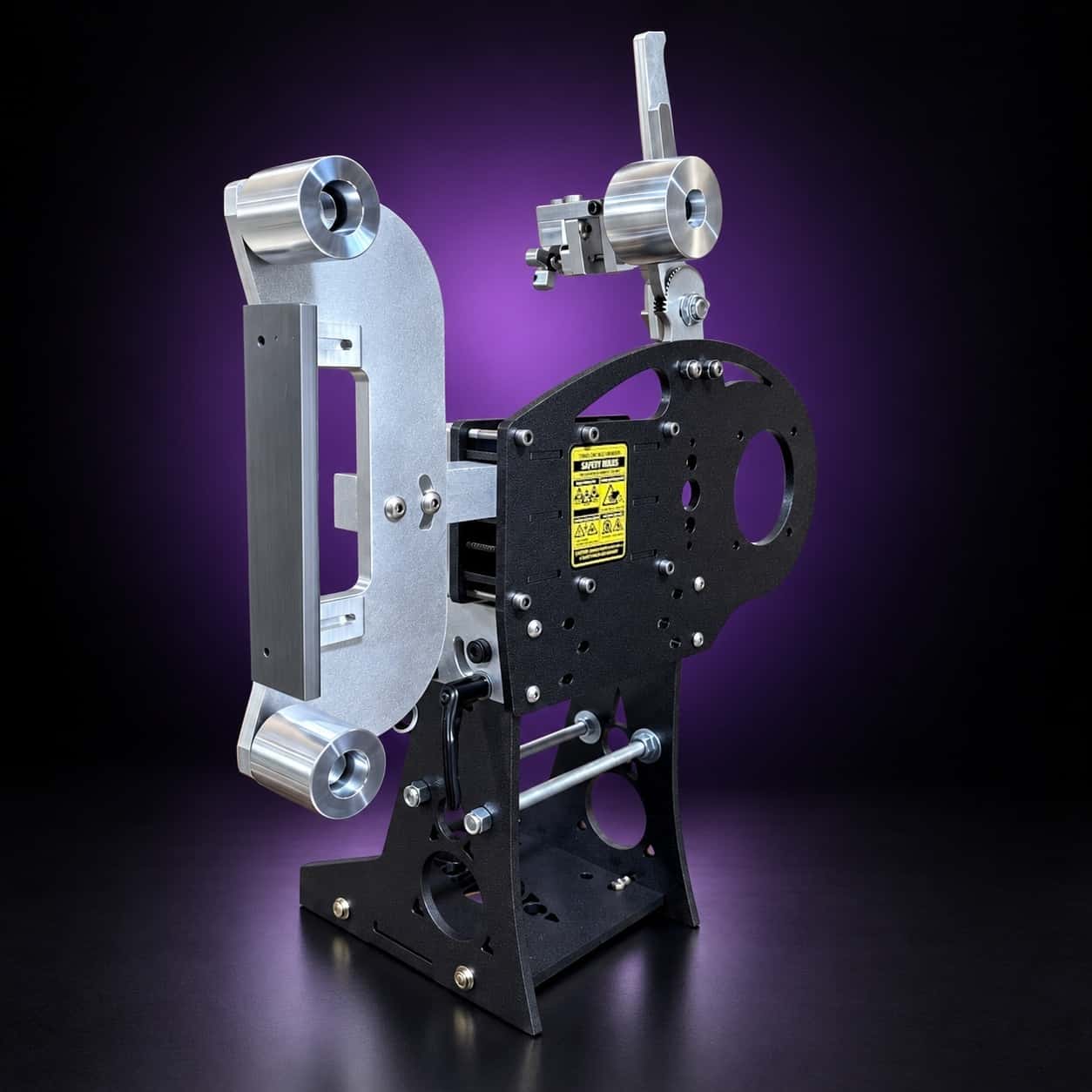
Current dual-axis platform with a steel chassis, more mass and less vibration.
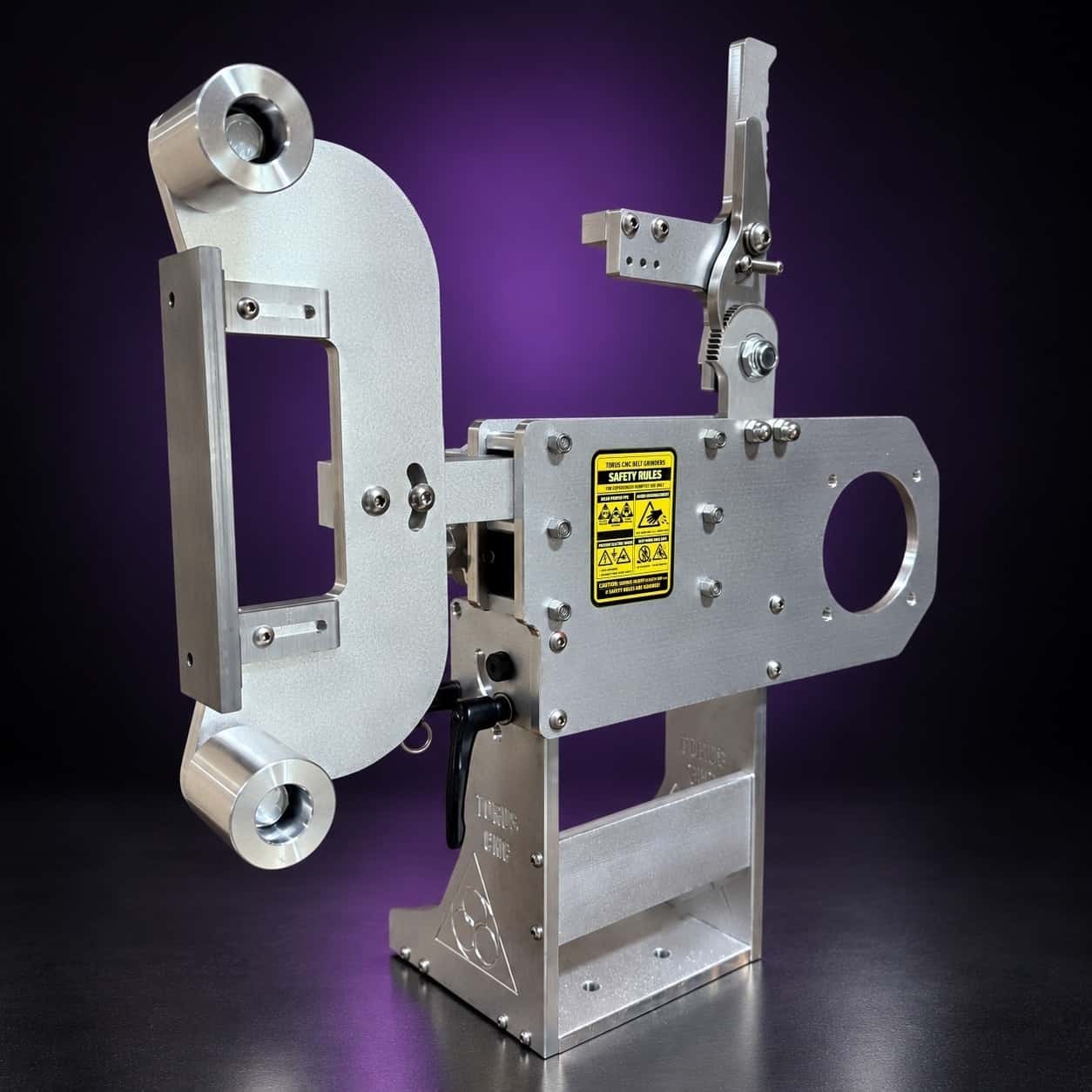
Prior-design aluminum chassis, 90-degree tilt and 1.5-inch tooling arms.
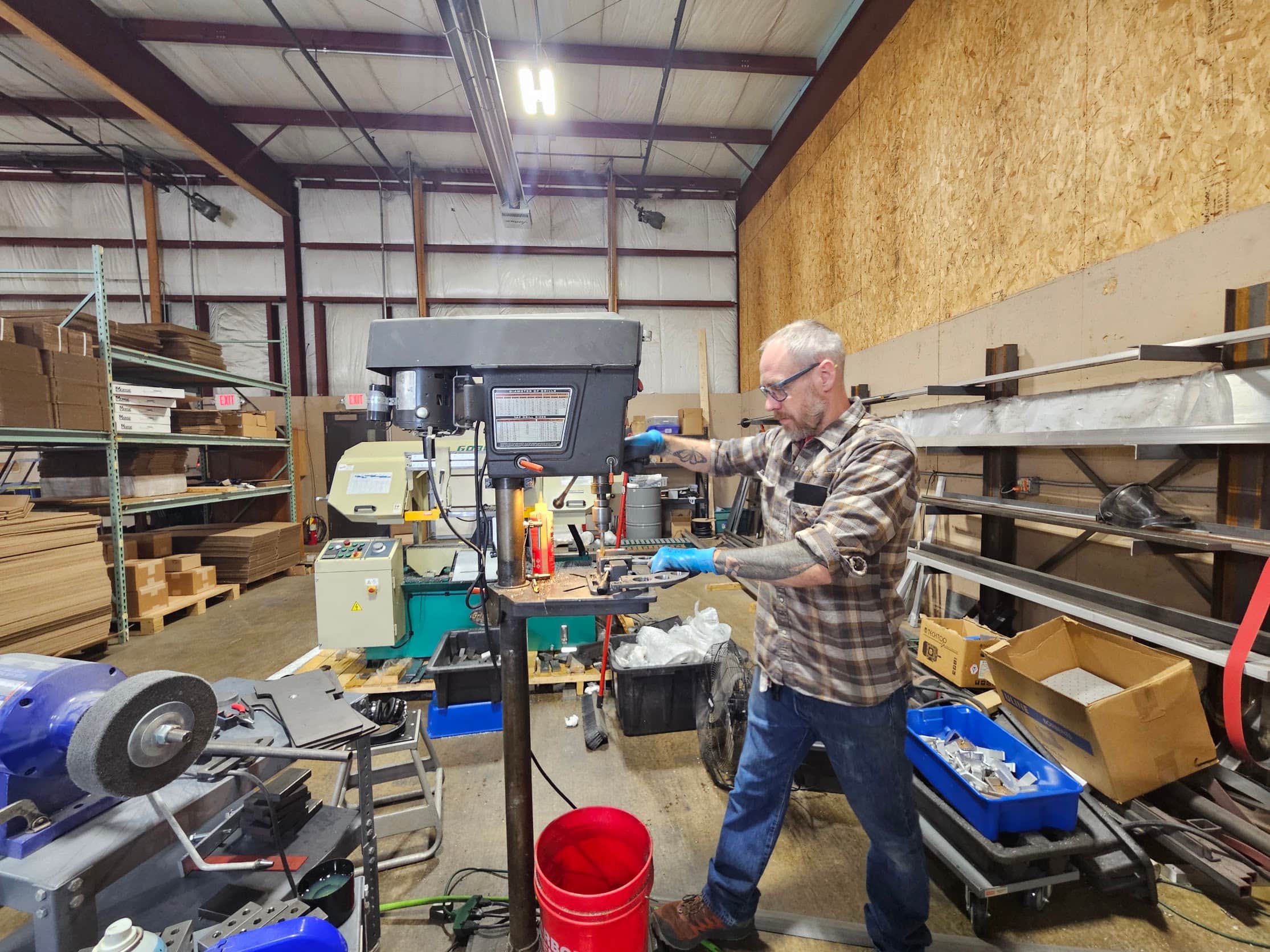
One-man shop
I answer my own email. Tell me the steel, the machine and what it is doing, and I will tell you what I would try next.