
Heat Treat
Heat Treat Oven Buyer’s Guide: Choosing a Knifemaking Kiln
Torch heat-treating and forge heat-treating both work, but a dedicated heat-treat kiln is what actually makes results repeatable, hitting the same target…
Heat Treat
Running a heat-treat kiln properly: programs and ramps, foil wrap, real soaks, the quench window, plate quenching and cold treatment by steel class.
3 min readWritten by Rich LinvilleFree to read
A kiln turns heat treating from an art of eyes and magnets into a science of numbers — which is exactly why it unlocks the high-carbide steels a forge cannot touch. This is the kiln-side counterpart to Heat Treating Without a Kiln: how to actually run the machine once you own it. (Still shopping? The oven buyer’s guide comes first.)
The forge path works because simple carbon steels forgive temperature wobble. The kiln path exists because the best modern steels do not: MagnaCut and the rest of the high-carbide stainless need soaks at precise temperatures a forge cannot hold, the low-carbide stainless (AEB-L, 14C28N) hardens from a forge but gains a point or two of hardness and consistency in a kiln (60 to 62 HRC against 58 to 60), and even carbon aristocrats like O1 and 52100 only show their real edge with a controlled soak. Buy the kiln and the entire steel database opens.
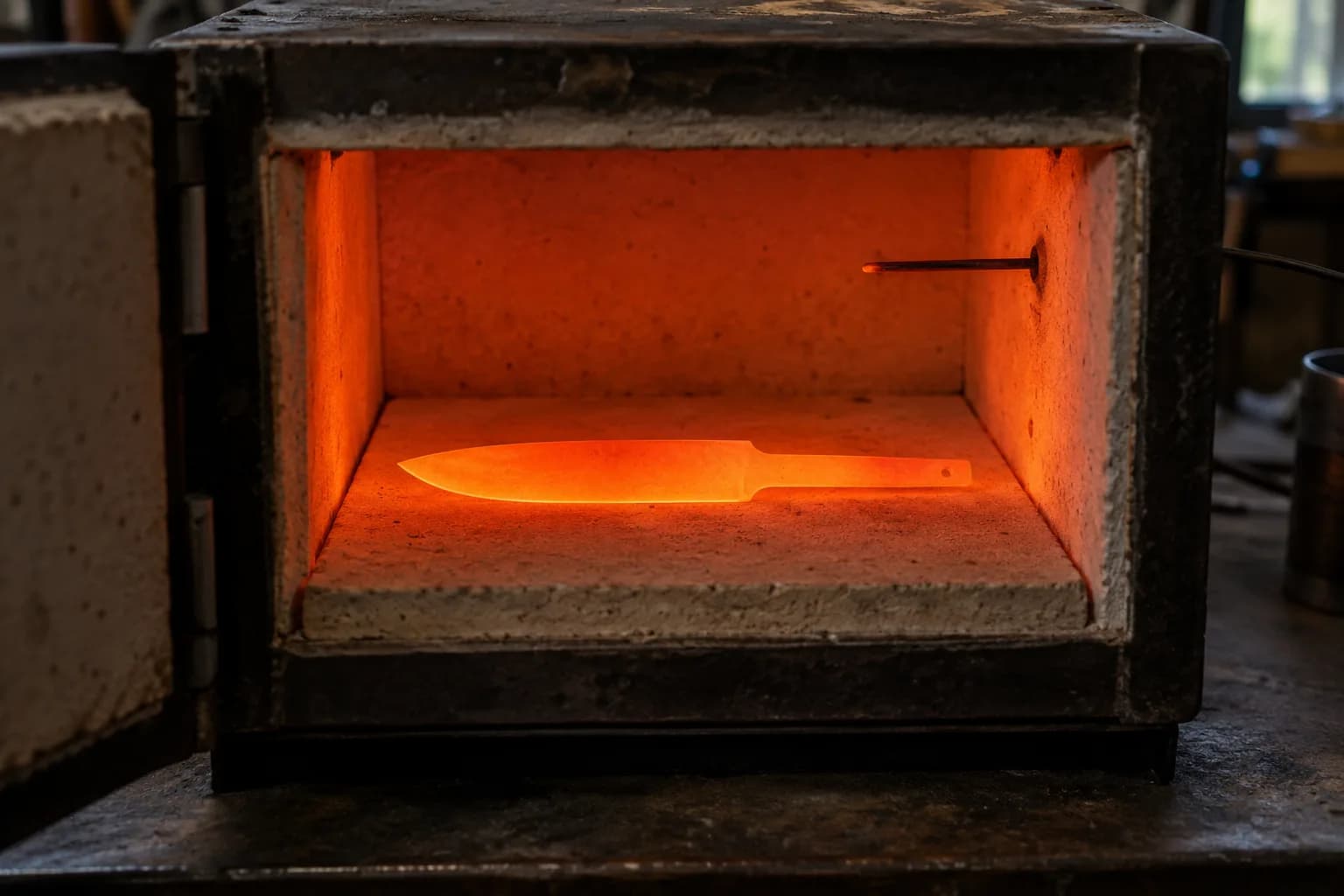
A heat-treat program is just steps: ramp rate, target, hold. The working pattern for most blade work: full-speed ramp to an equalization step just below target (an 1100-1400°F pause lets thick and thin sections even up — optional for thin blades, cheap insurance for anything with mass), then to the austenitizing target, hold for the soak, end. Program the SOAK, not just the temperature — the soak is the whole point of owning the machine. Write one program per steel you actually run and name them; re-typing temperatures at 6am is how wrong numbers happen.
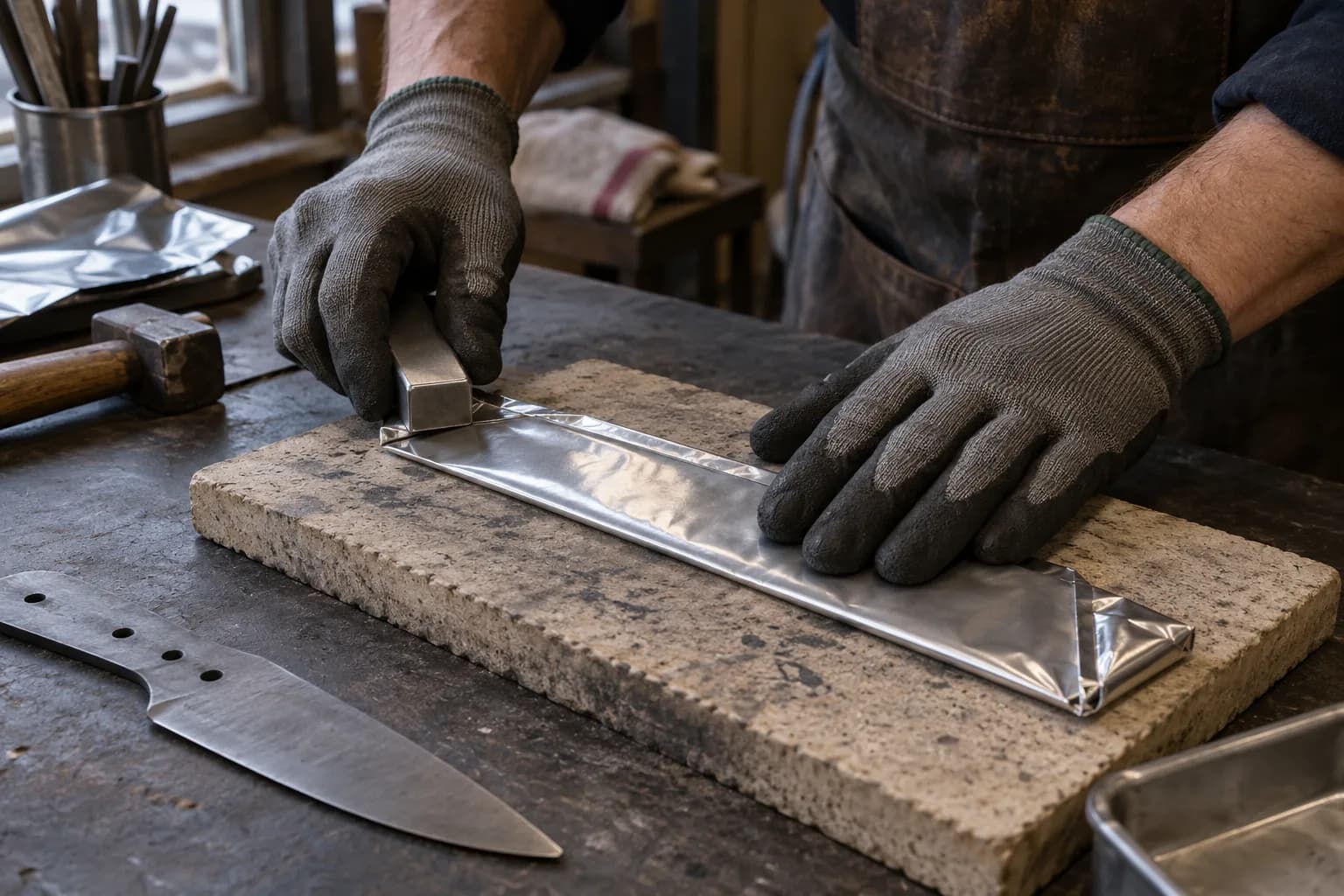
Air-hardening and stainless steels heat treat inside stainless tool wrap (foil) to block decarb and scale: fold an envelope, crimp tight, leave a corner to grab. Carbon steels headed for an oil quench skip the foil (you cannot unwrap fast enough) and accept light scale or use an anti-scale compound. The numbers themselves — austenitize, soak minutes, temper — live on each steel’s database page and they are not negotiable folklore: O1 wants 1475°F and a real 10-15 minute soak; AEB-L wants its high soak; MagnaCut runs hotter still. The kiln’s gift is that following the datasheet becomes trivial.
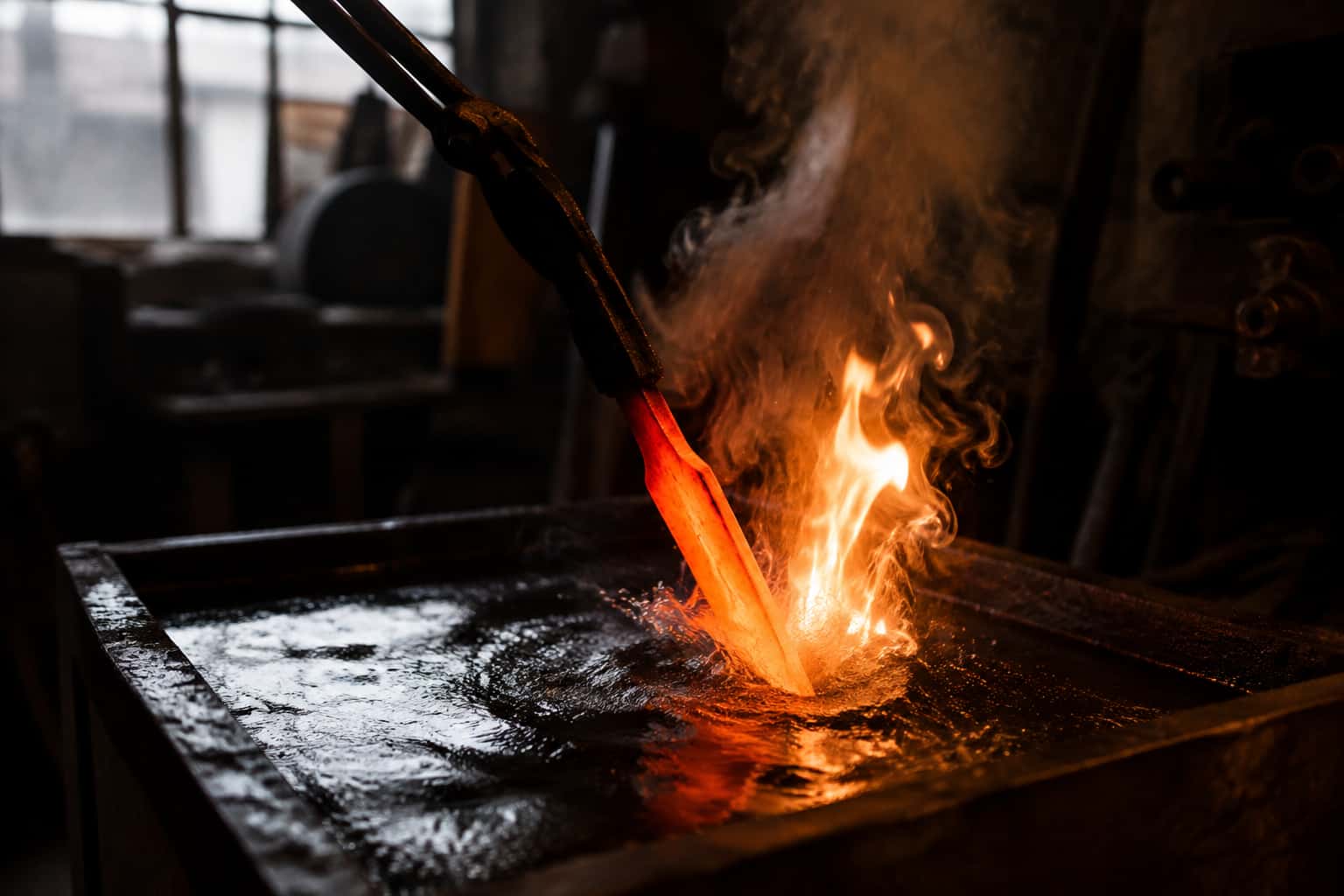
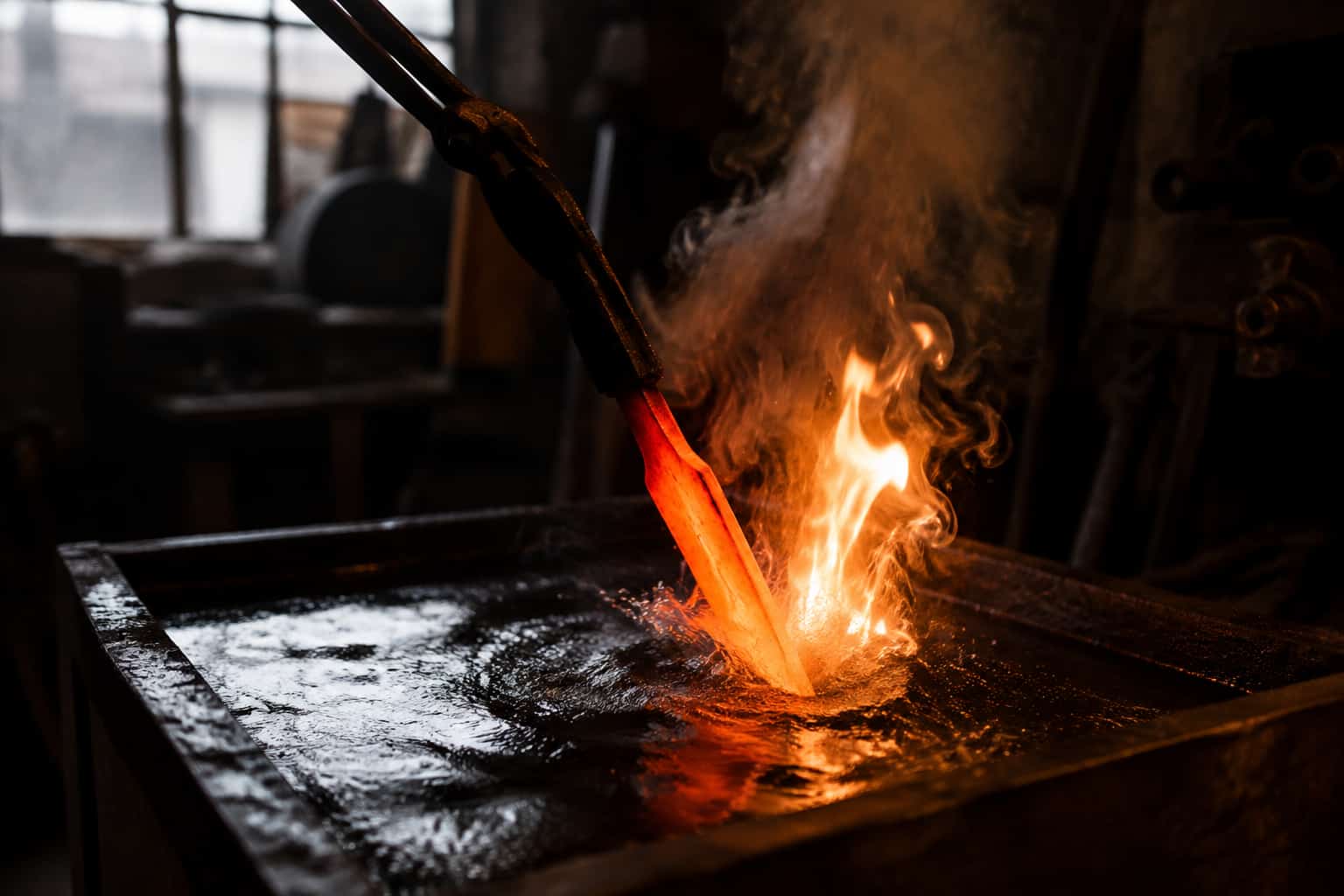
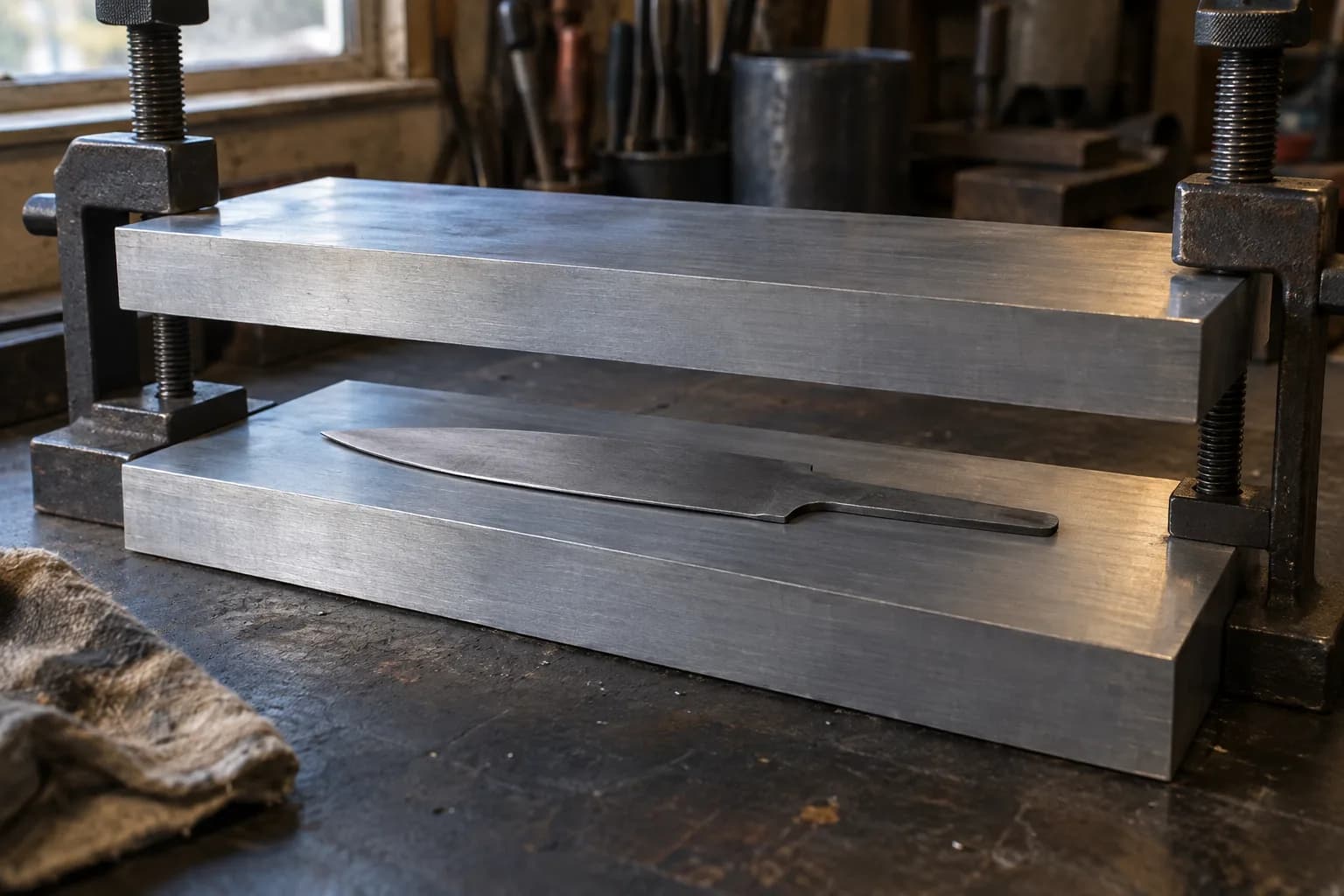
Two quench families leave a kiln. Oil steels: door open, tongs in, straight to the correct-speed oil — seconds matter, so the tank stands at the kiln’s elbow, per the shop-layout habit. Air/plate steels (the stainless class): out of the foil and into aluminum plates — the Quench Master vise exists for exactly this moment, clamping blades up to about 14 inches flat between its plates. Cold treatment (dry ice or cryo) follows promptly on the steels whose pages call for it — retained austenite does not wait politely.
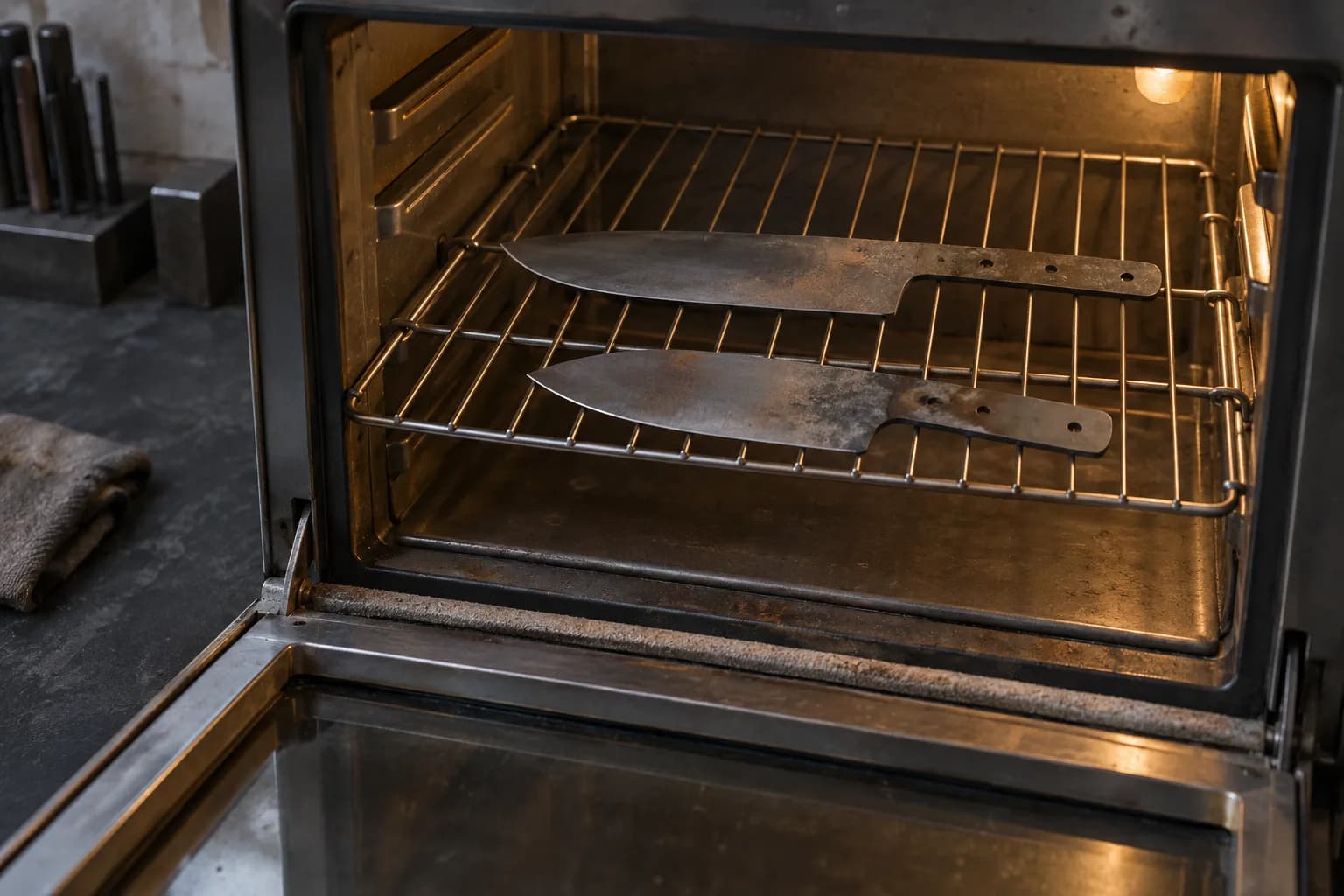
Most kilns temper too, though a toaster oven verified with a separate thermometer serves fine at tempering temperatures. Two cycles, two hours each, at the steel’s number — and the kiln’s precision matters again at the top of the hardness range, where 25°F is a full point of HRC. The temper color chart stays useful for spine draws; the oven does the real work.
The kiln removes temperature guessing; the log removes everything else. Steel, program, soak, quench, temper, tested hardness (files or a tester), result — one line per blade. Three months of lines beats any forum thread, because it is YOUR shop’s data. That log, plus a deliberate hardness target, is the entire difference between owning a kiln and using one. No kiln yet and no forge either? Send-out services run these exact protocols by the batch.
Keep reading
Three more from the same bench.
Torch heat-treating and forge heat-treating both work, but a dedicated heat-treat kiln is what actually makes results repeatable, hitting the same target…
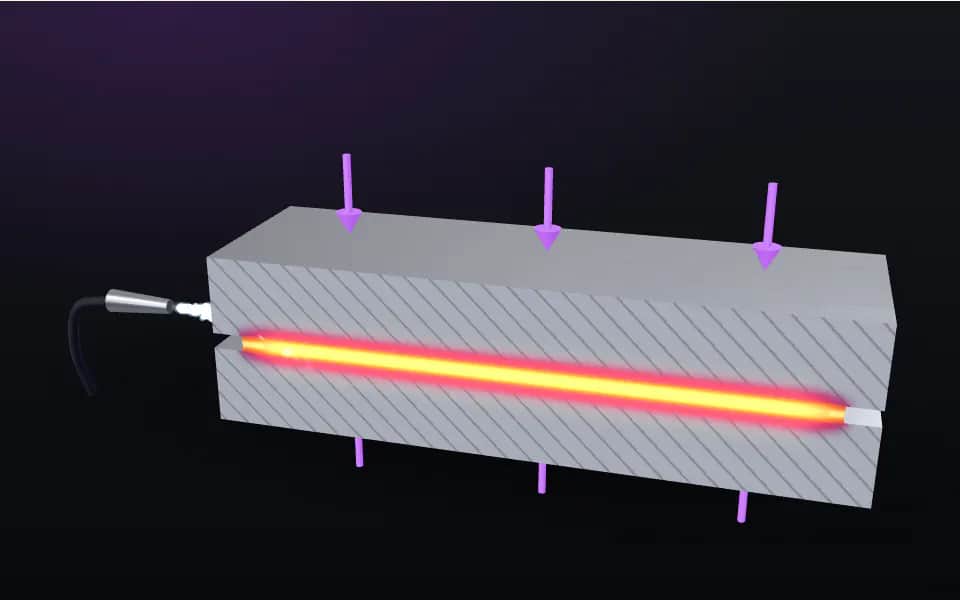
Somewhere in every stainless steel’s heat-treat sheet is a phrase that confuses first-time kiln owners: “plate quench.” No oil, no dramatic hiss — the…

“Do I need a $1,000+ kiln to heat treat a knife?” No — and pretending otherwise keeps a lot of people from ever making their first blade. Makers hardened…
Same bench
I machine the parts, hand-assemble, track and test Torus grinders in Sterling, Illinois. Most orders ship in seven to ten business days from time of order.

Current dual-axis platform with a fiber-laser-cut 6061 chassis and single-knob tracking.

Current dual-axis platform with a steel chassis, more mass and less vibration.

Prior-design aluminum chassis, 90-degree tilt and 1.5-inch tooling arms.

One-man shop
I answer my own email. Tell me the steel, the machine and what it is doing, and I will tell you what I would try next.