
Blade Design
EDC Pocket Knife Geometry: The 20-Degree Default
An EDC blade leads the hardest life in the knife world: cardboard by the mile, plastic strapping, food at lunch, a staple it never saw coming — owned by…
Folding Knives
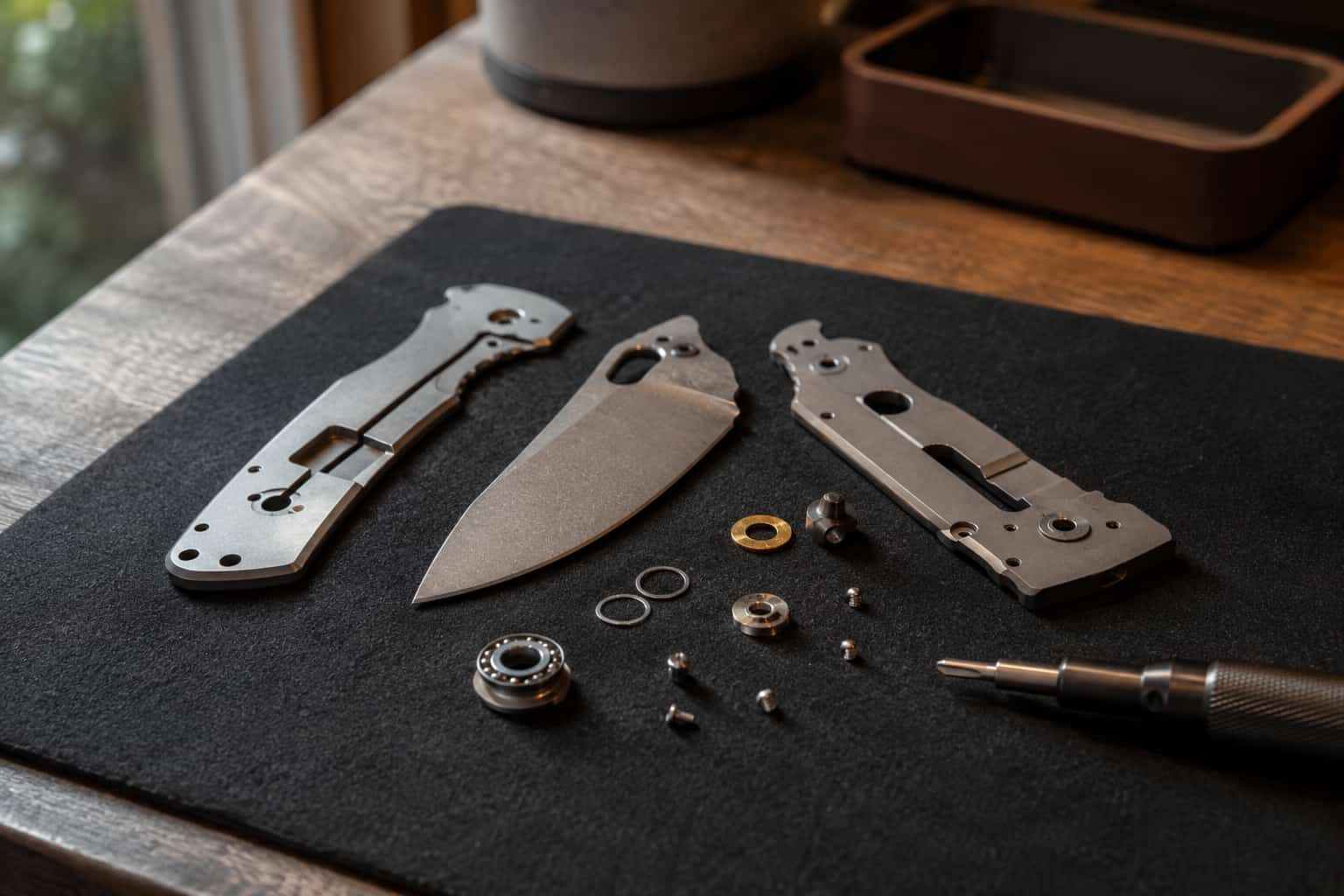
The folding knife as a machine: blade tang, pivot, washers, detent, lock, liners, scales, backspacer and clip - what each part does and why fit rules.
2 min readWritten by Rich LinvilleFree to read
A fixed blade is a shape; a folder is a MACHINE — a dozen parts in moving agreement, where a thousandth of an inch is the difference between glass-smooth action and a rattling disappointment. Fixed blades teach grinding; folders teach fitting. This is the parts map, and the section’s front door.
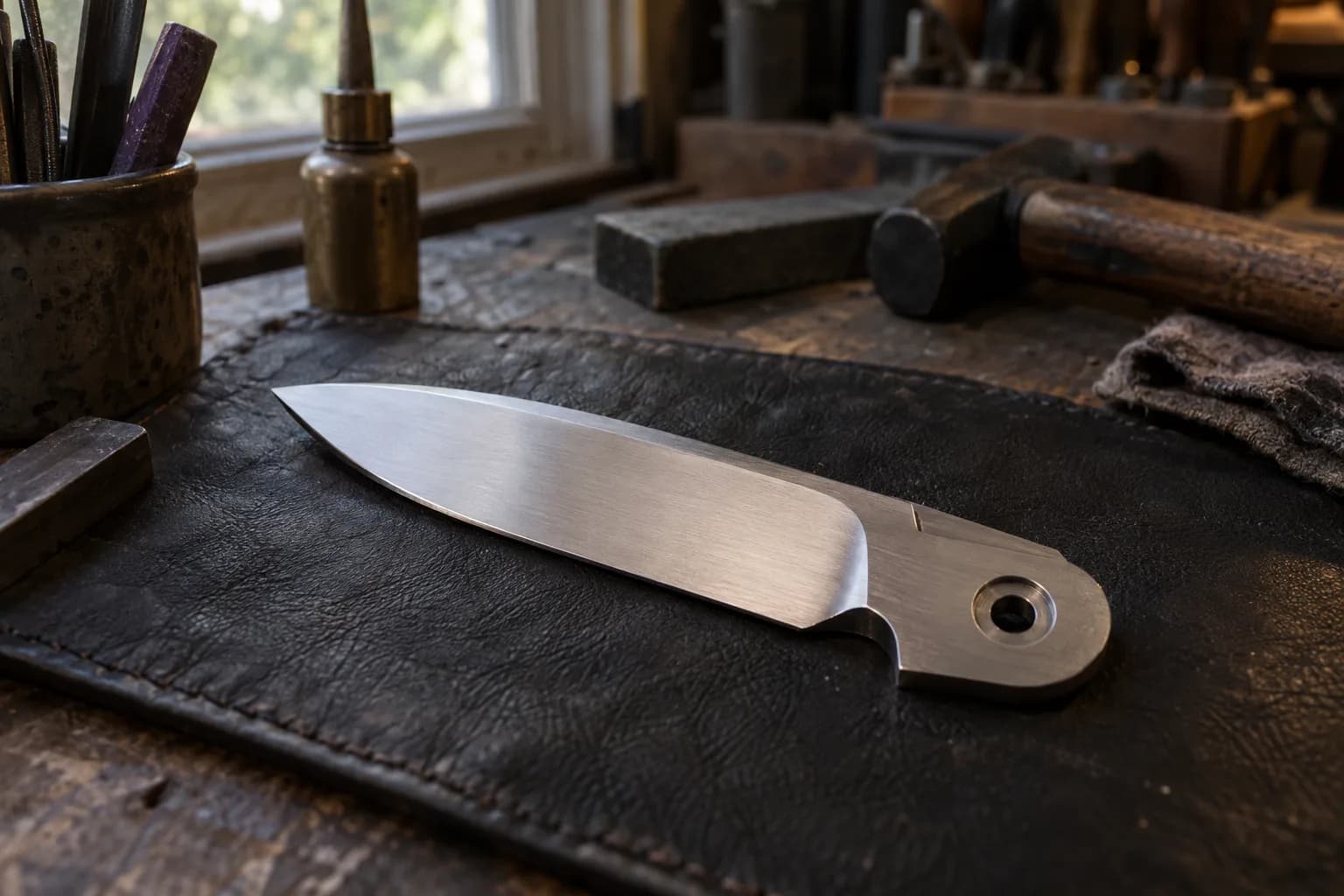
A folder blade is a normal blade wearing a round tail: the tang becomes a disc around the pivot hole, and that disc’s geometry runs the whole machine. Its radius must be constant around the pivot (or the blade binds and gaps through its arc), its flats must be parallel and burr-free (they ride the washers), and its perimeter carries the working stations: the detent track and hole on a liner lock, the lock-face stop flat, the kick or stop-pin flat that sets both open and closed positions. Blade steels are the usual suspects — fine stainless dominates for pocket duty — but the tang grinding demands are new, per Folder Blade Geometry.
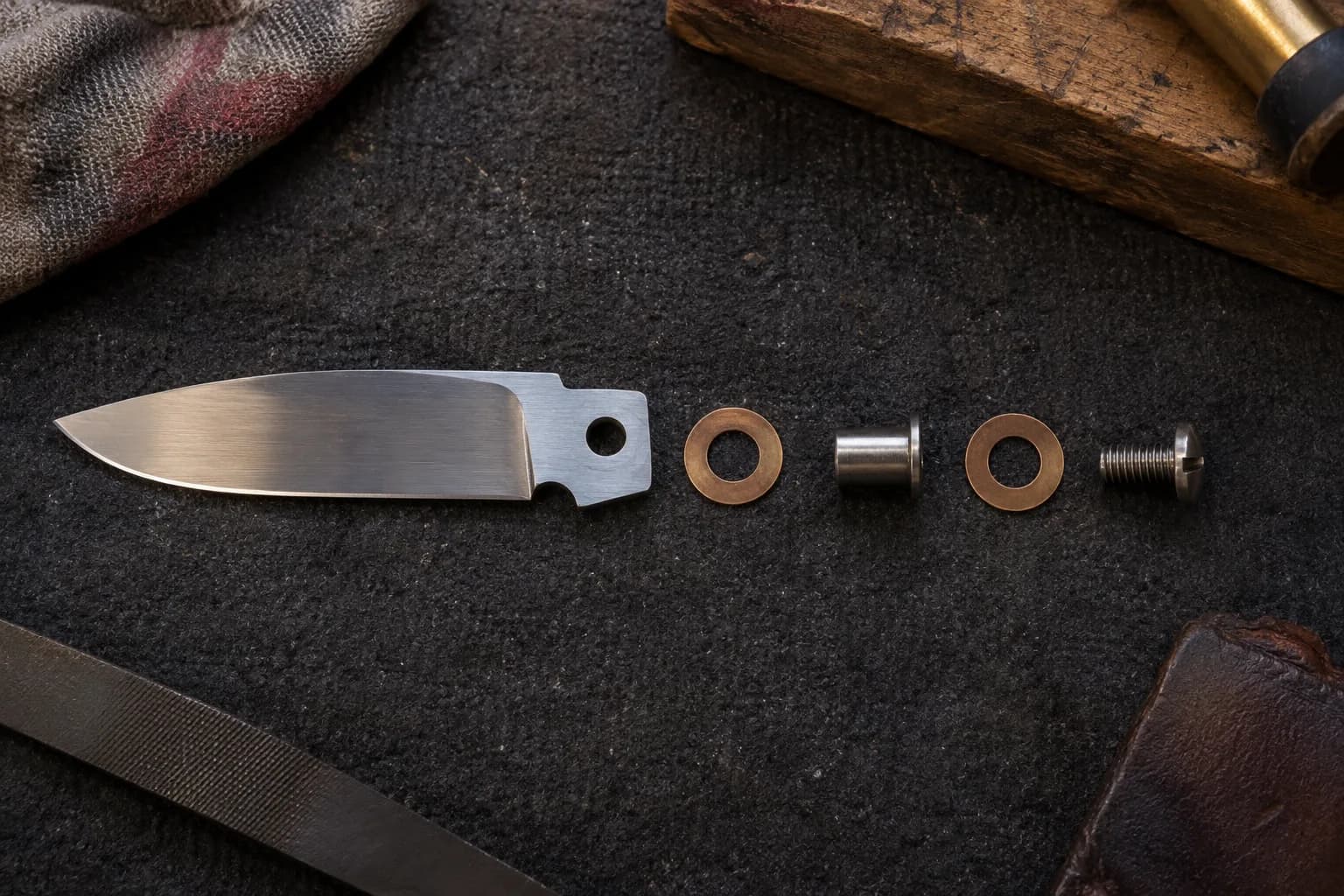
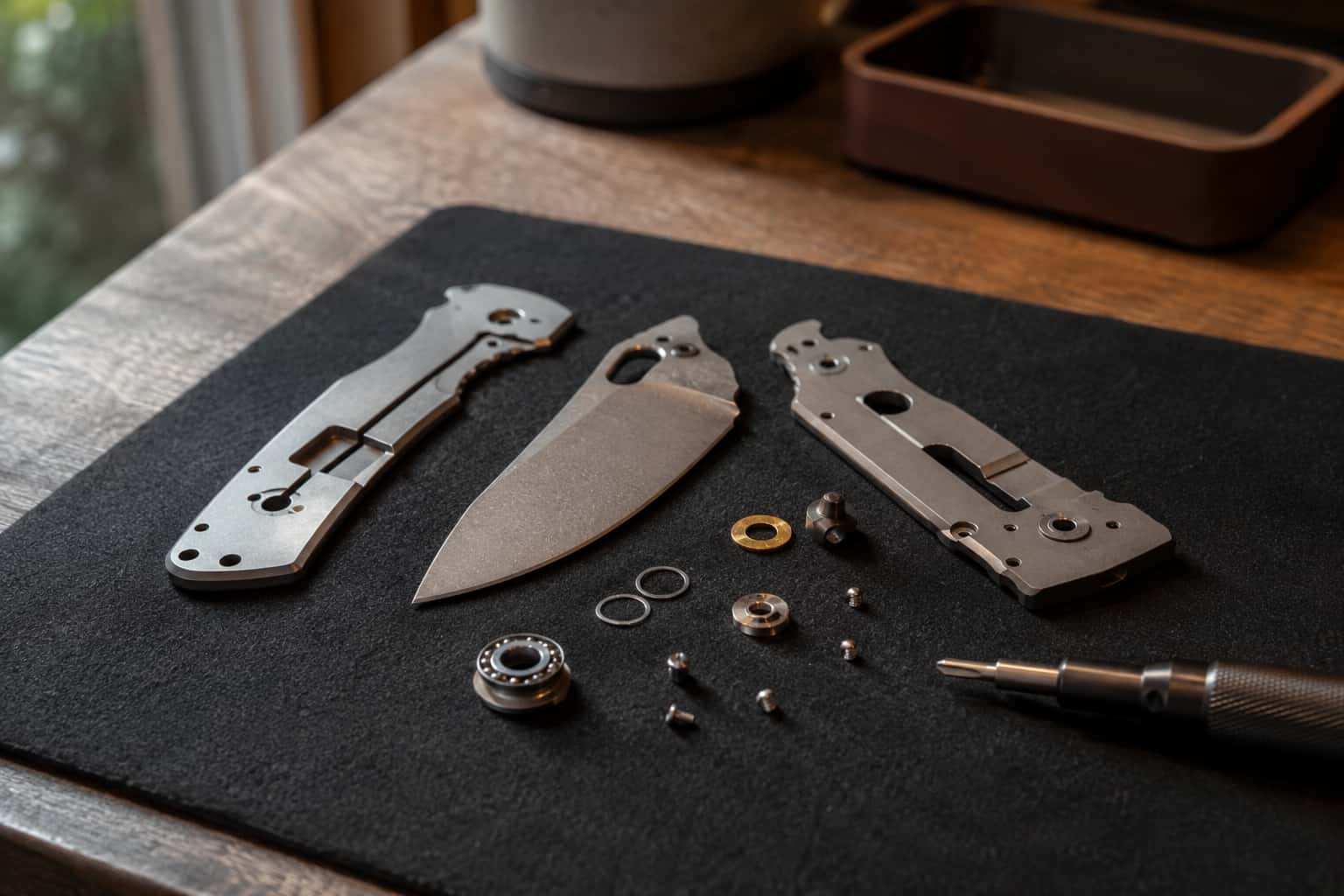
The pivot is the axle: a barrel and screw the blade rotates on, with washers or bearings on each side spacing blade from liners. Phosphor bronze washers are the traditional smooth-and-durable answer; ball bearings the modern flipper-fast one. The whole action lives in this stack’s fit: pivot snug, washers flat, tang polished — and the classic beginner discovery is that action quality is 90% THIS, not the lock.
The detent — a small ball (commonly ceramic or steel) pressed into the lockbar, riding the tang and dropping into its hole at closed — is what keeps a modern folder closed in the pocket and gives the crisp open. The lock (liner, frame, back lock, slipjoint’s spring — the full family in Locks Explained) is what keeps it open in the hand. Tuning both is its own craft: Detents and Action Tuning.
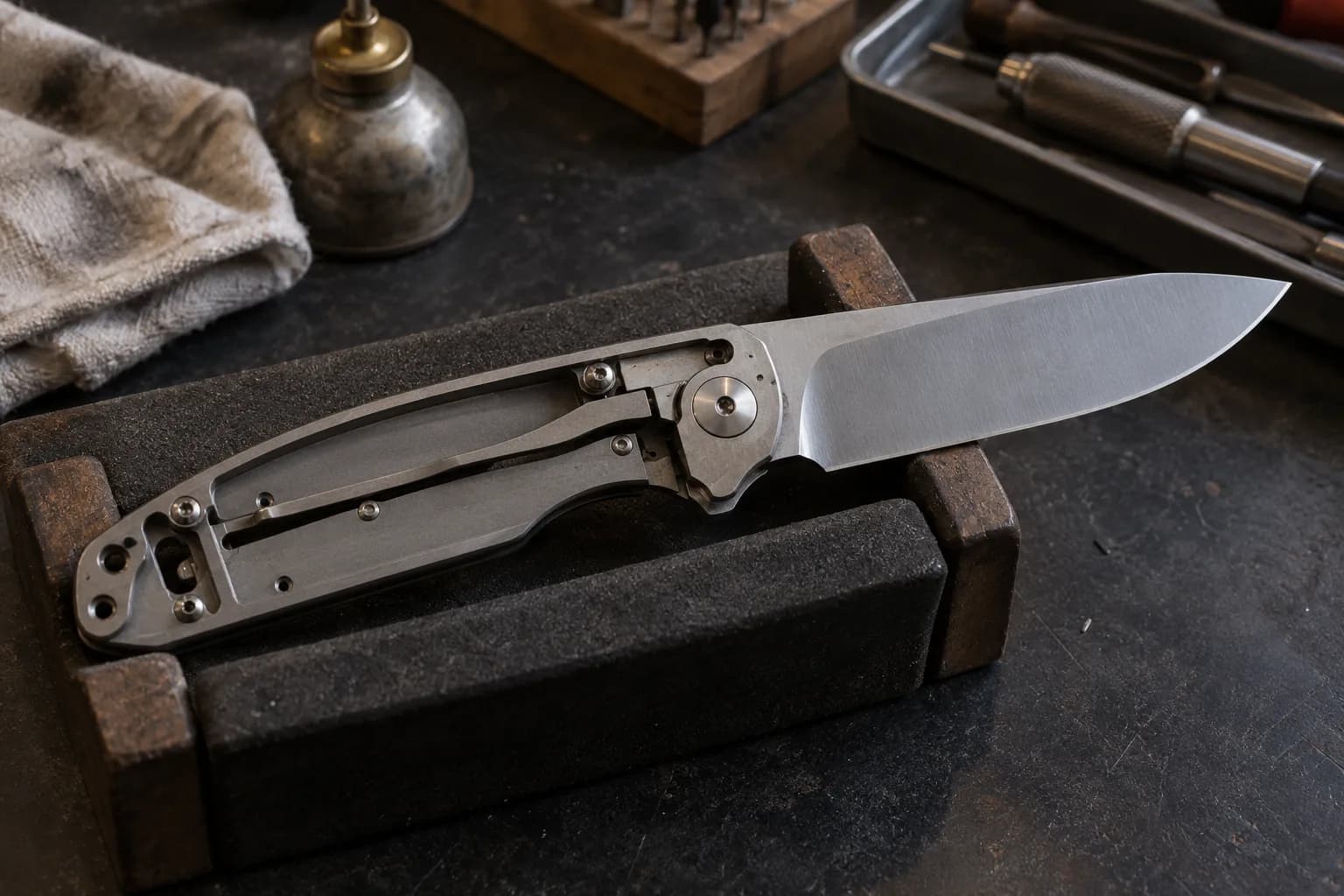
Liners (commonly titanium or stainless sheet) are the frame rails everything bolts to; scales dress them; a backspacer or standoffs hold the spine spacing. On frame locks the liner IS the scale is the lock. Everything is screwed (2-56 and torx-head hardware are the shop standards), which makes folders serviceable — and buildable in stages. The clip is the last bolt-on, and pocket real estate its whole design brief.
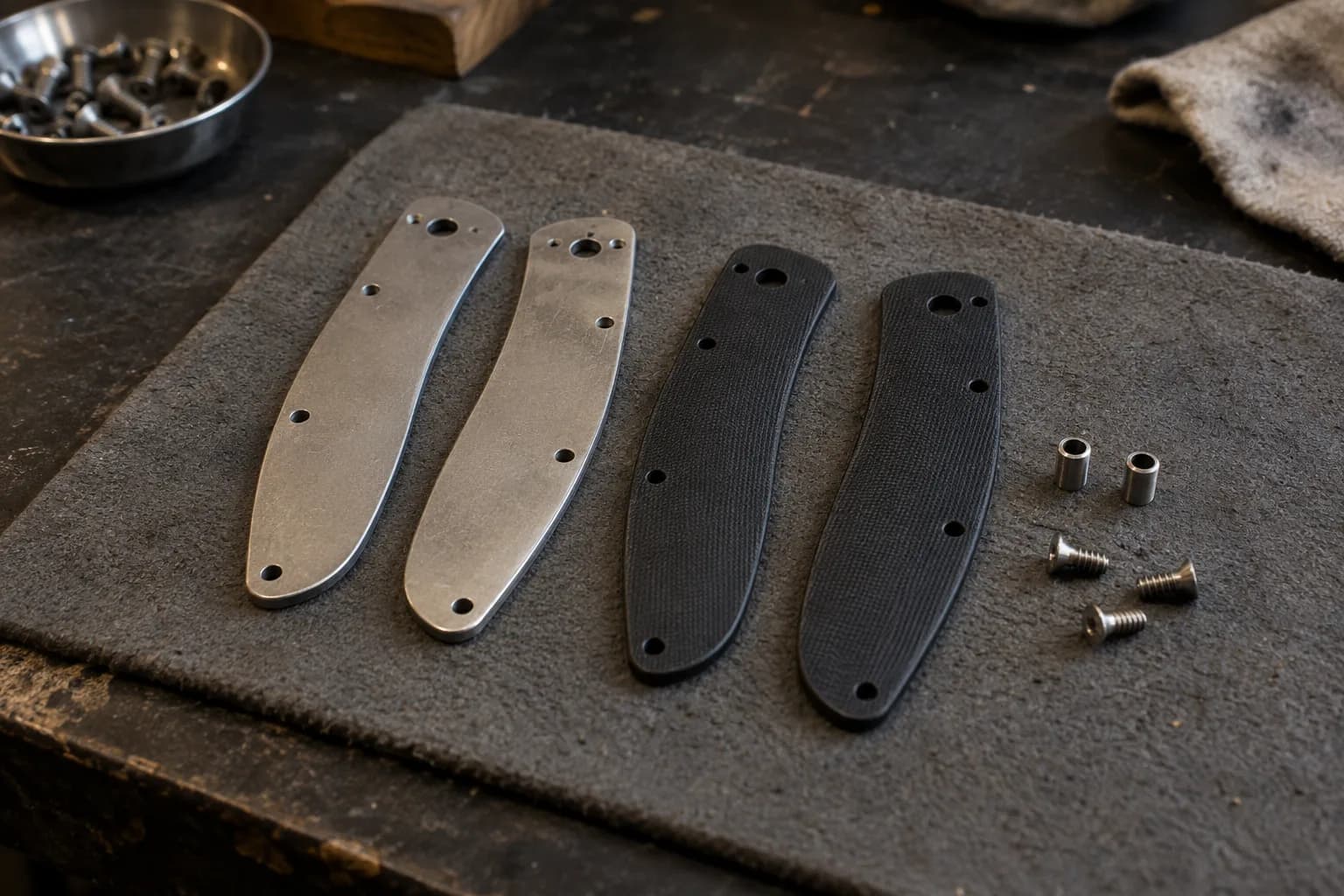
What separates a folder that works from one that delights: blade centered in the closed channel, zero side-to-side play at the pivot, no lock rock, detent crisp but not nail-breaking, action smooth through the whole arc. Every one of those is a fitting operation measured in thousandths — which is why the honest build path starts simple: a friction folder first, the lock work later. The section map from here: locks, first build, slipjoints, the liner lock build, hardware, and kits versus scratch.
Keep reading
Three more from the same bench.
An EDC blade leads the hardest life in the knife world: cardboard by the mile, plastic strapping, food at lunch, a staple it never saw coming — owned by…
Sharpening is where knifemaking gets humbled: you can grind a flawless blade and still hand someone a knife that won’t slice paper. The good news …
Belts are the single biggest recurring cost in this hobby, and buying the wrong ones wastes money twice: once on belts that wear out fast, and again on…
Same bench
I machine the parts, hand-assemble, track and test Torus grinders in Sterling, Illinois. Most orders ship in seven to ten business days from time of order.
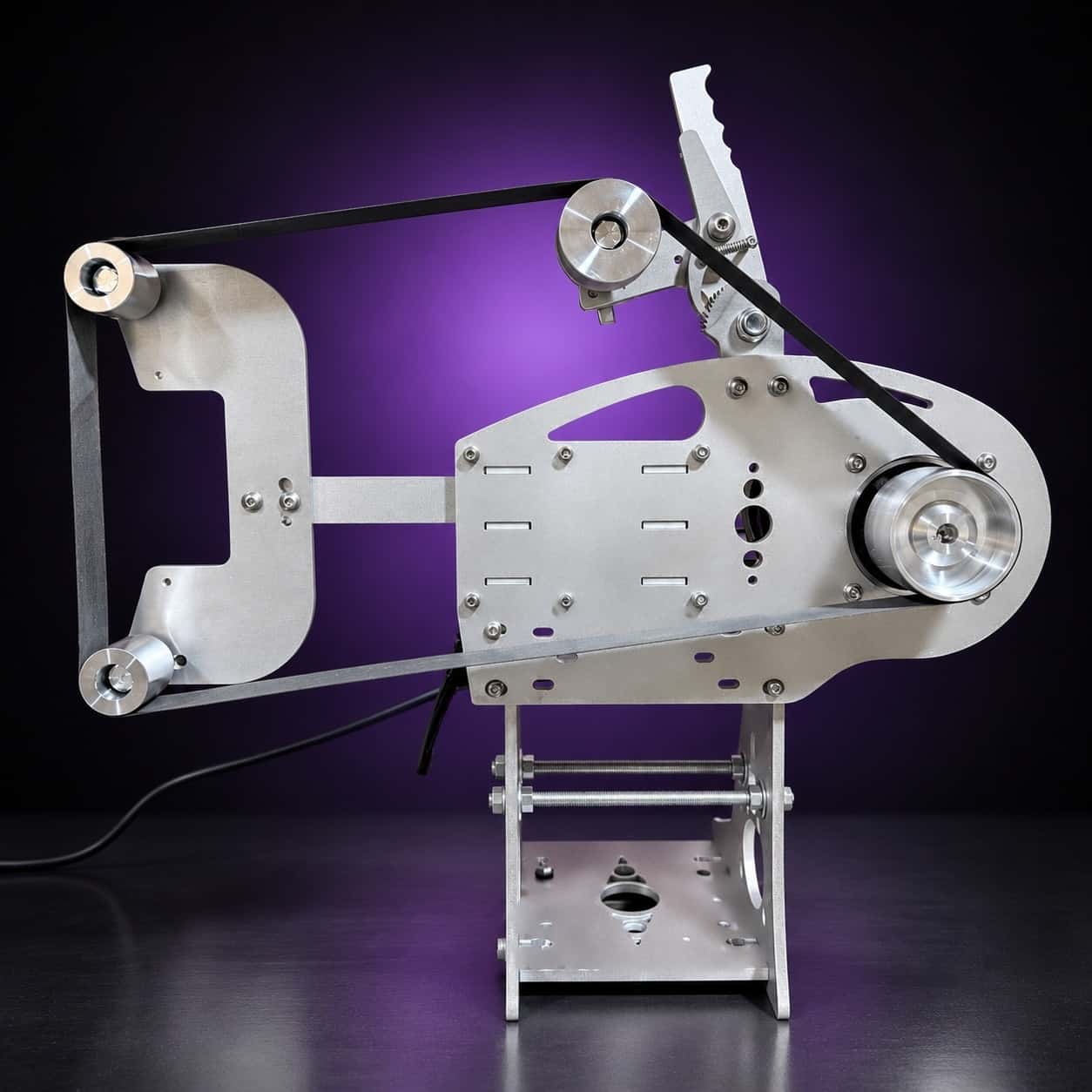
Current dual-axis platform with a fiber-laser-cut 6061 chassis and single-knob tracking.
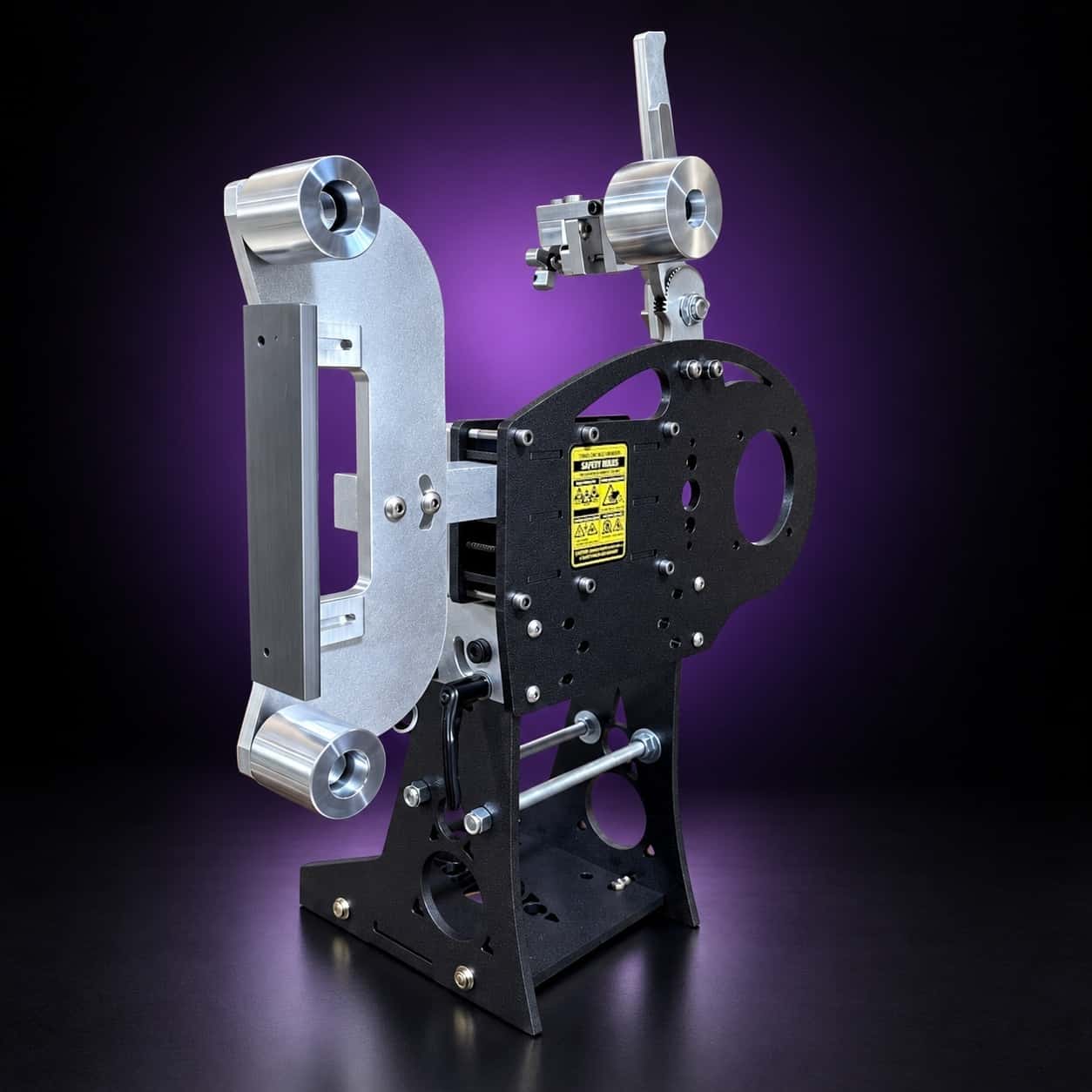
Current dual-axis platform with a steel chassis, more mass and less vibration.
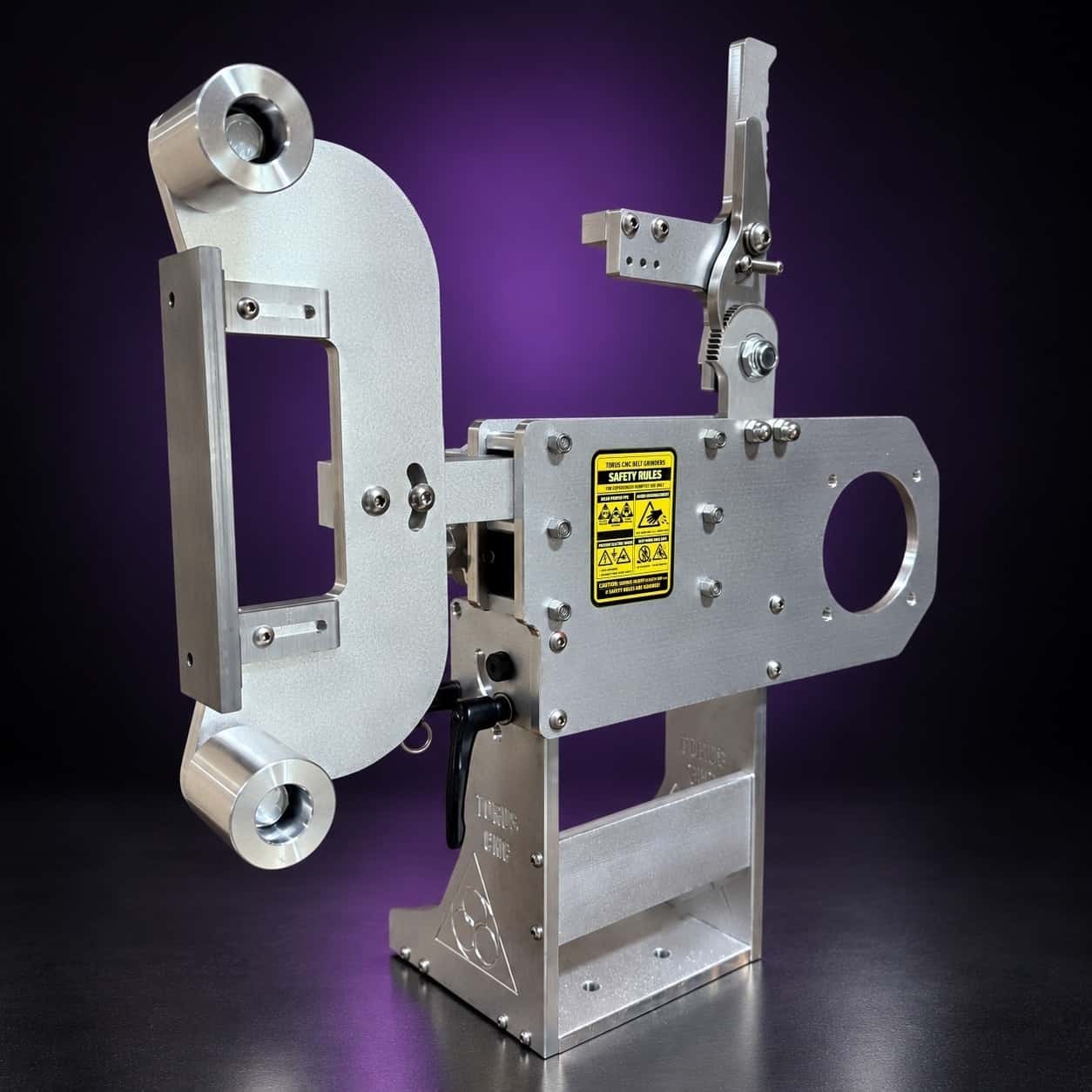
Prior-design aluminum chassis, 90-degree tilt and 1.5-inch tooling arms.
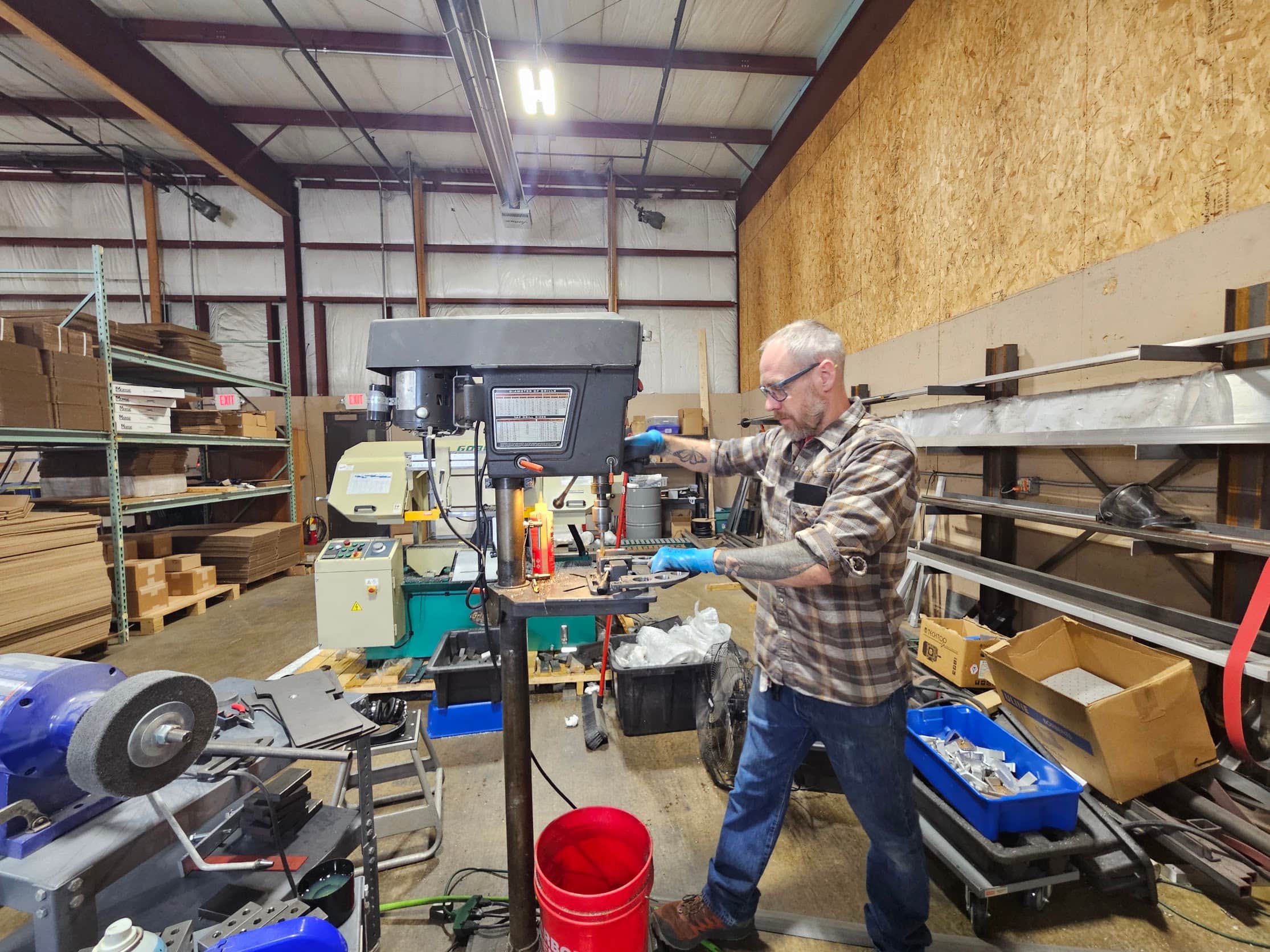
One-man shop
I answer my own email. Tell me the steel, the machine and what it is doing, and I will tell you what I would try next.