
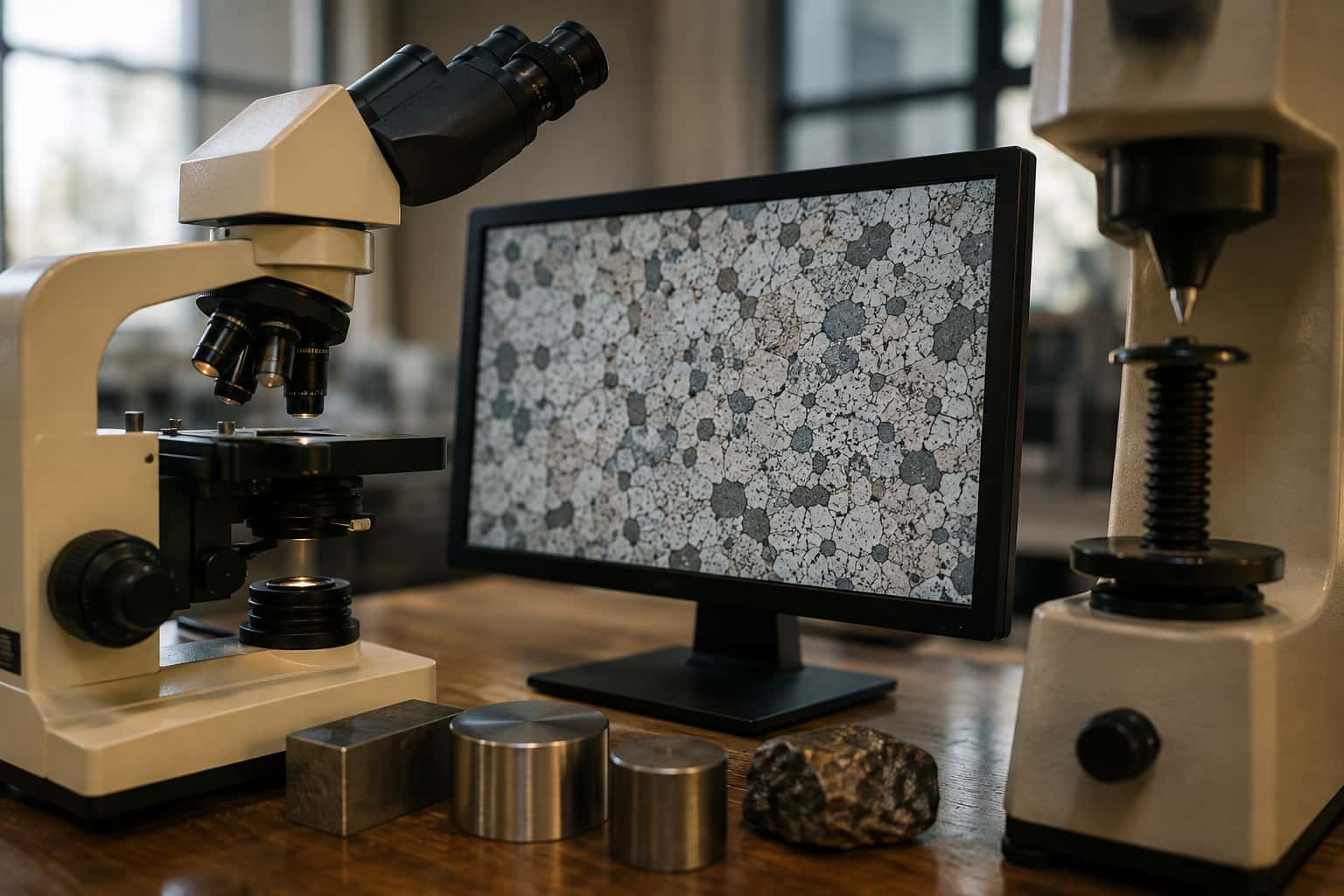
Metallurgy
Carbide Size and Sharpening: Why Some Steels Feel Different
Two steels with similar hardness numbers can feel completely different under a sharpening stone, one glides along smoothly, another feels like it’s…
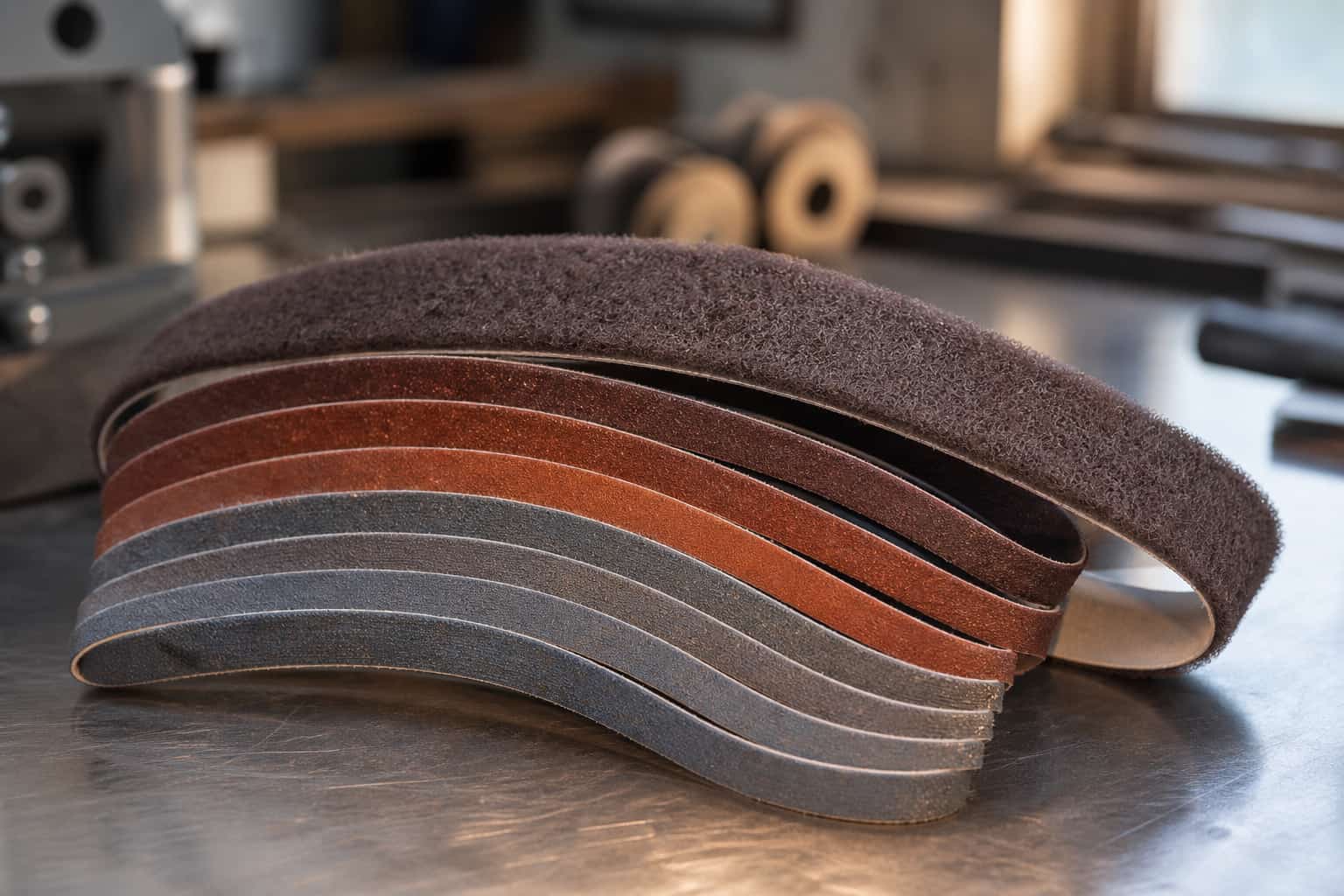
Abrasives
Aluminum oxide, zirconia or ceramic? Build a grit progression from 36-40 for stock removal to 400+ for finishing, and learn what to buy first for a 2x72.
4 min readWritten by Rich LinvilleFree to read
Belts are the single biggest recurring cost in this hobby, and buying the wrong ones wastes money twice: once on belts that wear out fast, and again on the extra time spent fighting a dull or mismatched belt instead of actually grinding. Here’s what to actually buy.
Aluminum oxide is the standard, affordable abrasive, a solid all-around choice for general shaping and most steel work, and the right default for stocking up on mid-range grits. Zirconia alumina cuts more aggressively and holds up better under heavy pressure and heat than aluminum oxide, making it a strong choice for hogging off material fast in the coarser grits, especially on tougher or thicker stock. Ceramic abrasives are the premium option, self-sharpening as they wear (the grain fractures to expose fresh cutting edges instead of just dulling), lasting significantly longer and cutting more consistently on hard, high-alloy, or stainless steels, at a real price premium over the other two types.
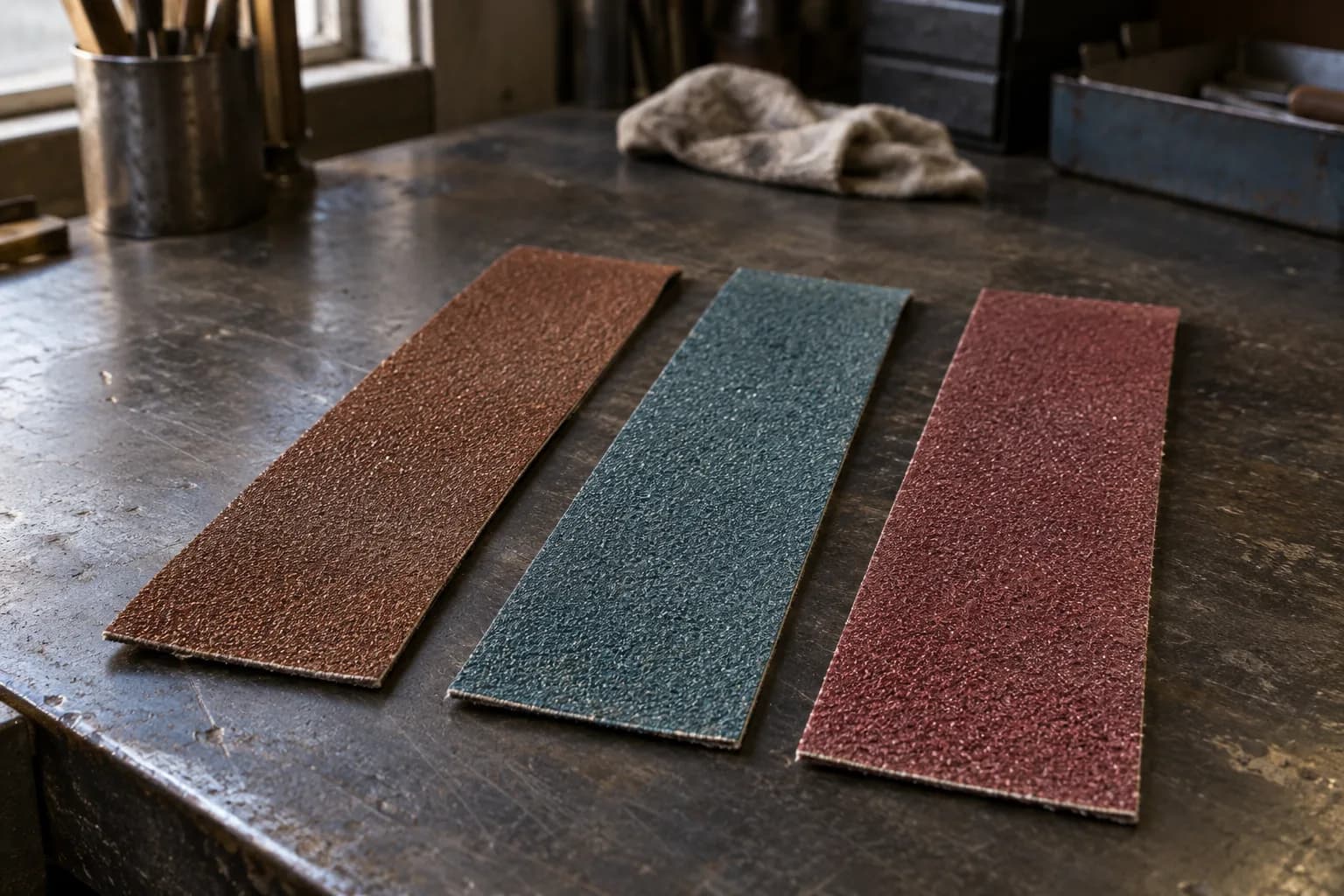
Aluminum oxide is fine for coarse-to-mid grinding on simple carbon steels and general shaping work where cost matters more than maximum belt life. Zirconia earns its keep specifically in the coarse grits (36-60) doing heavy stock removal, where its aggressive, heat-tolerant cutting saves real time. Ceramic is worth the extra cost on higher-alloy and stainless steels (see Carbide Size and Sharpening for why these steels are harder on abrasives generally), and in grits you’ll use heavily, since its longer life offsets the higher upfront price.
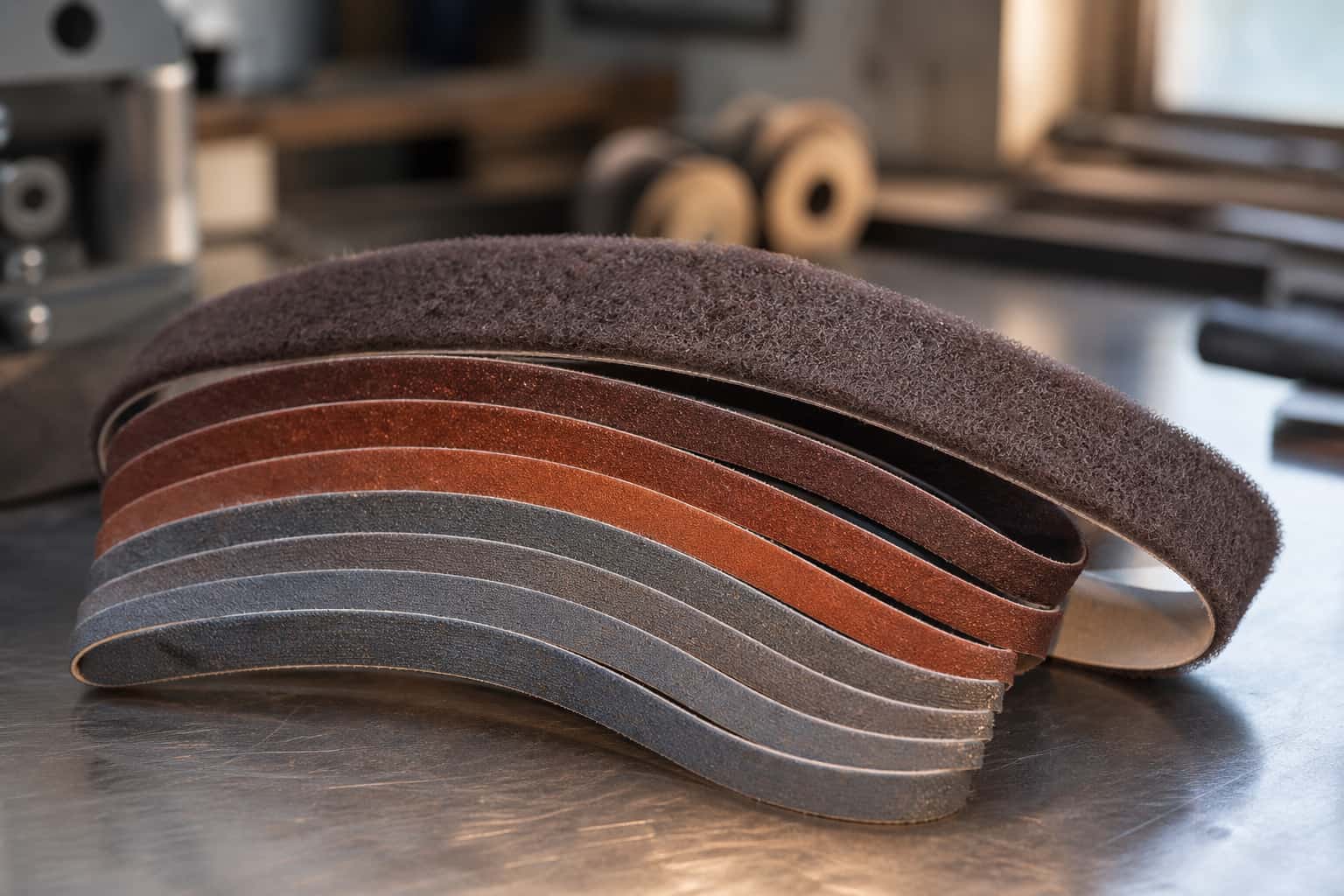
A practical progression for stock removal through finishing looks roughly like: 36-40 grit for aggressive profile cutting and heavy stock removal, 60-80 grit for shaping and establishing bevels, 120 grit for cleaning up the grind before heat treat, 220-400 grit for pre-heat-treat finish work, and 400 grit and up (often into the 600-2000 range) for post-heat-treat finishing and polishing. Skipping grit steps (jumping from 60 straight to 400, for example) leaves deep scratches from the coarser grit that the finer one can’t remove efficiently, plan on stepping through the sequence rather than skipping ahead.
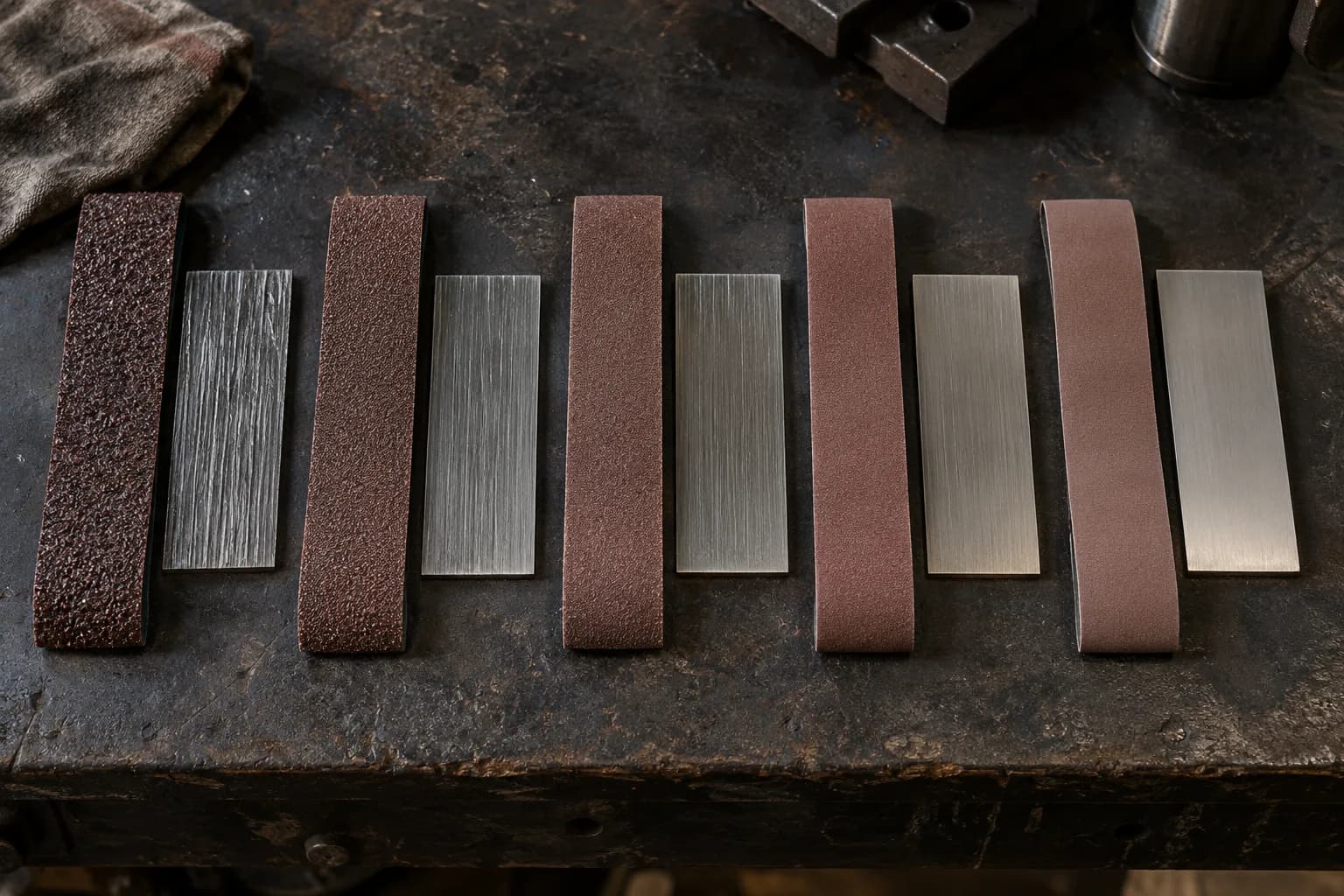
For a first real stock of belts, prioritize depth in the grits you’ll use constantly over breadth across every possible option: several 36 or 40 grit belts (these wear fastest and get used on every project), a good supply of 60-120 grit for shaping, and a handful of 220-400 grit for finishing. Buy the coarse, fast-wearing grits in the largest quantity, and the fine finishing grits in smaller quantities since they last longer per belt and get used more lightly.
Belt backing (the material grit is bonded to) comes in different weights, commonly labeled J-weight (lighter, more flexible, suited to fine grits and contoured work) and X-weight (heavier, stiffer, better for coarse grits and aggressive stock removal where the belt needs to hold up under heavy pressure). Very fine grits are sometimes film-backed rather than cloth-backed, giving an even, consistent scratch pattern important for polishing stages.
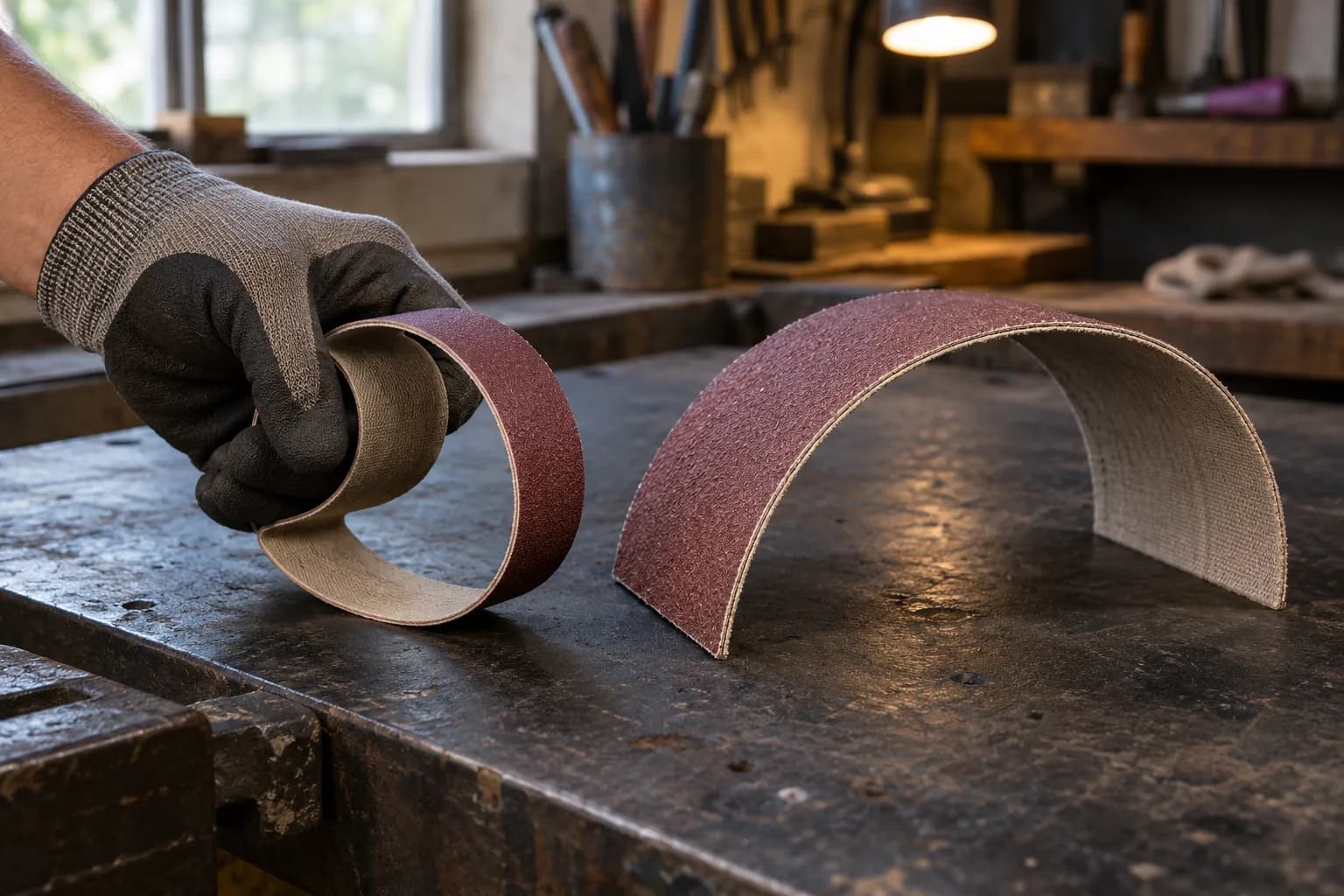
Non-woven abrasive belts (often called Scotch-Brite-style belts) don’t fit the standard grit numbering and are used for blending, deburring, and creating a uniform satin finish rather than removing significant material, genuinely useful once a blade reaches the finishing stage. See Blade Finishes Explained for how these fit into an actual finishing process.
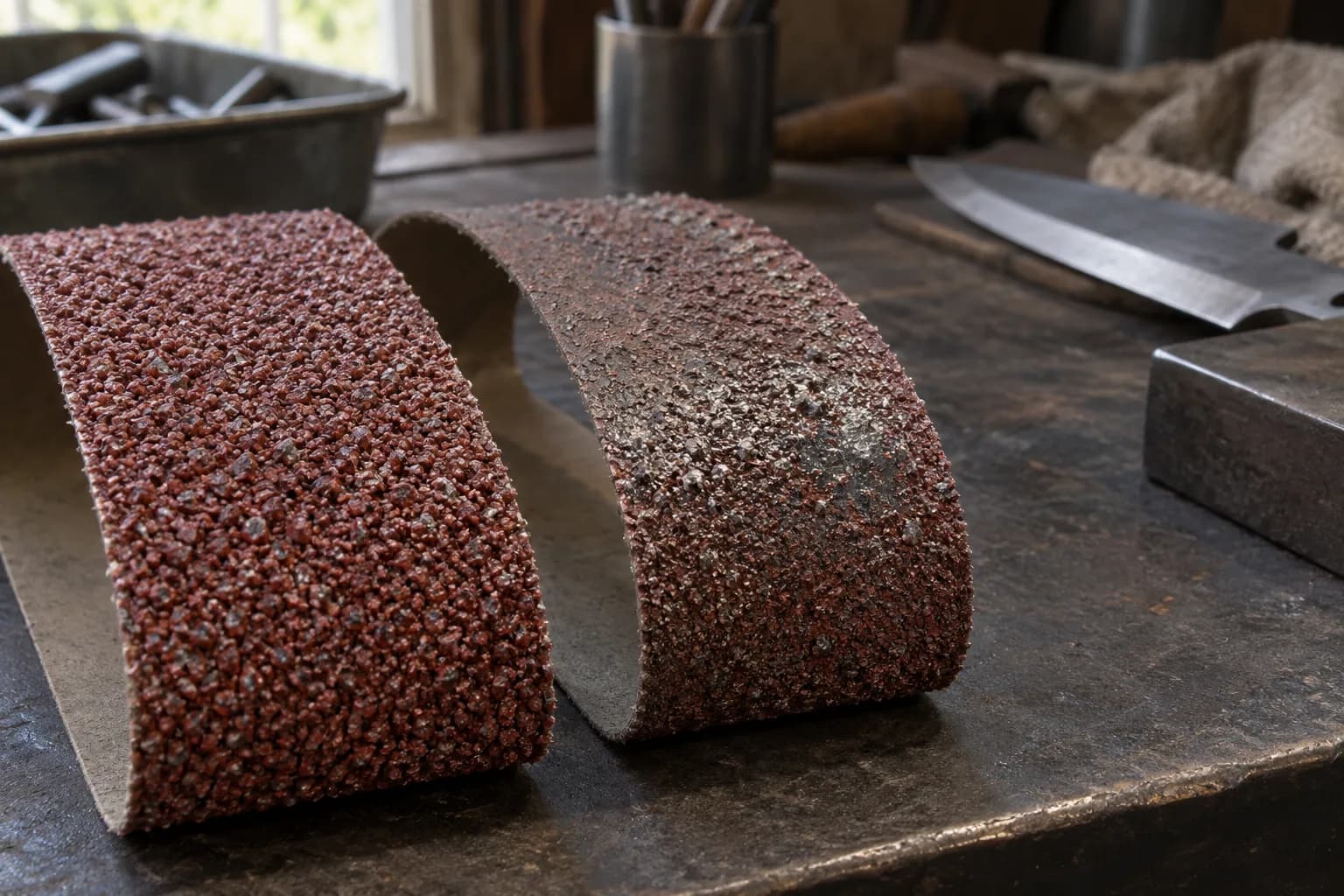
A coarse belt used for heavy stock removal wears out fastest, sometimes within a single blade’s worth of aggressive grinding, while fine finishing grits last considerably longer since they remove much less material per pass. A belt that’s glazed (shiny, no longer cutting) or visibly loaded with metal is done, continuing to use it just generates heat and wastes time; see Belts Burning, Glazing, or Dulling Too Fast for the full troubleshooting picture.
Not necessarily to start. Aluminum oxide is perfectly capable for learning on simple carbon steels; ceramic becomes worth the added cost once you’re regularly grinding harder, more alloyed steels where belt life and cutting consistency actually pay for the price difference.
Buy more coarse-grit belts than you think you’ll need, they wear fastest and get used on every project, and a modest supply of the finishing grits, which last longer per belt. Running out of a 40-grit belt mid-project is a far more common problem than running out of an 800-grit one.
Only if you’ll actually use enough of it to benefit from the longer life, a ceramic belt sitting mostly idle doesn’t pay for its price premium the way one in constant heavy use does. Match abrasive type to how much that specific grit actually gets used in your work.
Keep reading
Three more from the same bench.
Two steels with similar hardness numbers can feel completely different under a sharpening stone, one glides along smoothly, another feels like it’s…
The final surface finish on a blade is more than cosmetic, it affects corrosion resistance, how scratches show up over time, and how much grinding and…
Grinding dust is a genuine long-term health concern, not just a mess, and it’s also one of the most-discussed practical problems in maker communities…
Same bench
I machine the parts, hand-assemble, track and test Torus grinders in Sterling, Illinois. Most orders ship in seven to ten business days from time of order.
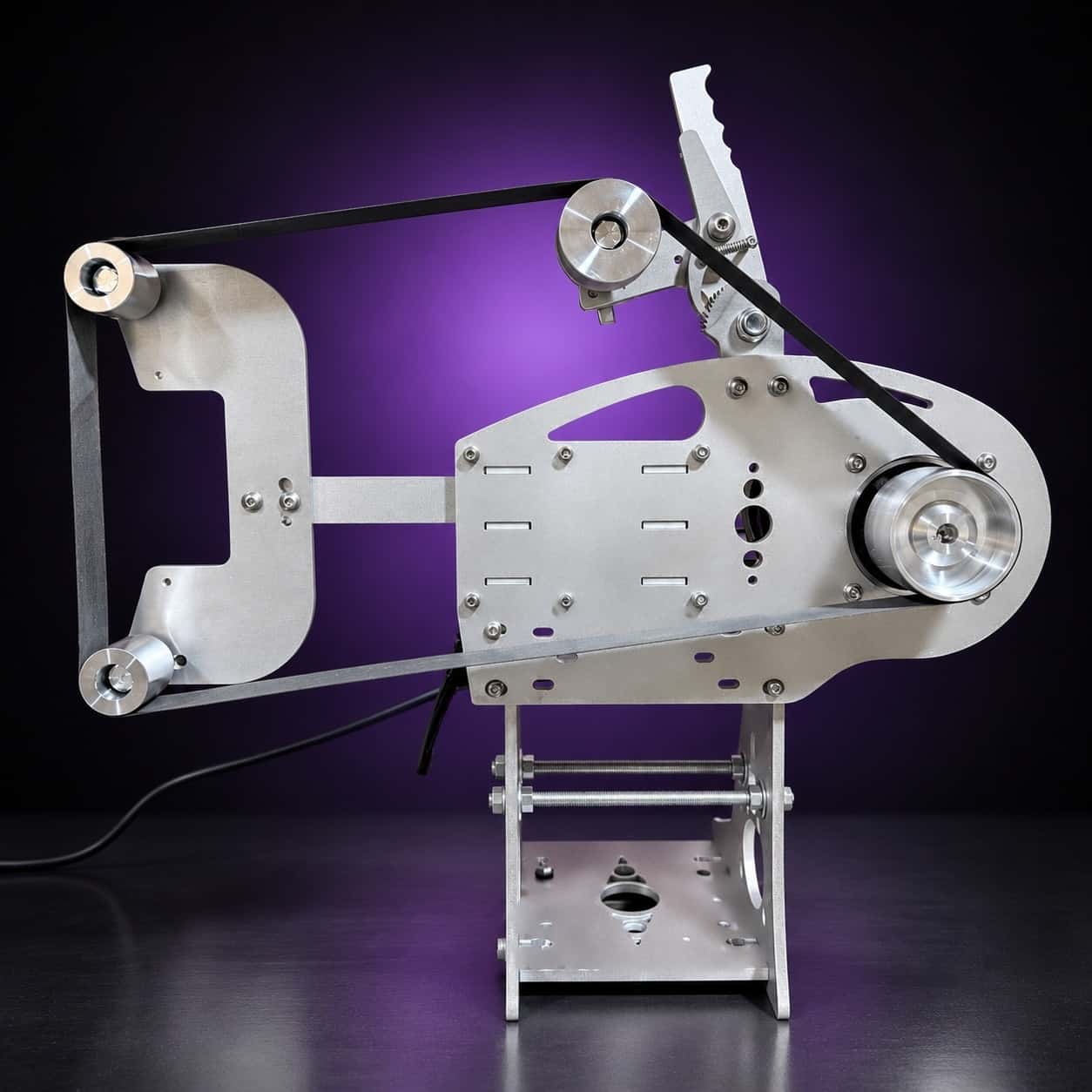
Current dual-axis platform with a fiber-laser-cut 6061 chassis and single-knob tracking.
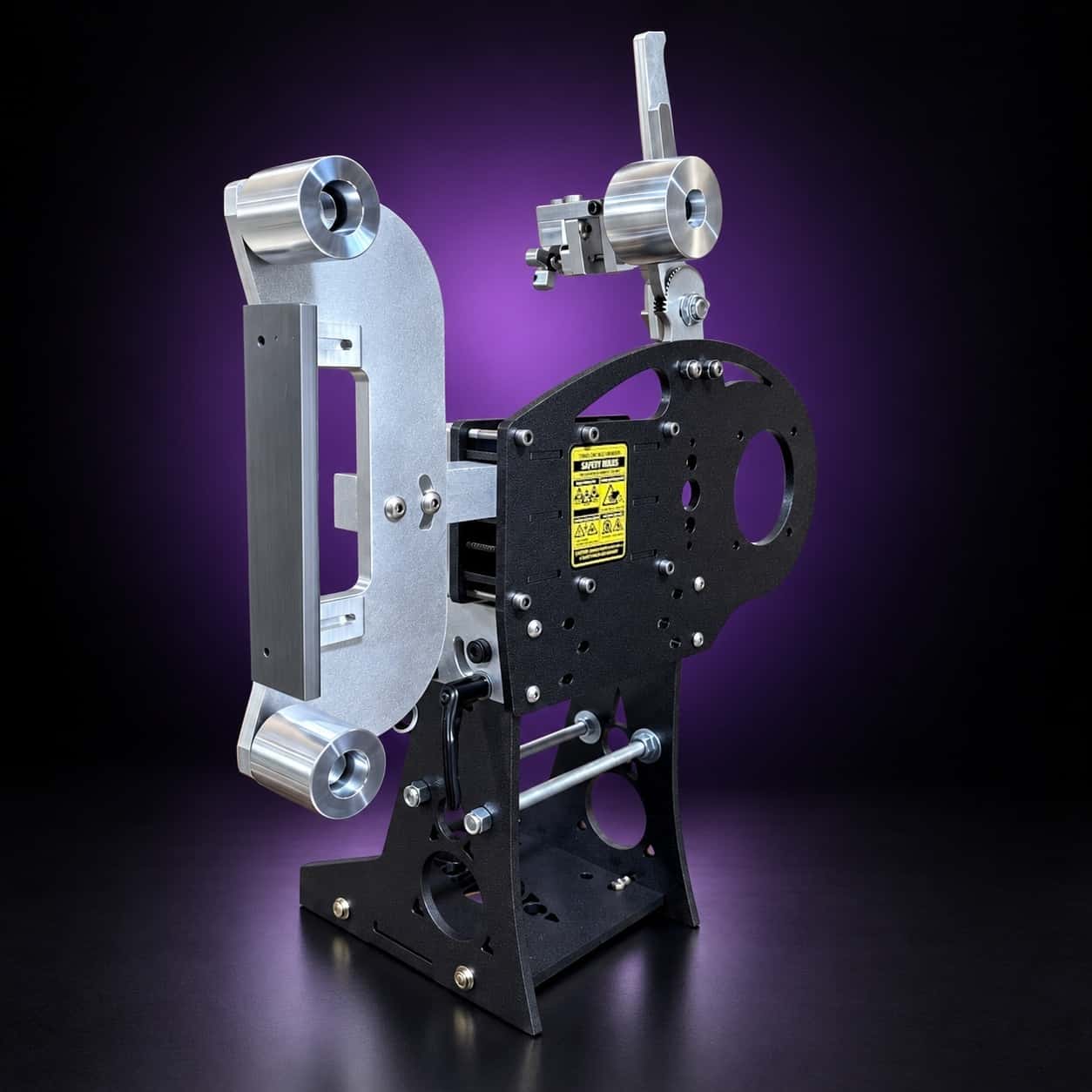
Current dual-axis platform with a steel chassis, more mass and less vibration.
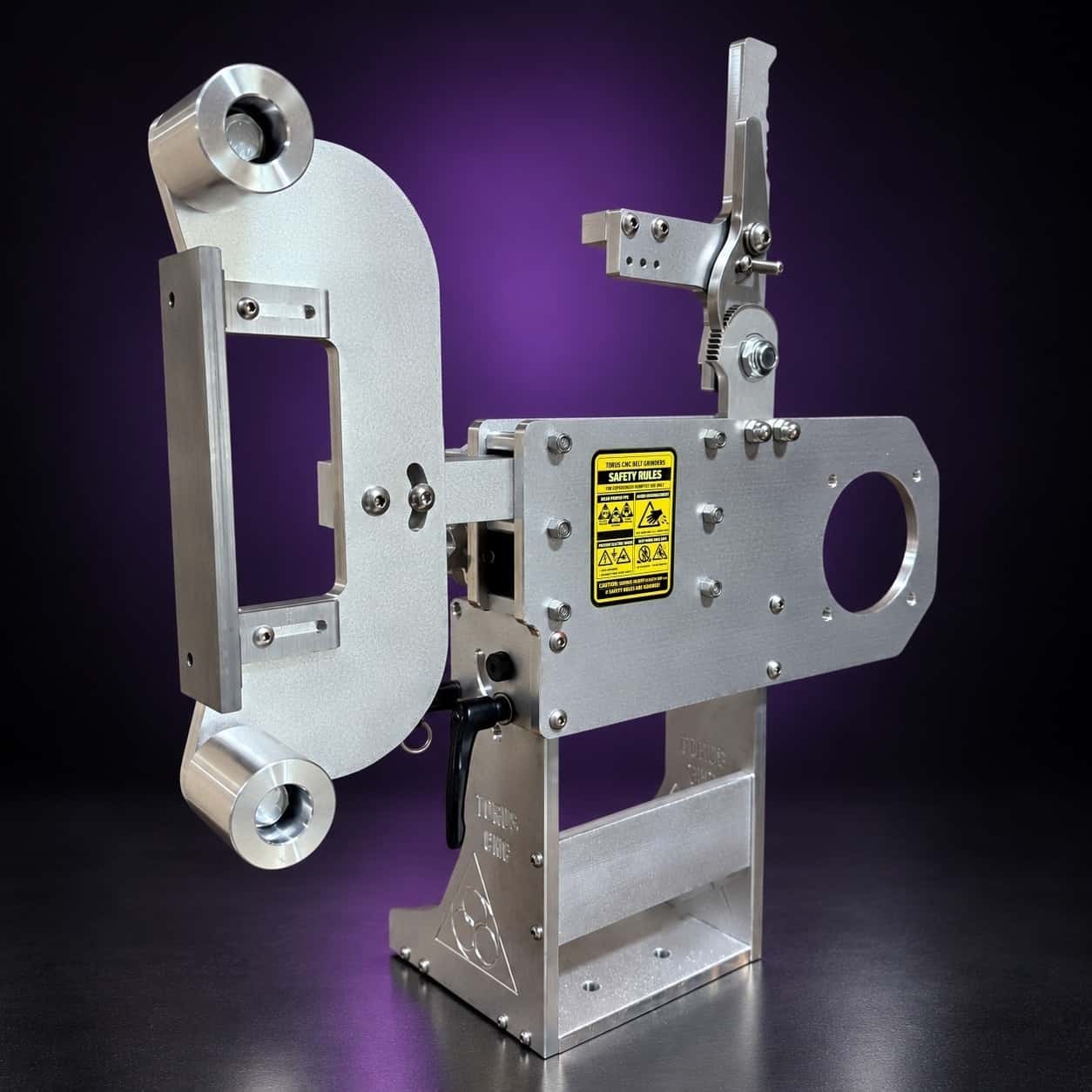
Prior-design aluminum chassis, 90-degree tilt and 1.5-inch tooling arms.
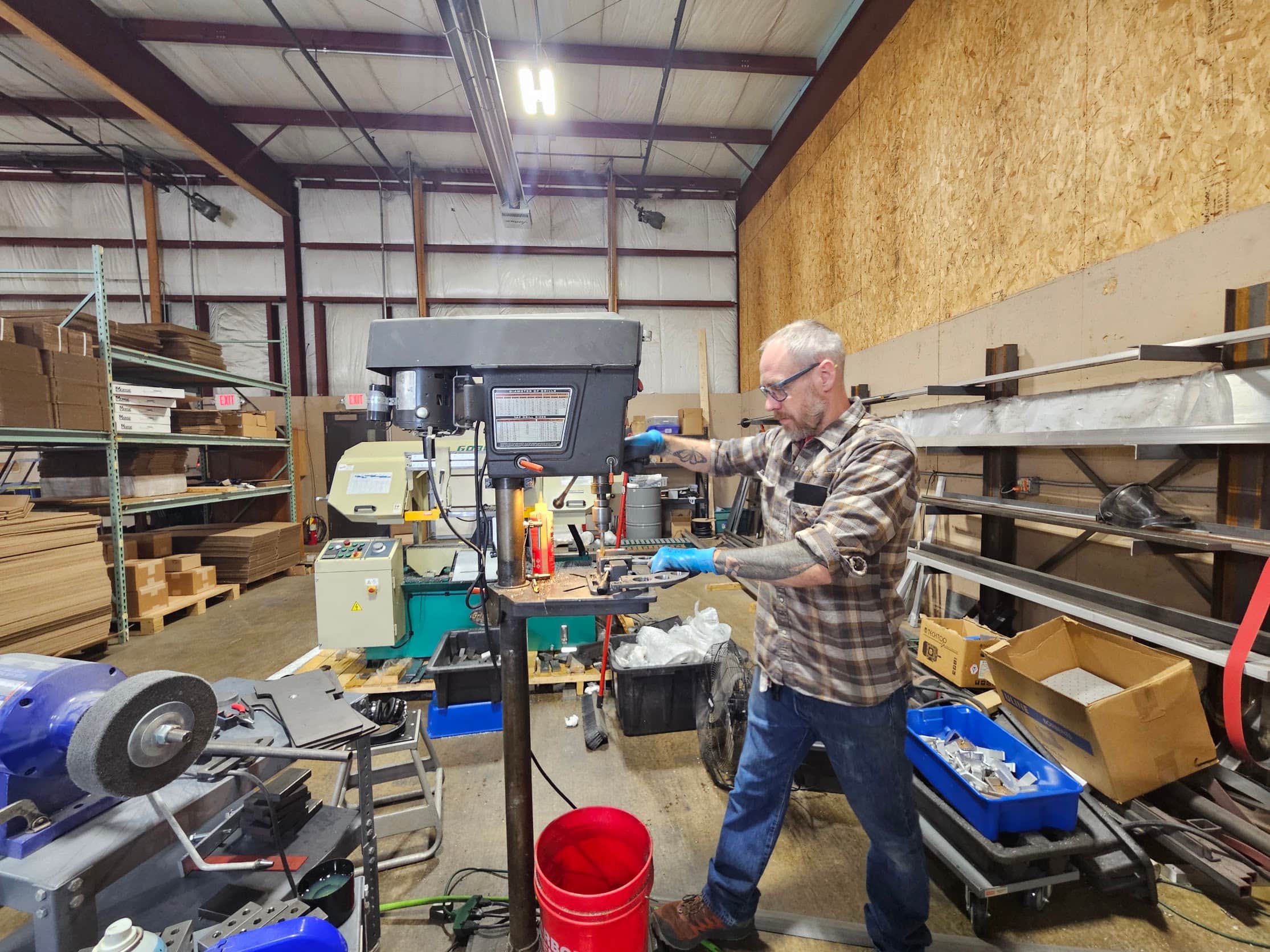
One-man shop
I answer my own email. Tell me the steel, the machine and what it is doing, and I will tell you what I would try next.