
Folding Knives
Building a Liner Lock: The Modern First Mechanism
The liner lock is the modern folder’s default mechanism and the standard first LOCKING build: every part is visible, every adjustment reachable, every…
Folding Knives
Folder kits as the learning path: what kits teach and skip, modification ladders, disclosure ethics when selling, and when to go full scratch.
2 min readWritten by Rich LinvilleFree to read
Folder kits — pre-machined blades, liners and hardware you fit, finish and assemble — occupy an odd place in the craft’s pride structure: quietly used, rarely discussed, genuinely useful. Here is the honest read: what kits teach, what they skip, and the one rule about selling them.
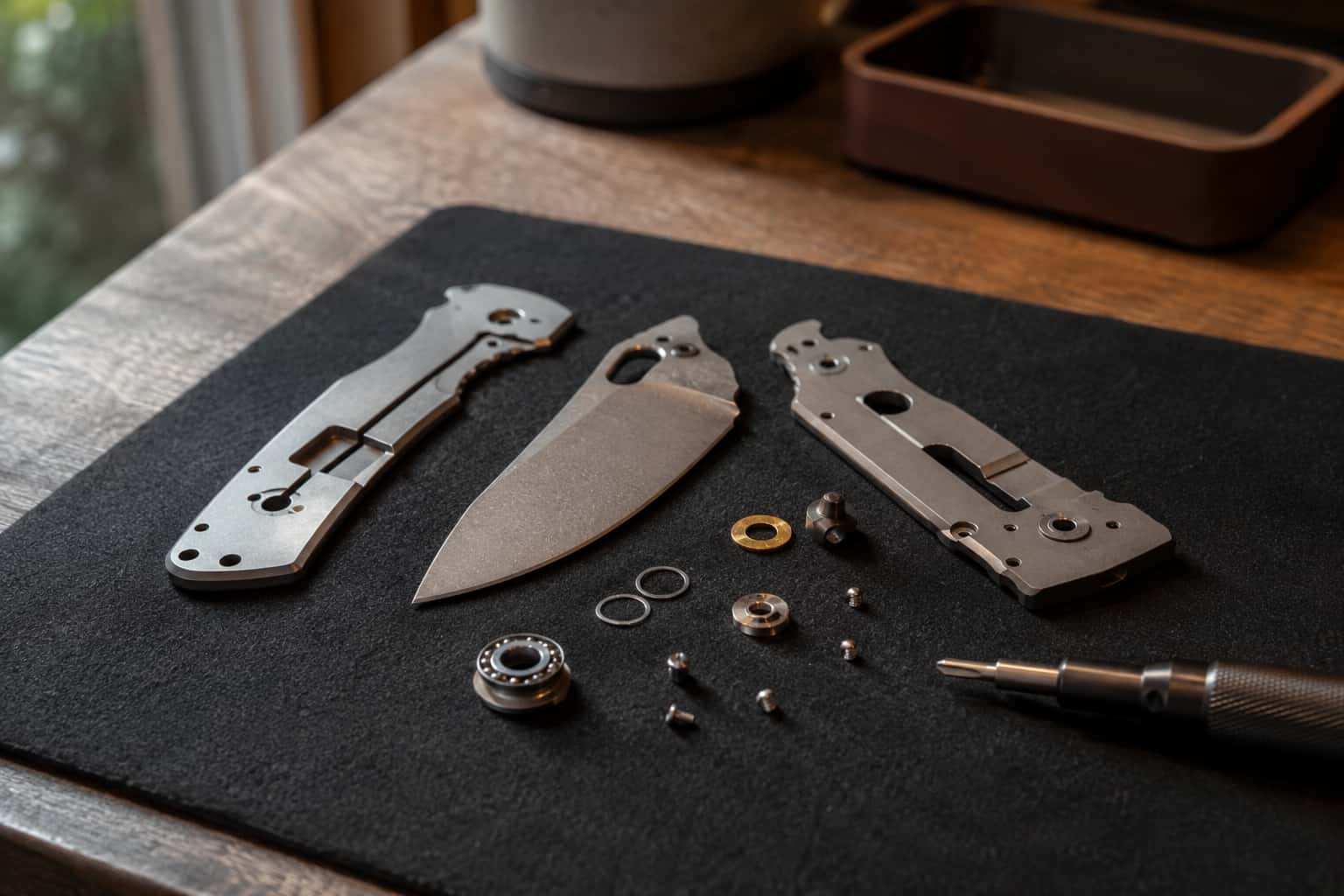
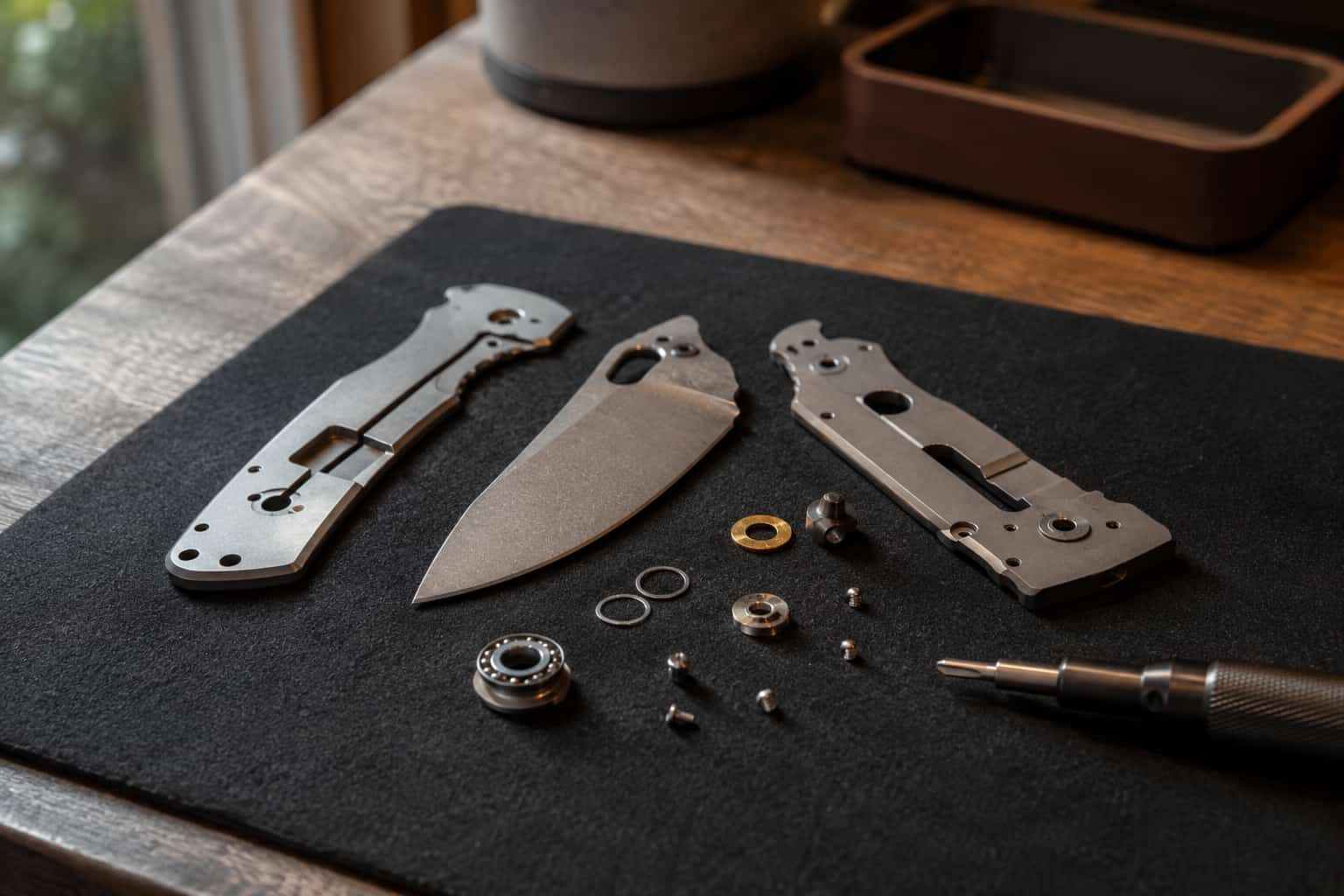
Assembly of a quality liner-lock kit teaches real skills in real order: pivot tensioning, washer prep, action tuning, centering diagnosis, lock-engagement reading, hardware discipline — the entire tuning craft on parts known to be good. That last clause is the pedagogical gold: when a kit’s action is gritty, YOUR fitting is the variable, not mystery geometry — the same reason beginners learn heat treat on known steel. A first kit that ends glassy-smooth teaches more about folders than a first scratch build that ends in a drawer.
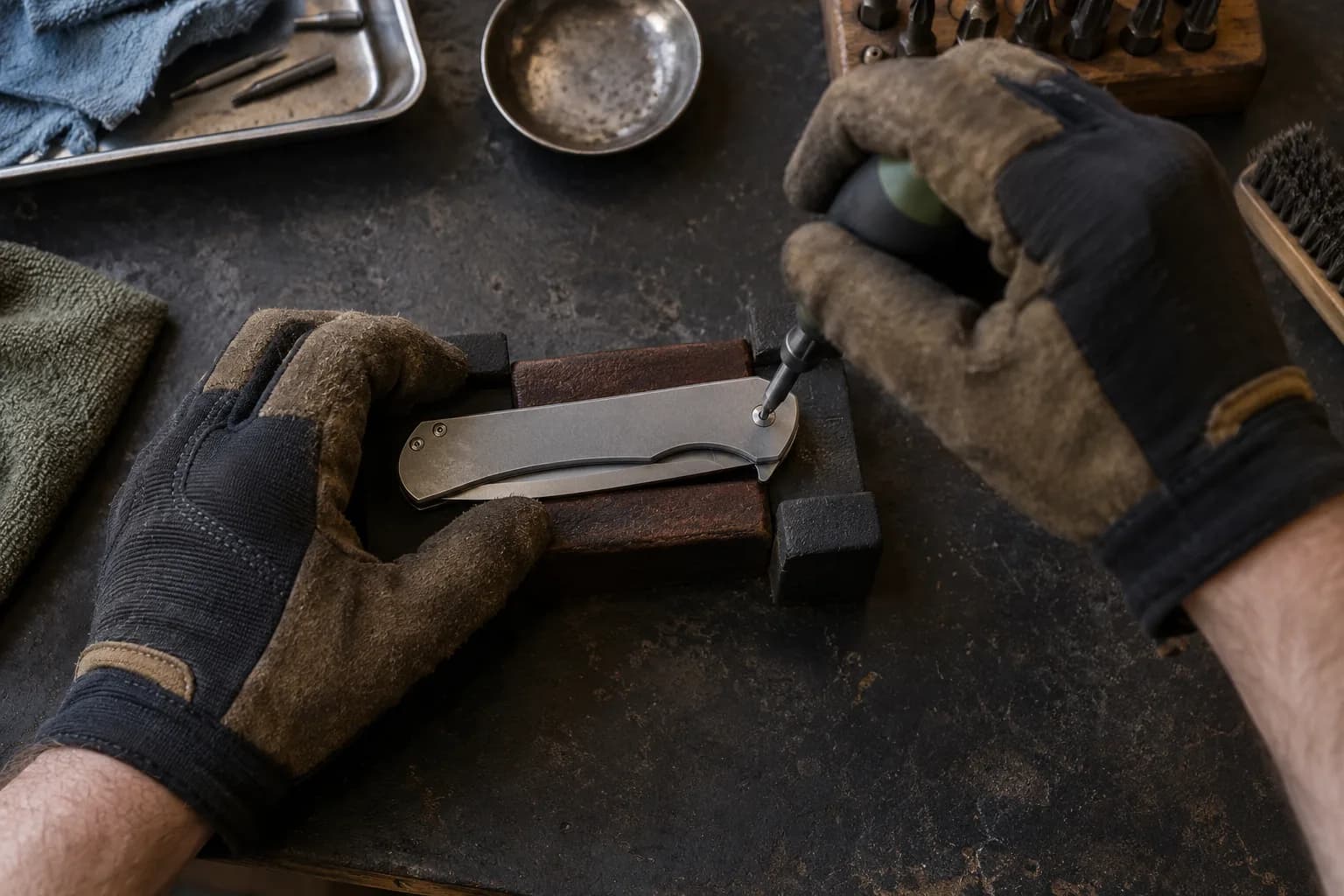
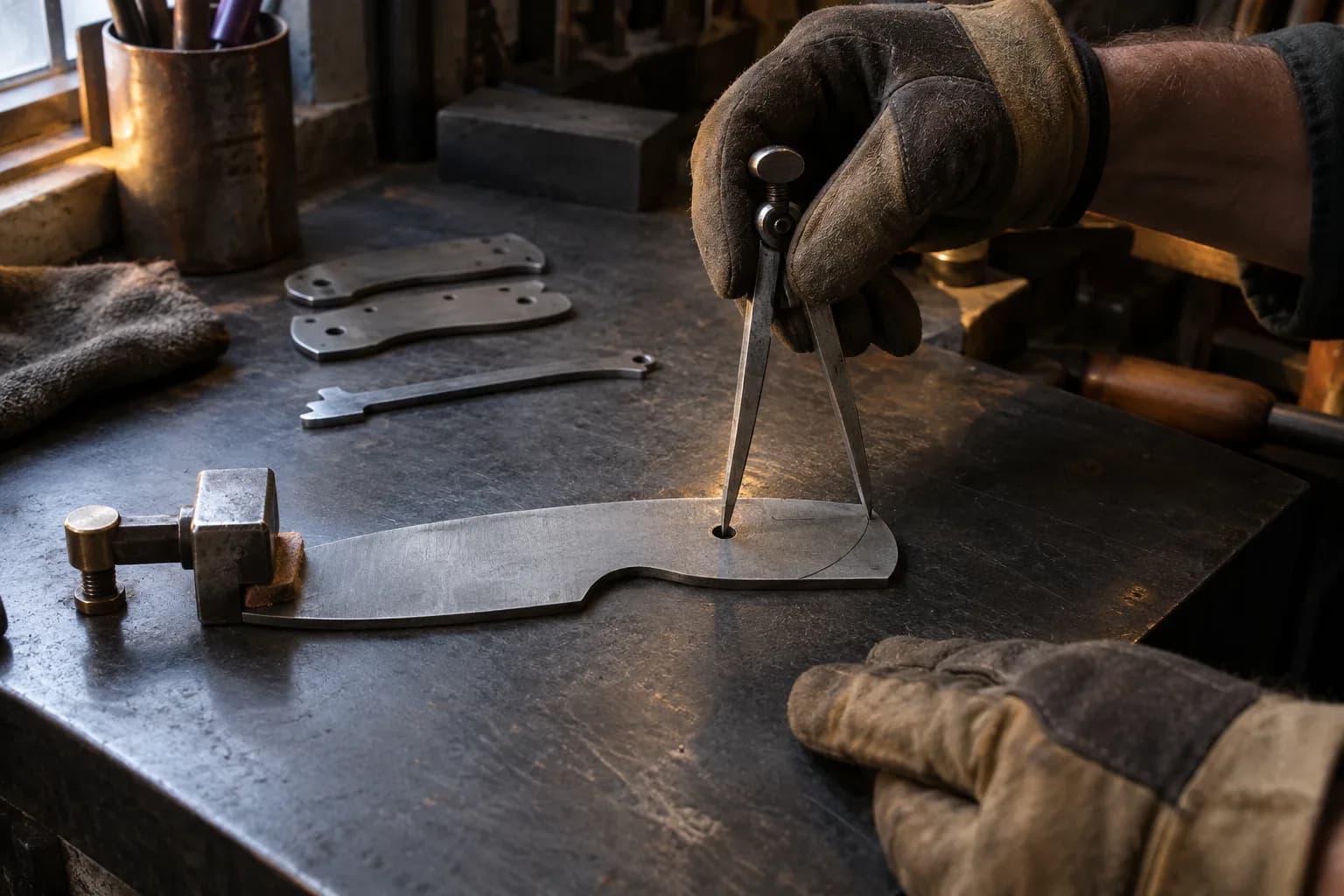
Everything upstream: tang geometry, lock-face grinding, detent placement — the unforgiving holes. Which is why the kit ladder works: build one stock, then modify the next (reshape the blade, regrind bevels per folder geometry, new scales, new clip), then replace parts (your blade in their chassis — the real graduation exam), then scratch. Each rung isolates new skills against known-good remainders. Skipping rungs is allowed; the ladder just makes the tuition cheaper.
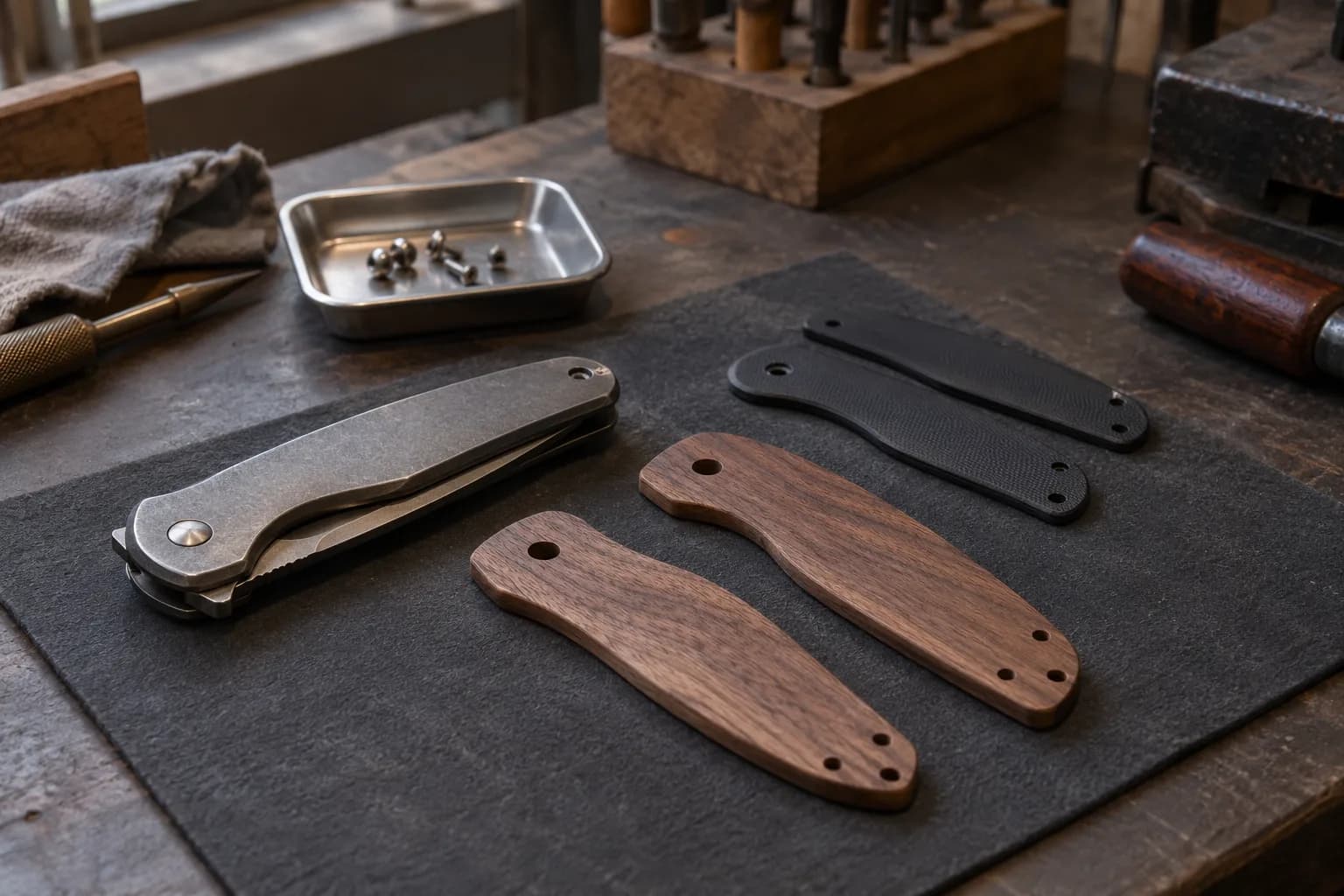
Selling kit-based work carries one absolute: say what it is. “Assembled and finished from a kit,” “kit build with custom scales,” “my blade in a production chassis” — the knife world’s terms (kit build, mid-tech, full custom) exist precisely so buyers know whose work they hold, and the community’s memory for misrepresentation is long and unforgiving. A finished kit honestly labeled sells honestly; a kit sold as full custom is the reputation mistake no business guide can fix. Related: check the kit maker’s terms — some restrict commercial resale.
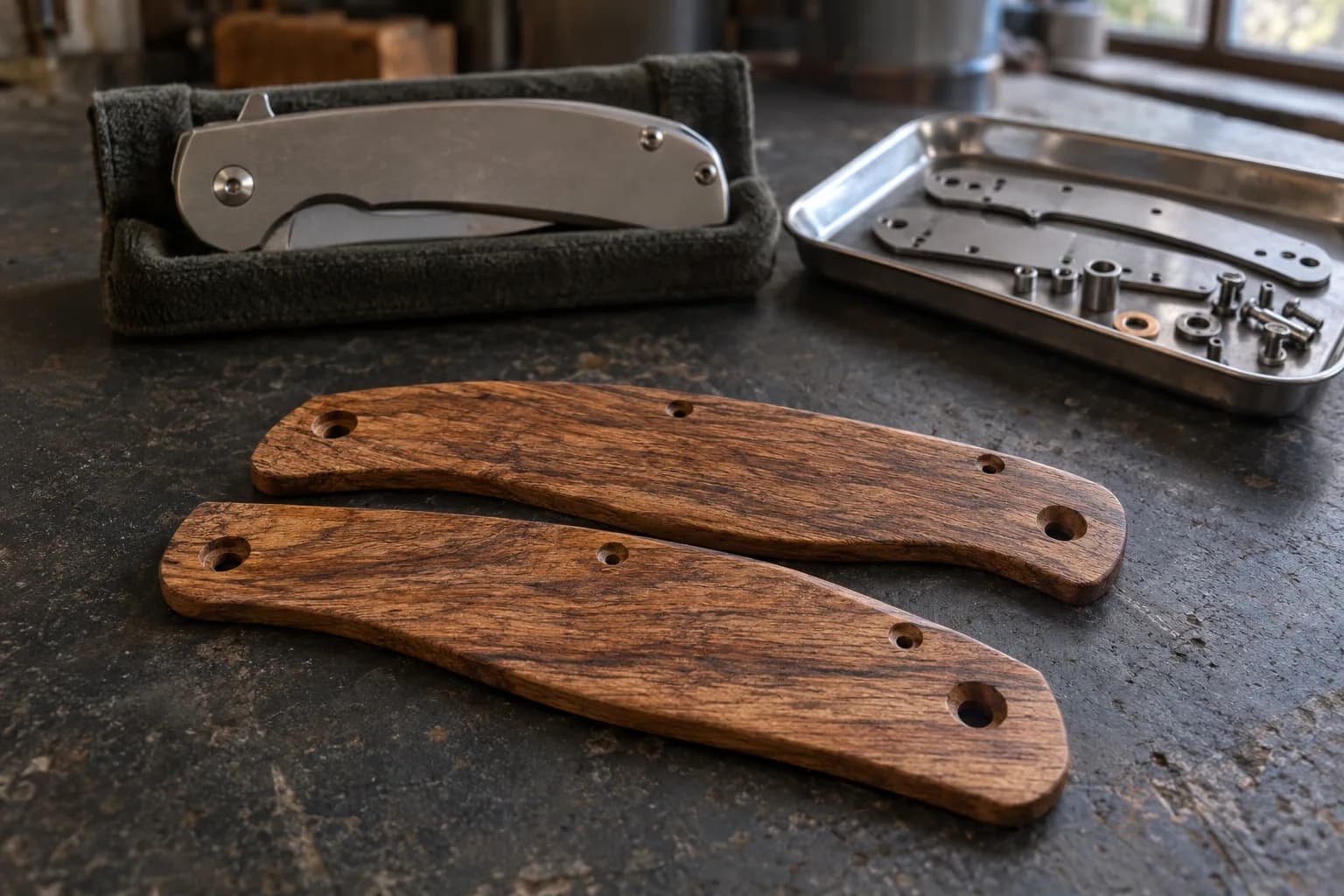
Go scratch when the mechanism itself is the pull — when you want YOUR tang geometry, YOUR lock feel, a slipjoint’s cam ground by your hand. Scratch folders are the craft’s precision summit and price accordingly; kits are the base camp that makes the summit survivable. Most working makers keep both in the catalog: scratch customs as the flagship, honest kit-plus-custom-scale builds as the accessible tier — the same two-tier logic as everything in the business section. The only wrong rung on the ladder is pretending to be on a different one.
Keep reading
Three more from the same bench.
The liner lock is the modern folder’s default mechanism and the standard first LOCKING build: every part is visible, every adjustment reachable, every…
Two folders can share identical parts lists and feel nothing alike — one glassy and crisp, one gritty and vague. The difference is tuning: the last…
A fixed blade is a shape; a folder is a MACHINE — a dozen parts in moving agreement, where a thousandth of an inch is the difference between glass-smooth…
Same bench
I machine the parts, hand-assemble, track and test Torus grinders in Sterling, Illinois. Most orders ship in seven to ten business days from time of order.
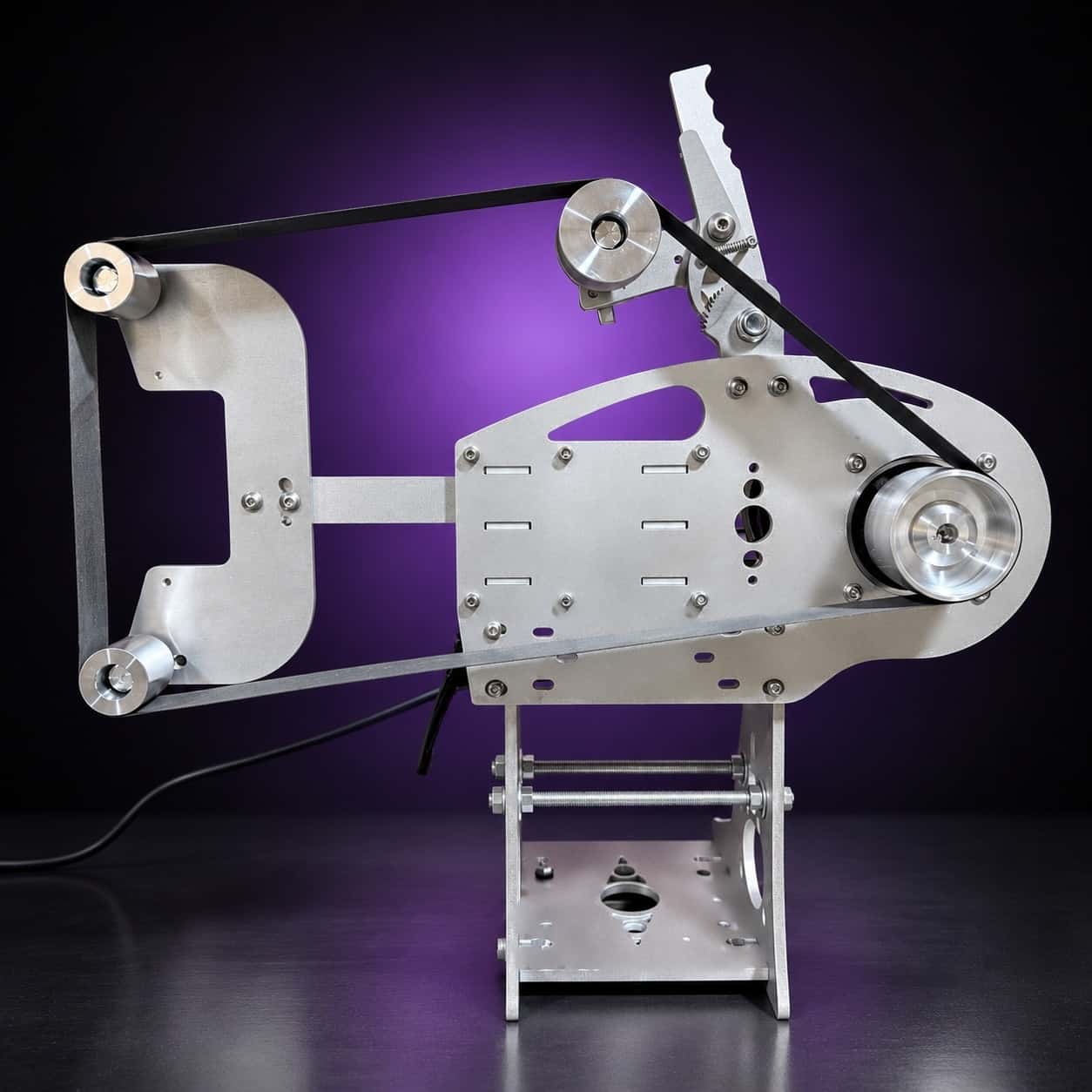
Current dual-axis platform with a fiber-laser-cut 6061 chassis and single-knob tracking.
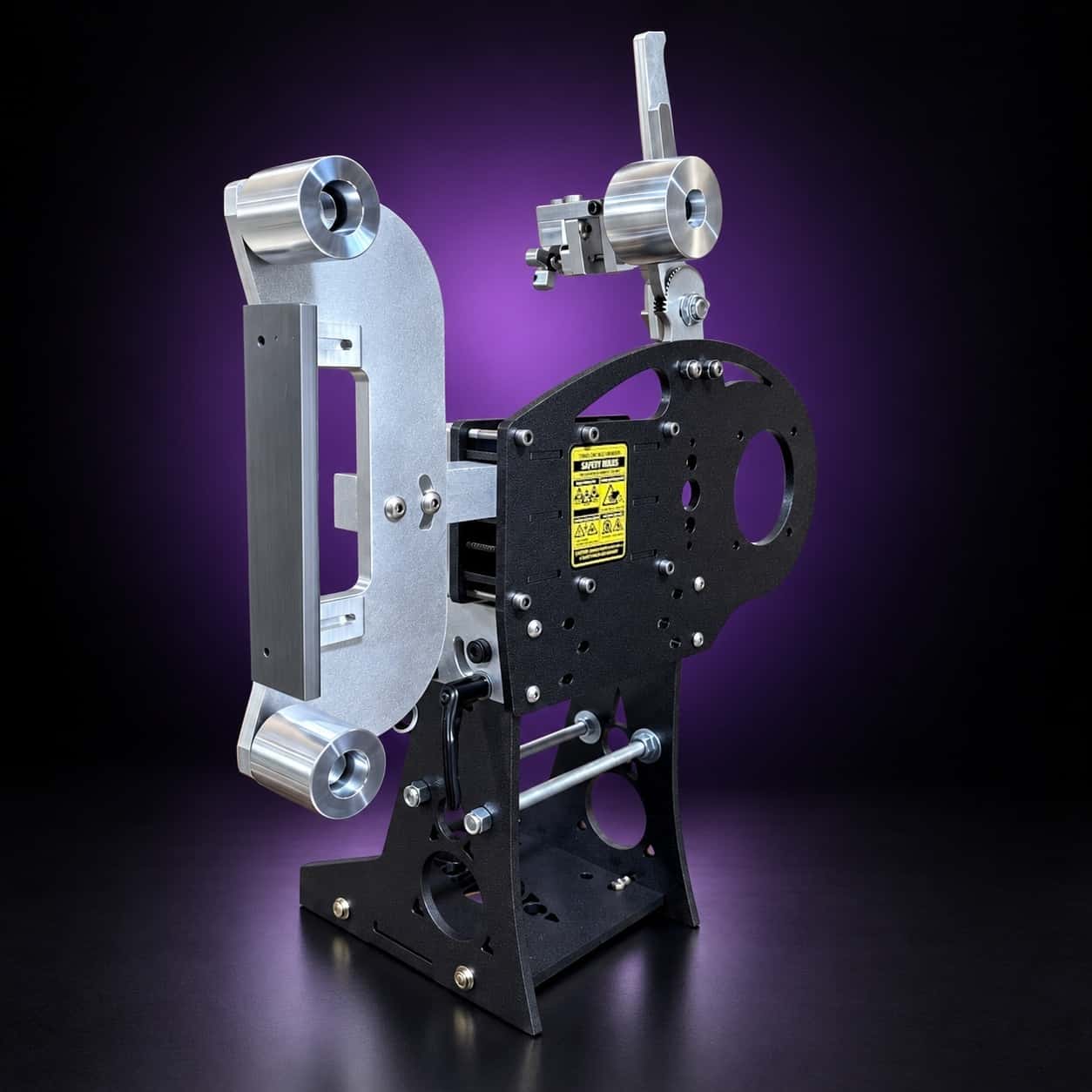
Current dual-axis platform with a steel chassis, more mass and less vibration.
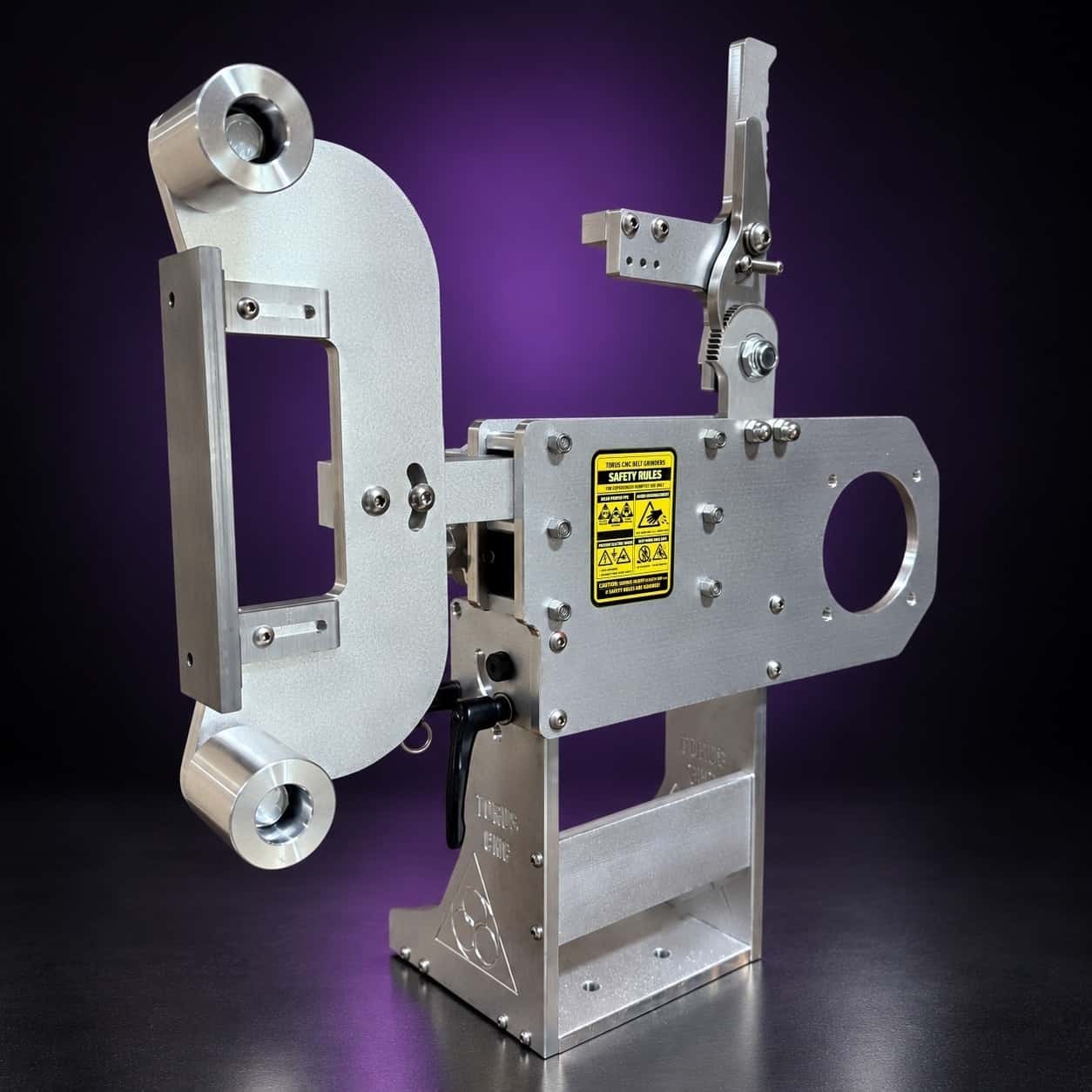
Prior-design aluminum chassis, 90-degree tilt and 1.5-inch tooling arms.
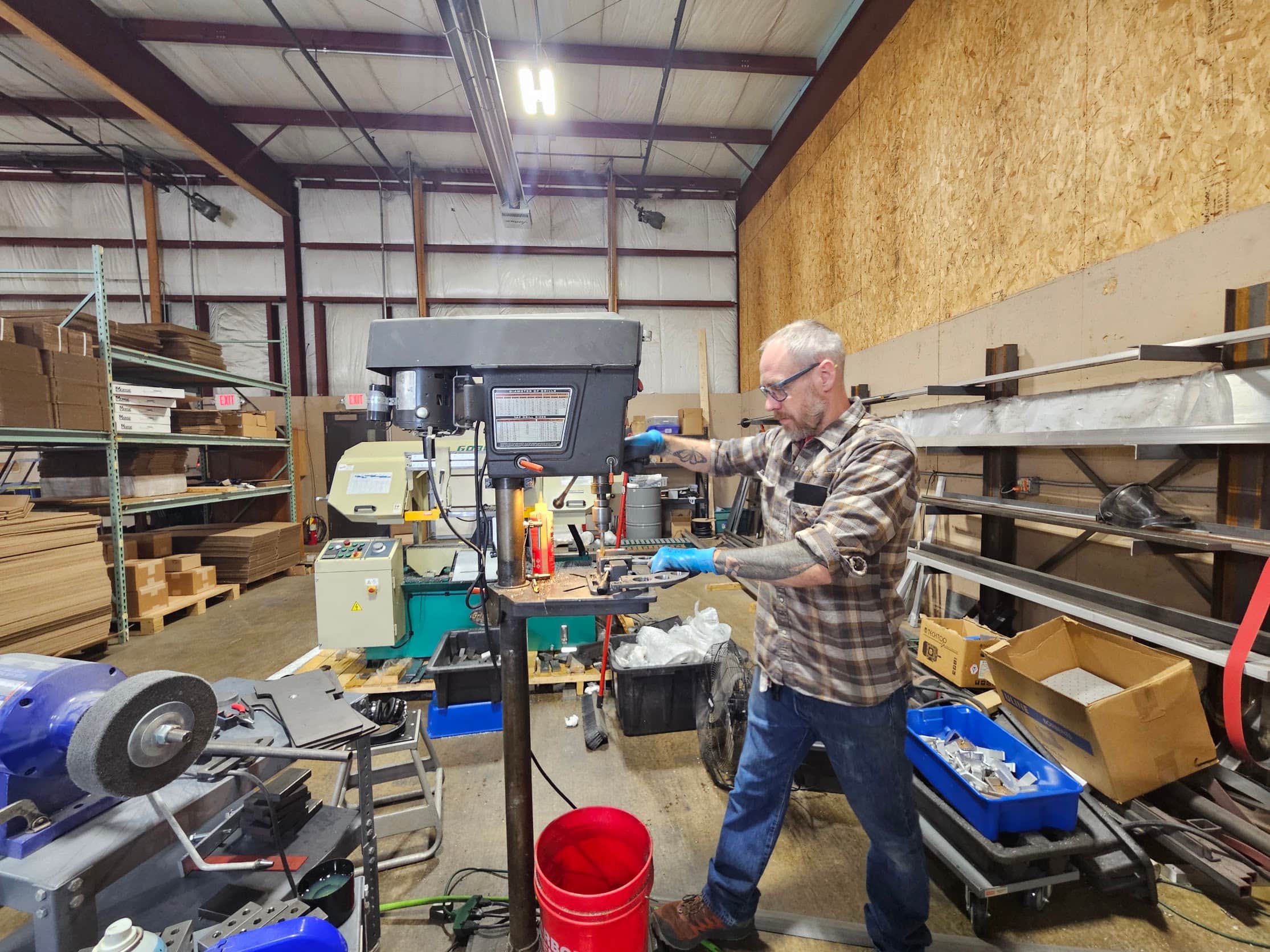
One-man shop
I answer my own email. Tell me the steel, the machine and what it is doing, and I will tell you what I would try next.