
Folding Knives
Folder Anatomy: How a Folding Knife Actually Works
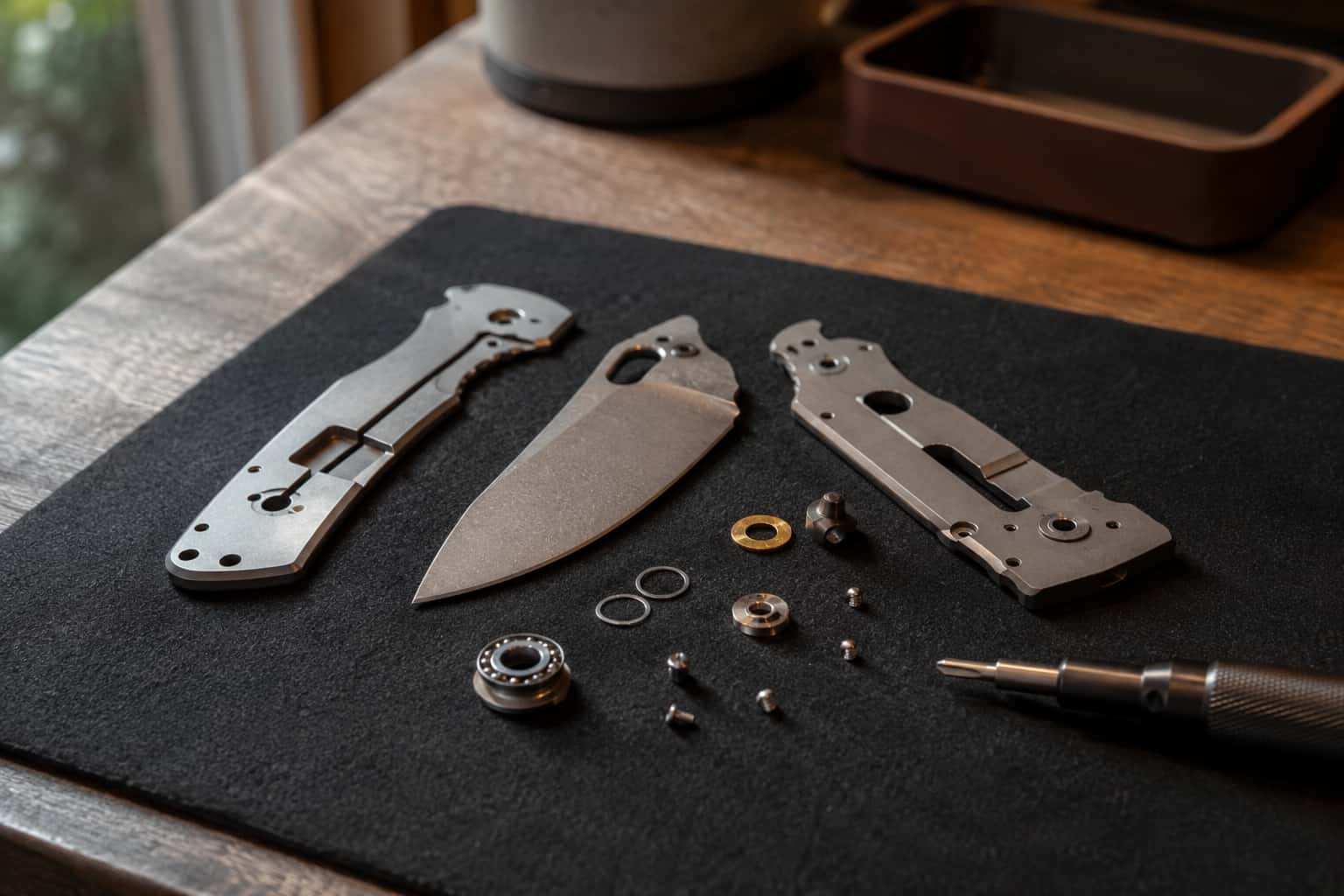
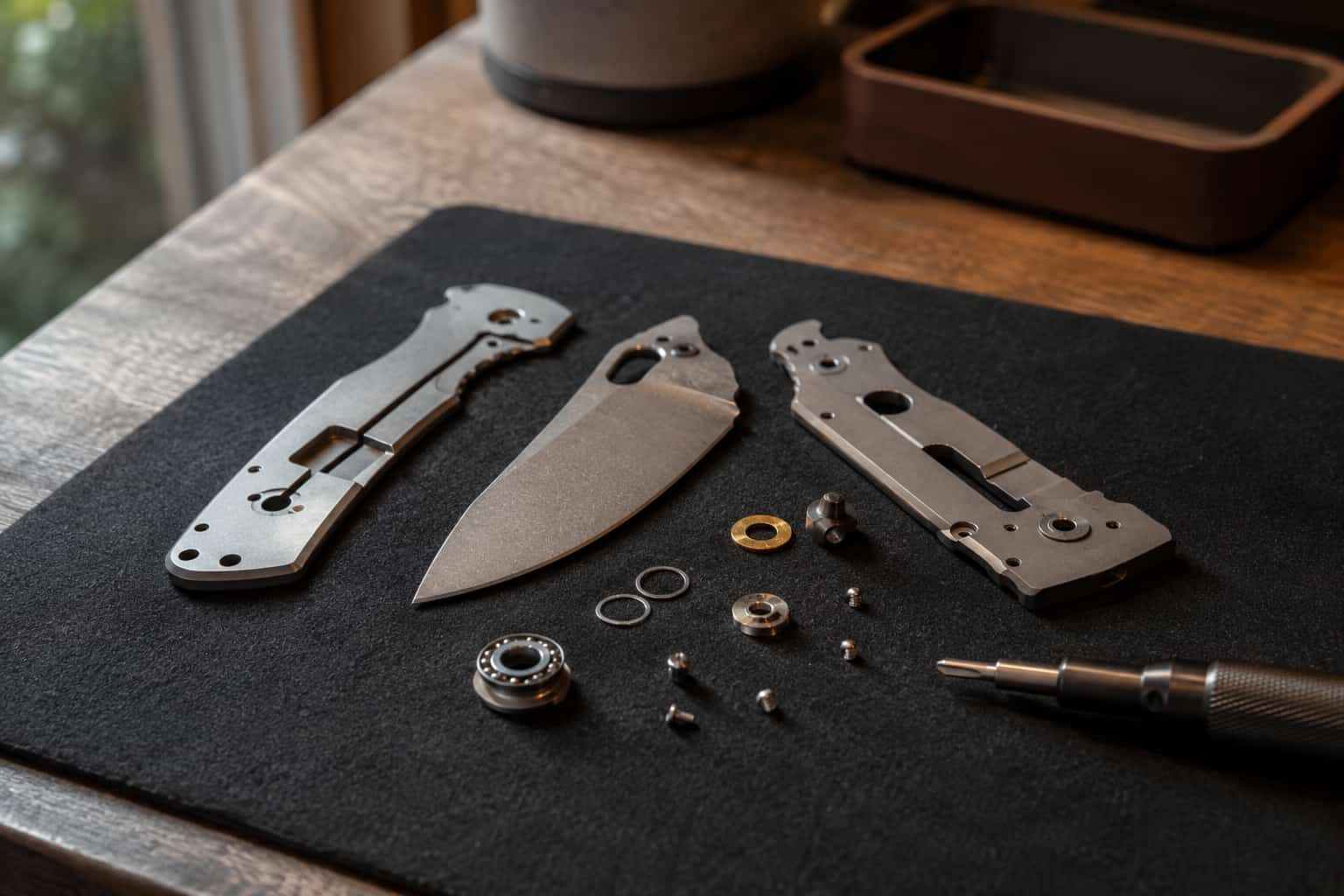
A fixed blade is a shape; a folder is a MACHINE — a dozen parts in moving agreement, where a thousandth of an inch is the difference between glass-smooth…
Folding Knives
The folder hardware map: pivot styles, phosphor bronze vs PTFE washers vs bearings, screw standards, sourcing, and what actually makes smooth.
2 min readWritten by Rich LinvilleFree to read
Folder hardware is a small parts bin with outsized consequences: the pivot, two washers and a handful of screws decide more of the knife’s feel than any other purchase. Here is the map — what each choice buys, and where the smooth actually comes from.
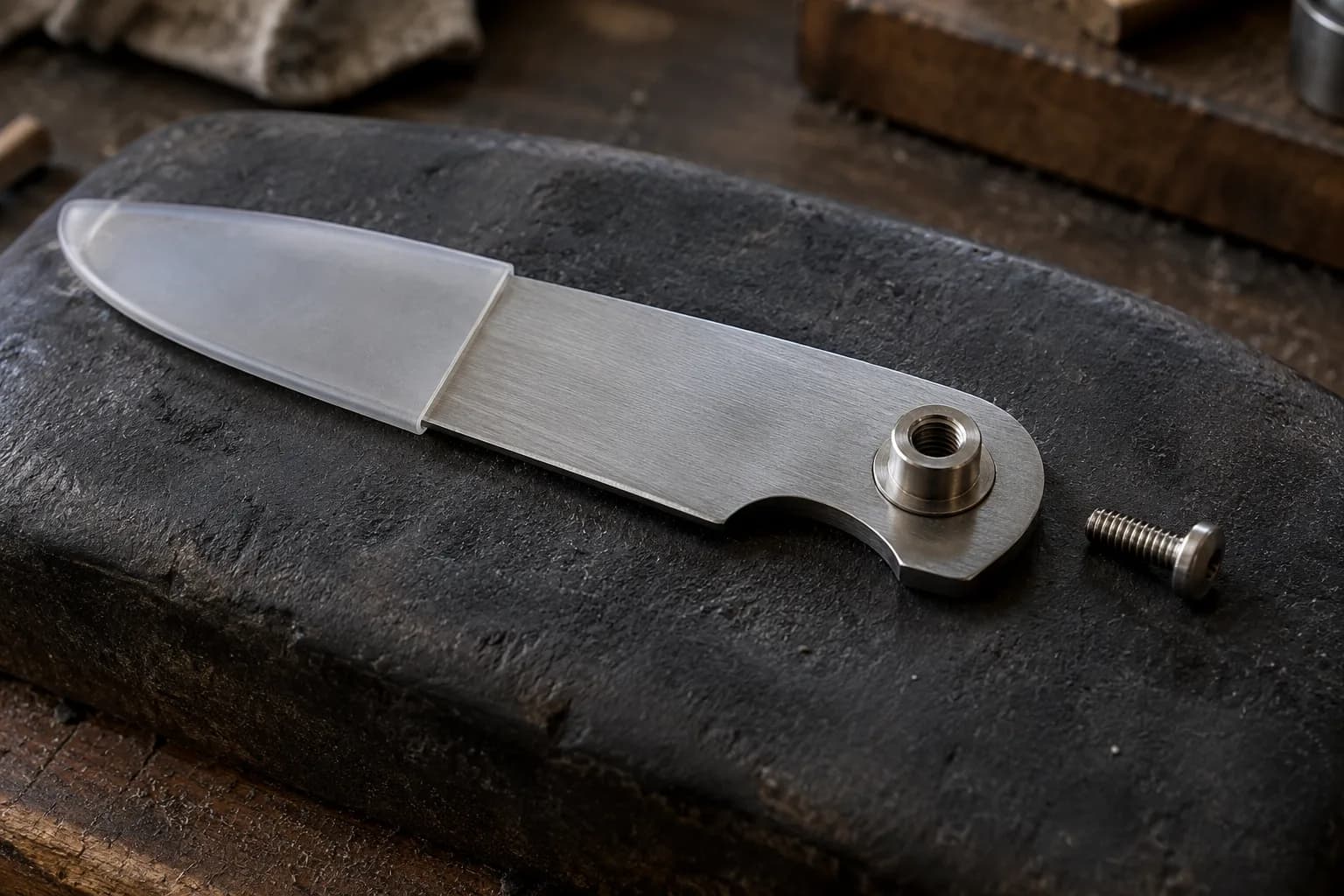
The standard is a barrel-and-screw pivot: a female barrel through the blade, a male screw from the show side, commonly 3/16 or 1/4 inch barrel diameter for working folders. Variants: slotted pivots (jeweler-simple), torx-both-sides decorative pivots, and plain pin pivots on traditional slipjoints (peened, adjusted by peening pressure — the old way). The pivot’s job is dull and absolute: a dead-round, dead-square axle whose tension is finely adjustable. Buy good ones; a wobbly pivot bore poisons everything downstream.
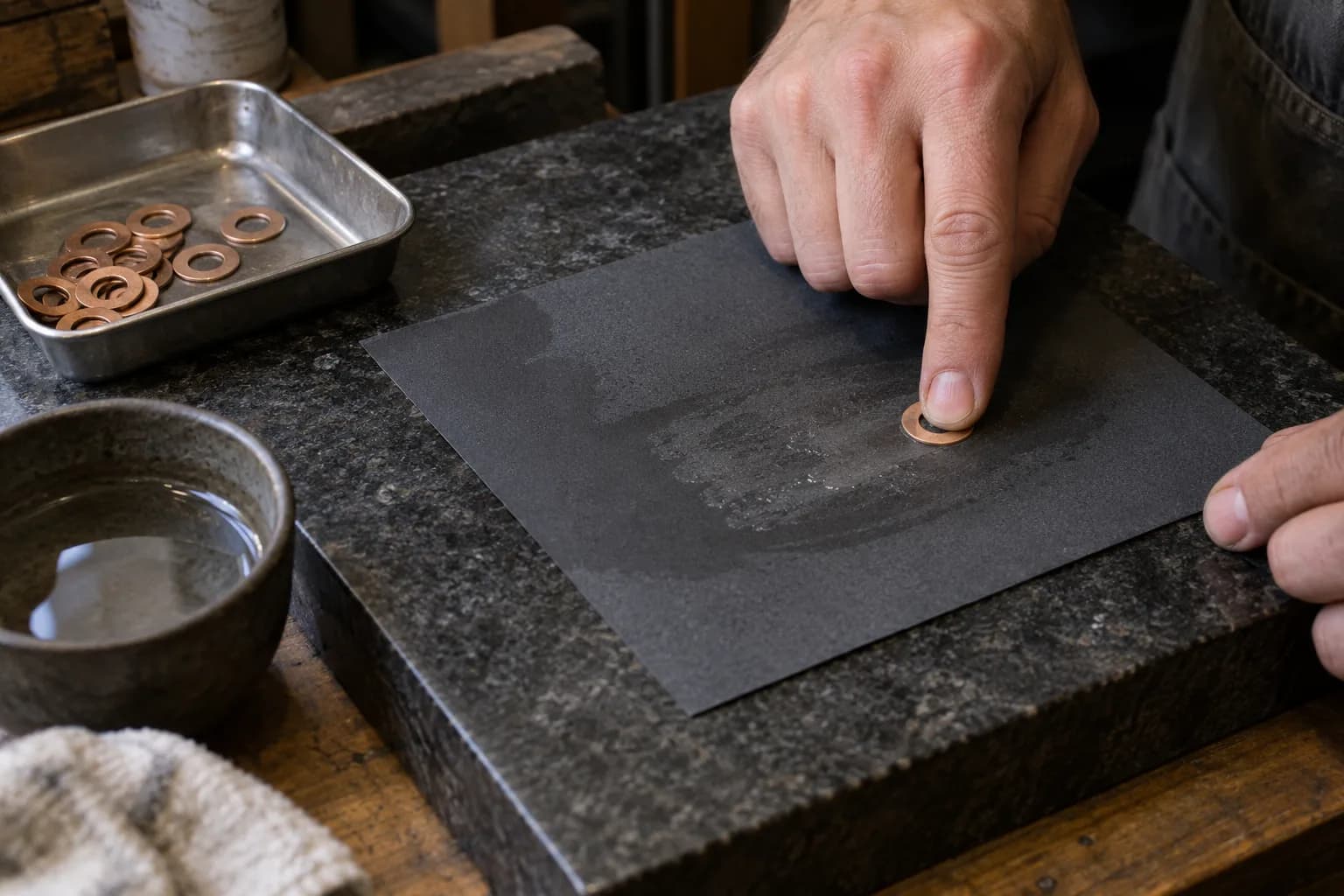
Phosphor bronze washers are the craft’s default bearing surface: self-lubricating against polished steel, durable for decades, tolerant of grit, thin (commonly 0.020-0.032). Their secret is that they arrive imperfect — flatten on a granite plate with fine paper and polish both faces, and a mediocre action turns silky. PTFE and nylatron washers run quieter and slicker dry, at the price of squish (a hair of side play under hard grip) — a legitimate choice for gent’s knives. The washer sets blade-to-liner clearance, so thickness is also a fitting dimension: buy assortments.
Caged ball bearings (washer-shaped cages carrying small balls, riding polished tang flats) give the drop-shut, flick-open action modern flipper culture expects. Costs: they demand HARDENED, polished tang flats (balls dent soft steel into a gritty racetrack), hate grit and pocket lint more than bronze does, and add parts count. Verdict by knife: hard-use and dirty-pocket folders favor bronze; fidget-grade flippers favor bearings; nobody ever returned a knife because its bronze was too smooth.
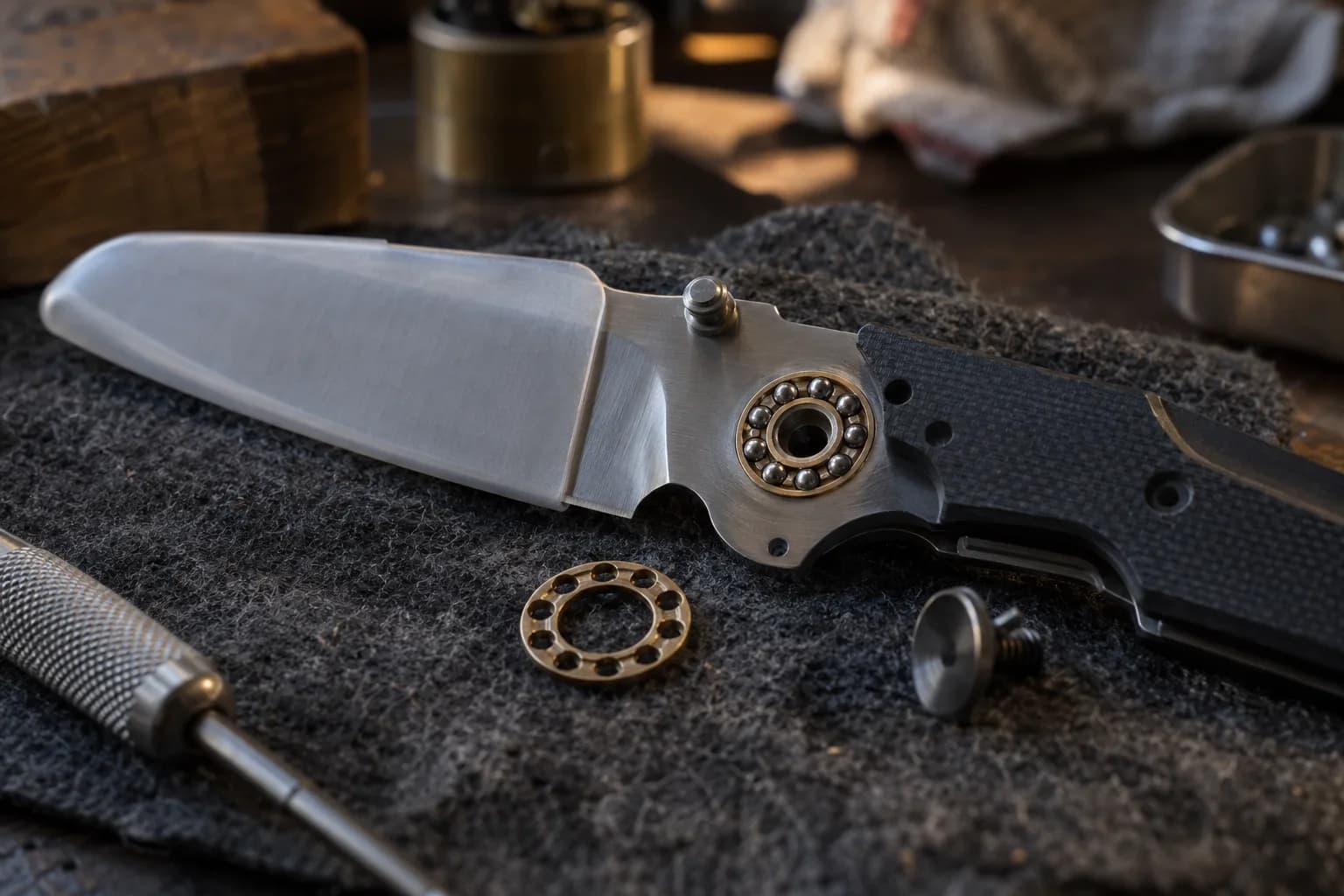
The de facto standards: 2-56 thread for body/scale screws with T6 torx heads, T8-T10 on pivots, 4-40 on heavier hardware — buy the matching drivers in quality (stripped tiny torx heads are the hobby’s tax on cheap tools). Thread-locker discipline: light (blue-class) locker at FINAL assembly only, never during fitting, and never on the pivot until its tension is proven over fifty cycles per action tuning. Standoffs versus backspacer is a style call; either way the chassis squares up before anything else fits.
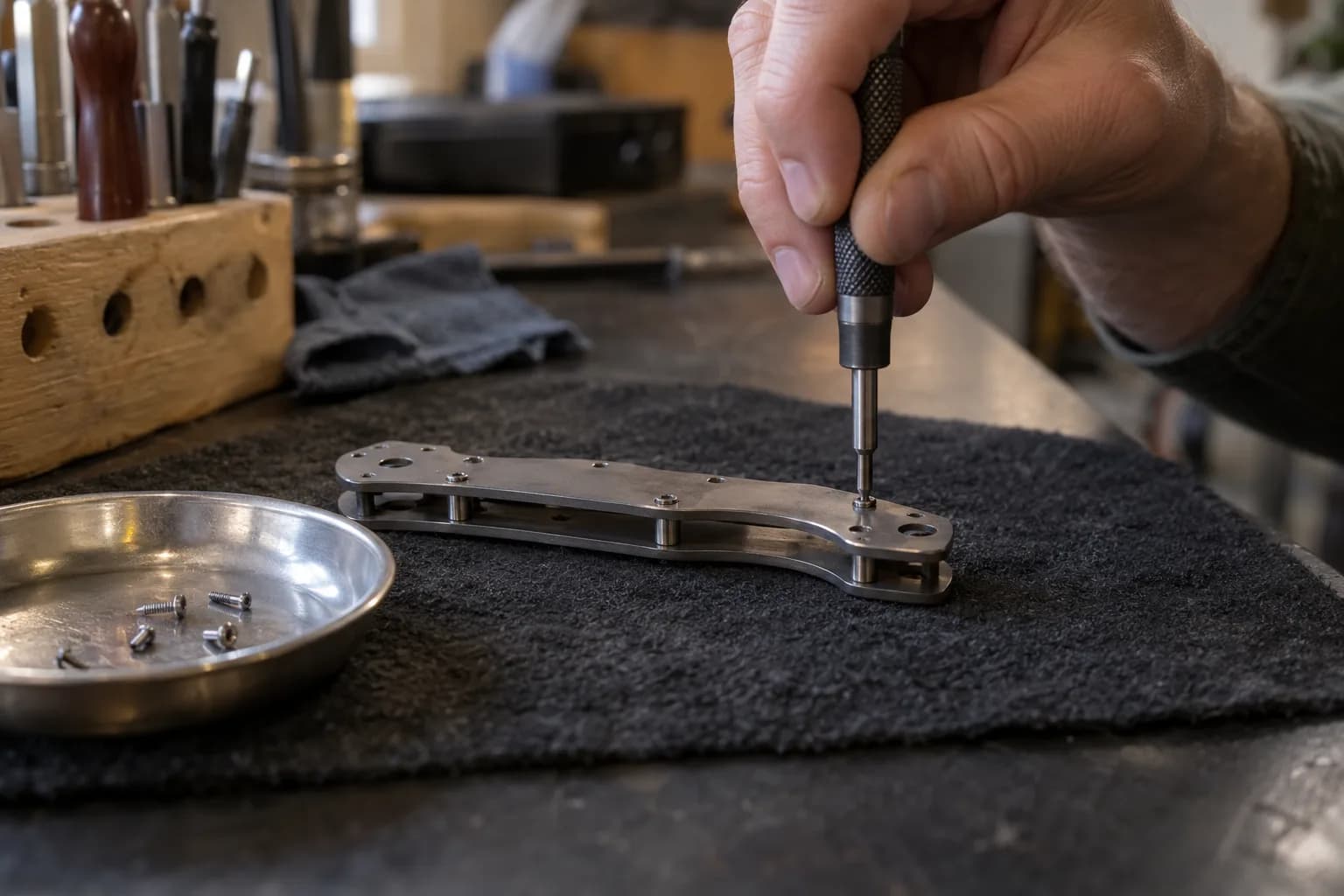
Knifemaker suppliers sell all of this in maker quantities — pivots, washer assortments, ceramic detent balls, screw kits, clip hardware. The working shop keeps a folder drawer: washer thickness assortment, ball sizes, spare screws (they leave), and one good pivot per size. Total investment is lunch money; the return is never bodging a build with the wrong-thickness washer. The deeper machine these parts serve is mapped in Folder Anatomy — and the smooth they enable is finished by hand, per the tuning guide.
Keep reading
Three more from the same bench.
A fixed blade is a shape; a folder is a MACHINE — a dozen parts in moving agreement, where a thousandth of an inch is the difference between glass-smooth…
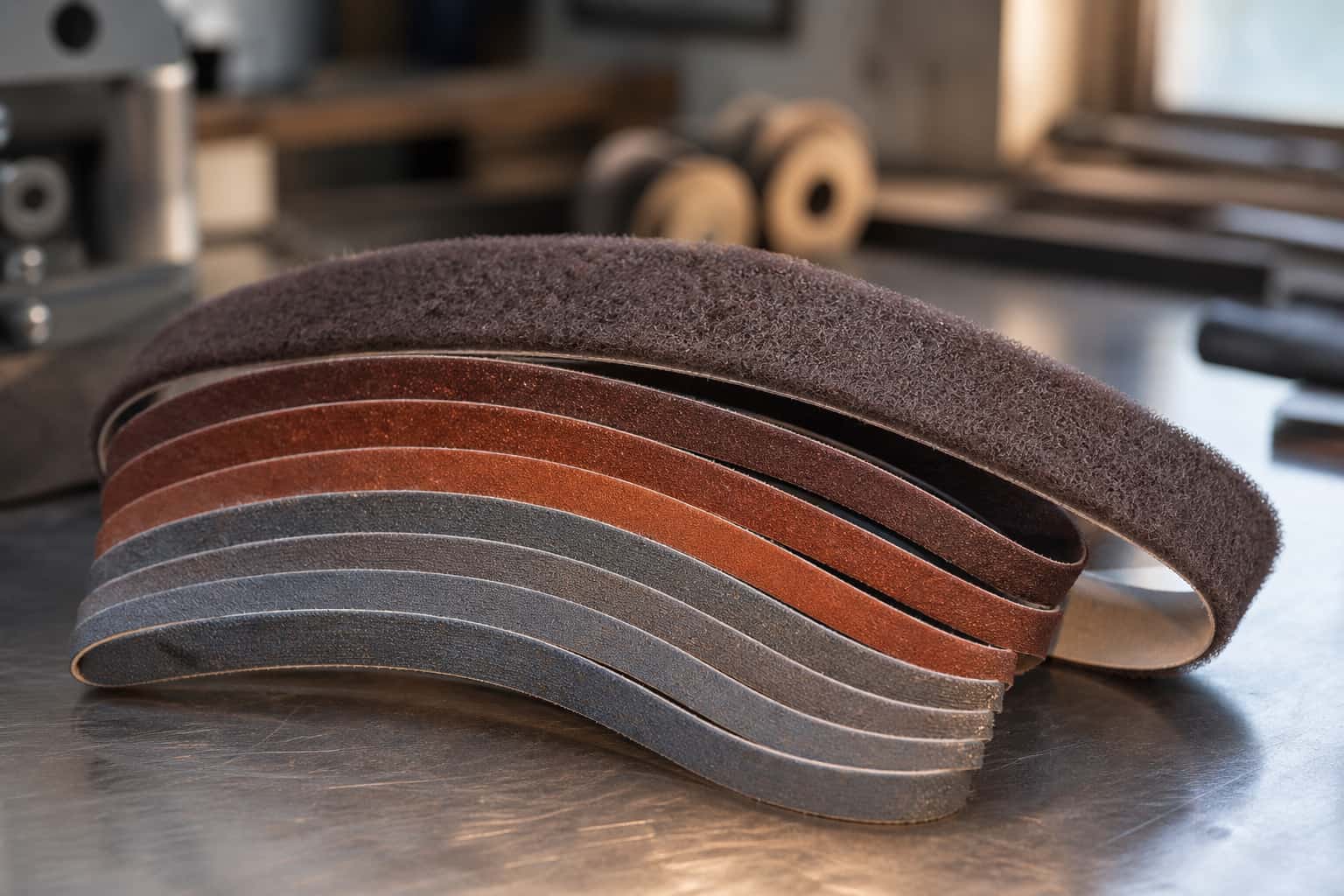
Two folders can share identical parts lists and feel nothing alike — one glassy and crisp, one gritty and vague. The difference is tuning: the last…
The liner lock is the modern folder’s default mechanism and the standard first LOCKING build: every part is visible, every adjustment reachable, every…
Same bench
I machine the parts, hand-assemble, track and test Torus grinders in Sterling, Illinois. Most orders ship in seven to ten business days from time of order.
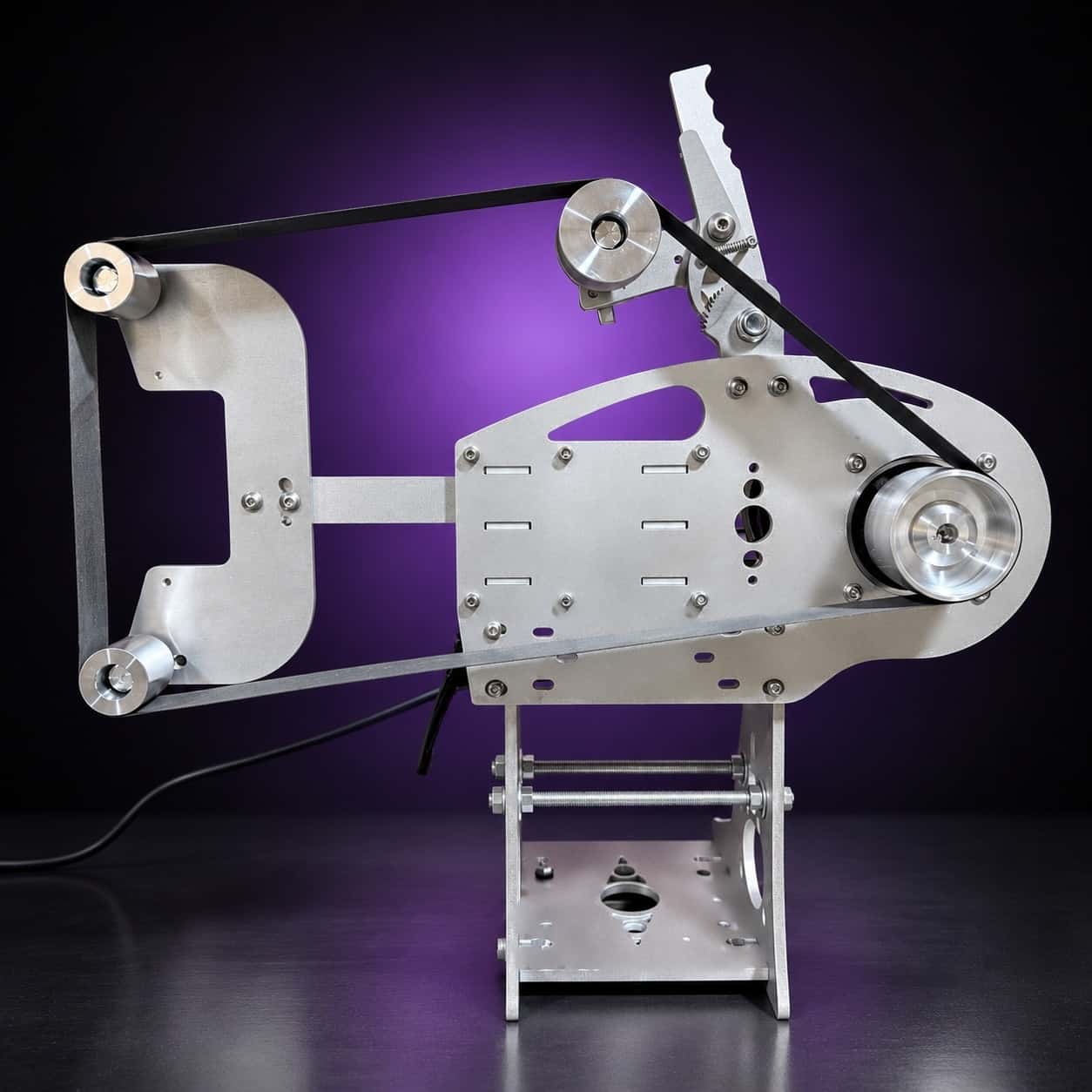
Current dual-axis platform with a fiber-laser-cut 6061 chassis and single-knob tracking.
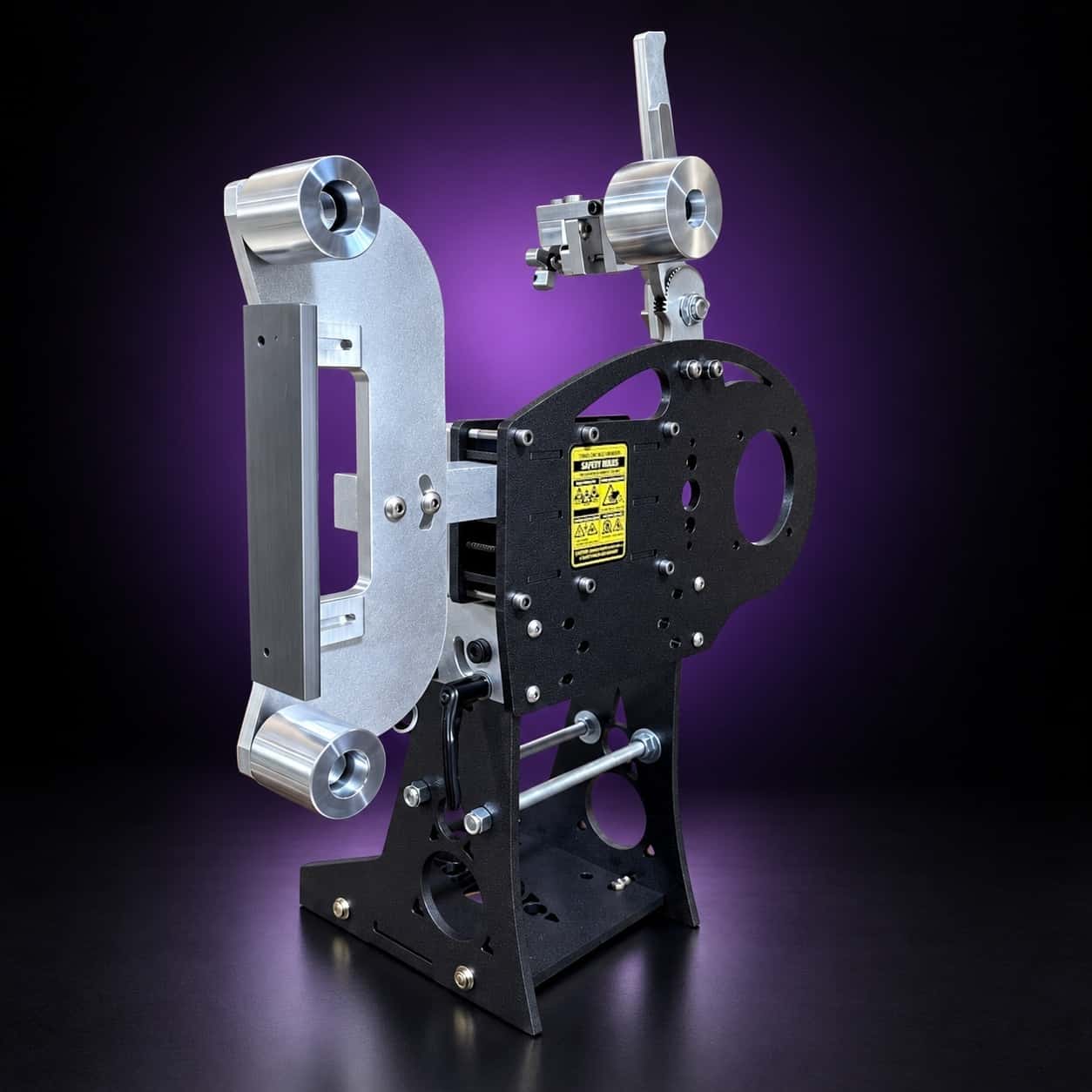
Current dual-axis platform with a steel chassis, more mass and less vibration.
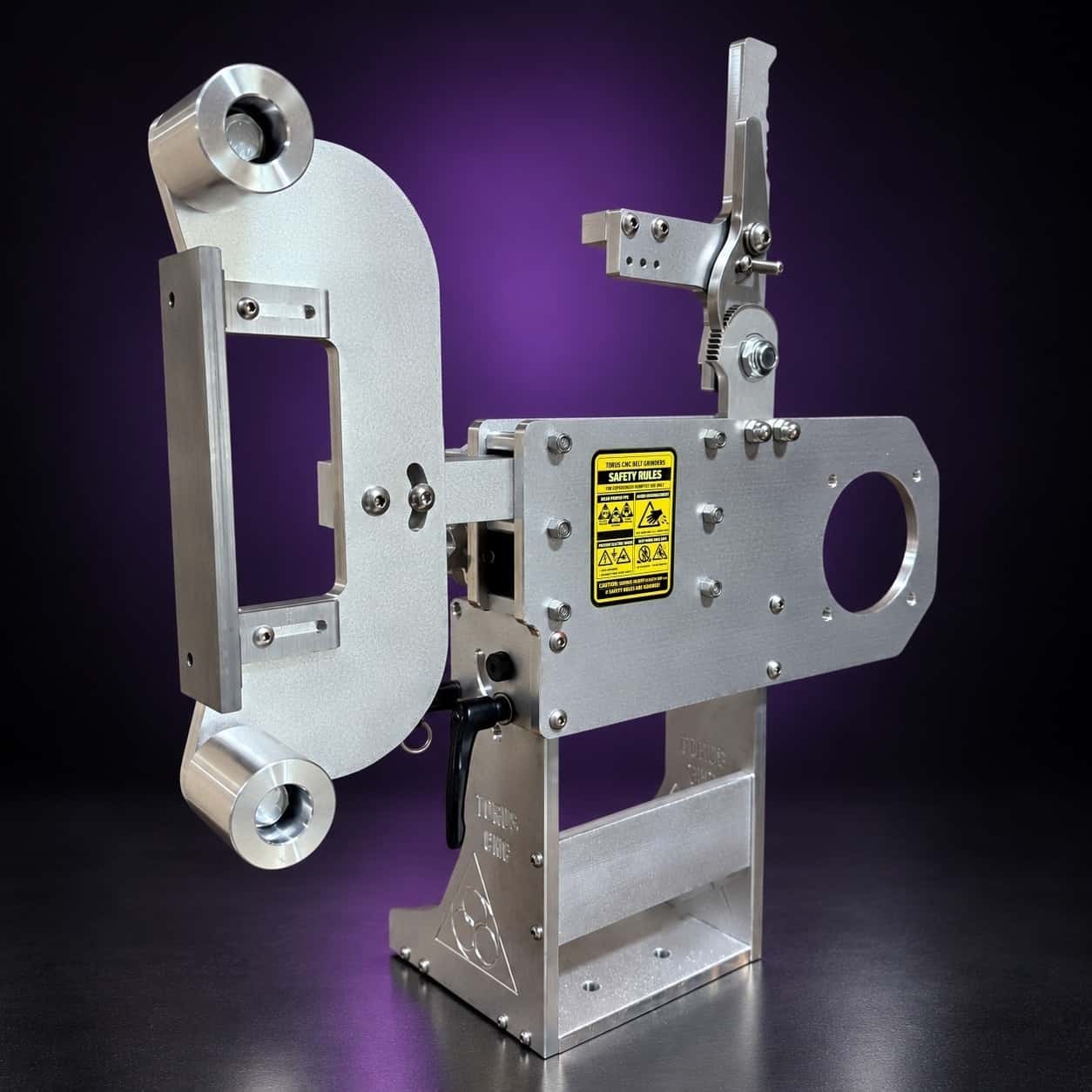
Prior-design aluminum chassis, 90-degree tilt and 1.5-inch tooling arms.
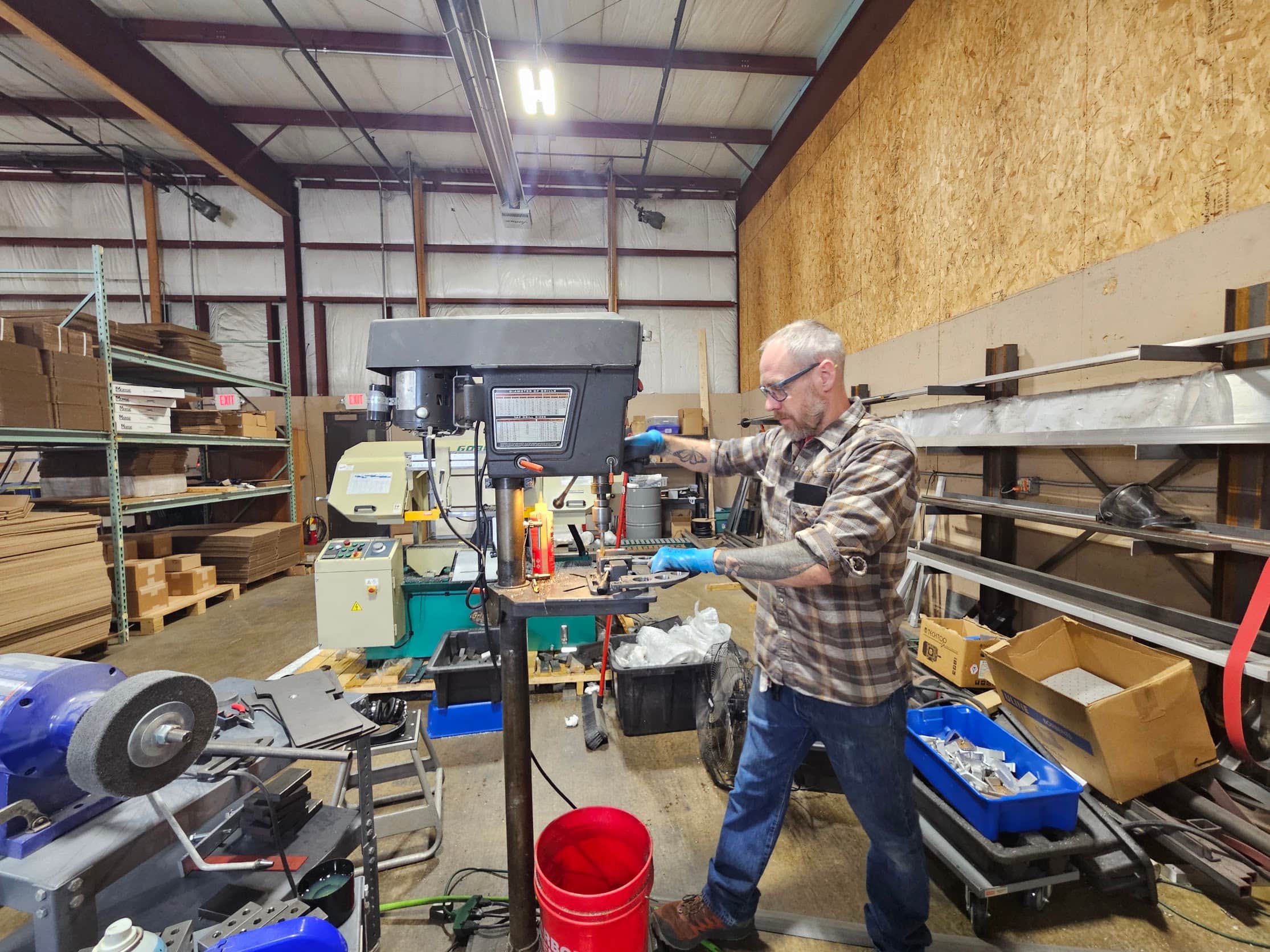
One-man shop
I answer my own email. Tell me the steel, the machine and what it is doing, and I will tell you what I would try next.