
Folding Knives
Your First Friction Folder: The Honest Entry
The friction folder is folder-making with the hard parts removed and the important parts kept: no lock, no detent, no spring — just a blade, a pivot, and…
Folding Knives
The traditional slipjoint from a maker's bench: backspring geometry, tang cams and half-stops, flush-at-three-positions, and pattern culture.
2 min readWritten by Rich LinvilleFree to read
The slipjoint is the folder the twentieth century carried: no lock, just a spring bar riding the blade’s tang cam — biased closed, biased open, with the crisp snap between that collectors call walk and talk. Making one is precision spring-and-cam work, and the traditional-knife world judges it by standards a caliper can read.
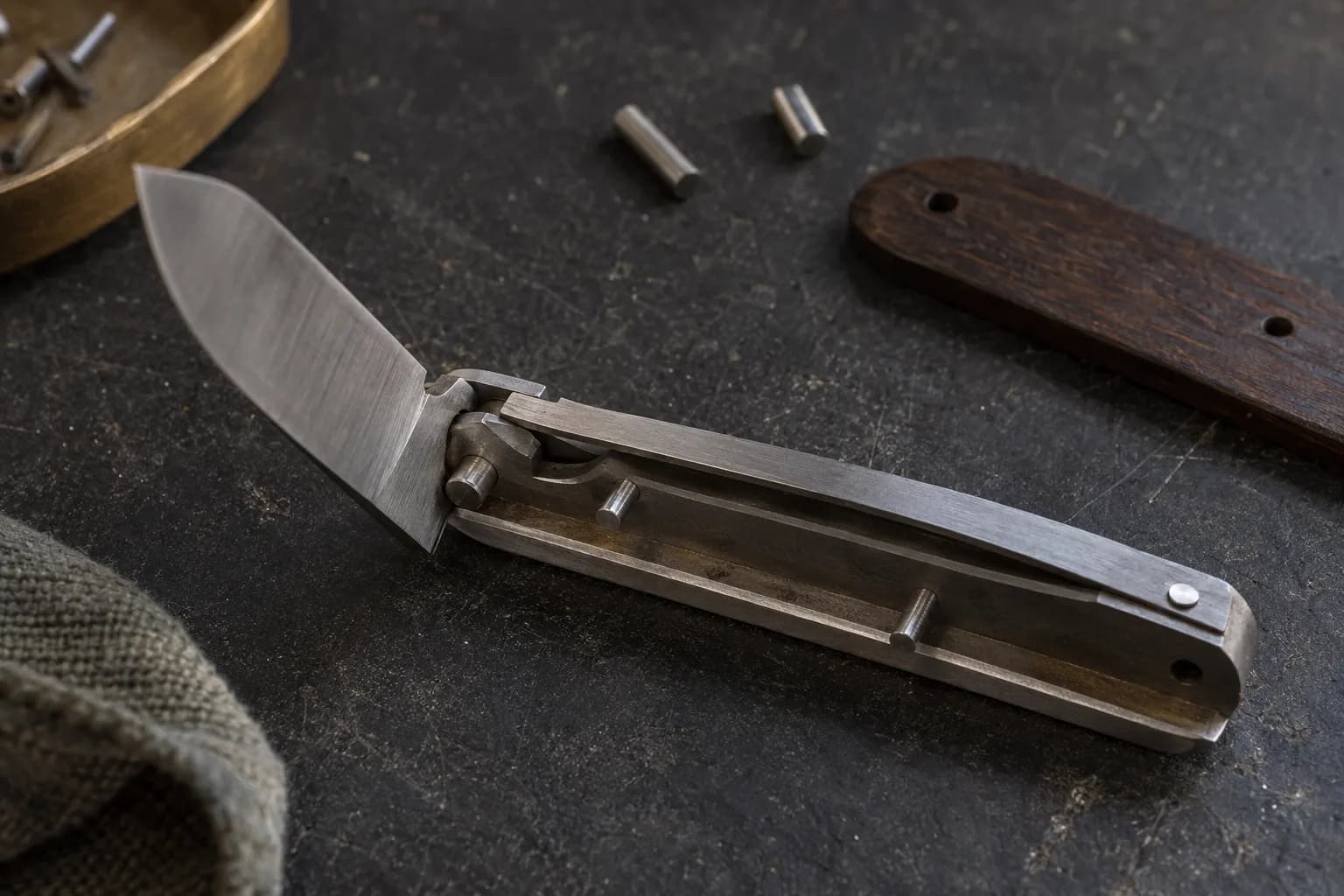
The backspring runs the handle’s spine, pinned at the butt, bearing on the tang at the pivot end. The tang is ground as a cam: flats for closed and open (and usually a half-stop flat at ninety degrees — the safety courtesy that pauses a closing blade), radiused corners between them. Spring tension against those surfaces IS the action: the pull weight opening, the snap home, the authority of the stop. No detent, no lock — geometry and spring doing everything.
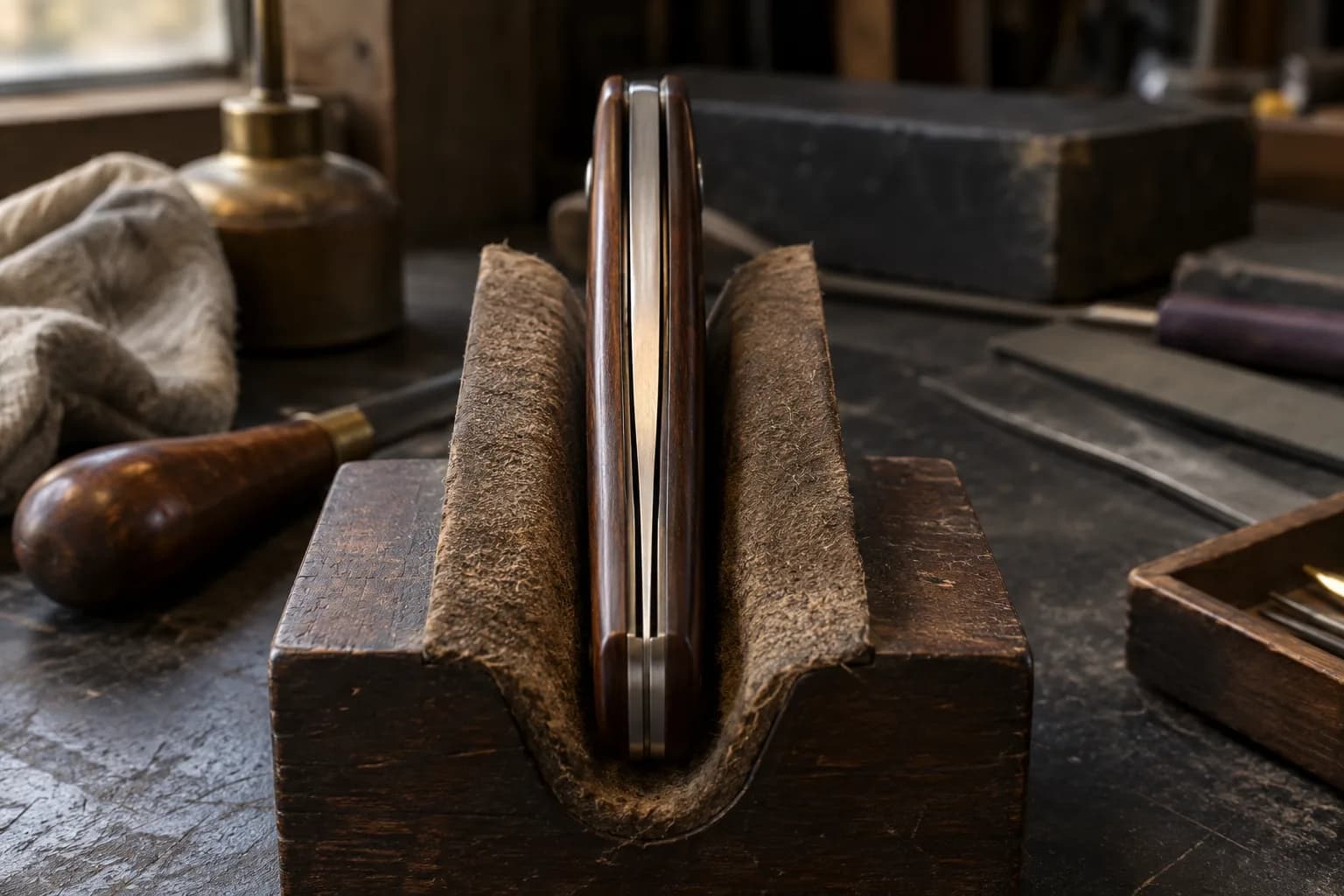
Traditional slipjoint judging is beautifully specific. Flush transitions: the spring’s spine sits flush with the handle at closed, at open, AND at the half-stop — three positions, one spring, pure cam-geometry discipline (a proud or sunken spring at any position is the tell of an unresolved cam). Centered blade, no play, kick set so the edge never touches the spring channel. Pull weight on the traditional 1-to-10 feel scale, with 5-7 the working norm. Walk and talk: smooth travel, decisive snap. Every one of these is decided at the tang grind and spring fit — thousandths again.
The sequence that works: blade and tang cam first (card template, then grind the flats true and square to the blade — the flats’ distances from pivot center set the flush conditions), spring next (spring steel like 1095 or 5160 class, heat treated to spring temper — the blade gets blade hardness, the spring gets drawn far softer, per the temper chart’s blue range), then the fit dance: assemble on temporary pins, read the flush states, adjust cam flats a few thousandths at a time. Pinned construction is traditional (peened brass or stainless through bolsters); screwed construction is legitimate modern practice and kinder to iteration.
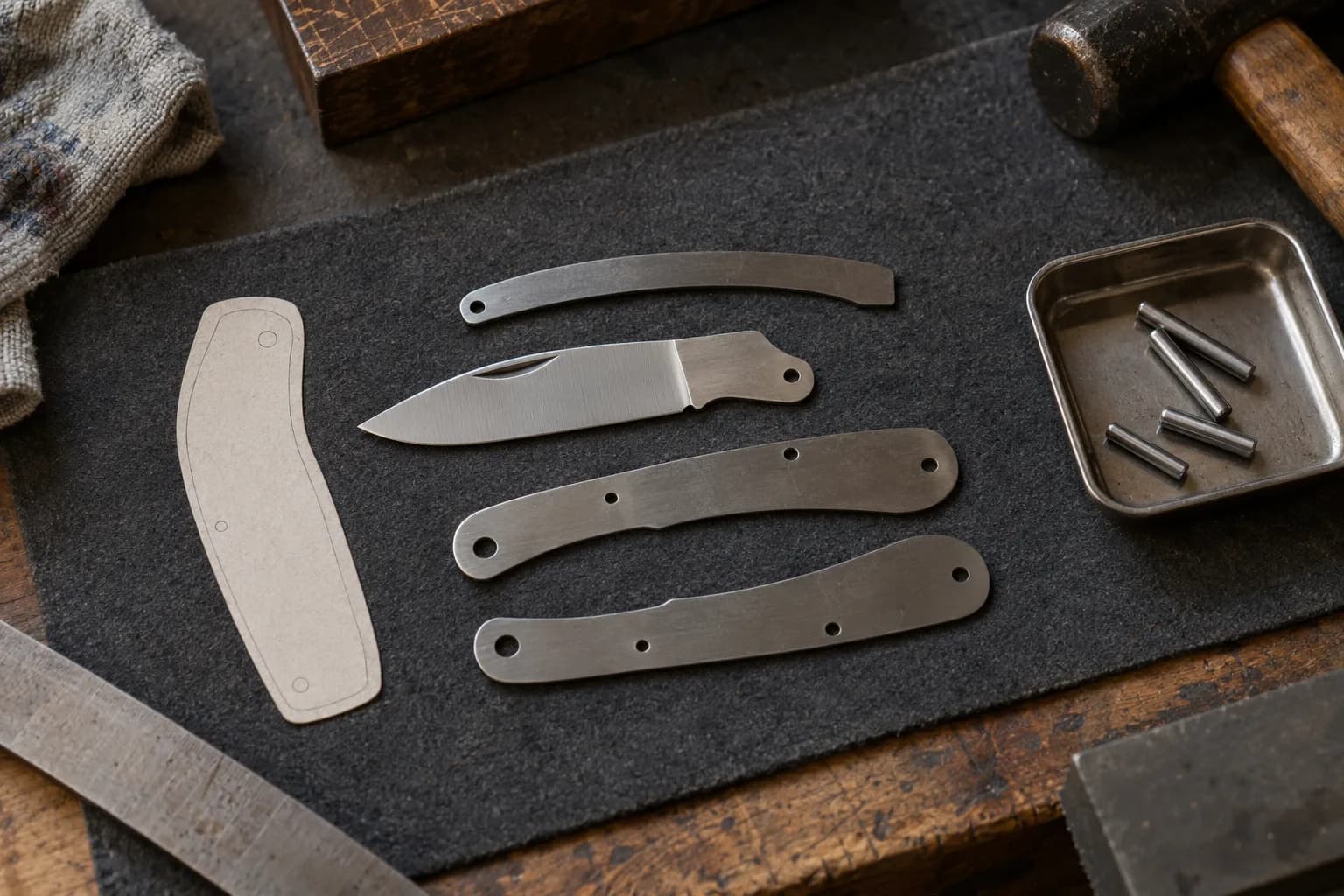
The traditional patterns — trapper, stockman, barlow, sodbuster, congress — carry a collector culture as specific as their standards, and a maker entering it inherits both. Single-blade slipjoints (one spring, one blade) are the honest first; multi-blade stockmen with their crink-bent blades and shared springs are the doctoral thesis. Market truth: hand-made slipjoints command serious prices precisely because the standards are inspectable — flush at three positions is either there or it is not. Start after the friction folder, expect the first spring to be scrap steel tuition, and join the last corner of the knife world where ‘walks and talks’ is a complete review.
Keep reading
Three more from the same bench.
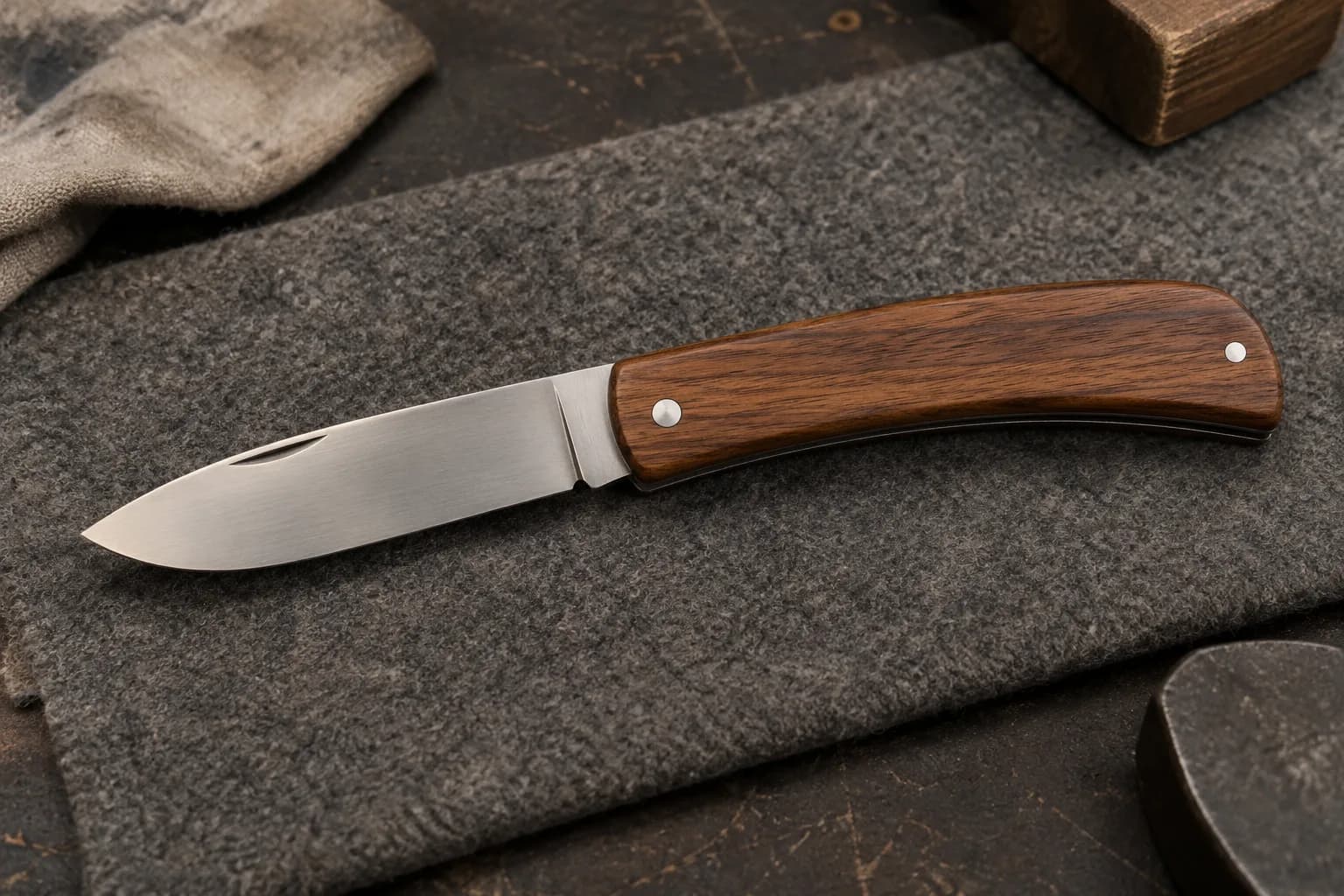
The friction folder is folder-making with the hard parts removed and the important parts kept: no lock, no detent, no spring — just a blade, a pivot, and…
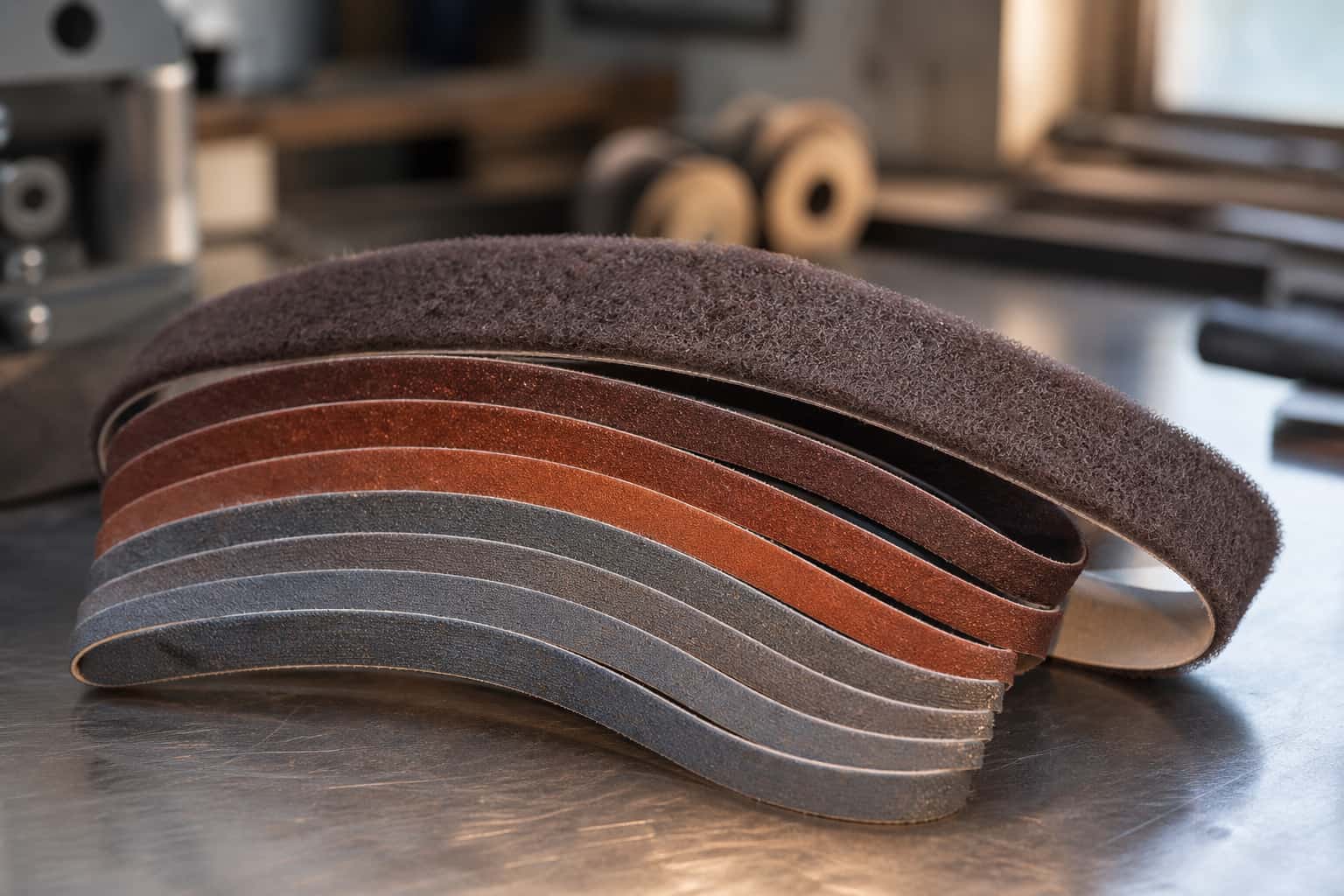
The lock is the folder’s signature mechanism, and every major type is a different answer to one question: what holds the blade open when the cut pushes…
Two folders can share identical parts lists and feel nothing alike — one glassy and crisp, one gritty and vague. The difference is tuning: the last…
Same bench
I machine the parts, hand-assemble, track and test Torus grinders in Sterling, Illinois. Most orders ship in seven to ten business days from time of order.
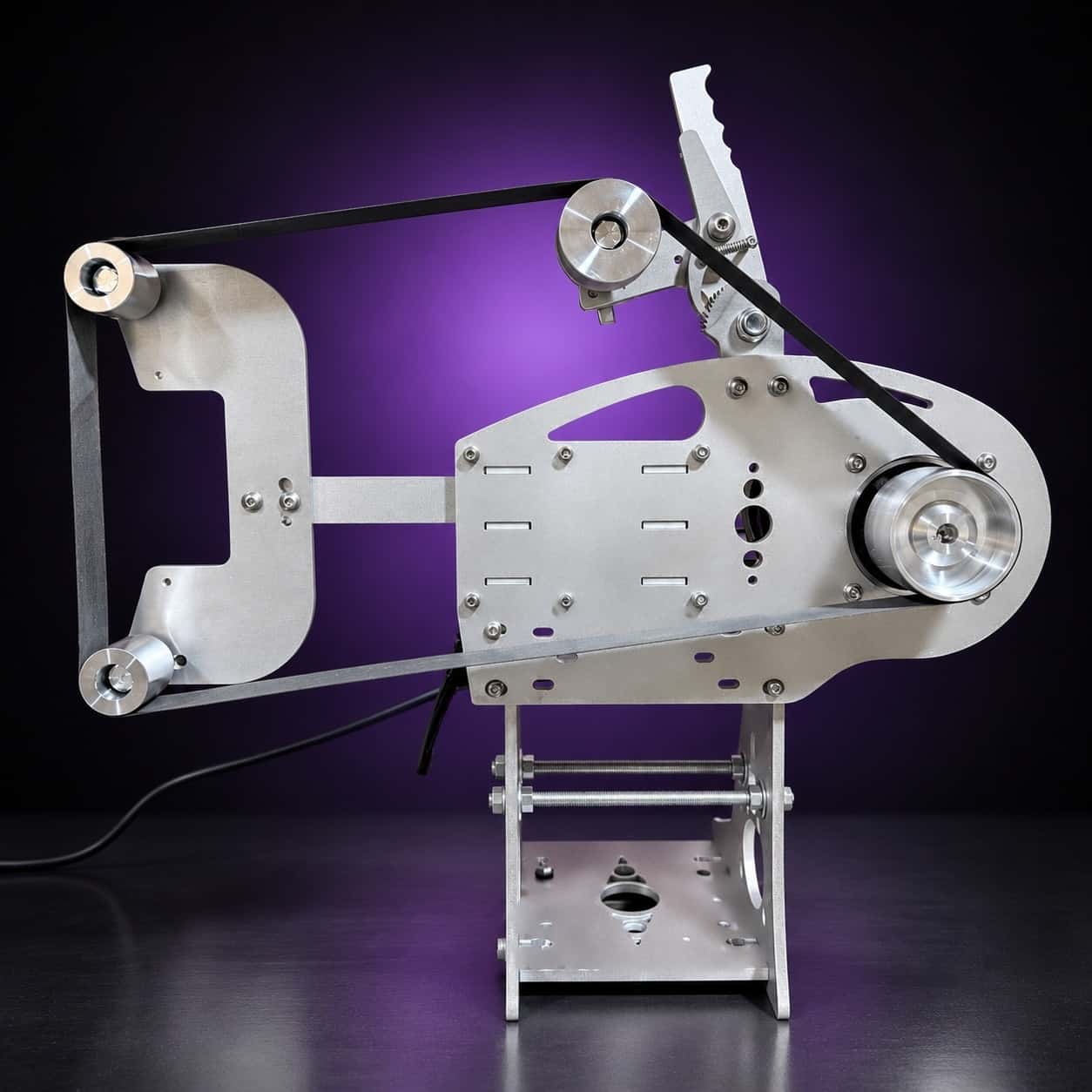
Current dual-axis platform with a fiber-laser-cut 6061 chassis and single-knob tracking.
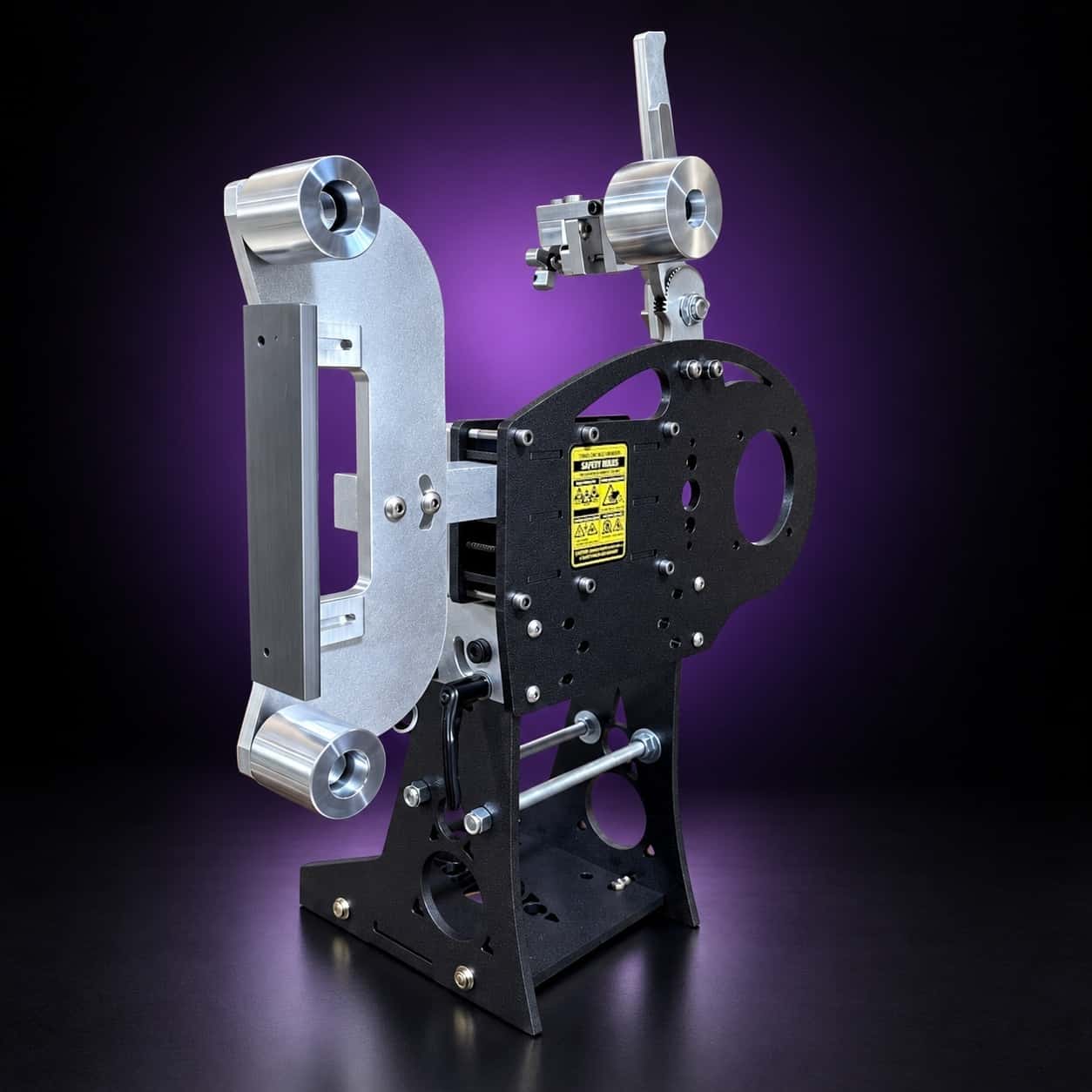
Current dual-axis platform with a steel chassis, more mass and less vibration.
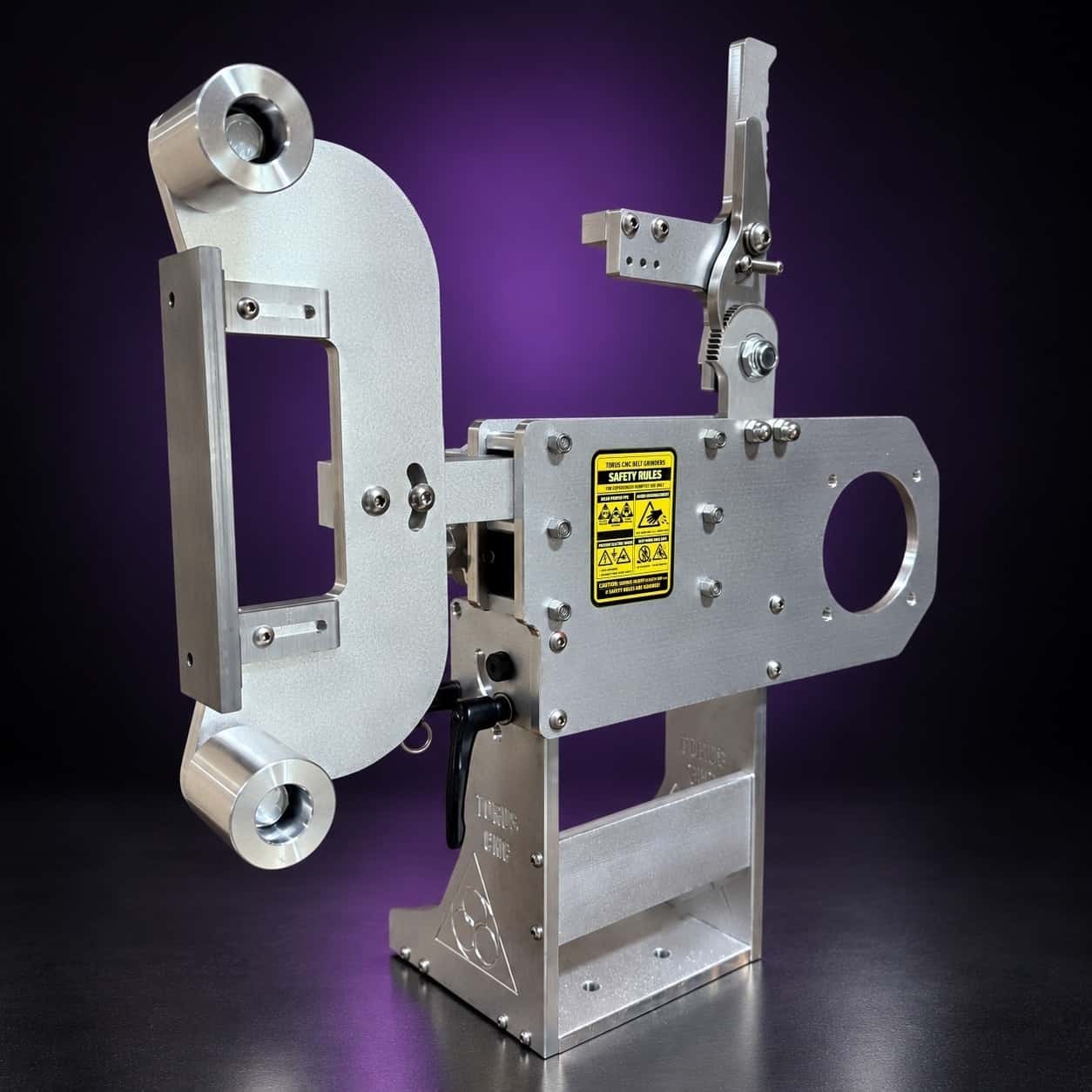
Prior-design aluminum chassis, 90-degree tilt and 1.5-inch tooling arms.
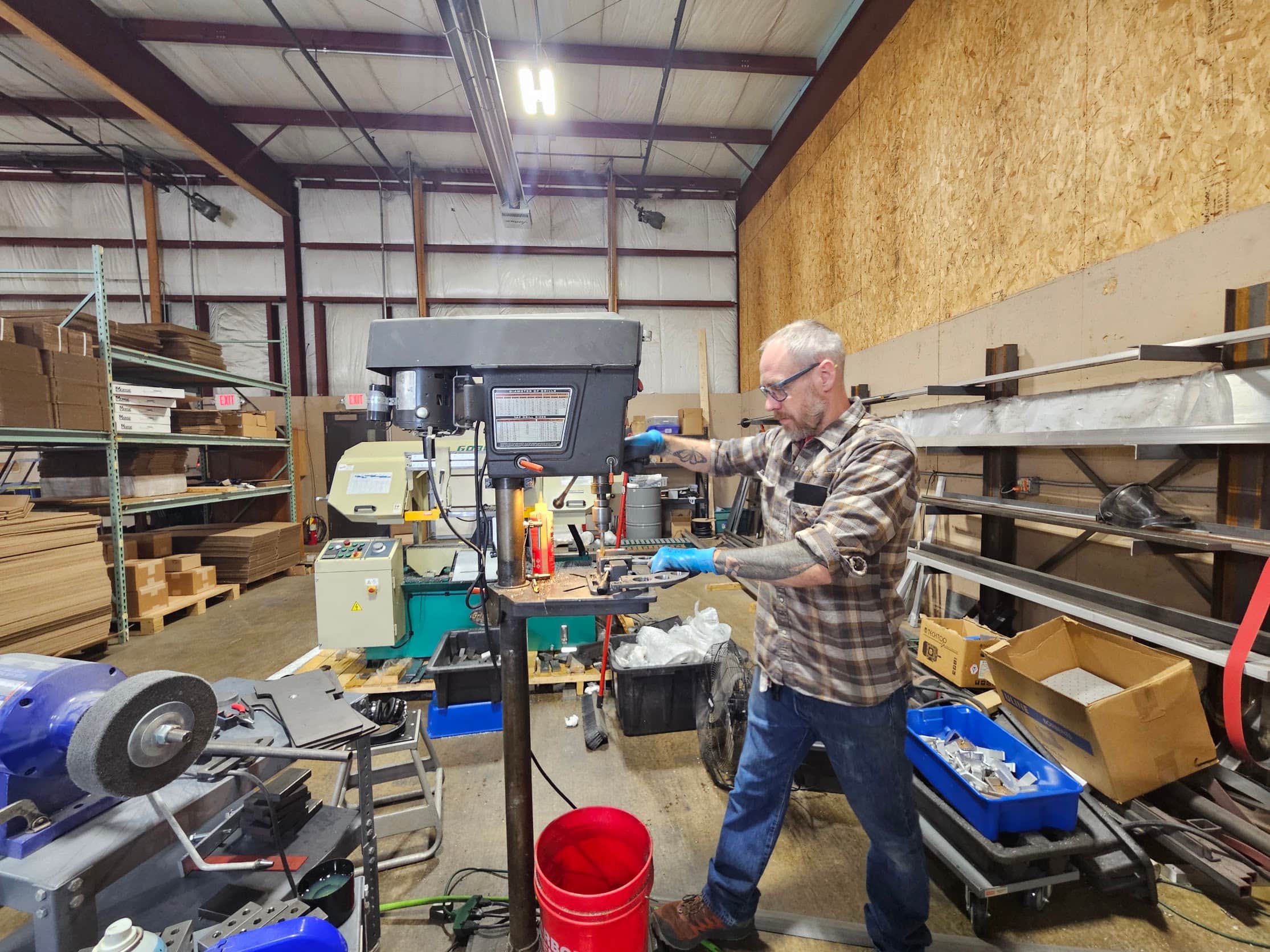
One-man shop
I answer my own email. Tell me the steel, the machine and what it is doing, and I will tell you what I would try next.