
Folding Knives
Folder Anatomy: How a Folding Knife Actually Works
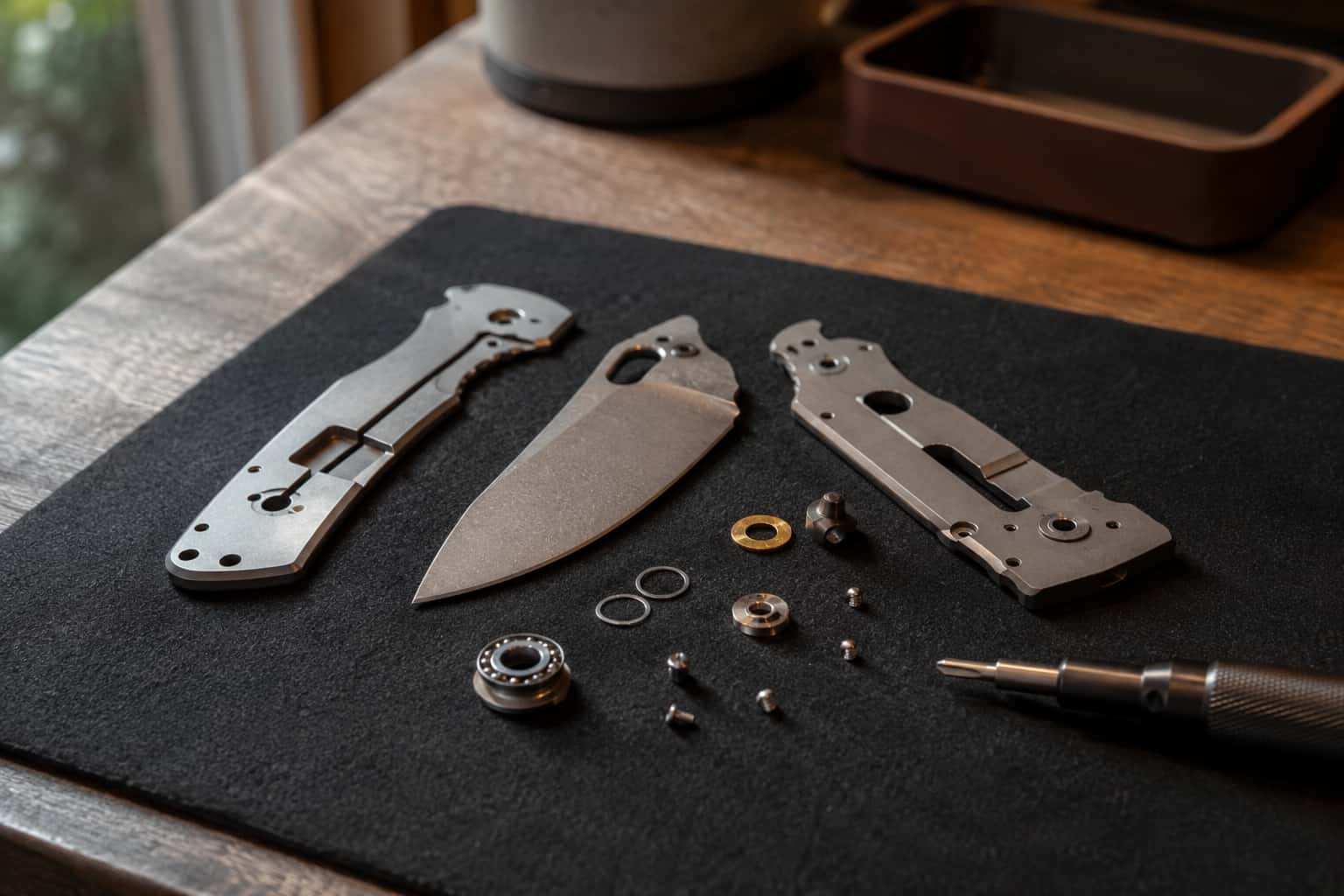
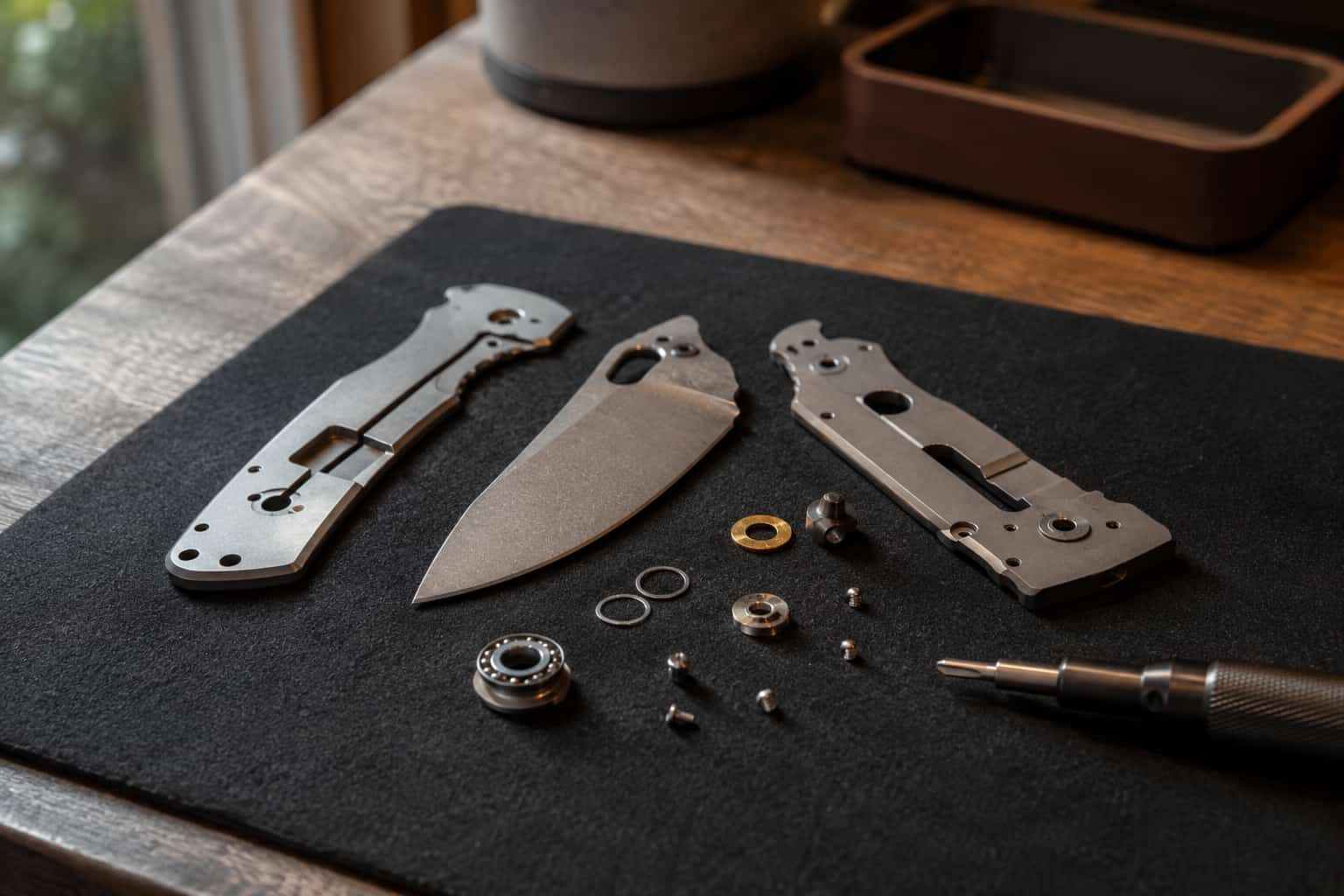
A fixed blade is a shape; a folder is a MACHINE — a dozen parts in moving agreement, where a thousandth of an inch is the difference between glass-smooth…
Folding Knives
Grinding blades that fold: machined-grade tang radii, the thickness stack, pocket-scale grind heights, the sharpening choil, and centering the blade.
2 min readWritten by Rich LinvilleFree to read
A folder blade is a knife AND a machine part, and the machine half has opinions about the grinding. Everything from the EDC geometry guide still applies — this guide covers what changes when the blade has to fold.
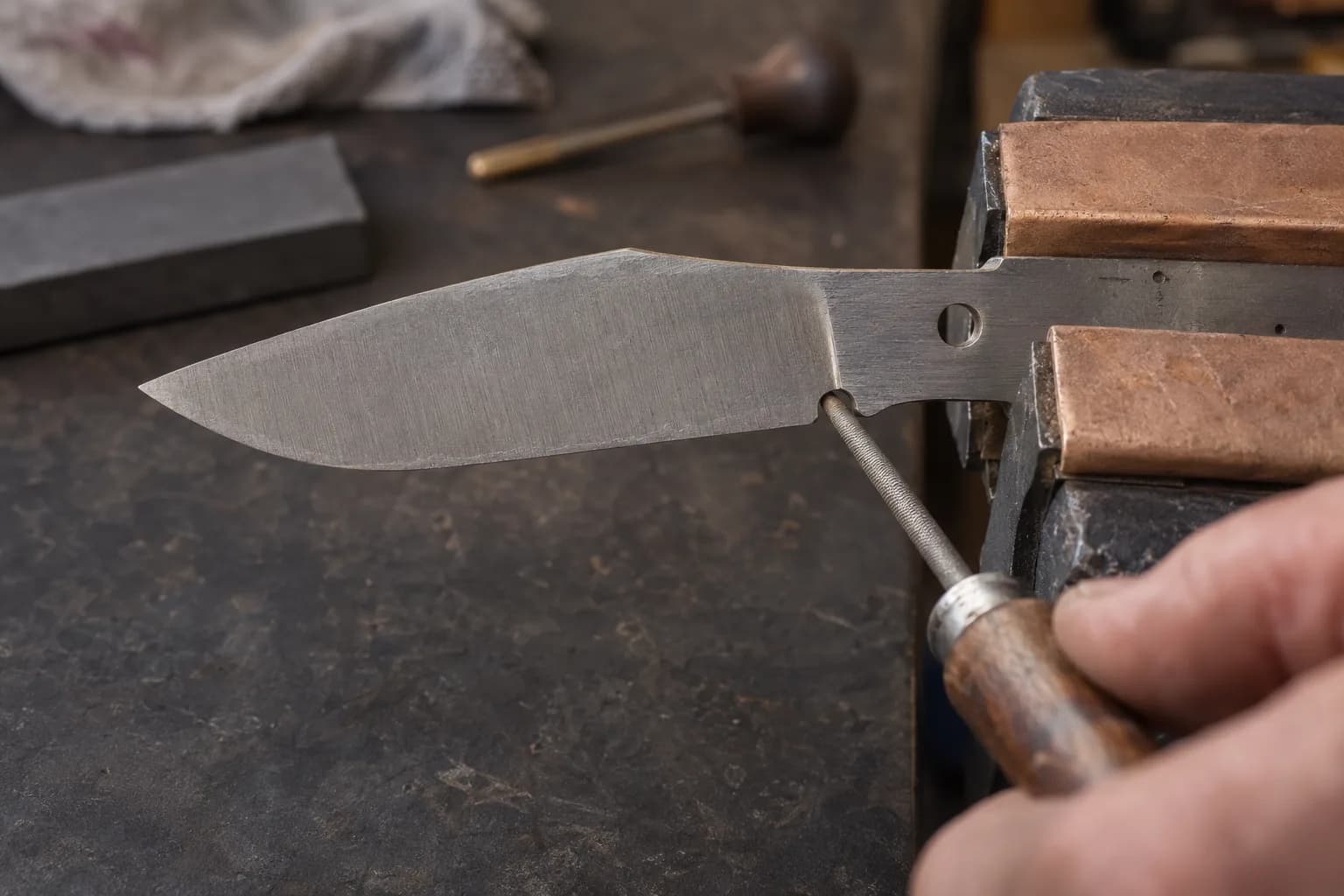
The blade’s working end gets ground; the tang gets MACHINED-grade discipline: constant radius around the pivot (scribe from center, grind to the line on a small wheel or spindle), flats dead flat and polished (they are bearing surfaces), and the functional stations — lock face, detent track, stop flats — placed by template and cut deliberately. Heat treat covers the tang too: locking faces and detent tracks want blade hardness (soft tangs dent, per the bearing warning), which means all tang geometry is finish-ground post-HT with the usual cool discipline.
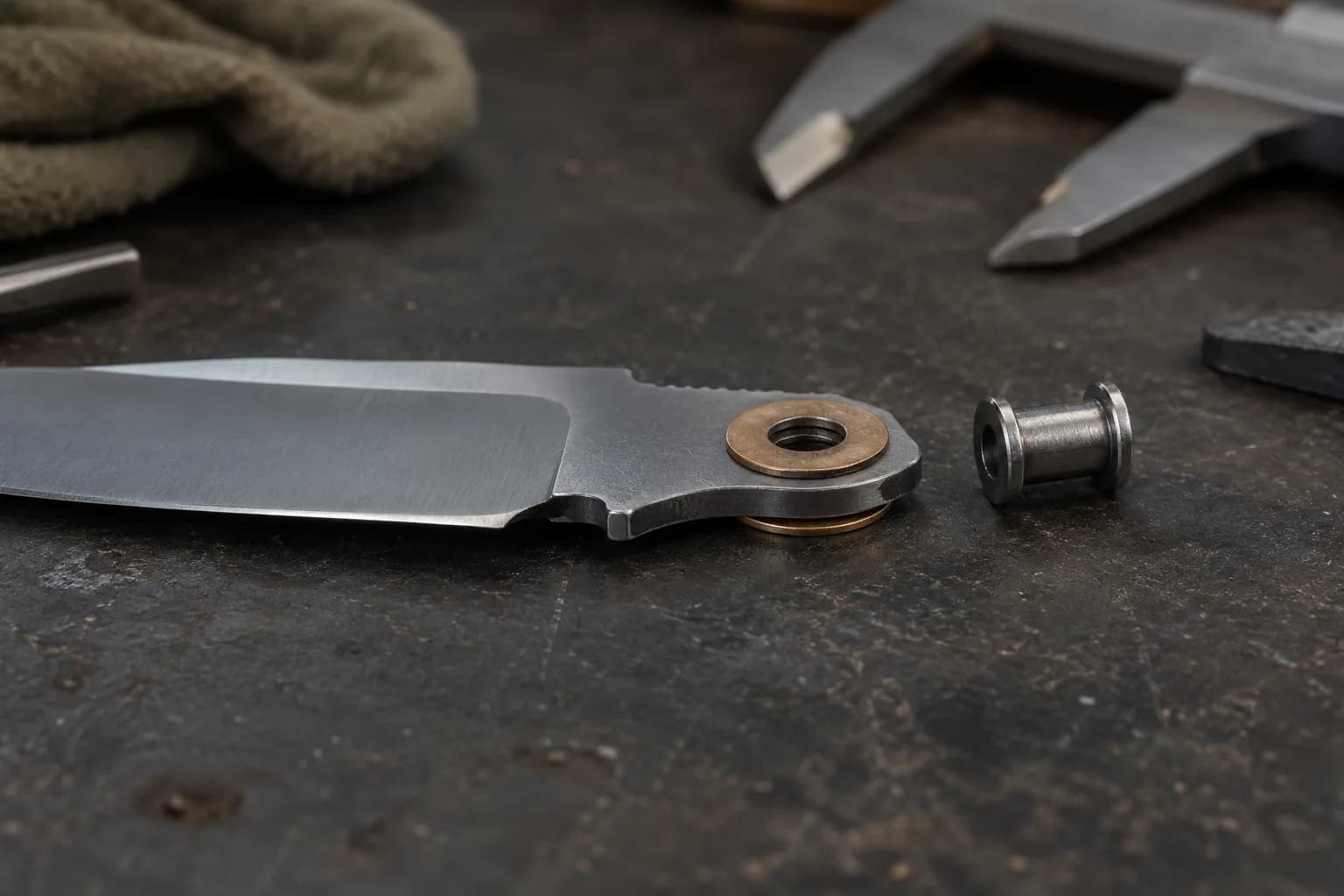
Folder design starts from a thickness budget: blade stock + two washers must equal the pivot barrel’s working length and the channel’s width, with the blade centered in what remains. Common working math: 1/8 or 3/32 blade stock, 0.025-class washers, liners to suit. Change any layer and the stack changes — which is why folder blades get ground to a MEASURED thickness, not a vibe, and why the caliper lives at the folder bench.
Small blades tighten the geometry game: a 3-inch blade at 7/8 width leaves little room for grind height error, so the grind height calculator earns its keep before every folder bevel. Hollow and flat grinds both serve (the EDC guide’s logic unchanged); what folders add is the plunge discipline — plunge lines sit clear of the pivot area and match side to side, because a folder is inspected closed, where both plunges show at once. Tips get one extra rule: the closed tip must bury below the liner line with margin — a proud tip in the channel is the injury the whole mechanism exists to prevent.
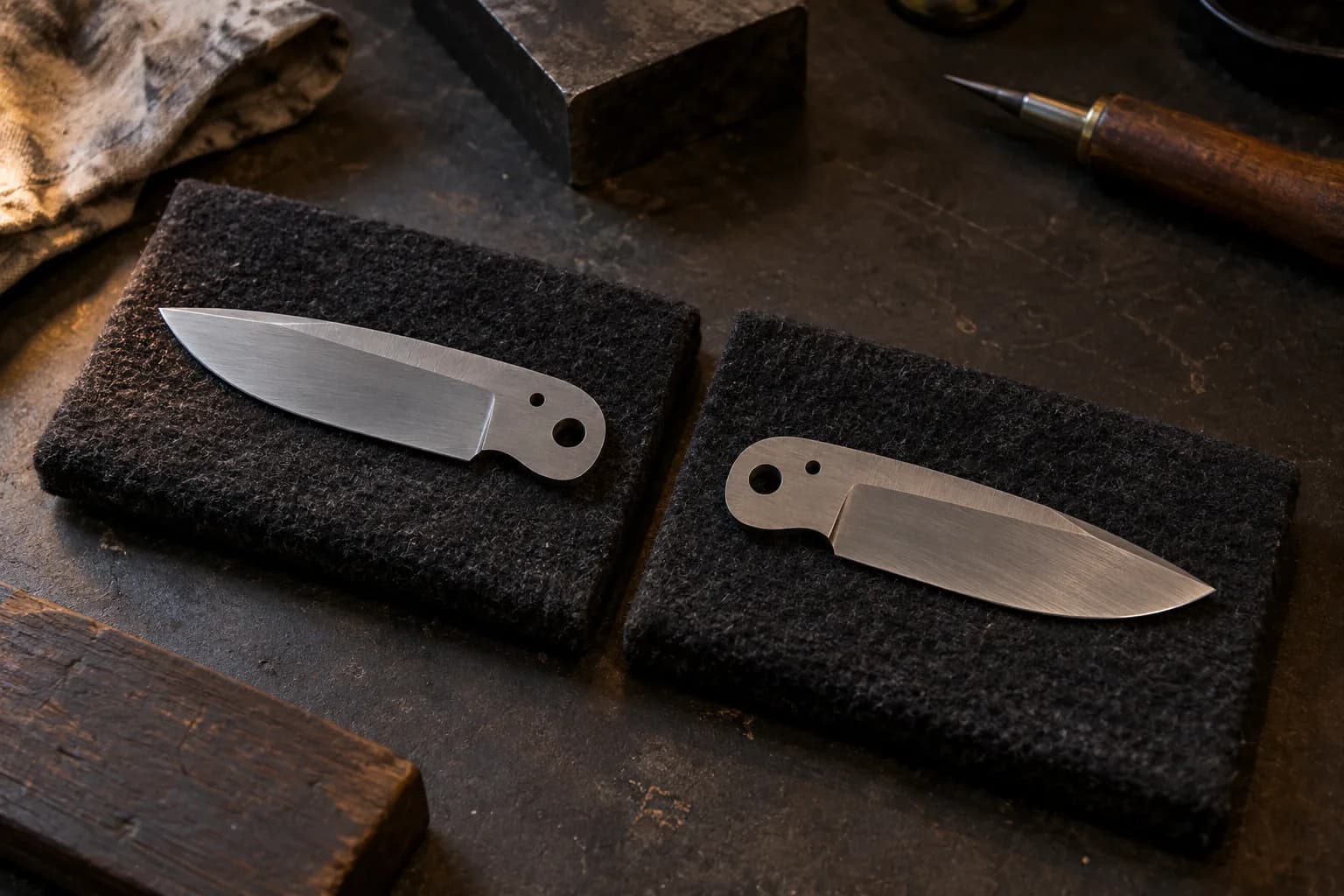
Folders want a small sharpening choil (notch between edge heel and ricasso) more than any fixed blade: the edge must end cleanly before the tang’s mechanical zone, and stones need runout room or the heel goes recurved in a year. Cut it with a small wheel or round file before HT; size it so the stone exits, not so a finger enters (finger choils on small folders eat cutting edge the pocket paid for).
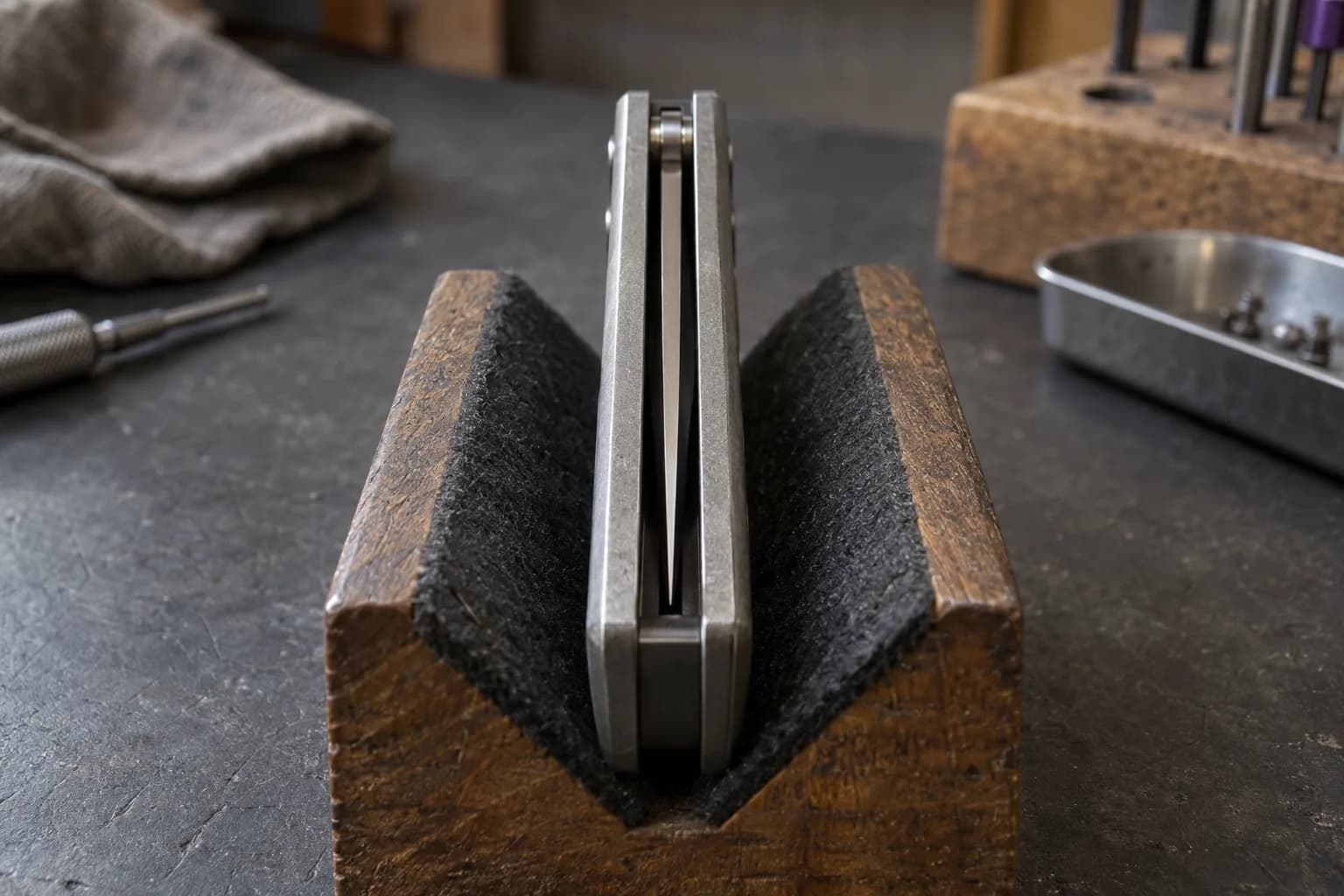
Closed centering — the blade splitting the channel — is the folder’s handshake inspection, and it is set by the whole system (tang flats, washer equality, liner squareness, pivot fit) rather than one adjustment. The blade’s closed rest position is set by the kick (slipjoints) or stop pin/detent geometry (locking folders): adjust so the EDGE never kisses the backspring or spacer — an edge that touches steel at closing dulls itself with every pocket day, and grinding the kick is the fix, taken slow, because kick steel only removes once. The blade earns its centered, buried, clean-stopped close — and then it is both a knife and a machine part, finished.
Keep reading
Three more from the same bench.
A fixed blade is a shape; a folder is a MACHINE — a dozen parts in moving agreement, where a thousandth of an inch is the difference between glass-smooth…
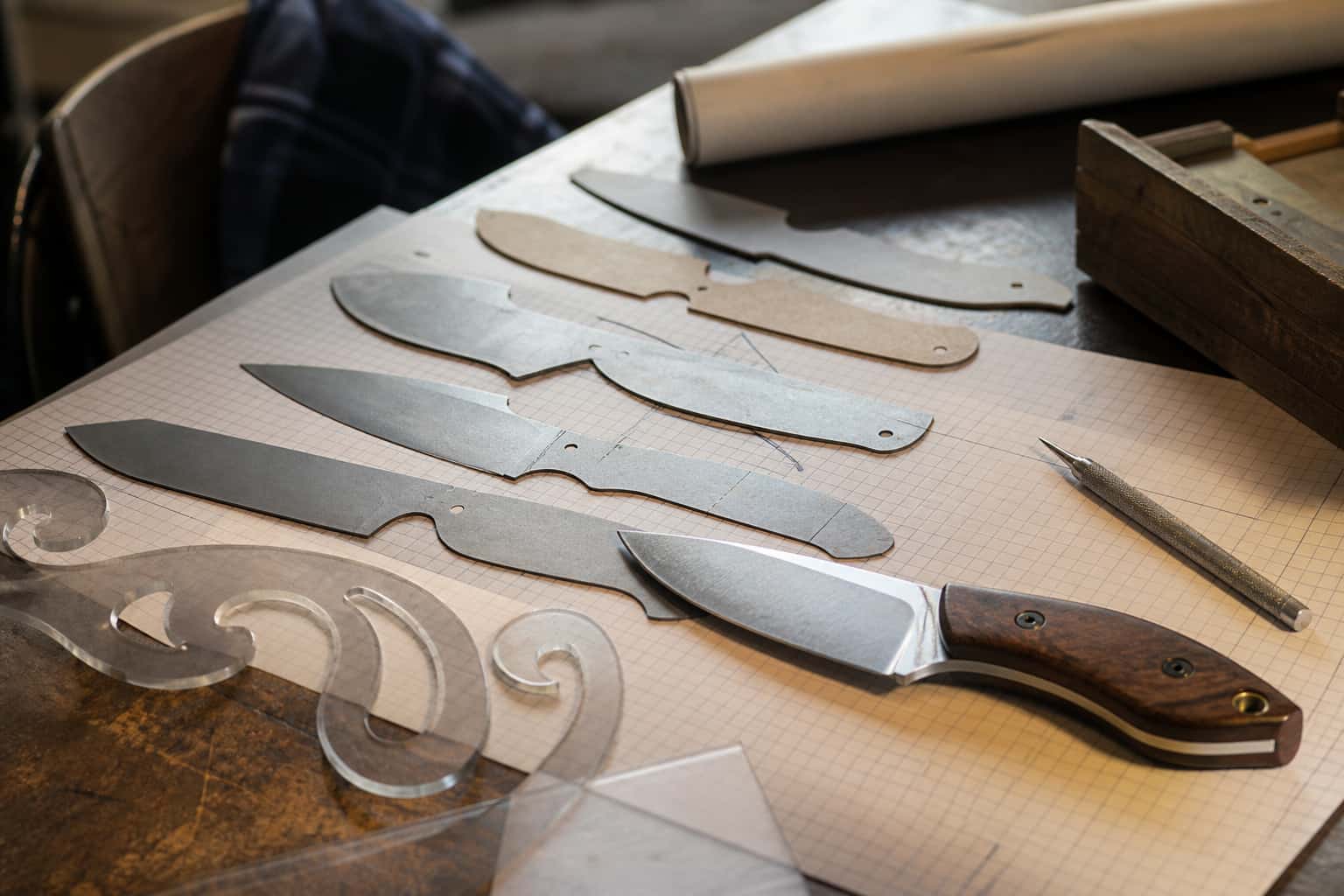
An EDC blade leads the hardest life in the knife world: cardboard by the mile, plastic strapping, food at lunch, a staple it never saw coming — owned by…
Folder hardware is a small parts bin with outsized consequences: the pivot, two washers and a handful of screws decide more of the knife’s feel than any…
Same bench
I machine the parts, hand-assemble, track and test Torus grinders in Sterling, Illinois. Most orders ship in seven to ten business days from time of order.
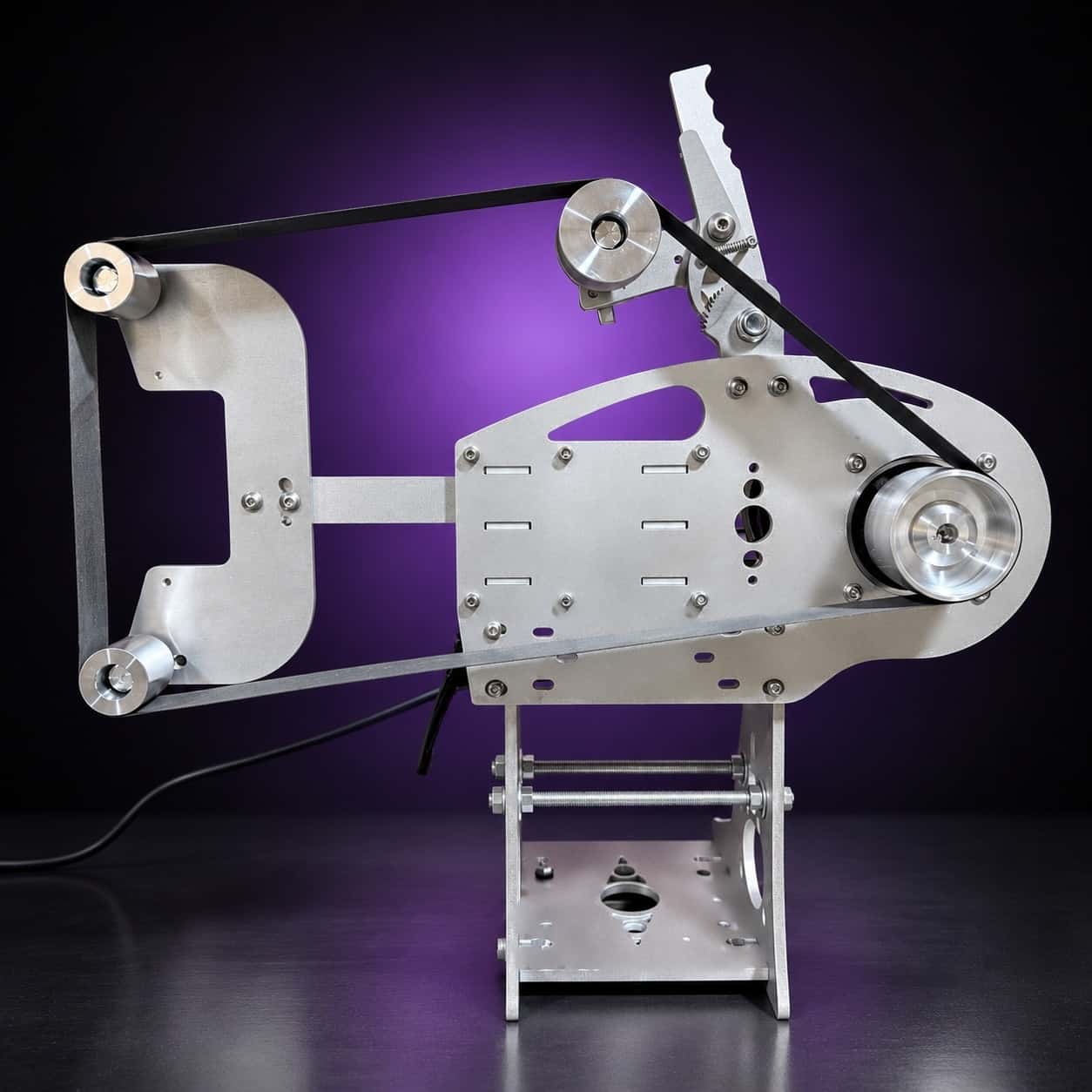
Current dual-axis platform with a fiber-laser-cut 6061 chassis and single-knob tracking.
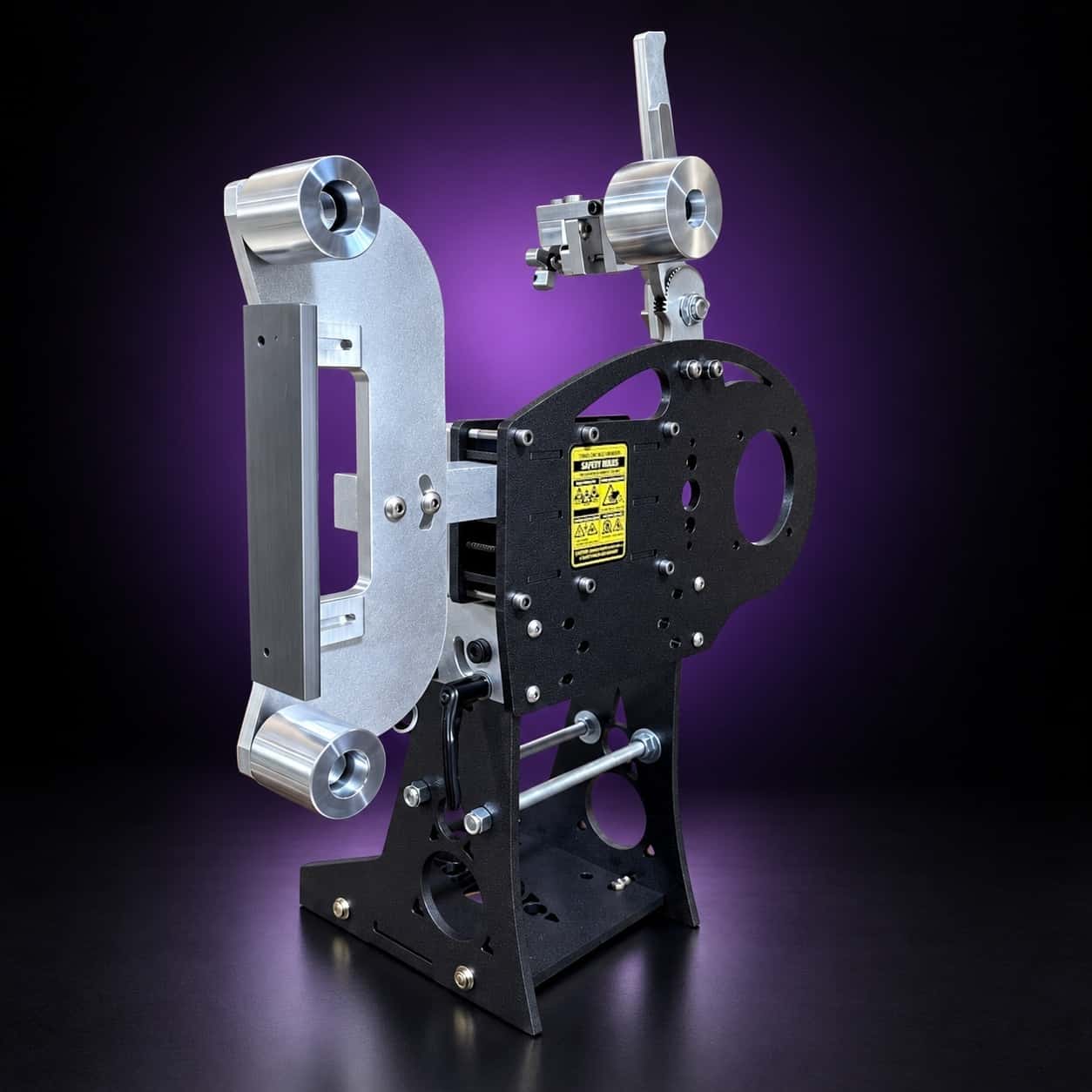
Current dual-axis platform with a steel chassis, more mass and less vibration.
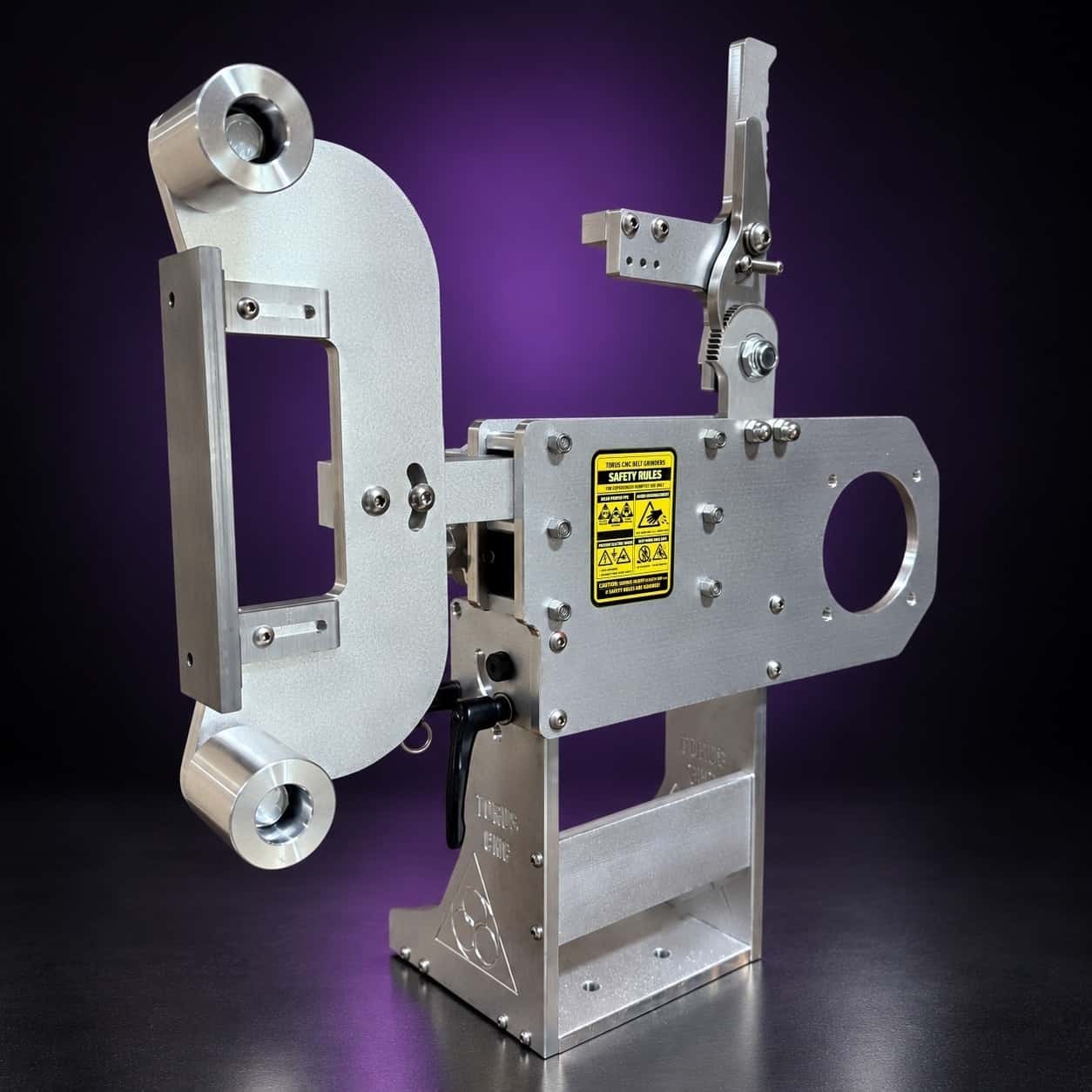
Prior-design aluminum chassis, 90-degree tilt and 1.5-inch tooling arms.
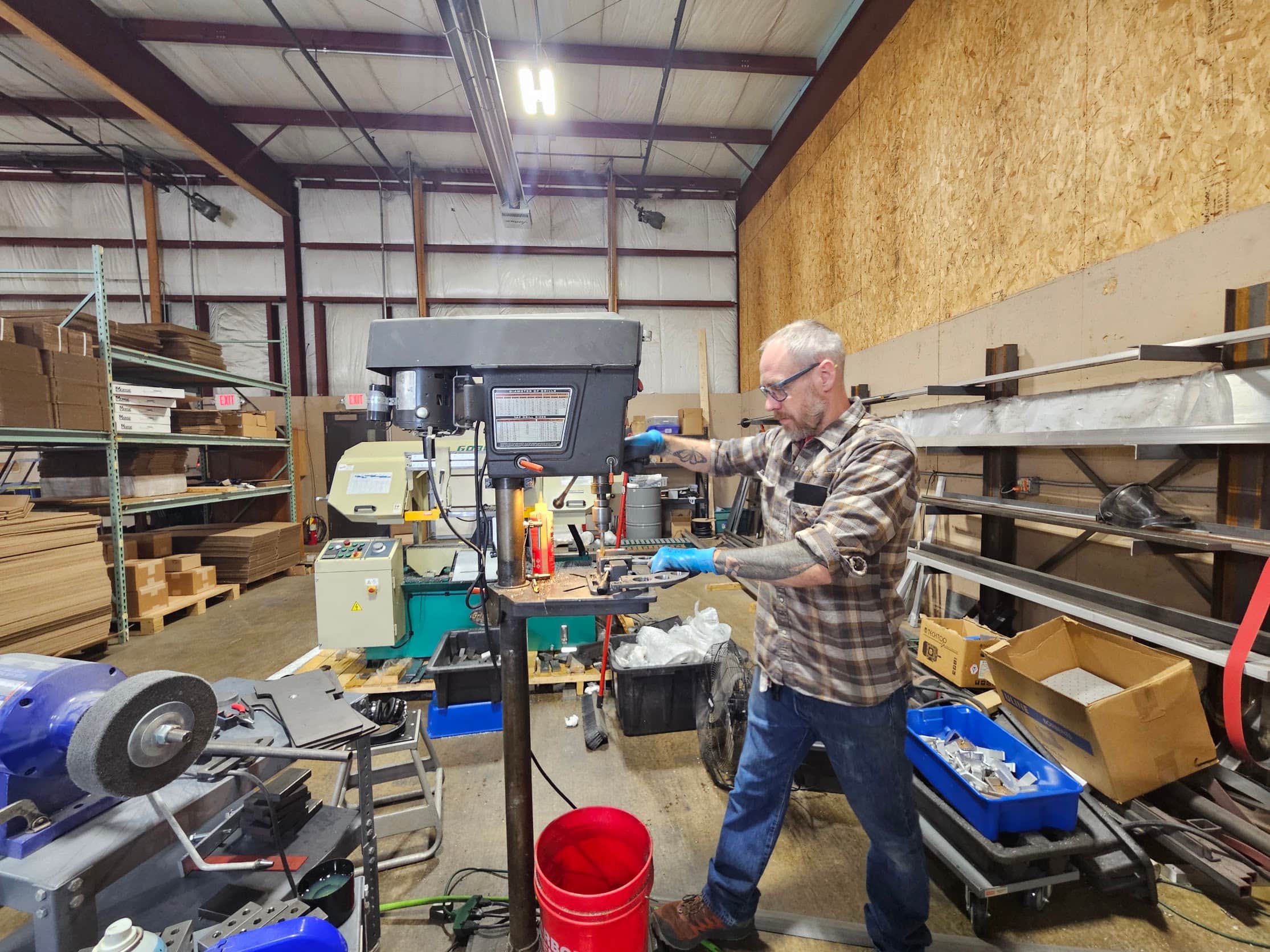
One-man shop
I answer my own email. Tell me the steel, the machine and what it is doing, and I will tell you what I would try next.