
Folding Knives
Folder Anatomy: How a Folding Knife Actually Works
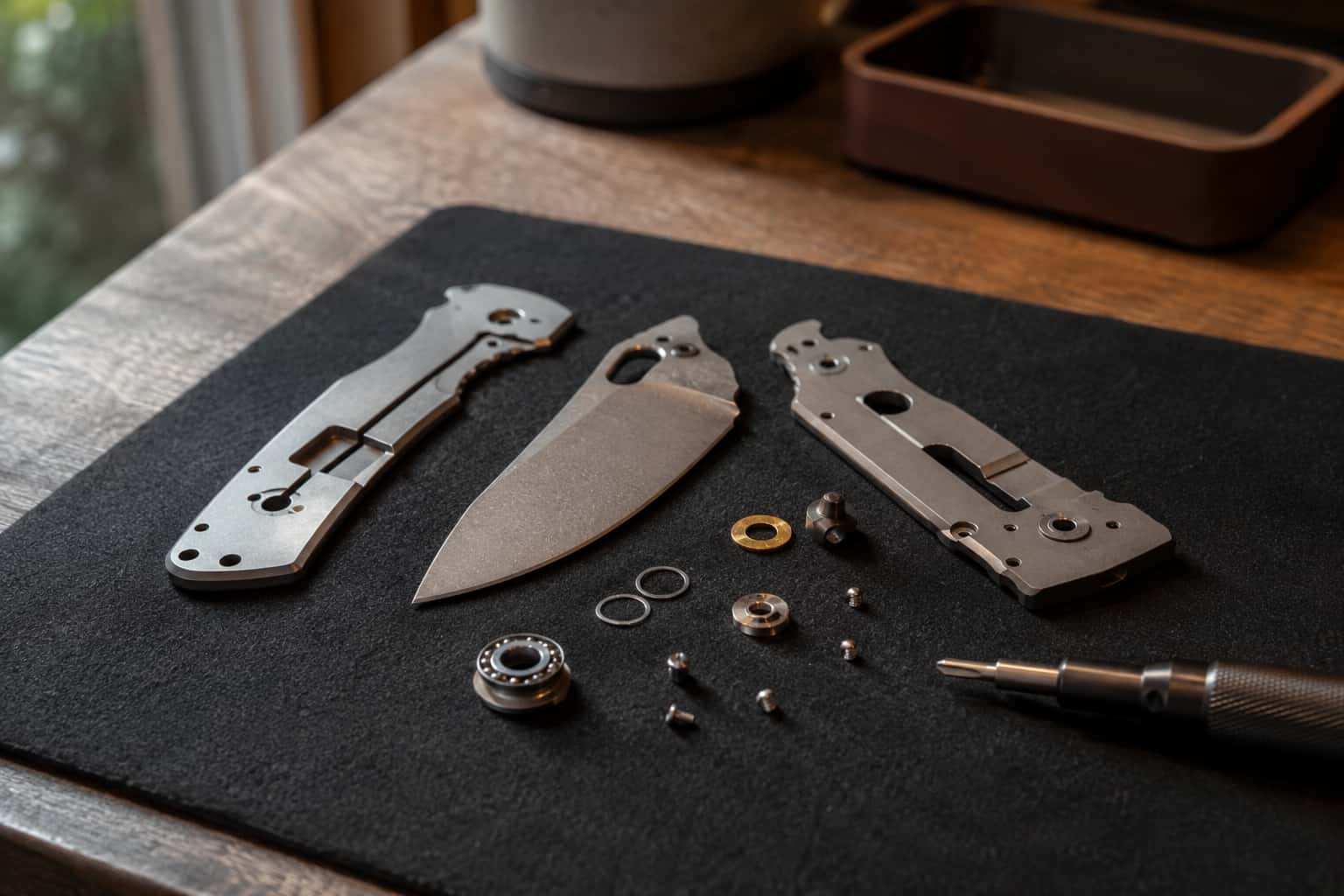
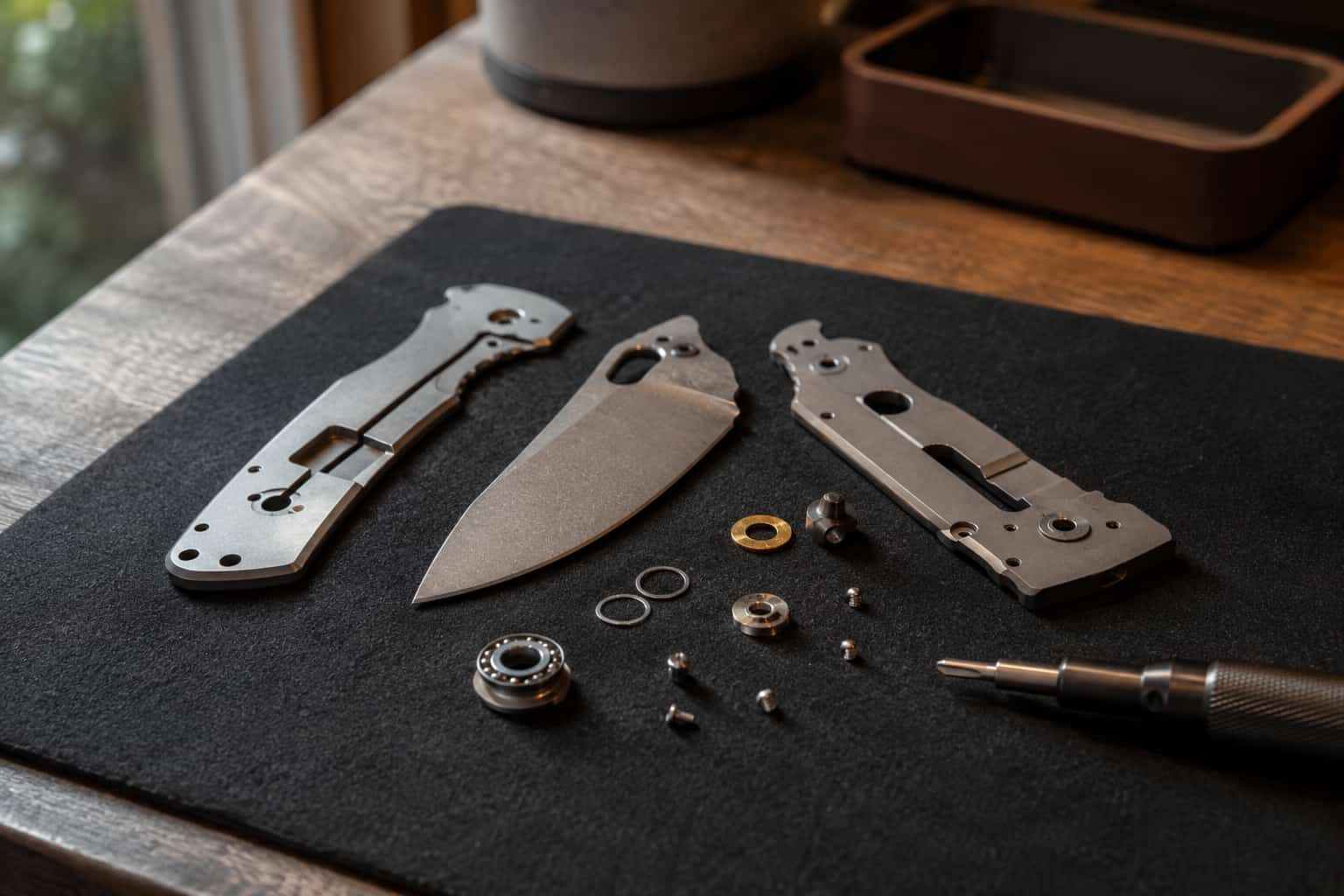
A fixed blade is a shape; a folder is a MACHINE — a dozen parts in moving agreement, where a thousandth of an inch is the difference between glass-smooth…
Folding Knives
The friction folder is folder-making without the lock: tang, pivot, washers and fit - a full build path from blade to extended-tang pocket knife.
2 min readWritten by Rich LinvilleFree to read
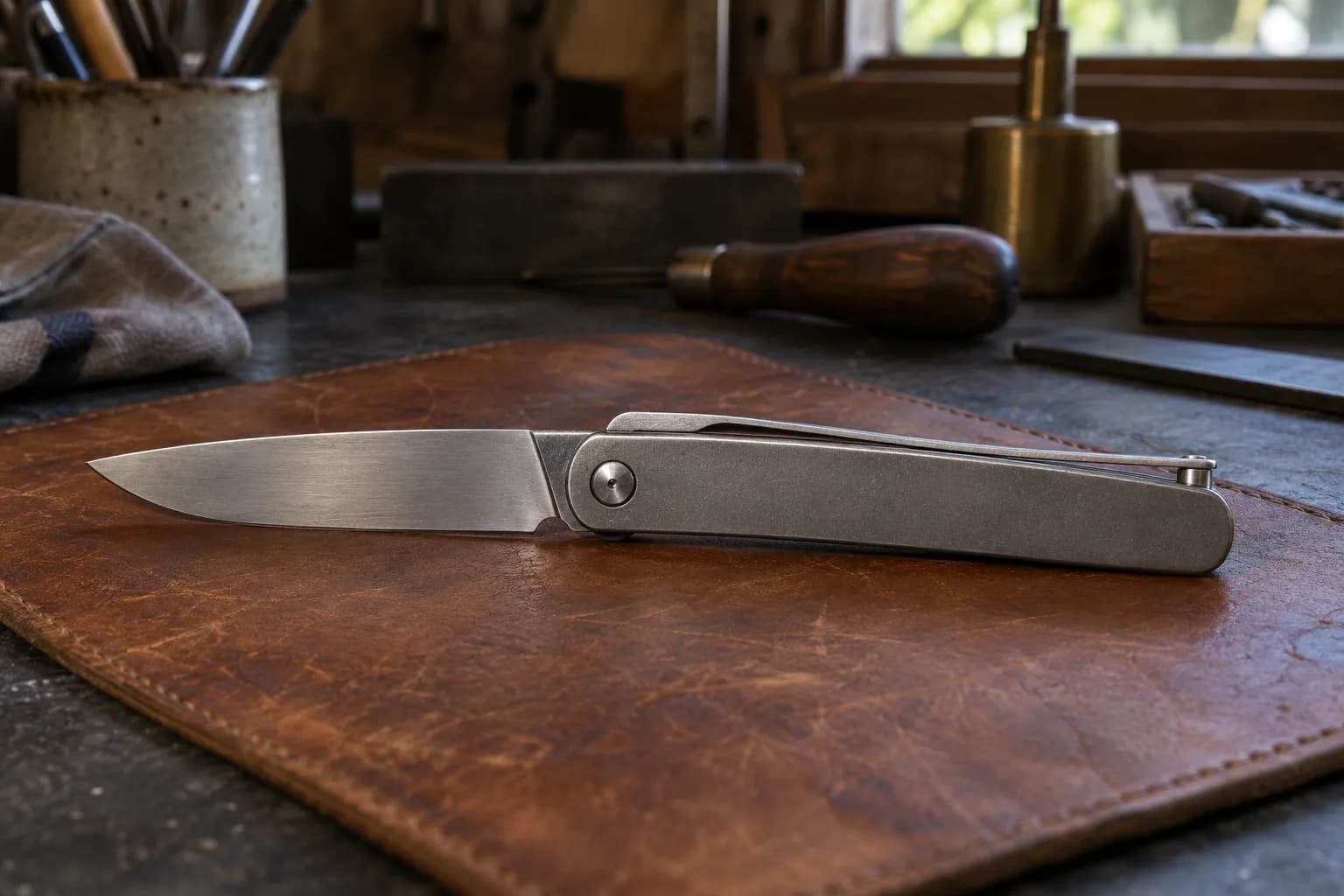
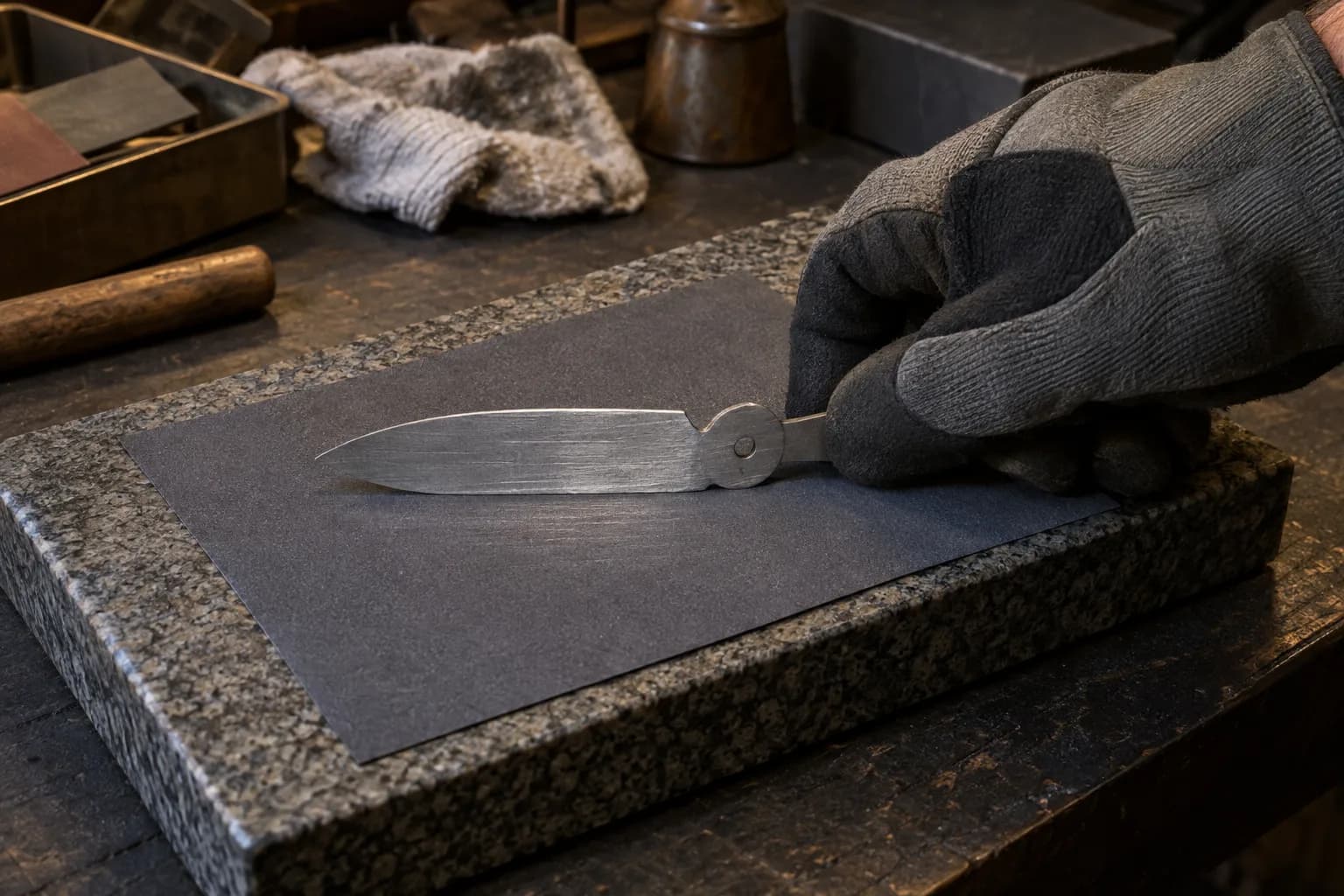
The friction folder is folder-making with the hard parts removed and the important parts kept: no lock, no detent, no spring — just a blade, a pivot, and an extended tang that your grip pins open. It is the oldest folding knife design on earth (Roman examples survive) and the perfect first folder, because it teaches the skill that actually rules the craft: pivot fitting.
The blade’s tang extends past the pivot into a tail (often gracefully curved) that, when the blade opens, lays along the handle’s spine — under your grip. Held, the knife cannot close; pocketed, the blade folds friction-snug into the channel. Adjustable friction at the pivot does the rest: firm enough to stay where put, free enough to open with a thumb on the tang. The Japanese higonokami runs this pattern with a simple flat tang lever; the French piemontais the same idea centuries older.
Blade: 2.5-3.5 inches, simple drop or wharncliffe, from 3/32 stock — any fine steel works, and this is a beautiful home for AEB-L or a 26C3 patina blade. Tang: the disc around a 3/16 or 1/4 pivot hole, radius CONSTANT (scribe it with a compass from the pivot center and grind to the line), flats sanded flat and polished — plus the tail, shaped so it nests the spine at open and clears at closed; card-stock template first, always. Handle: two liners (Ti or stainless sheet) or a one-piece channel handle in hardwood or micarta; pivot barrel and screw; two bronze washers; a spine pin or standoff for the tail to seat against. No other mechanism exists to fight you.
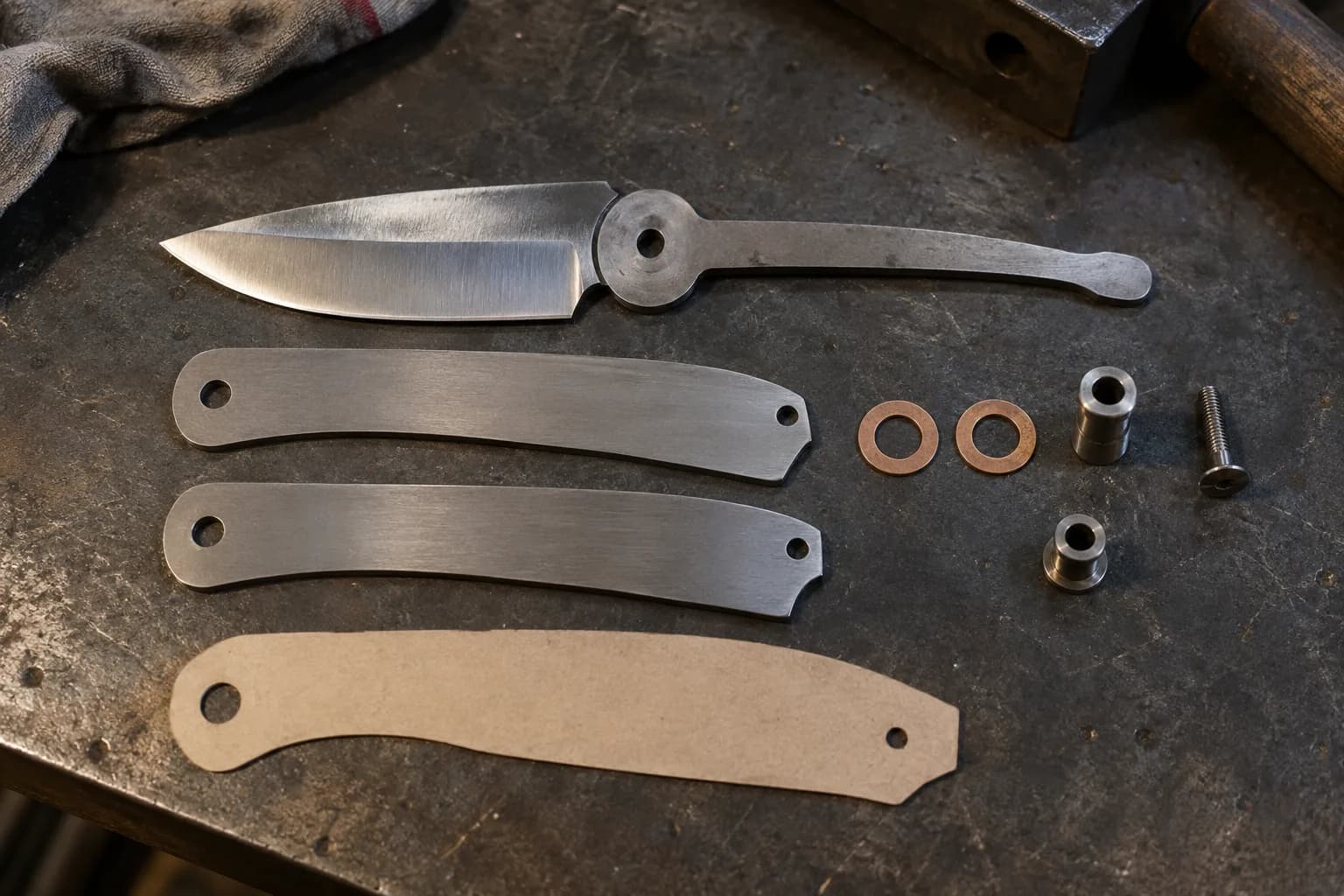
Everything folders demand shows up here in its gentlest form. Tang flats: sand on a granite plate to dead flat — any burr or wobble reads instantly in the action. Radius truth: an out-of-round tang gaps and binds through the arc; the fix is patient spindle or small-wheel work back to the scribed circle. Washer stack: pivot tension is your action dial — snug, test, adjust; thread-locker only at final. Centering: shim and square the liners until the closed blade splits the channel. Two evenings of this and you understand folders from the inside.
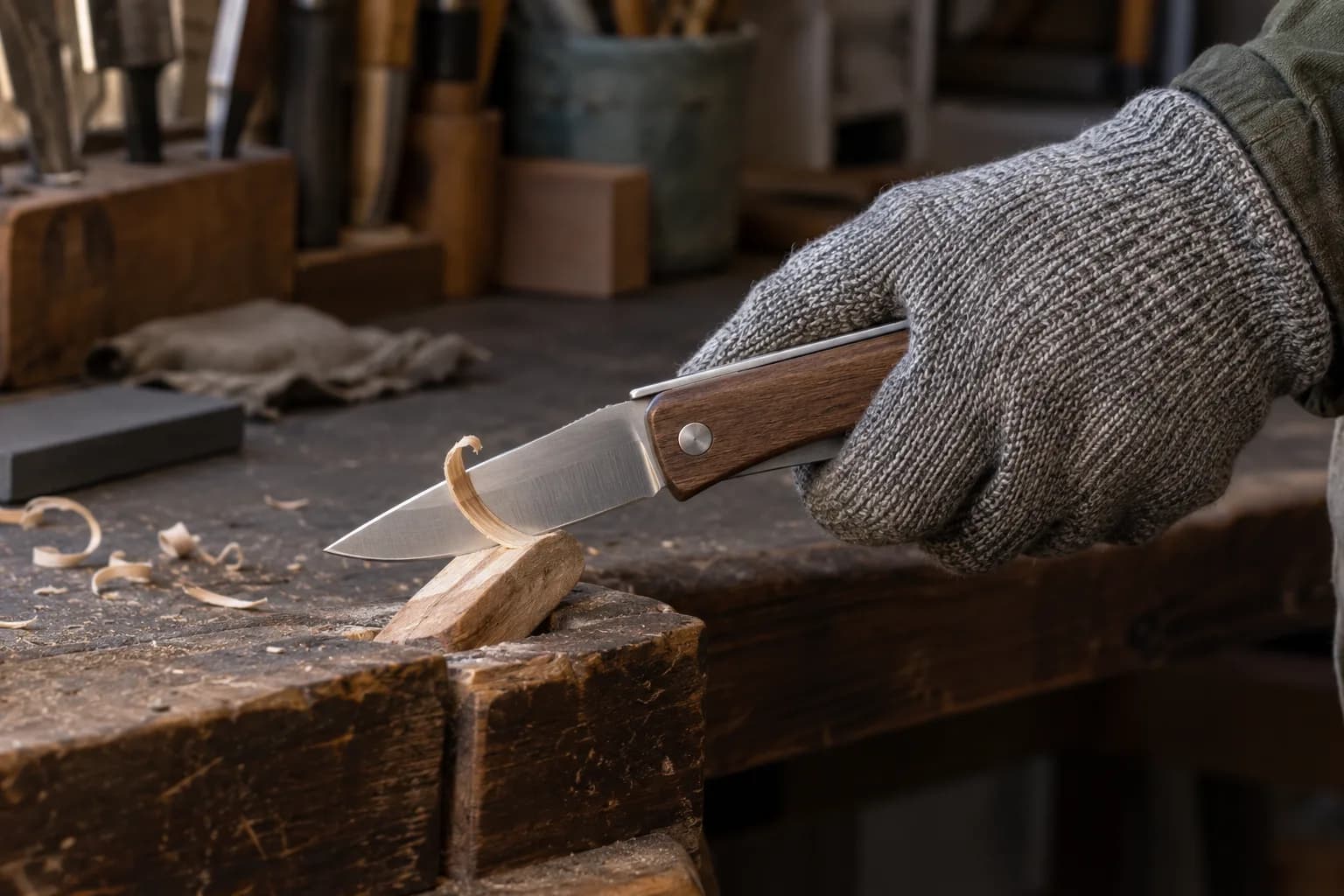
Finish everything before final assembly (folders assemble finished parts; nothing sands well inside a channel), ease every corner per slack-belt practice, and tell the buyer what it is: a knife held open by grip, wonderful for whittling and package duty, wrong for stabbing anything — which honest framing is exactly why the pattern is legal in pockets where locks are not. Then build the next one with a lock — you have already learned the part most people get wrong.
Keep reading
Three more from the same bench.
A fixed blade is a shape; a folder is a MACHINE — a dozen parts in moving agreement, where a thousandth of an inch is the difference between glass-smooth…
The lock is the folder’s signature mechanism, and every major type is a different answer to one question: what holds the blade open when the cut pushes…
An EDC blade leads the hardest life in the knife world: cardboard by the mile, plastic strapping, food at lunch, a staple it never saw coming — owned by…
Same bench
I machine the parts, hand-assemble, track and test Torus grinders in Sterling, Illinois. Most orders ship in seven to ten business days from time of order.
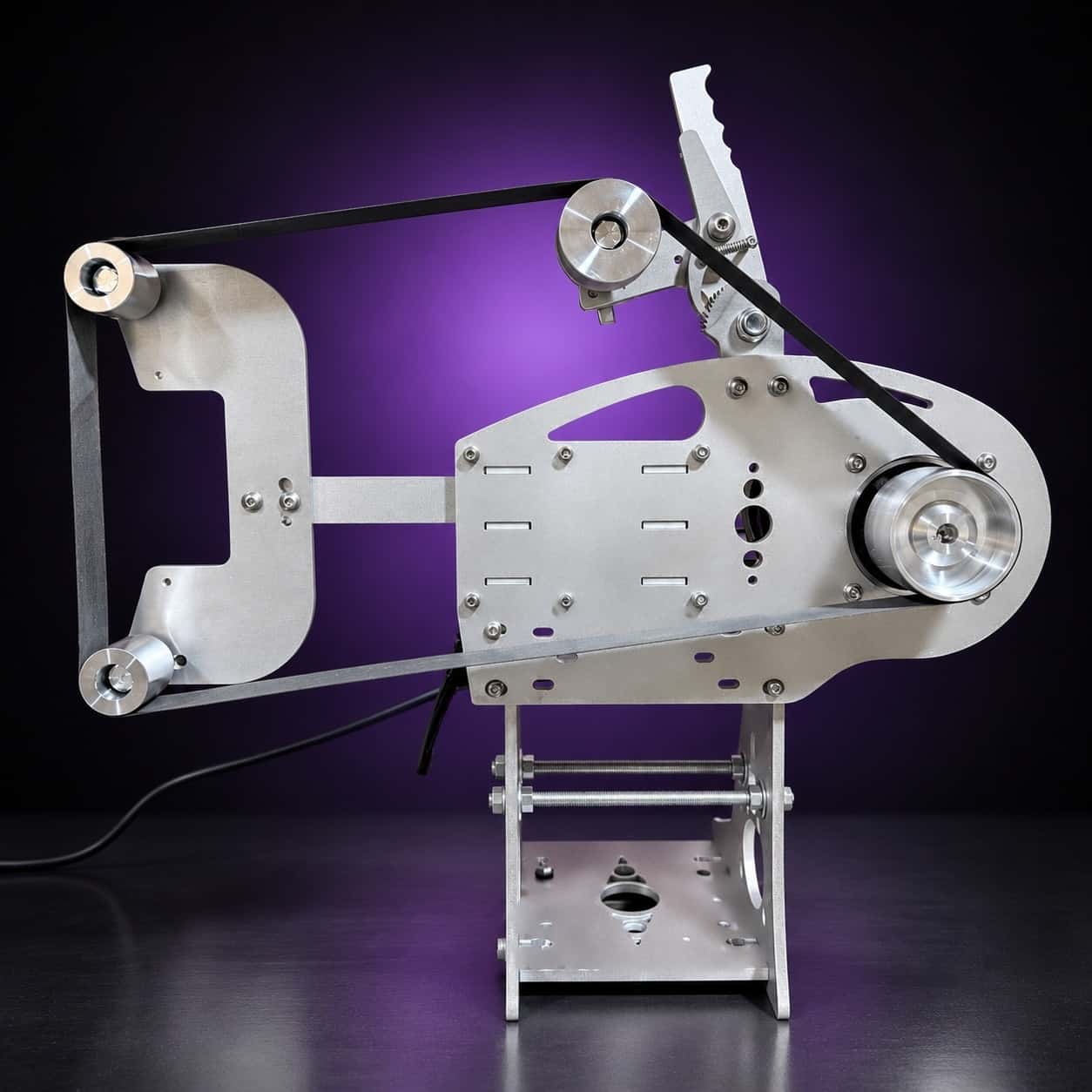
Current dual-axis platform with a fiber-laser-cut 6061 chassis and single-knob tracking.
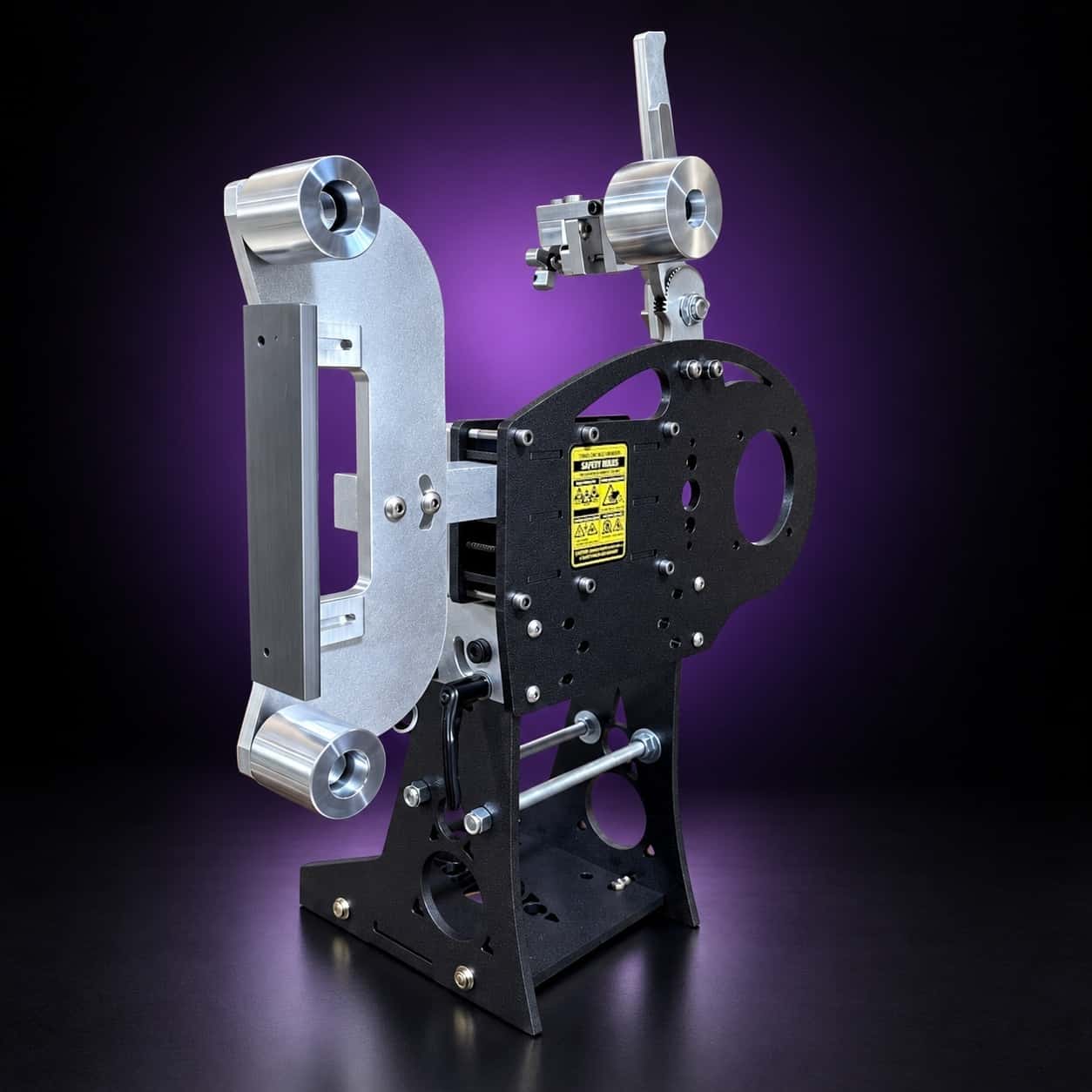
Current dual-axis platform with a steel chassis, more mass and less vibration.
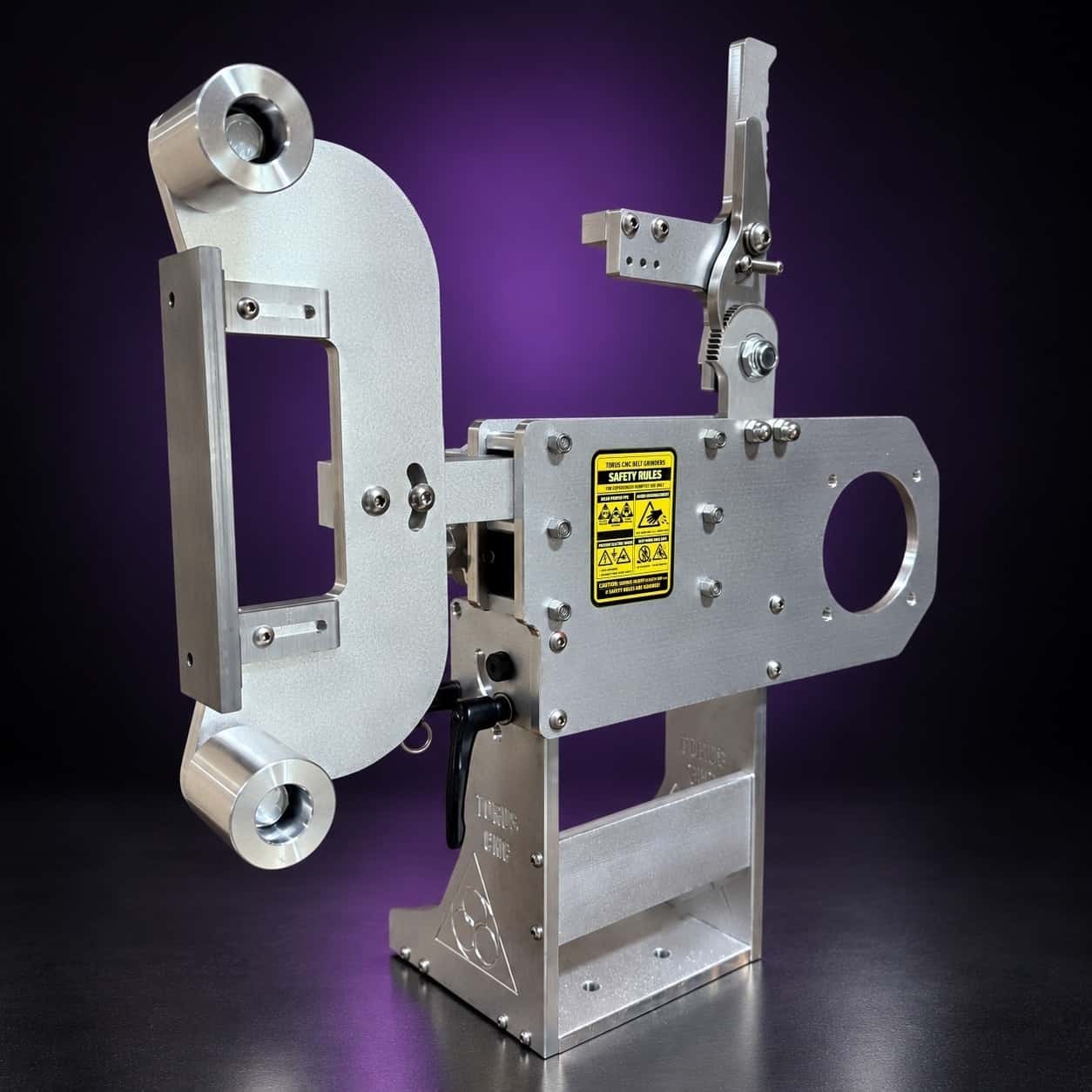
Prior-design aluminum chassis, 90-degree tilt and 1.5-inch tooling arms.
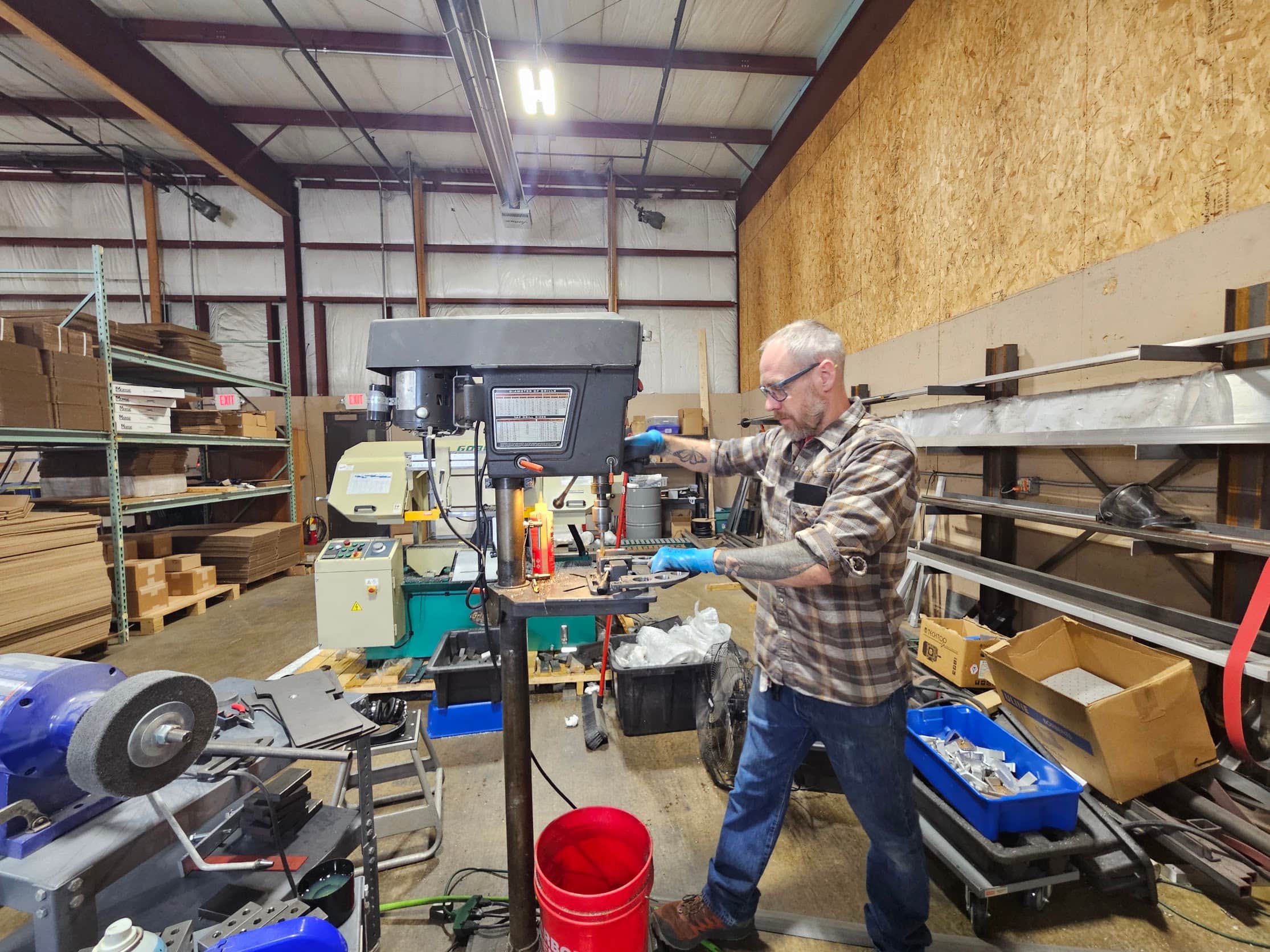
One-man shop
I answer my own email. Tell me the steel, the machine and what it is doing, and I will tell you what I would try next.