
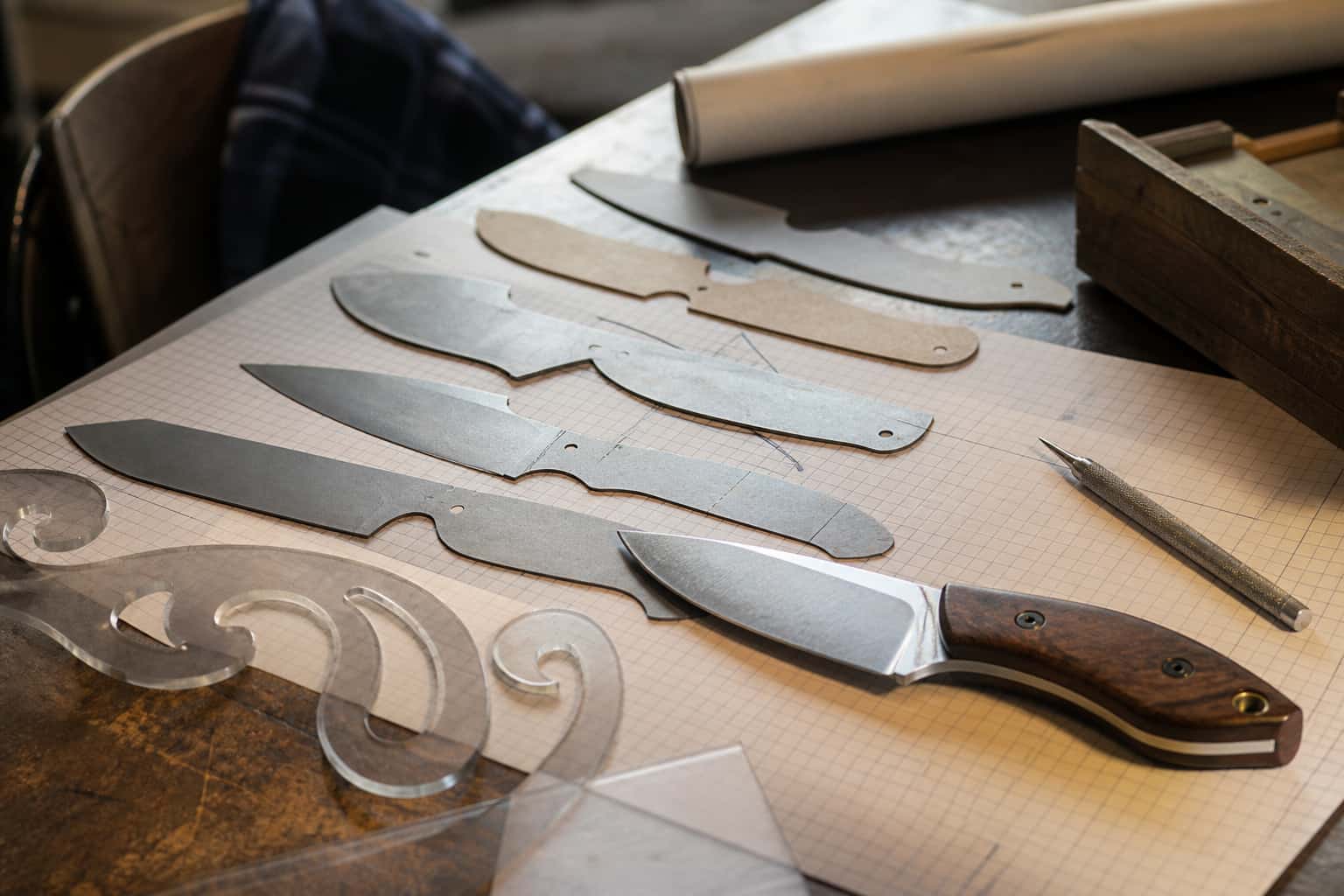
Blade Design
Survival Knife Geometry: Built for Abuse
A survival knife is designed for its worst day, not its best one: batoned through a knotty round, pried against a frozen hinge, hammered by a rock on the…

Metallurgy
Choosing steel for a survival knife: the 1095 tradition, why CPM 3V owns the category, tough stainless options, and field-sharpening reality.
2 min readWritten by Rich LinvilleFree to read
Survival steel selection is a toughness-first decision with a field-maintenance veto: the blade must survive impact and prying, and it must be sharpenable on whatever rock-adjacent abrasive the worst day provides. Those two requirements sort the whole steel chart fast. Here is the field guide, with every steel linked to its full page.
1095 built the classic survival knives and still works: cheap, proven, takes a field edge on a river stone, and tough ENOUGH at sensible hardness (56-58) with the thick geometry the category runs. Its honest liabilities: it rusts enthusiastically (a coating or patina is part of the design) and it is measurably tougher-beaten by the modern options. The smarter simple-carbon picks for a maker today: 80CrV2 and 1084 — same field-friendly sharpening, better toughness margins — or 5160 when the knife trends chopper.
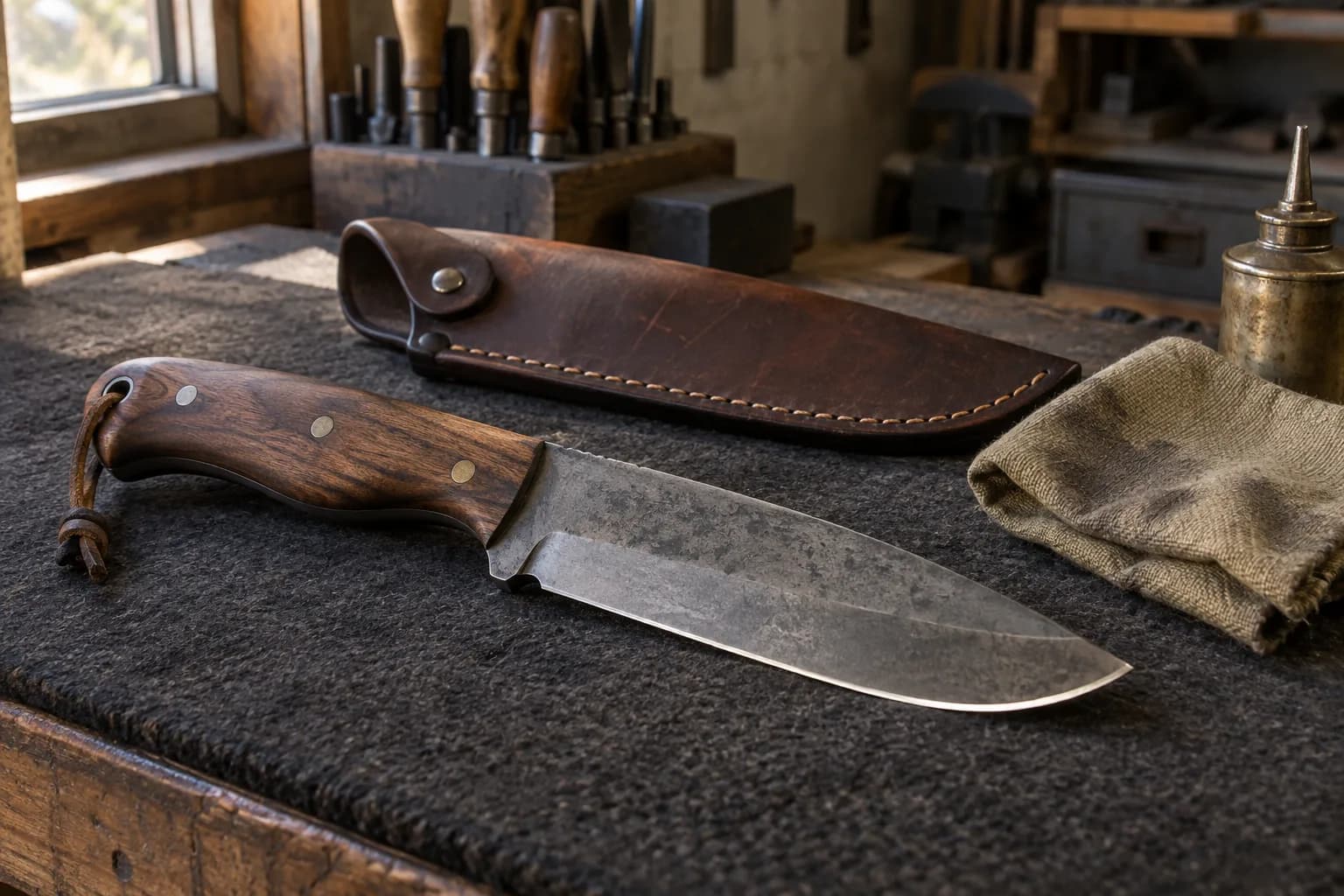
CPM 3V is what the survival category looks like with modern metallurgy: several times 1095’s toughness at equal hardness, real edge retention, and enough alloy to slow rust without pretending to be stainless. Run 58-60 with the low-temper protocols, it makes thin-ER edges survivable — a 3V survival knife can carry 0.025 behind the edge where 1095 wants 0.035, clawing back some of the slicing the geometry guide spends. Costs: price, harder grinding, and diamond stones preferred at home (field touch-ups still work on ceramic). CruWear plays the same role with a bit more edge retention traded for a bit less toughness.
Wet-environment survival (coastal, jungle, boat kits) makes rust a survival issue itself, and two modern steels answer without the old stainless-is-brittle tax: MagnaCut — 3V-adjacent toughness with genuine corrosion resistance, the modern survival stainless answer — and LC200N where salt immersion is the actual brief and edge retention can give. Classic stainless (154CM class, VG-10) stays wrong for this category: chippy at impact loads. The full tradeoff logic lives in Choosing Steel by Application.
Whatever the chart says, the field veto stands: a survival edge must come back on primitive abrasives. Simple carbons pass easily. 3V passes acceptably. High-vanadium wear steels (S90V class) fail the veto outright — the carbides that hold an edge forever also ignore a river stone forever. This is the rare category where MORE wear resistance is a defect past a point.
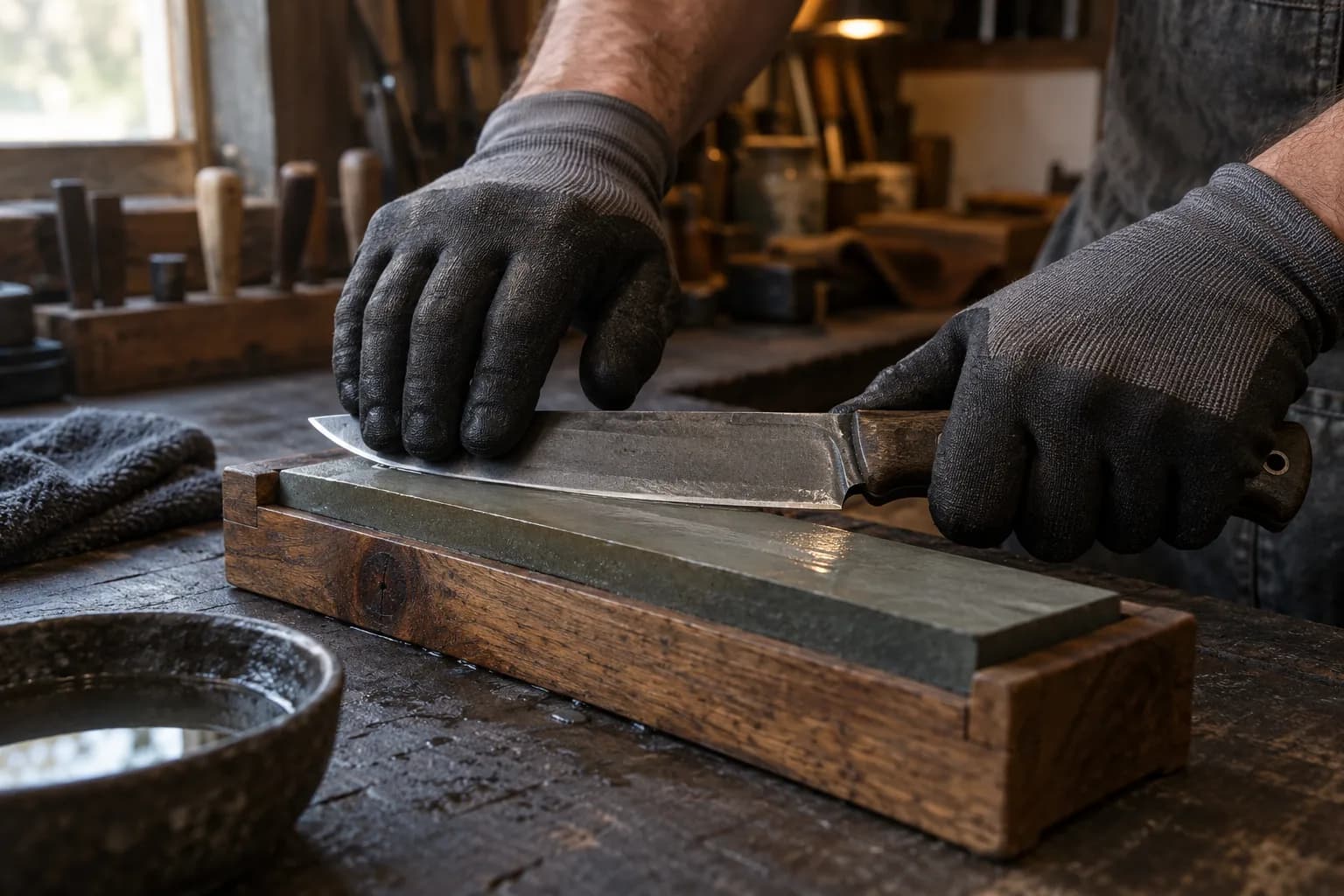
Budget build: 80CrV2 at 56-58, coated or patinated. Flagship: 3V at 58-60 with the toughness-first heat treat. Wet brief: MagnaCut. Then let the geometry do its half, and put the steel’s name and hardness on the listing — survival buyers read spec sheets like scripture, and the maker who publishes real numbers owns the comment section.
Keep reading
Three more from the same bench.
A survival knife is designed for its worst day, not its best one: batoned through a knotty round, pried against a frozen hinge, hammered by a rock on the…

Every knife steel is iron plus a specific recipe of other elements, and each of those elements pulls the steel’s behavior in a particular direction…
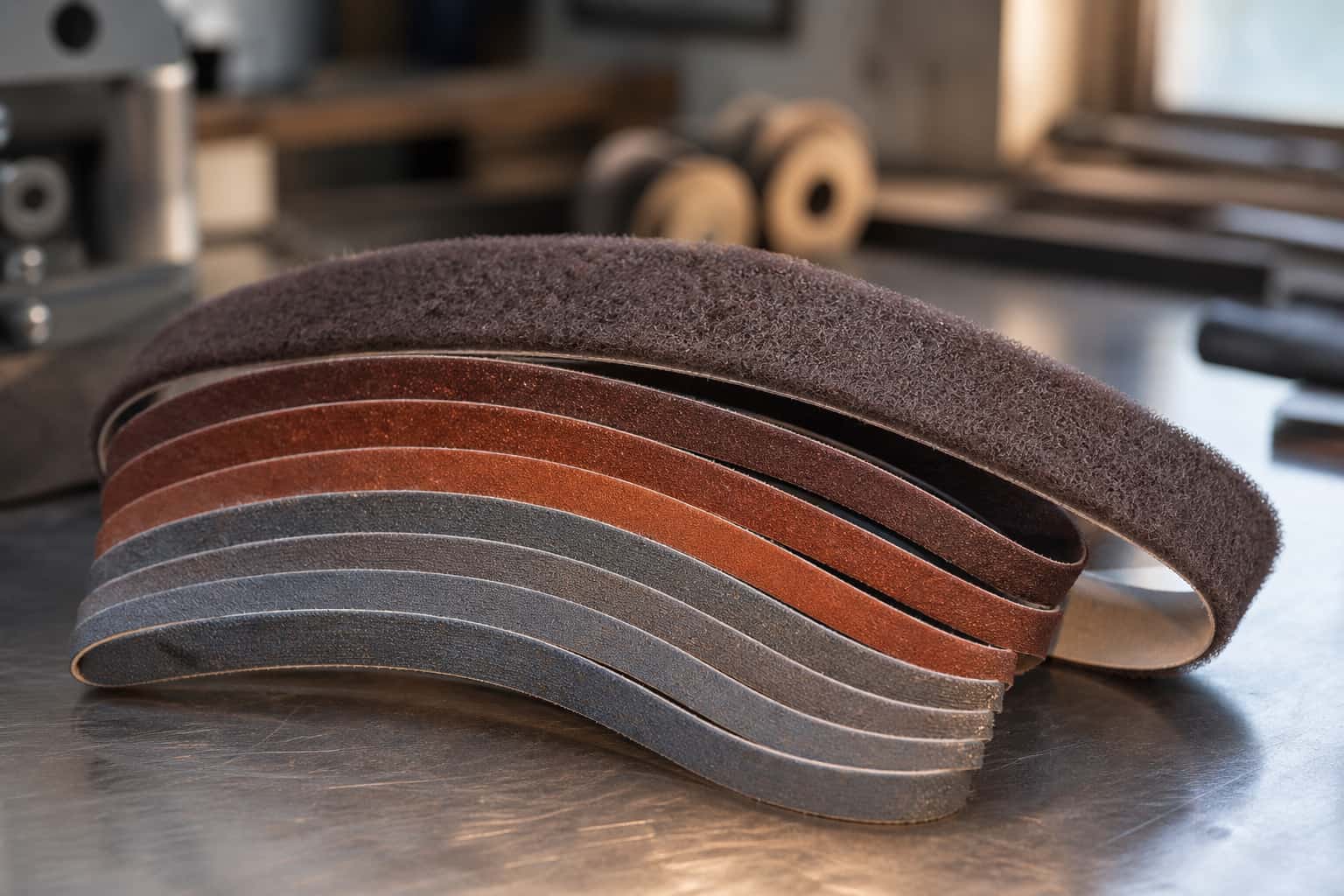
Two steels with similar hardness numbers can feel completely different under a sharpening stone, one glides along smoothly, another feels like it’s…
Same bench
I machine the parts, hand-assemble, track and test Torus grinders in Sterling, Illinois. Most orders ship in seven to ten business days from time of order.
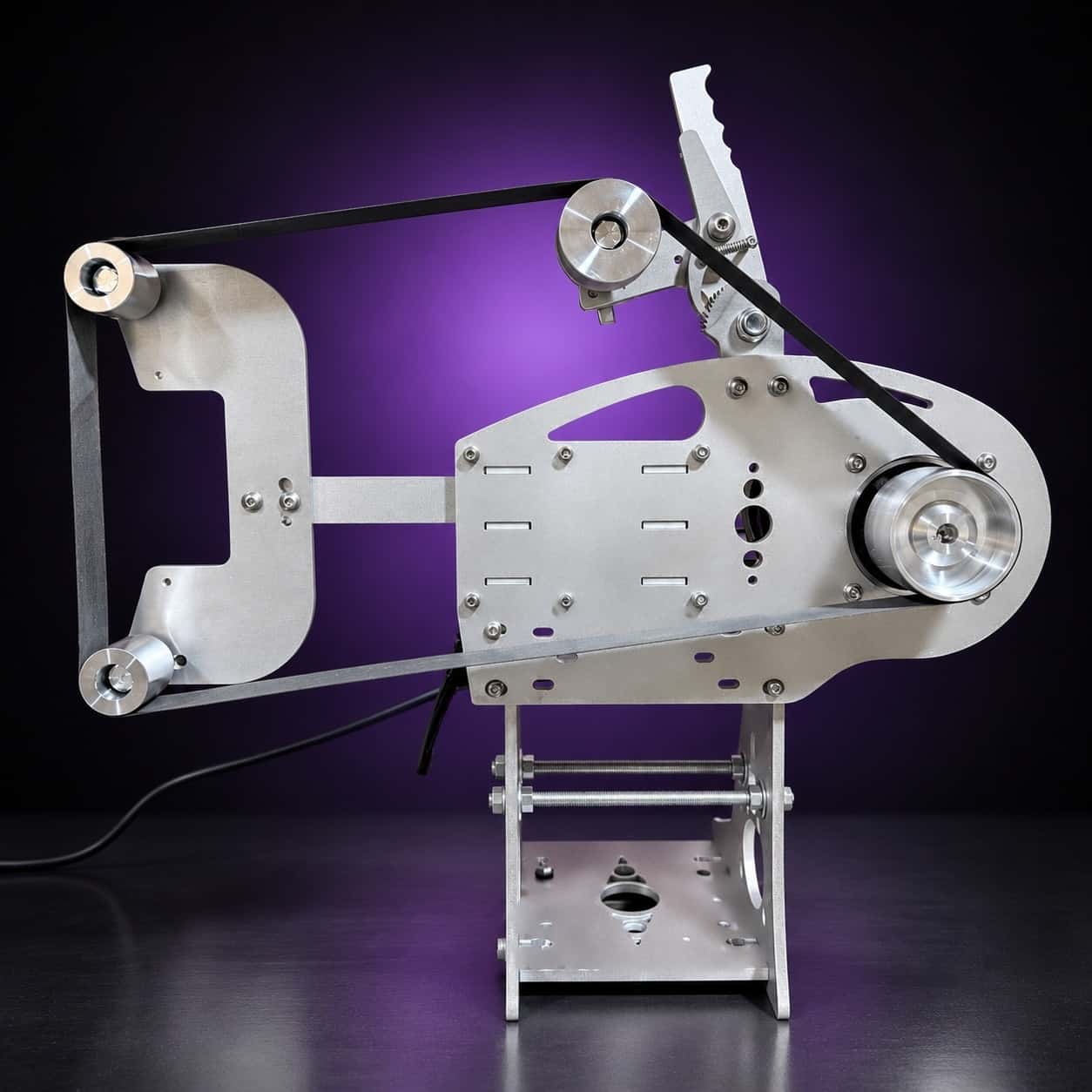
Current dual-axis platform with a fiber-laser-cut 6061 chassis and single-knob tracking.
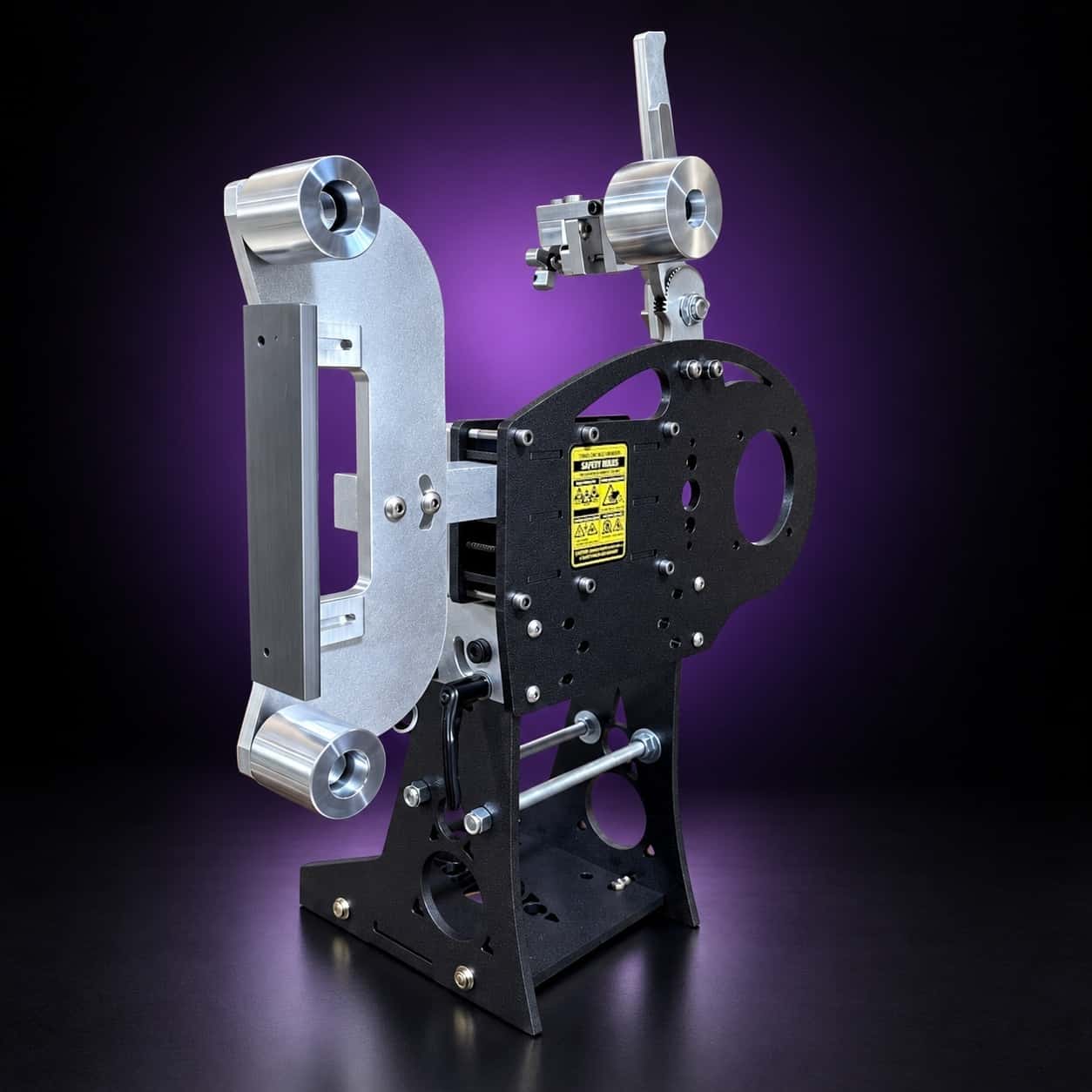
Current dual-axis platform with a steel chassis, more mass and less vibration.
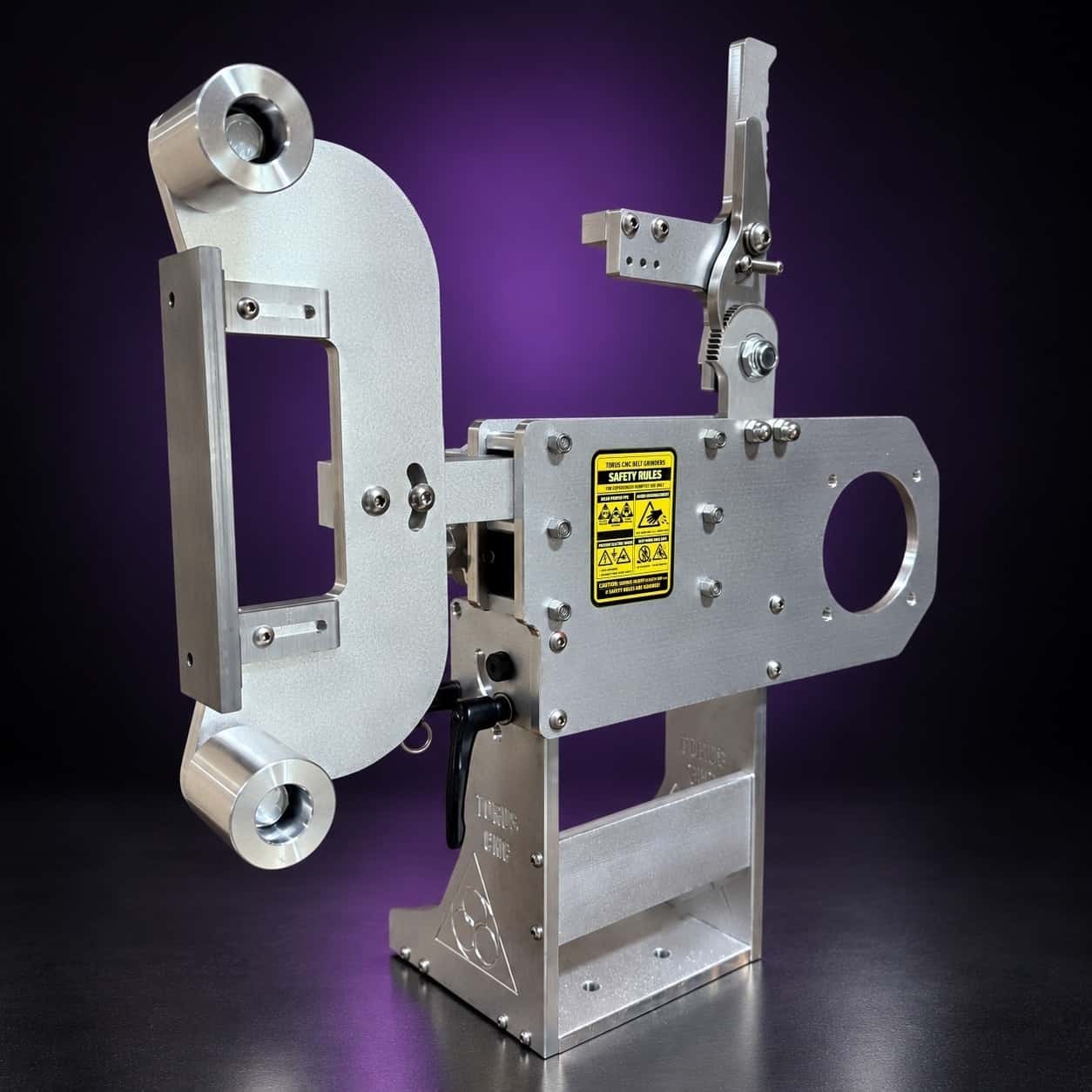
Prior-design aluminum chassis, 90-degree tilt and 1.5-inch tooling arms.
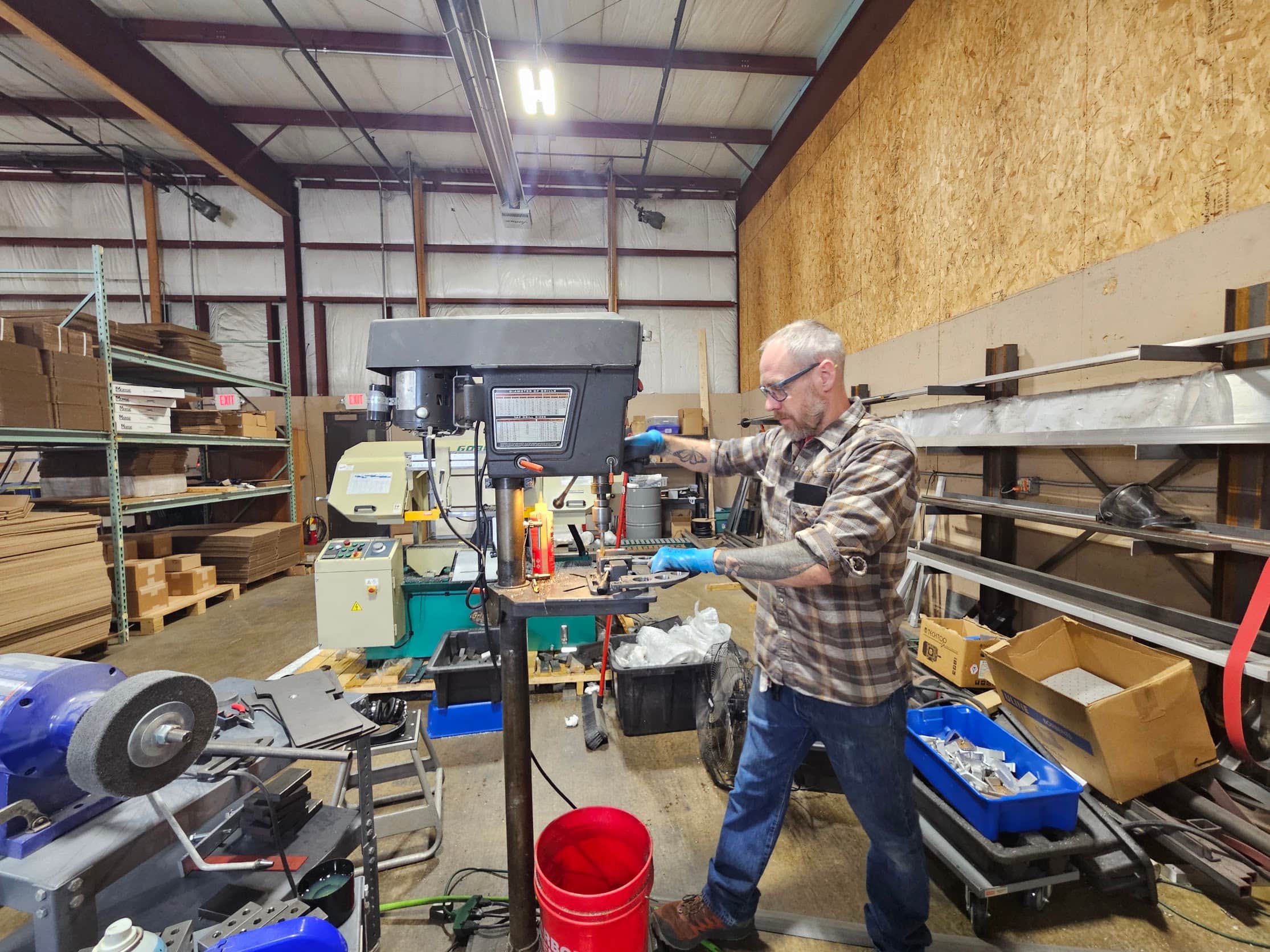
One-man shop
I answer my own email. Tell me the steel, the machine and what it is doing, and I will tell you what I would try next.