

Blade Design
Bushcraft Knife Geometry: The Scandi Question
Bushcraft is the only knife category where the grind is practically a religion. The scandi faithful have a point: for controlled wood carving — feather…
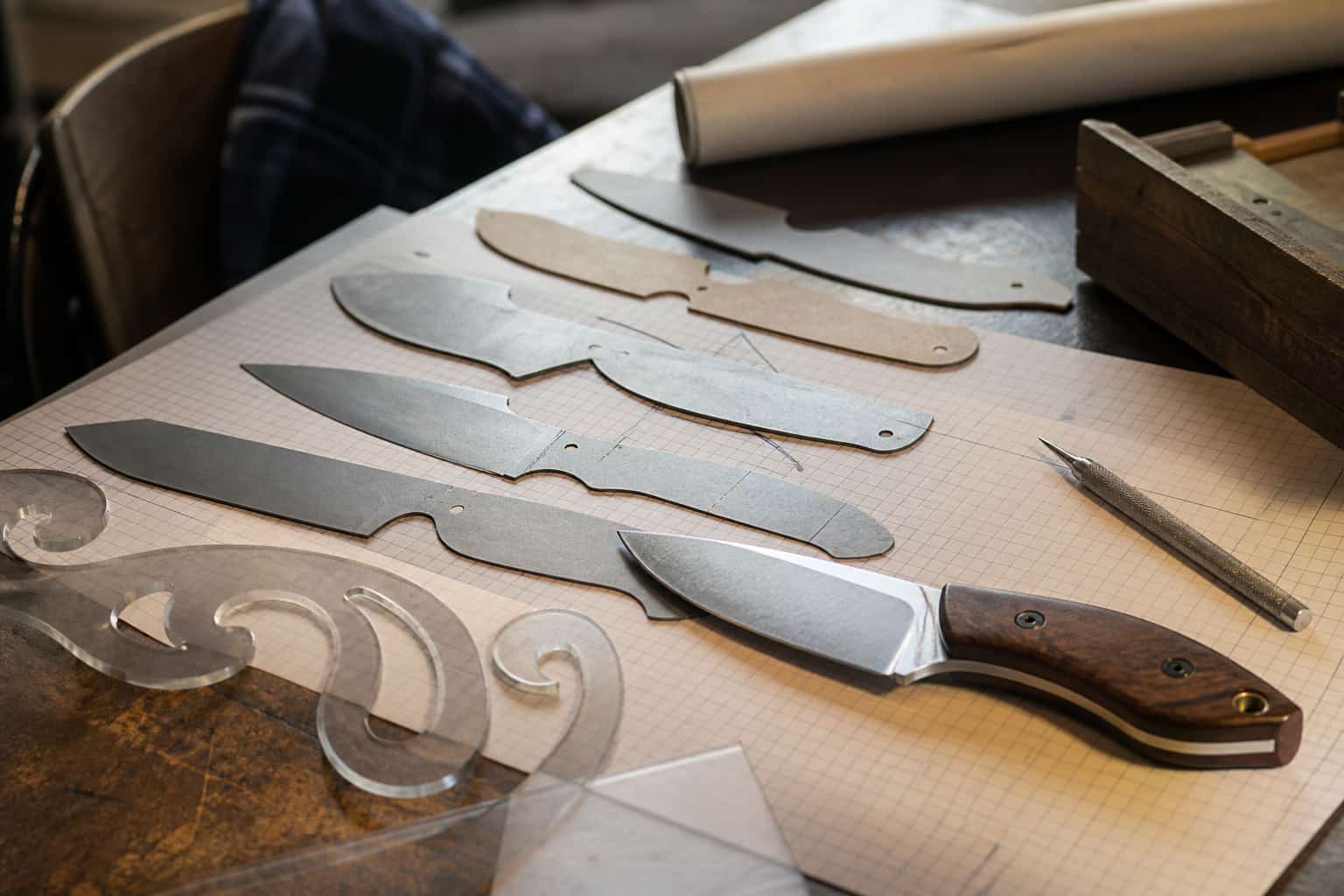
Blade Design
Survival blade geometry from a maker's bench: stock, grinds and edges that survive batoning and prying, tip and tang rules, and honest tradeoffs.
2 min readWritten by Rich LinvilleFree to read
A survival knife is designed for its worst day, not its best one: batoned through a knotty round, pried against a frozen hinge, hammered by a rock on the spine — used, in short, in every way the warranty card forbids. The geometry that survives that brief is specific, and it costs cutting performance on the good days. Here is the maker’s build sheet.
Design for four loads a normal knife never plans on: batoning (spine impact plus edge wedging in wood), lateral prying (the load that snaps blades and tips), chopping at partial power, and spine strikes (ferro rods at best, rocks at worst). Each load has a geometry answer, and every answer trades away slicing — which is why the survival knife is a category, not just a thick bushcraft knife. The bushcraft guide covers the craft-first cousin; this is the abuse-first sibling.
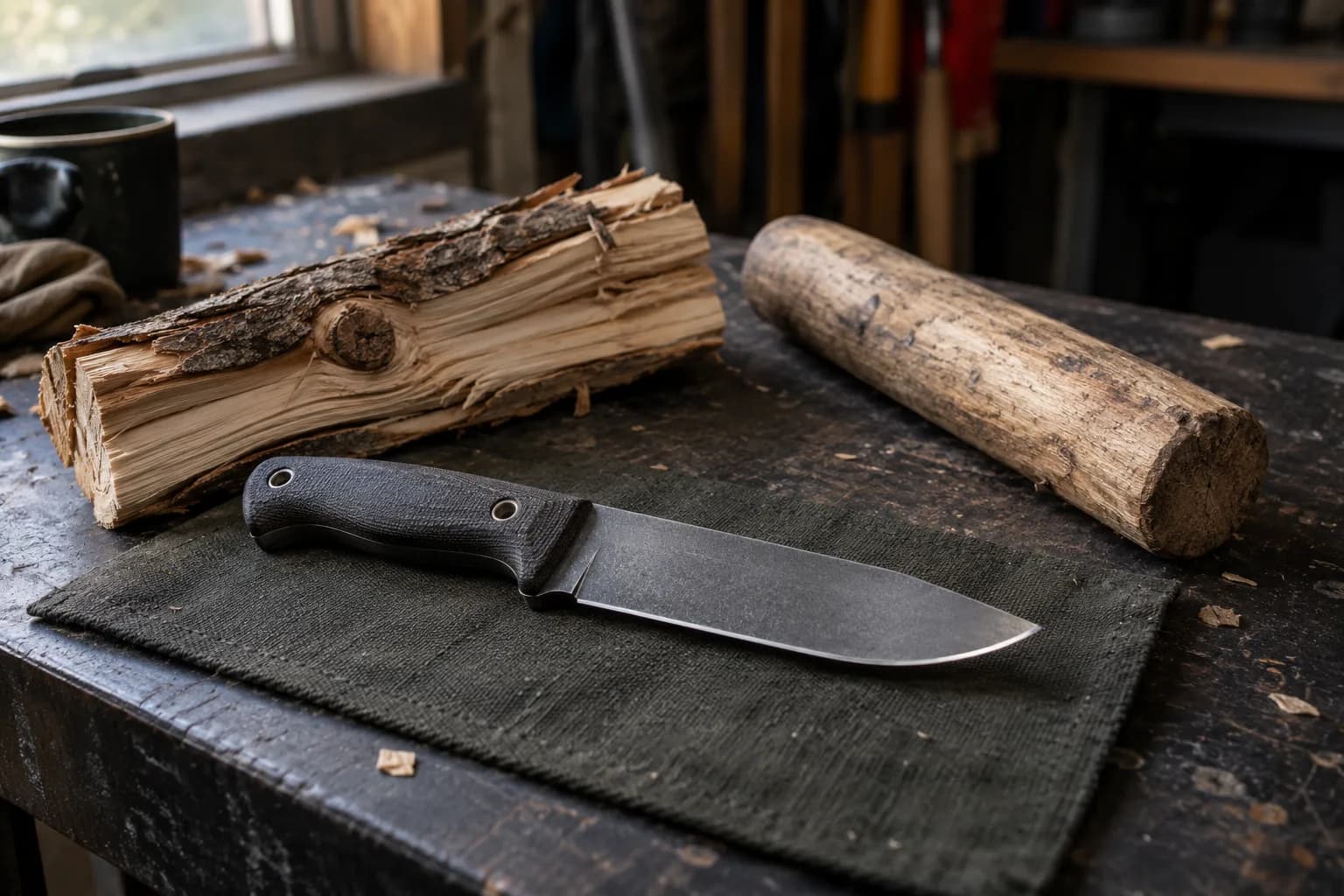
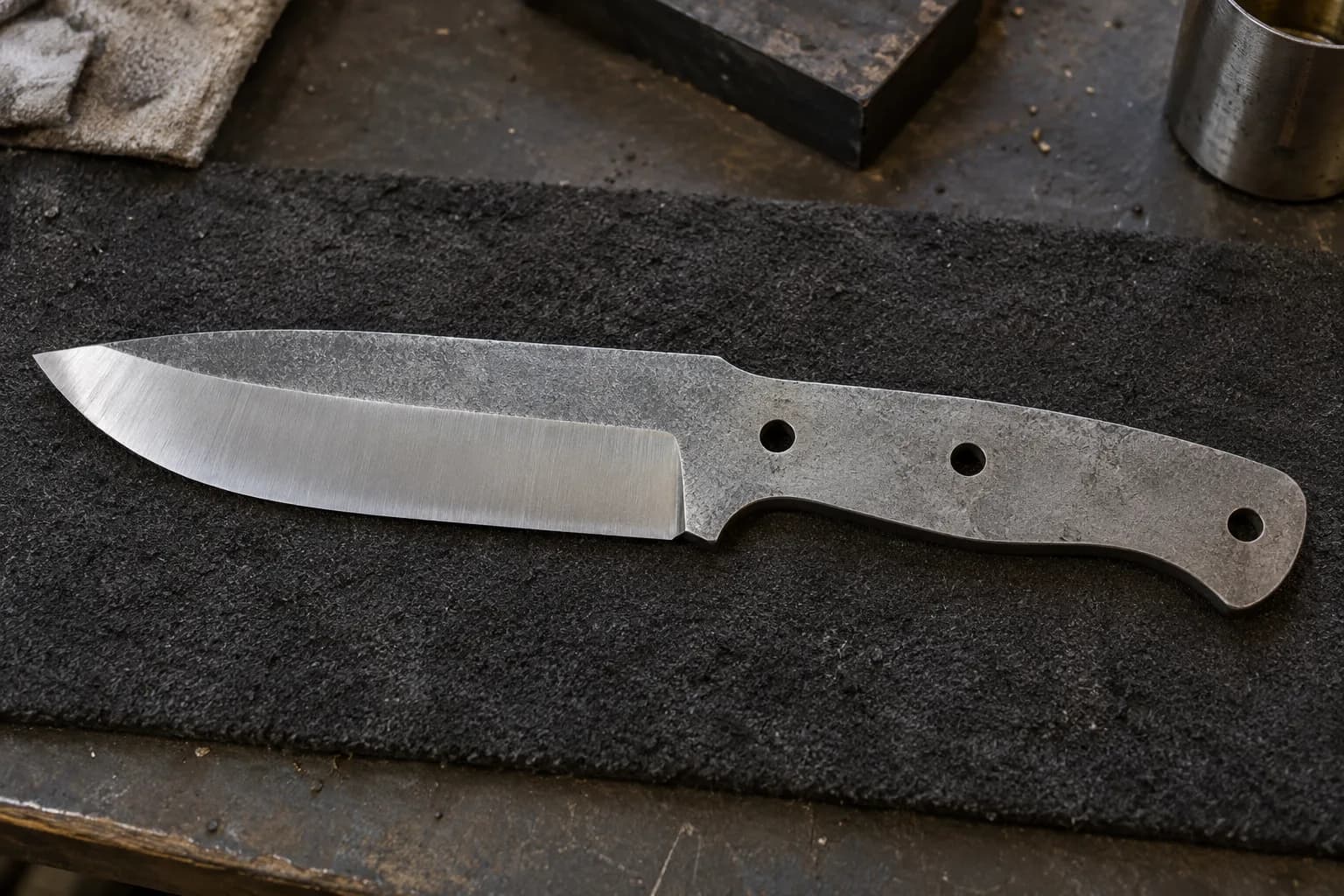
Stock: 3/16 inch is the survival standard – stiff enough to pry, still grindable to a usable edge; 5/32 suits smaller blades, 1/4 belongs on choppers. Length: 4.5 to 6 inches covers batoning wrist-thick wood without becoming a machete. Grind: sabre or high flat with real thickness behind the edge — 0.030 to 0.040 inch, chopper numbers, because the edge is a wedge under impact. Edge: convex or a stout 22-25 degrees per side per the angle chart’s hard-use rows. Tip: drop point with the spine carried thick to the front – broken tips are the category’s classic failure, and a needle tip on a survival knife is a design error. Tang: full, wide, and radiused at every transition (sharp tang corners are where prying loads win); exposed pommel if spine-hammering is in the brief. Spine: crisp 90-degree corner for ferro rods, per bushcraft practice.
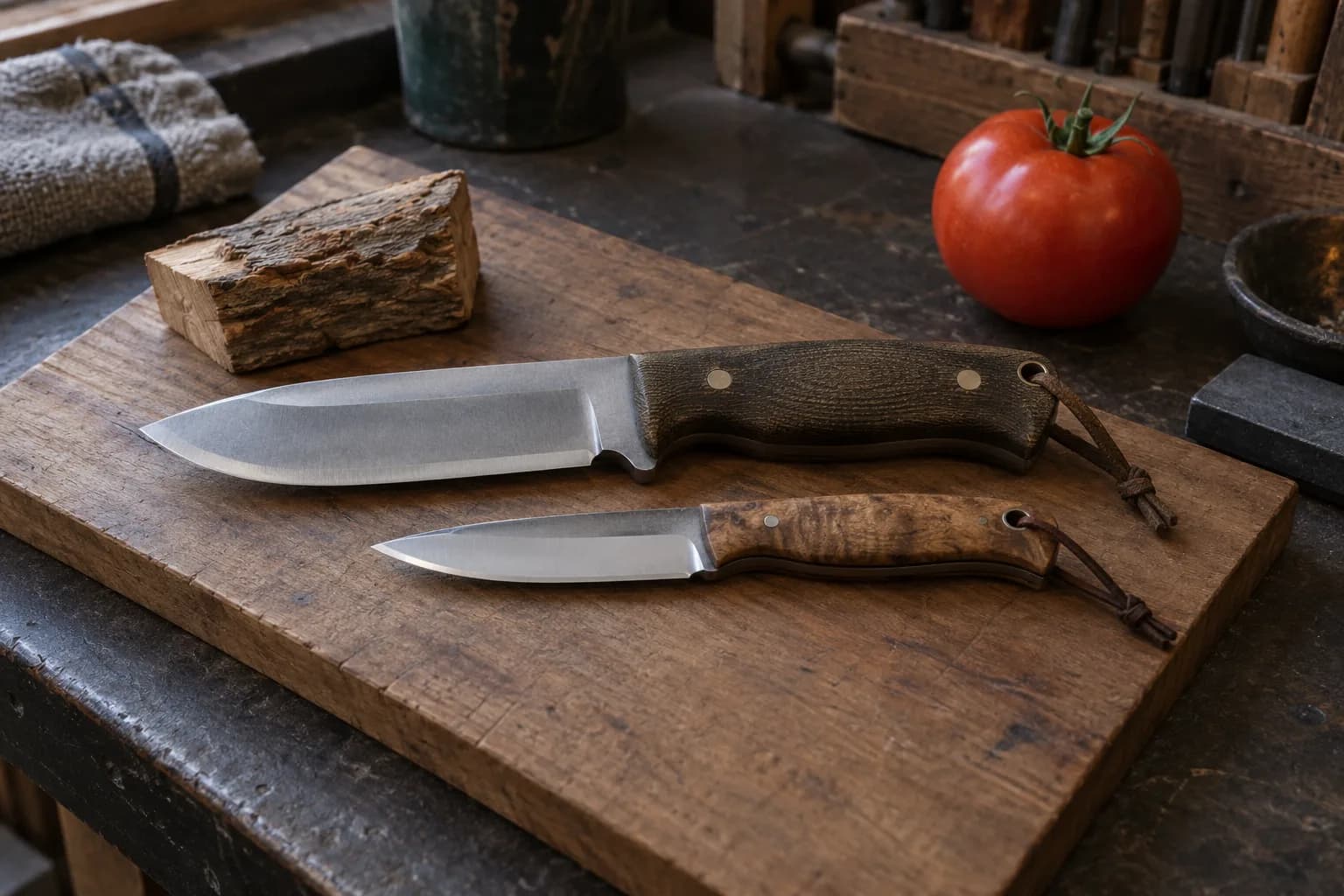
Honesty the marketing skips: this knife slices worse than a bushcraft blade, carves worse than a scandi, and food-preps like a crowbar. The 0.035 edge that shrugs off a knot also wedges in a tomato. A maker selling the category well says so out loud – and often sells the two-knife answer (survival fixed blade plus a light companion) that outdoorsmen eventually arrive at anyway. Steel choice carries half the durability load; the survival steel guide and toughness-first heat treat carry that half of the story.
Grind the primary at full speed in the thick stock, set the behind-edge thickness with calipers not optimism, convex the edge on the slack belt, radius the tang shoulders like they matter (they do), and test YOUR pattern the way the buyer will: baton it through a knot, pry it in a stump, strike the spine. The survival market is one of the few where destructive testing of a prototype is both product development and the entire marketing story.
Keep reading
Three more from the same bench.
Bushcraft is the only knife category where the grind is practically a religion. The scandi faithful have a point: for controlled wood carving — feather…

Big blades live on impact, and impact rewrites the geometry rules: the edge is a wedge under shock load, balance is a cutting spec, and…

Every knife argument eventually lands on angles. Here is the chart we wish someone had handed us — edge angle per side, the grind that usually carries it…
Same bench
I machine the parts, hand-assemble, track and test Torus grinders in Sterling, Illinois. Most orders ship in seven to ten business days from time of order.

Current dual-axis platform with a fiber-laser-cut 6061 chassis and single-knob tracking.

Current dual-axis platform with a steel chassis, more mass and less vibration.

Prior-design aluminum chassis, 90-degree tilt and 1.5-inch tooling arms.

One-man shop
I answer my own email. Tell me the steel, the machine and what it is doing, and I will tell you what I would try next.