
Beginner Guides
How to Choose Your First Knife Steel
With dozens of knife steels to choose from, picking your first one can feel overwhelming. The good news: for a first knife, the right answer is almost…
Beginner Guides
Which found steel really makes a knife: quality files, leaf springs and bearings work after testing; railroad spikes and mower blades do not. How to test it.
5 min readWritten by Rich LinvilleFree to read
Spend a week on any knifemaking forum and you’ll see the question: “Can I make a knife out of this old file / leaf spring / saw blade?” It’s one of the oldest questions in the craft, and the honest answer is: sometimes — if you test the steel first. This guide covers which scrap steels genuinely make good knives, which ones are internet myths, and how to test unknown steel before sinking twenty hours of work into it.
Free steel feels like free knives. But the material was never the expensive part of a knife — your hours are. A bar of known steel costs $15–25 from any of the suppliers in our steel sourcing guide, arrives annealed and ready to work, and comes with a published heat-treat recipe that thousands of makers have verified.
Mystery steel gives you none of that. Heat treating is a recipe matched to a specific alloy: austenitizing temperature, quench speed, tempering range all depend on what the steel actually is. When you don’t know the alloy, you’re guessing at every step — and a guessed heat treat is the difference between a knife and a knife-shaped object. That’s the catch, and it’s why experienced makers steer beginners toward known steel like 1084 for a first blade (see our first steel guide).
That said — some found steel really is good steel. Here’s the real list.
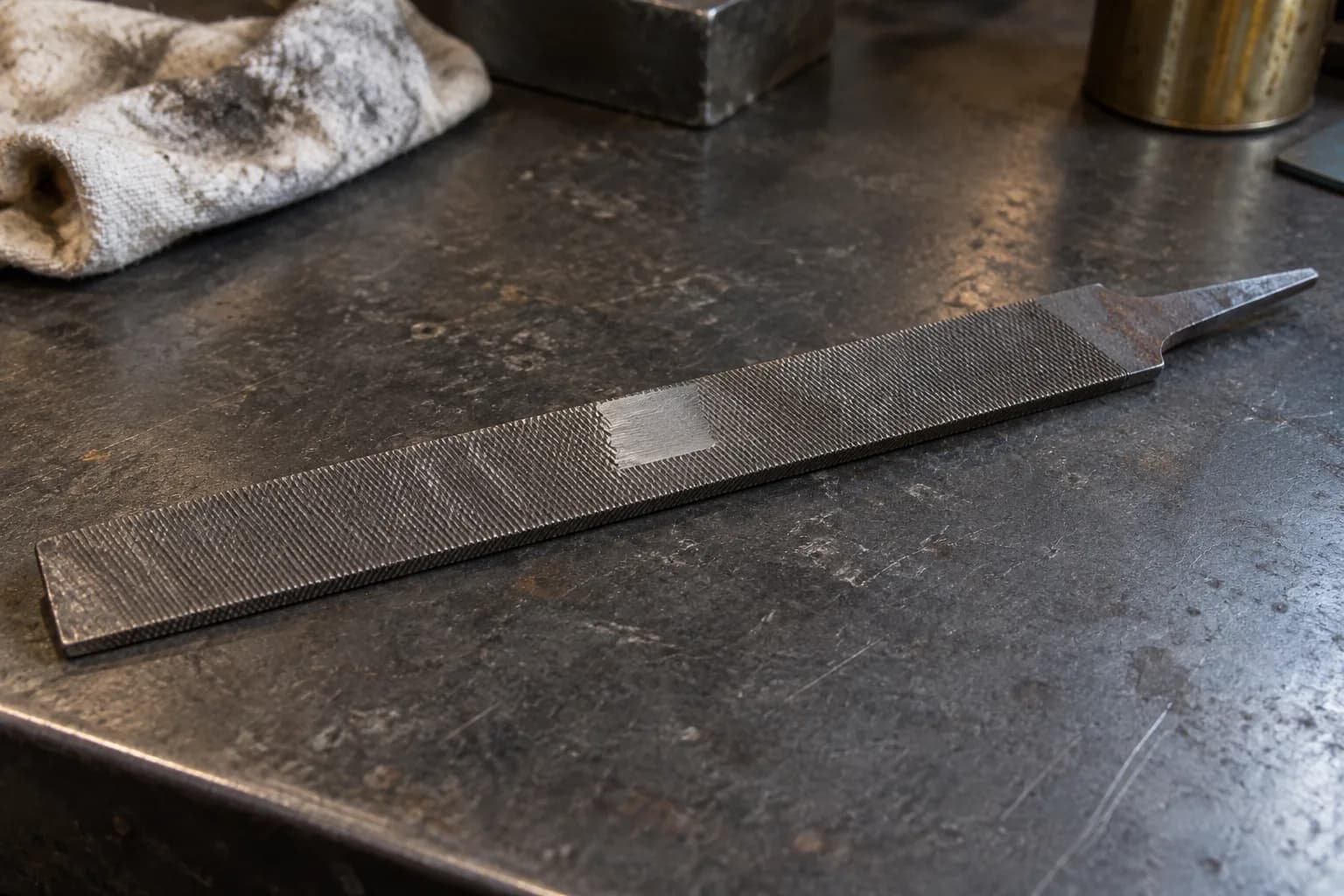
Good files are the classic found-steel success story. A file’s whole job is to be harder than other steel, so quality files are made from simple high-carbon tool steel — historically W1, later 1095-class (Nicholson, for example, used W1 in the past and 1095 in more recent production). Treat a proven old file like 1095 and it can make an excellent blade.
The trap: many modern budget and import files are case-hardened — a thin, glass-hard skin over a low-carbon core. Once you grind past the teeth, there’s nothing underneath that will harden. Older American-made files are the safer bet, and the test protocol below will catch the fakes either way.
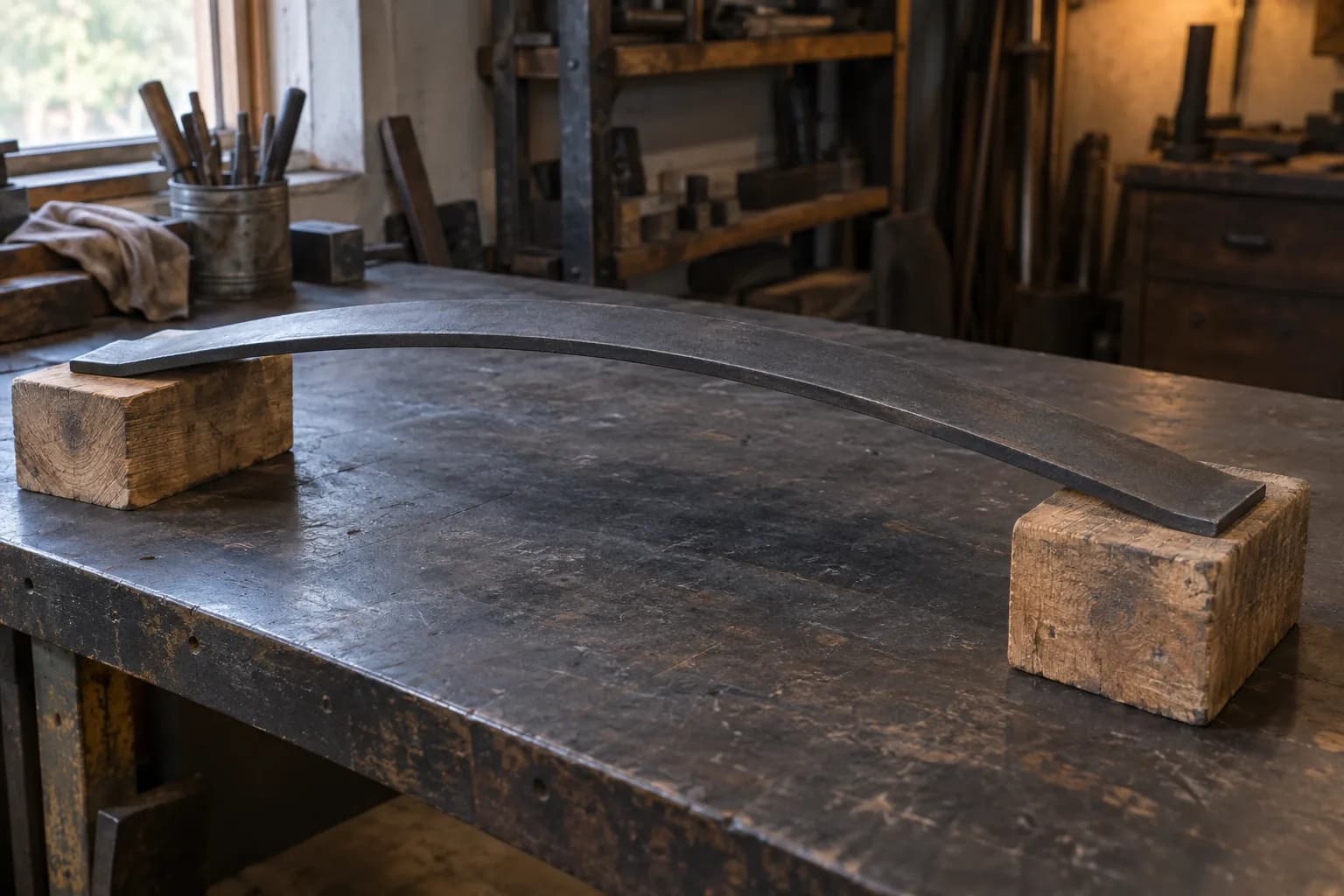
Automotive leaf springs are typically 5160-class spring steel — around 0.60% carbon with chromium for hardenability. It’s tough, forgiving to heat treat, and a longtime favorite for camp knives and choppers. Springs are the best argument for found steel.
The caveat: a spring that spent twenty years cycling under a truck can carry invisible fatigue micro-cracks. Forging and grinding won’t heal them — they surface as a crack in your finished blade, sometimes during the quench. New take-off springs or unused spring stock sidestep the problem entirely.
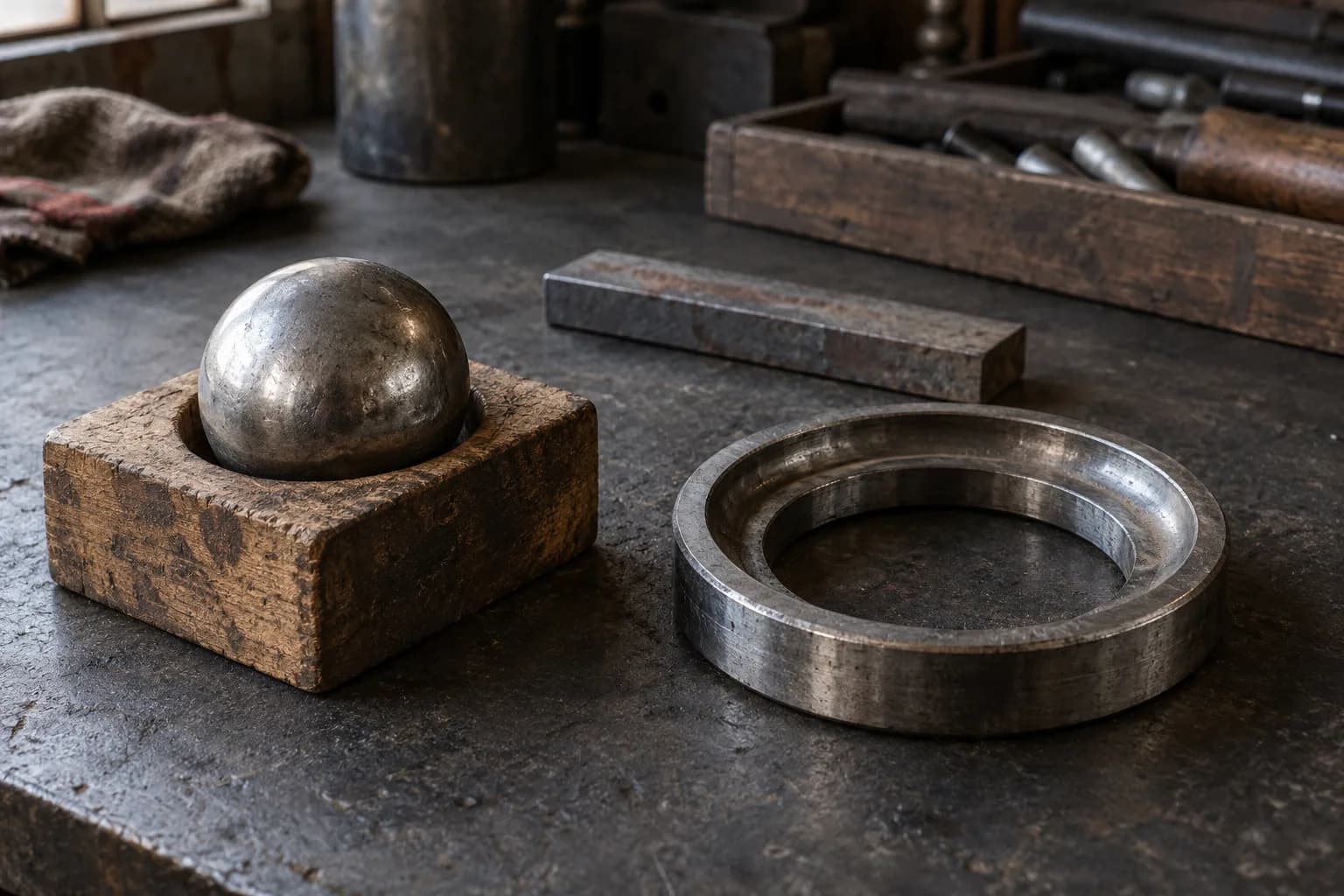
Bearing steel is genuinely premium blade steel — 52100 is so good that knife steel suppliers sell it on purpose, and we have a full page on it in the steel database. Around 1% carbon with fine grain and excellent edge-holding. The catch here is shape: turning a sphere or a race into a blade is forging work, not stock removal — see stock removal vs. forging.
Big old sawmill blades and two-man crosscut saws were made from tough, often nickel-alloyed steels in L6/8670 territory — hardenable and famously tough. The trap is the modern version: today’s carbide-tipped circular saw blades have mild steel bodies. The brazed carbide teeth do all the cutting, so the disc itself won’t harden. Old, all-steel blades only.
The “HC” stamp on some spikes means higher carbon in railroad-spec language, not “high carbon” as knifemakers use the term. Independent lab testing of HC spikes measured about 0.34% carbon — roughly a third of what 1095 carries — and the rail spec itself only requires around 0.3%. That’s barely enough to take minimal hardness. A railroad spike knife is a fun forging exercise and a great conversation piece; it is not a knife that will hold a working edge. If someone sells you one as “high carbon steel,” now you know better.
Mower blades are engineered to do the opposite of what a knife does: they’re medium-carbon steel kept deliberately soft so they bend instead of shattering when they hit a rock at 3,000 RPM. That’s exactly what you want in a mower and exactly what you don’t want in a blade.
Rebar, angle iron, fence posts, most structural scrap: low-carbon mild steel that will never harden meaningfully. Fine for forging practice, tongs, or bottle openers — not blades.
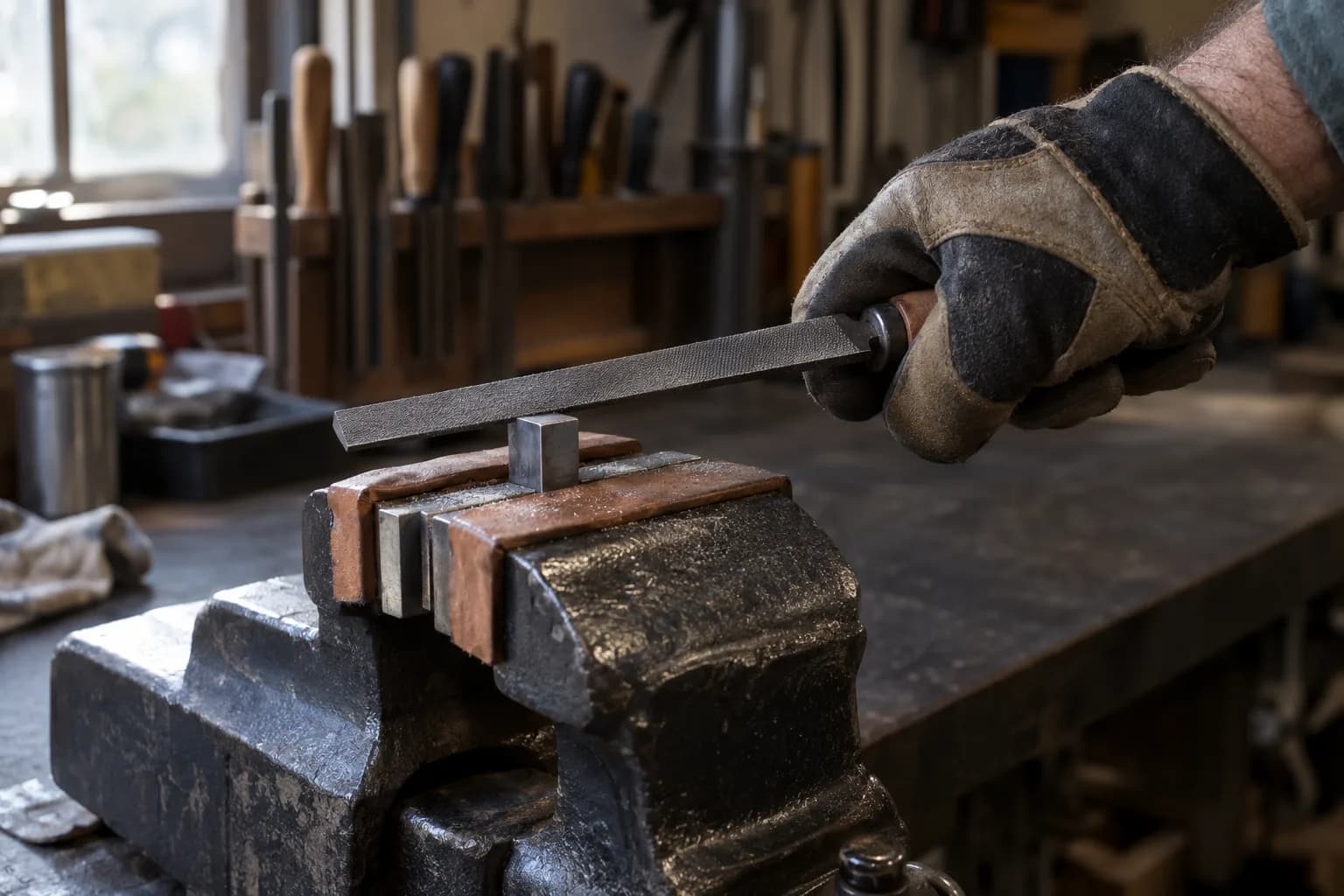
If the steel passes, heat treat the real blade using the recipe for its closest known relative — file steel like 1095, leaf spring like 5160, bearing steel like 52100 — and follow the fundamentals in our complete heat treating guide. Working without a kiln? See heat treating without a kiln for what’s realistic with a torch or forge.
Found steel is a legitimate part of knifemaking tradition — files, springs, and bearings have made real working knives for a century. But make it a deliberate project, not your default material. For learning heat treat, building skills, and finishing knives you can trust (or sell), a known bar of 1084 or 1095 is cheaper than the hours mystery steel can waste. Most of the classic beginner mistakes get more expensive when the steel itself is a question mark.
Keep reading
Three more from the same bench.
With dozens of knife steels to choose from, picking your first one can feel overwhelming. The good news: for a first knife, the right answer is almost…
Buying steel from a real, known supplier instead of unmarked scrap or “mystery steel” is the single most important sourcing decision a new maker makes…
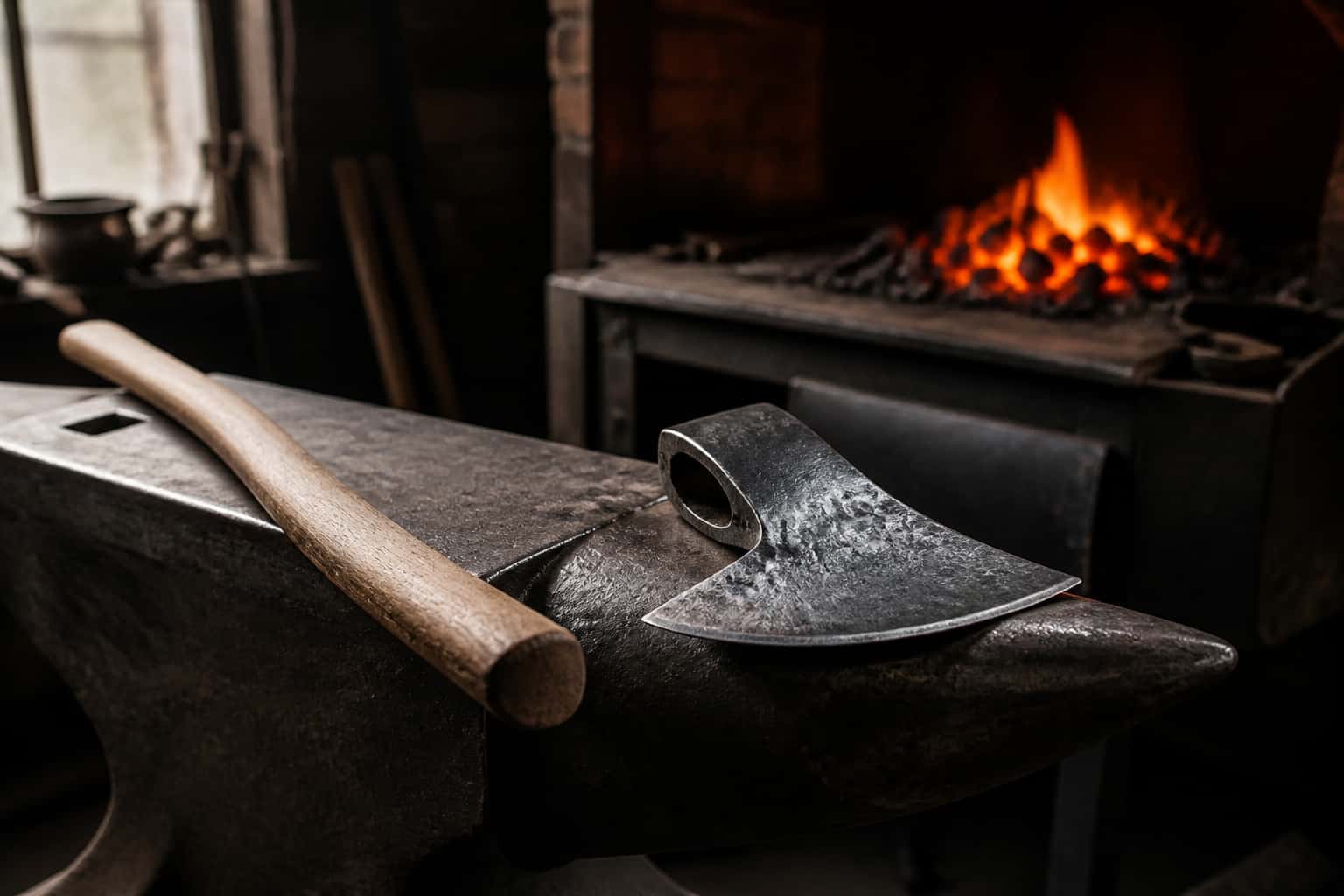
Every new knifemaker eventually hits this fork in the road: do you shape a blade by grinding it out of flat bar stock, or by heating and hammering it to…
Same bench
I machine the parts, hand-assemble, track and test Torus grinders in Sterling, Illinois. Most orders ship in seven to ten business days from time of order.
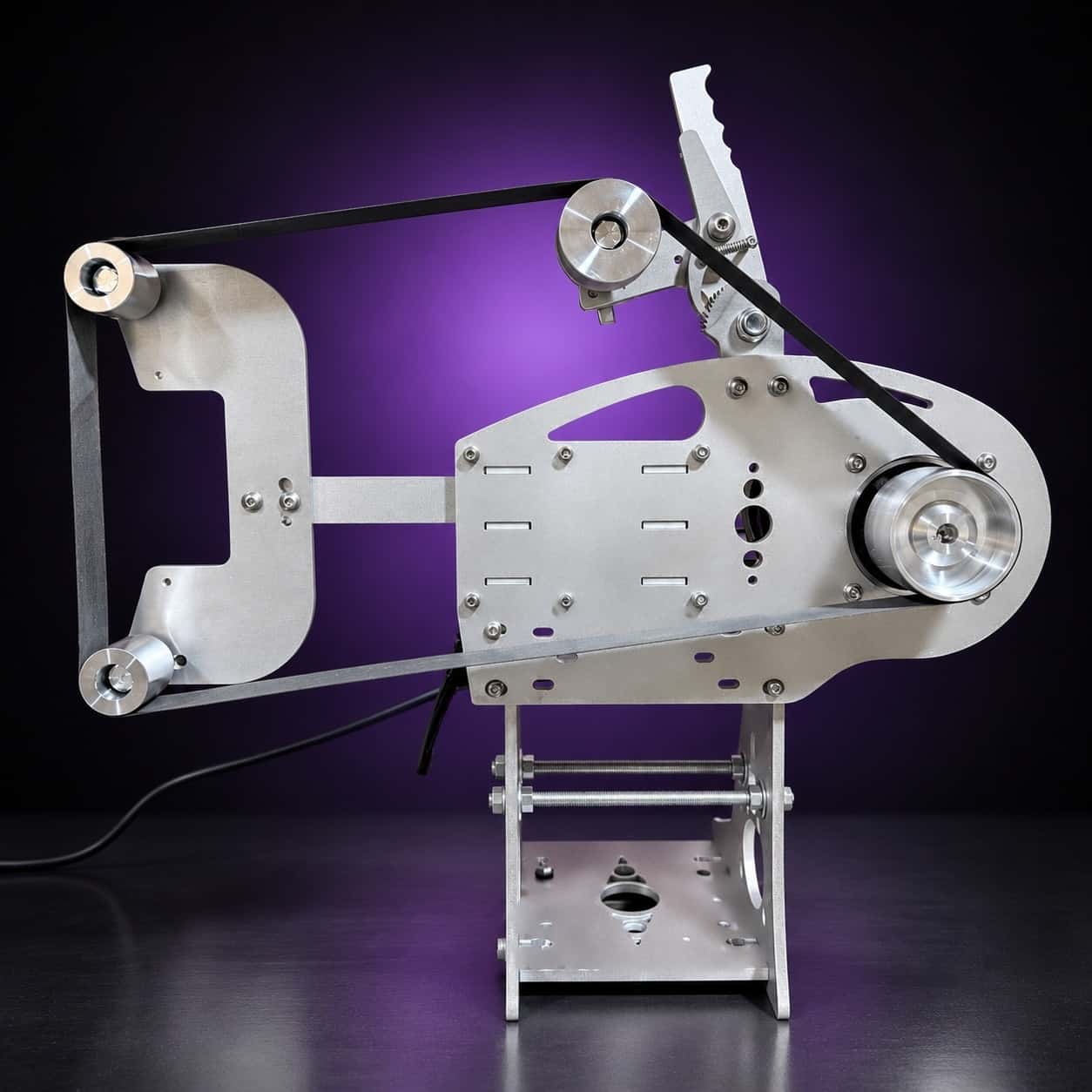
Current dual-axis platform with a fiber-laser-cut 6061 chassis and single-knob tracking.
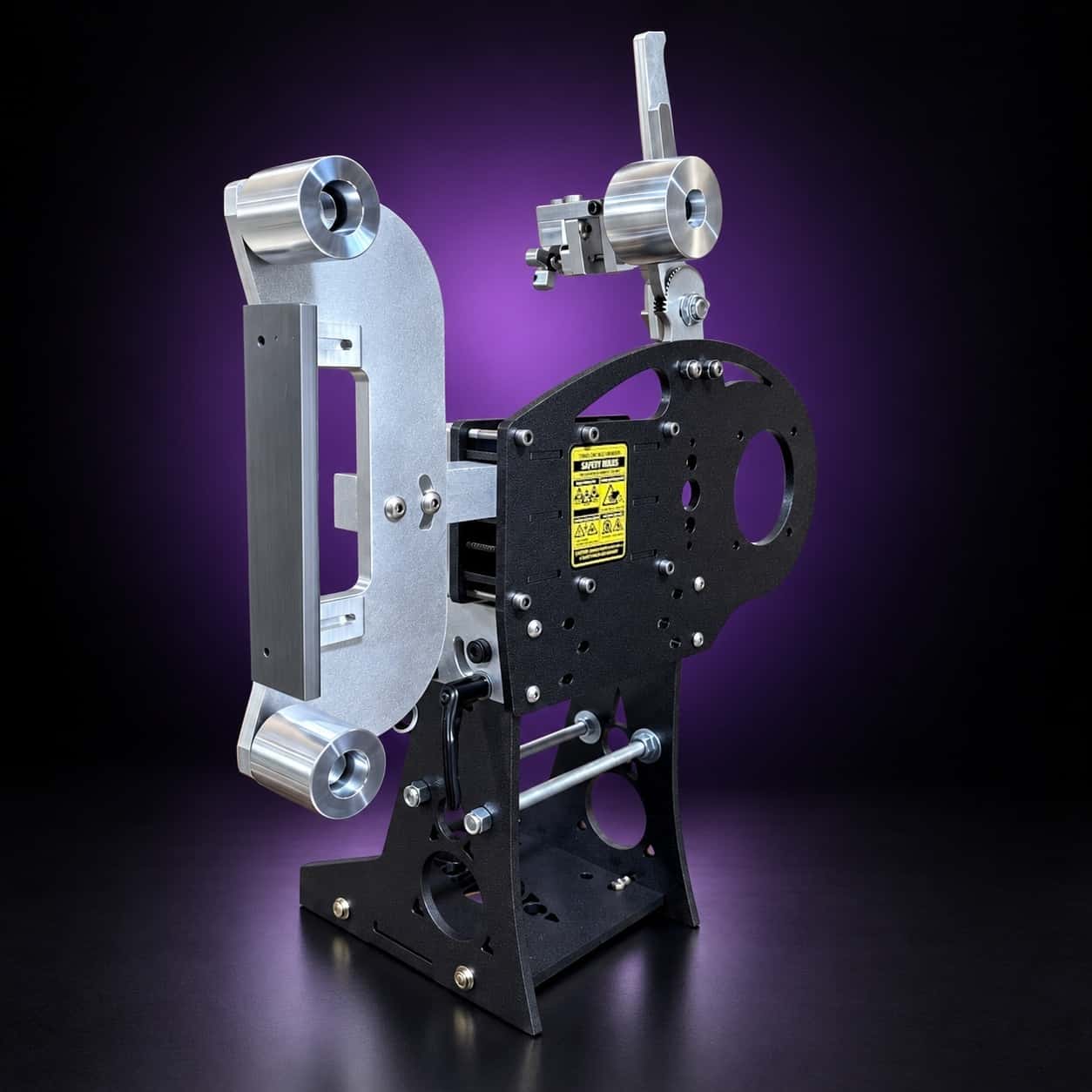
Current dual-axis platform with a steel chassis, more mass and less vibration.
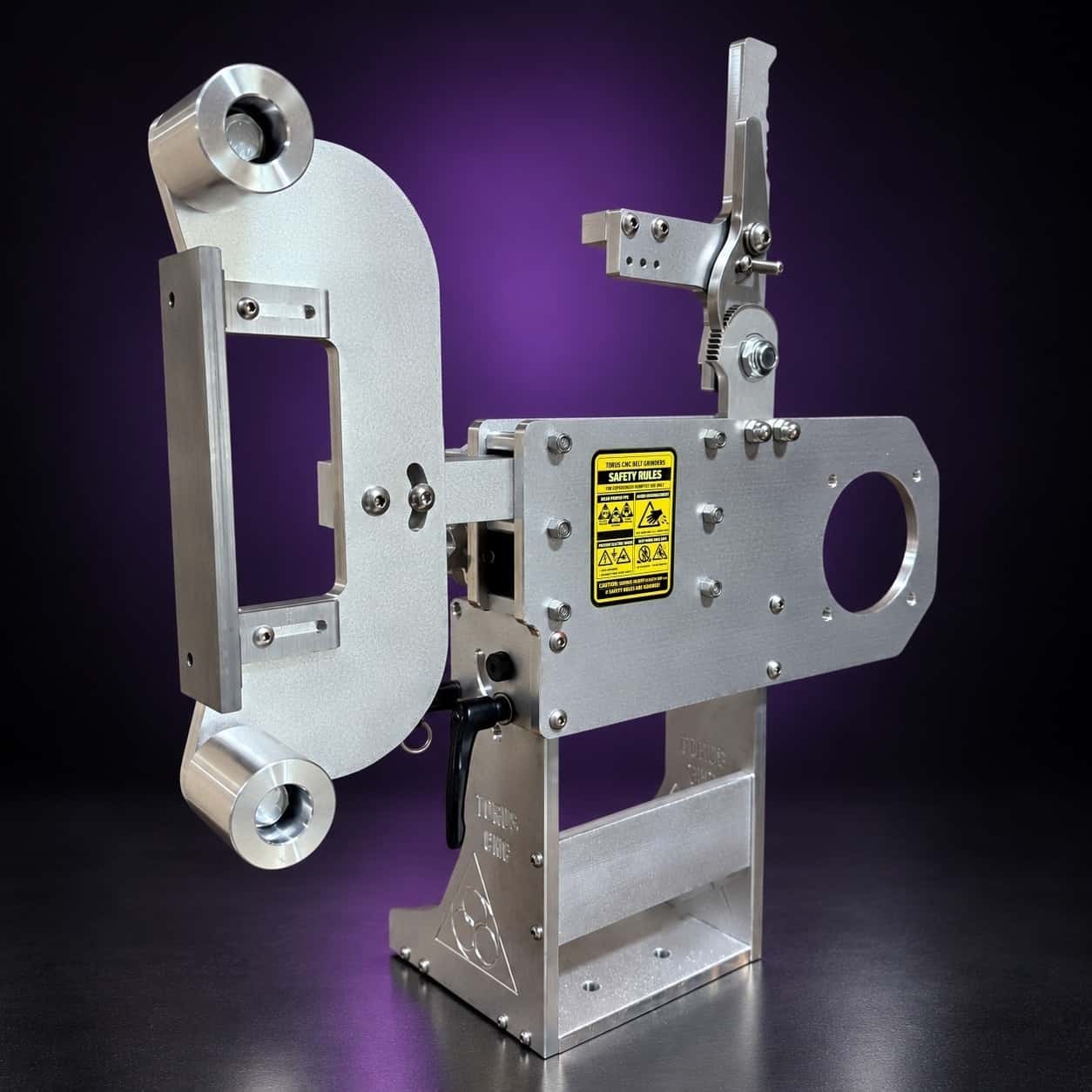
Prior-design aluminum chassis, 90-degree tilt and 1.5-inch tooling arms.
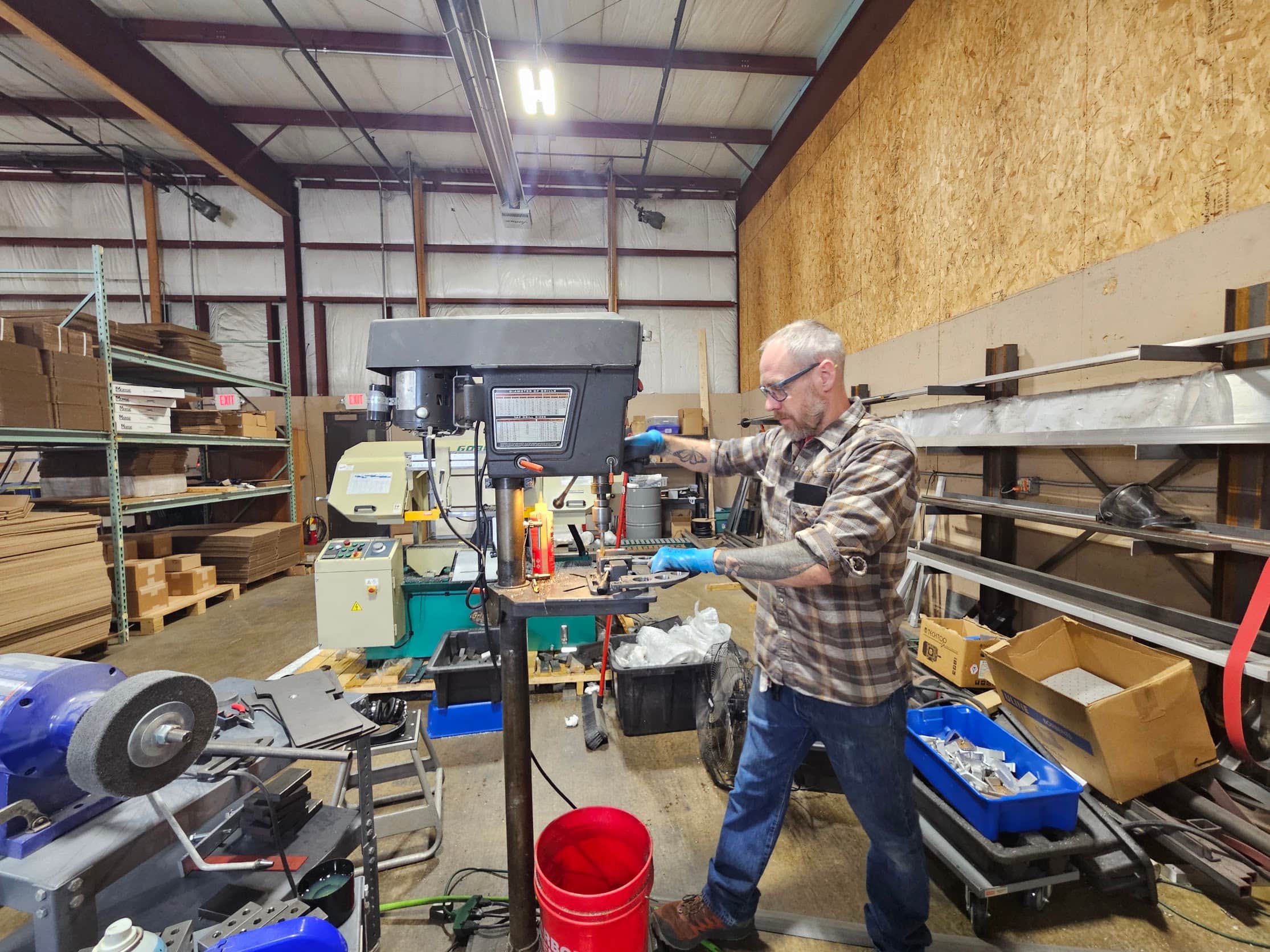
One-man shop
I answer my own email. Tell me the steel, the machine and what it is doing, and I will tell you what I would try next.