

Abrasives
Belt Buyer’s Guide: Which Abrasives to Actually Buy
Belts are the single biggest recurring cost in this hobby, and buying the wrong ones wastes money twice: once on belts that wear out fast, and again on…
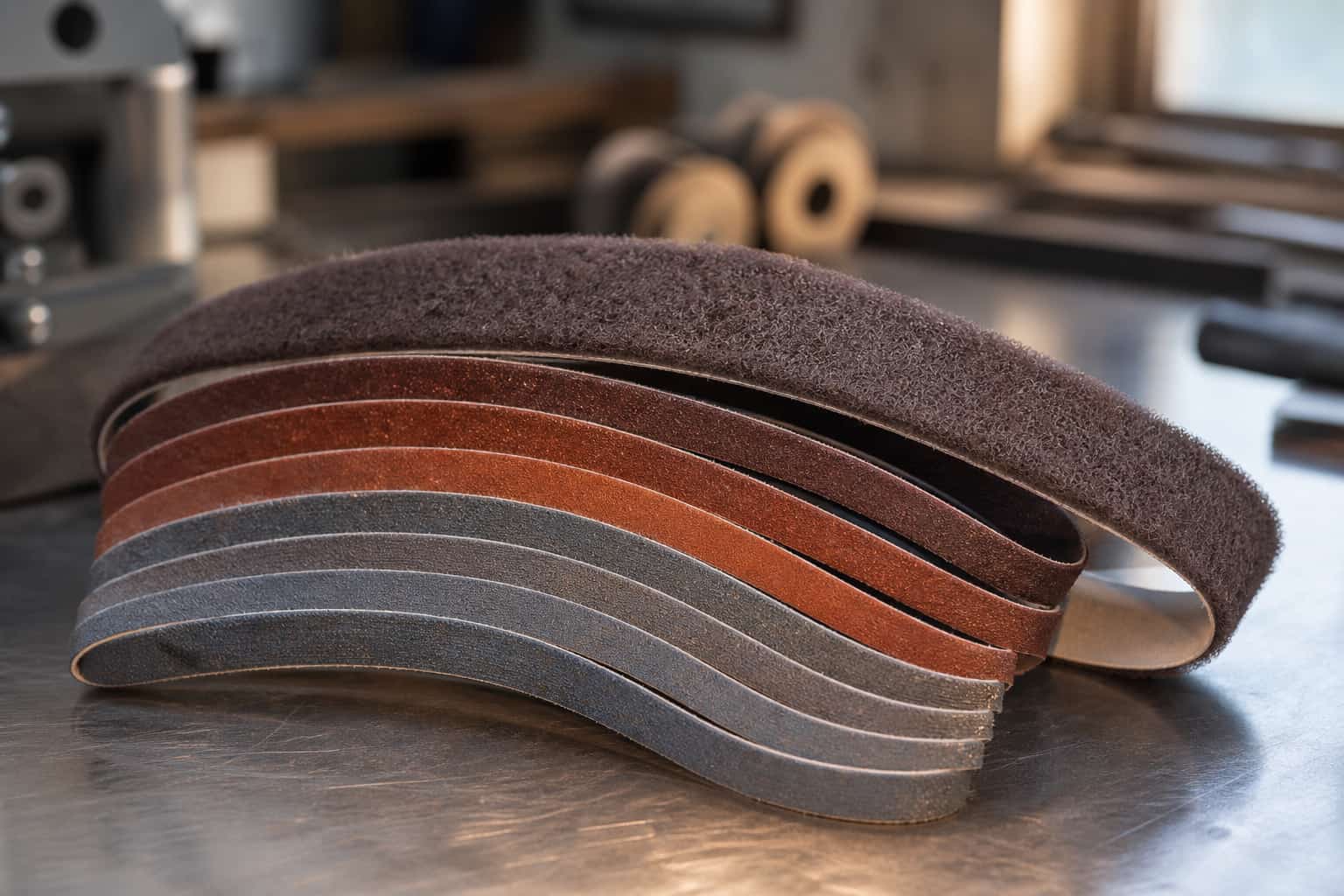
Abrasives
W1 anneals dead soft and grinds with anything sharp. Notes on drill rod, shallow hardening after heat treat, soft-spine differential blades and stones.
1 min readWritten by Rich LinvilleFree to read
W1 is the least demanding steel in the abrasives rack — it anneals dead soft, grinds like the simple steel it is, and sharpens on anything. Its shop quirks come from how it arrives (round drill rod as often as flat bar) and how it is hardened (often differentially, which changes the sanding story).
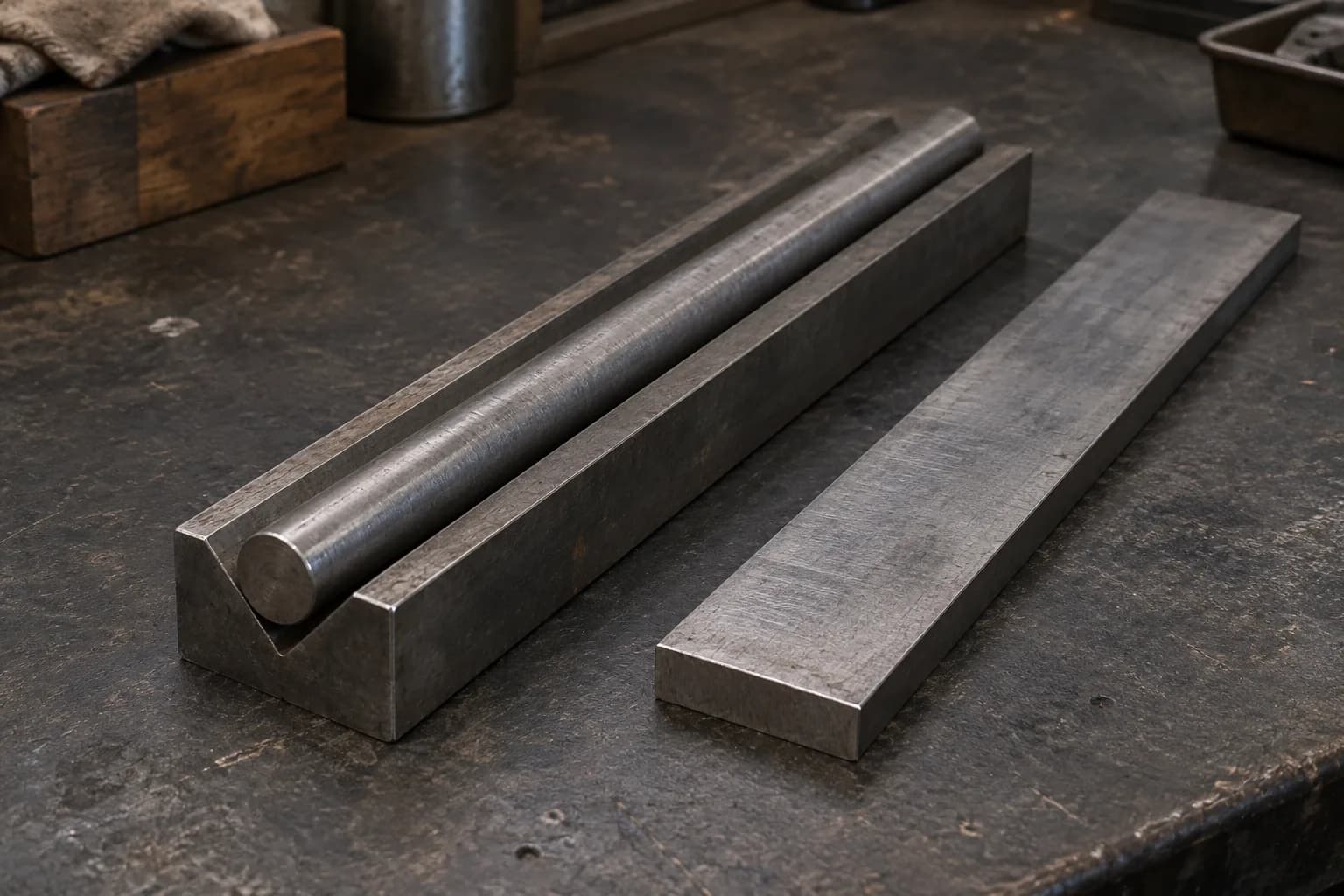
Any sharp belt eats annealed W1; the interesting work is flattening rounds — forging drill rod to bar, then truing on the platen — and the usual thin-hard discipline after the quench at 60-64 HRC: sharp 120-220, light passes, cool hands. W1 through-hardens shallow, so aggressive post-HT grinding can genuinely grind through the hard case on thicker stock quenched slow — another argument for hogging annealed and finishing gently.
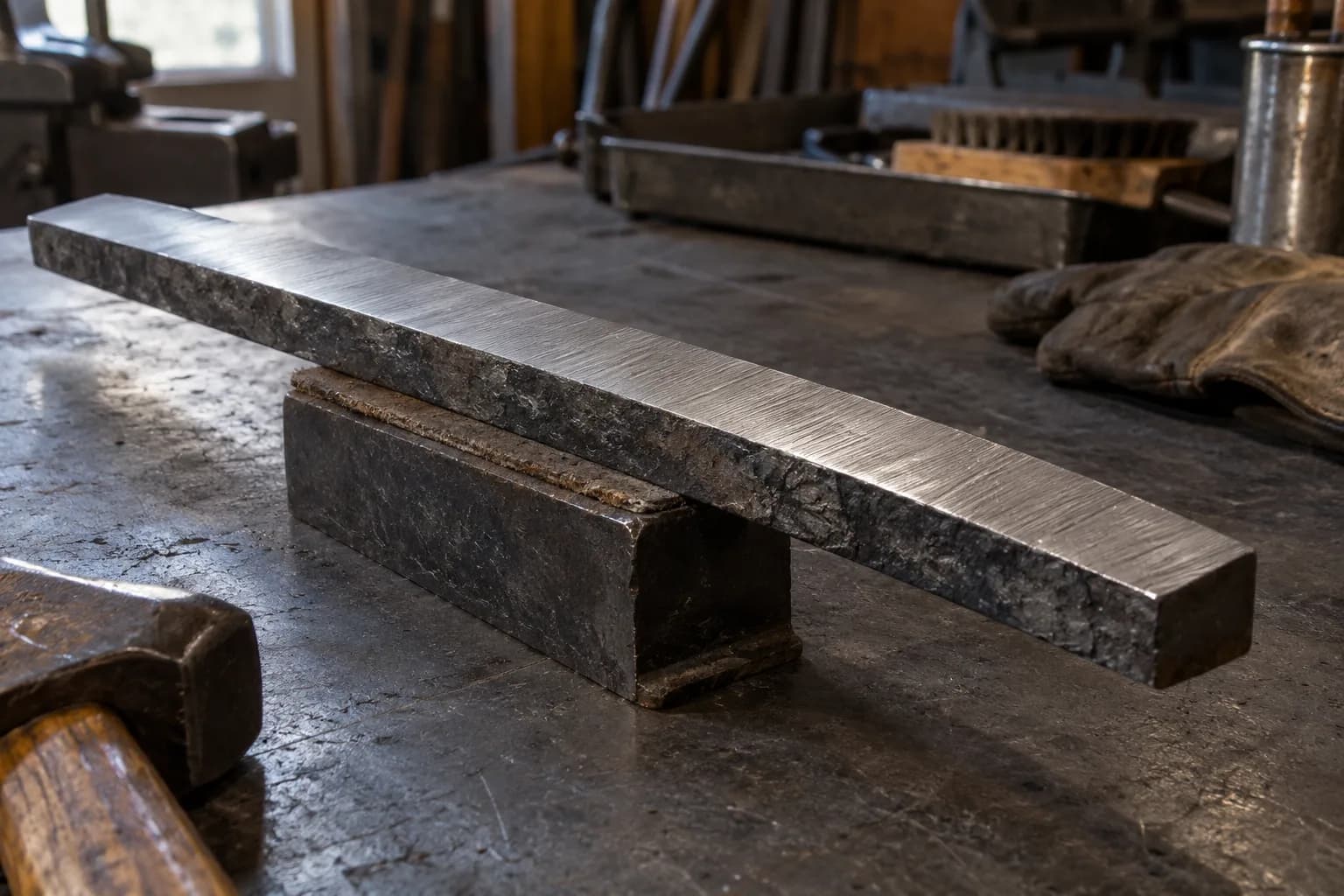
Clay-quenched or edge-quenched W1 (its natural configuration, per the hamon guide) puts soft spine and hard edge on one blade — and they sand differently: the soft zone cuts faster and scratches deeper at every grit. Even pressure discipline, fresh paper, and the etch-polish ladder manage it; the reward is the quench line coming up bright. Budget the hamon finish like a second project.
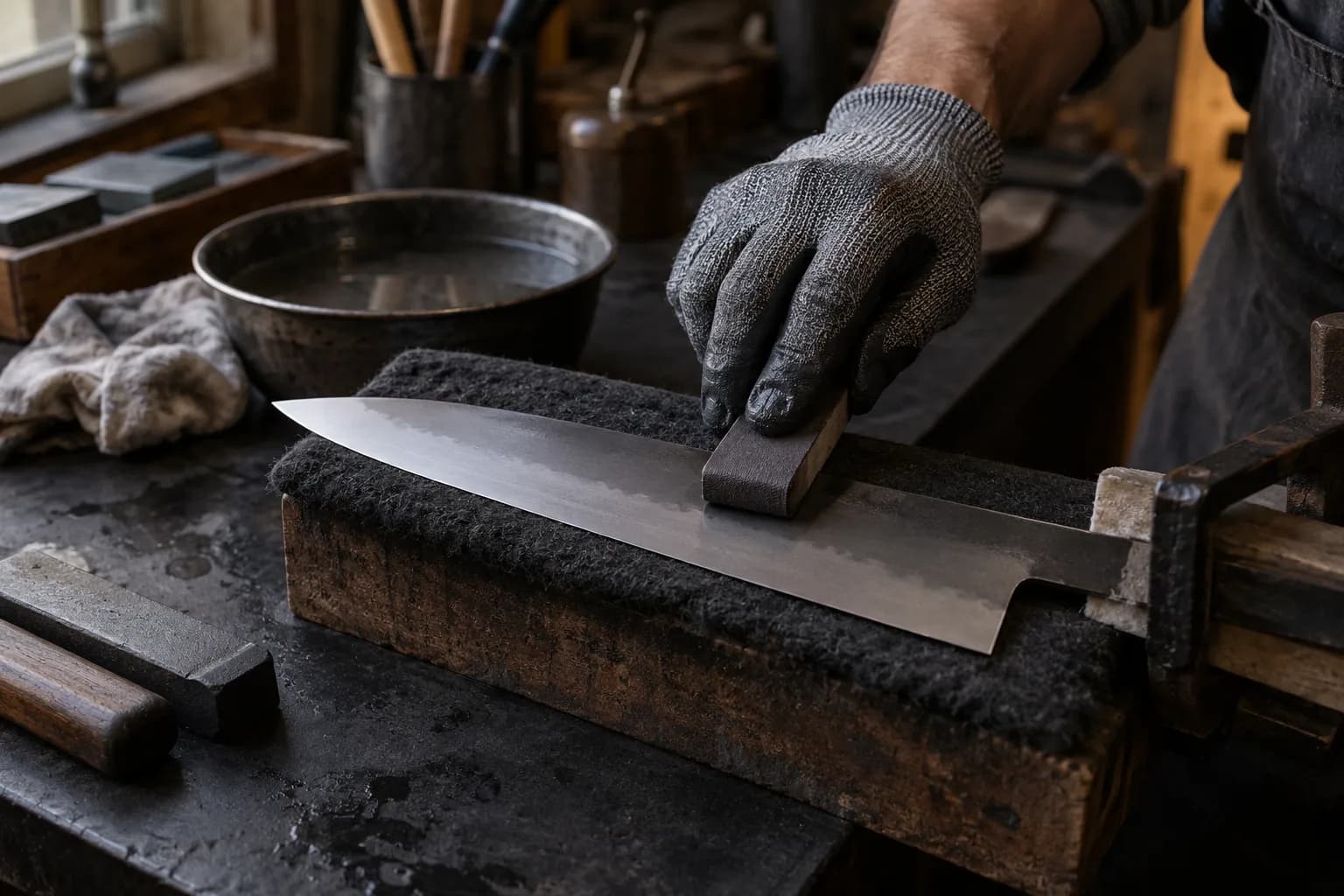
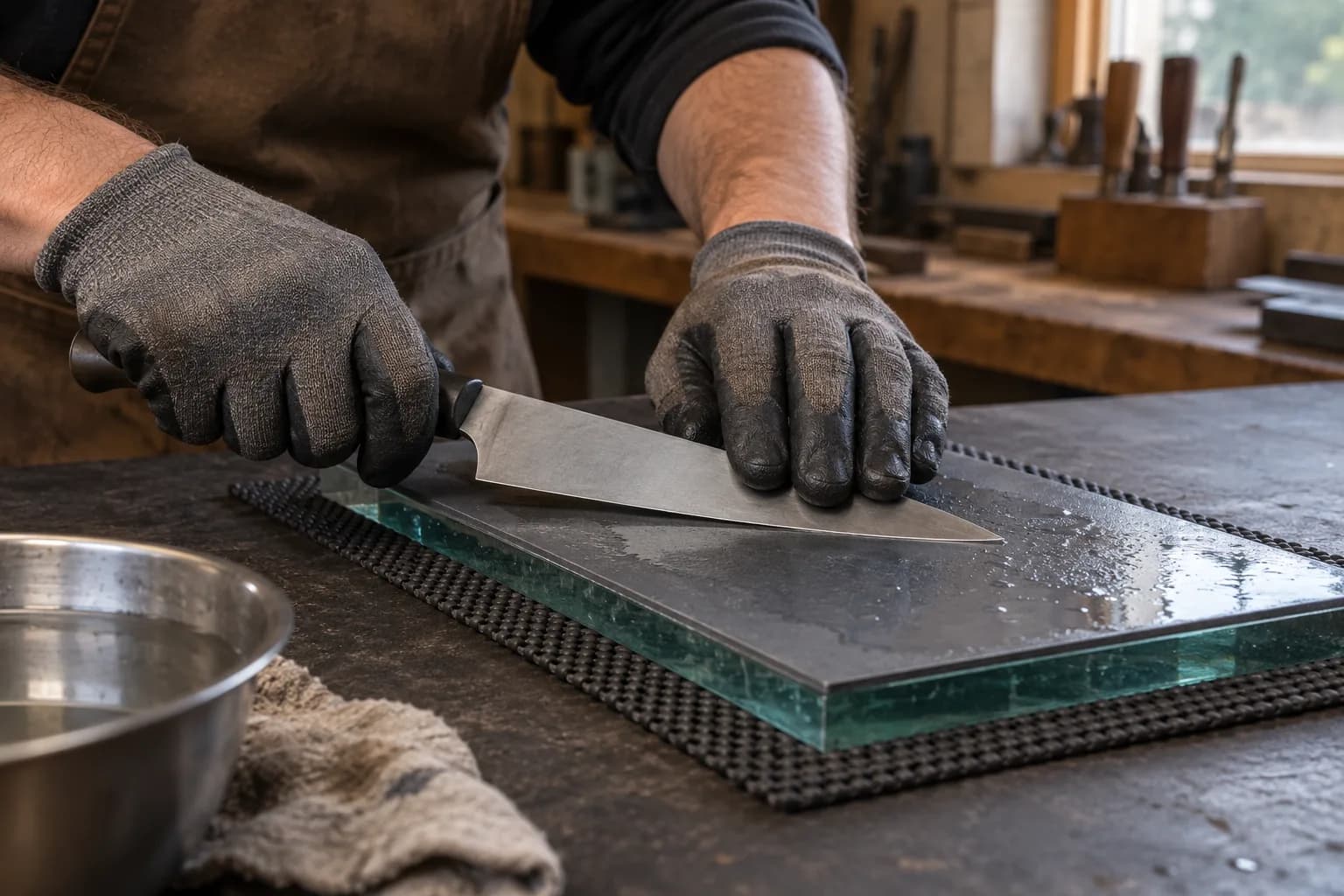
Everything works — oilstones, waterstones, sandpaper on glass, the strop. W1 takes a violent edge fast and strops back instantly; angles 10-15 dps fine work, 15-20 field. This is the steel to LEARN freehand sharpening on: cheap, honest feedback, keen results — the same reasons it teaches heat treat so well.
Keep reading
Three more from the same bench.
Belts are the single biggest recurring cost in this hobby, and buying the wrong ones wastes money twice: once on belts that wear out fast, and again on…

Sharpening is where knifemaking gets humbled: you can grind a flawless blade and still hand someone a knife that won’t slice paper. The good news …
26C3 is bought for one reason — the finest edge simple steel takes — so its shop story is less about surviving the grind (easy) and more about not…
Same bench
I machine the parts, hand-assemble, track and test Torus grinders in Sterling, Illinois. Most orders ship in seven to ten business days from time of order.

Current dual-axis platform with a fiber-laser-cut 6061 chassis and single-knob tracking.

Current dual-axis platform with a steel chassis, more mass and less vibration.

Prior-design aluminum chassis, 90-degree tilt and 1.5-inch tooling arms.

One-man shop
I answer my own email. Tell me the steel, the machine and what it is doing, and I will tell you what I would try next.