

Abrasives
Grinding & Sharpening CPM S90V
S90V is the steel that teaches makers what vanadium carbide really means: nine percent of the bar is particles harder than most of your abrasives. Every…

Knife steel
Crucible's edge-retention extreme: 2.3% carbon and 9% vanadium in a PM stainless that out-cuts essentially everything mainstream, paid for in toughness, grindability and sharpening effort (diamond stones effectively required). Crucible's data sheet aims at 56-59 HRC; stock removal only. A specialist slicer's steel that is honest about its tradeoffs.
Also known as
At a glance
The four meters are relative to the rest of the database. Composition is the published nominal analysis, not a mill certificate for your bar.
Working properties
predecessor designation CPM 420V; European cousin: Bohler M398 (higher carbide take on the recipe).
Dedicated EDC and utility slicers, cardboard-and-rope working knives, hunting blades for owners with diamond stones, collector-grade folders where the spec sheet is the story. Not for choppers, prying tips, or basic-stone households.
At the bench
Open the property you are worried about. Every note is written for the blade in your hand, not for a spec sheet.
The full reference
CPM S90V is what happens when a steel is designed around one question: how long can an edge keep cutting? Crucible’s answer packs 9% vanadium and 2.3% carbon into a powder-metallurgy stainless whose carbide volume out-wears essentially every mainstream blade steel — a working edge that survives cardboard, rope and abrasive media for absurd stretches. Everything else about S90V is the bill for that answer: it grinds slowly, sharpens grudgingly, chips before it bends, and costs accordingly. It is a specialist’s steel, and it is honest about it.
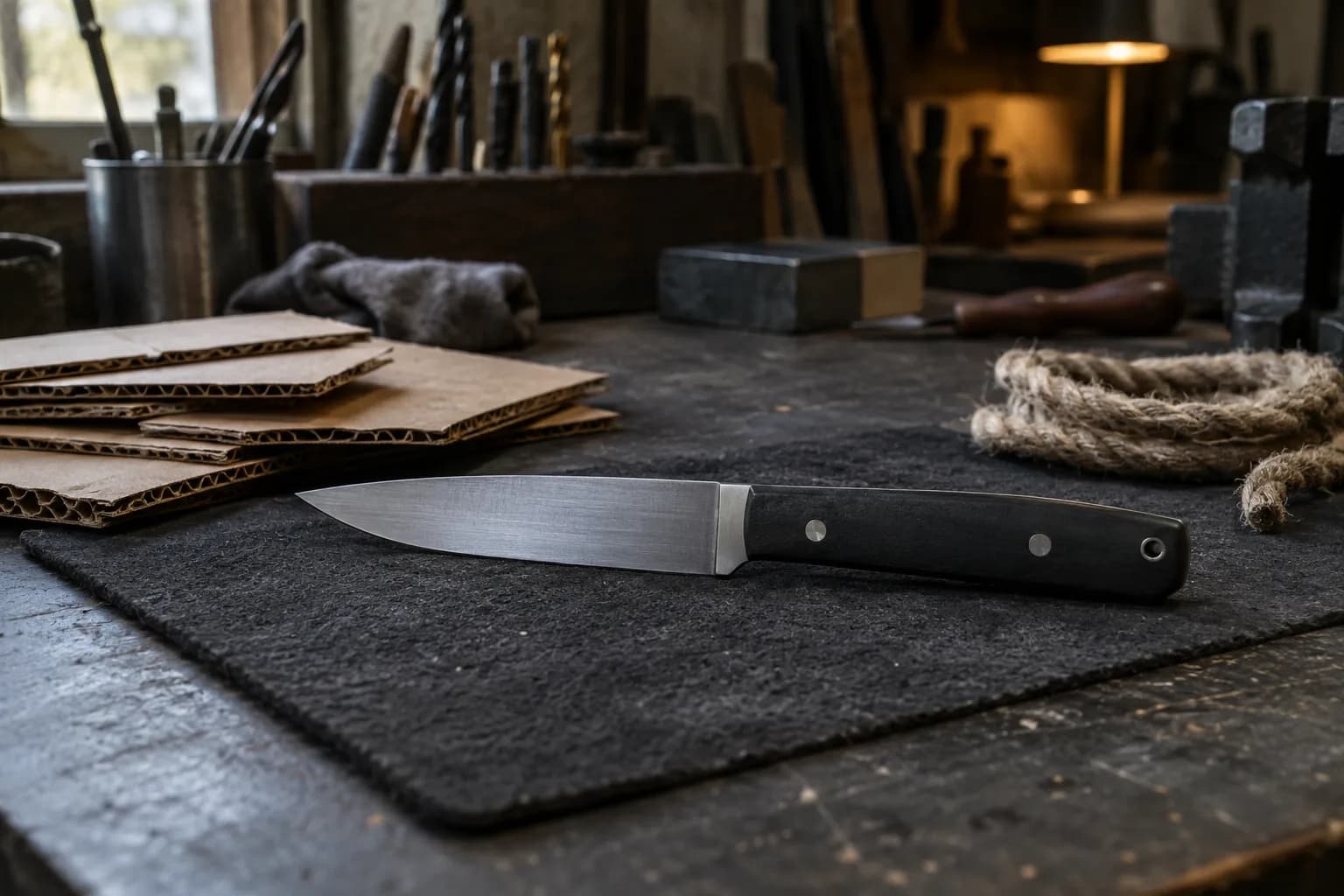
For dedicated slicers whose owners prize edge retention above all — yes, nearly unmatched. The vanadium carbide population is so dense that in standardized cutting tests S90V lands at the top of the stainless chart, clearly above M390 and 20CV. It is the wrong steel for hard use, batoning, tips that pry, or owners who sharpen on basic stones.
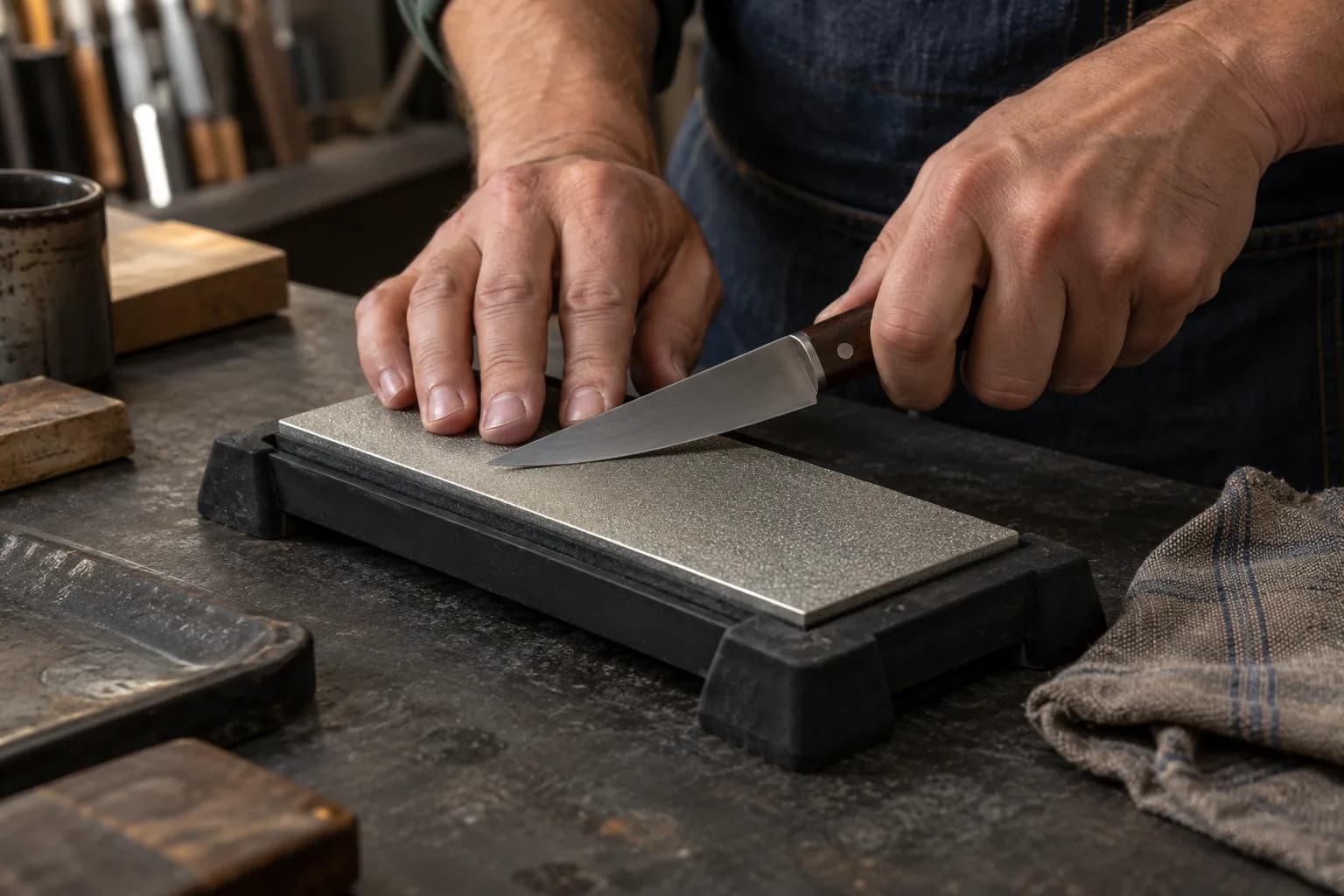
This is the famous cost. Vanadium carbide is harder than aluminum-oxide and silicon-carbide abrasives — conventional stones polish the steel matrix around the carbides rather than cutting them, which is why S90V has a reputation for taking a “good enough” edge reluctantly. Diamond and CBN abrasives change the experience completely: with diamond plates, S90V sharpens slowly but normally. Sell or buy this steel with the diamond-stone conversation attached; details in our S90V grinding guide.
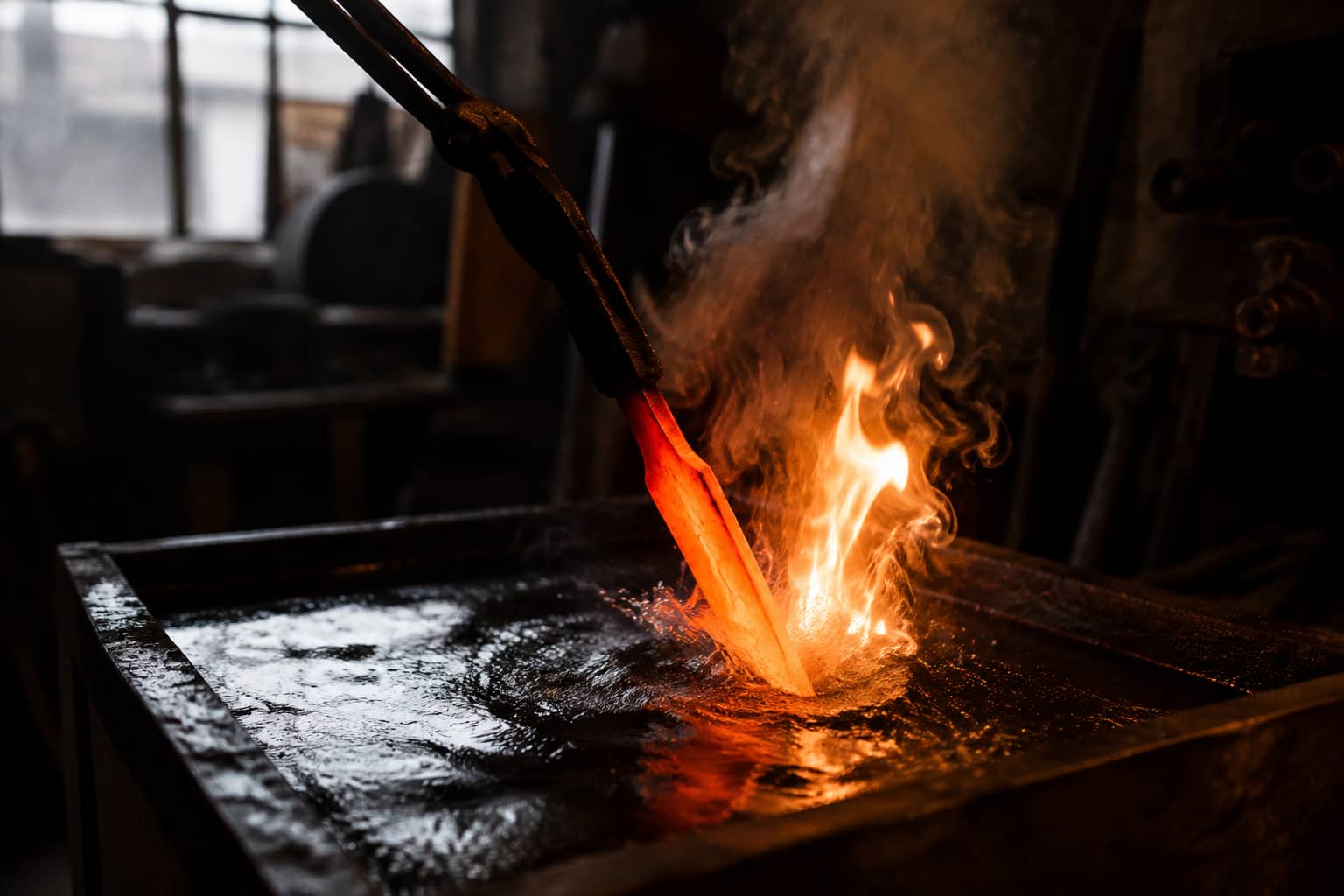
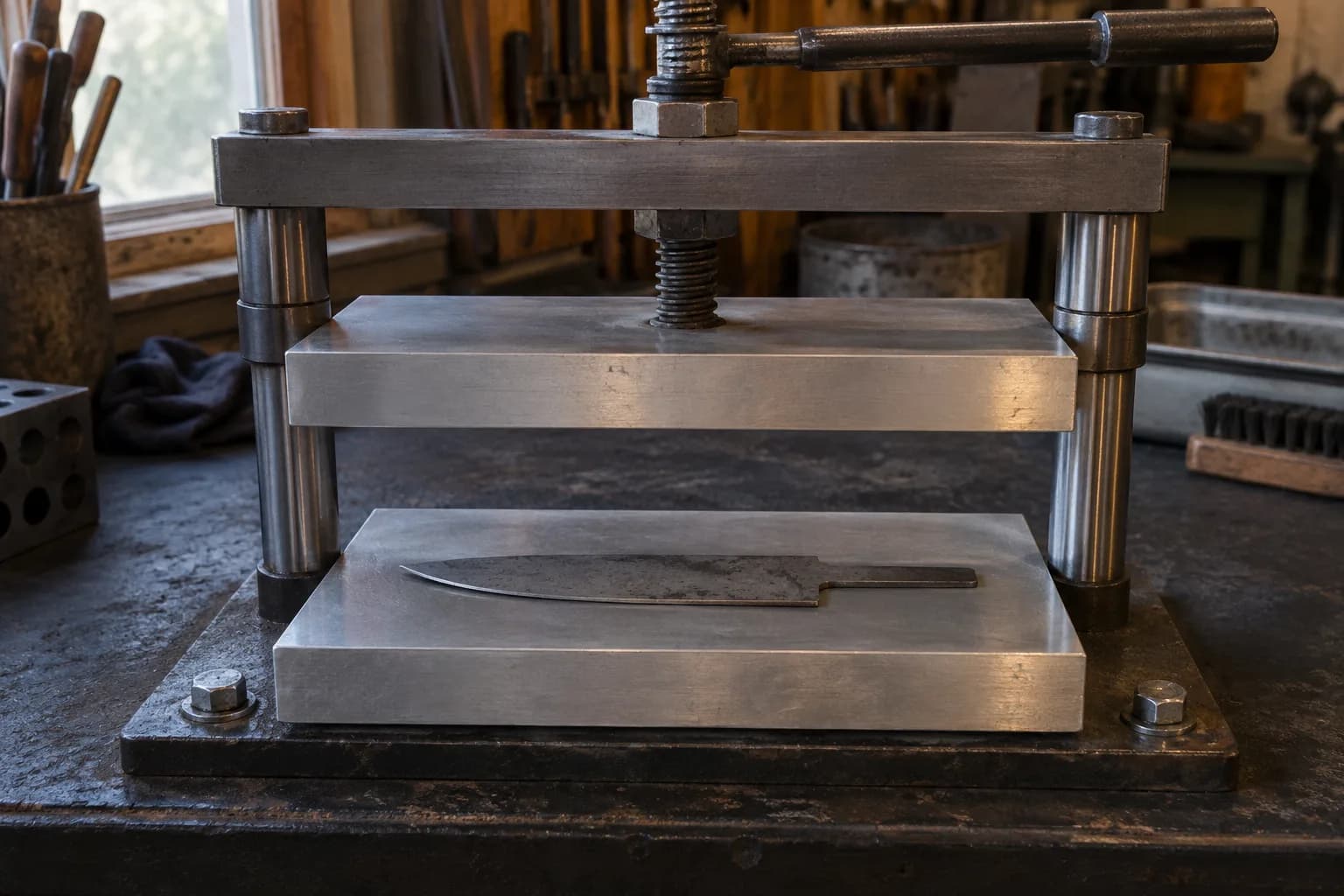
Crucible’s data sheet aims at 56–59 HRC; its own test row is 58 HRC after a 2050°F austenitize and a double temper at 500°F. Crucible’s MagnaCut sheet tests S90V at 61–61.5 HRC without stating a cycle, so 56–61 HRC is the span Crucible’s paperwork covers; ask the maker for the actual hardness. The sheet’s cycle is a 2100–2150°F austenitize, a fast quench, a double temper at 400–750°F and an optional freeze between tempers — the same kiln-and-protocol discipline as every high-alloy PM stainless, covered in our heat treat guide. Stock removal only; nobody forges 9% vanadium on purpose.
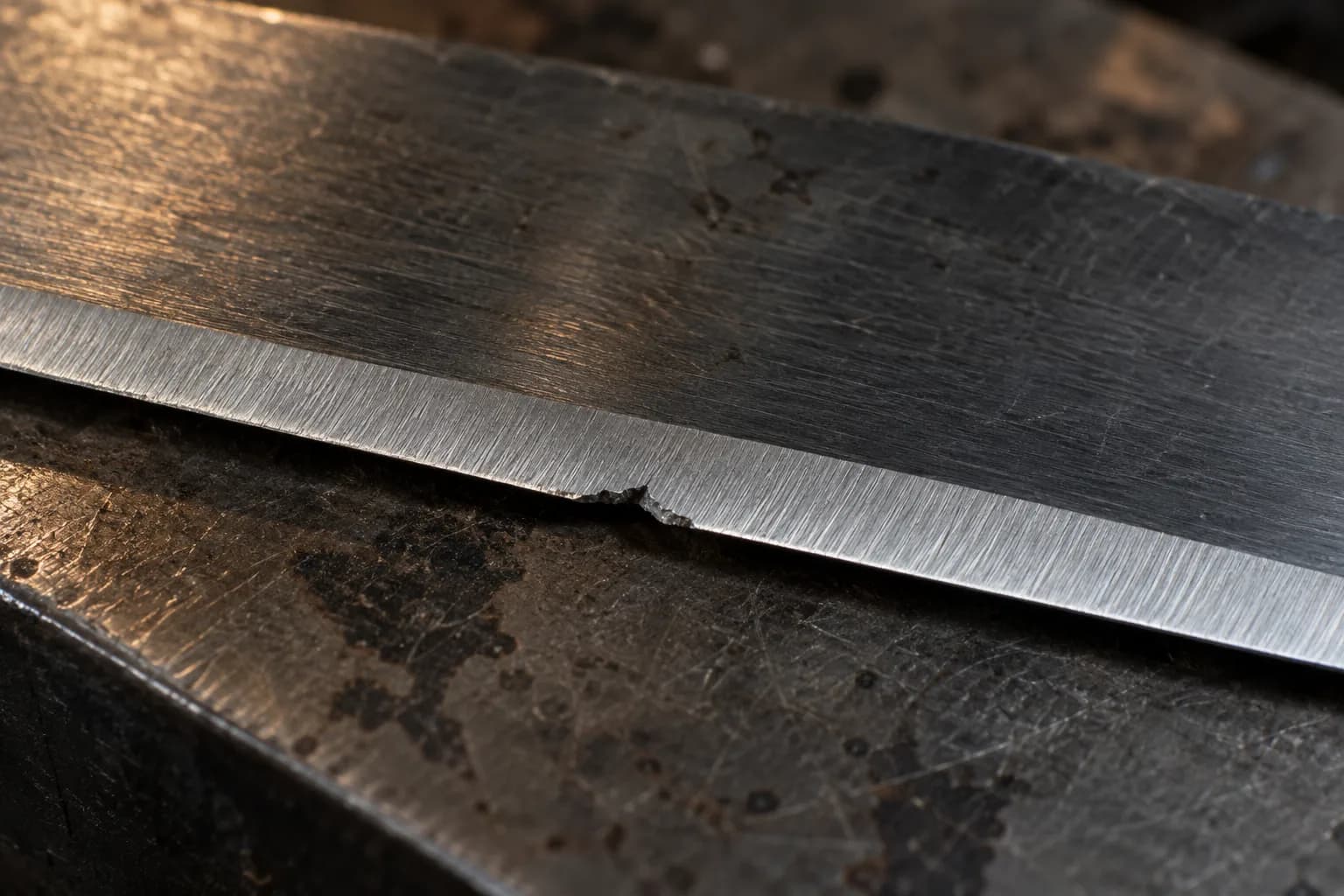
No — and it does not pretend. That carbide volume leaves modest impact toughness; thin edges chip on staples and bones that MagnaCut or 3V would shrug off. The design answer is geometry: S90V wants sensible edge angles (18-20 dps) and slicing duty, where its wear resistance gets to matter and its brittleness never comes up.
Yes, in practical terms. Around 14% chromium delivers real stain resistance for EDC and kitchen service — below M390’s margin and far below LC200N’s immunity, but rust is a non-issue with normal care.
S90V cuts longer; M390 does everything else a little better — tougher, easier to sharpen, easier to find, cheaper. For a pure cardboard-and-rope slicer, S90V earns its premium; for a general premium EDC, M390/20CV is the saner pick. Full breakdown: S90V vs M390.
Head to head
Every matchup CPM S90V appears in, dimension by dimension.
Keep reading
S90V is the steel that teaches makers what vanadium carbide really means: nine percent of the bar is particles harder than most of your abrasives. Every…

Every knife steel is iron plus a specific recipe of other elements, and each of those elements pulls the steel’s behavior in a particular direction…

Two steels with similar hardness numbers can feel completely different under a sharpening stone, one glides along smoothly, another feels like it’s…
Same bench
Whatever the steel, the grind is only as flat as the platen behind it. I machine the parts, hand-assemble and test Torus grinders in Sterling, Illinois.

Current dual-axis platform with a fiber-laser-cut 6061 chassis and single-knob tracking.

Current dual-axis platform with a steel chassis, more mass and less vibration.

Prior-design aluminum chassis, 90-degree tilt and 1.5-inch tooling arms.

One-man shop
Tell me what the blade is for and how you heat treat. I will tell you whether this is the steel I would use, and what I would use instead.