
Swords
Sword Anatomy: A Maker’s Field Guide
Before the types, the vocabulary. Every sword — katana or claymore, gladius or rapier — is the same short list of parts negotiating the same physics: a…
Swords
Choosing sword steel: why toughness rules at length, 5160 and 9260 spring steels, 8670 and 1075, hamon steels, and why stainless fails swords.
2 min readWritten by Rich LinvilleFree to read
Sword steel selection is knife steel selection with the priorities inverted: at three feet of lever arm, toughness is nearly everything and wear resistance nearly nothing. A sword that holds a scary edge but snaps is a recall; a sword that bends and springs back is an heirloom. The steels that rule this category are the tough, simple, forgiving ones — and they are cheap.
A sword edge meets targets in violent, imperfect contact and the blade takes flex a knife never sees. So: toughness first, resilience (spring-back) second, edge retention a distant third — nobody slices cardboard for an hour with a longsword. Hardness targets drop accordingly: 50–55 HRC through-hardened is the classic sword zone, with some makers running the high 50s on smaller, well-tapered blades. The logic of trading hardness for survival is the HRC tradeoff pushed to its toughness extreme.
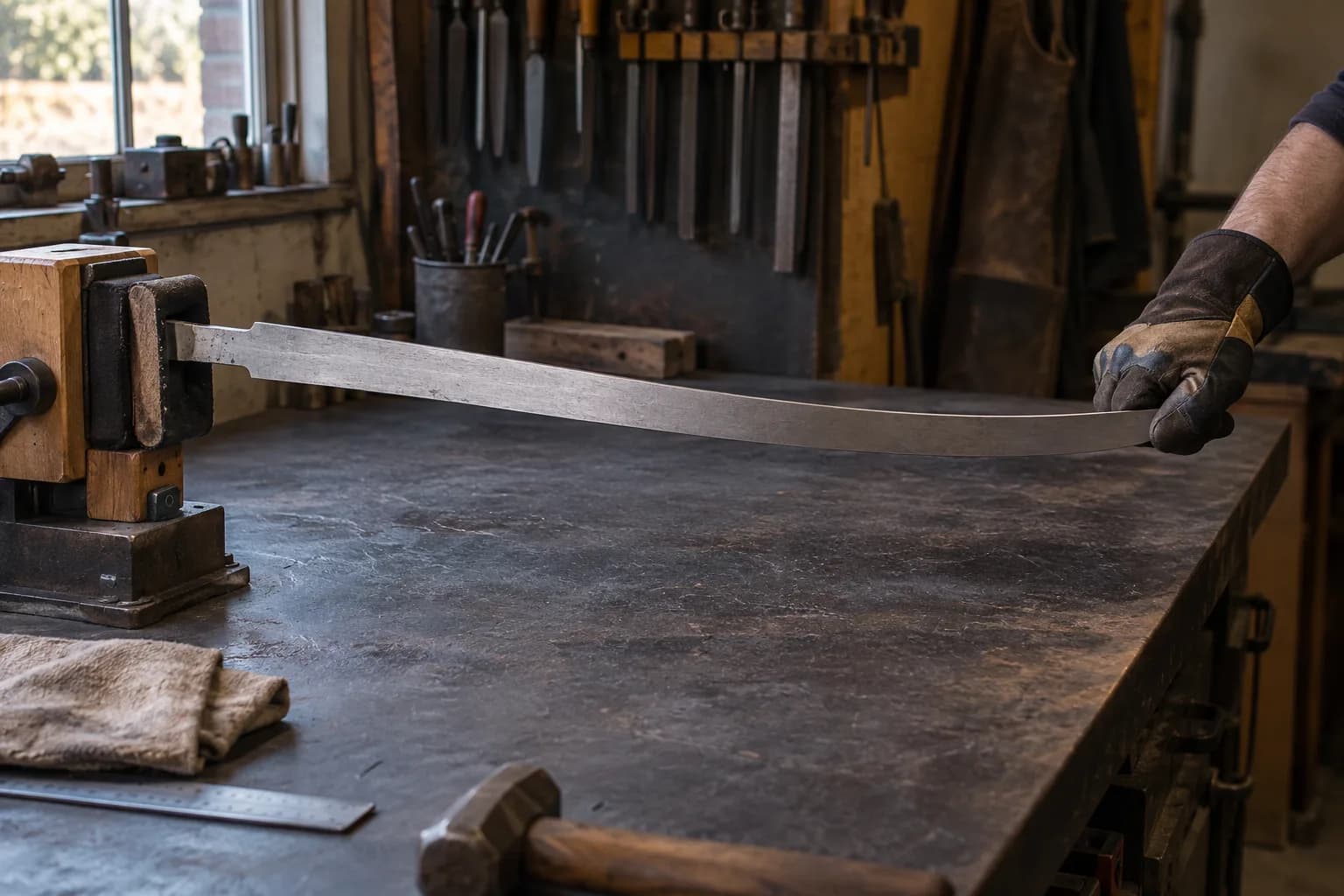
5160 is the default modern sword steel and deserves it: elite toughness, forgiving heat treat, cheap in long bars, proven in a million blades. 9260 — its high-silicon sibling — is the choice of the HEMA feder industry (sparring swords built to flex thousands of times) precisely because silicon spring steels shrug off repeated deflection; it runs comparably tough with even better resilience, at the price of scarcer bar stock. Between them sits nearly every serious production sword made today.
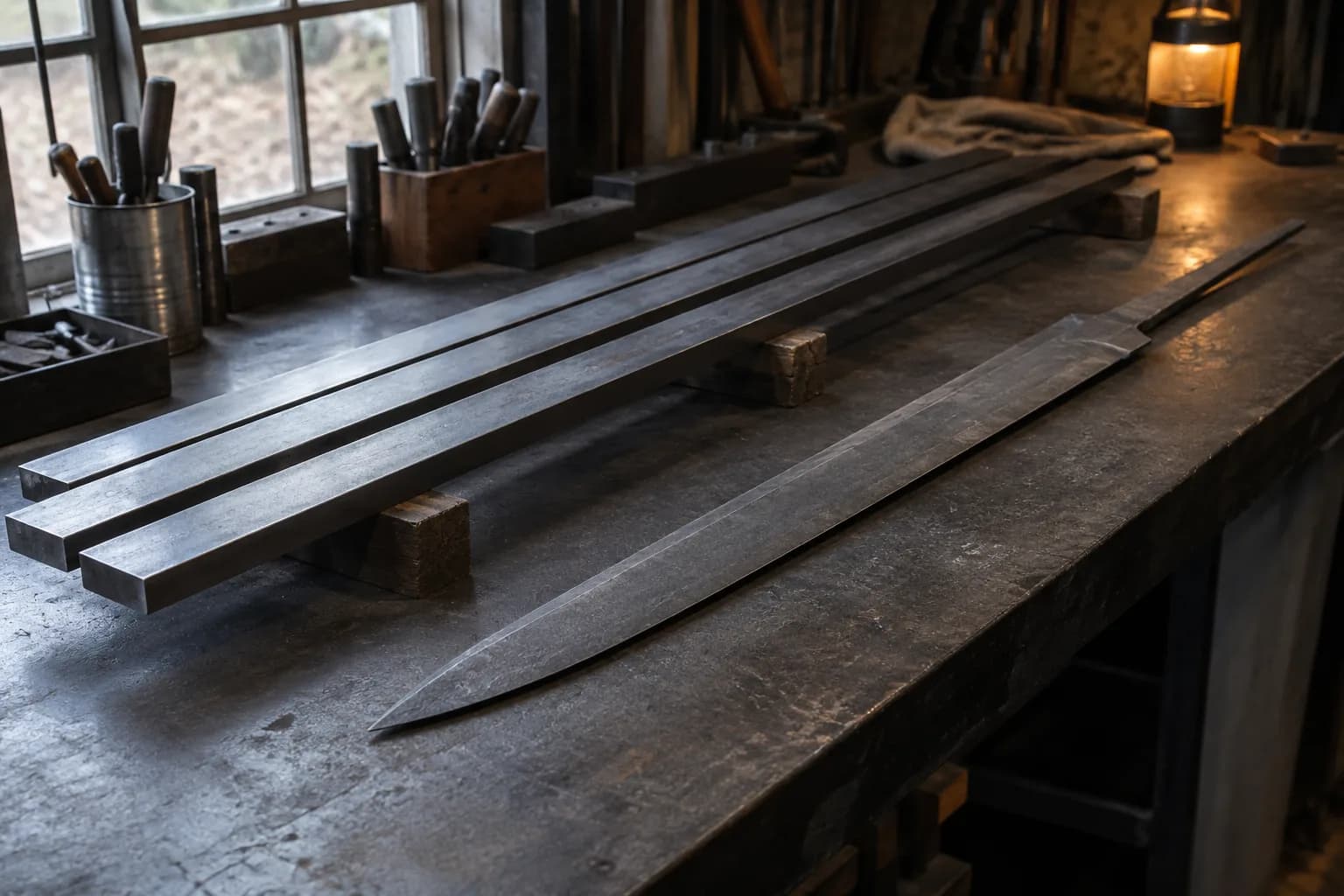
1075 and 1060-class steels are the production katana standard: tough at sword hardness, dirt cheap, and shallow enough hardening to clay-quench convincingly. 8670 — the nickel band-saw steel — makes an outstanding sword steel that few people talk about: elite toughness, thin-stock availability irrelevant here but its forgiveness very relevant. For hamon-forward builds, W2 and 1095 bring the vivid clay-quench line at a real toughness cost — differential hardening (soft spine carrying a hard edge, per the hamon guide) is precisely how those steels survive at length.
The stainless steels that dominate knives fail swords on the same spec sheet that recommends them for kitchens: their carbide-rich chemistry runs brittle at sword lengths and their hardenability profile fights differential treatment. A stainless sword-shaped object survives the wall; a stainless sword meeting a target is a liability lawsuit warming up. The exceptions (specialty applications aside) are rare enough to prove the rule. Carbon steel plus oil is the sword owner’s maintenance contract, same as it was in 1400.
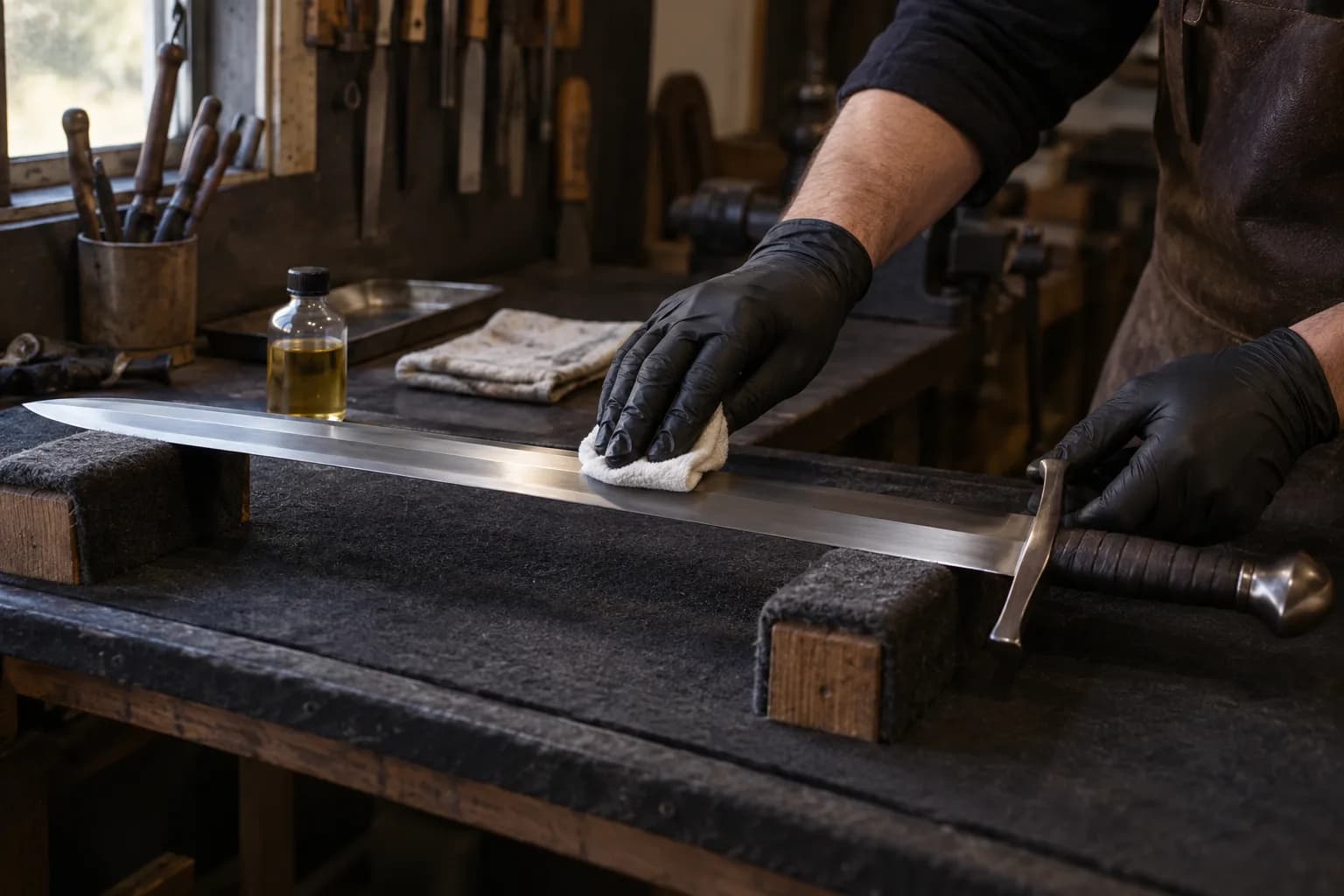
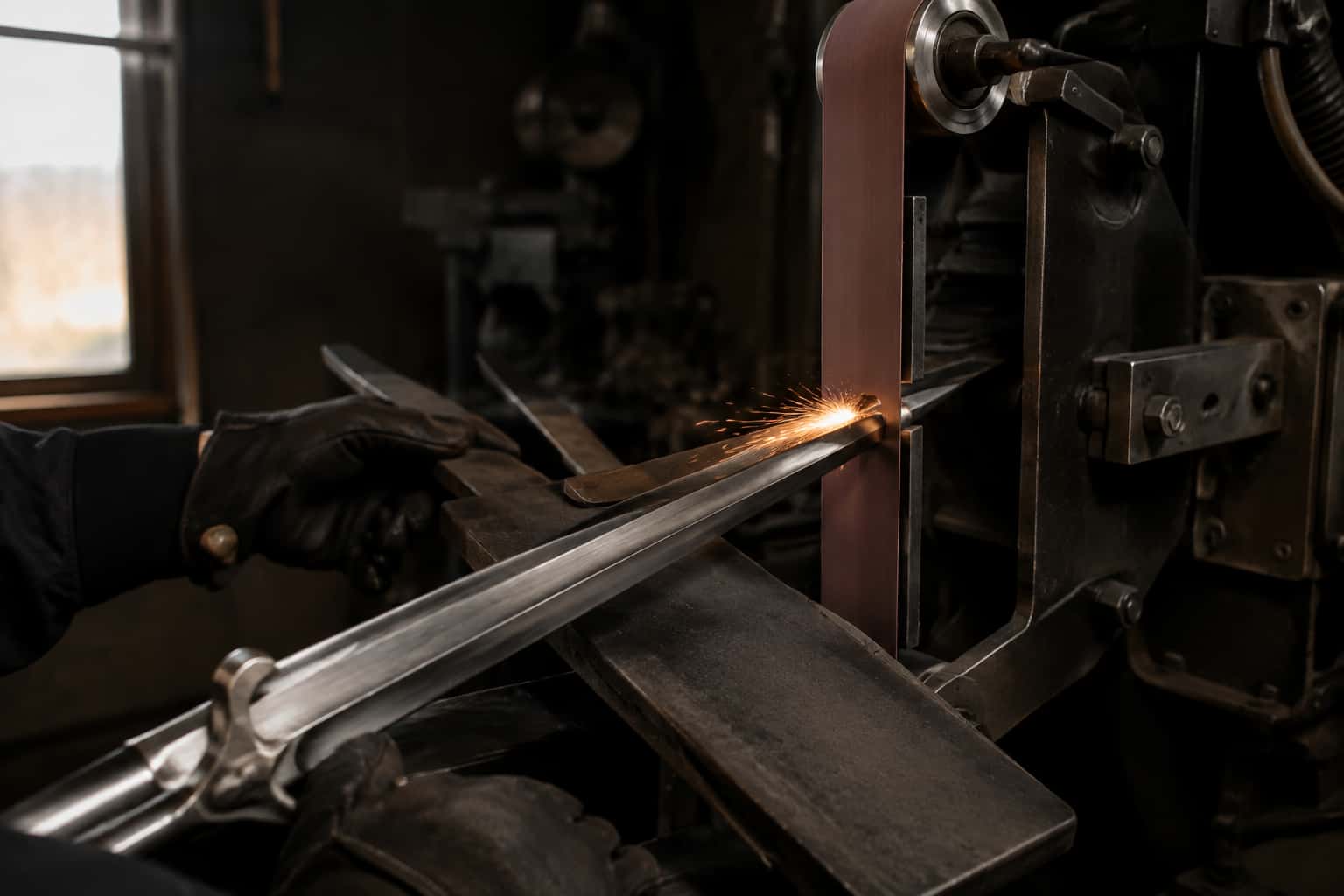
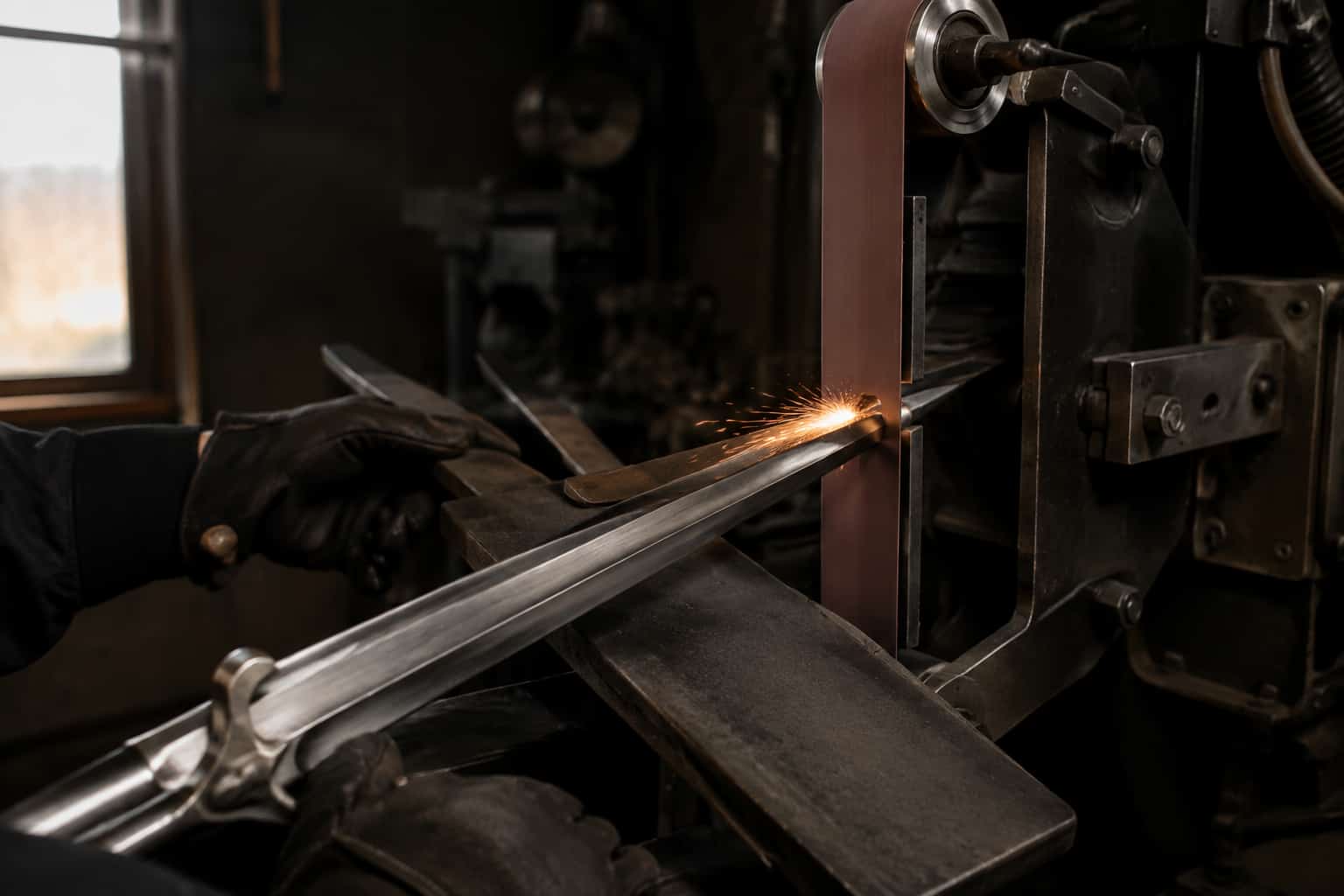
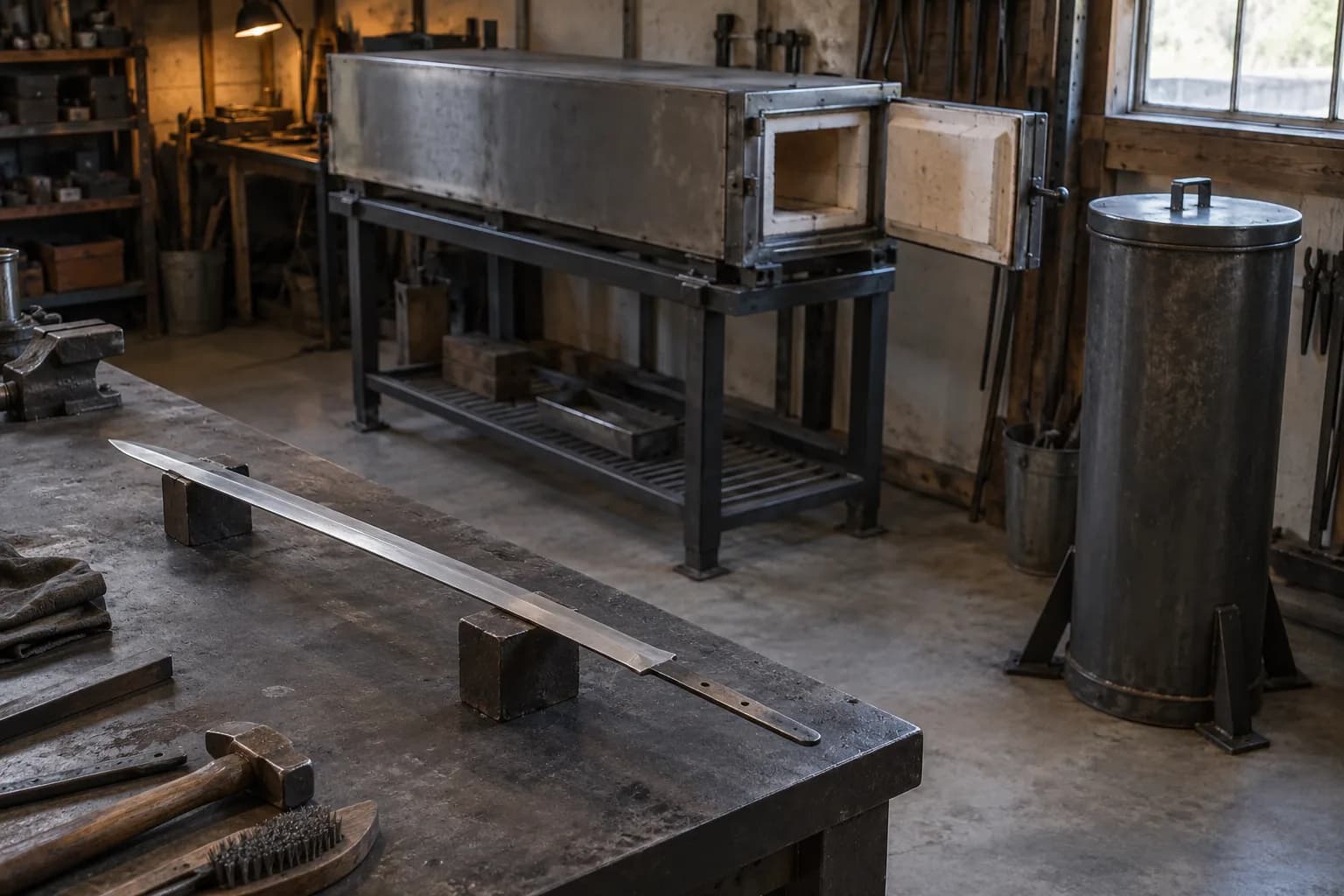
The steel choice is half; the other half is executing at three-plus feet: long even austenitizing (forge-length pipe ovens and careful passes, or a kiln that fits), quench tanks sized to the blade, and the warp-and-straighten cycle every sword maker learns to love. The full sequence lives in Your First Sword on a 2×72; the steel-specific numbers live on each steel’s page in the database.
Keep reading
Three more from the same bench.
Before the types, the vocabulary. Every sword — katana or claymore, gladius or rapier — is the same short list of parts negotiating the same physics: a…
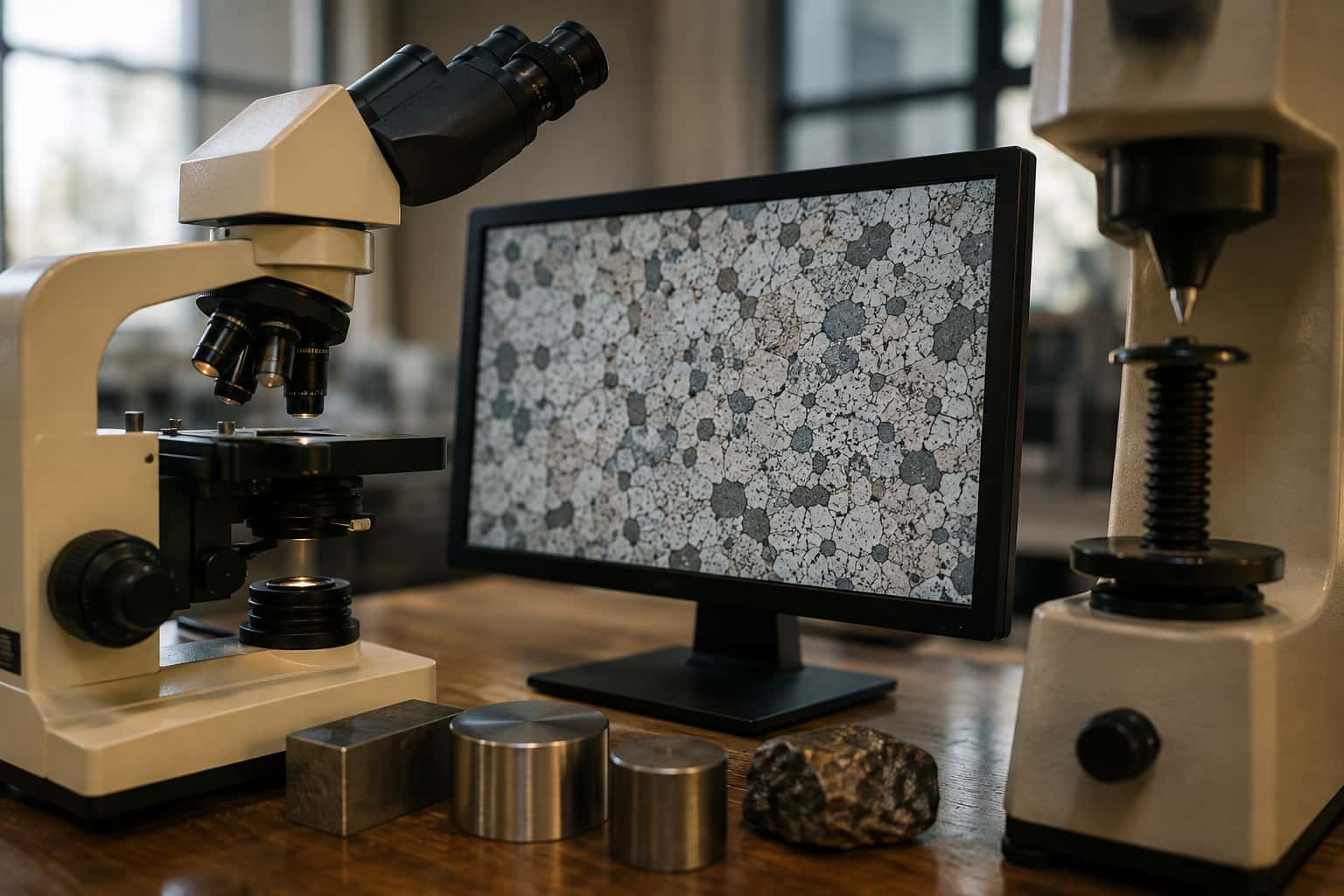
Heat treat recipes and steel spec sheets both cite a target hardness on the Rockwell C scale, but the number by itself doesn’t explain why that specific…
The wavy line visible along a hamon-bearing blade isn’t decoration applied after the fact, it’s a direct visual record of which parts of the steel…
Same bench
I machine the parts, hand-assemble, track and test Torus grinders in Sterling, Illinois. Most orders ship in seven to ten business days from time of order.
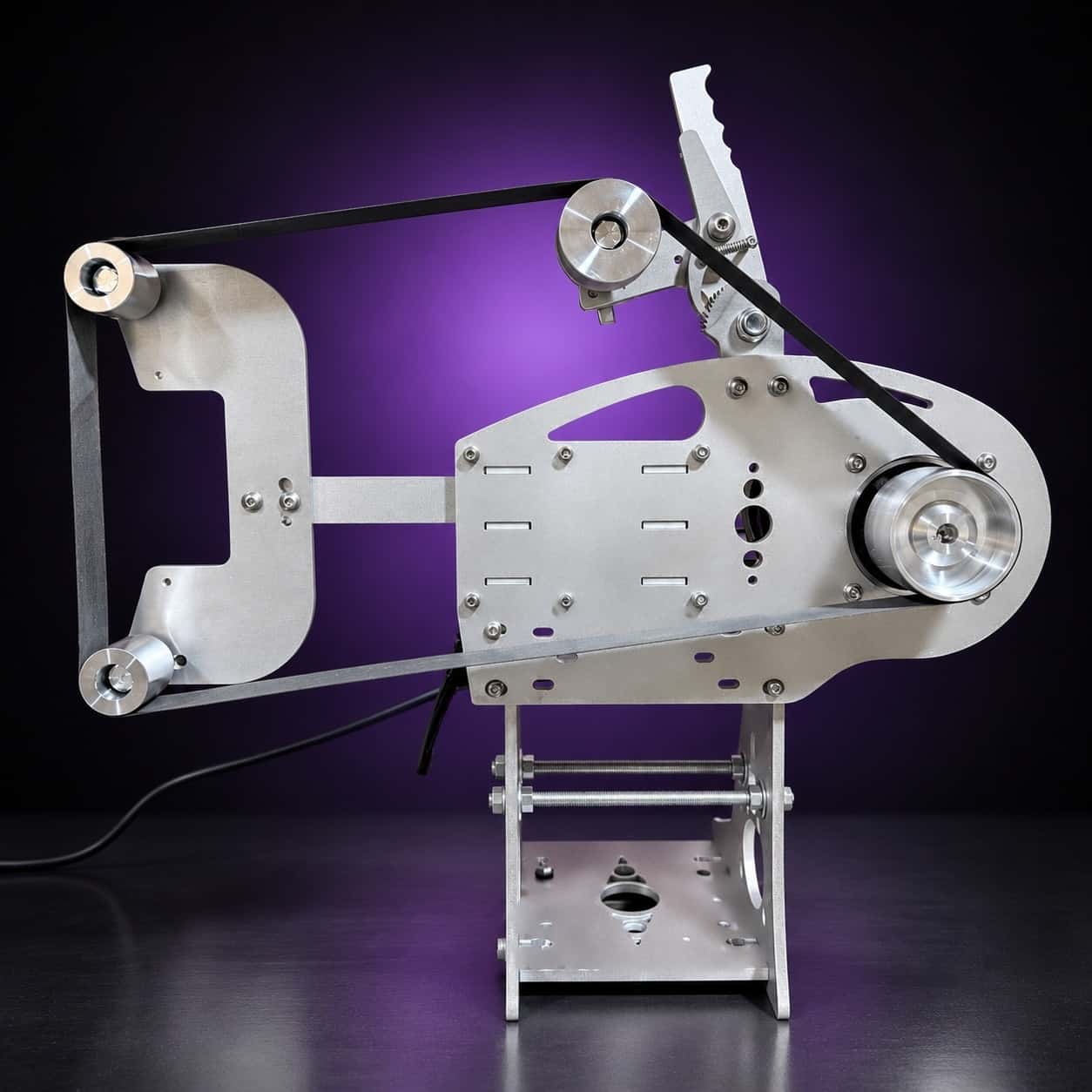
Current dual-axis platform with a fiber-laser-cut 6061 chassis and single-knob tracking.
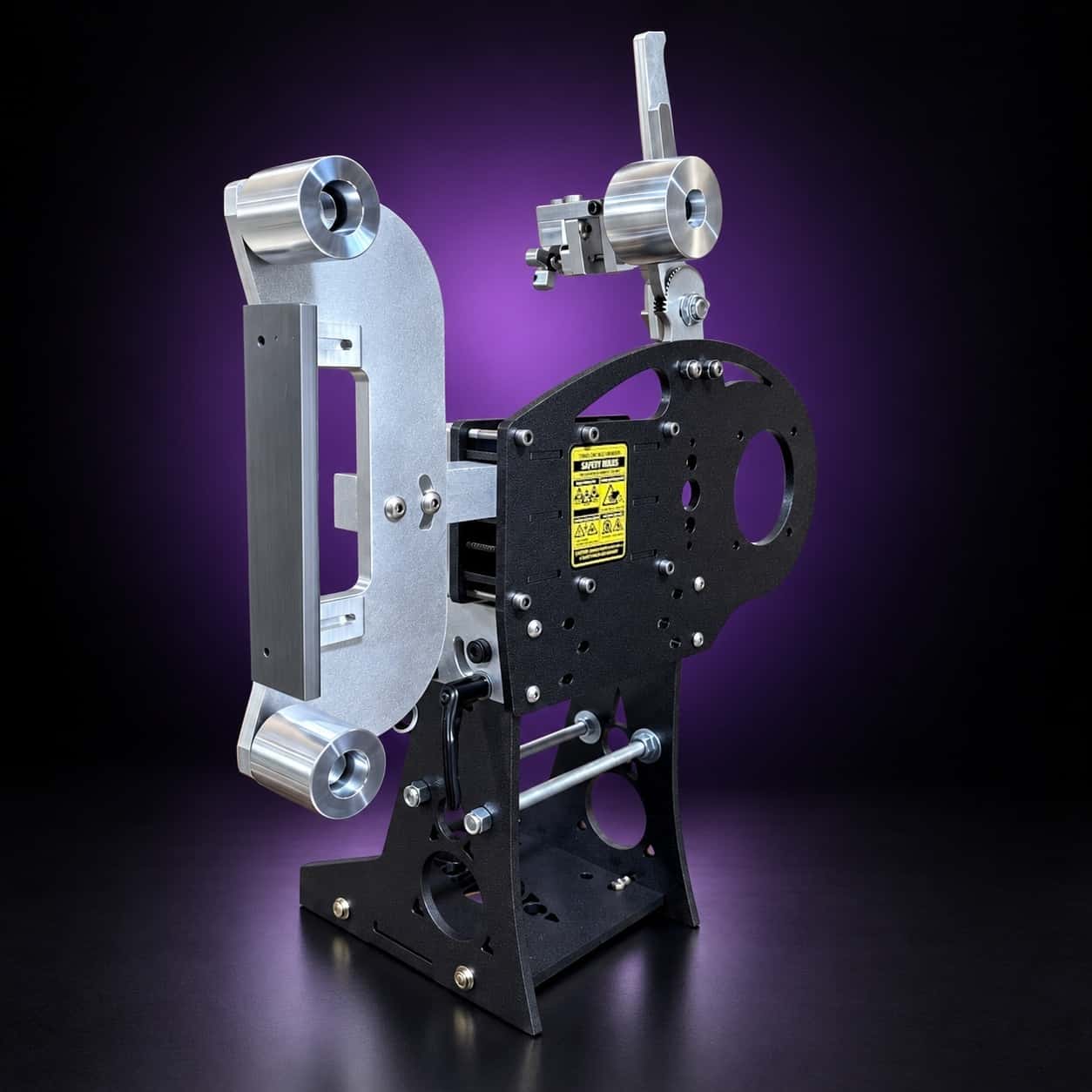
Current dual-axis platform with a steel chassis, more mass and less vibration.
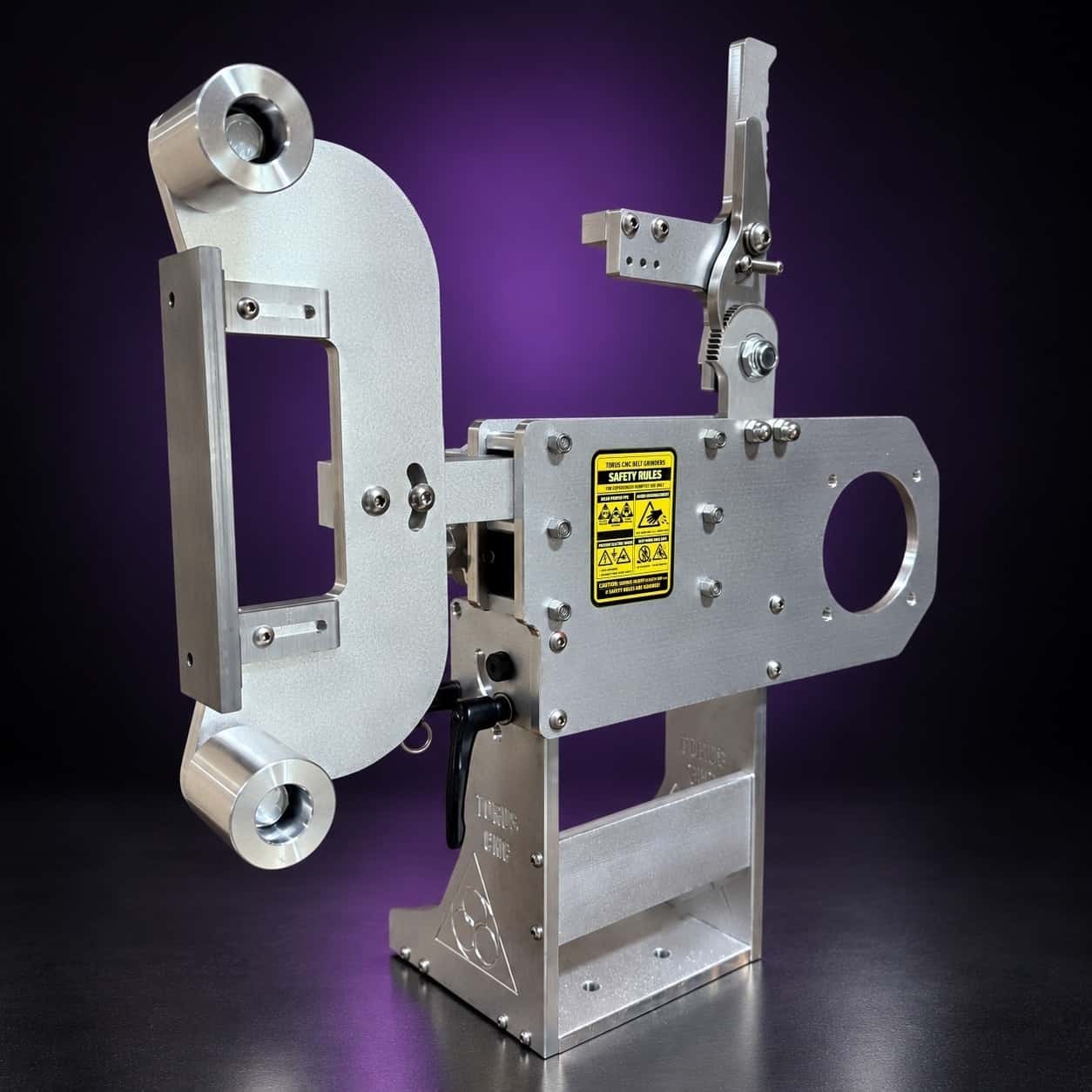
Prior-design aluminum chassis, 90-degree tilt and 1.5-inch tooling arms.
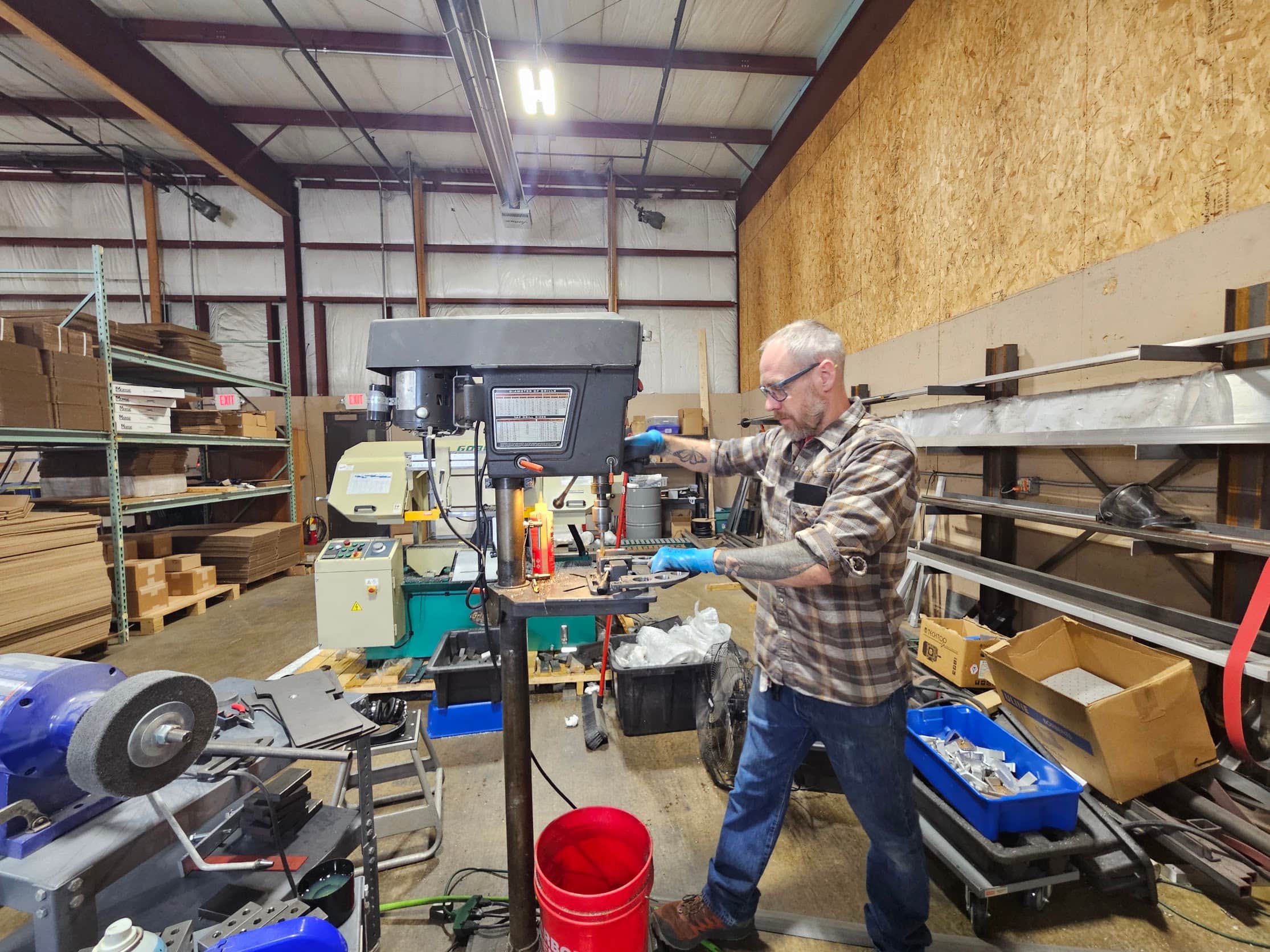
One-man shop
I answer my own email. Tell me the steel, the machine and what it is doing, and I will tell you what I would try next.