
Swords
Sword Steels for Modern Makers
Sword steel selection is knife steel selection with the priorities inverted: at three feet of lever arm, toughness is nearly everything and wear…
Swords
Making a first sword: sizing down to succeed, grinding long bevels in zones, fullers, distal taper, long-blade heat treat, and hilt assembly.
3 min readWritten by Rich LinvilleFree to read
Every knifemaker’s customers eventually ask, and every knifemaker eventually wonders: could I make a sword? Yes — the 2×72 that grinds your knives grinds swords, and every skill transfers. What changes is scale, and scale is merciless about technique gaps. Here is the honest path from knife bench to first sword.
The first sword should not be a sword. A wakizashi, gladius, or big bowie-adjacent shortsword — 18 to 24 inches of blade — teaches every long-blade skill (zoned grinding, distal taper at length, warp management) inside a heat treat your existing kiln or forge and quench tank can actually handle. The maker who starts at katana length learns the same lessons plus a scrapped bar. Pick a pattern from the gladius or wakizashi families and build it start to finish; the longsword is the second project.
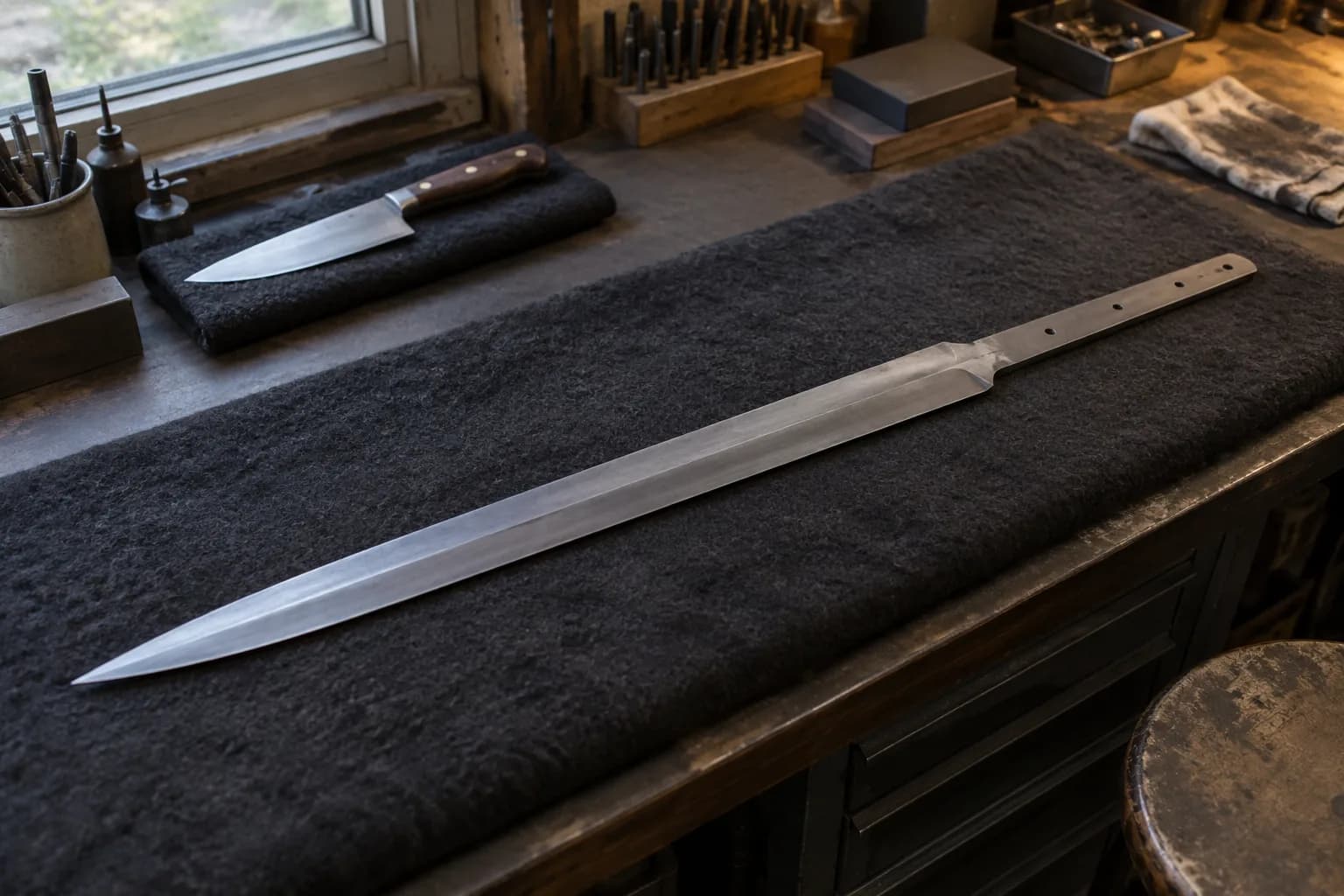
Spring steel per Sword Steels — 5160 or 1075, 1/4 inch thick, full length plus tang (continuous tang, generously radiused shoulders, no exceptions at any length). Profile on the 2×72 with a fresh 36 grit exactly like a knife, just longer: steady feed past the platen, no dwelling. The curve of a saber or wakizashi profiles in the same pass — walked smoothly, per the arc discipline from the saber guide.
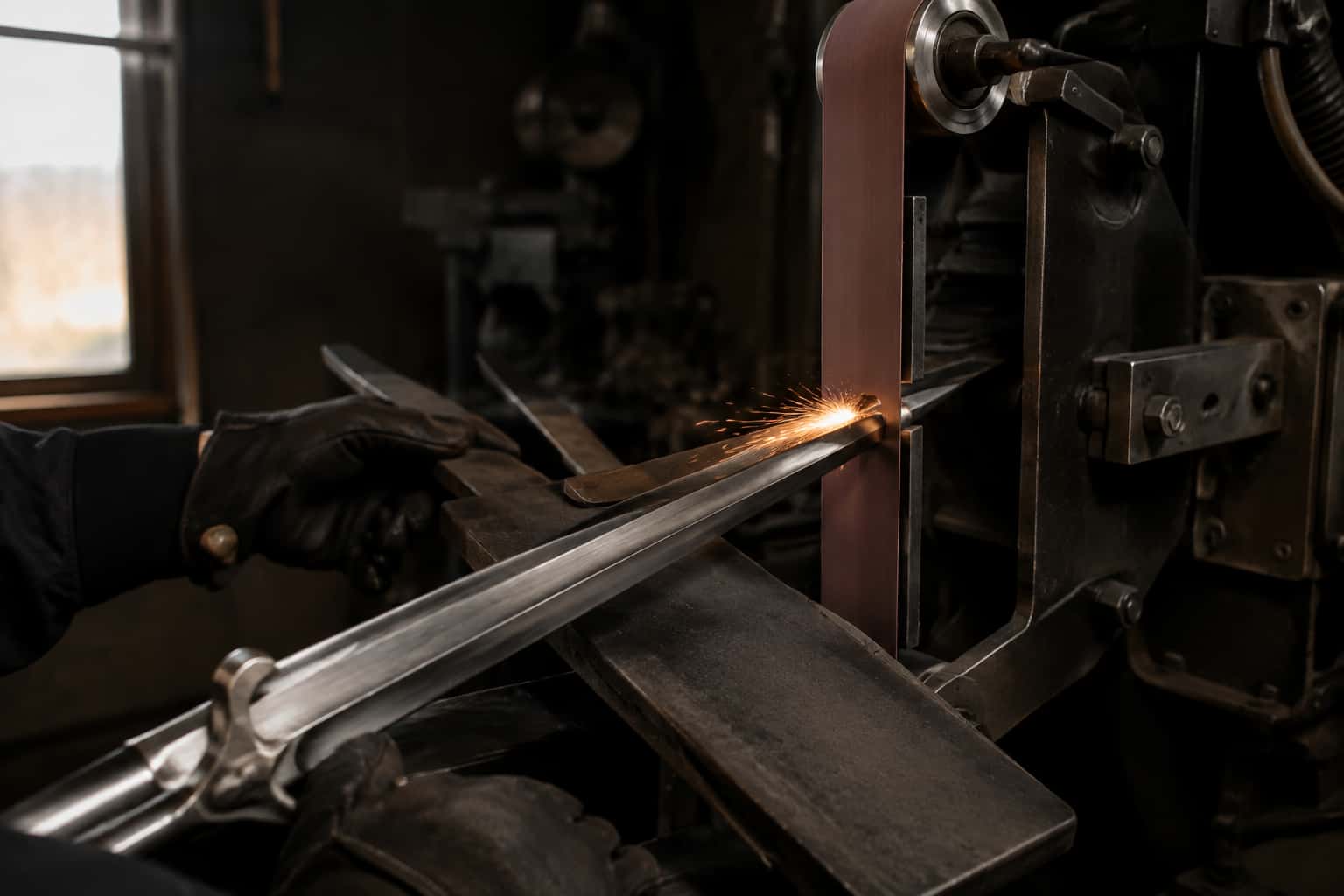
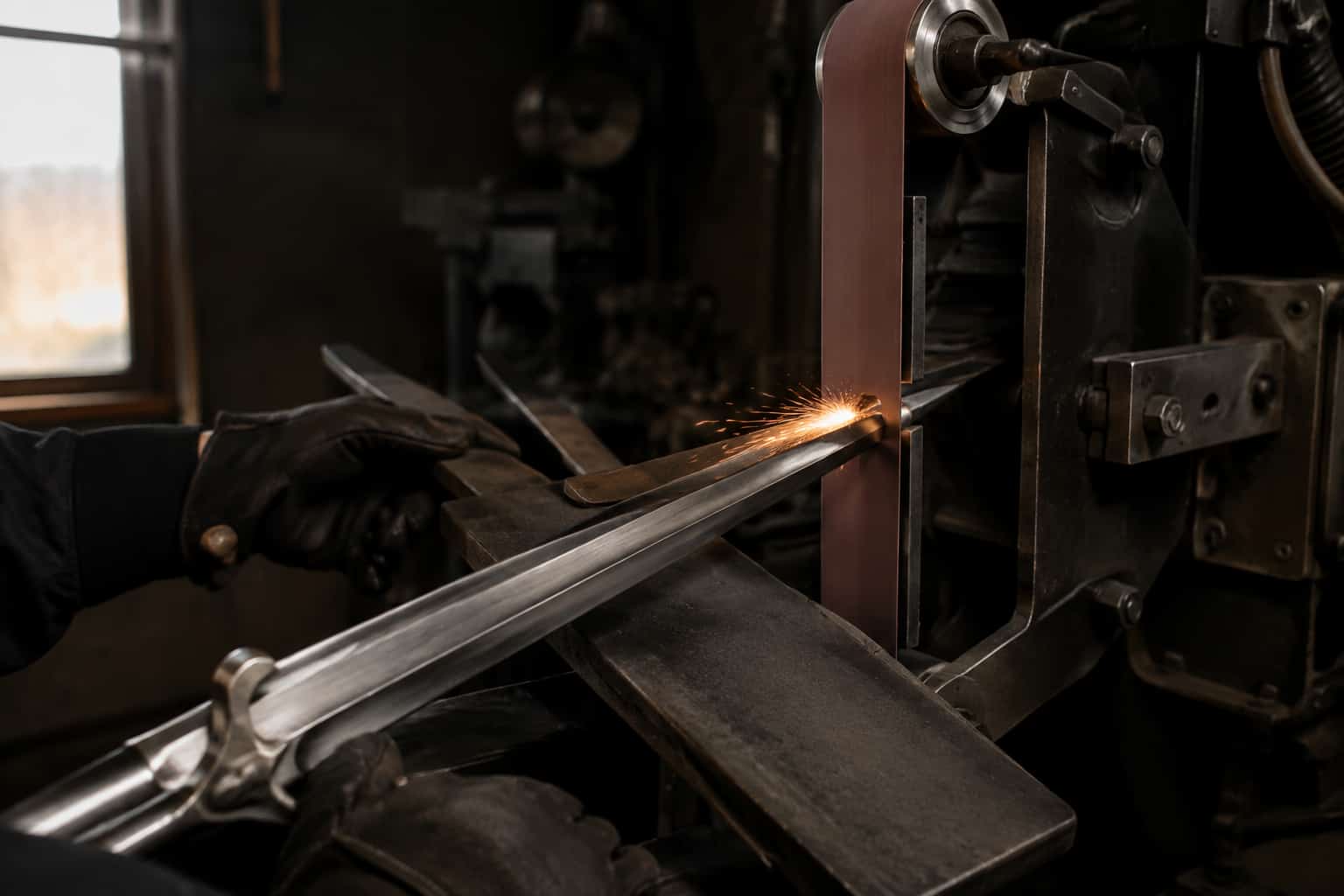
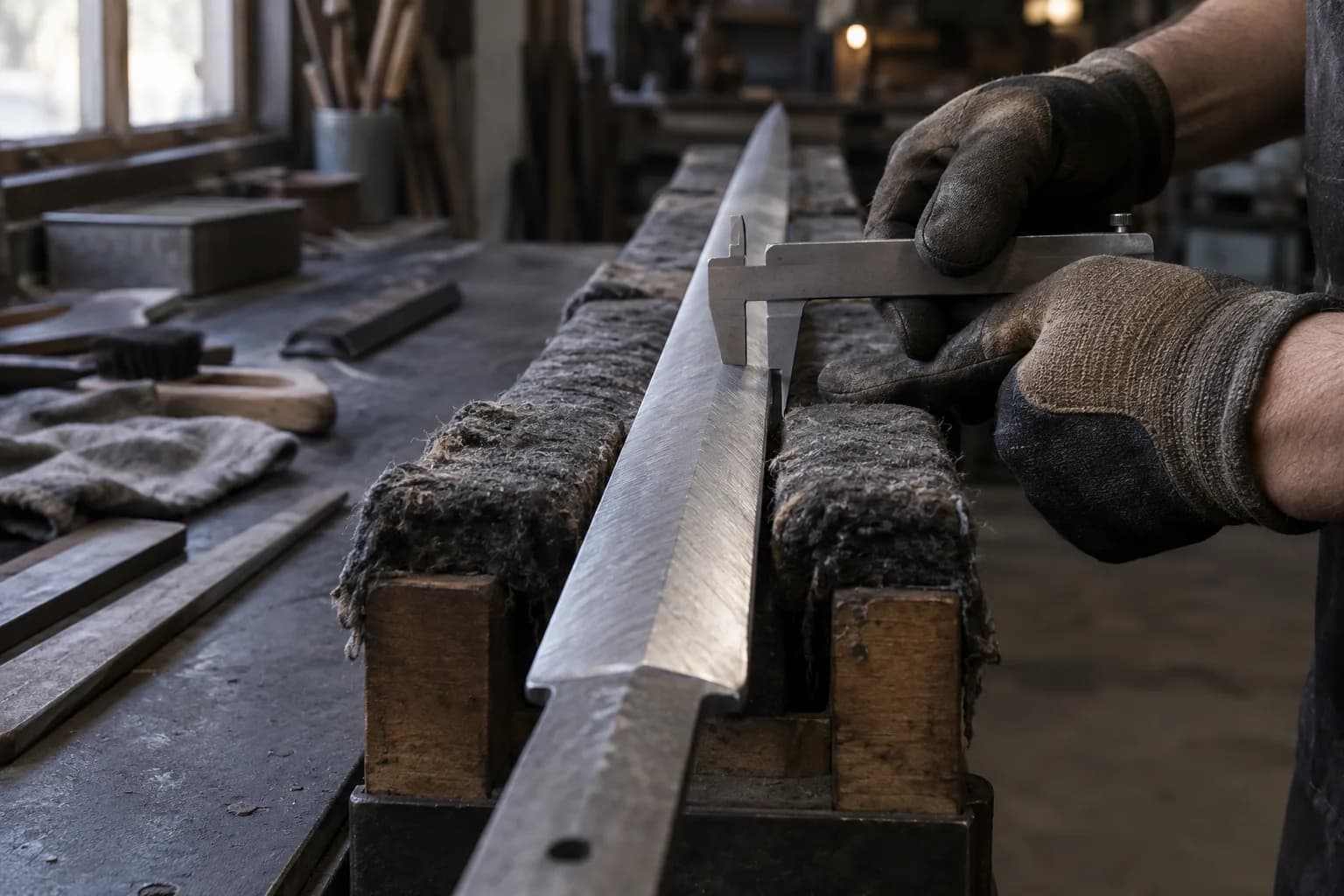
A 20-inch bevel exceeds any platen, so it grinds as overlapping zones — 6 to 8 inches at a time, blending each into the last while the blade moves continuously. The killers are dwell marks (heat and dips at zone edges) and taper amnesia. Distal taper is not optional at length: thickness should fade continuously toward the point — commonly toward half the ricasso thickness — or the finished blade swings like the crowbar every bad replica proves. Check with calipers every inch; your hands lie over long spans, per the taper guide. Fullers, if the pattern calls for them, go in now on a small contact wheel in the same zoned discipline — guided passes, shallow bites, walked ends.
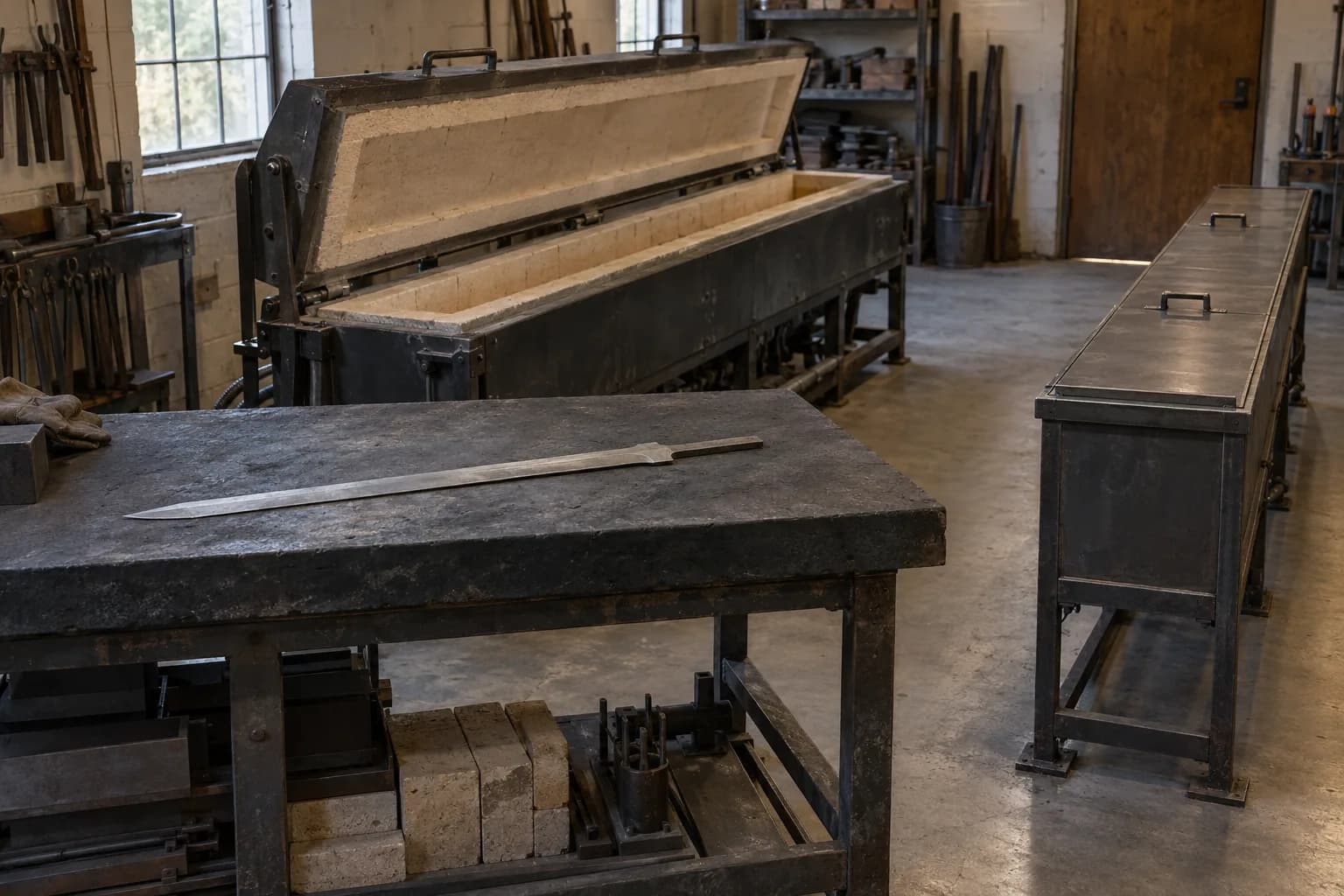
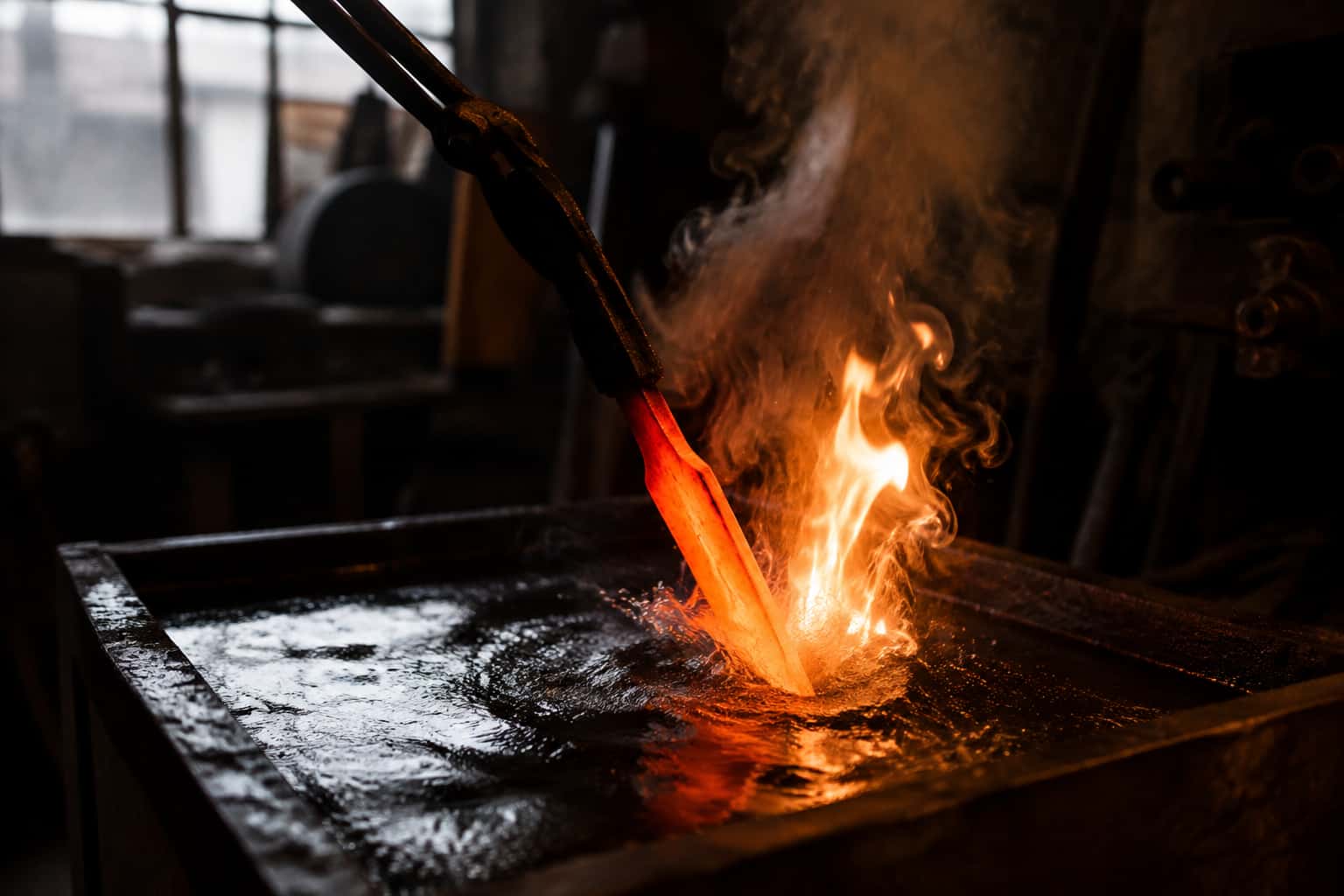
The three problems are evenness, quench, and warp. Even heat: a long kiln, a pipe forge, or a torch-and-move technique that never lets one zone soak while another waits. Quench: a vertical tube or horizontal trough sized BEFORE the steel is hot, with enough oil volume not to boil. Warp: expect it, catch it in the first minute — a hot-straightening between quench and full cool, then temper-straightening with clamps as needed. Temper to the low 50s, twice. Every step is the knife process from the heat treat guide, stretched — and stretching is exactly what breaks shortcuts you did not know you were taking. A fixture that clamps the full length straight as it cools, or sword-length quench plates for air-hardening steels, turns the straightening lottery into a process.
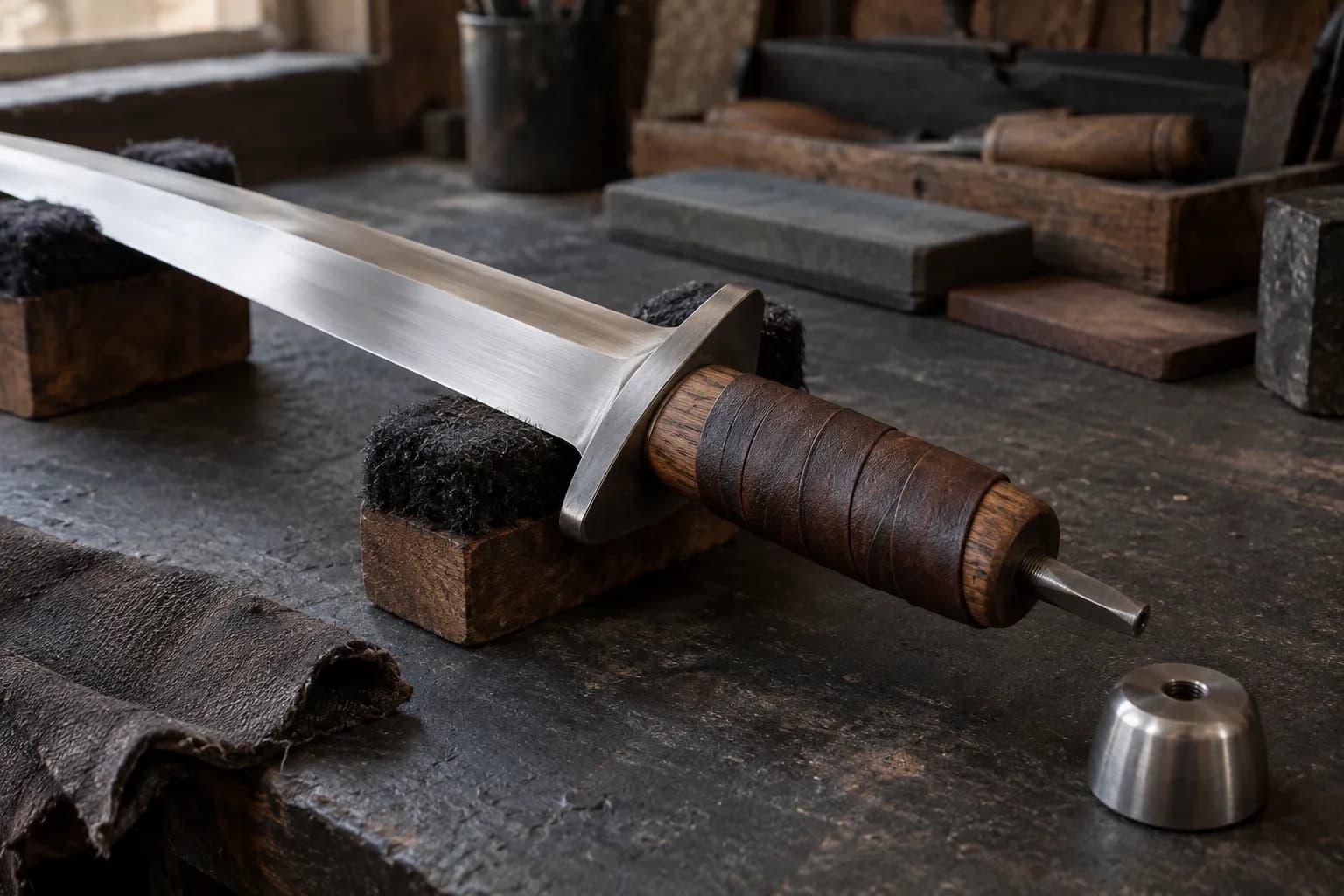
Furniture is a metalworking course attached to the project: guard slotted and fitted tight to the ricasso, grip cored and wrapped, pommel peened or threaded — and balance tuned LAST, with pommel weight, to land the point of balance where the anatomy guide says the pattern wants it. Then the finish your grits earn — most working swords wear satin, per Blade Finishes. First swords take three times the hours of the knife that taught you the skills. They also outsell everything on the table at the next show. Plan both.
Keep reading
Three more from the same bench.
Sword steel selection is knife steel selection with the priorities inverted: at three feet of lever arm, toughness is nearly everything and wear…

Before the types, the vocabulary. Every sword — katana or claymore, gladius or rapier — is the same short list of parts negotiating the same physics: a…
Heat treating is what turns a piece of flat bar stock into a functional knife blade. Done correctly, it transforms the steel’s internal crystal structure…
Same bench
I machine the parts, hand-assemble, track and test Torus grinders in Sterling, Illinois. Most orders ship in seven to ten business days from time of order.

Current dual-axis platform with a fiber-laser-cut 6061 chassis and single-knob tracking.

Current dual-axis platform with a steel chassis, more mass and less vibration.

Prior-design aluminum chassis, 90-degree tilt and 1.5-inch tooling arms.

One-man shop
I answer my own email. Tell me the steel, the machine and what it is doing, and I will tell you what I would try next.