

Blade Design
Blade Thickness & Distal Taper: How They Affect Performance
Two knives can share the same steel, grind type, and blade shape and still perform completely differently, because of stock thickness and how that…
Swords
Sword anatomy from point to pommel: blade, fuller, ricasso, tang, guard, grip and pommel - what each part does and why balance rules them all.
2 min readWritten by Rich LinvilleFree to read
Before the types, the vocabulary. Every sword — katana or claymore, gladius or rapier — is the same short list of parts negotiating the same physics: a long blade that must cut or thrust without exhausting or endangering its owner. Learn the parts and every sword in every museum starts explaining itself.
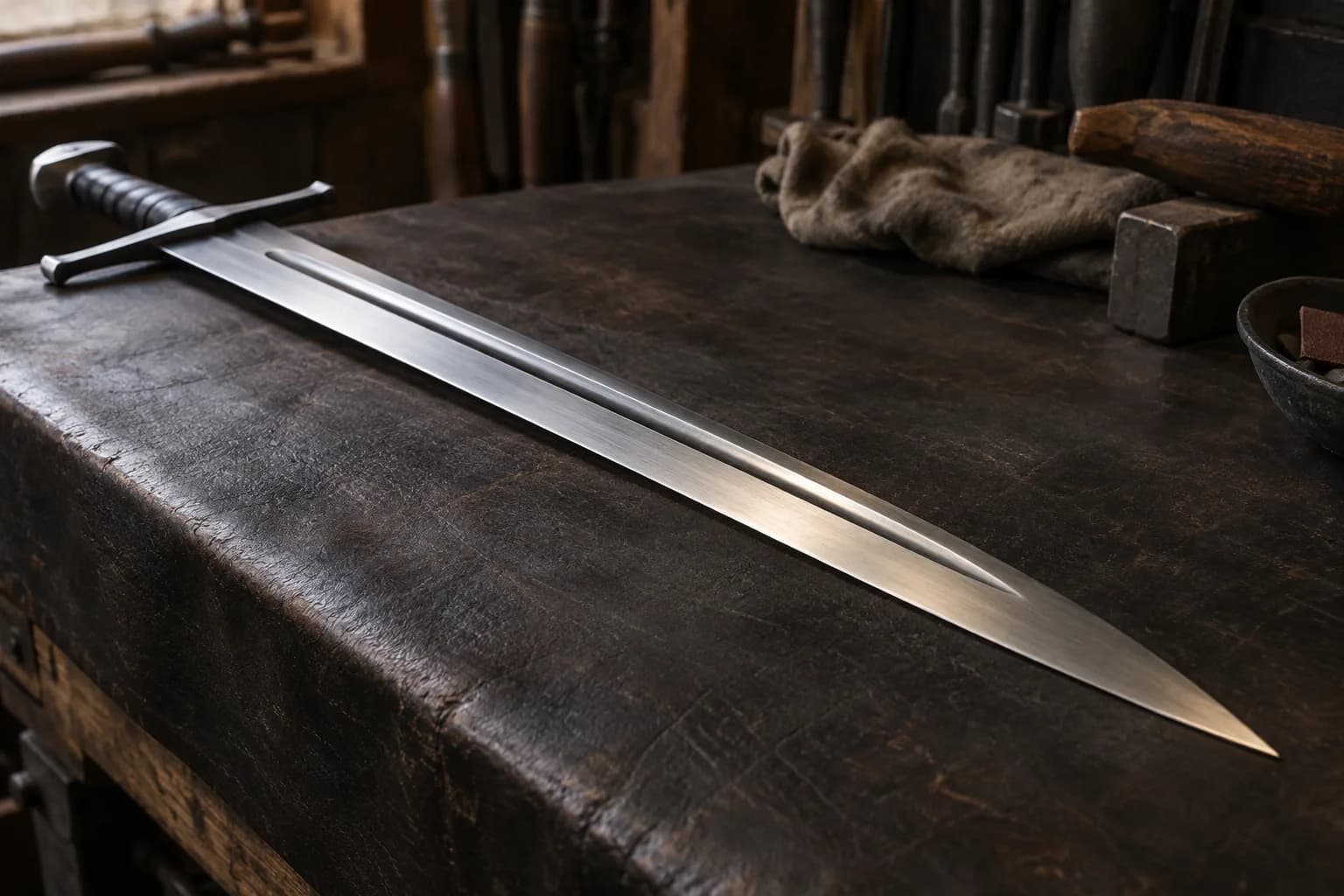
The business length divides into the forte (strong third near the hilt, where parries live), the middle, and the foible (fast, flexible third near the point). The edge may be single or double; the point ranges from acute thrusting needles to broad cutting tips. The spine or central ridge carries stiffness; the bevels carry the edge geometry — the same angle logic as knives, covered in Bevel Angles by Knife Type, stretched over feet instead of inches.
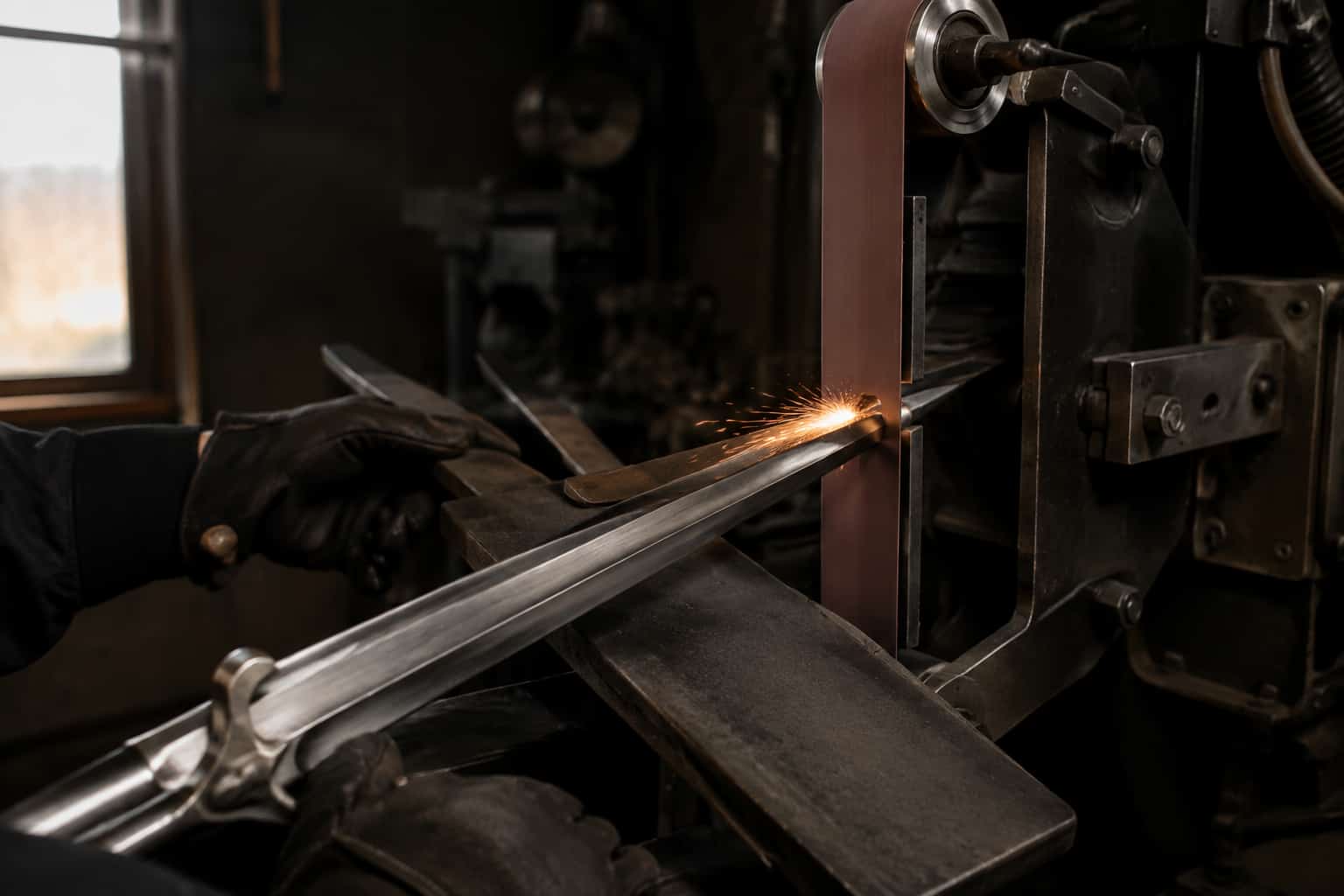
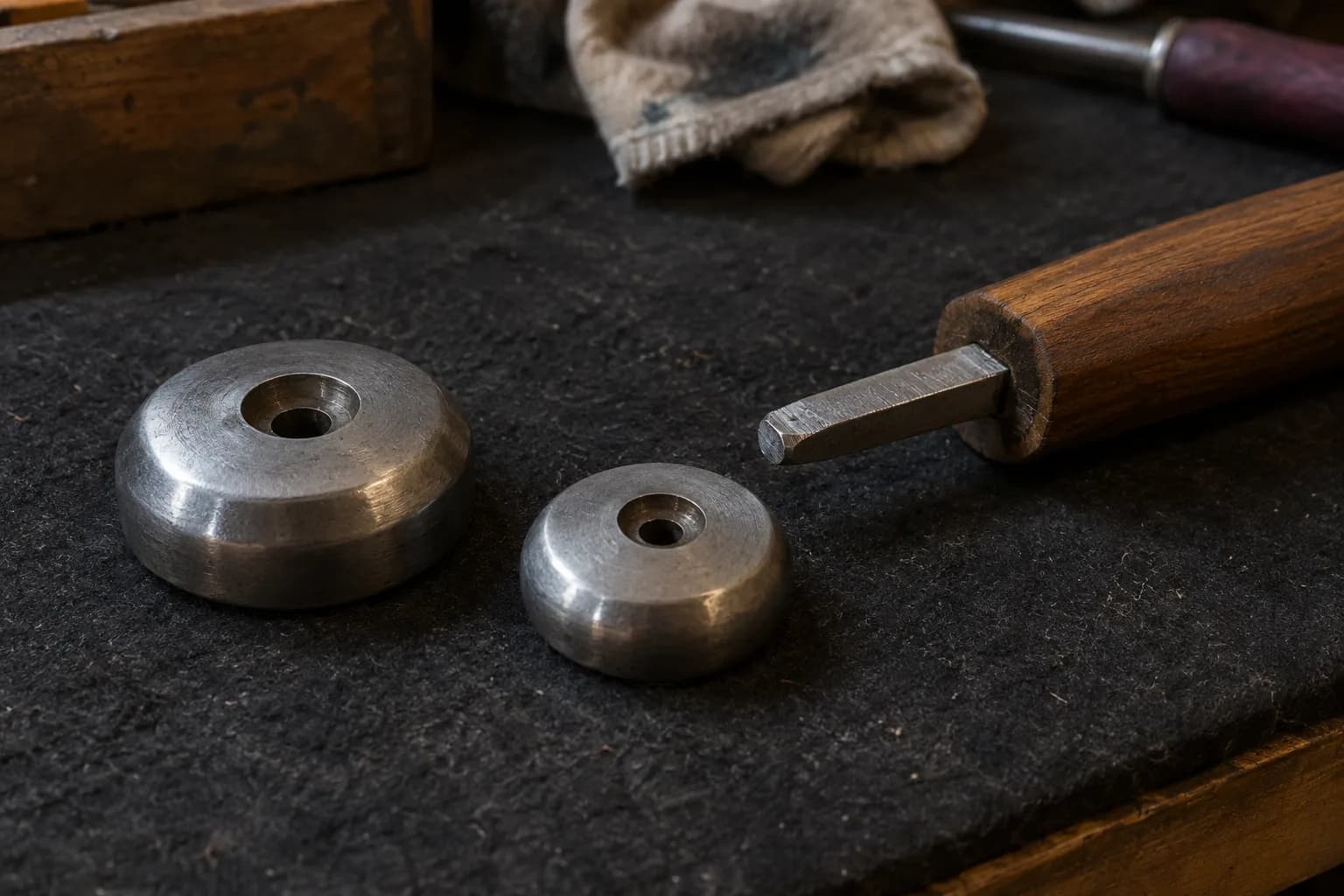
The groove down many blades is not a blood channel — that myth refuses to die. A fuller removes mass from the blade’s neutral axis, where steel contributes least to stiffness, lightening the blade twenty to thirty percent while keeping most of its rigidity: an I-beam in sword form. Forged in with a fullering tool or ground on a small contact wheel, it is one of the maker skills covered in Your First Sword on a 2×72.
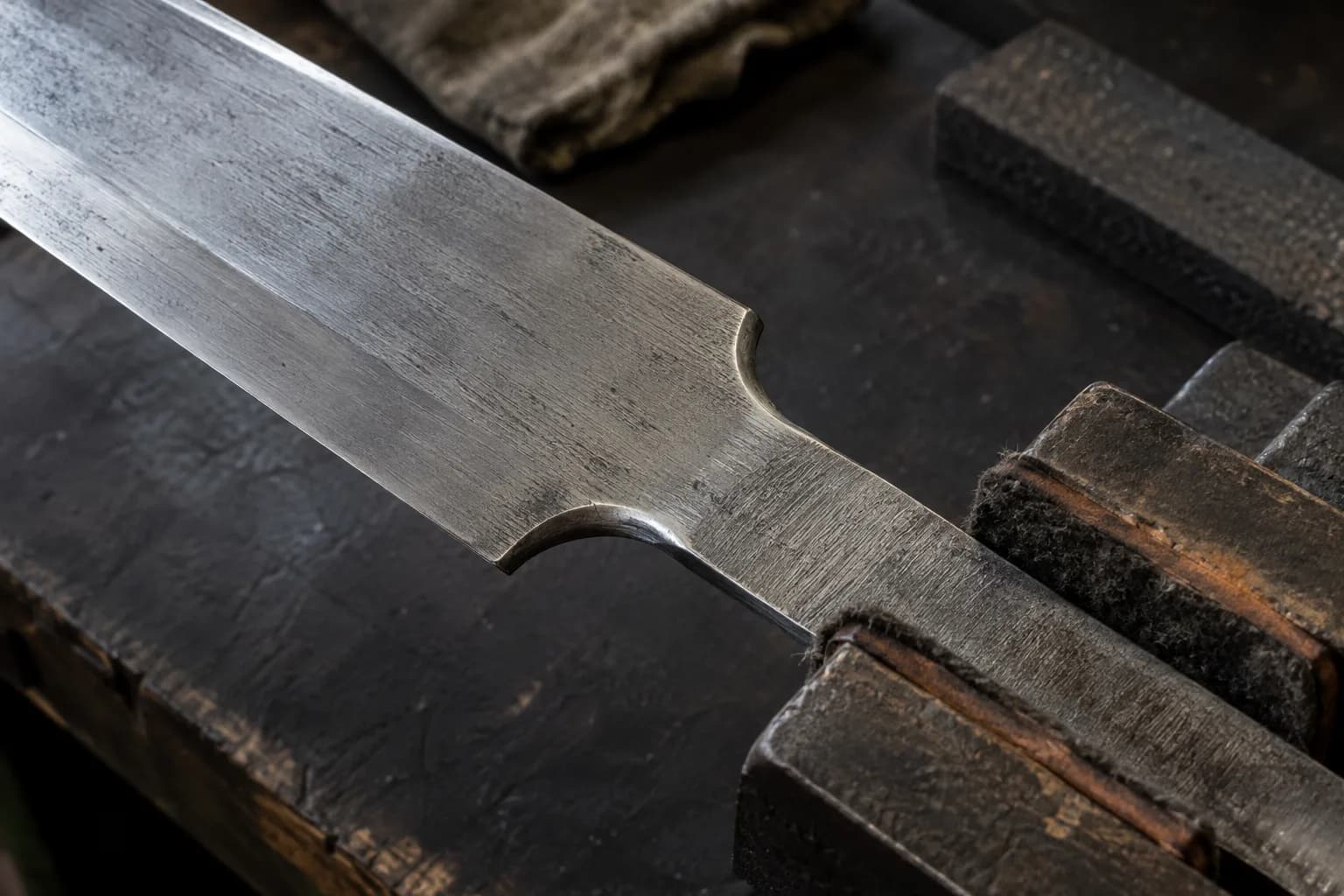
The unsharpened blade section just above the guard — the ricasso — gives a finger purchase on many European swords (with a side ring guarding it), a place for maker’s marks, and a clean geometric transition from tang to bevels. Japanese blades run instead through the habaki collar seating the blade in its scabbard. Where blade meets tang, generous radiused shoulders are structural life-or-death: sharp corners concentrate stress exactly where swords break.
The tang is the hidden spine of the whole enterprise — full-width or rod-style, but always continuous, never welded on. The guard (crossguard, disc, tsuba, swept rapier cage) keeps hands off edges — the opponent’s and your own. The grip is wood cored under leather, cord or wire. The pommel counterweights the blade and locks the assembly; period pommels peened over the tang end, and a modern screw-on pommel is the honest concession most makers accept.
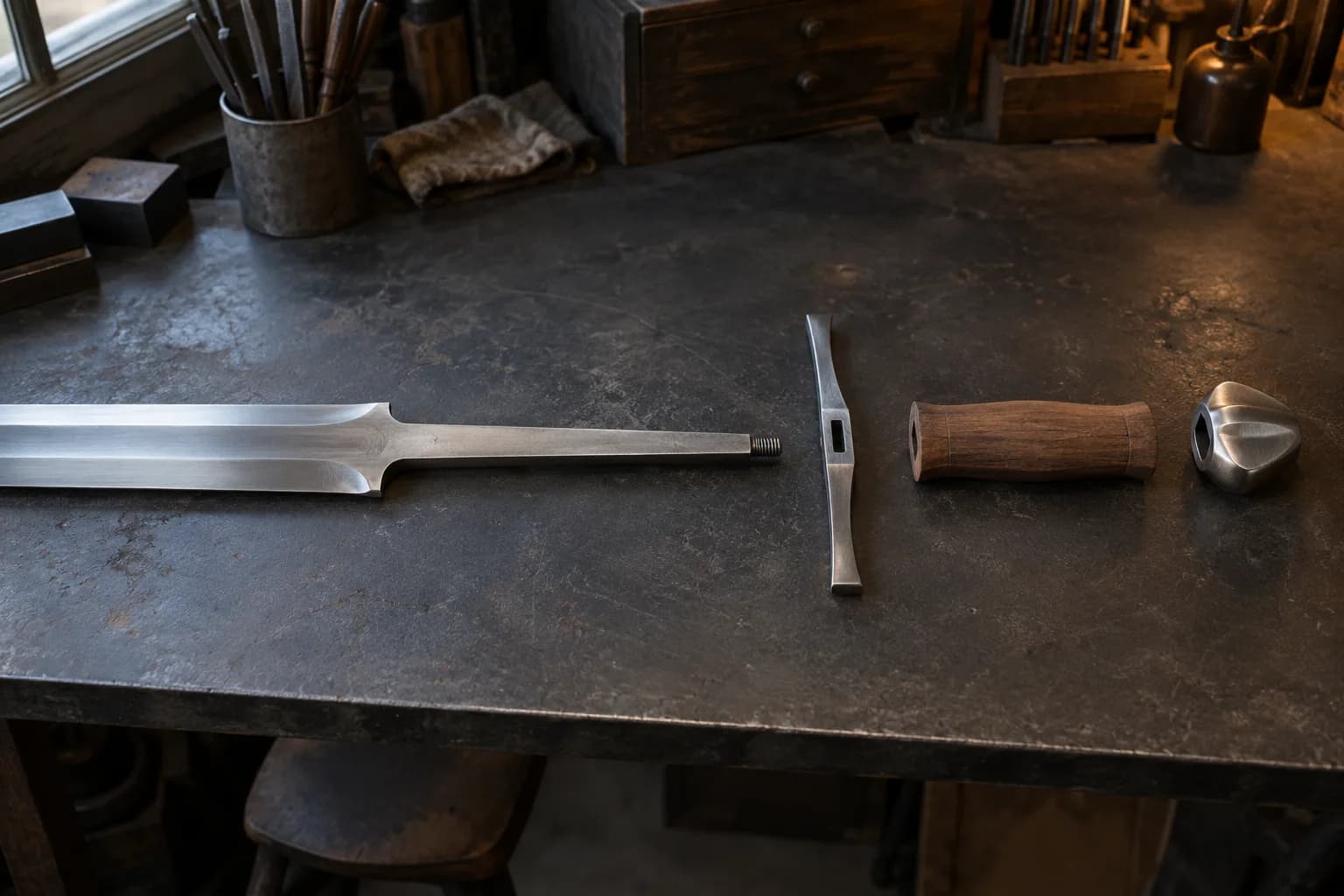
Point of balance — where the assembled sword balances on a finger — sits typically two to five inches ahead of the guard: closer for thrust-oriented agility, farther for cutting authority. It is the single spec that separates a sword from a sword-shaped object, and it is tuned last through pommel weight and distal taper, the blade’s thickness fade from guard to point (the same distal taper that governs knife liveliness, at full scale). Wall-hangers skip this tuning; your hand knows within one lift.
Keep reading
Three more from the same bench.
Two knives can share the same steel, grind type, and blade shape and still perform completely differently, because of stock thickness and how that…
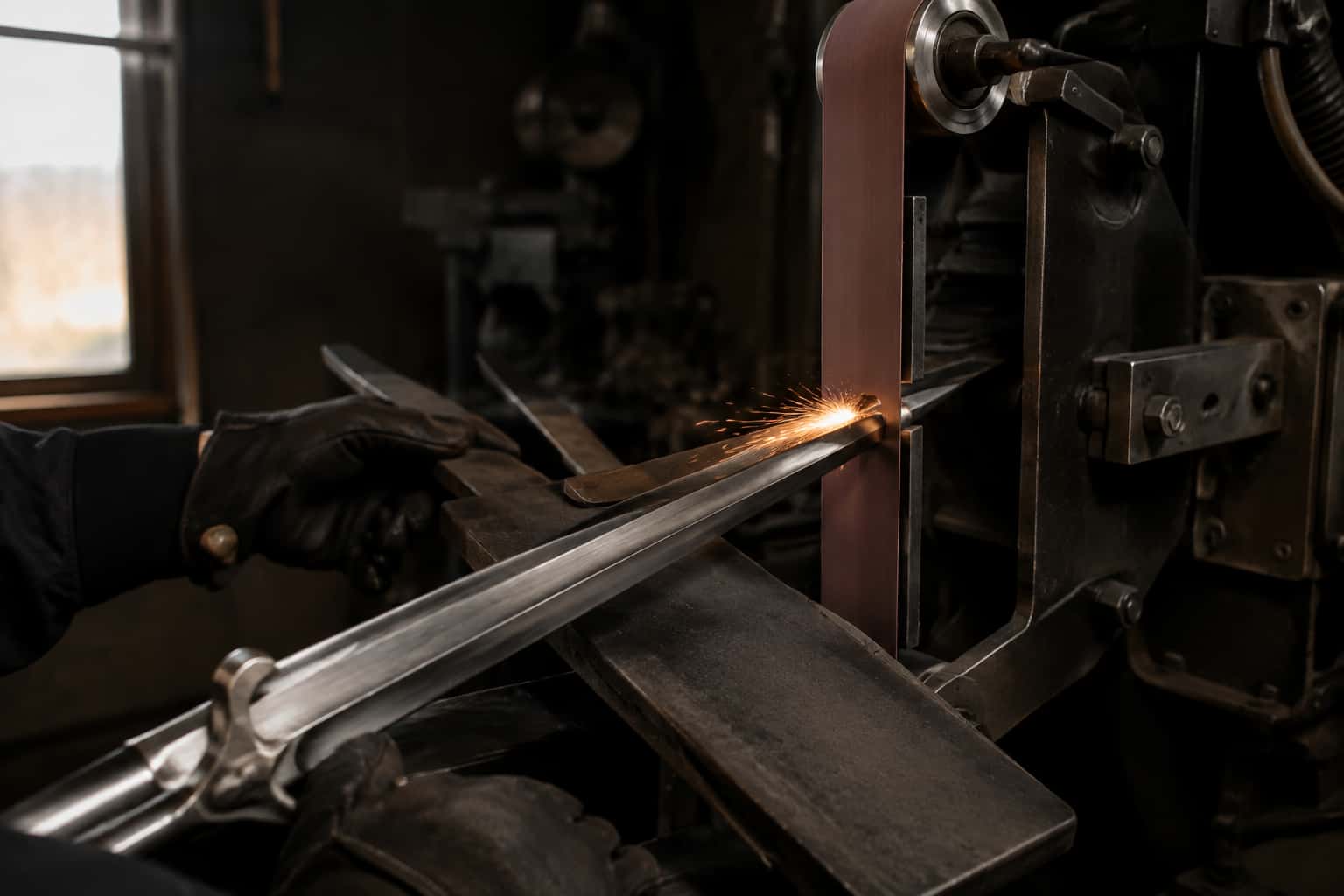
Every knife argument eventually lands on angles. Here is the chart we wish someone had handed us — edge angle per side, the grind that usually carries it…
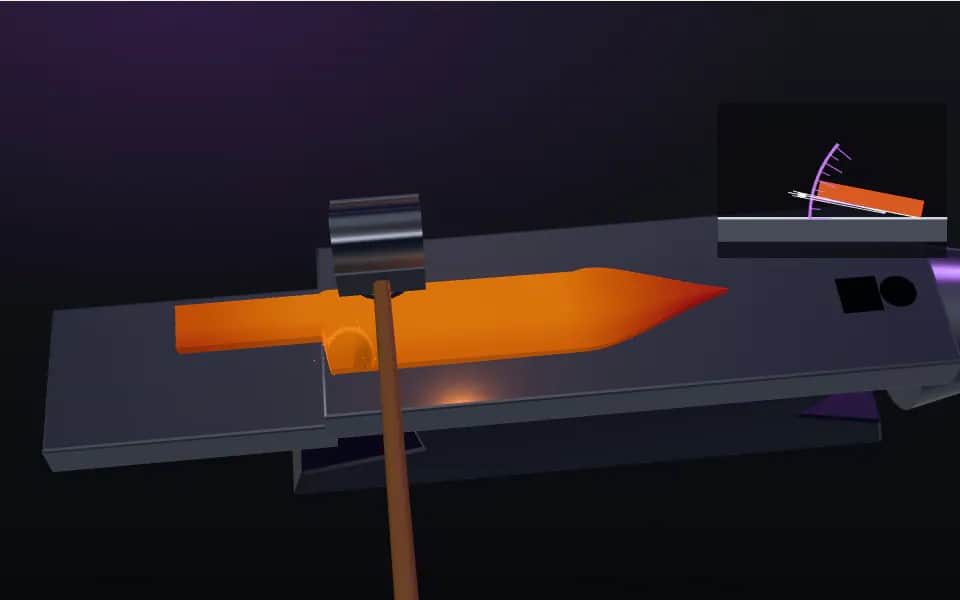
Forging a knife is not sculpting with sparks — it’s a sequence, and once you know the sequence, every session has a plan. This guide walks a first forged…
Same bench
I machine the parts, hand-assemble, track and test Torus grinders in Sterling, Illinois. Most orders ship in seven to ten business days from time of order.

Current dual-axis platform with a fiber-laser-cut 6061 chassis and single-knob tracking.

Current dual-axis platform with a steel chassis, more mass and less vibration.

Prior-design aluminum chassis, 90-degree tilt and 1.5-inch tooling arms.

One-man shop
I answer my own email. Tell me the steel, the machine and what it is doing, and I will tell you what I would try next.