
Selling & Business
How to Price a Custom Knife
Undercharging is the single most common mistake makers make when they start selling knives, mostly because it’s easy to price for materials and forget to…
Selling & Business
The ren faire blade vendor's playbook: what actually sells, booth economics and cost-per-unit math, the faire circuit, and building for the rules.
3 min readWritten by Rich LinvilleFree to read
Renaissance faires are one of the last places in America where a bladesmith can sell steel face-to-face to thousands of costumed customers who came specifically to spend money on the past. Almost nobody publishes for the makers who supply them. Here is the working playbook: what sells, what it costs, and how the circuit actually works.
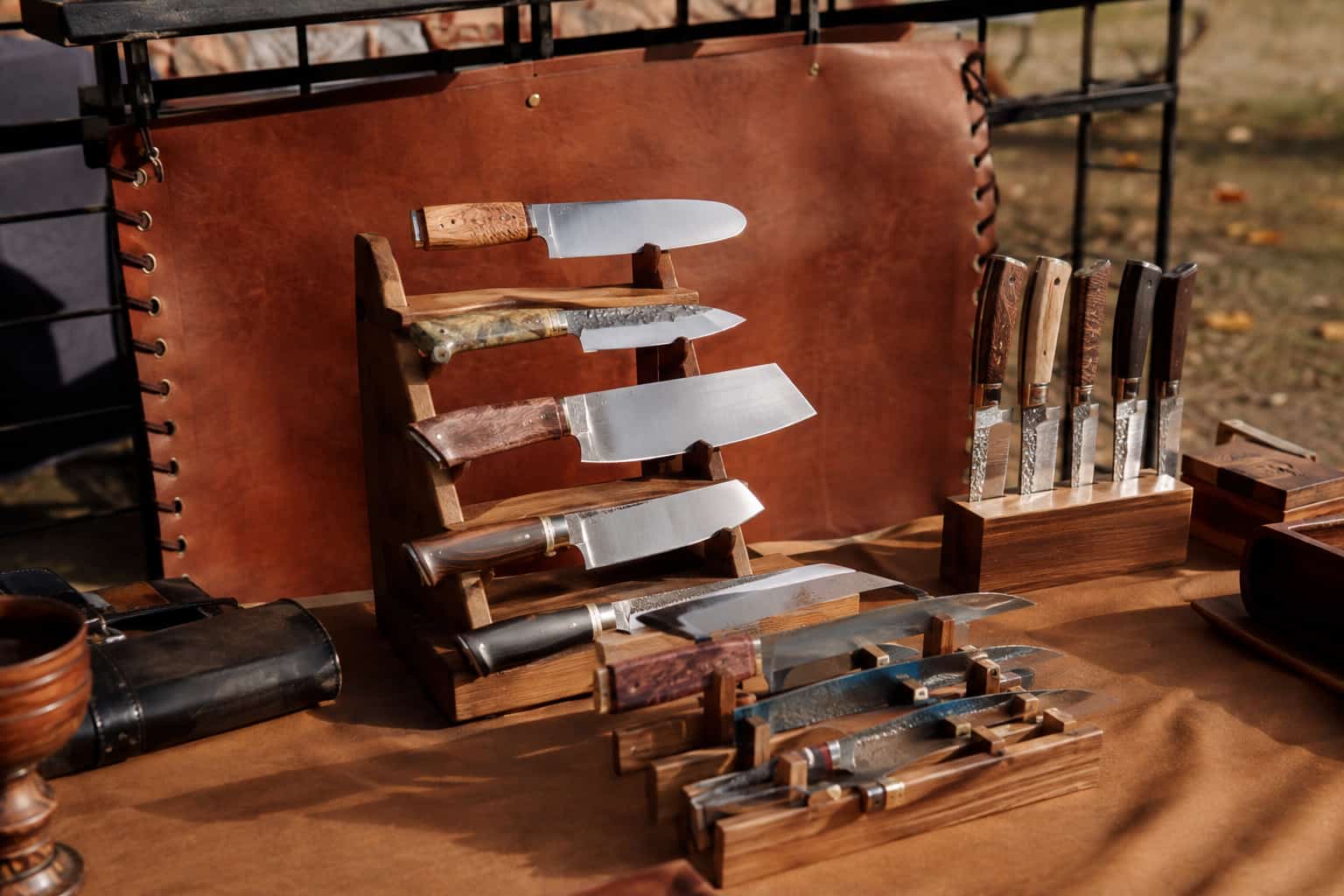
A mid-size faire draws tens of thousands of visitors over a run, and a meaningful slice arrive intending to buy something with an edge — or the look of one. The catalog that moves: daggers and short blades first (pocket-money prices, easy to carry all day), belt knives with period styling, letter openers and bodkins at the impulse tier, and the occasional sword as the booth’s anchor and photo magnet. The buyer is costumed, cash-ready, and shopping for the OBJECT and its story — which means finish, sheath and presentation carry more of the sale than steel chemistry. Your sheath work is not an accessory here; it is half the product.
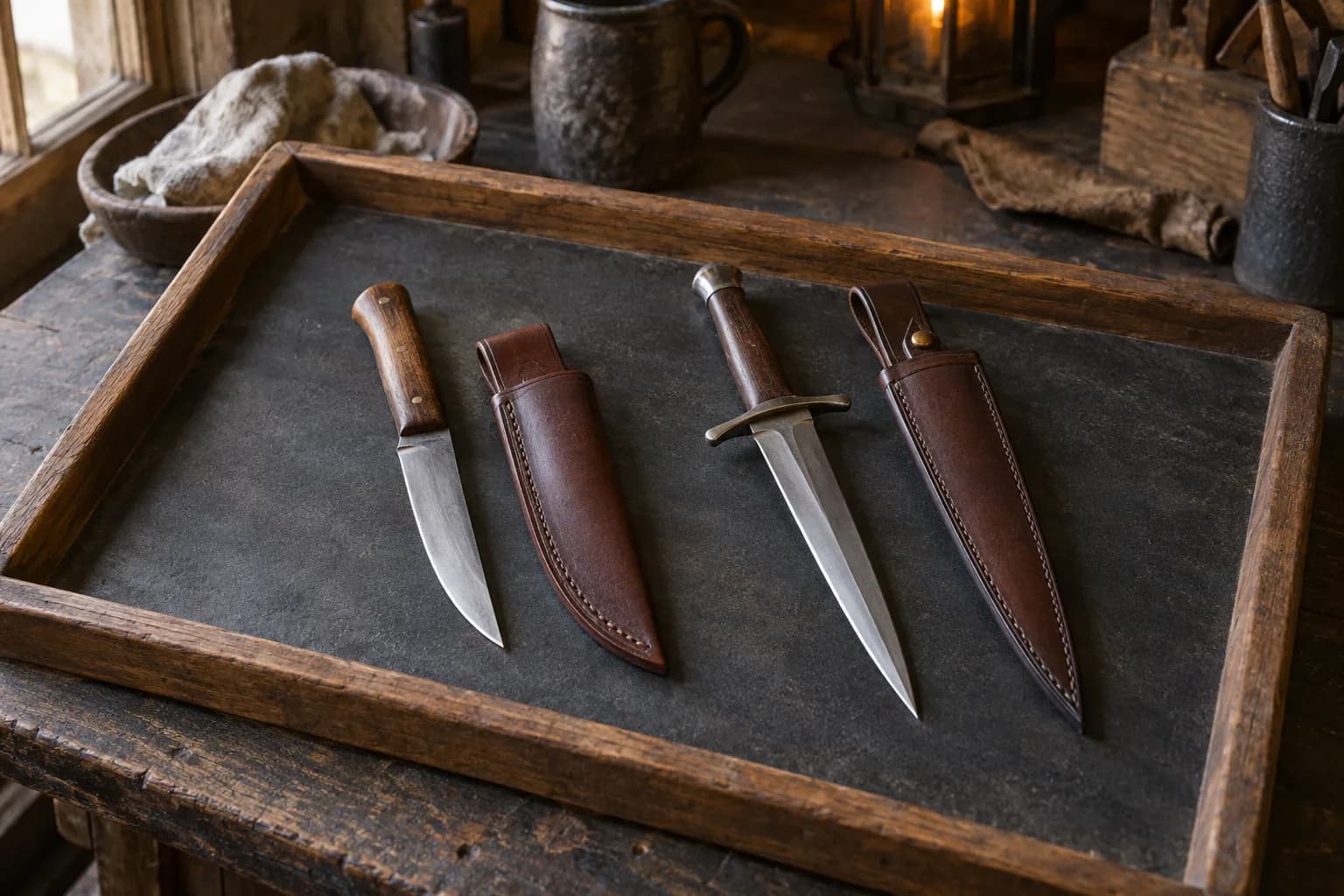
Faire blades split into lanes with different rules and different builds. Display pieces — wall-hangers and costume blades — need the look, a safe blunt edge, and a price that moves. Stage and performance blades — for the joust troupes, stage-combat performers and serious garb crowd — need real spring steel and real engineering, covered in Display and Stage Blade Geometry and Spring Steel vs Mild Steel. Working sharps — actual knives sold as knives — are legal to sell at most faires but leave the grounds wrapped, per the rules in Peace Ties and Faire Rules. Know which lane each piece lives in before you price it, because the lanes price differently.
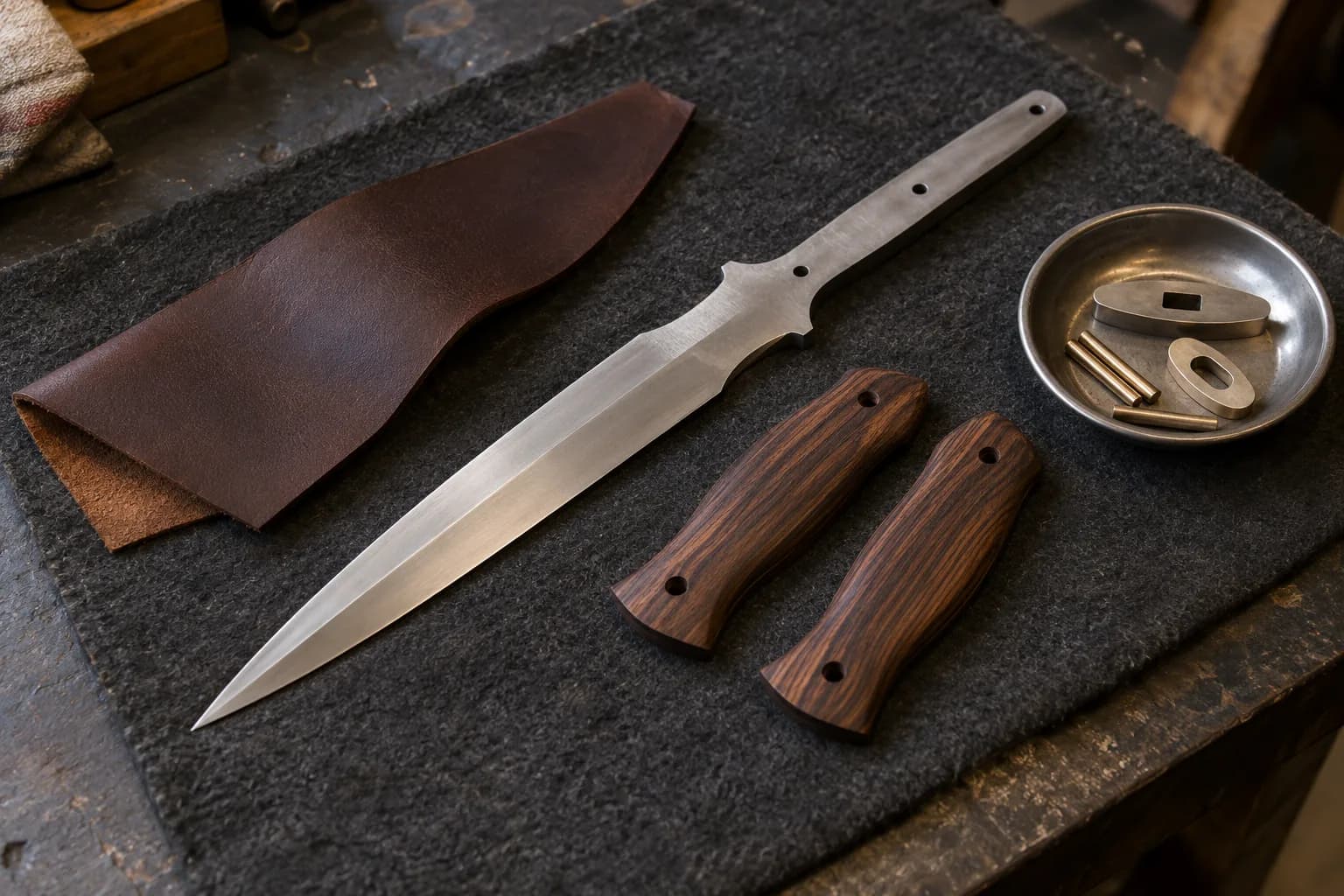
Booth economics run on cost per unit, and the faire circuit punishes gut-feel pricing. The working formula per piece: materials (steel, handle, sheath leather, hardware) + your hours at a real shop rate + booth overhead spread across expected units. A concrete example, in the spirit of How to Price a Custom Knife: a batch dagger with $18 in materials and 2.5 hours of total build time at even $25/hour carries $80.50 of true cost before the booth fee touches it. If the booth costs $800 for the weekend and you expect to sell 40 pieces, that is $20 more per unit — $100 landed cost on a dagger the crowd expects to buy for $125-175. The margin is real but thin, and it is made or lost in the hours column — which is why batch production is the actual business model, not one-at-a-time craftsmanship.
Faire vendors run seasons, not weekends: applications months ahead (juried at the established faires — bring photos of booth and work), booth fees from hundreds for a small local weekend to four figures for a run at a major faire, plus travel, lodging and a period-acceptable booth setup. The established circuit vendors stack faires within driving distance and sell the same catalog across a season — which means your production winter builds the inventory your summer sells. Slot faires alongside knife shows using the shows directory logic: different crowds, same van.
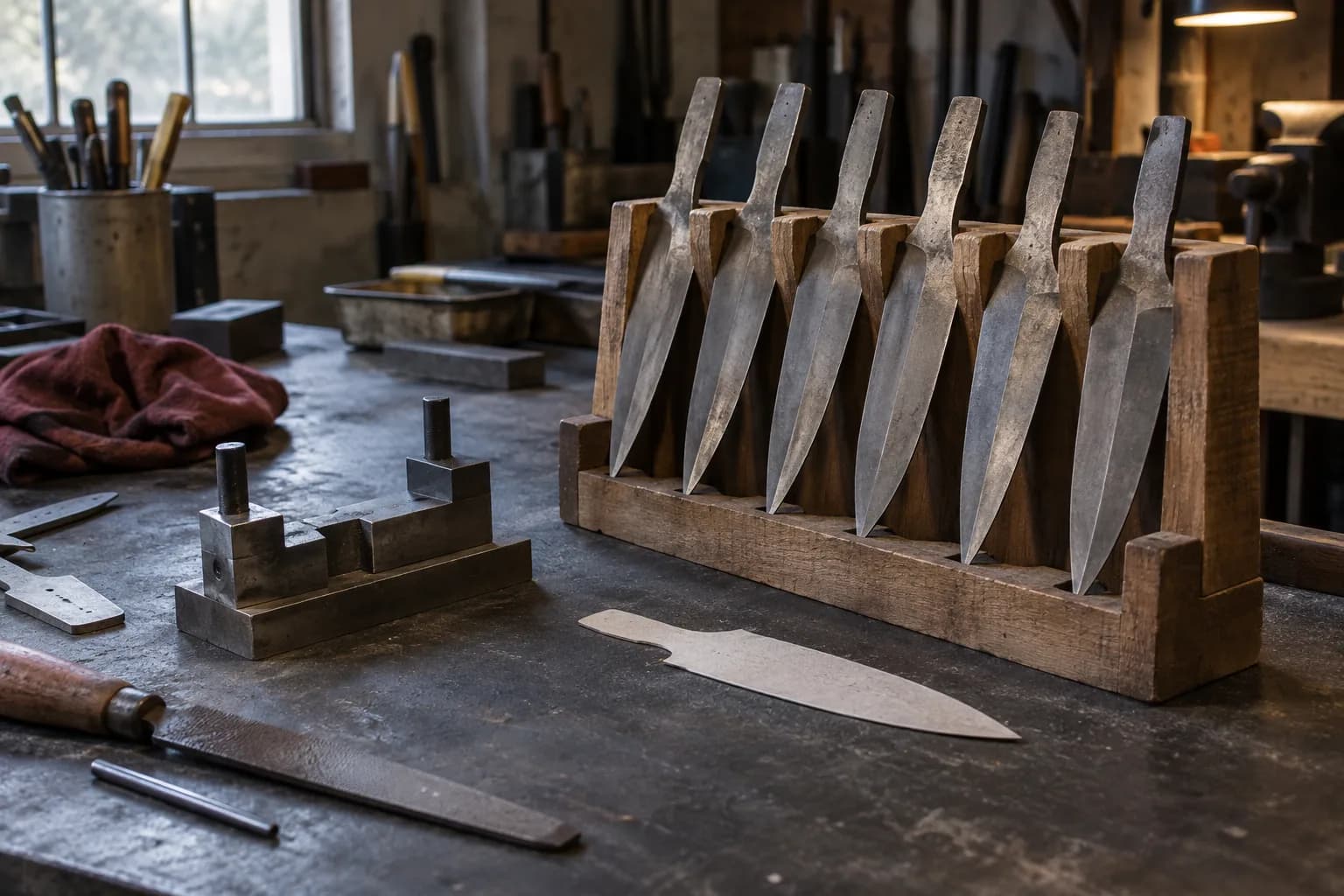
The faire business is a throughput business wearing a costume. Forty daggers for a weekend booth is a production run, and production runs live and die at the grinder: profile jigs, repeatable bevels, a finish sequence you can run in your sleep, and belt discipline per the speed-by-task chart. The maker who hand-forges each faire dagger loses money with style; the maker who batches twenty at a time on a machine that holds its settings owns the booth next to them. Start with the legal layer (LLC, insurance — stage blades especially), build the batch process, and let the circuit compound.
Keep reading
Three more from the same bench.
Undercharging is the single most common mistake makers make when they start selling knives, mostly because it’s easy to price for materials and forget to…

Making a great knife and selling it consistently are two different skills, and most makers who struggle to sell aren’t struggling because their work isn’t…

This is general education, not insurance or legal advice, actual coverage needs depend on your sales volume, state, and specific risk factors, talk to a…
Same bench
I machine the parts, hand-assemble, track and test Torus grinders in Sterling, Illinois. Most orders ship in seven to ten business days from time of order.

Current dual-axis platform with a fiber-laser-cut 6061 chassis and single-knob tracking.

Current dual-axis platform with a steel chassis, more mass and less vibration.

Prior-design aluminum chassis, 90-degree tilt and 1.5-inch tooling arms.

One-man shop
I answer my own email. Tell me the steel, the machine and what it is doing, and I will tell you what I would try next.