
Selling & Business
Making & Selling Blades at Renaissance Faires
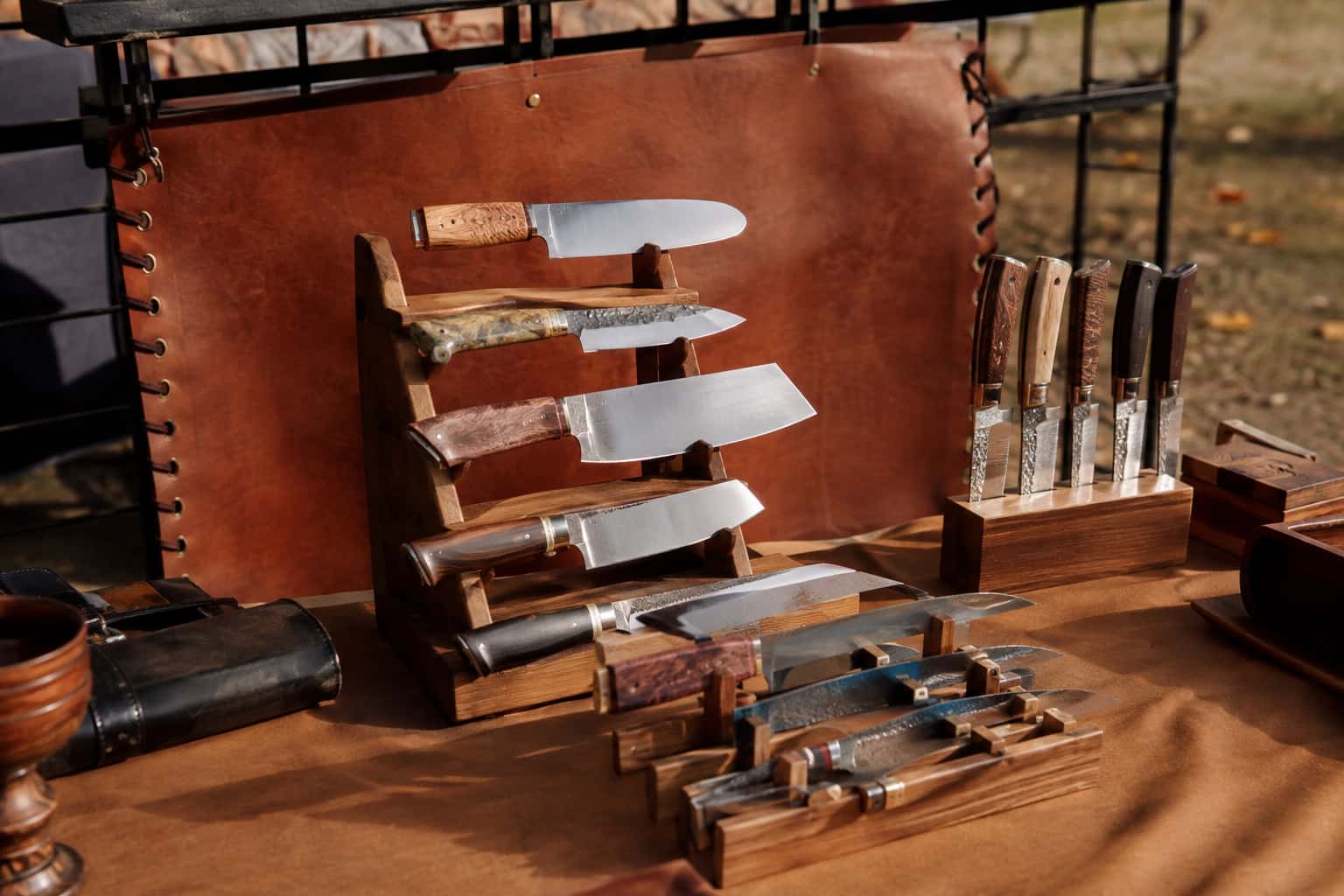
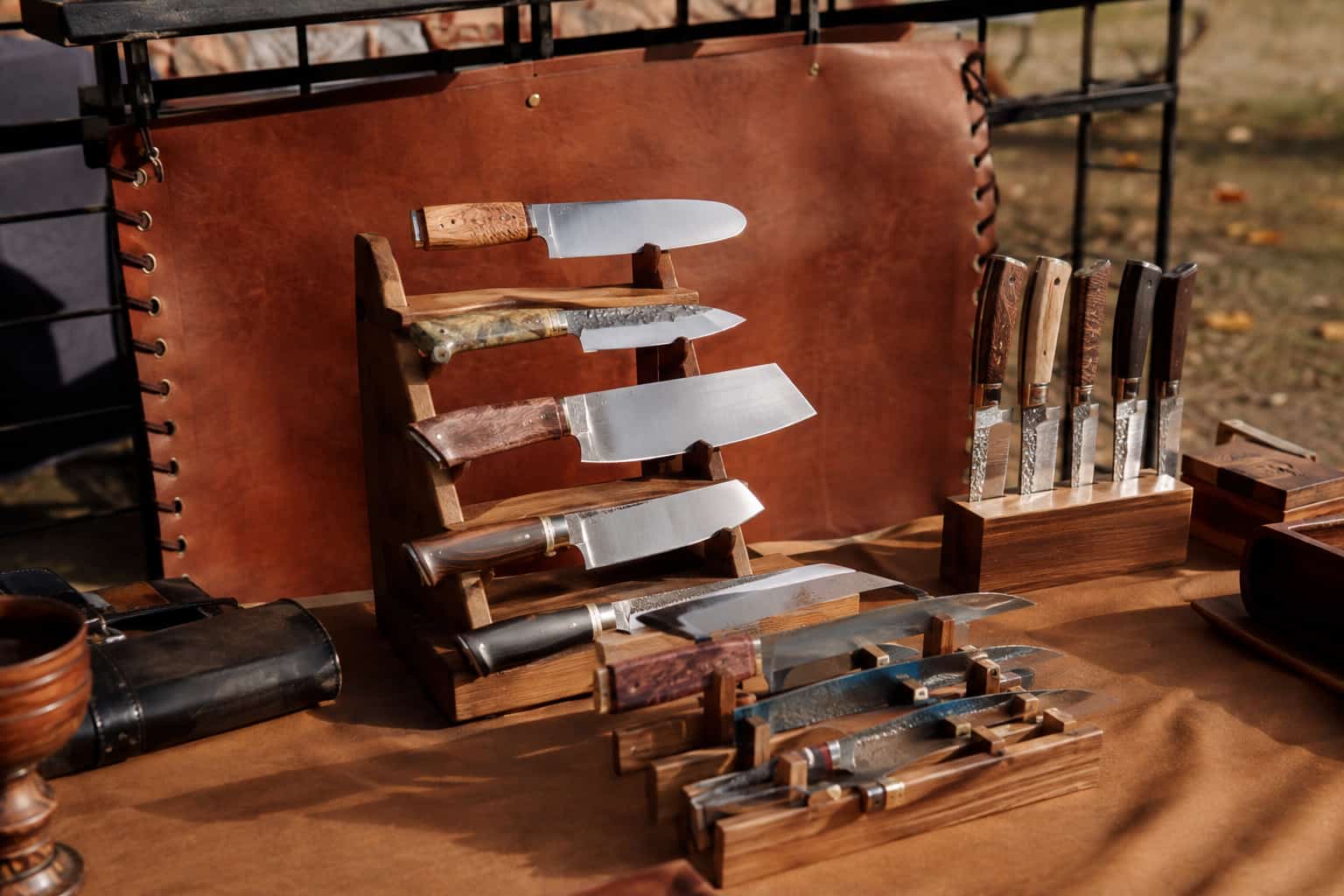
Renaissance faires are one of the last places in America where a bladesmith can sell steel face-to-face to thousands of costumed customers who came…
Selling & Business
How faire weapons policies actually work - peace ties, sheath rules, wrapped sales - and how a smart vendor designs blades and sheaths for them.
2 min readWritten by Rich LinvilleFree to read
Every renaissance faire runs a weapons policy, and for a blade vendor those rules are not an obstacle — they are design requirements. The vendor who builds for the policy sells more, moves customers through the gate without drama, and gets invited back. Here is how the rules typically work and what they mean at the bench. The disclaimer that is actually the law: policies vary by faire and by state — read YOUR faire’s published policy and vendor packet before building inventory, every season, because they change.
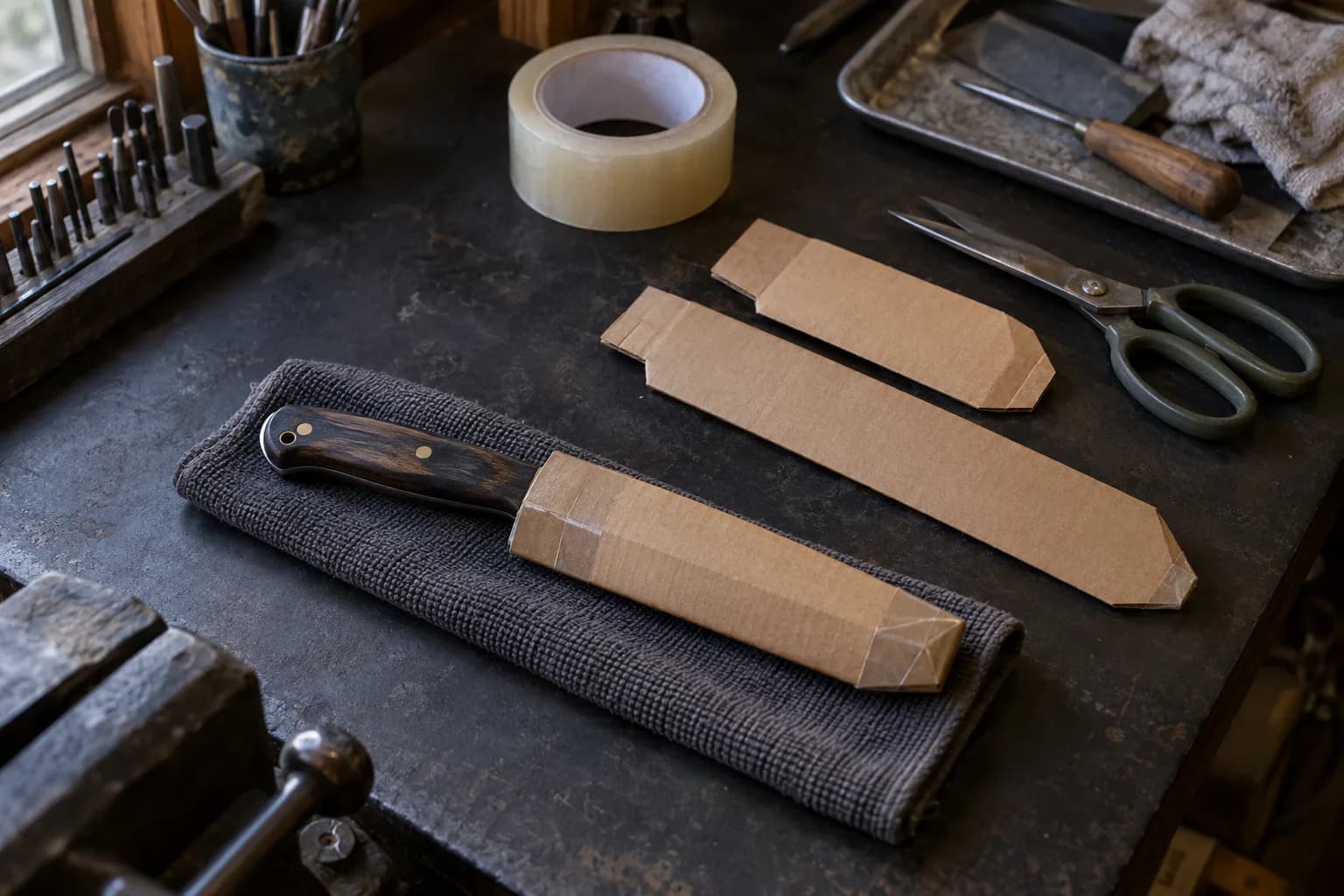
The near-universal pattern: any blade worn as part of garb must be peace-tied — secured into its sheath, typically with a visible zip tie or cord through guard and sheath so it cannot be drawn — and it stays tied on the grounds. Real examples of the pattern: the Pennsylvania Renaissance Faire requires all weapons peace-tied before entry and throughout the visit; the Minnesota Renaissance Festival requires blades sold on-site to leave the booth with the blade encased in cardboard or similar wrap that stays on inside the grounds; smaller faires publish the same rules in local dialect. Gate security usually ties patron weapons at entry; vendors are expected to tie or wrap at the point of sale.
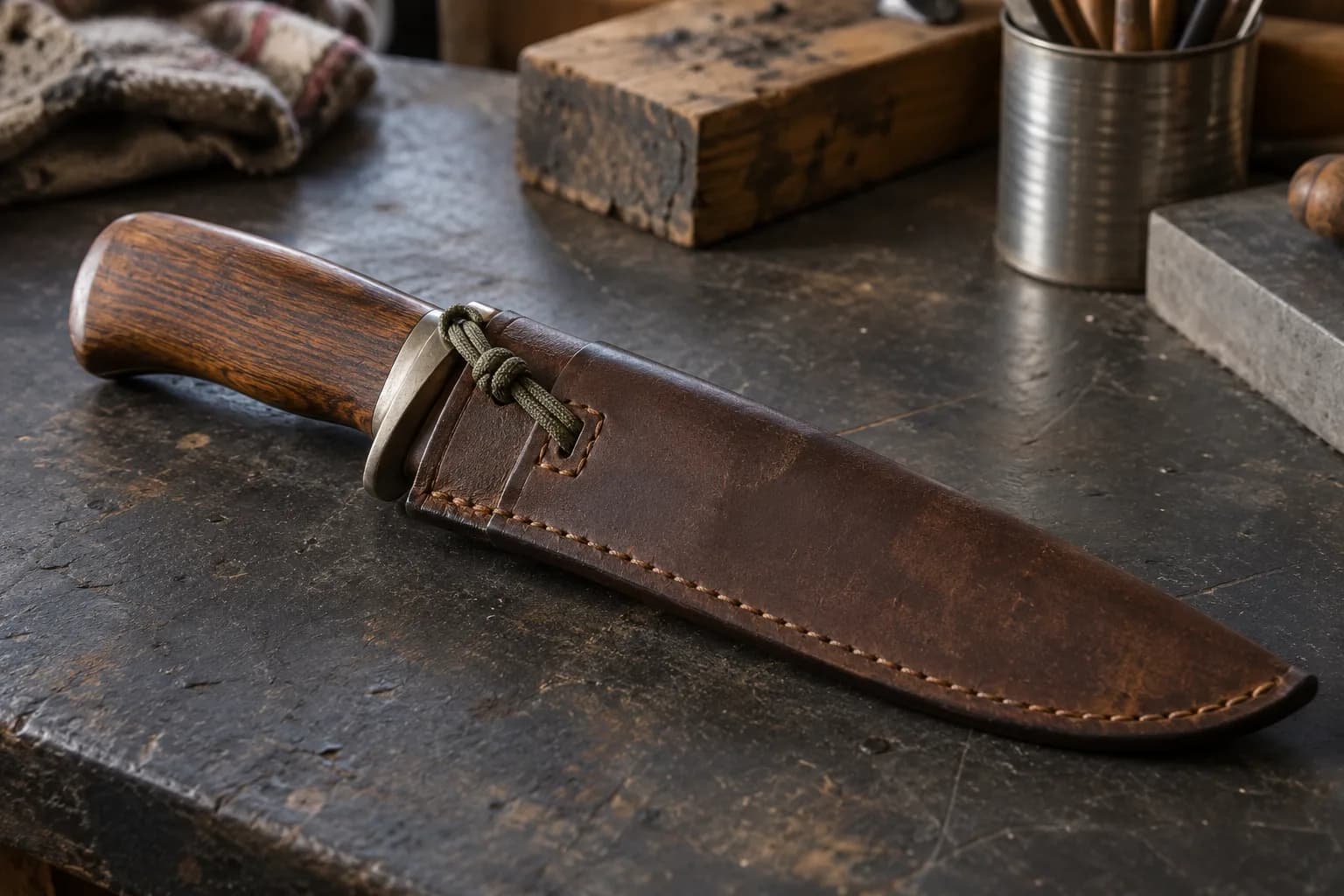
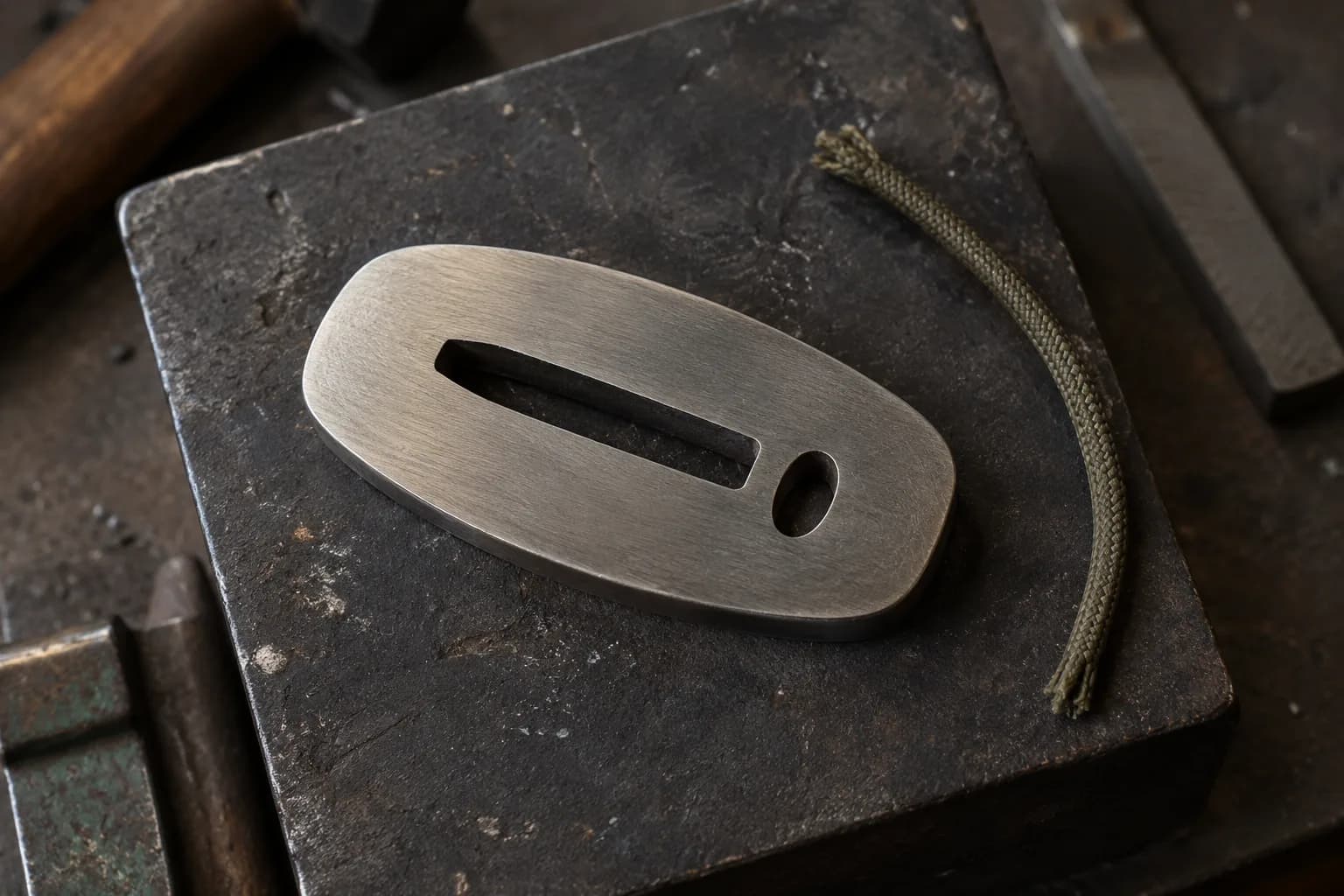
Read the policy as a spec sheet and it starts paying you. A peace tie needs somewhere to tie: guards with an opening, a ricasso gap, or a sheath throat with a tie slot make the gate’s job trivial — a tie-friendly design is a small, real selling point at a faire booth. Sheaths become mandatory equipment, not upsells: every worn blade needs one that fully covers the edge, retains the blade firmly (a wet-formed fit plus a strap reads as security to a faire officer), and survives being tied shut. Sold-sharp wrapping means your booth needs a wrap station — cardboard sleeves and tape, sized to your catalog, budgeted into cost per unit. And blade length norms differ by faire and by state law (some states regulate carry length even at events) — the answer is always the faire office and your state’s statutes, never a forum thread.
Vendor packets commonly add rules the public never sees: display cases or racking requirements for sharps, handling rules (customer handles blades only with vendor present is typical), age restrictions on sales, and insurance minimums — which is where liability coverage stops being theoretical. Some faires prohibit live-edge sales entirely and your catalog for that venue becomes display and stage tiers only. Ask for the vendor packet BEFORE the application; building forty sharps for a blunt-only faire is a winter wasted.
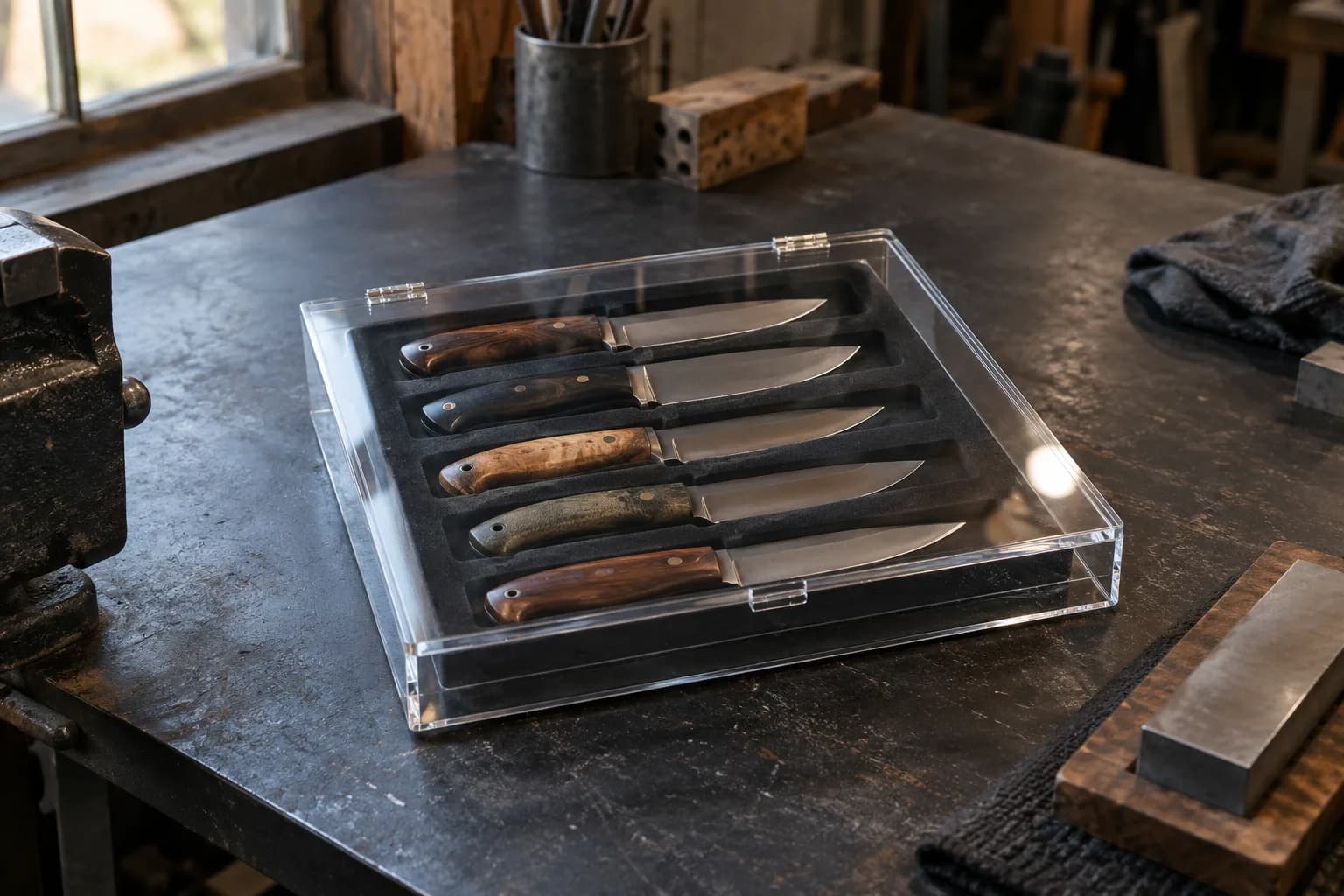
Design the tie point into the guard, build the sheath as retention equipment, keep a wrap station in the booth kit, and keep a one-page copy of the faire’s policy taped inside your cash box for the customer who argues. The rules are the same physics as everything else in this trade: constraints, designed for, become features.
Keep reading
Three more from the same bench.
Renaissance faires are one of the last places in America where a bladesmith can sell steel face-to-face to thousands of costumed customers who came…

This is general education, not insurance or legal advice, actual coverage needs depend on your sales volume, state, and specific risk factors, talk to a…

This is general education, not legal advice, knife laws vary significantly by state and even by city, and shipping carrier policies change, always verify…
Same bench
I machine the parts, hand-assemble, track and test Torus grinders in Sterling, Illinois. Most orders ship in seven to ten business days from time of order.

Current dual-axis platform with a fiber-laser-cut 6061 chassis and single-knob tracking.

Current dual-axis platform with a steel chassis, more mass and less vibration.

Prior-design aluminum chassis, 90-degree tilt and 1.5-inch tooling arms.

One-man shop
I answer my own email. Tell me the steel, the machine and what it is doing, and I will tell you what I would try next.