
Swords
Spring Steel vs Mild Steel for Display & Stage Pieces
Not-sharp blades still have a steel decision, and it is really a safety decision wearing a cost question. The short answer: mild steel is legitimate for…
Swords
What blunt means in numbers: display, stage and combat-sport rebated blades, from edge flats to radiused edges and rounded tips, ground on a 2x72.
2 min readWritten by Rich LinvilleFree to read
“Blunt” is not one spec — it is three different builds, and mixing them up is how display pieces end up in stage fights they were never engineered for. Here is what not-sharp actually means at the caliper, tier by tier.
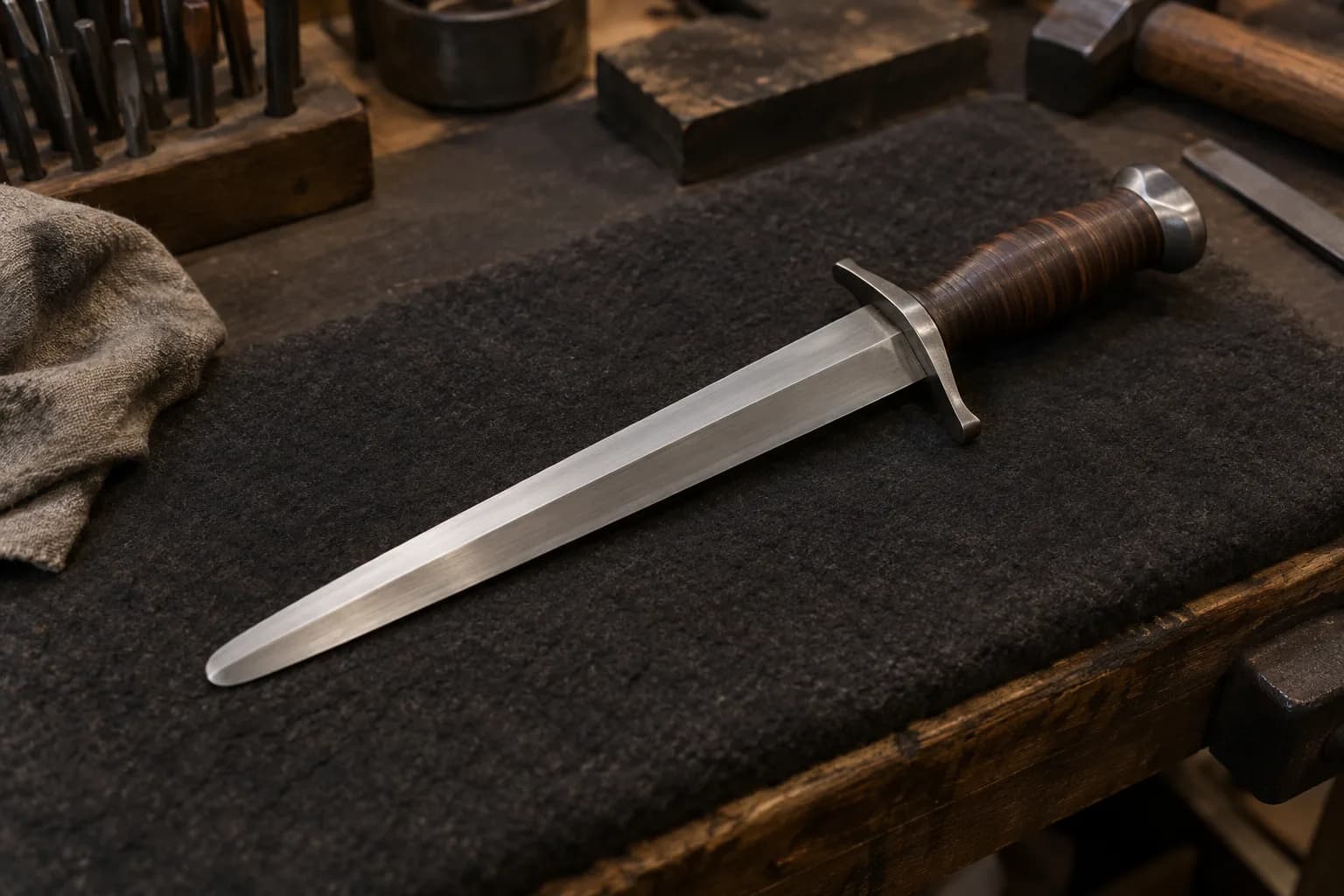
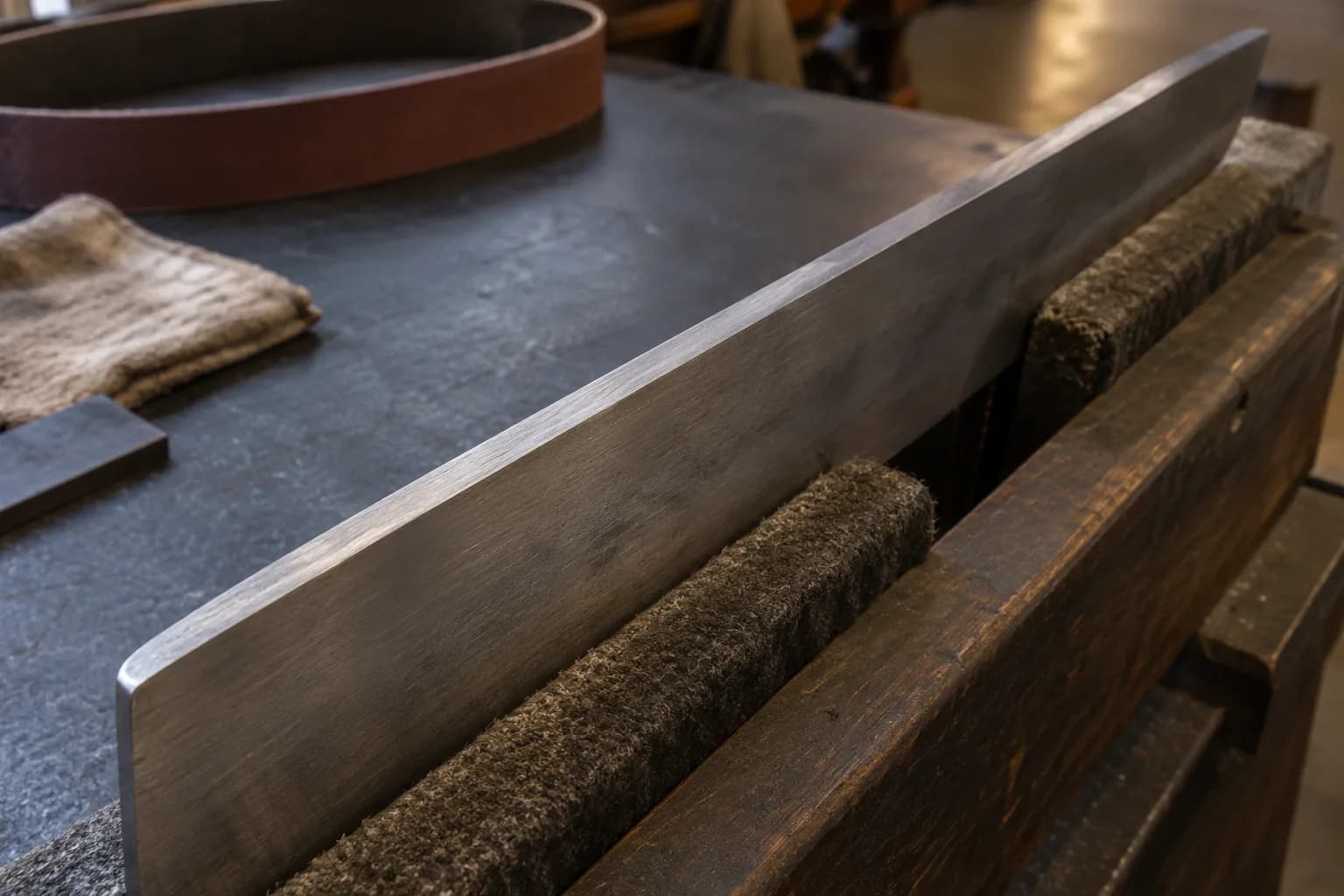
A wall and costume piece needs to not cut on casual contact — nothing more. The working geometry: grind the bevels for the LOOK of a blade but stop the edge at a flat of roughly 1/16 inch, then ease that flat’s corners smooth on a fine belt so a sliding hand meets no bite. Tips get rounded to at least a pencil-eraser profile. The bevels can be as dramatic as the design wants because the apex never arrives. This is cosmetic geometry: it must survive handling and belt wear, not impact.
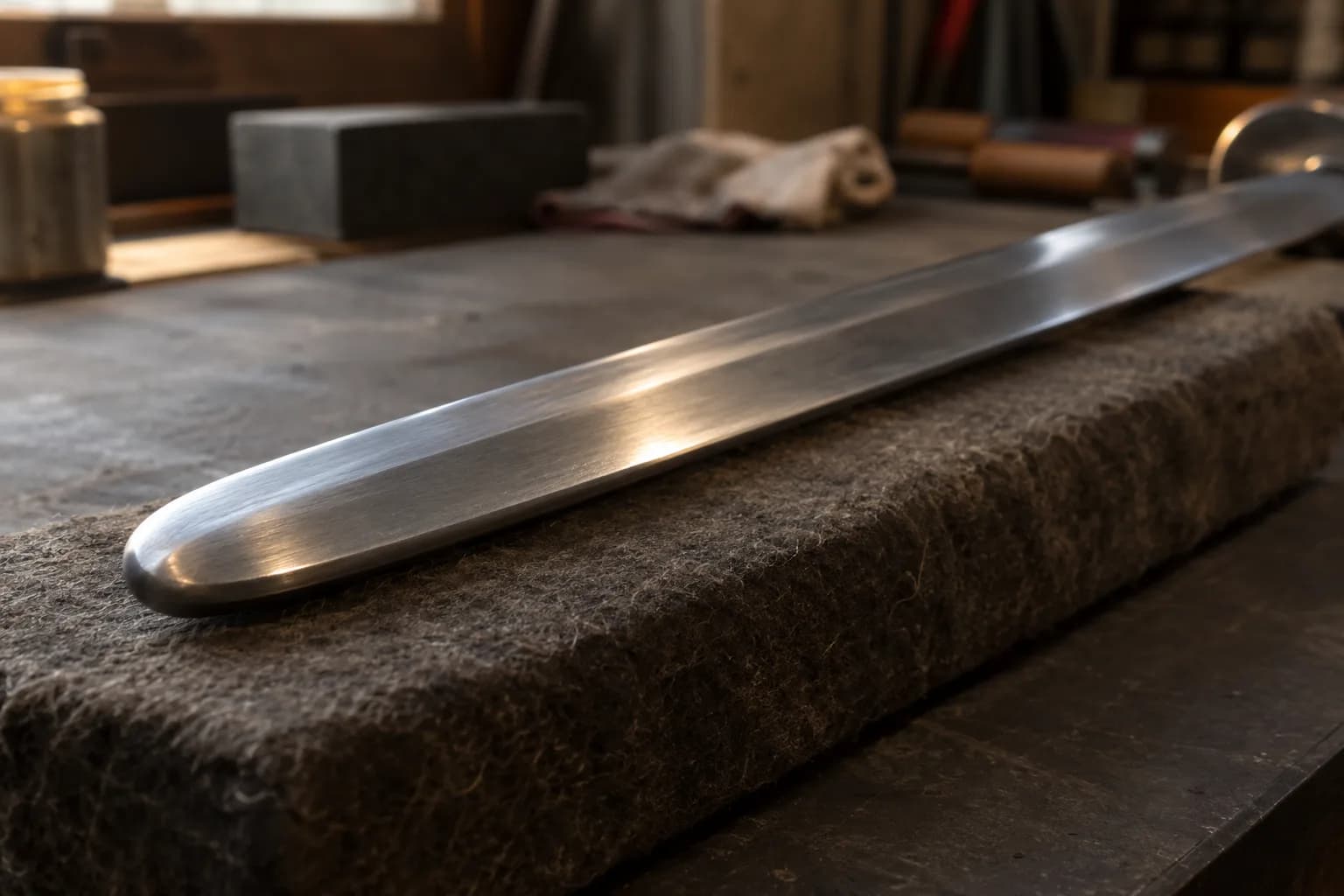
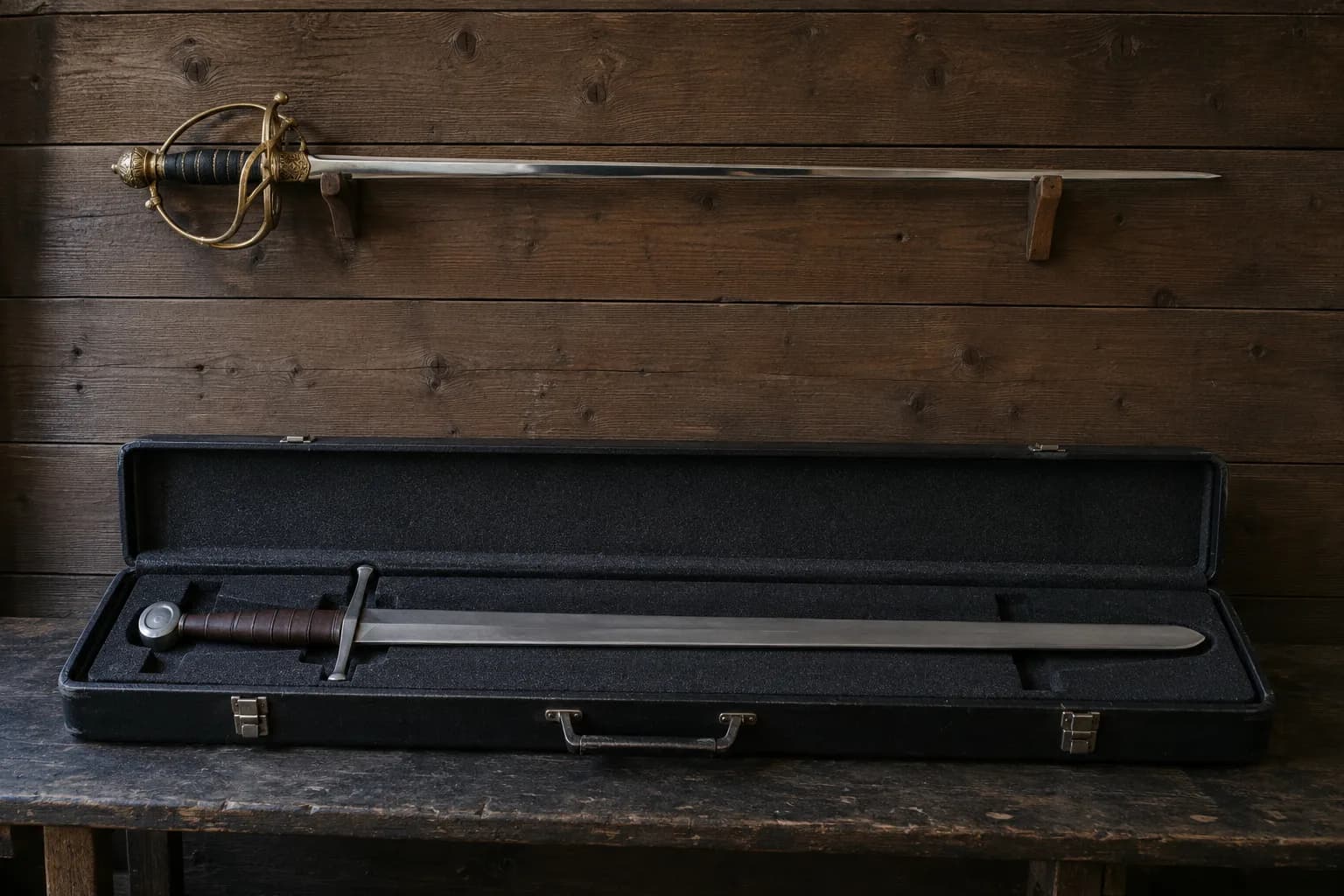
Blades that meet other blades — stage combat, choreographed shows, joust troupes — are engineering, not costume. The conventions the theatrical world runs on: edges carry a substantial flat (1/16 to 1/8 inch) with fully radiused corners so edge-on-edge contact peens instead of chipping, tips are rounded to a generous button (think dime-to-nickel diameter, not eraser), and the blade is real heat-treated spring steel per Spring Steel vs Mild Steel — because a snapped mild-steel blade in a show is the industry’s recurring nightmare. There is no single national spec: the fight director, the venue and the insurer set the requirements, and a maker supplying this market asks for them in writing before quoting. What is universal: distal taper and balance still matter (performers fight all day — see the balance rules), and every edge and tip is checked before every show because stage blades peen, mushroom and grow burrs with use.
Steel-fighting sports (buhurt, HEMA) run published rulebook specs — thicker edges and bigger radii than stage work, covered separately in Combat Blunts. Do not sell a stage blunt into a buhurt list or vice versa; the rulebook is the spec sheet.
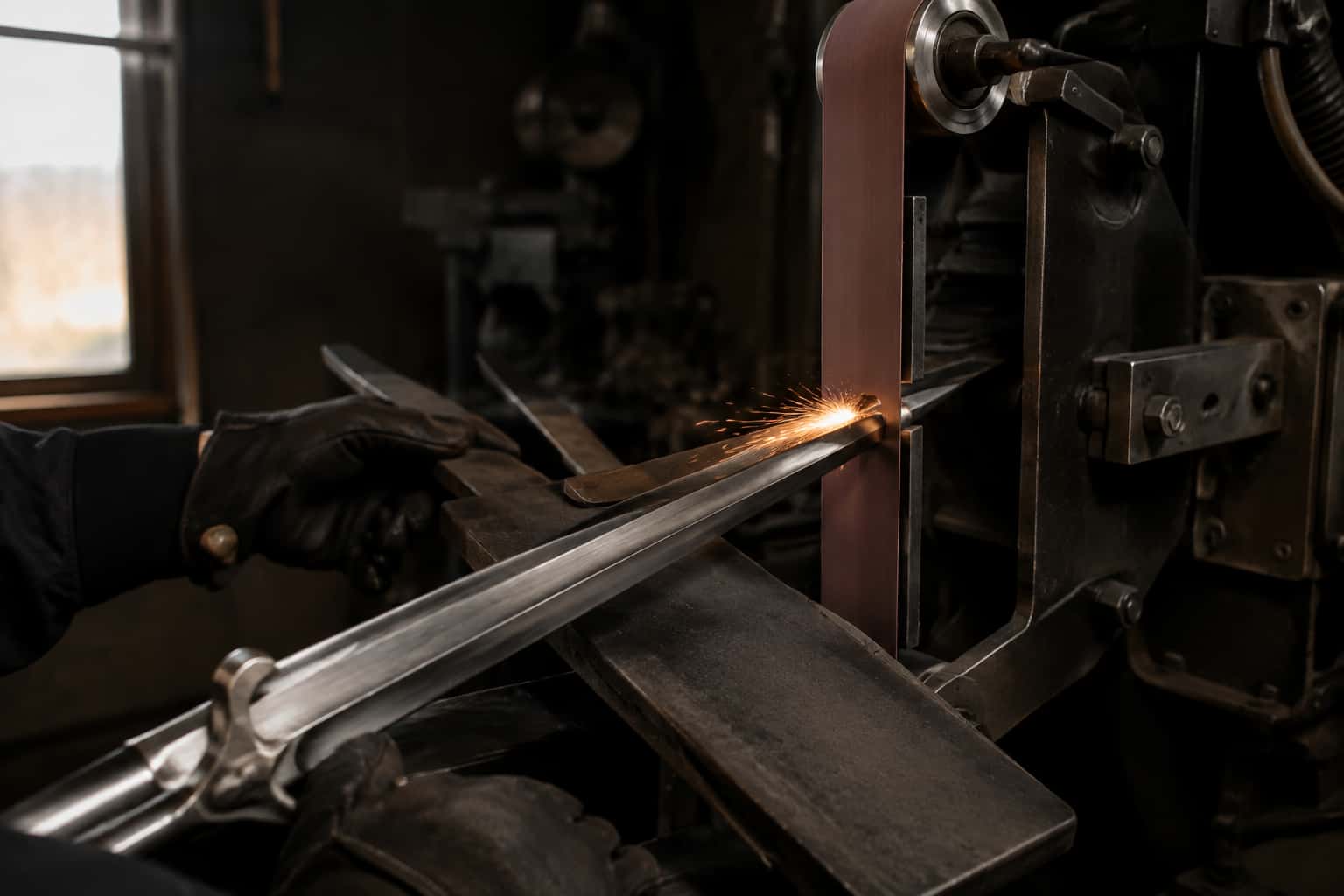
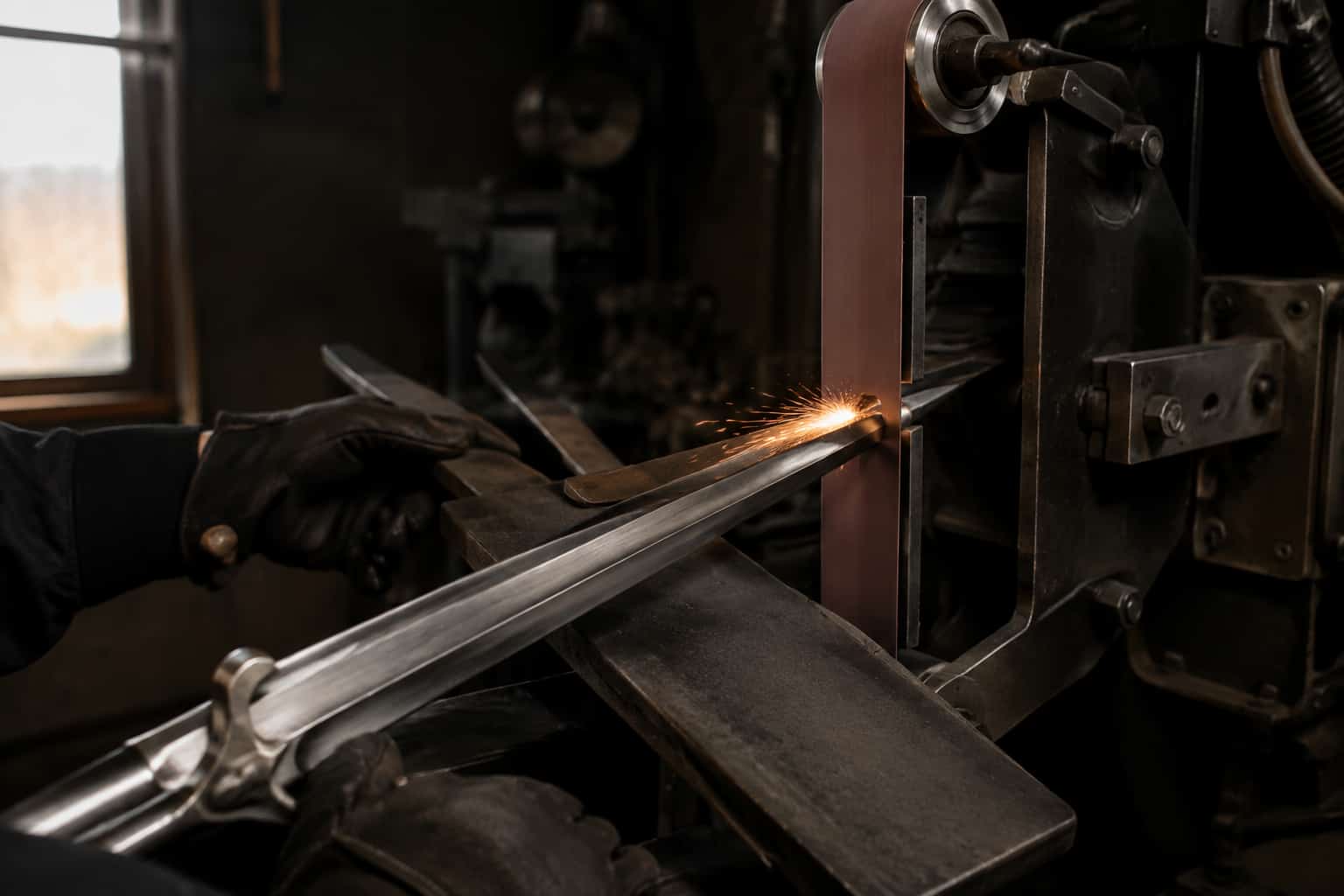
Blunt geometry is honest grinder work with the drama removed. The edge flat is a platen pass held square — a worn 120 belt at moderate speed leaves a clean uniform flat faster than any file. Radiusing the flat’s corners is a slack-belt roll, exactly like easing a spine. Tips round against the platen edge or a small wheel, walked smoothly so the button stays centered. The skill that transfers least intuitively: consistency still shows. A display dagger with a wandering edge flat reads as cheap from three feet away, and the faire buyer at the booth is buying the look. Grind blunts with the same discipline as sharps; the market can tell.
Ask every not-sharp commission one question first: will it ever touch another blade? No — Tier 1, cosmetic flat, eased corners, rounded tip, price it friendly. Yes — Tier 2 minimum: spring steel, real heat treat, generous flats and buttons, the buyer’s fight director’s rules in writing, and liability coverage in force. The tiers protect the performer, and they protect you.
Keep reading
Three more from the same bench.
Not-sharp blades still have a steel decision, and it is really a safety decision wearing a cost question. The short answer: mild steel is legitimate for…

Before the types, the vocabulary. Every sword — katana or claymore, gladius or rapier — is the same short list of parts negotiating the same physics: a…

Sword steel selection is knife steel selection with the priorities inverted: at three feet of lever arm, toughness is nearly everything and wear…
Same bench
I machine the parts, hand-assemble, track and test Torus grinders in Sterling, Illinois. Most orders ship in seven to ten business days from time of order.

Current dual-axis platform with a fiber-laser-cut 6061 chassis and single-knob tracking.

Current dual-axis platform with a steel chassis, more mass and less vibration.

Prior-design aluminum chassis, 90-degree tilt and 1.5-inch tooling arms.

One-man shop
I answer my own email. Tell me the steel, the machine and what it is doing, and I will tell you what I would try next.