
Swords
Display & Stage Blade Geometry: What Blunt Actually Means
“Blunt” is not one spec — it is three different builds, and mixing them up is how display pieces end up in stage fights they were never engineered for…
Swords
Choosing steel for not-sharp blades: mild steel's cost case for wall pieces, why stage blades demand heat-treated spring steel, and the price gap.
2 min readWritten by Rich LinvilleFree to read
Not-sharp blades still have a steel decision, and it is really a safety decision wearing a cost question. The short answer: mild steel is legitimate for pieces that only hang and pose; anything that meets another blade gets heat-treated spring steel, full stop. Here is the reasoning and the numbers.
Mild steel (1018 and friends) costs a fraction of blade steel, grinds like butter, needs no heat treat, and takes the blackened, antiqued and satin finishes the faire market loves. For a Tier-1 display piece per Display Geometry — wall-hangers, costume daggers that live peace-tied, photo props — it is the honest economic choice: the blade bends before it breaks (soft steel’s one safety virtue), and at booth prices the material savings is real margin. Its limits are just as honest: it takes a set if flexed (a bent costume dagger stays bent), dings and dents in handling, and has no business in any blade that will be swung at anything.
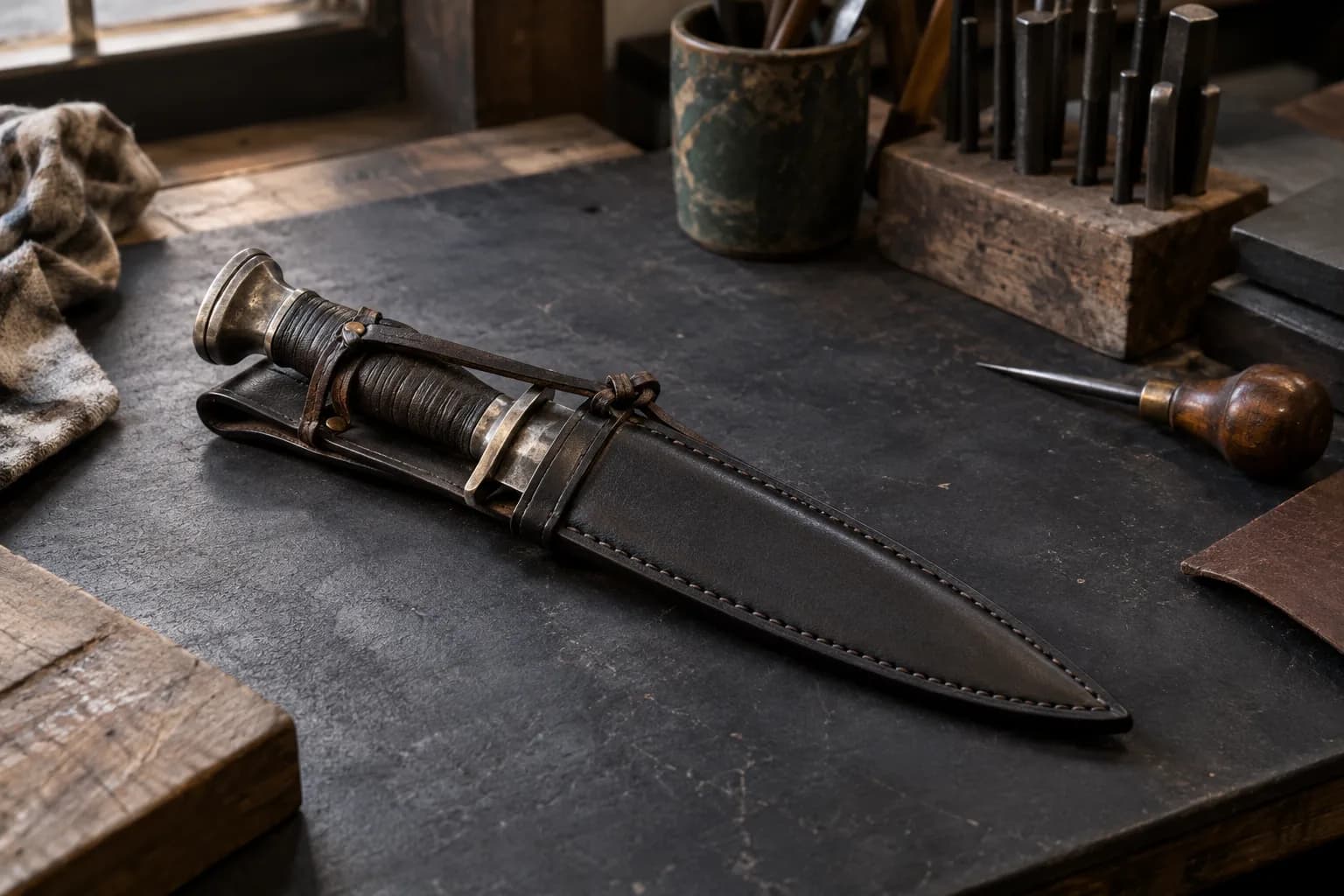
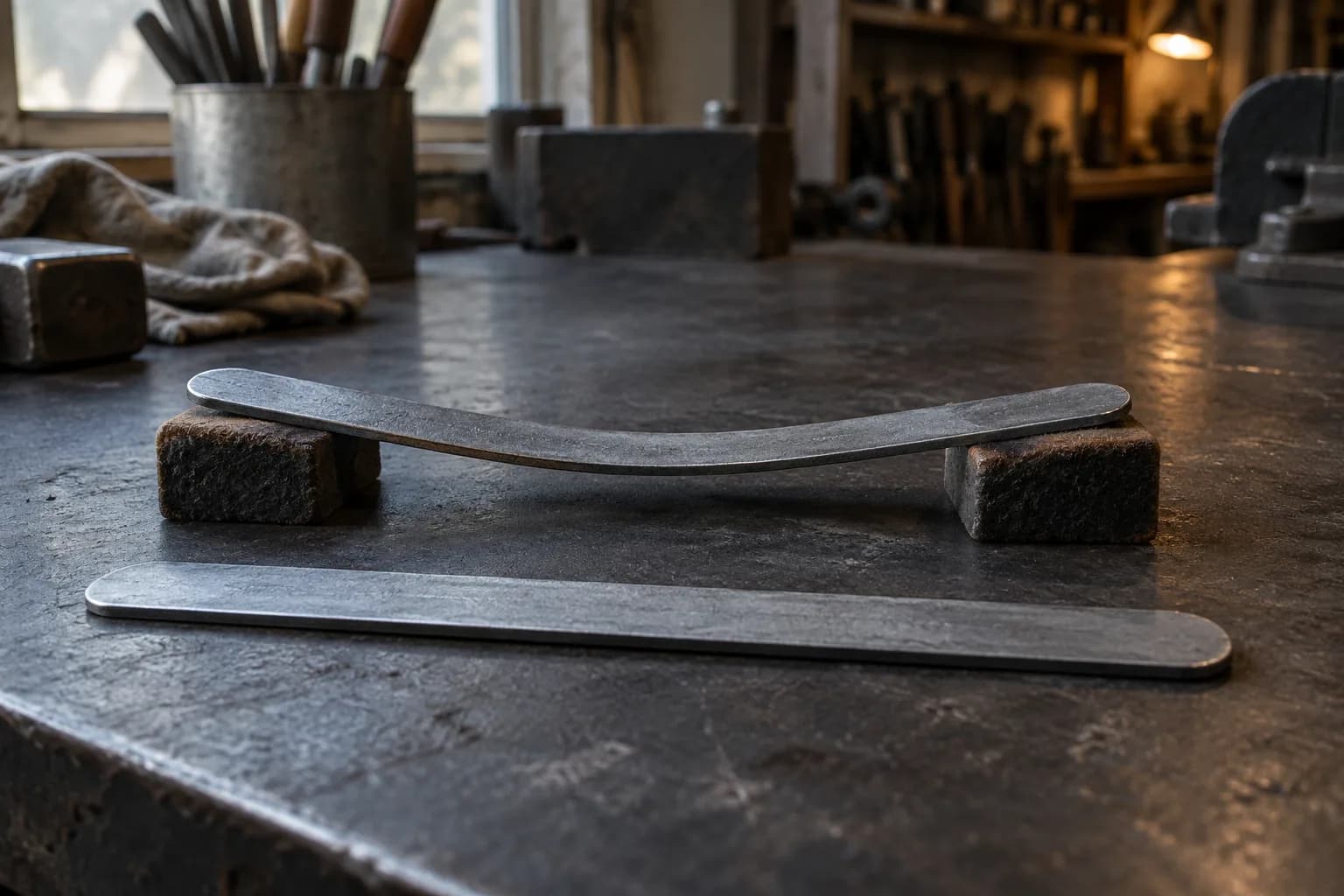
A stage blade’s job is surviving repeated impact and flex without failing, and that is the definition of a heat-treated spring steel: 5160 is the industry default (9260 in the same class), tempered into the mid-to-upper 40s HRC — springy, tough, resilient — rather than knife-hard. Mild steel in that role fails two ways, both on stage: it takes sets until the blade is a banana, and unhardened steel work-hardens at the contact points until one night it cracks. The stage-combat world’s recurring horror story is a snapped bargain blade, and it is why performers and fight directors ask what a blade is made of before they ask the price. Heat treat matters as much as alloy: through-tempered per the heat treat guide’s spring protocols (and the sword-scale notes in Sword Steels), then edge and tip maintained per show-blade practice.
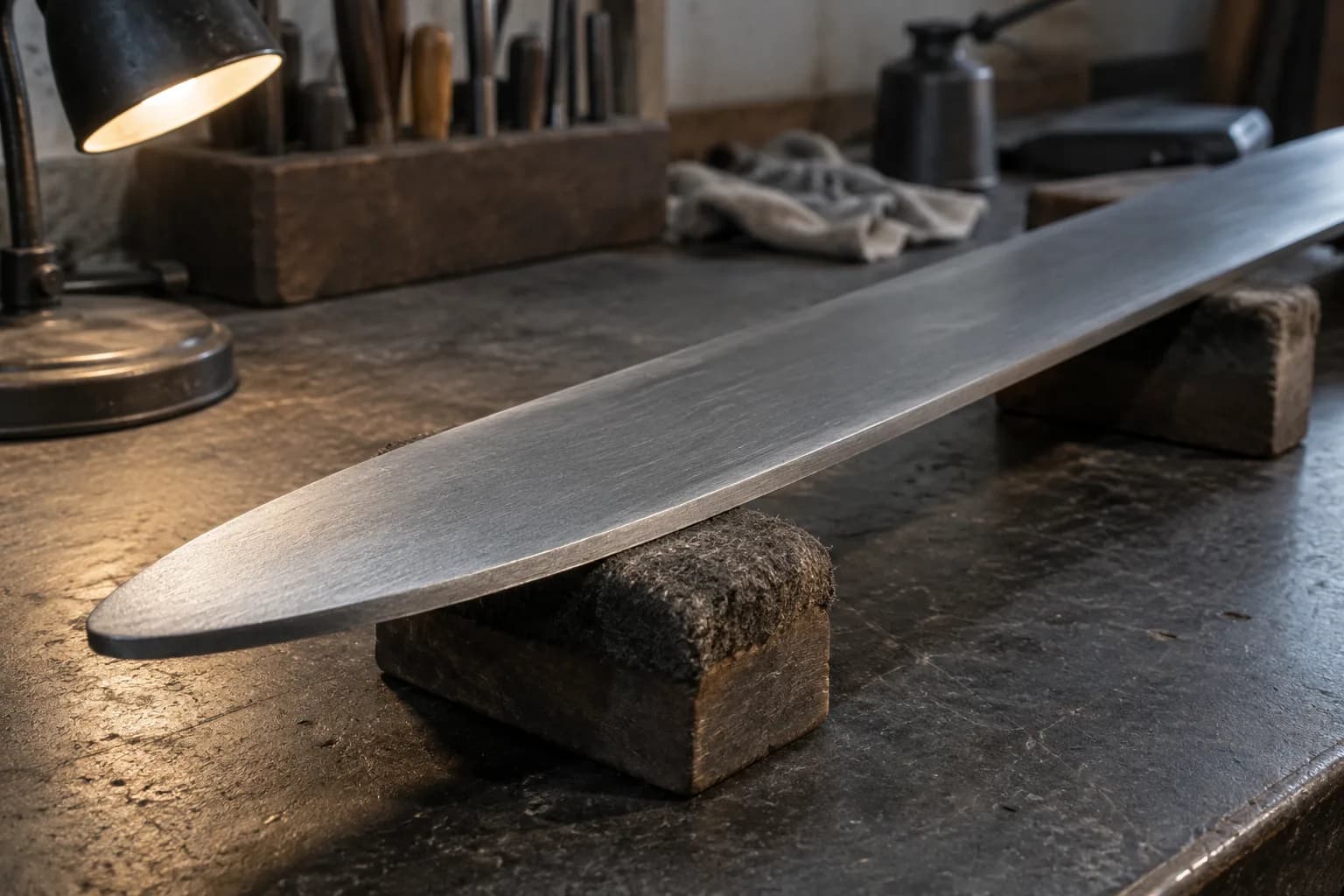
The materials gap per short blade is modest — mild bar might save ten to twenty dollars against 5160 — but the LABOR gap is real: spring steel means heat treat time, harder grinding, and inspection standards. The market prices accordingly: display pieces sell on look at friendly numbers, stage-grade blades sell on engineering at multiples. The vendor mistake is blurring the tiers to win a sale; the vendor advantage is stating them plainly — the same honesty that runs the booth playbook.
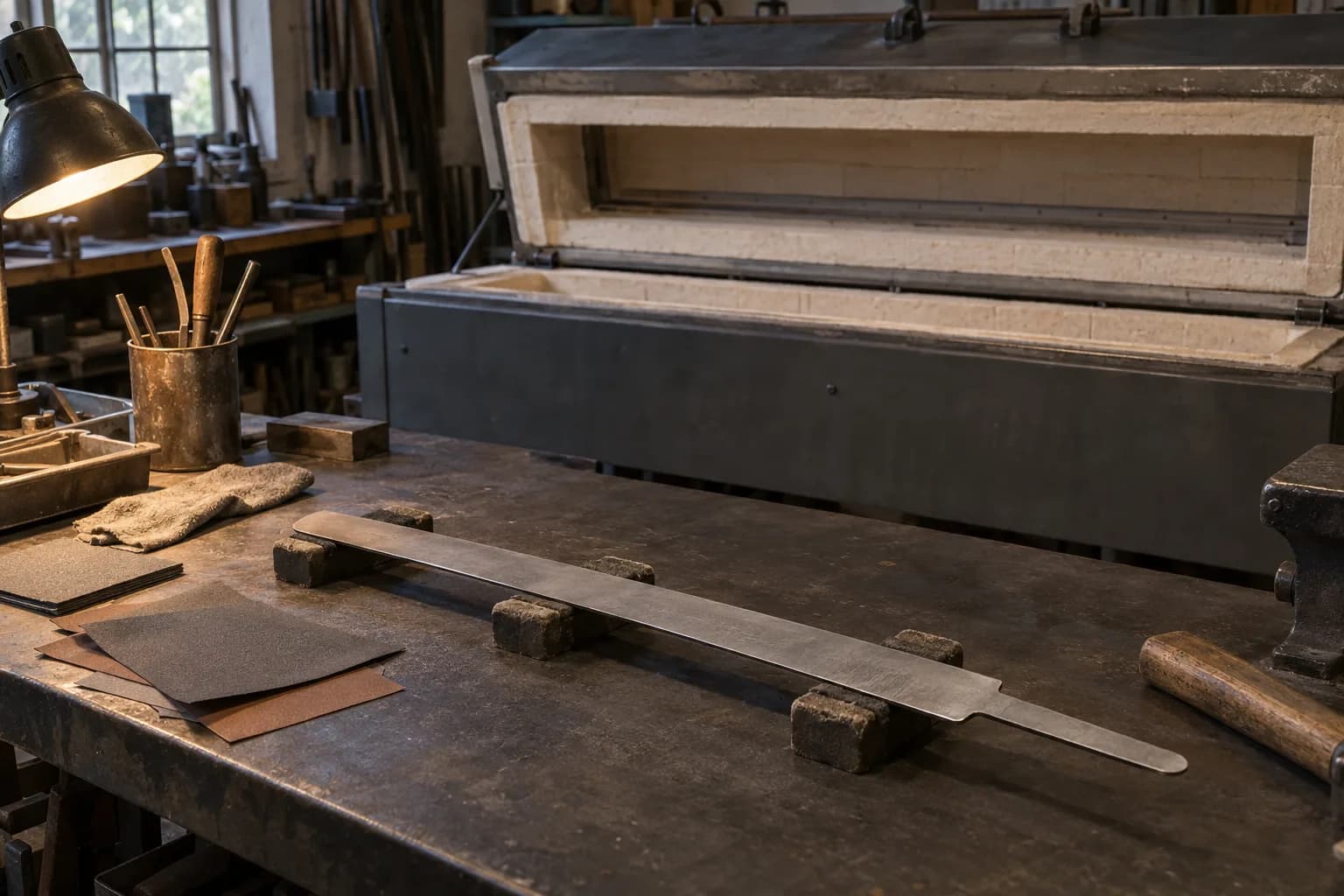
Ask the display-geometry question — will it ever meet another blade? — and let the answer pick the bar: mild for the wall, 5160 for the stage, and never the reverse. Stamp or invoice which one a piece is. Mild steel grinds fast at full speed; 5160 gets blade-steel discipline per its grinding practice. And when a customer wants the stage look at the wall price, sell them the wall piece honestly — the performer they lend it to is your liability too.
Keep reading
Three more from the same bench.
“Blunt” is not one spec — it is three different builds, and mixing them up is how display pieces end up in stage fights they were never engineered for…
Sword steel selection is knife steel selection with the priorities inverted: at three feet of lever arm, toughness is nearly everything and wear…
Every knifemaker’s customers eventually ask, and every knifemaker eventually wonders: could I make a sword? Yes — the 2×72 that grinds your knives grinds…
Same bench
I machine the parts, hand-assemble, track and test Torus grinders in Sterling, Illinois. Most orders ship in seven to ten business days from time of order.
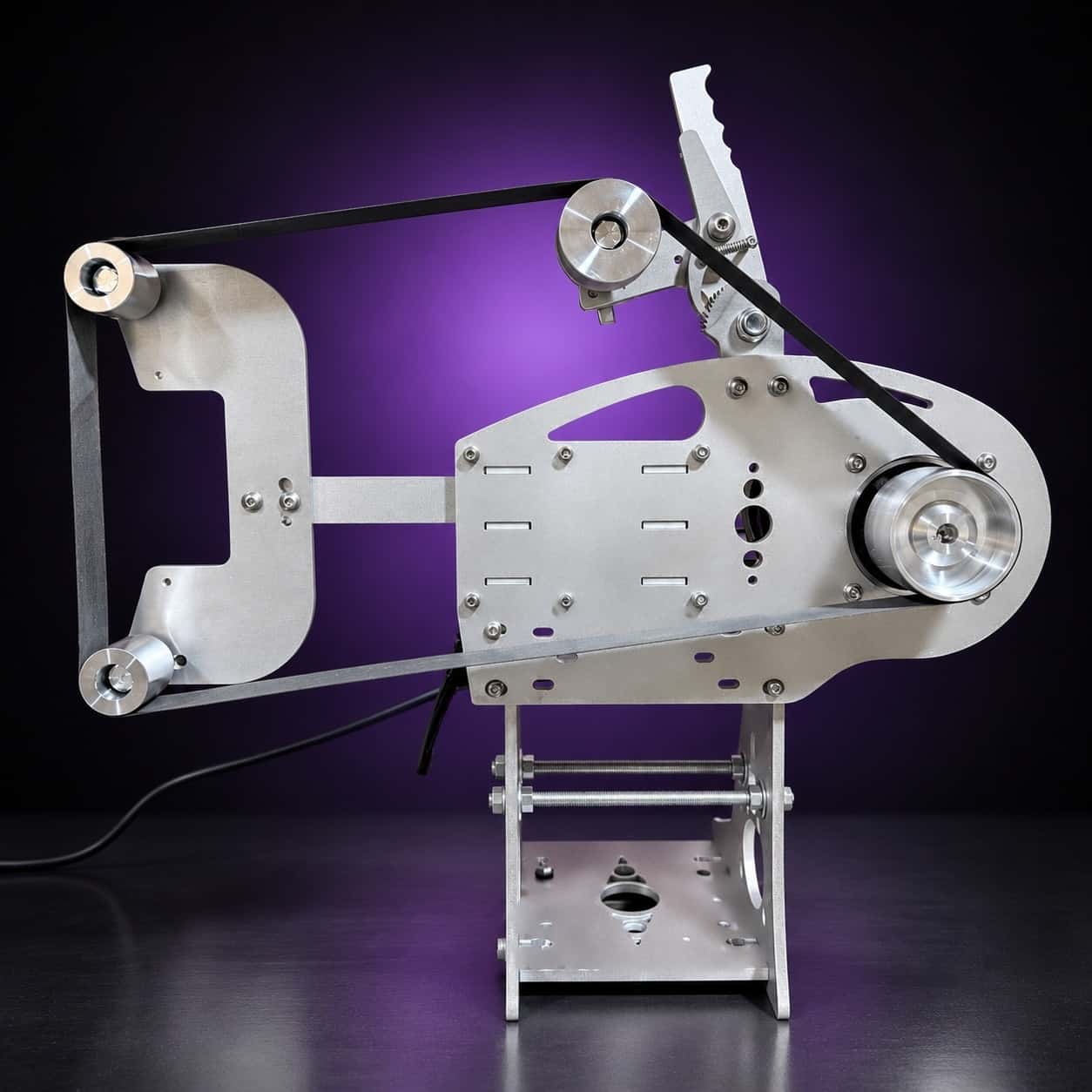
Current dual-axis platform with a fiber-laser-cut 6061 chassis and single-knob tracking.
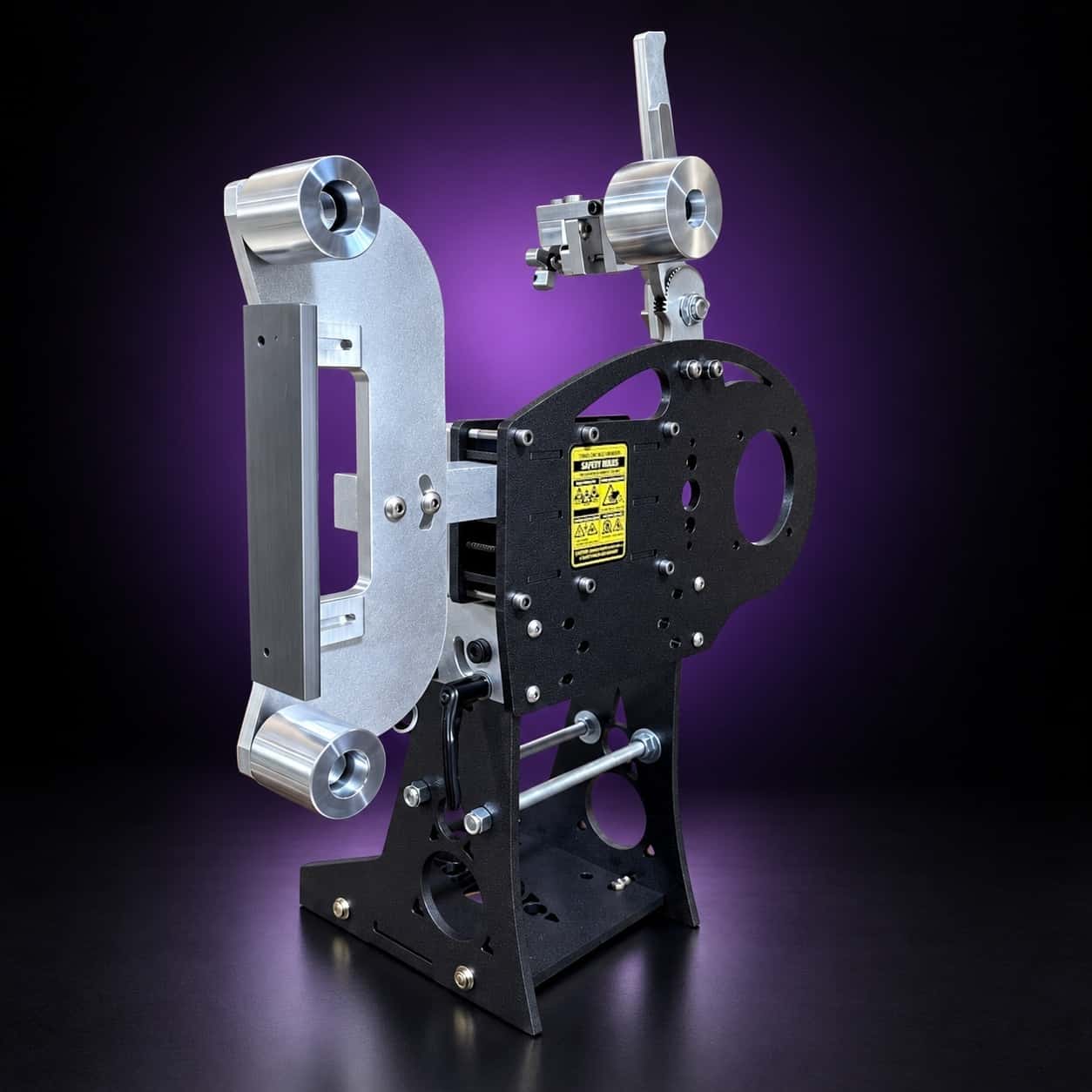
Current dual-axis platform with a steel chassis, more mass and less vibration.
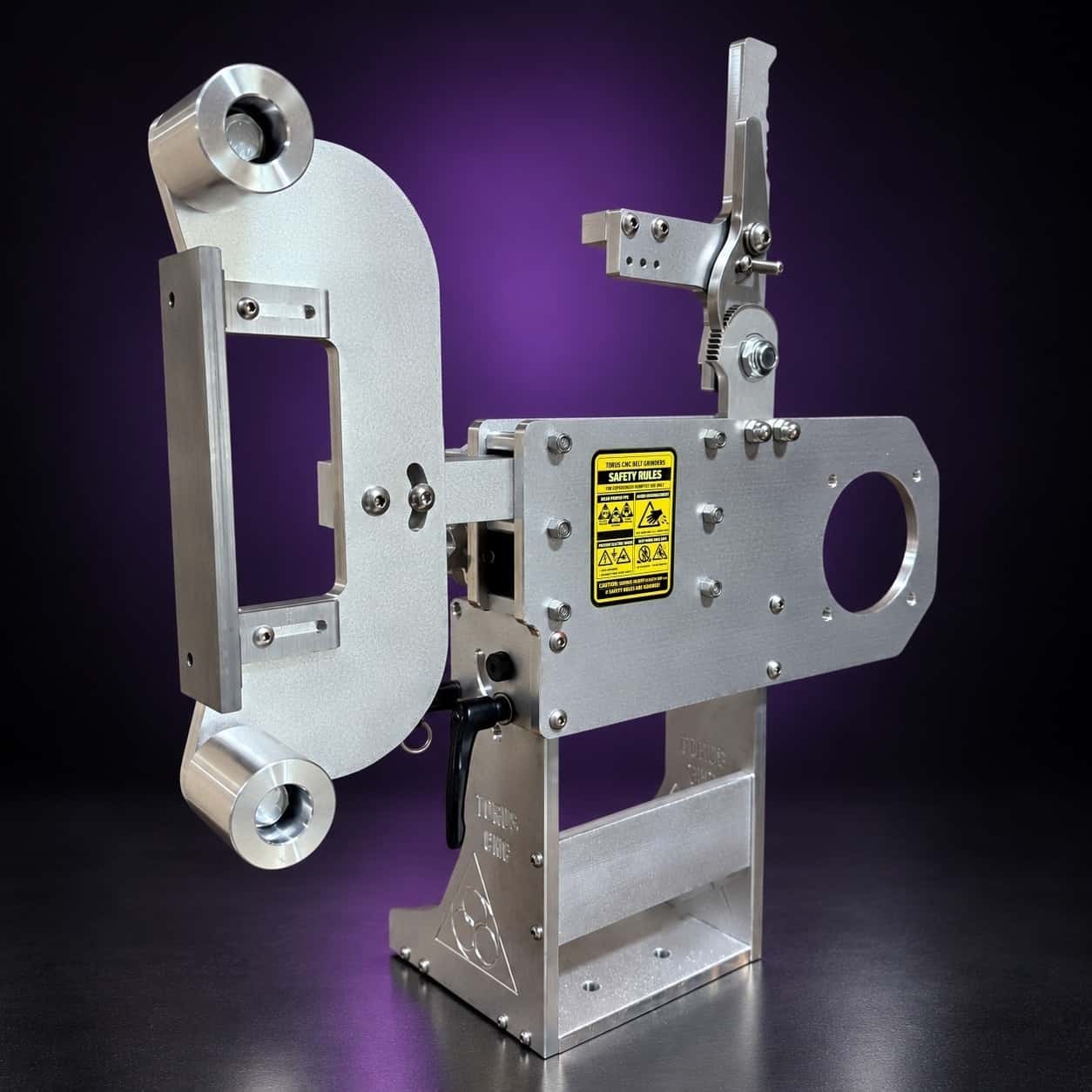
Prior-design aluminum chassis, 90-degree tilt and 1.5-inch tooling arms.
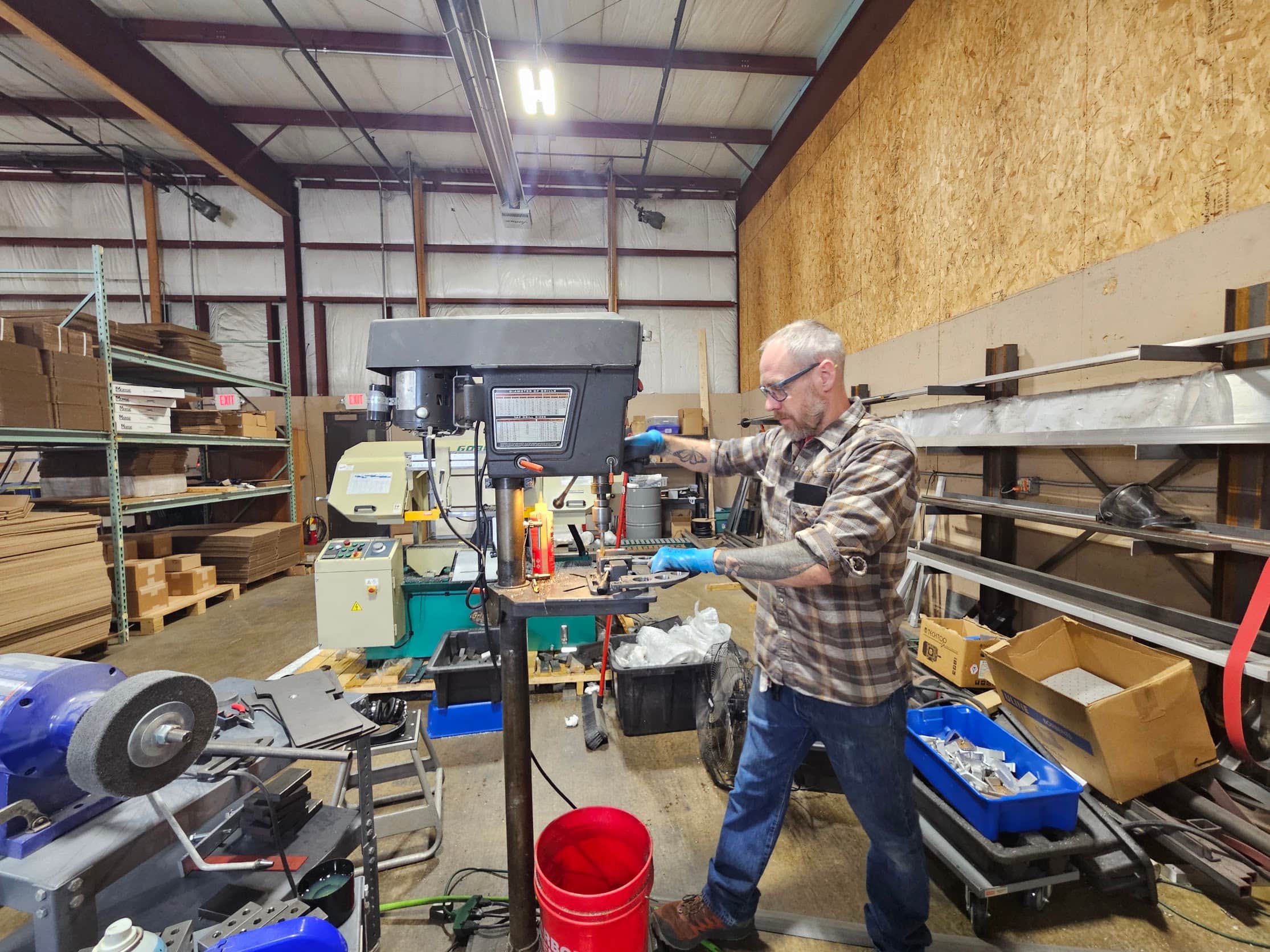
One-man shop
I answer my own email. Tell me the steel, the machine and what it is doing, and I will tell you what I would try next.