
A high-carbide, semi-stainless tool steel known for excellent wear resistance and low heat-treat distortion, at the cost of toughness and ease of sharpening.
- Toughness
- 2
- Edge retention
- 4
- Corrosion resistance
- 2
- Ease of grinding
- 2
Steel matchup
D2 and 1095, compared on the five things that decide a blade: toughness, edge retention, corrosion, heat treat and how each one grinds.
A high-carbide, semi-stainless tool steel known for excellent wear resistance and low heat-treat distortion, at the cost of toughness and ease of sharpening.
A classic simple high-carbon steel known for taking a very keen edge and reaching high hardness, but shallow-hardening and less forgiving to heat treat consistently than steels like 1084.
Dimension by dimension
Each steel's own note, its score out of five, and what separates the two in that one column. The higher score in a row is marked in purple.
| Dimension | D2 | 1095 | What separates them |
|---|---|---|---|
| Toughness | The weak point of D2: its heavy carbide volume makes it more prone to chipping than most modern powder-metallurgy steels, and it has a reputation for being harder to sharpen back to a clean edge after damage. | Middle-of-the-road toughness for a simple carbon steel, and generally less tough than higher-manganese steels like 1084 at a comparable hardness. Its high carbon content trades some toughness for hardness potential and edge sharpness. | Roughly comparable, both land on the tougher-but-not-top-tier end of the scale, though for different reasons: 1095's simplicity gives it consistent, predictable toughness, while D2's higher carbide content trades some toughness for wear resistance compared to simpler carbon steels. |
| Edge retention | Very good wear resistance thanks to a large volume of chromium and vanadium carbides, a big part of why it remained popular for decades before newer powder-metallurgy steels became common. | Good for a simple carbon steel thanks to its high carbon content and the hardness it can reach (58-62+ HRC), taking a very keen edge, though it lacks the wear-resistant carbides of alloy tool steels. | D2 wins clearly here. Its higher chromium and carbon content forms substantially more wear-resistant carbides than 1095's simple composition, giving D2 a real, noticeable edge-retention advantage in extended cutting tasks. |
| Corrosion resistance | Chromium sits right at the edge of the stainless threshold, giving it noticeably better rust resistance than plain tool steels, but it will still spot or stain without regular care, unlike true stainless steels. | No chromium and no corrosion resistance to speak of. Requires regular oiling and drying like any plain carbon steel. | D2 has a real, if partial, advantage, its roughly 12% chromium content puts it right at the edge of the stainless threshold, giving it meaningfully better corrosion resistance than 1095, which has essentially none and will rust without regular care. |
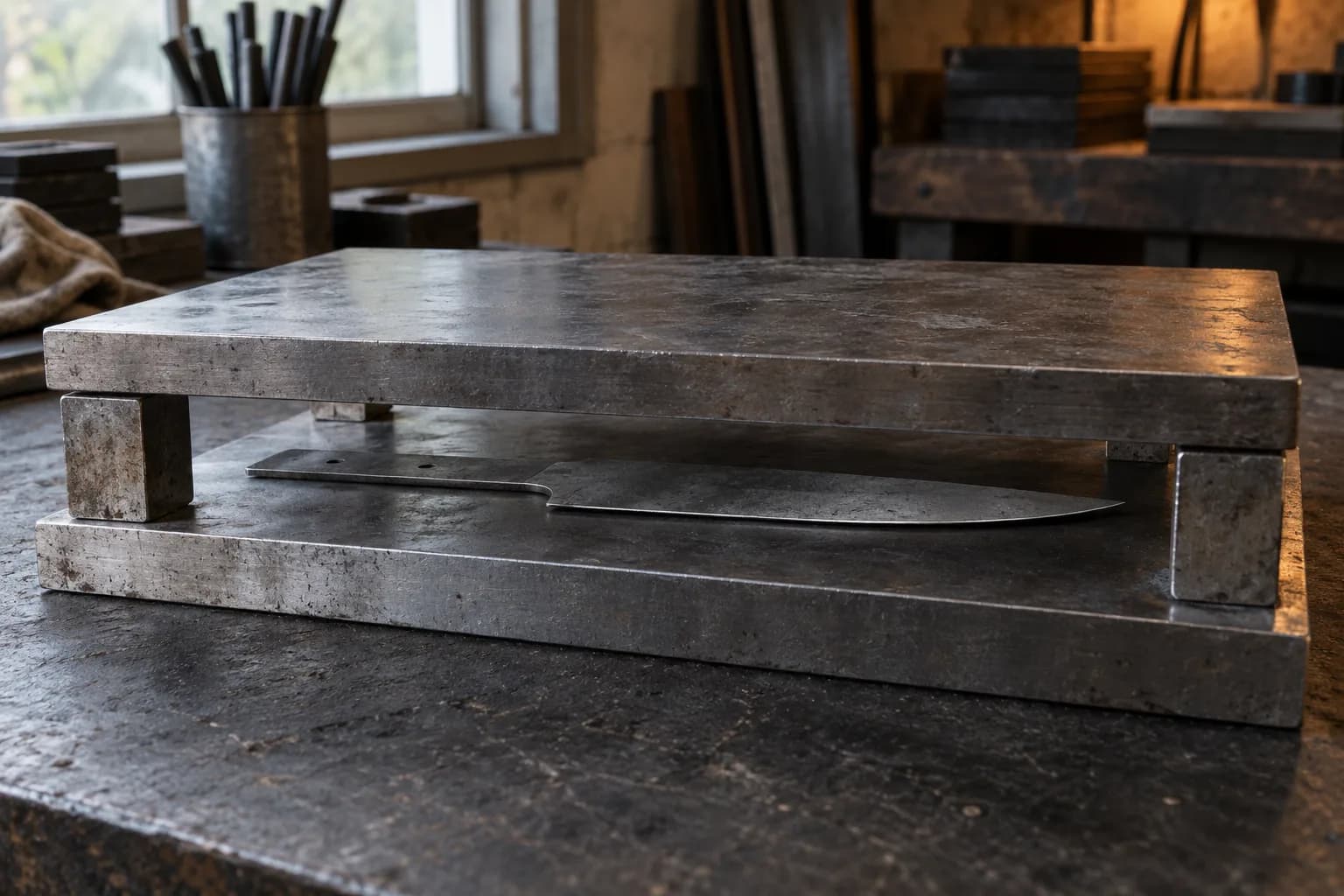
| Heat treat | Preheat at 450-500 C (842-932 F), equalize, then raise to a second preheat of 850-900 C (1560-1650 F). Austenitize at 1850-1900 F, holding 30-45 minutes for the first inch of thickness plus 15 minutes per additional inch. D2 is air-hardening, so quench in still air, which keeps distortion low. Temper between 300 and 500 F depending on the goal: 300-350 F favors maximum wear resistance (62-64 Rc), while 500-550 F gives a better balance of wear resistance and toughness (58-60 Rc). | Austenitize between 1475-1550 F. Because 1095 has relatively low manganese and therefore low hardenability, it needs a genuinely fast quench to reach full hardness; water or brine are traditional choices, though many modern makers use a very fast oil (such as Parks 50) to reduce the cracking risk while still hitting the needed cooling rate. This low hardenability is exactly why 1095 has a reputation for being trickier to heat treat consistently than 1084, which has more manganese and hardens more reliably in oil. Temper at 400-700 F depending on desired final hardness, typically yielding around 58-62 HRC for knife use. | 1095 is dramatically simpler to heat treat, a straightforward water or fast-oil quench that's very achievable in a home shop. D2 requires more precise temperature control and is often air- or plate-quenched, and many hobbyist makers send D2 out to a professional heat-treat service to get consistent results. |
| Grinding | Hard on belts due to its heavy carbide load; grinds and sharpens more slowly than simpler carbon or basic stainless steels. | Very easy to grind, like other simple carbon steels with no hard alloy carbides to fight through. | 1095 grinds easily and predictably, ideal for learning fundamentals. D2's higher carbide content makes it noticeably slower and more demanding to grind and finish, especially with worn belts. |
Best use
D2
D2 suits users who want better edge retention and are willing to invest in more careful heat treat and maintenance.
Open the D2 reference1095
1095 is the better choice for a first knife or any build where forgiving, predictable behavior matters more than maximum wear resistance.
Open the 1095 reference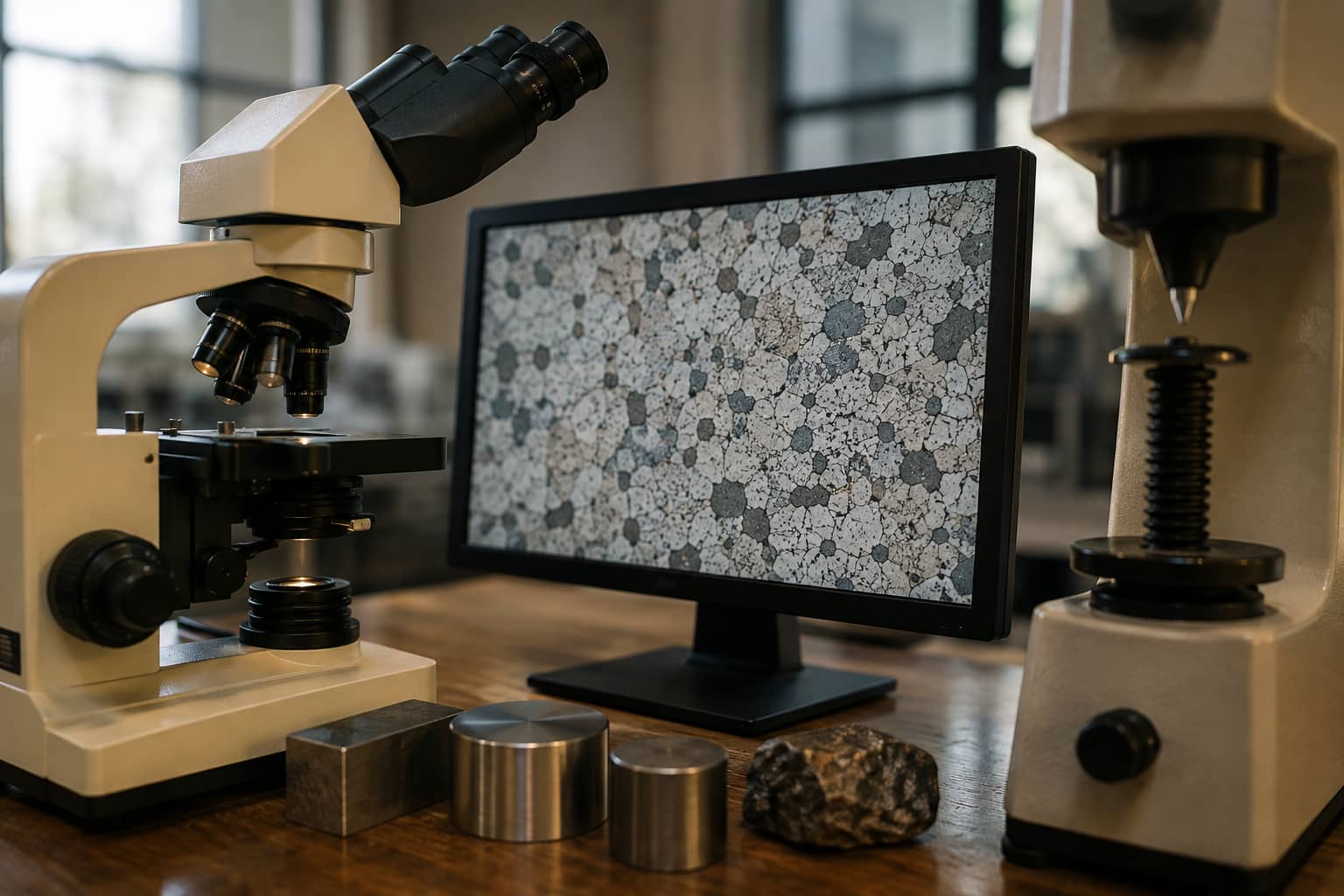
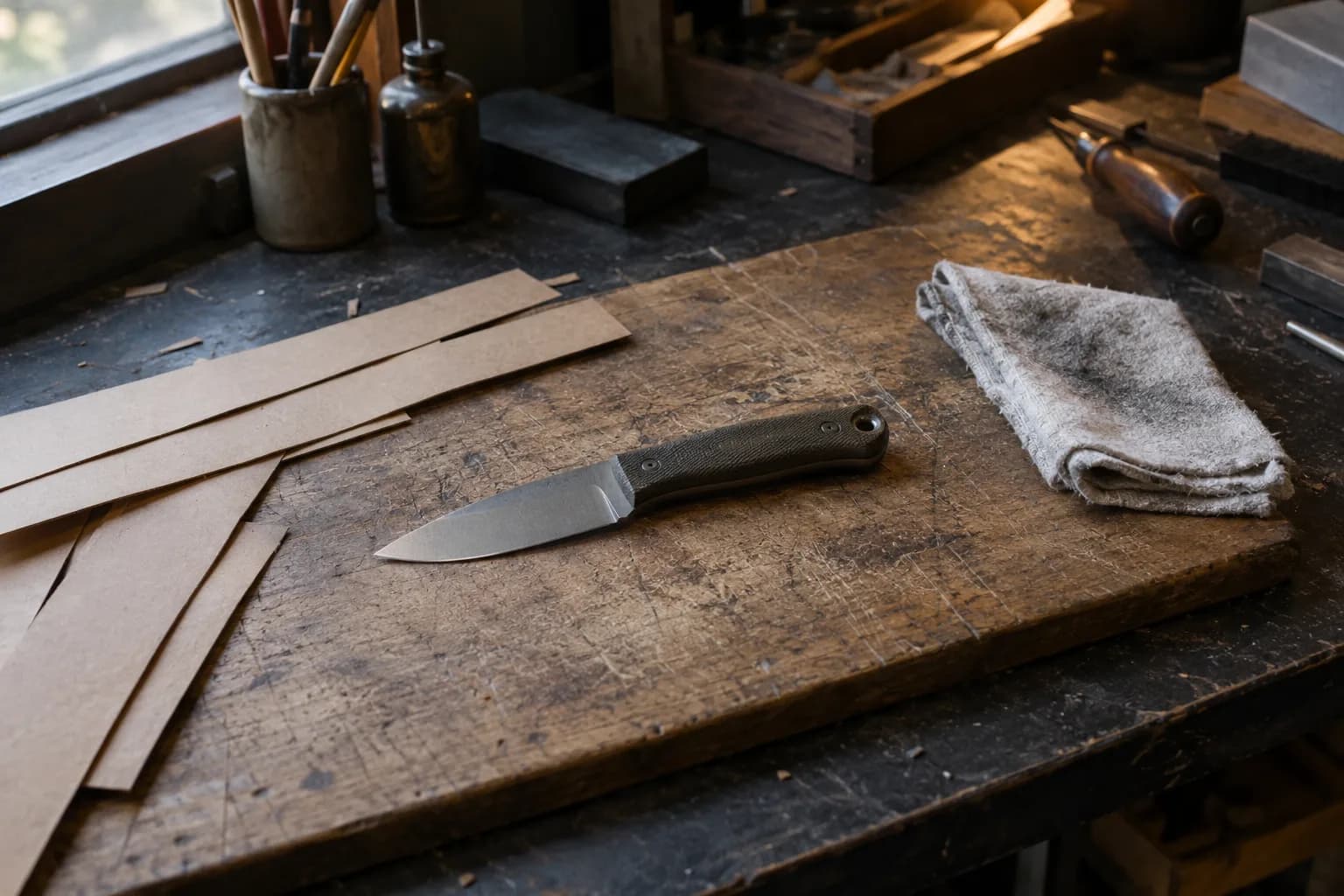
The long answer
D2 and 1095 represent two very different philosophies: a semi-stainless tool steel built for wear resistance, versus a simple, classic carbon steel built for ease of use. Both have loyal followings for very different reasons.
Keep comparing
Keep reading
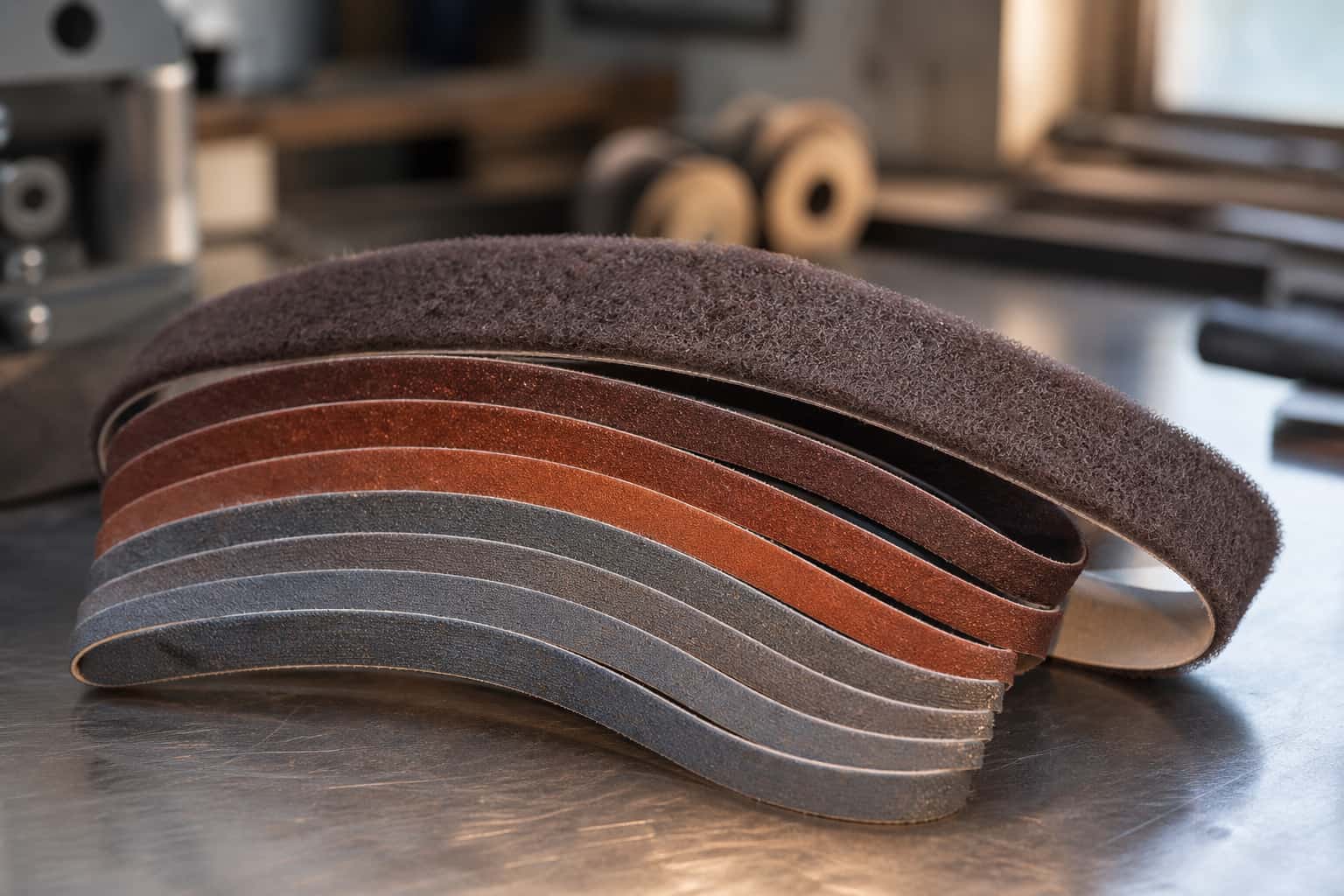
1095 grinds and forges as easily as any simple carbon steel, requiring no special abrasives or equipment. The one thing to watch is its narrower quench…
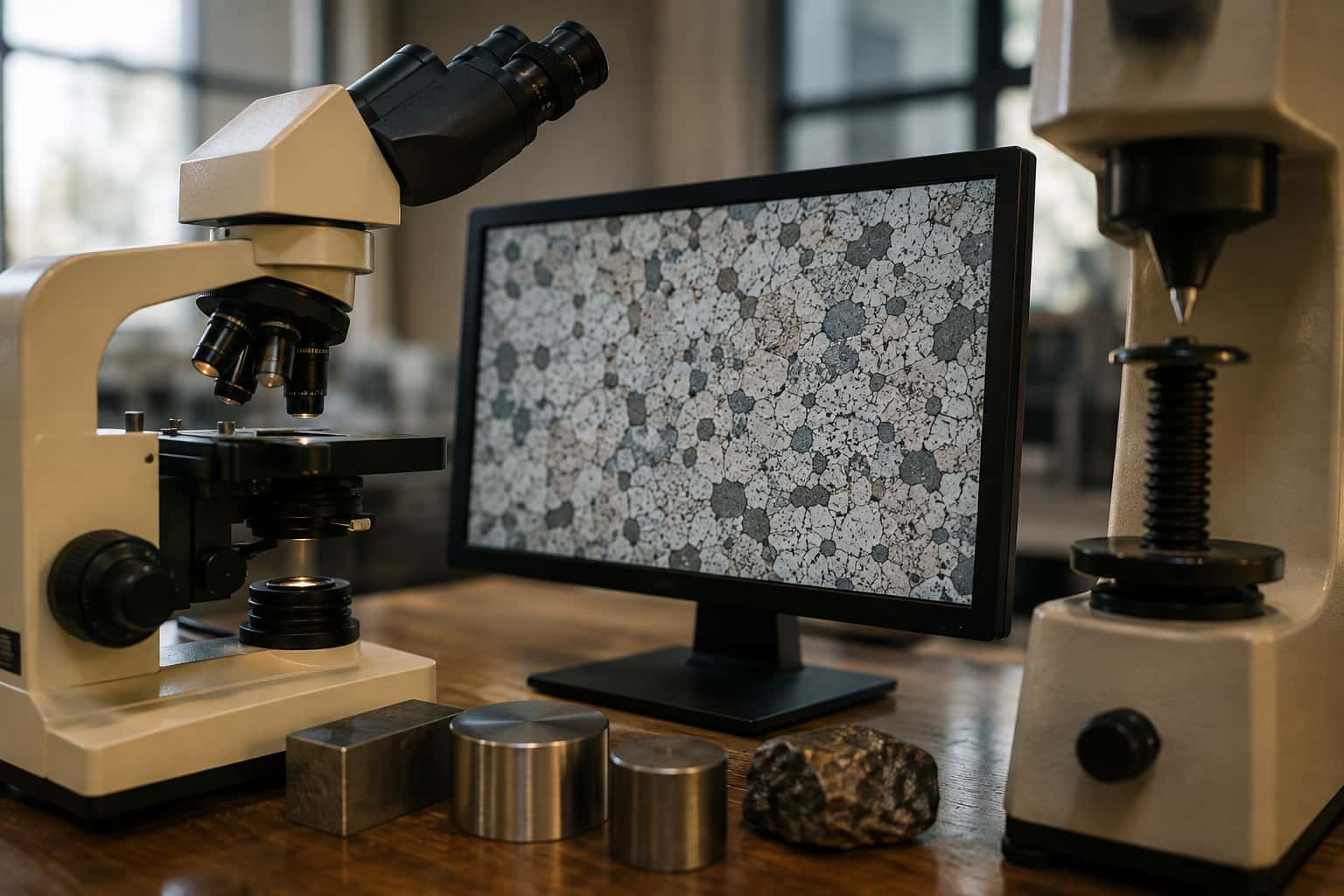
D2’s heavy chromium and vanadium carbide load, the same feature that gives it excellent wear resistance, makes it one of the more demanding tool steels to…
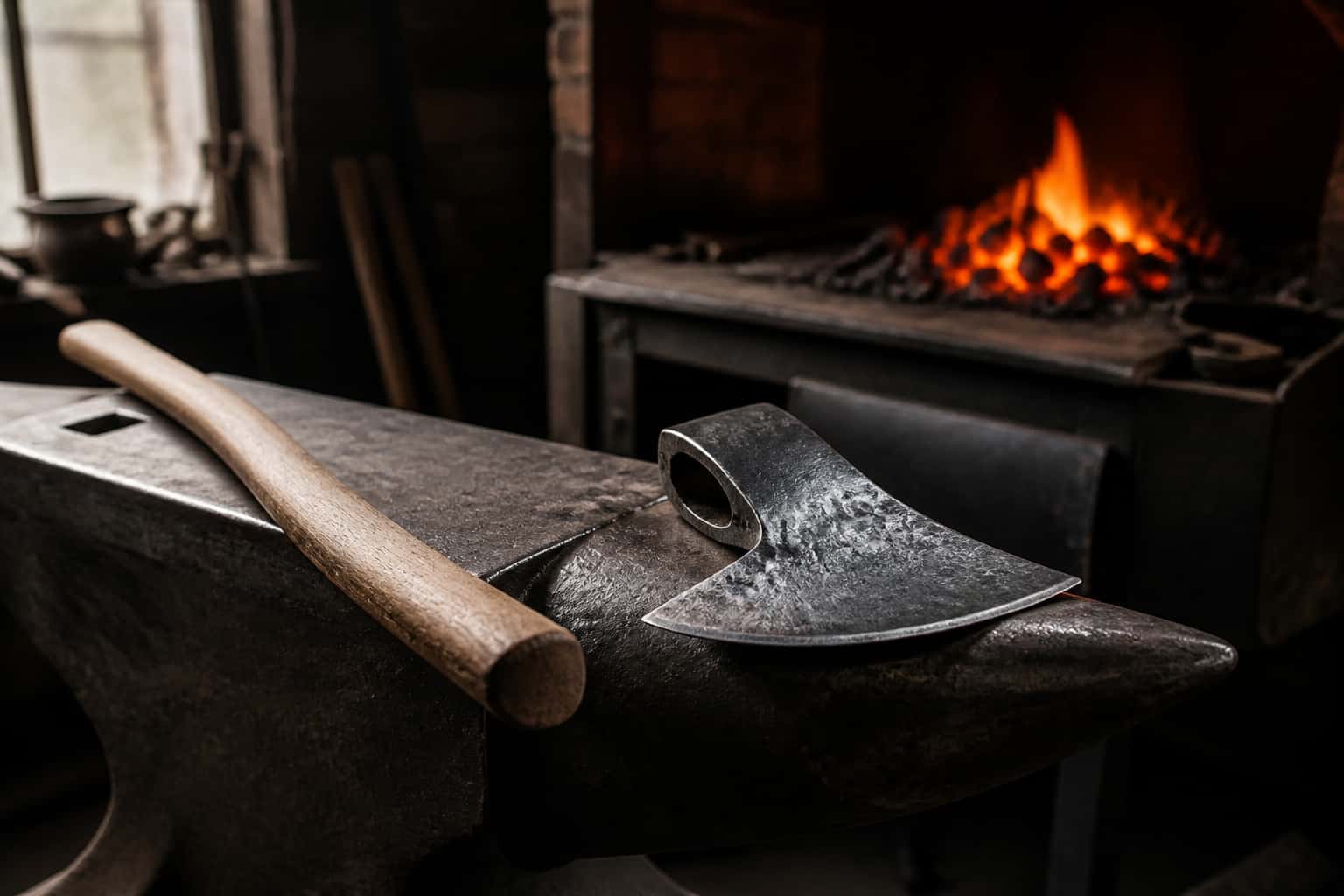
Survival steel selection is a toughness-first decision with a field-maintenance veto: the blade must survive impact and prying, and it must be sharpenable…
Same bench
Whichever steel wins, the grind is only as flat as the platen behind it. I machine the parts, hand-assemble, track and test Torus grinders in Sterling, Illinois.
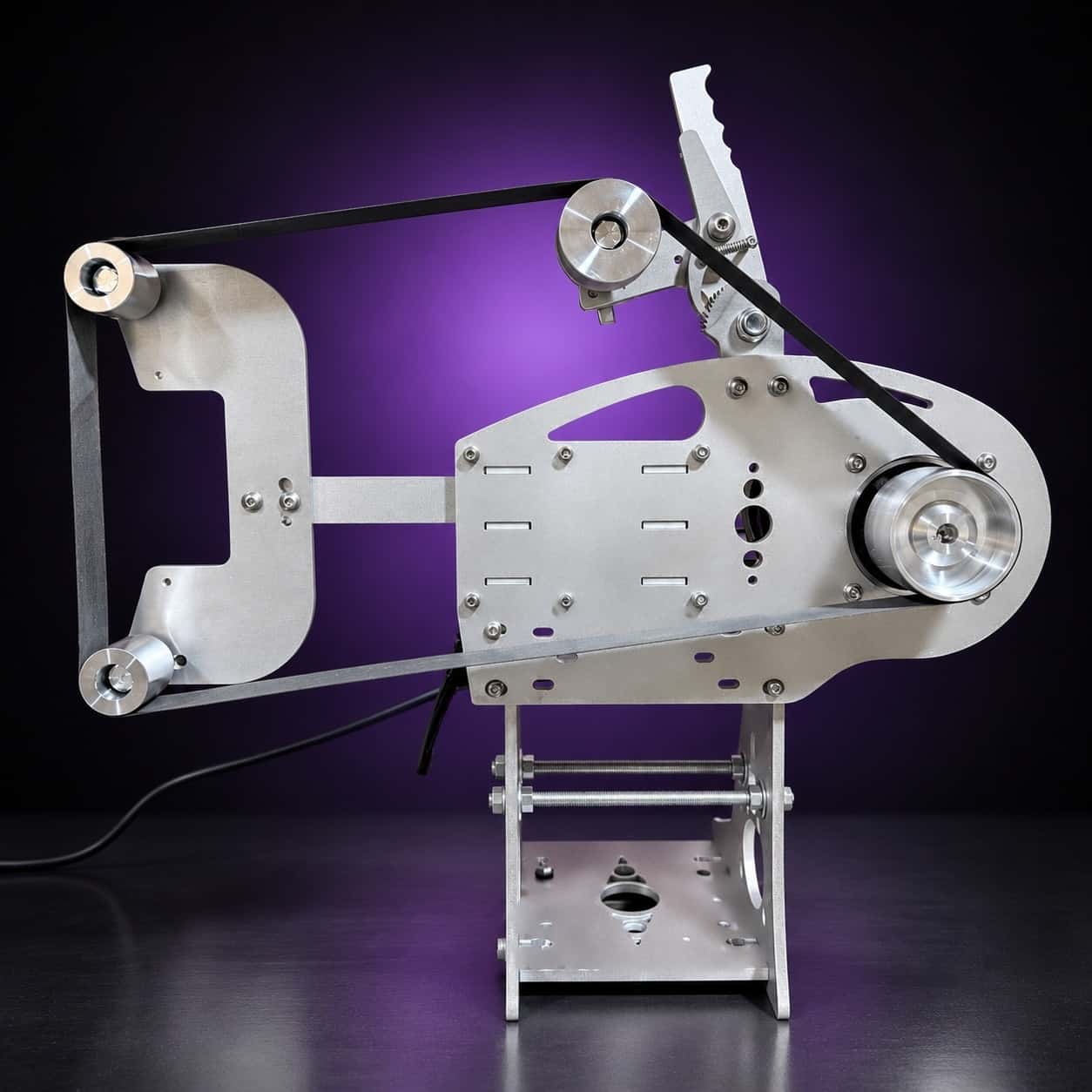
Current dual-axis platform with a fiber-laser-cut 6061 chassis and single-knob tracking.
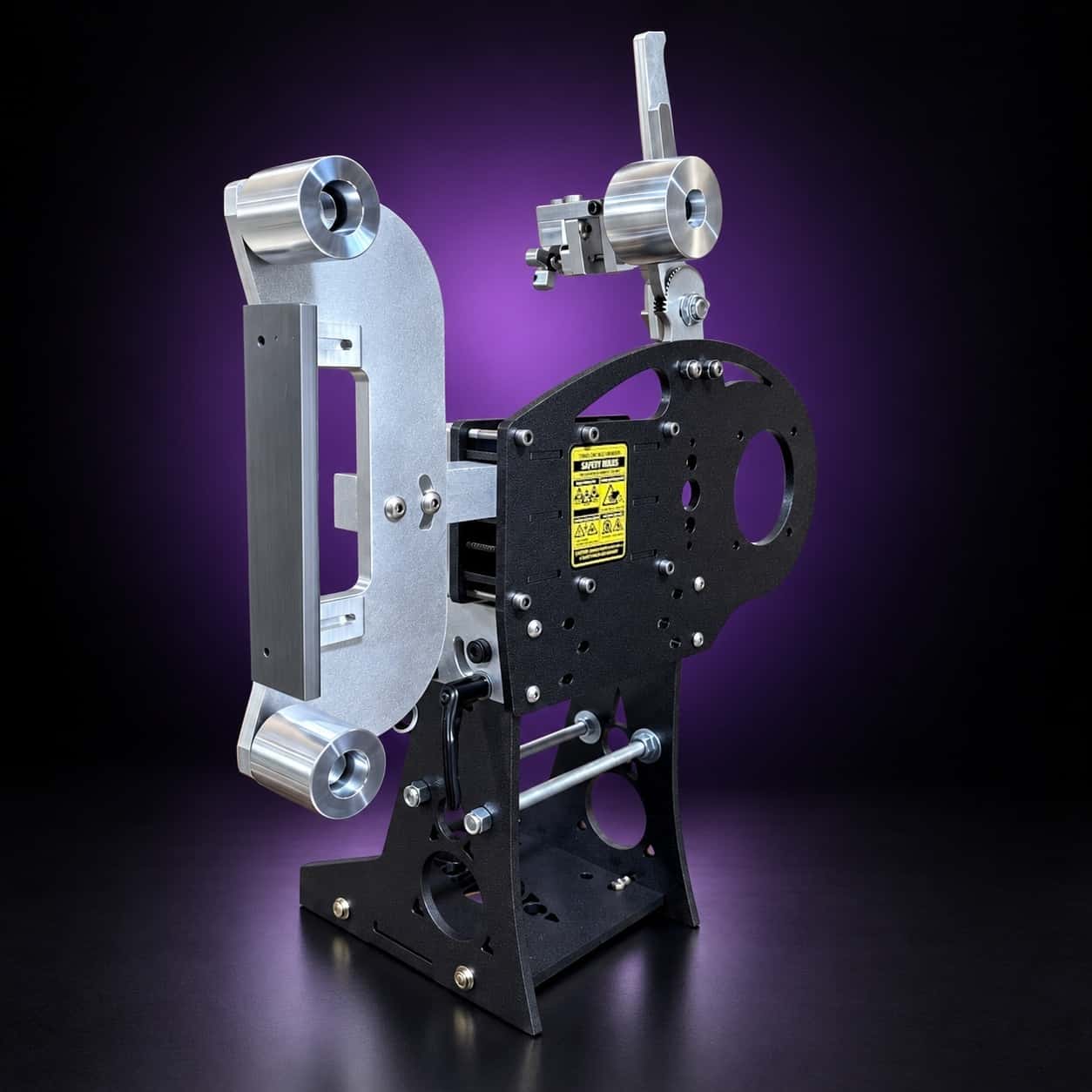
Current dual-axis platform with a steel chassis, more mass and less vibration.
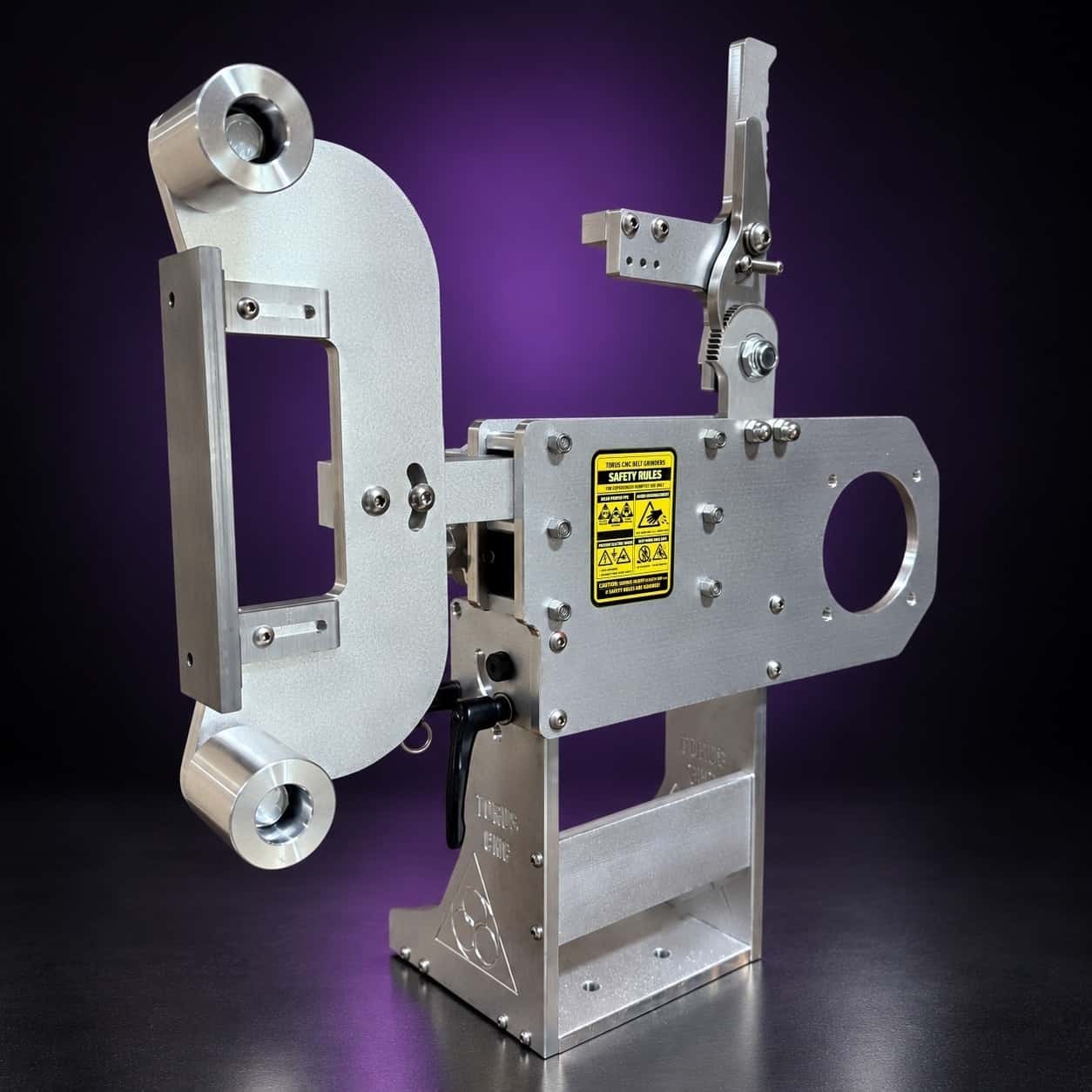
Prior-design aluminum chassis, 90-degree tilt and 1.5-inch tooling arms.
One-man shop
Tell me what the blade is for and how you heat treat, and I will tell you which of these I would put on the bench — including when the answer is neither.