
A high-carbide, semi-stainless tool steel known for excellent wear resistance and low heat-treat distortion, at the cost of toughness and ease of sharpening.
- Toughness
- 2
- Edge retention
- 4
- Corrosion resistance
- 2
- Ease of grinding
- 2
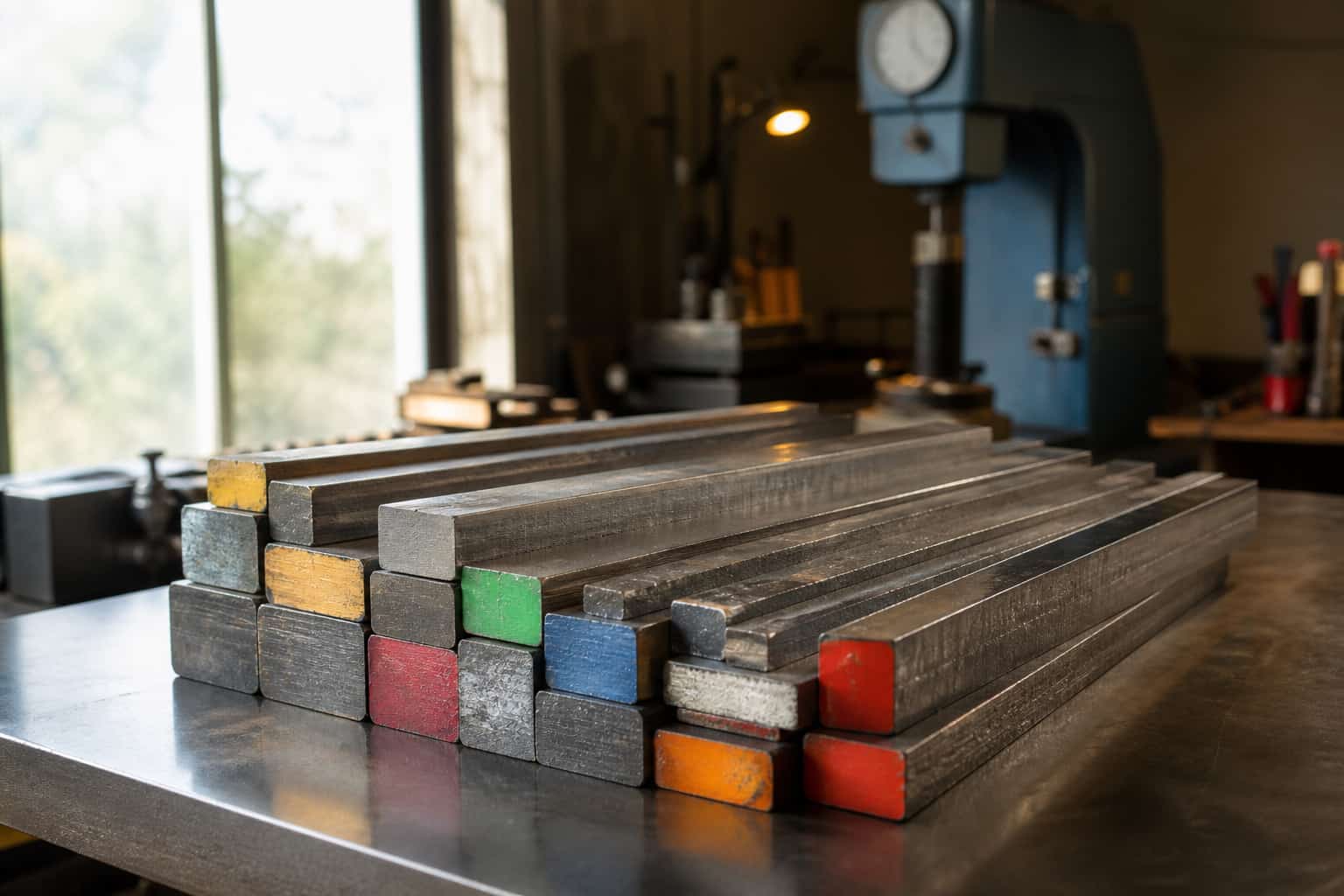
Steel matchup
D2 and CPM 154, compared on the five things that decide a blade: toughness, edge retention, corrosion, heat treat and how each one grinds.
A high-carbide, semi-stainless tool steel known for excellent wear resistance and low heat-treat distortion, at the cost of toughness and ease of sharpening.
The powder-metallurgy remake of 154CM: a well-rounded stainless steel known for easy grinding and finishing, solid edge retention, and dependable toughness for a stainless tool steel.
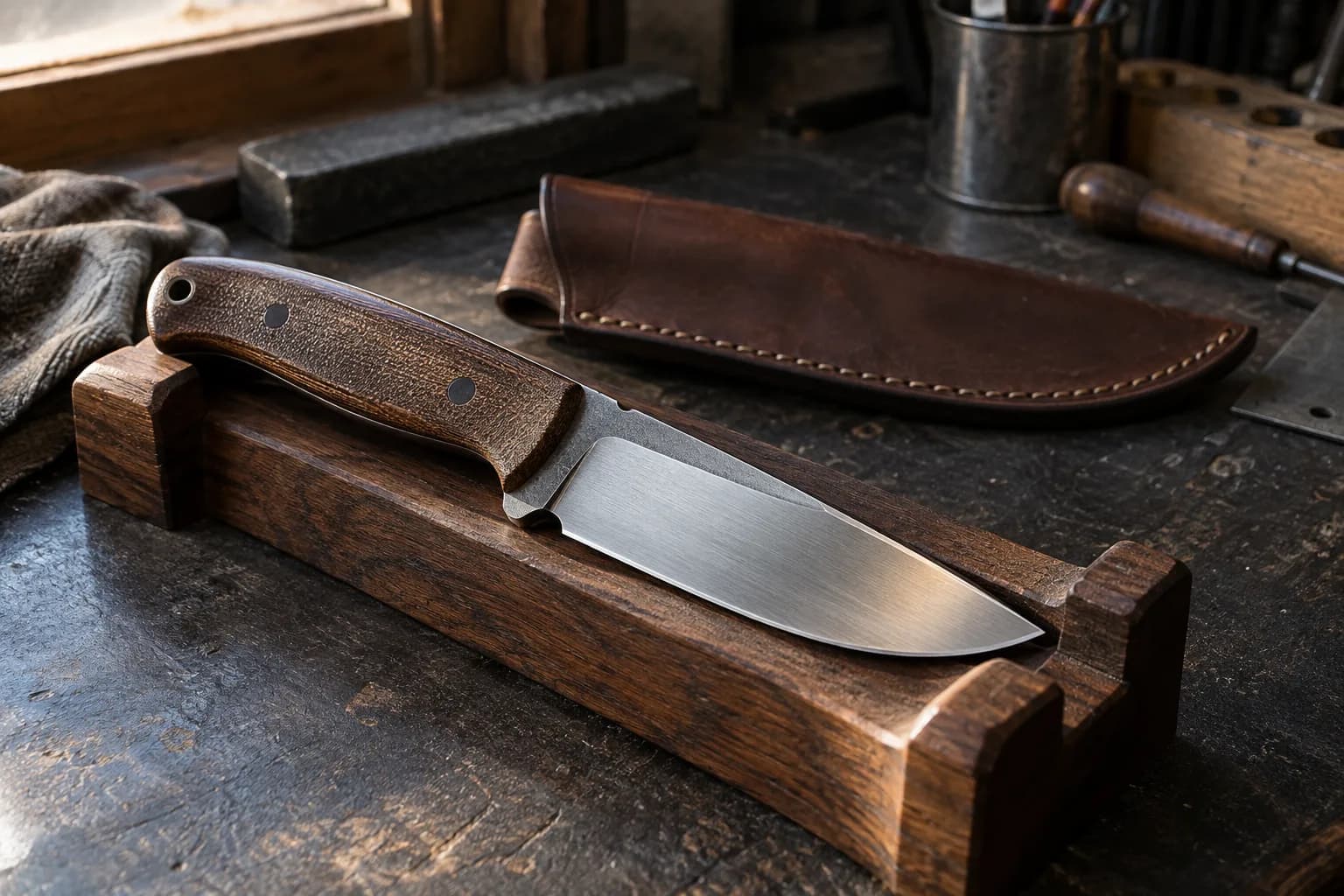
Dimension by dimension
Each steel's own note, its score out of five, and what separates the two in that one column. The higher score in a row is marked in purple.
| Dimension | D2 | CPM 154 | What separates them |
|---|---|---|---|
| Toughness | The weak point of D2: its heavy carbide volume makes it more prone to chipping than most modern powder-metallurgy steels, and it has a reputation for being harder to sharpen back to a clean edge after damage. | Solid for a stainless tool steel and a clear step up from conventional 154CM thanks to its finer PM carbide structure, though it trails newer higher-alloy steels like S35VN or MagnaCut in outright toughness. | CPM 154 is meaningfully tougher. D2's heavy carbide volume makes it more prone to chipping, a well-known tradeoff for its wear resistance. |
| Edge retention | Very good wear resistance thanks to a large volume of chromium and vanadium carbides, a big part of why it remained popular for decades before newer powder-metallurgy steels became common. | Better edge retention and chipping resistance than 440C, and a dependable middle-of-the-pack performer among modern stainless steels. Not a high-vanadium wear-resistance leader, but very well balanced. | D2 holds an edge here thanks to its very heavy chromium and vanadium carbide load, giving it real wear-resistance advantages over CPM 154's more moderate carbide content. |
| Corrosion resistance | Chromium sits right at the edge of the stainless threshold, giving it noticeably better rust resistance than plain tool steels, but it will still spot or stain without regular care, unlike true stainless steels. | A true stainless steel with 14% chromium, giving it strong, dependable corrosion resistance suitable for kitchen, EDC, and outdoor use with normal care. | CPM 154 is clearly ahead. D2 sits right at the edge of the stainless threshold and will still spot or stain without care, while CPM 154 offers genuinely good, dependable stainless performance. |
| Heat treat | Preheat at 450-500 C (842-932 F), equalize, then raise to a second preheat of 850-900 C (1560-1650 F). Austenitize at 1850-1900 F, holding 30-45 minutes for the first inch of thickness plus 15 minutes per additional inch. D2 is air-hardening, so quench in still air, which keeps distortion low. Temper between 300 and 500 F depending on the goal: 300-350 F favors maximum wear resistance (62-64 Rc), while 500-550 F gives a better balance of wear resistance and toughness (58-60 Rc). | Austenitize in the 1900-2000 F range, with 1950 F commonly cited as a toughness sweet spot; hold 30-60 minutes, then oil or plate quench. Temper twice, 2 hours minimum each cycle, aiming for 59-61 HRC for knife use (overall aim-hardness range is 55-62 HRC depending on application). Avoid tempering in the 800-1100 F range, which causes sensitization and reduces both corrosion resistance and toughness. A dry-ice freeze treatment after quench or between tempers helps fully transform retained austenite. | D2 is air-hardening, which keeps distortion low, but requires a longer soak and more careful temperature control. CPM 154 uses a more standard oil-quench stainless recipe and is generally considered more forgiving overall. |
| Grinding | Hard on belts due to its heavy carbide load; grinds and sharpens more slowly than simpler carbon or basic stainless steels. | One of CPM 154's signature strengths: it grinds and finishes noticeably easier than most modern stainless PM steels, which is part of why it remains popular with custom makers who hand-finish blades. | CPM 154 is significantly easier to grind and sharpen. D2's heavy carbide load makes it one of the more demanding steels in this database to bring back to a clean edge. |
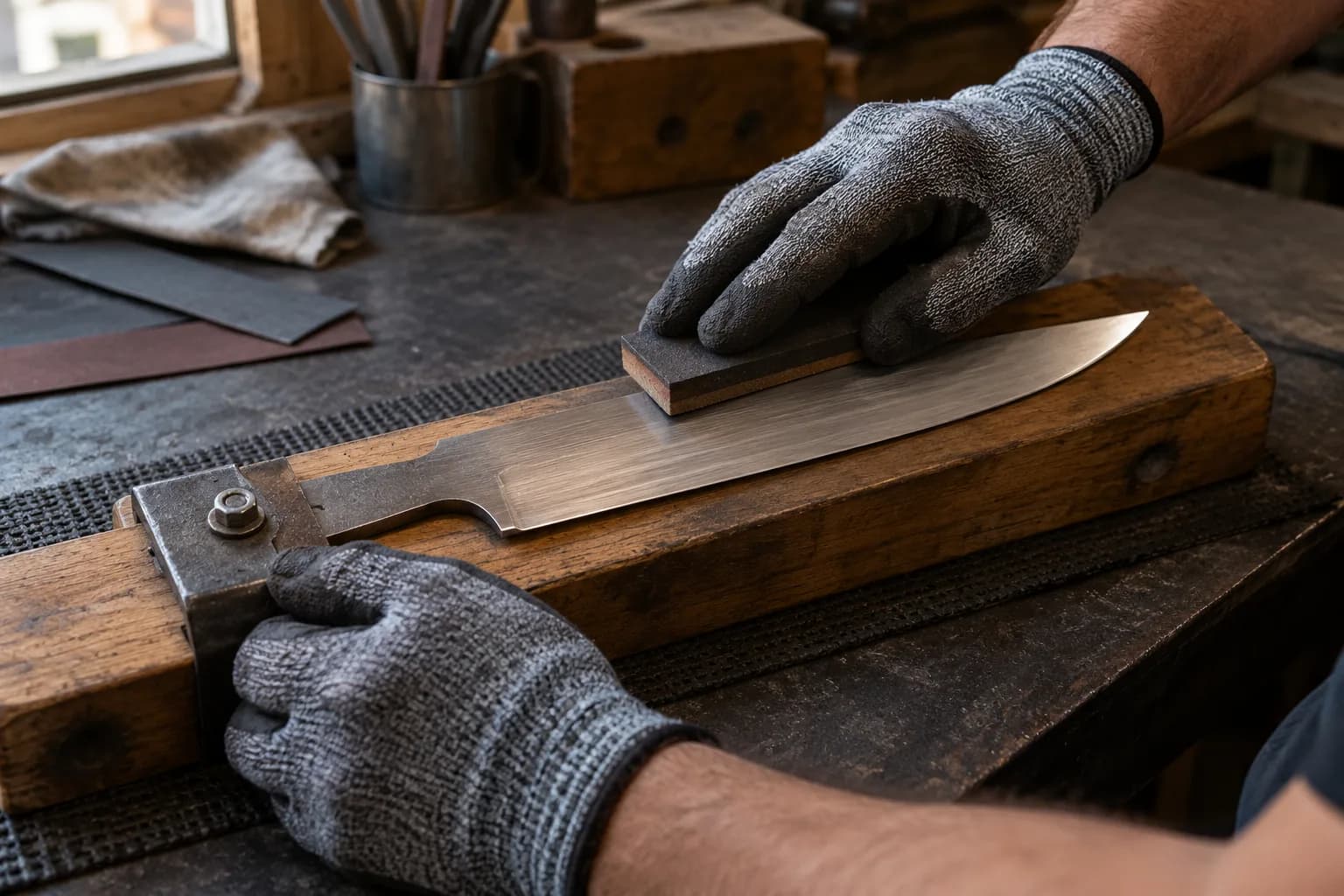
Best use
D2
Choose D2 for hunting or kitchen knives where strong wear resistance and low heat-treat distortion matter more than rust resistance or easy sharpening.
Open the D2 referenceCPM 154
Choose CPM 154 for a more dependable, easier-to-maintain all-around stainless steel with a long, proven production track record.
Open the CPM 154 reference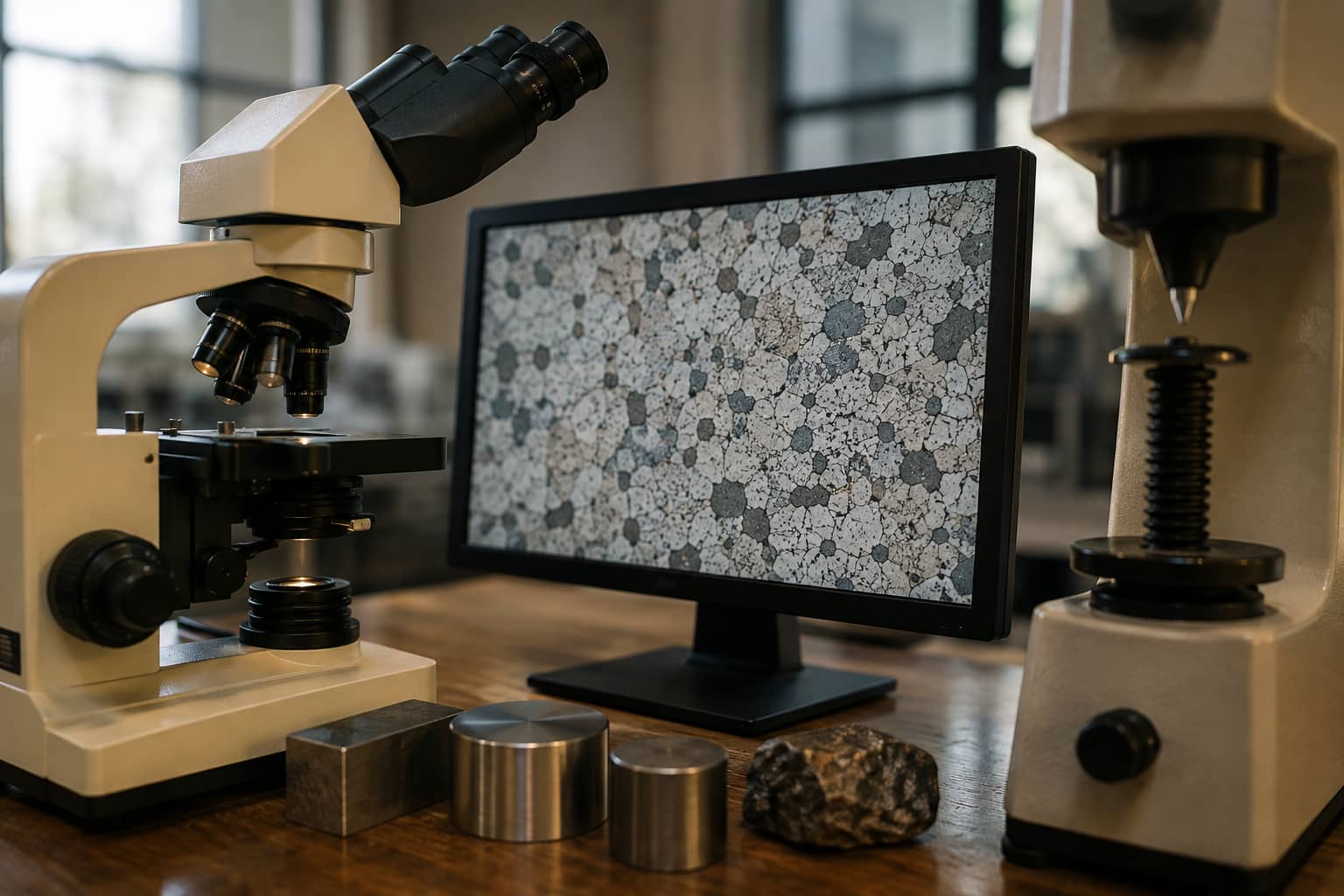
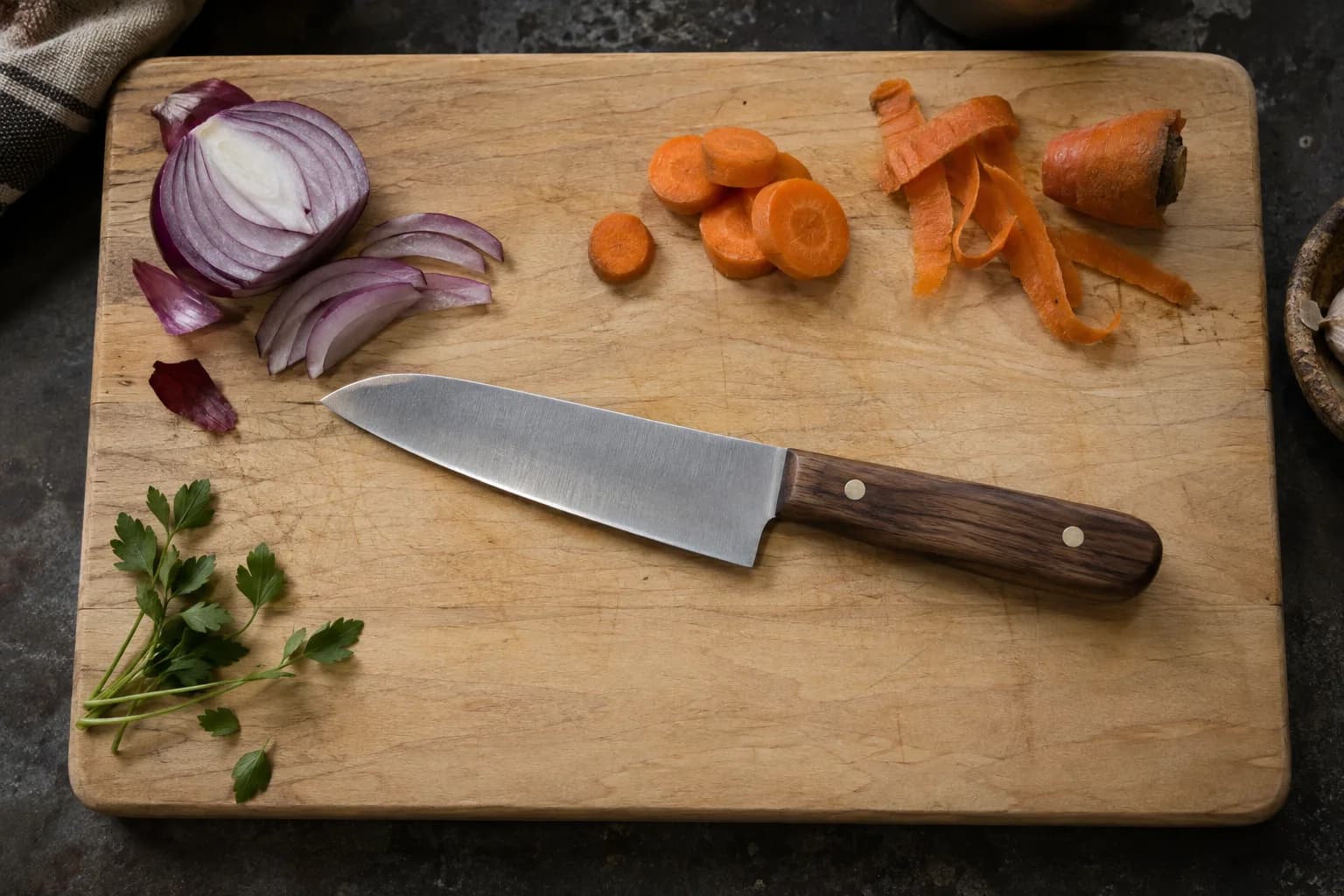
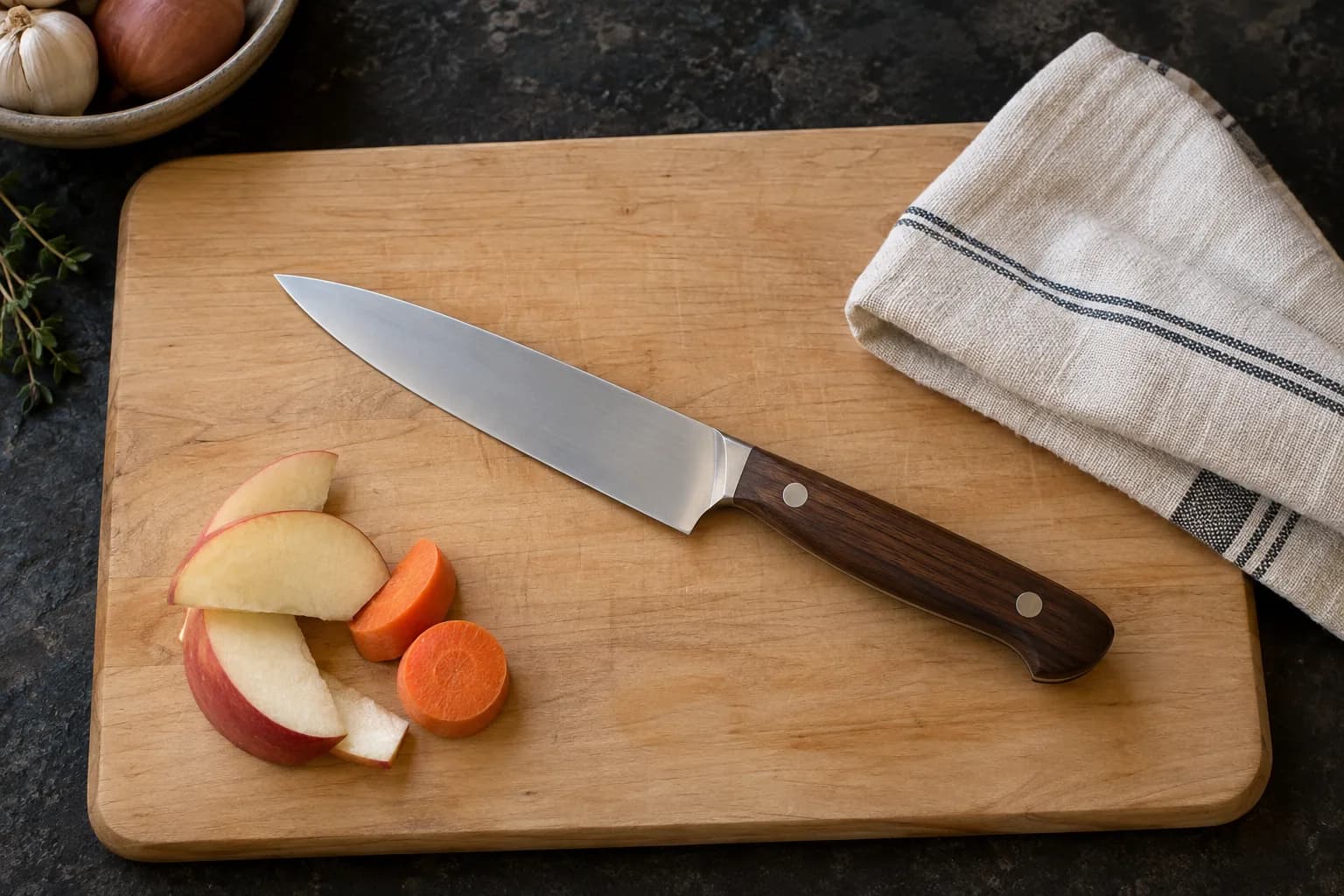
The long answer
D2 and CPM 154 represent two very different eras and philosophies of knife steel. D2 is a semi-stainless tool steel built for industrial wear resistance long before knifemaking-specific alloys existed, while CPM 154 is a purpose-refined, fully stainless powder-metallurgy steel designed from the start for cutlery.
Keep comparing
Keep reading
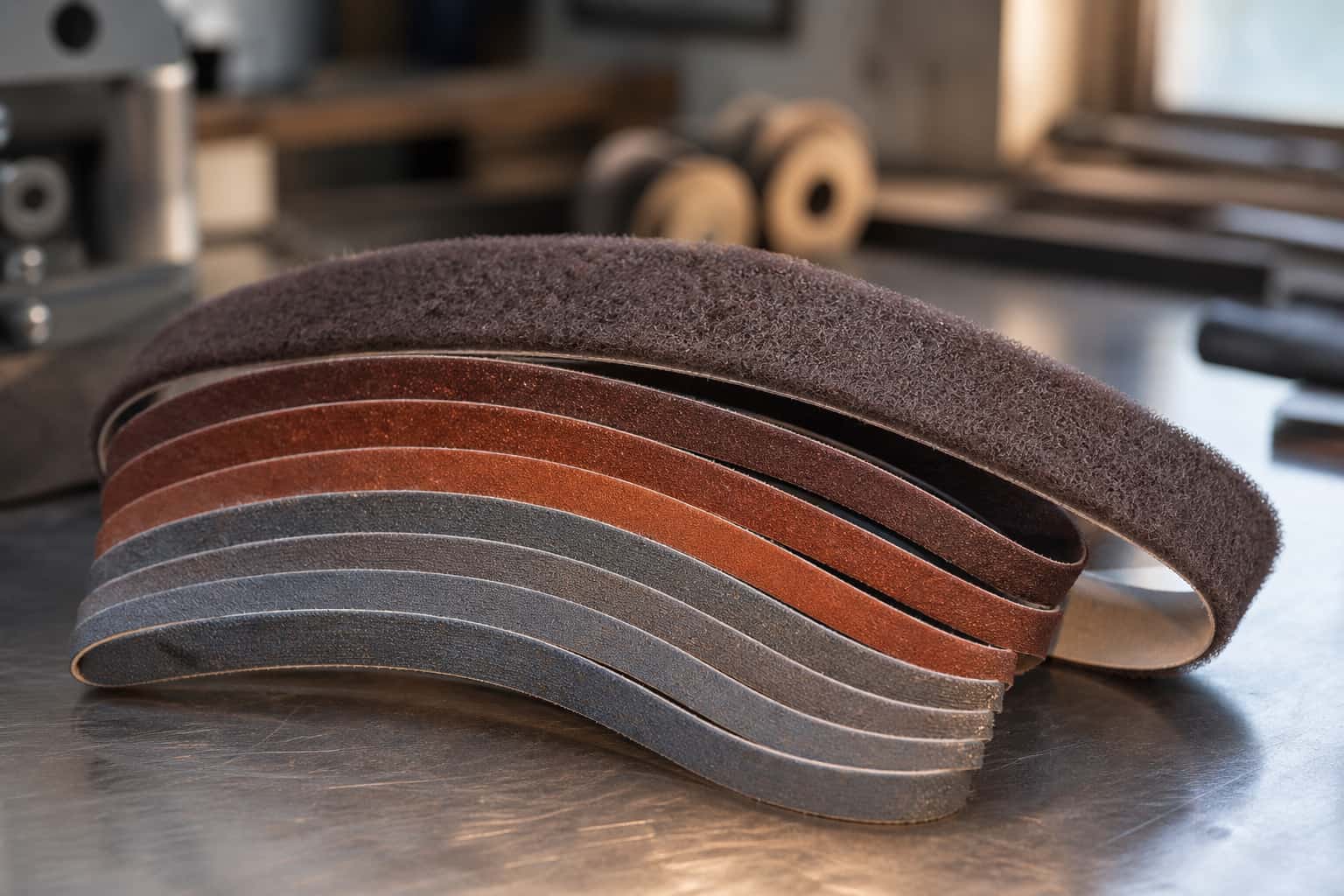
CPM 154 grinds and finishes easily, inheriting the same forgiving character as its conventionally-melted twin, 154CM, while the powder-metallurgy process…
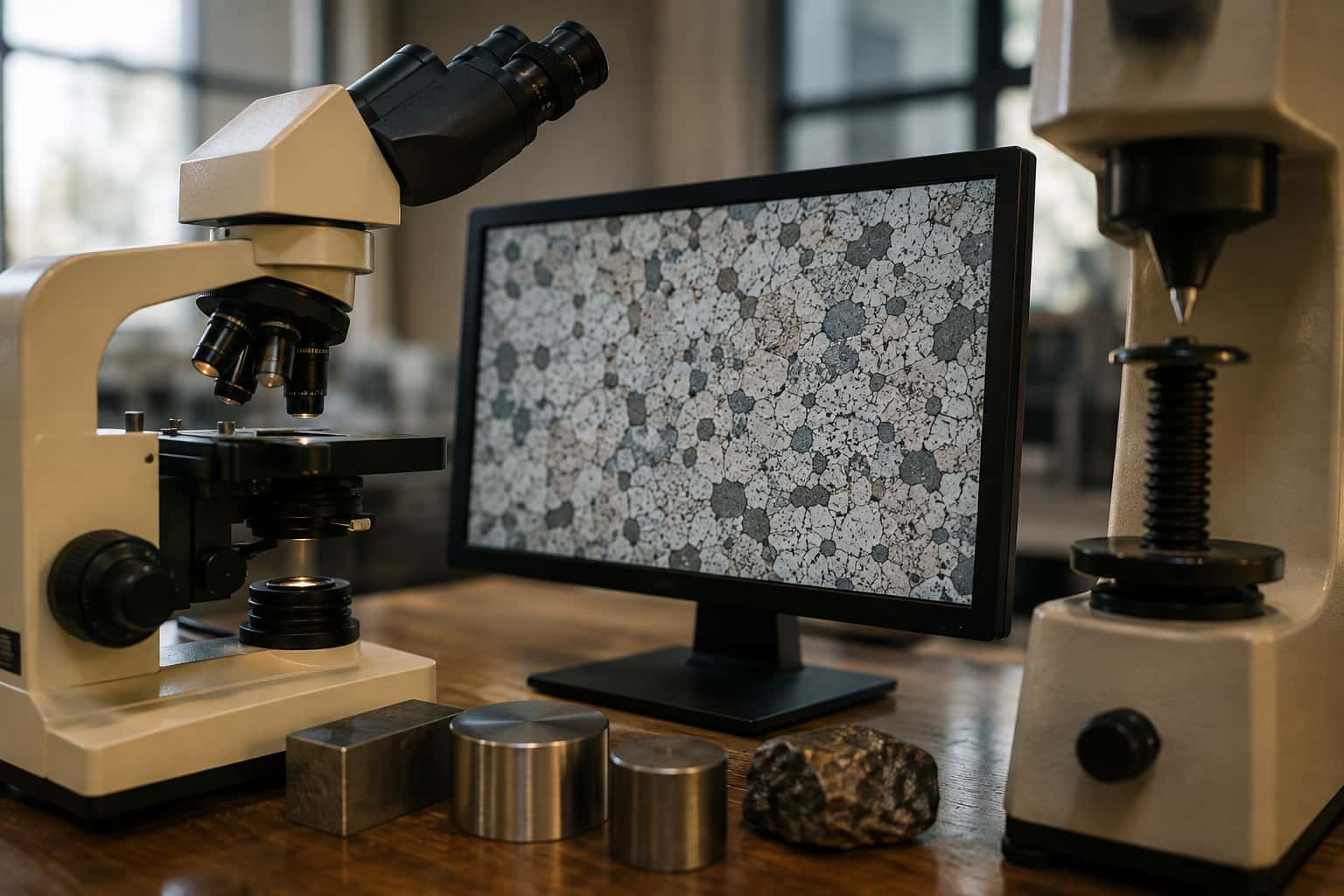
D2’s heavy chromium and vanadium carbide load, the same feature that gives it excellent wear resistance, makes it one of the more demanding tool steels to…
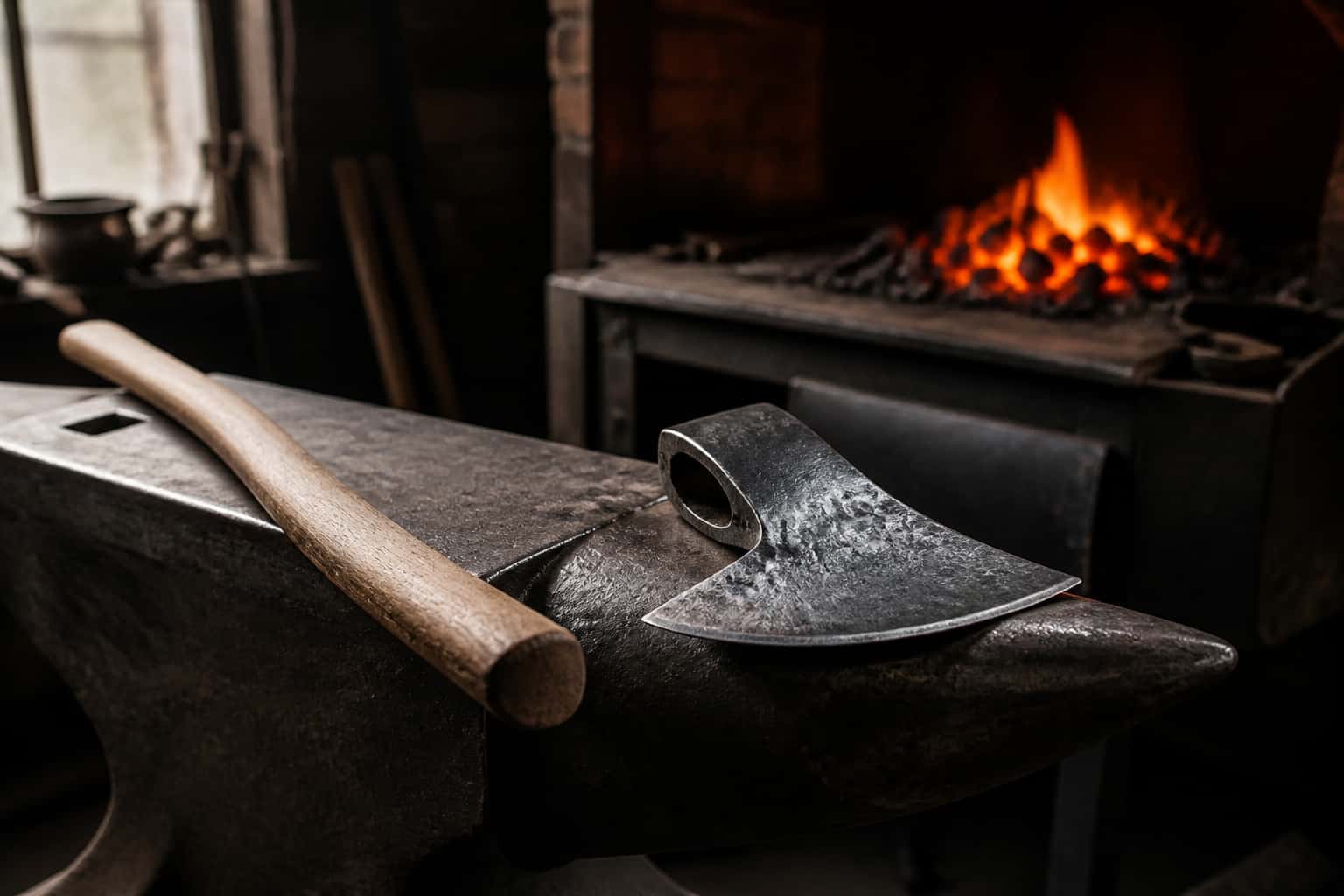
Every knife steel is iron plus a specific recipe of other elements, and each of those elements pulls the steel’s behavior in a particular direction…
Same bench
Whichever steel wins, the grind is only as flat as the platen behind it. I machine the parts, hand-assemble, track and test Torus grinders in Sterling, Illinois.
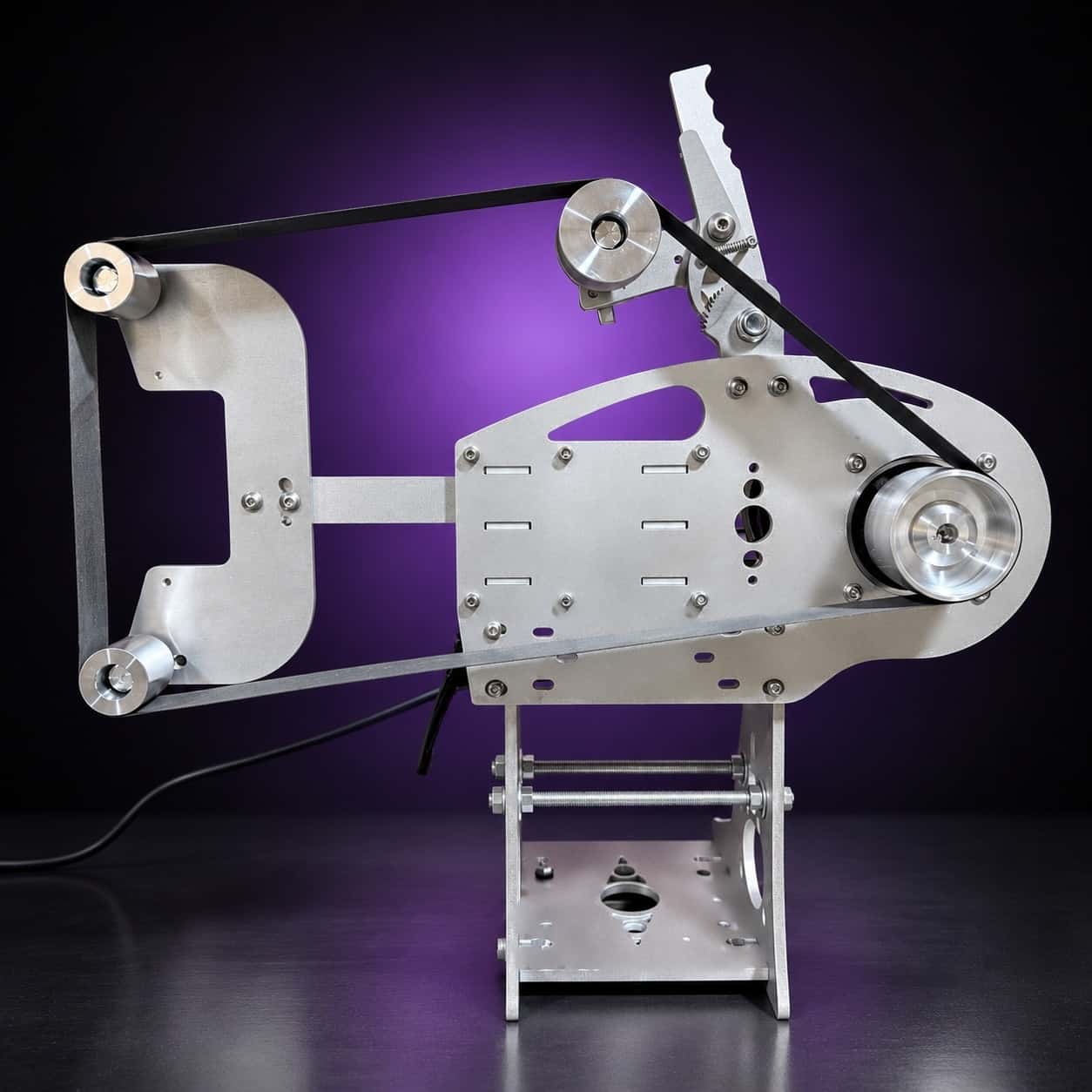
Current dual-axis platform with a fiber-laser-cut 6061 chassis and single-knob tracking.
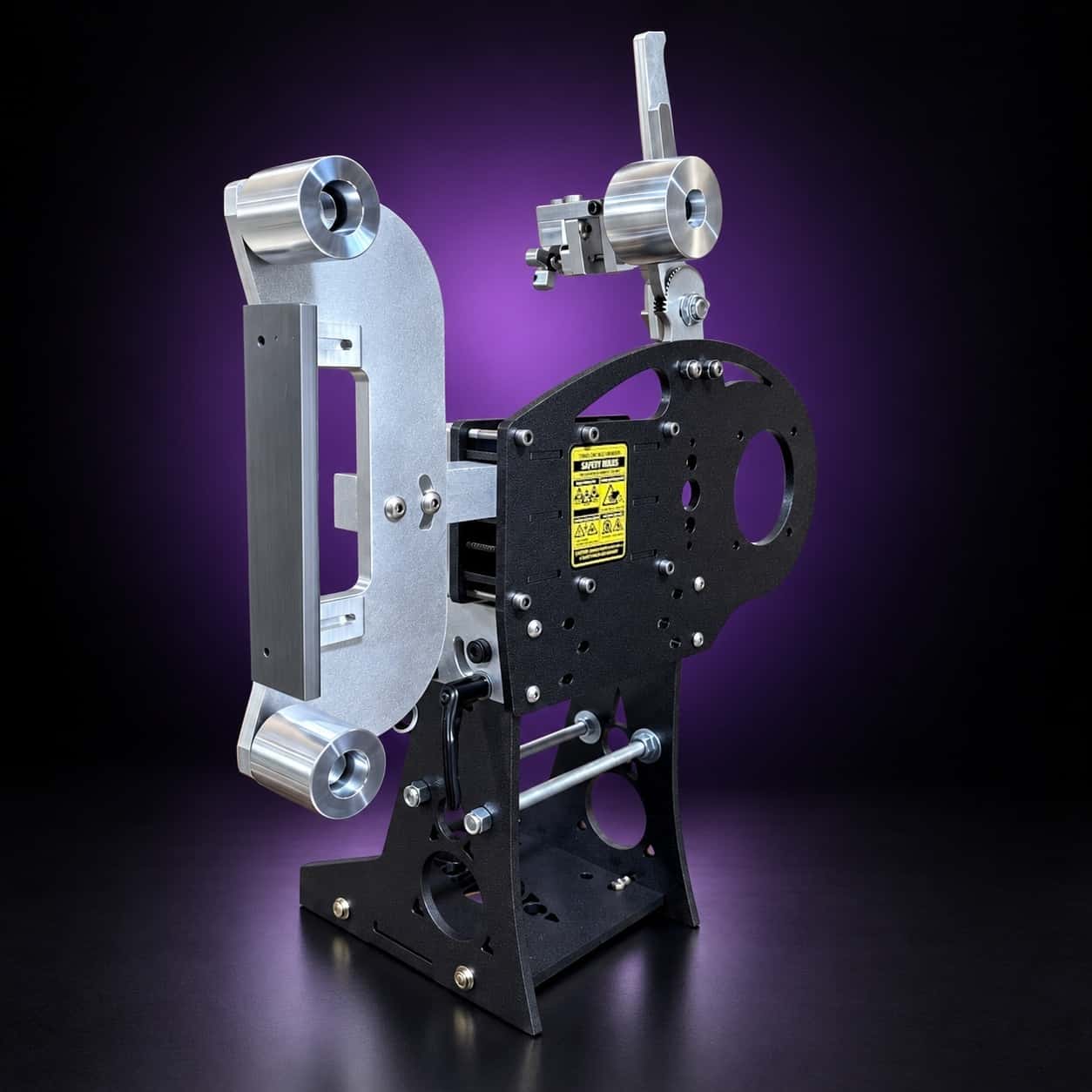
Current dual-axis platform with a steel chassis, more mass and less vibration.
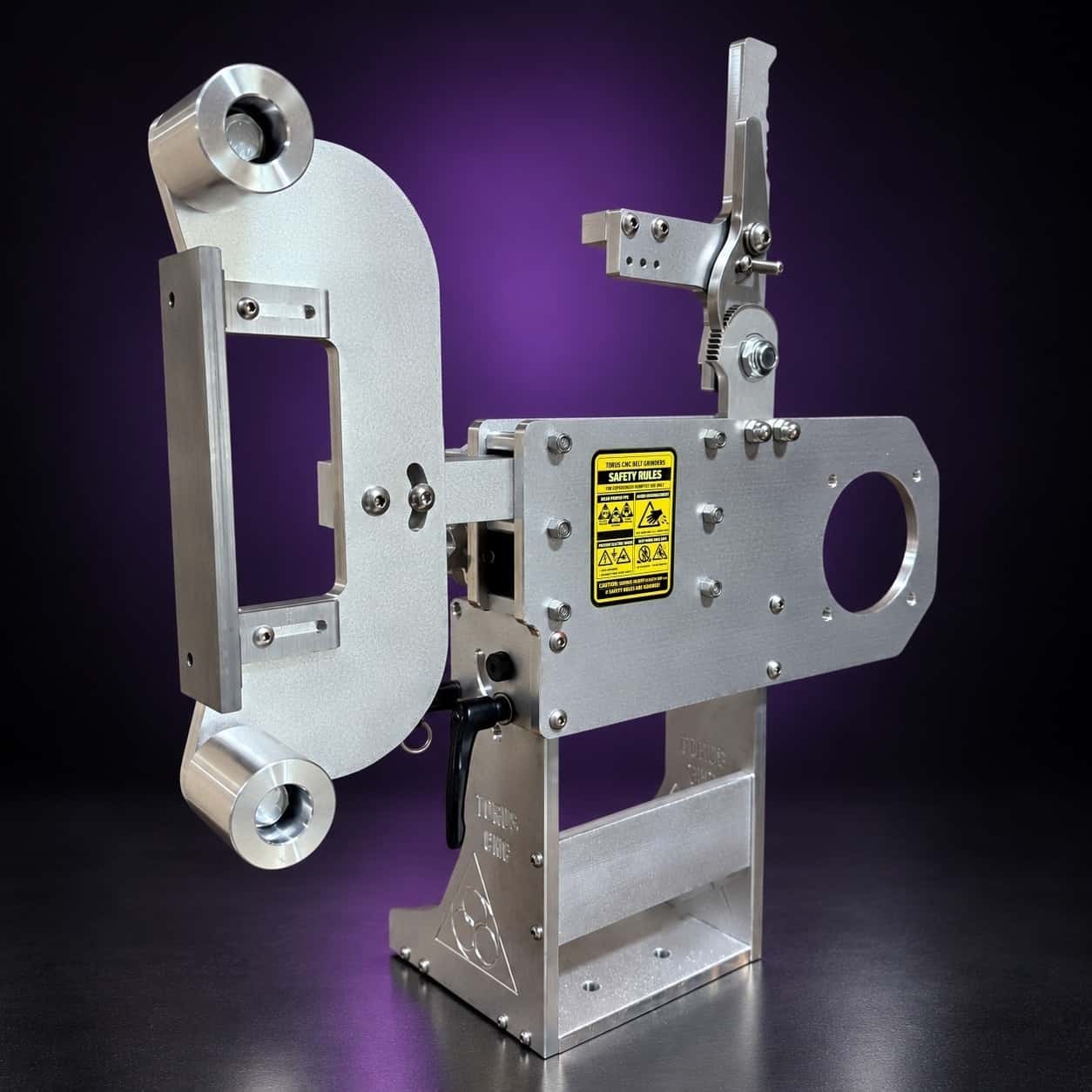
Prior-design aluminum chassis, 90-degree tilt and 1.5-inch tooling arms.
One-man shop
Tell me what the blade is for and how you heat treat, and I will tell you which of these I would put on the bench — including when the answer is neither.