
Abrasives
Belt Buyer’s Guide: Which Abrasives to Actually Buy
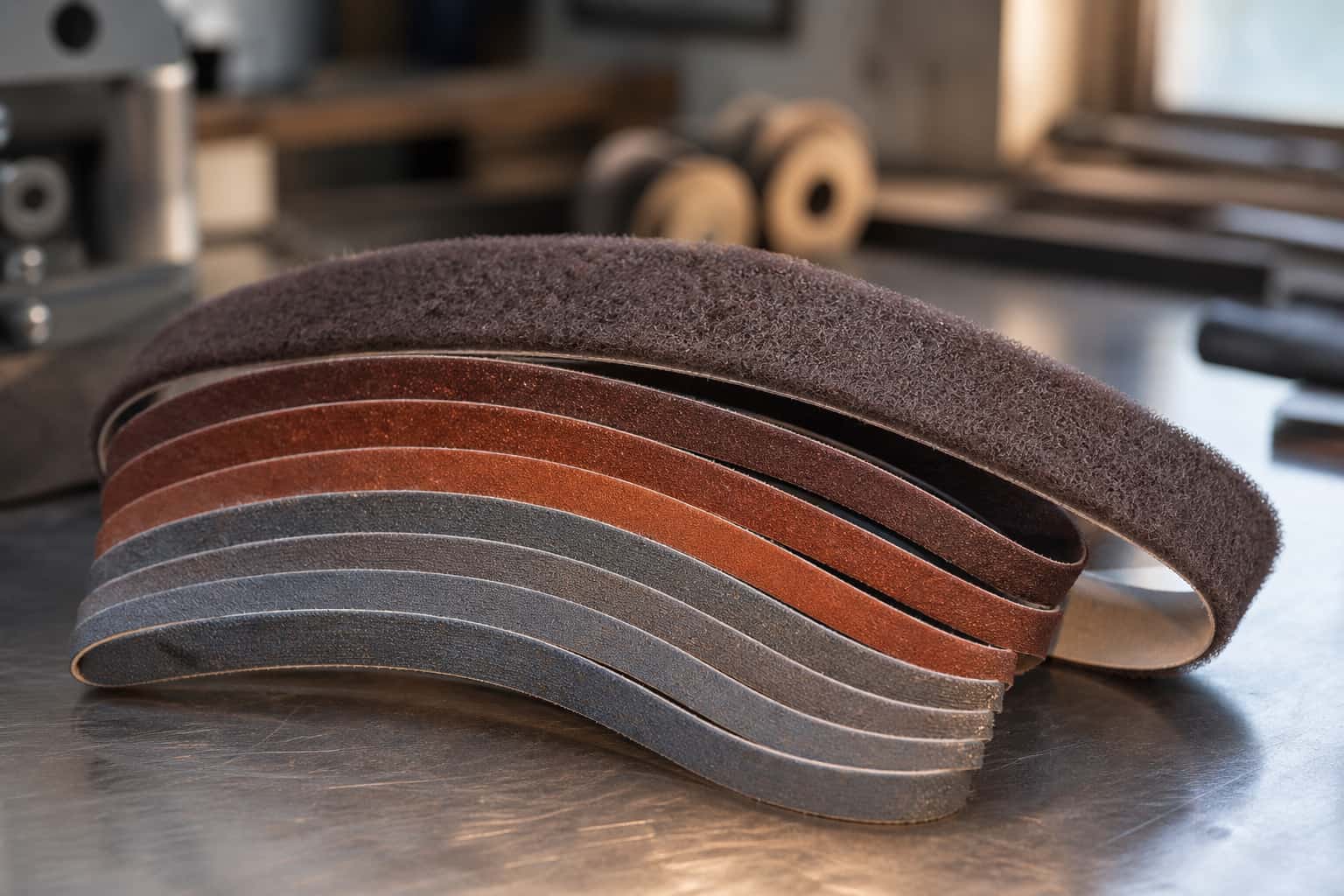
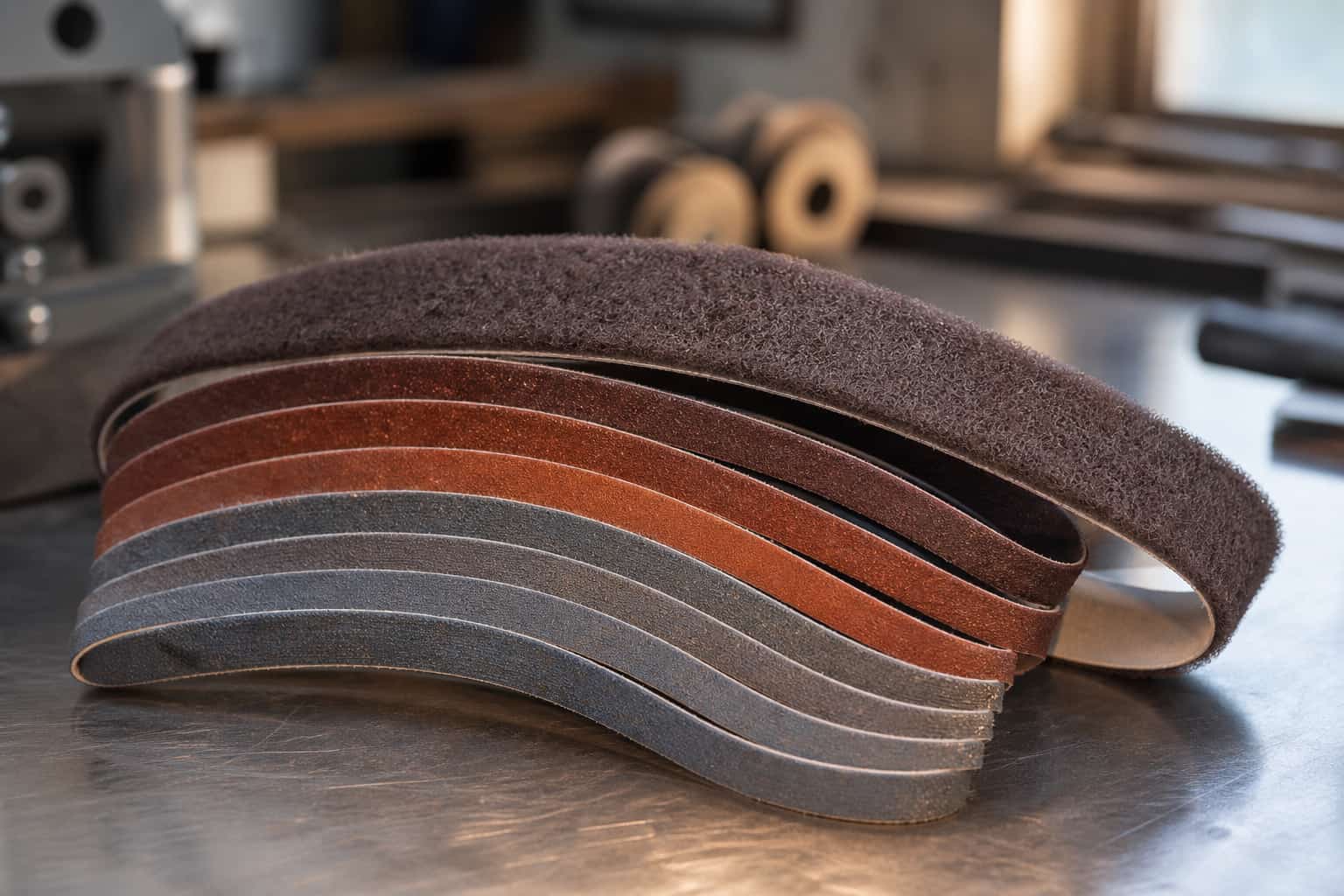
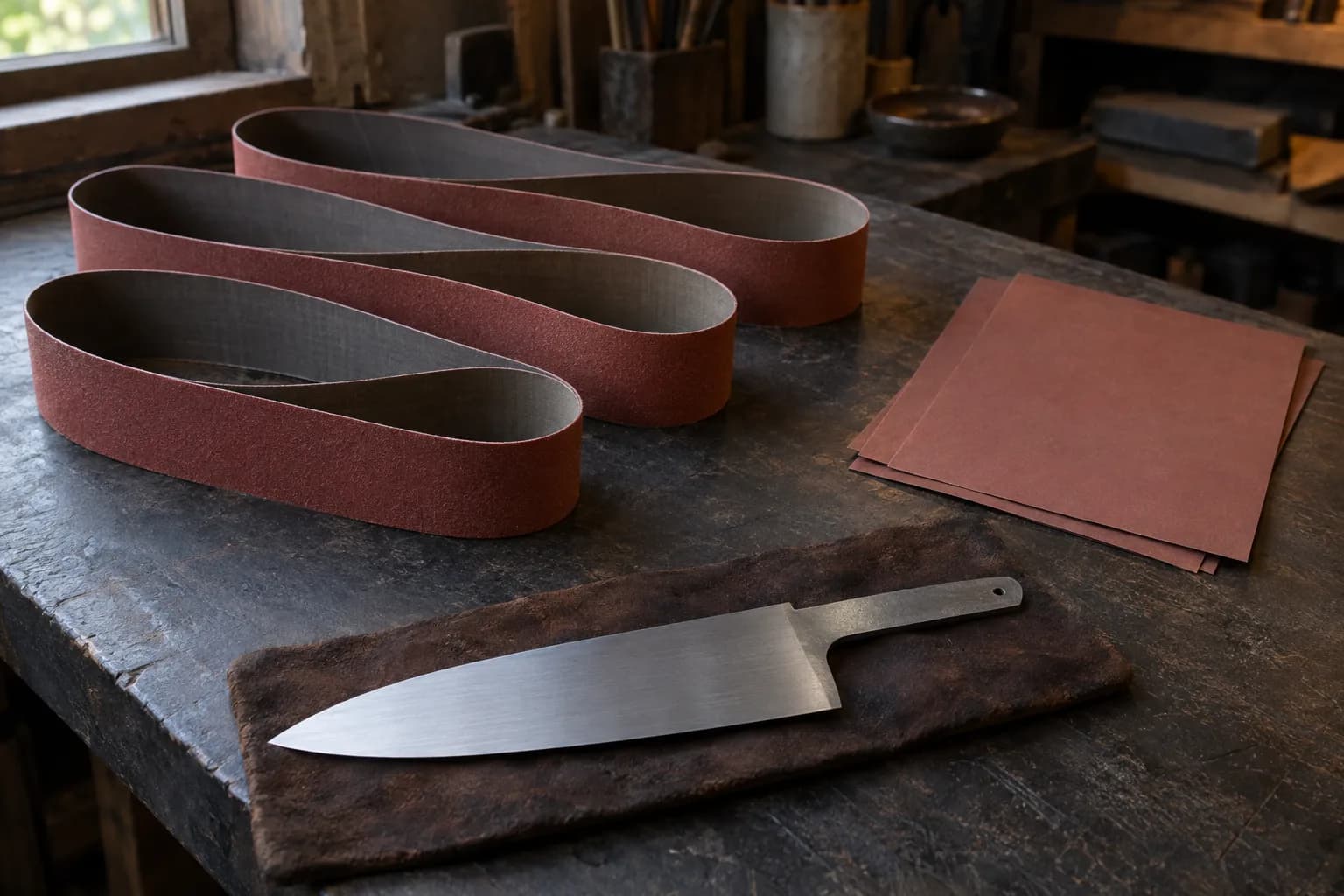
Belts are the single biggest recurring cost in this hobby, and buying the wrong ones wastes money twice: once on belts that wear out fast, and again on…
Abrasives
ApexUltra at 64-67 HRC grinds like a stubborn 52100: feather passes and constant dunks to protect the temper, then a diamond-assisted routine at the bench.
1 min readWritten by Rich LinvilleFree to read
ApexUltra sits deliberately between worlds, and the shop experience matches: harder work than the classic carbon steels it forges like, far friendlier than the powder stainless class it cuts like. The tungsten that buys its wear resistance collects a modest tax at every abrasive step — pay it with sharp consumables and cool habits.
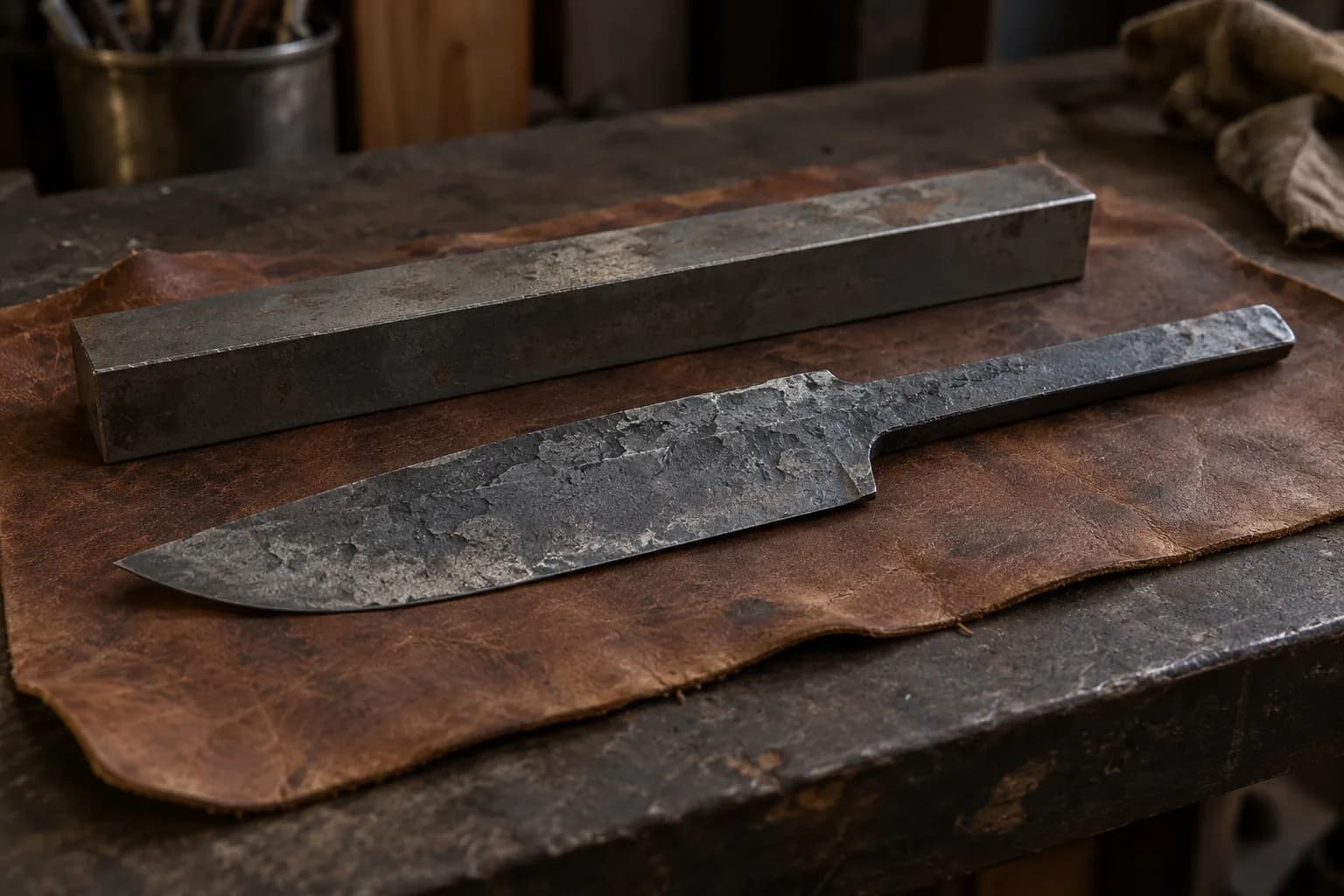
Fresh ceramic belts make annealed ApexUltra feel like slightly stubborn 52100; worn belts make it feel like punishment — the carbides decide which shop you run. Hog annealed as always. Post-heat-treat is the real discipline: at 64-67 HRC, edges are thin, hard and expensive — sharp 120-220 ceramics, feather pressure, dunk cadence like a metronome. A blued ApexUltra edge hurts three ways: the temper, the re-treat, and the bar price. Finishing: it hand-sands well for a carbide steel and takes a handsome satin; hamon is not its game (that is W2 and 26C3 territory) but a clean etch shows a quiet quench line on differentially treated blades.
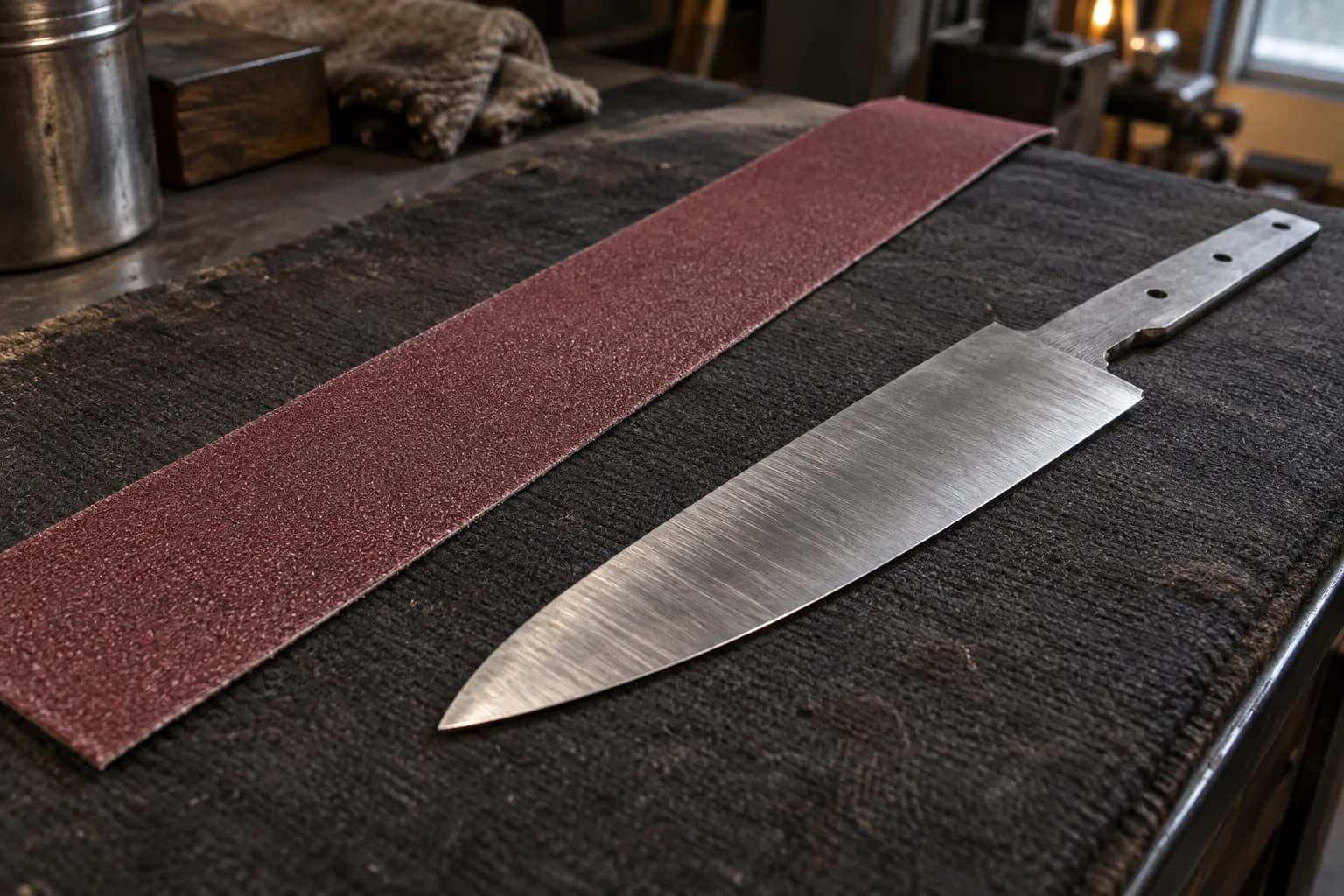
Good stones work; diamonds work better. The tungsten/vanadium carbide load is low enough that quality waterstones cut it honestly — slower than 26C3, faster than any PM stainless — and a diamond progression simply makes the 65-HRC edge routine. Finish on a strop with fine compound: at this hardness the apex stabilizes beautifully and push-cut keenness holds. Angles: the whole point of the steel is running 10-14 dps kitchen edges at hardness that keeps them stable — grind the thin geometry it was engineered for, per the kitchen angle guide.
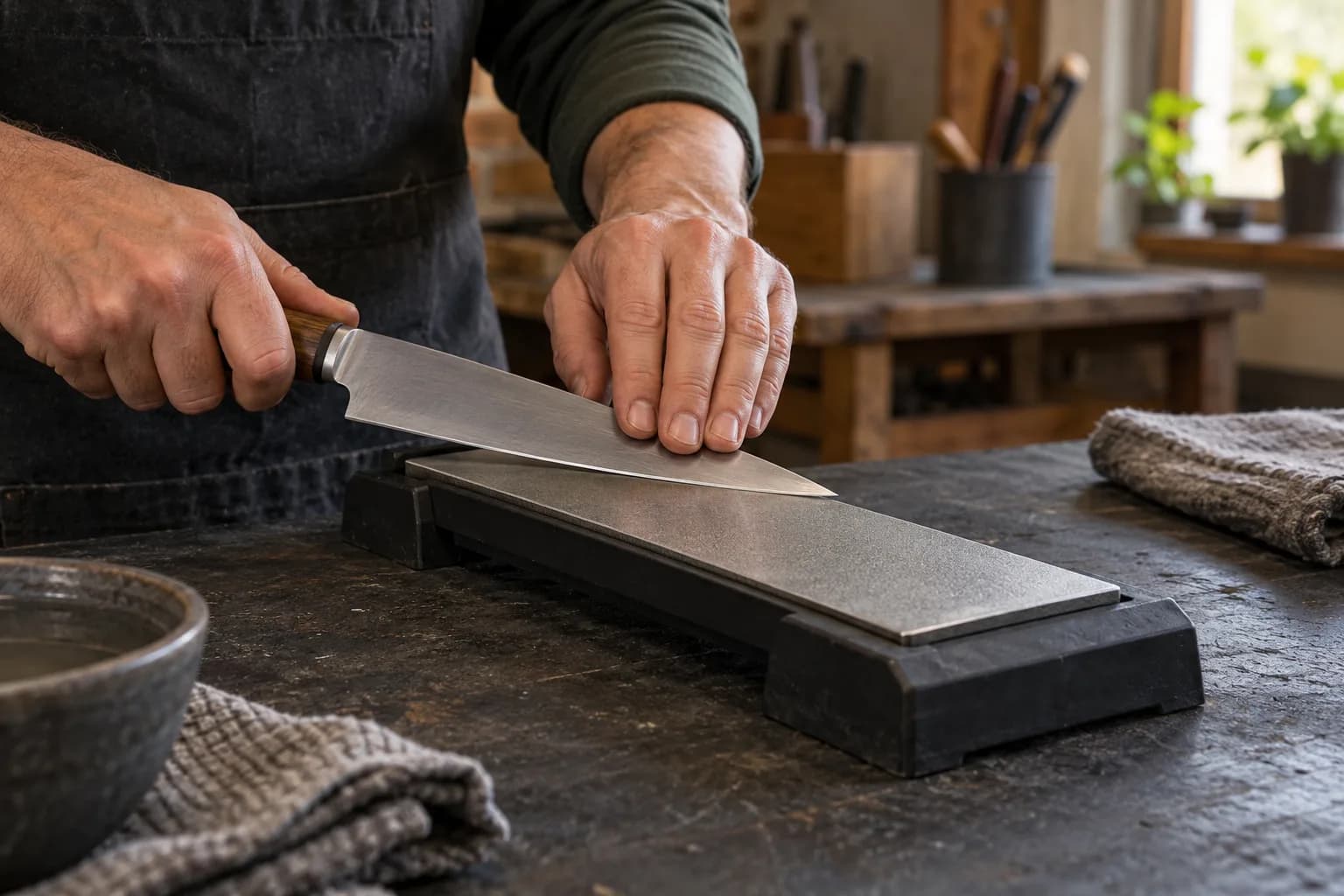
Budget roughly 1.5x classic-carbon shop time and premium belt consumption — then remember the finished blade’s spec sheet writes the listing. ApexUltra work is flagship work; the shop tax is part of the story the customer is buying.
Keep reading
Three more from the same bench.
Belts are the single biggest recurring cost in this hobby, and buying the wrong ones wastes money twice: once on belts that wear out fast, and again on…
Sharpening is where knifemaking gets humbled: you can grind a flawless blade and still hand someone a knife that won’t slice paper. The good news …
M390 earns its benchmark status at the cutting board and collects the bill in the shop: its vanadium and chromium carbides resist your abrasives exactly…
Same bench
I machine the parts, hand-assemble, track and test Torus grinders in Sterling, Illinois. Most orders ship in seven to ten business days from time of order.
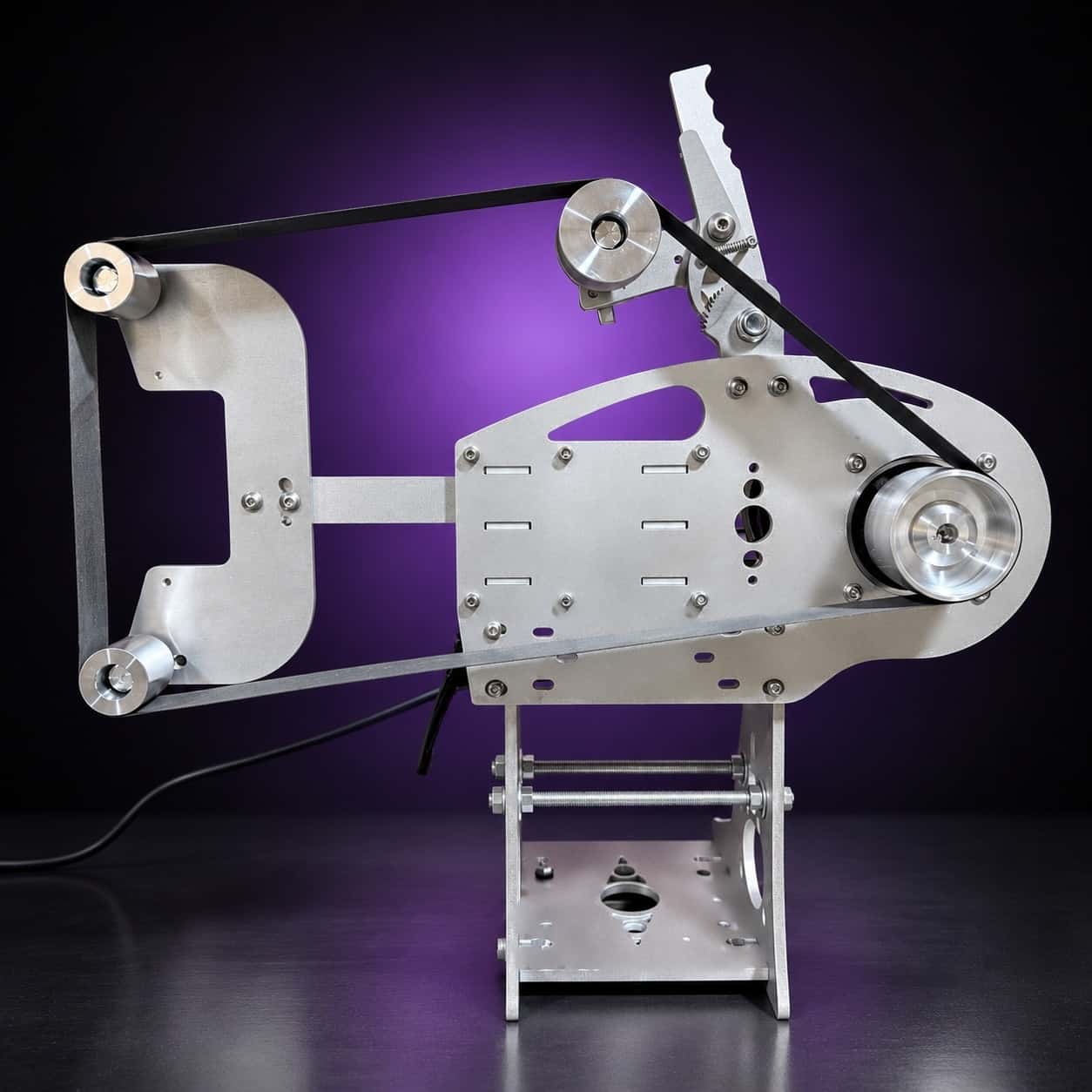
Current dual-axis platform with a fiber-laser-cut 6061 chassis and single-knob tracking.
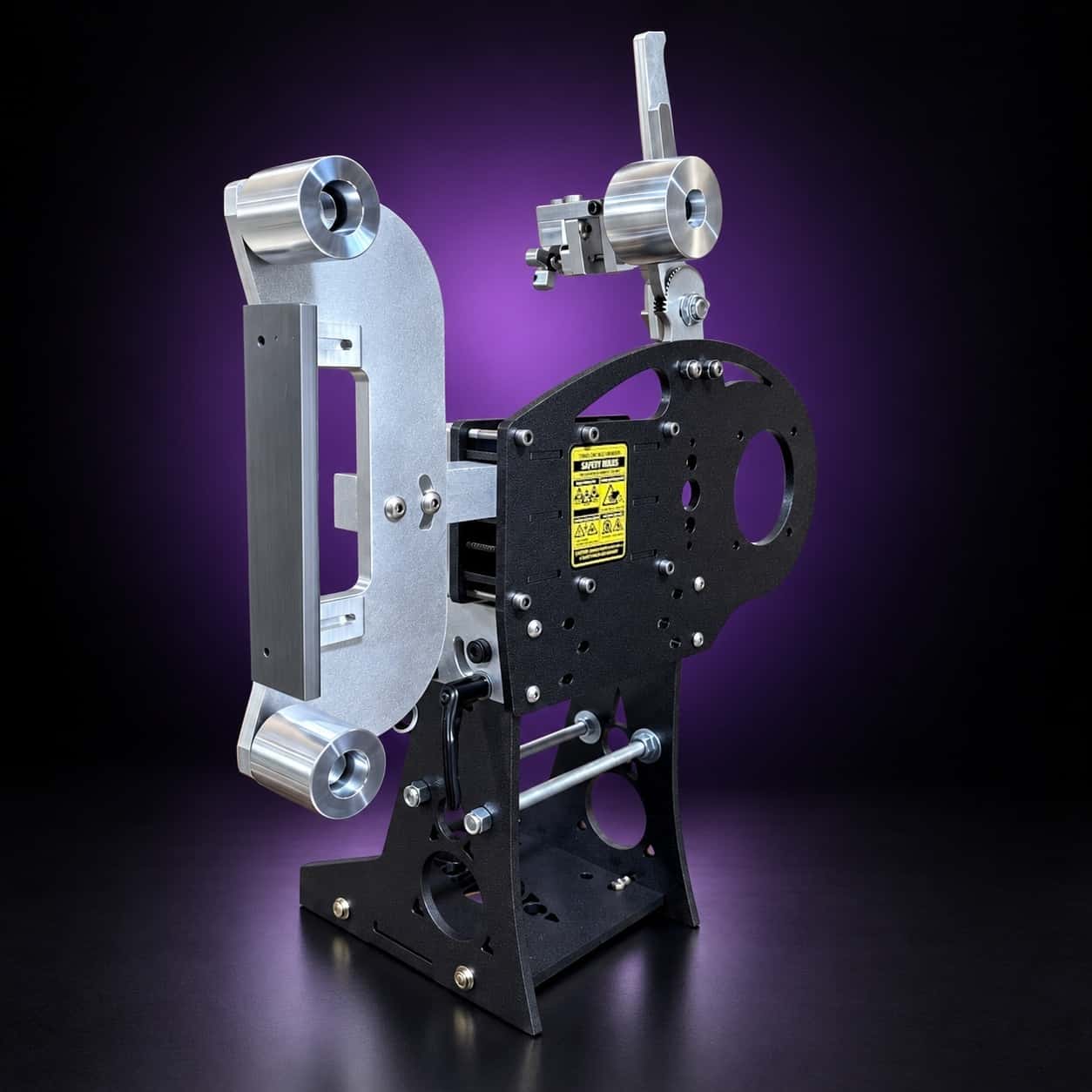
Current dual-axis platform with a steel chassis, more mass and less vibration.
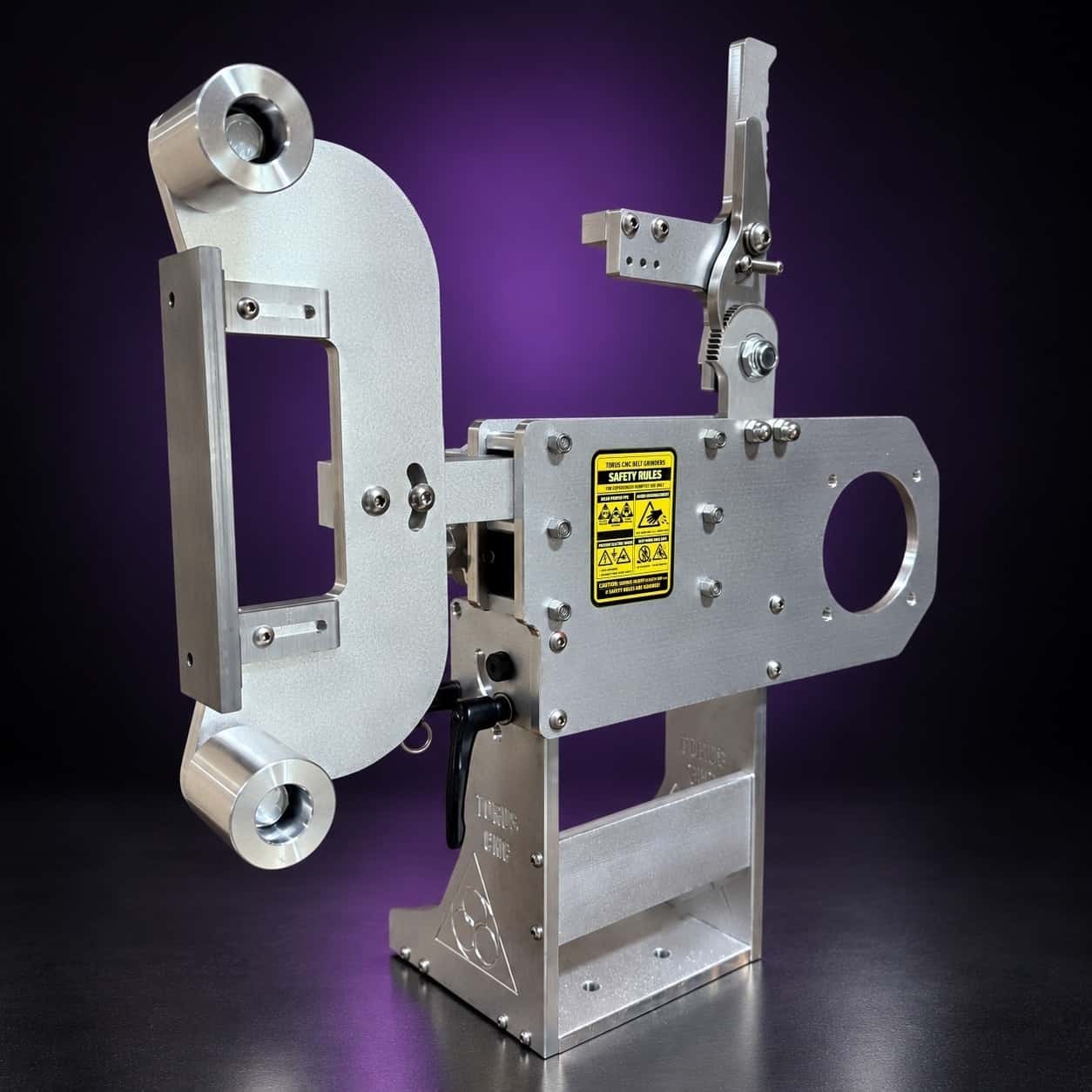
Prior-design aluminum chassis, 90-degree tilt and 1.5-inch tooling arms.
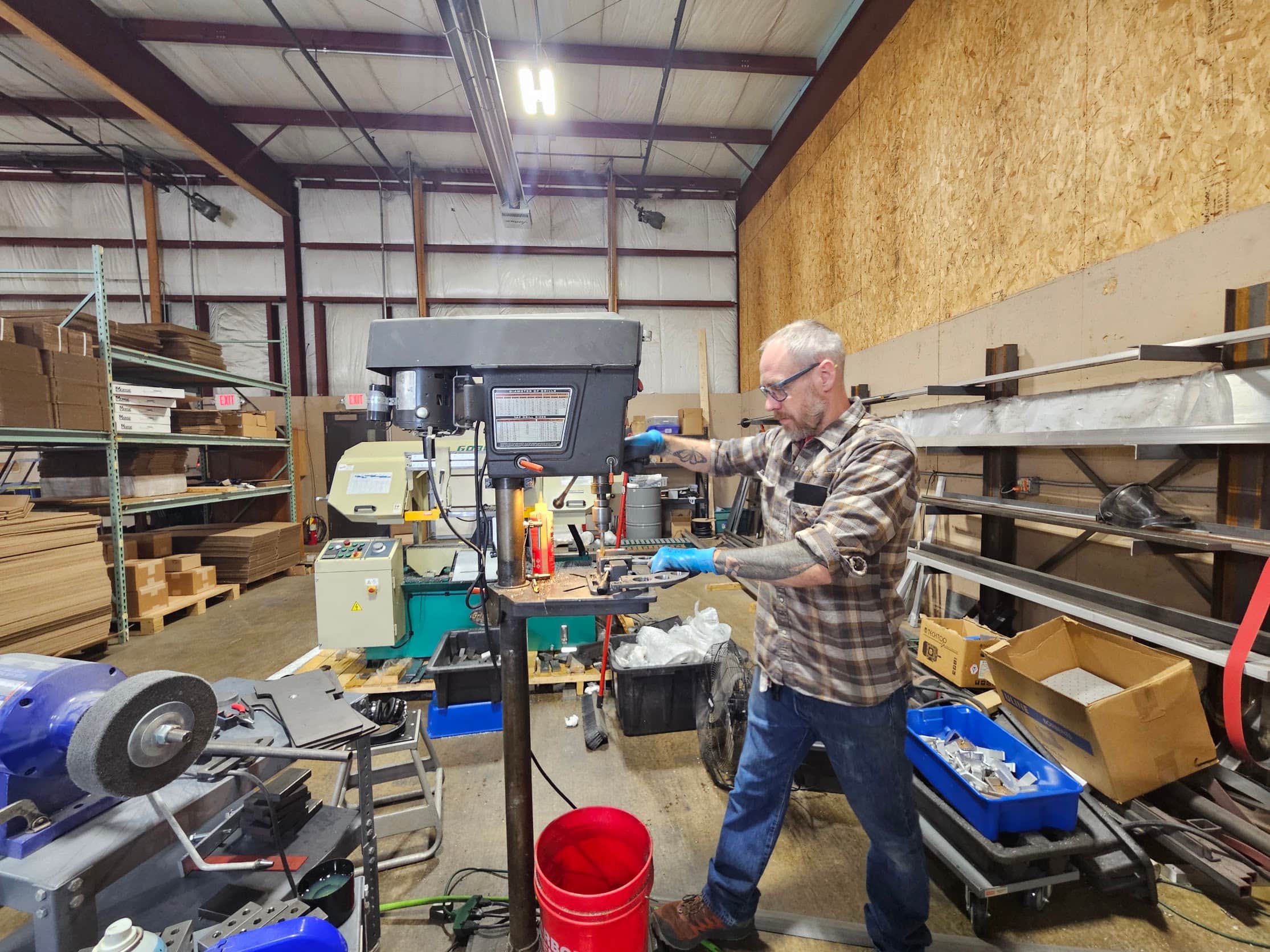
One-man shop
I answer my own email. Tell me the steel, the machine and what it is doing, and I will tell you what I would try next.