

Abrasives
Grinding and Sharpening 15N20: Belt Recommendations & Technique
15N20 is a pleasure to grind and very easy to overheat, for the same reason: it is almost always sold thin. Stock in the 0.060 to 0.125 inch range has…

Knife steel
The bright layer in damascus that is secretly an excellent standalone knife steel: a 2% nickel bandsaw alloy with outstanding toughness, very fine grain, and the hardenability to run 61–62 HRC in thin blades — easy to heat treat and easy on belts.
Also known as
At a glance
The four meters are relative to the rest of the database. Composition is the published nominal analysis, not a mill certificate for your bar.
Working properties
nickel bandsaw steel; grouped with 8670 and L6 as the nickel alloy steels.
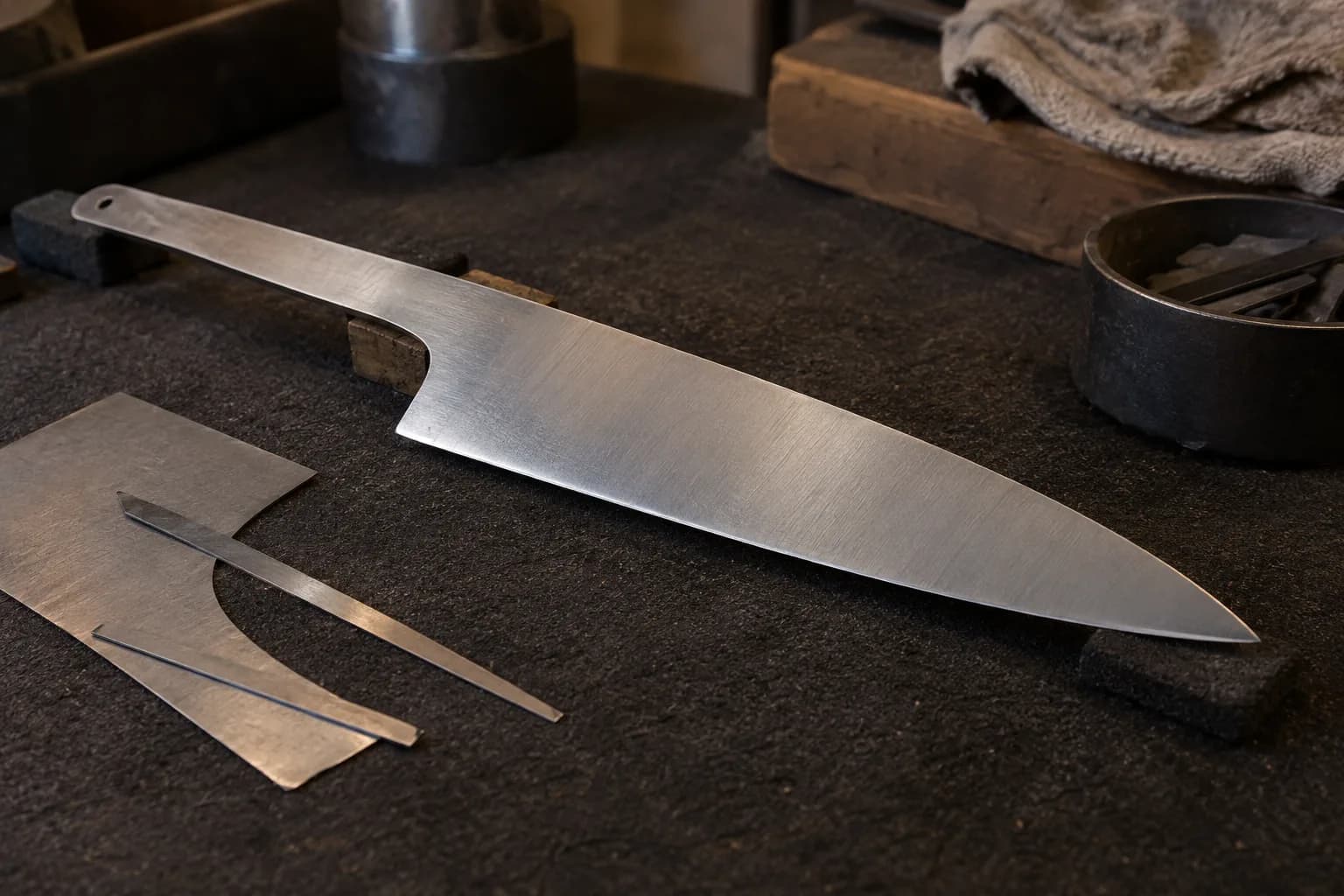
Thin kitchen knives and slicers where a hard, keen, tough edge is the whole job
EDC and neck knives
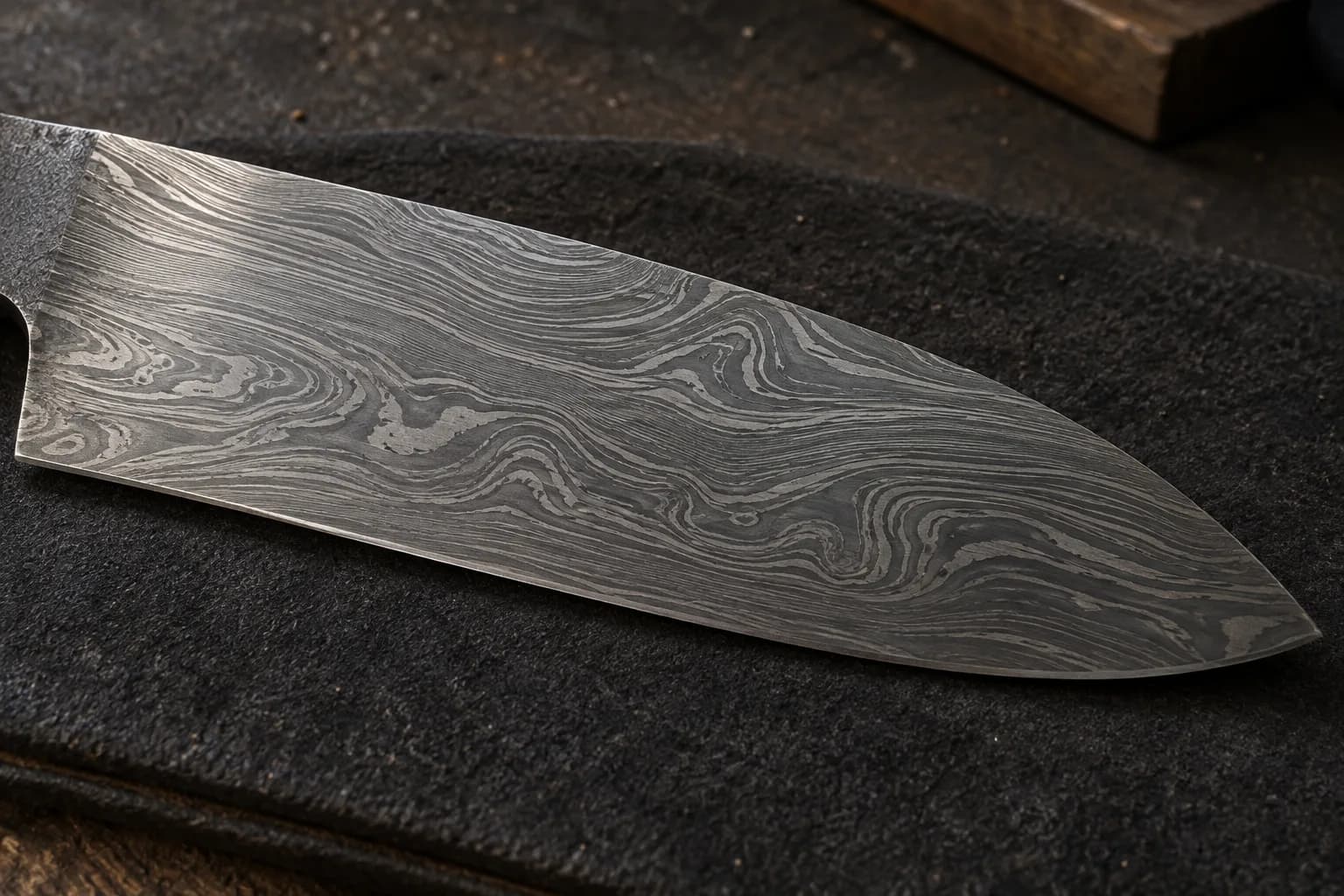
hidden-tang camp knives in thicker stock when you can find it. And of course as the bright contrast layer in pattern-welded damascus, paired 2:1 with 1084.
At the bench
Open the property you are worried about. Every note is written for the blade in your hand, not for a spec sheet.
The full reference
Most makers meet 15N20 as an ingredient rather than a steel: it is the bright layer in pattern-welded damascus, the partner that makes 1084 look like contrast. That reputation undersells it badly. 15N20 is a nickel-alloyed bandsaw steel with excellent toughness, a very fine grain, and enough hardenability to run 61–62 HRC in a thin blade — a combination that makes it one of the best standalone kitchen and slicing steels available in simple carbon-steel territory. It is also cheap, easy to heat treat, and sold in exactly the thin stock a kitchen knife wants.
Two things, mostly. First, as the bright layer in pattern-welded damascus, almost always paired with 1084 in a 2:1 thickness ratio. Second — and underrated — as a standalone blade steel for thin kitchen knives, slicers and EDC, where its toughness lets you run it hard and grind it thin.
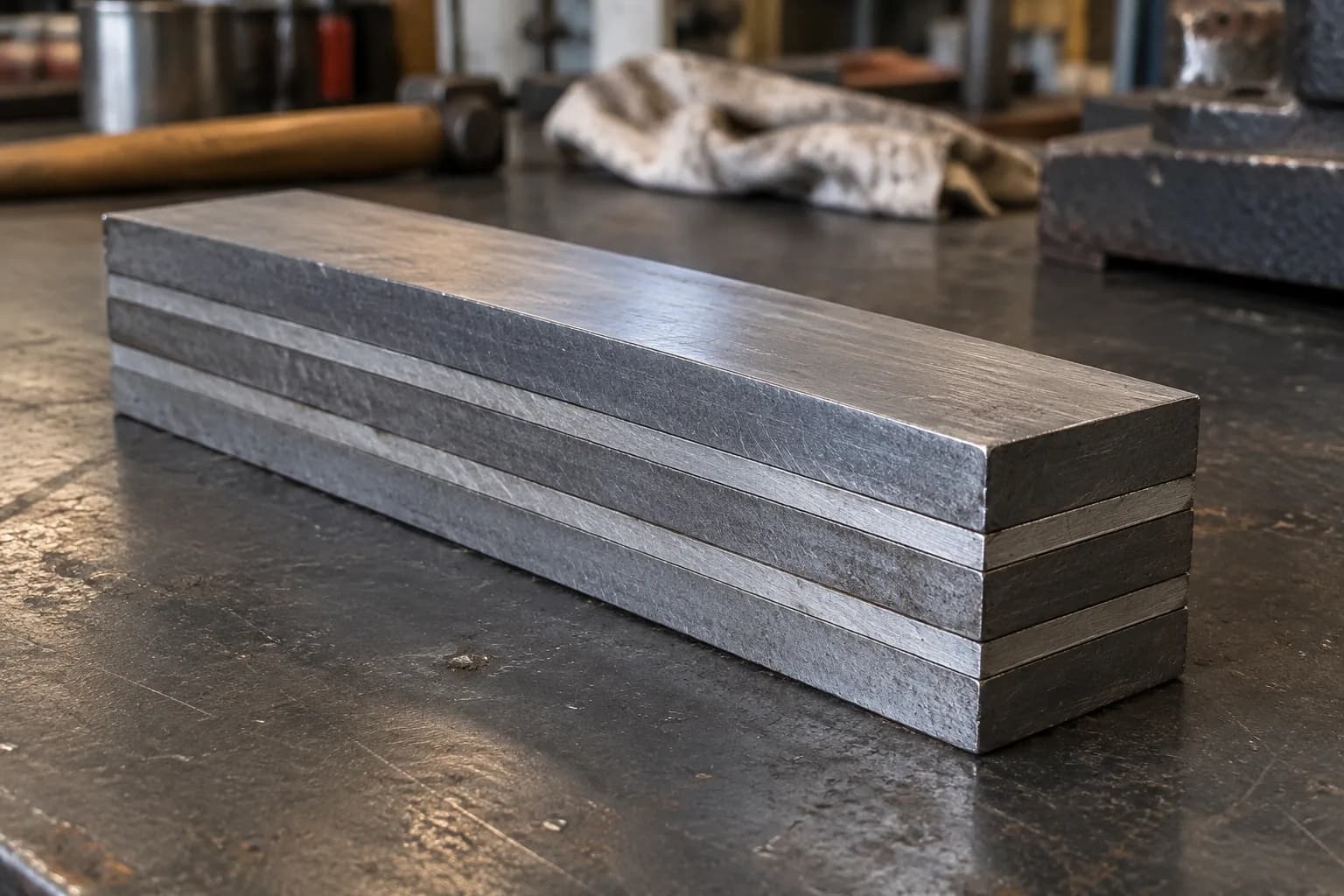
Nickel. At roughly 2%, the nickel in 15N20 resists ferric chloride far better than plain carbon steel does, so when the billet is etched the 1084 layers darken and the 15N20 layers stay silver. That contrast is the entire visual point of the pairing — more on the chemistry in Etching Damascus.
Yes, and you should try it. A monosteel 15N20 kitchen knife at 61–62 HRC is tough enough to survive a thin grind, holds an edge better than most people expect from a steel with no alloy carbides, and sharpens on anything. The main limitation is availability: it is usually stocked in thin sheet (0.060–0.125″), so it is not the steel for a big chopper.
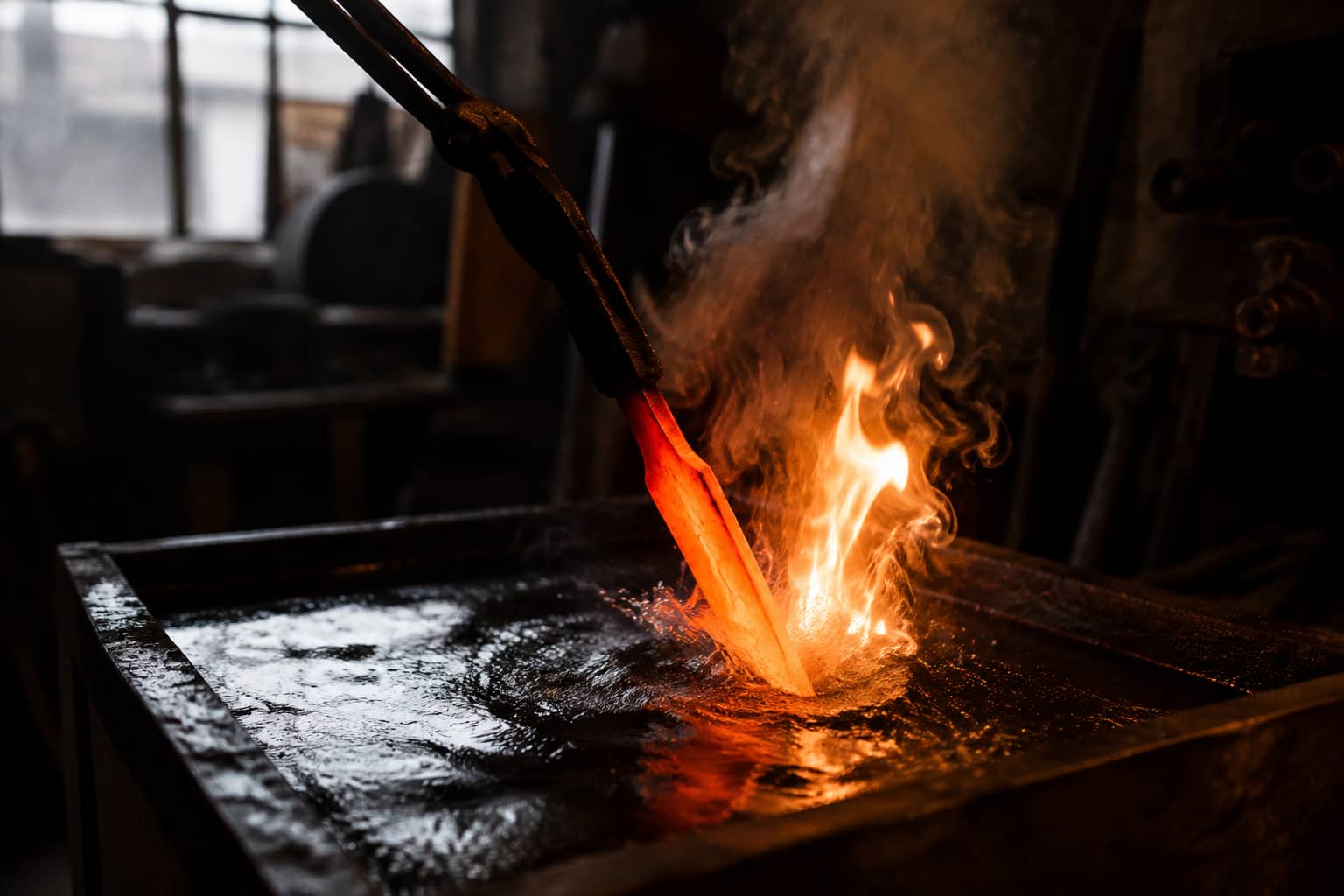
61–62 HRC, and that is not a typo. Because 15N20 has toughness to spare, the usual reason to back hardness off does not apply — a 300–350°F temper that would be reckless in a high-carbide steel is simply correct here. Austenitize around 1475–1500°F with a short soak, quench in a fast oil, then temper low.
Close relatives, not twins. 15N20, 8670 and L6 are all nickel-alloyed low-carbide steels and share a heat-treat philosophy, but L6 carries chromium that 15N20 does not, and true L6 is hard to source in knife-friendly stock. Knife Steel Nerds groups them together for heat treatment; treat published L6 recipes as a starting point, not a substitute.
No. The nickel buys a marginal improvement over 1084 — enough to matter in an etching tank, not enough to matter in a sink. Dry it and oil it like any carbon steel.
Head to head
Every matchup 15N20 appears in, dimension by dimension.
Keep reading
15N20 is a pleasure to grind and very easy to overheat, for the same reason: it is almost always sold thin. Stock in the 0.060 to 0.125 inch range has…

Every knife steel is iron plus a specific recipe of other elements, and each of those elements pulls the steel’s behavior in a particular direction…

Two steels with similar hardness numbers can feel completely different under a sharpening stone, one glides along smoothly, another feels like it’s…
Same bench
Whatever the steel, the grind is only as flat as the platen behind it. I machine the parts, hand-assemble and test Torus grinders in Sterling, Illinois.

Current dual-axis platform with a fiber-laser-cut 6061 chassis and single-knob tracking.

Current dual-axis platform with a steel chassis, more mass and less vibration.

Prior-design aluminum chassis, 90-degree tilt and 1.5-inch tooling arms.

One-man shop
Tell me what the blade is for and how you heat treat. I will tell you whether this is the steel I would use, and what I would use instead.