
Heat Treat
Heat Treating Knife Steel: Complete Guide
Heat treating is what turns a piece of flat bar stock into a functional knife blade. Done correctly, it transforms the steel’s internal crystal structure…
Metallurgy
Fine grain makes tougher steel and a better edge. What causes coarse grain, how normalizing refines it, and how powder metallurgy sidesteps the problem.
3 min readWritten by Rich LinvilleFree to read
“Grain” comes up constantly in heat-treat discussions, fine grain is good, coarse grain is bad, normalizing refines it, but it’s rarely explained what grain actually is or why its size makes a real difference in a finished blade.
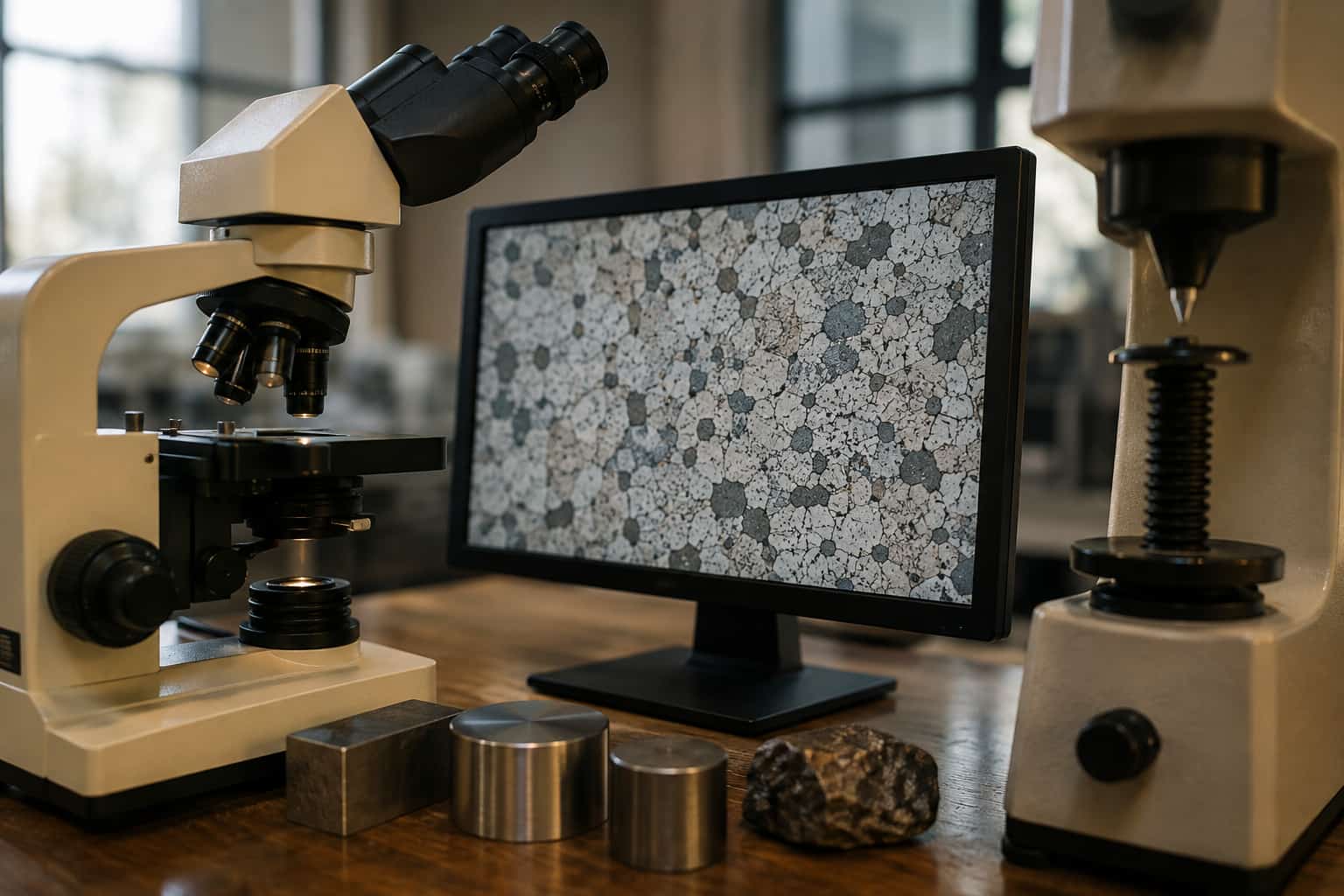
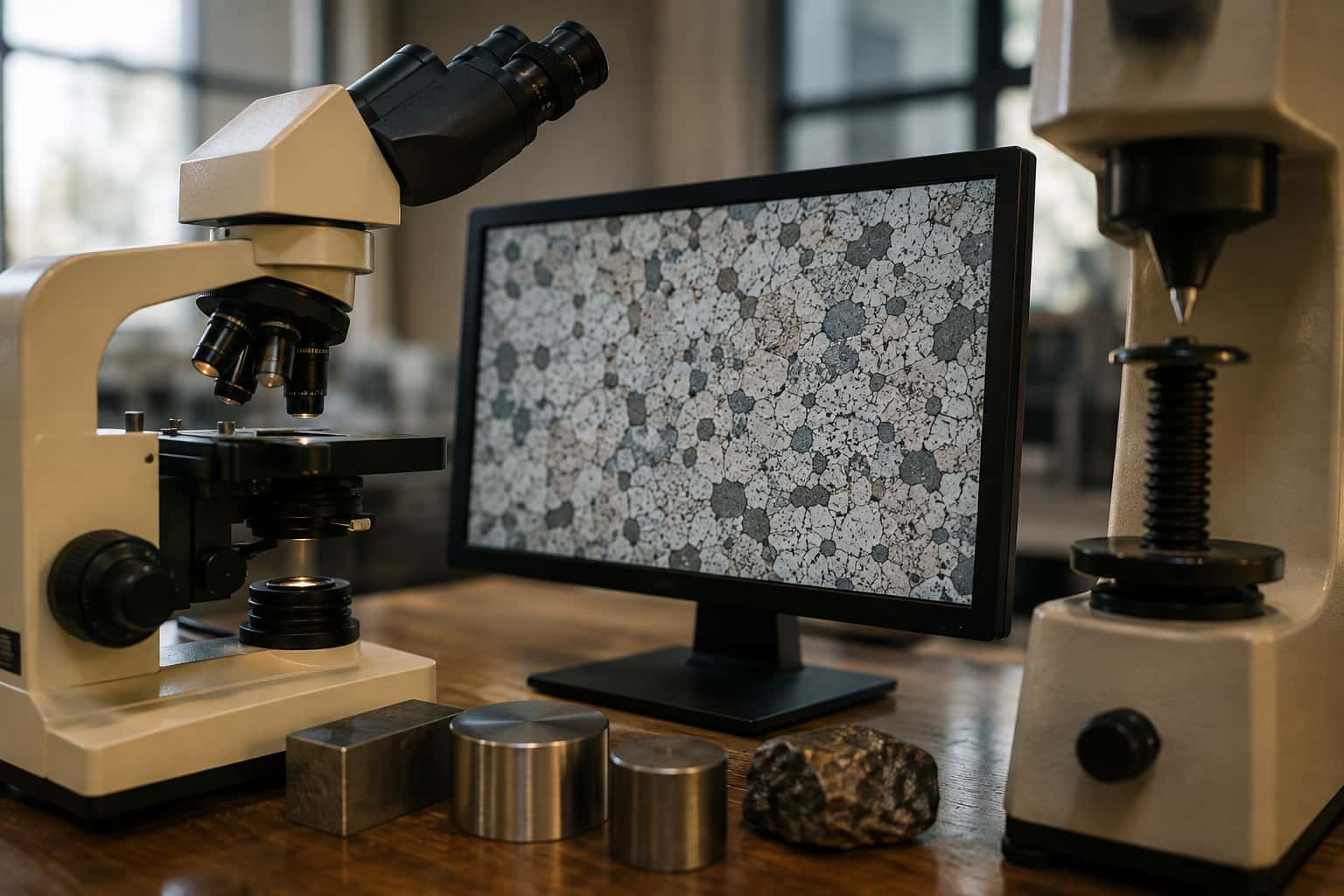
Steel isn’t a single continuous crystal, it’s made up of countless individual crystal regions called grains, each with its internal atomic structure oriented slightly differently from its neighbors. Grain size refers to how large these individual regions are, visible under a microscope on a properly prepared and etched sample, and in extreme cases of very coarse grain, sometimes even visible to the naked eye on a fracture surface.
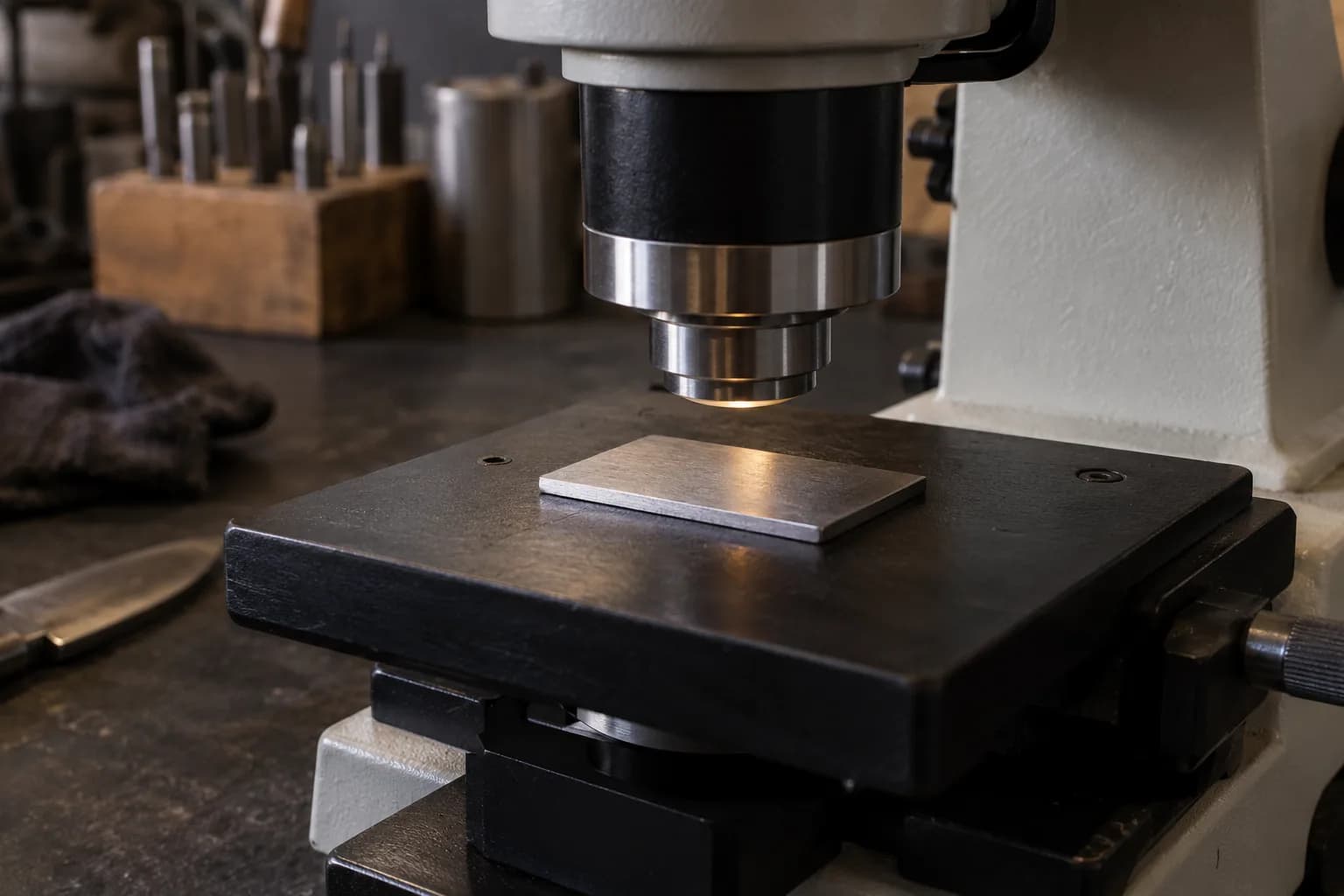
The boundaries between grains are where cracks have to change direction as they propagate through the steel. Fine grain means many more boundaries packed into the same volume, forcing a crack to zigzag constantly and absorb more energy as it grows, which shows up as meaningfully better toughness. Coarse grain gives a crack fewer obstacles and straighter paths to follow, making the steel more prone to sudden, brittle failure.
A fine-grained edge can be sharpened to a finer, more stable apex, since the “building blocks” the edge is made of are smaller and more uniform. A coarse-grained edge tends to lose tiny grain-sized fragments during sharpening and use, producing a less refined edge and, in visible extreme cases, a edge that looks slightly ragged even after careful sharpening.
Grain grows coarser with excessive time at high temperature, holding steel above its critical temperature longer than necessary, or heating well beyond what’s needed for austenitizing, gives grain boundaries time and energy to migrate and merge into larger regions. Repeated forging or grinding heats without adequate cooling between passes can have a similar coarsening effect if the steel spends too long hot.
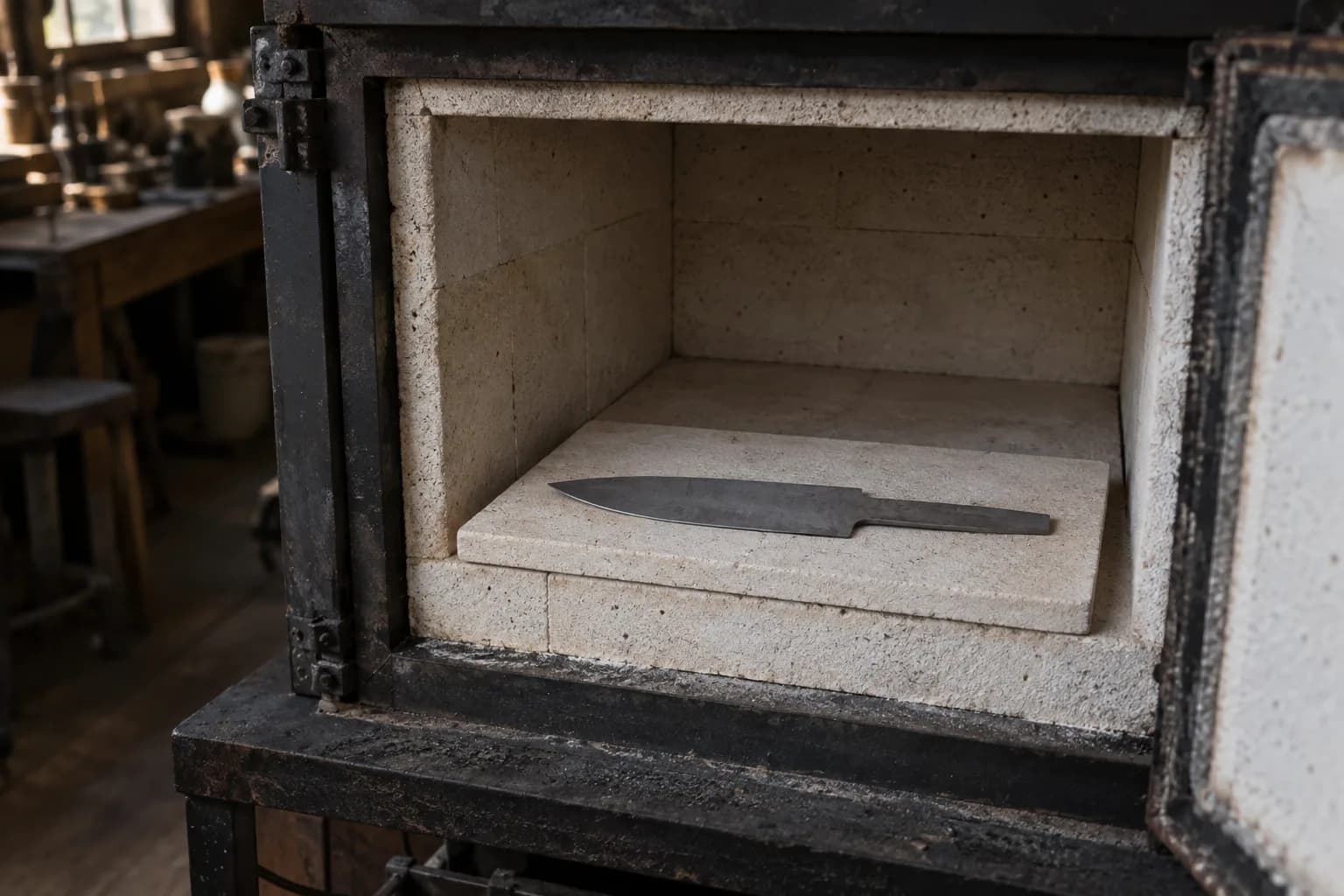
Each time steel is heated through its critical transformation temperature and air-cooled, the grain structure has an opportunity to reform from scratch, generally finer than before if the prior structure was coarse or uneven. This is why a normalizing sequence (sometimes multiple cycles at progressively lower temperatures) is standard practice before hardening, especially after forging or heavy stock removal, both of which can leave grain coarser or more uneven than ideal.
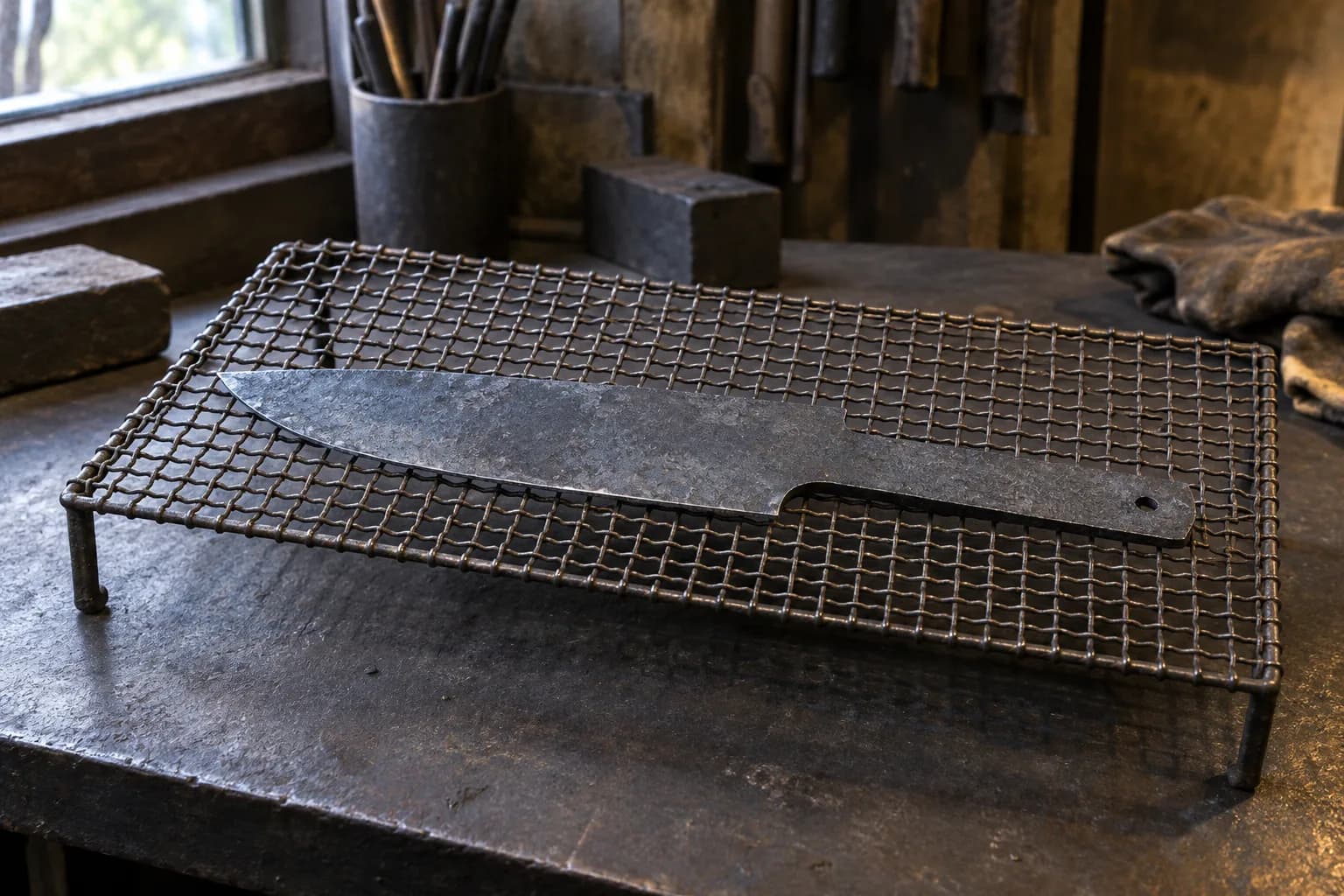
A single normalizing cycle helps, but starting from very coarse or uneven grain (common after forging, less common after simple stock removal from mill-processed bar stock) sometimes benefits from two or three cycles, each one refining the structure further. Beyond a certain point, additional cycles produce diminishing returns, there’s a practical limit to how fine repeated air-cooling cycles alone can make the grain.
As covered in Carbon Steel vs. Stainless vs. Tool Steel vs. Powder Metallurgy, PM steel starts from atomized powder rather than a cast ingot, giving it an inherently fine, uniform starting structure that conventional casting struggles to match even with careful normalizing. This is a separate advantage from the alloy content itself, part of why PM steels can combine high wear resistance with good toughness more easily than conventionally cast steel with similar alloy content.
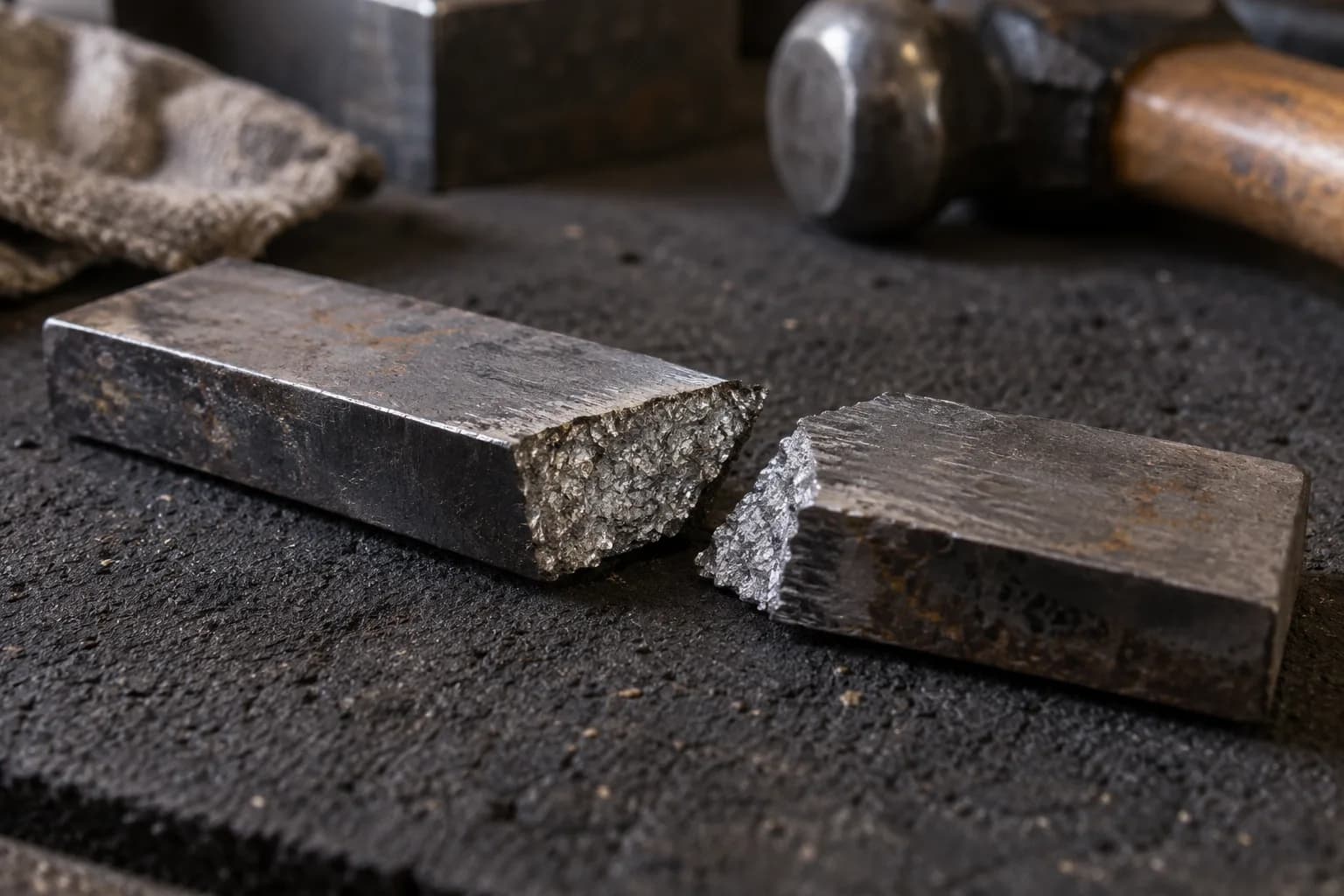
Usually not directly, grain size differences that matter for knife performance are typically too fine to see with the naked eye. Extremely coarse, badly overheated steel can occasionally show a visibly crystalline, glittery fracture surface, but this represents a heat-treat mistake, not normal variation.
For steel that’s been forged or has an unknown thermal history, yes, almost always. For steel already in a fine, uniform state (some mill-processed bar stock used directly for stock removal), normalizing still relieves stress from cutting the profile even if grain refinement itself has less room to improve.
Grinding heat that gets high enough and lasts long enough can, in extreme cases, start to coarsen grain right at the edge in addition to drawing the temper, compounding the problem, an overheated edge can end up both softer and more brittle-prone than intended.
Keep reading
Three more from the same bench.
Heat treating is what turns a piece of flat bar stock into a functional knife blade. Done correctly, it transforms the steel’s internal crystal structure…
The Heat Treating Guide covers the practical steps: normalize, austenitize, quench, temper. This guide covers what’s actually happening inside the steel…
“Carbon steel,” “stainless steel,” “tool steel,” and “powder metallurgy steel” get used as if they’re four completely separate categories, but they…
Same bench
I machine the parts, hand-assemble, track and test Torus grinders in Sterling, Illinois. Most orders ship in seven to ten business days from time of order.
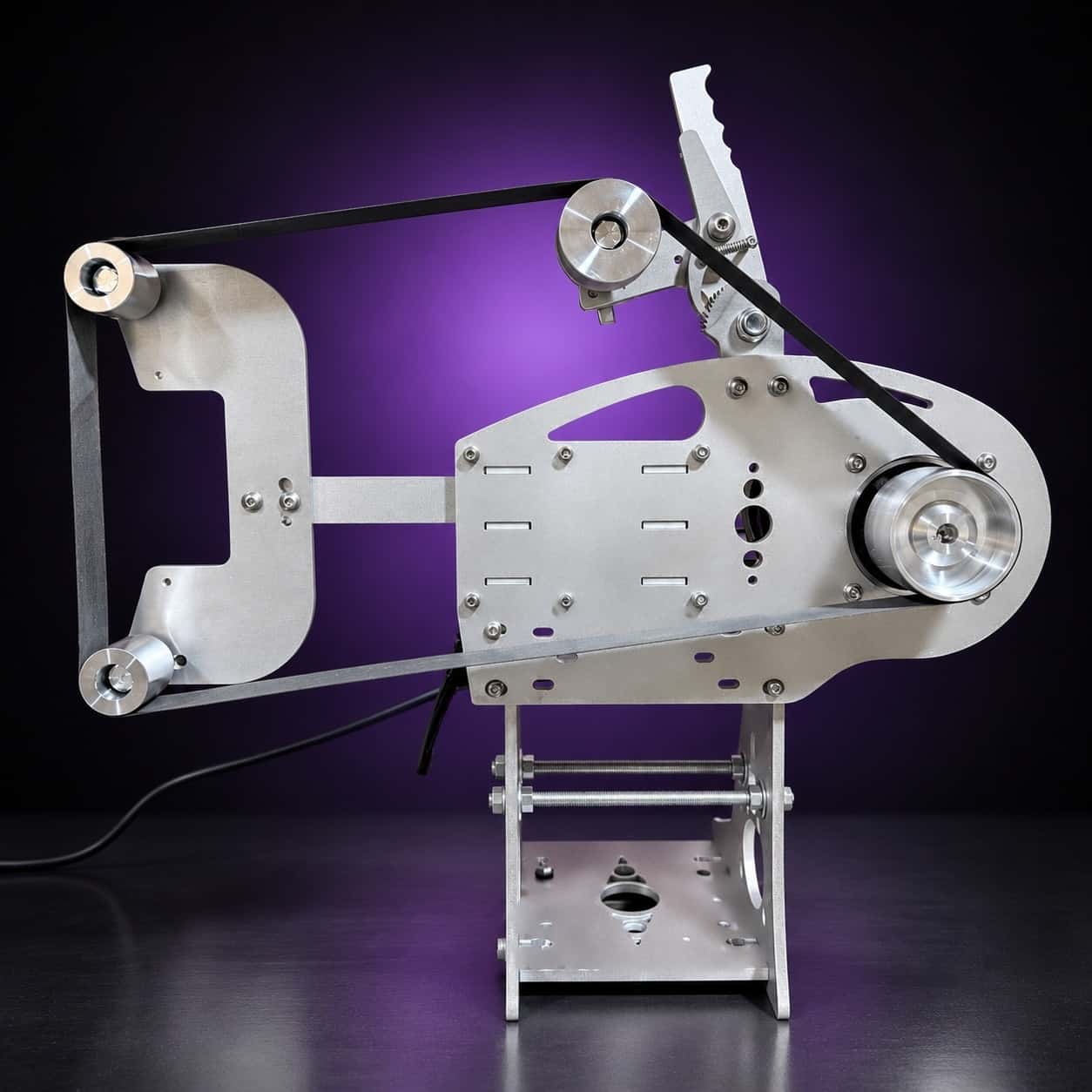
Current dual-axis platform with a fiber-laser-cut 6061 chassis and single-knob tracking.
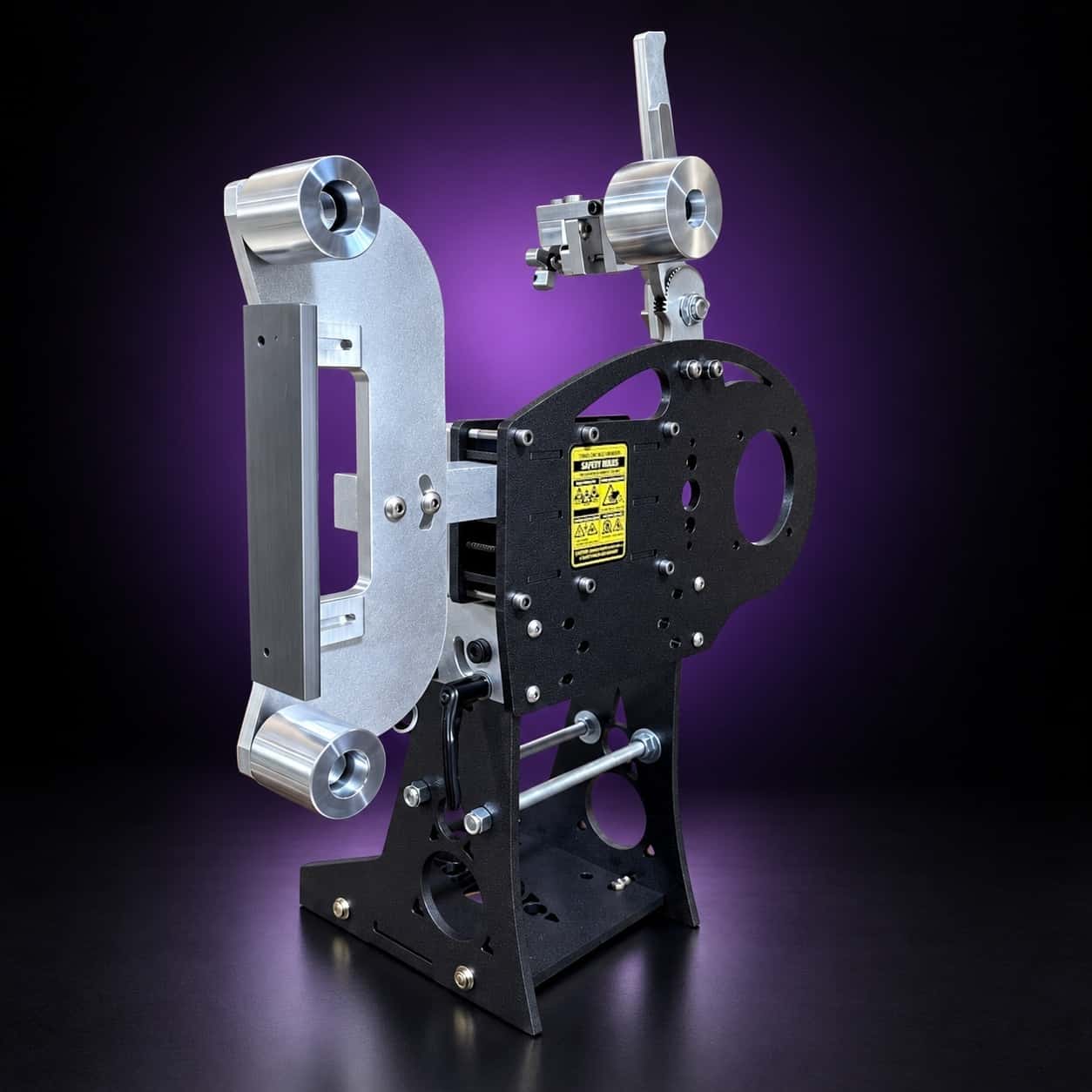
Current dual-axis platform with a steel chassis, more mass and less vibration.
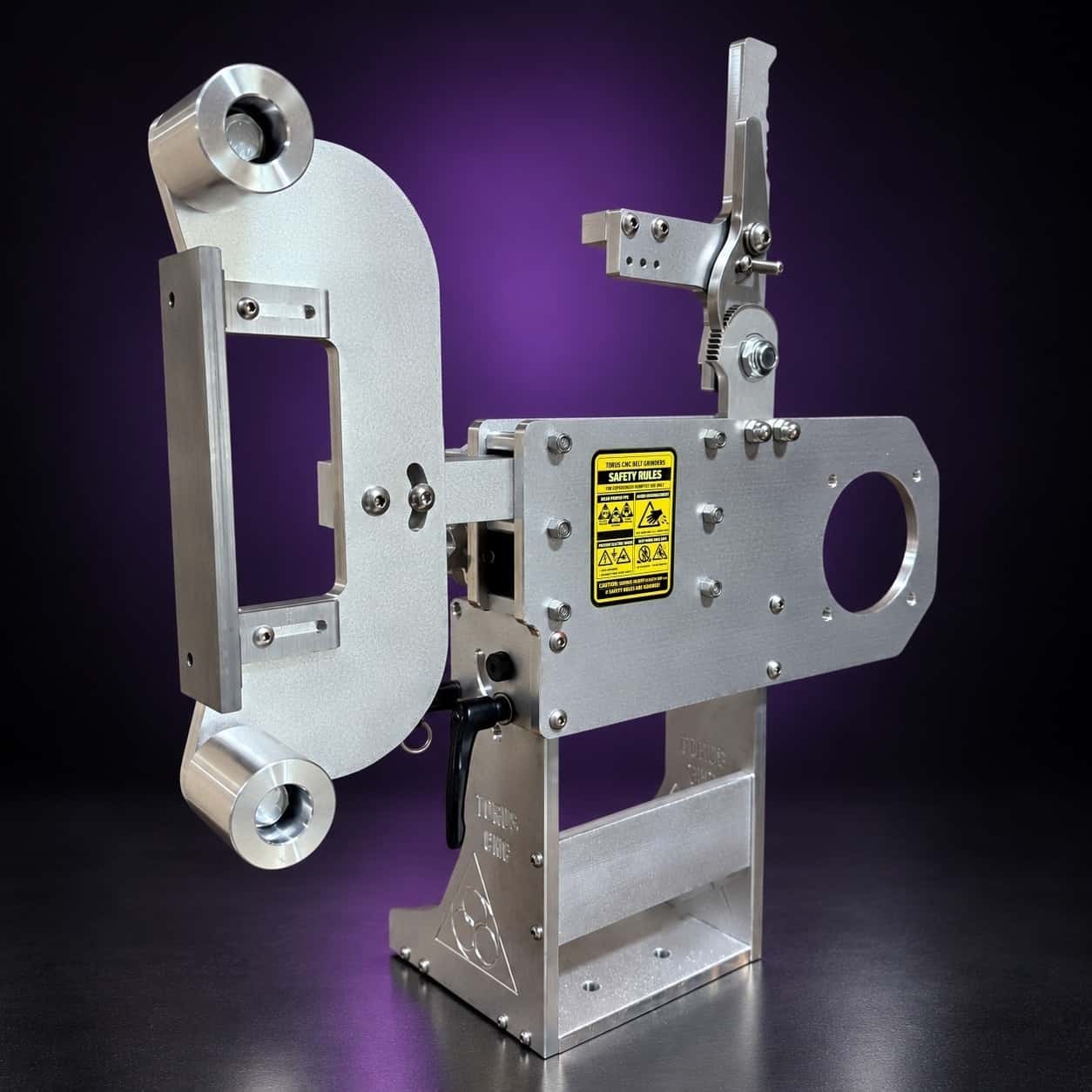
Prior-design aluminum chassis, 90-degree tilt and 1.5-inch tooling arms.
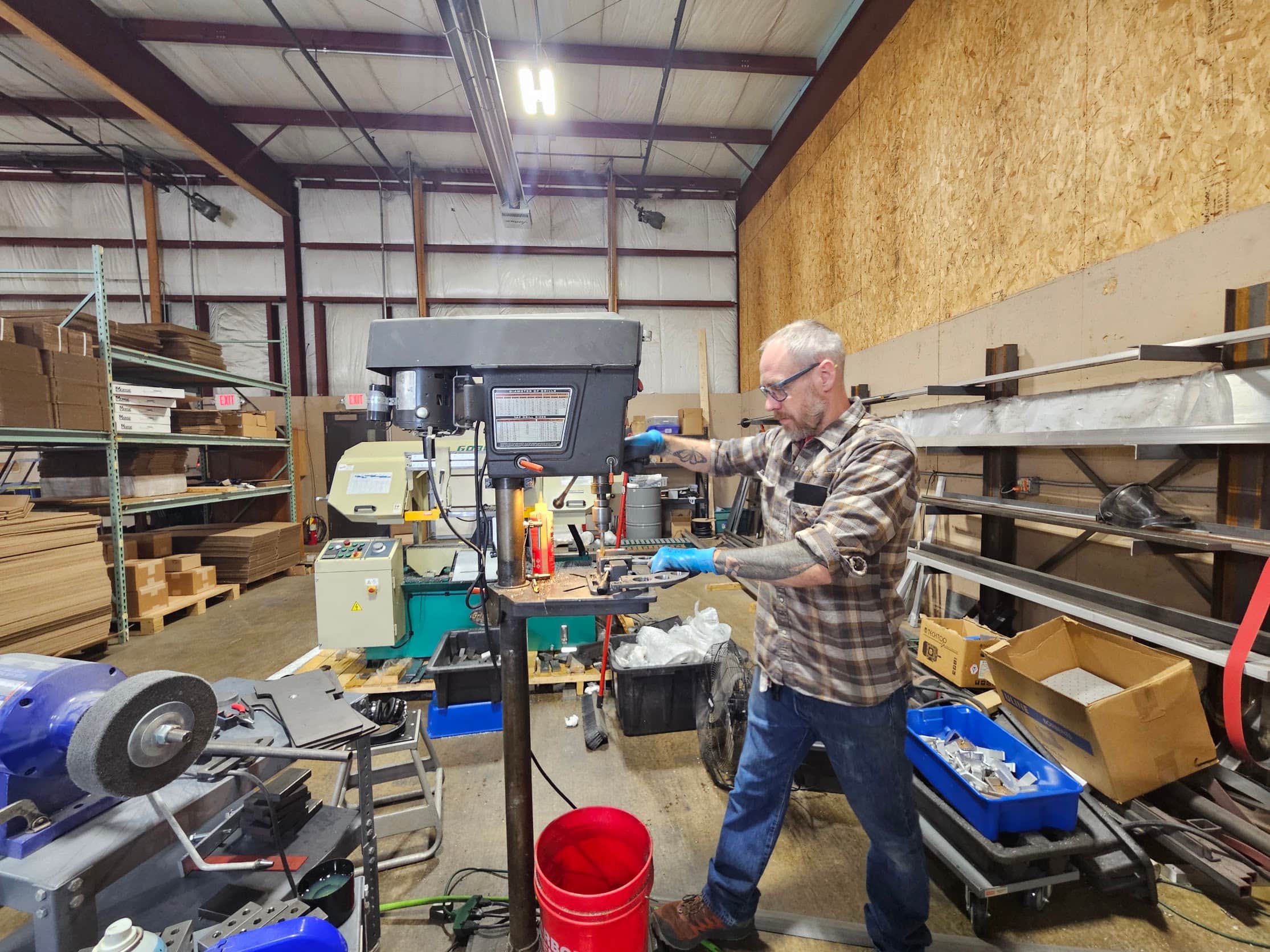
One-man shop
I answer my own email. Tell me the steel, the machine and what it is doing, and I will tell you what I would try next.