| Toughness | 5/5The reason to buy it. Measured at roughly 27–50 ft-lbs around 59–60 HRC (Knife Steel Nerds — batch and machining dependent), which only the 5160/15N20 class matches among common knife steels. The nickel lets it keep that toughness at a hardness where 5160 is usually run softer. | 4/5Excellent for a simple high-carbon steel. The vanadium addition refines grain size compared to plain steels like 1080 or 1084, giving it very good toughness that makes it a popular choice for choppers, camp knives, and swords. | 8670 at typical working hardness (58–60 HRC) — its nickel puts it in the elite 5160/15N20 class, with test values other budget steels cannot touch. 80CrV2's party trick is holding its good-not-elite toughness up near 63 HRC, where 8670 is not usually taken. At the hardness most makers actually run, 8670 wins. |
|---|
| Edge retention | 2/5Low wear resistance and no vanadium carbides — a fine-grained edge that takes a keen apex, dulls faster than any alloyed steel, and comes back with a few passes on a cheap stone. For its intended hard-use knives that fast maintenance loop is a feature, not a flaw. | 2/5Modest compared to alloy tool steels or stainless PM steels, in line with other simple high-carbon steels. It sharpens very easily and takes a keen edge, but will need more frequent touch-ups under hard use than higher-carbide steels. | 80CrV2 by a nose — its vanadium contributes a little real wear resistance where 8670 has essentially none. Both are low-wear steels that sharpen in moments; do not pick either expecting powder-steel endurance. |
|---|
| Corrosion resistance | 1/5Carbon-steel rust behavior; the sub-1% nickel does not meaningfully slow it (15N20 carries twice the nickel and still only manages a shade better). Oil it, dry it, patina it. | 1/5Not stainless and not intended to be. Like other simple carbon steels, it will rust without an applied finish or regular oiling and drying. | A tie: both rust like the carbon steels they are. 8670's nickel and 80CrV2's chromium are there for toughness and hardenability respectively, not stain resistance. Oil both. |
|---|
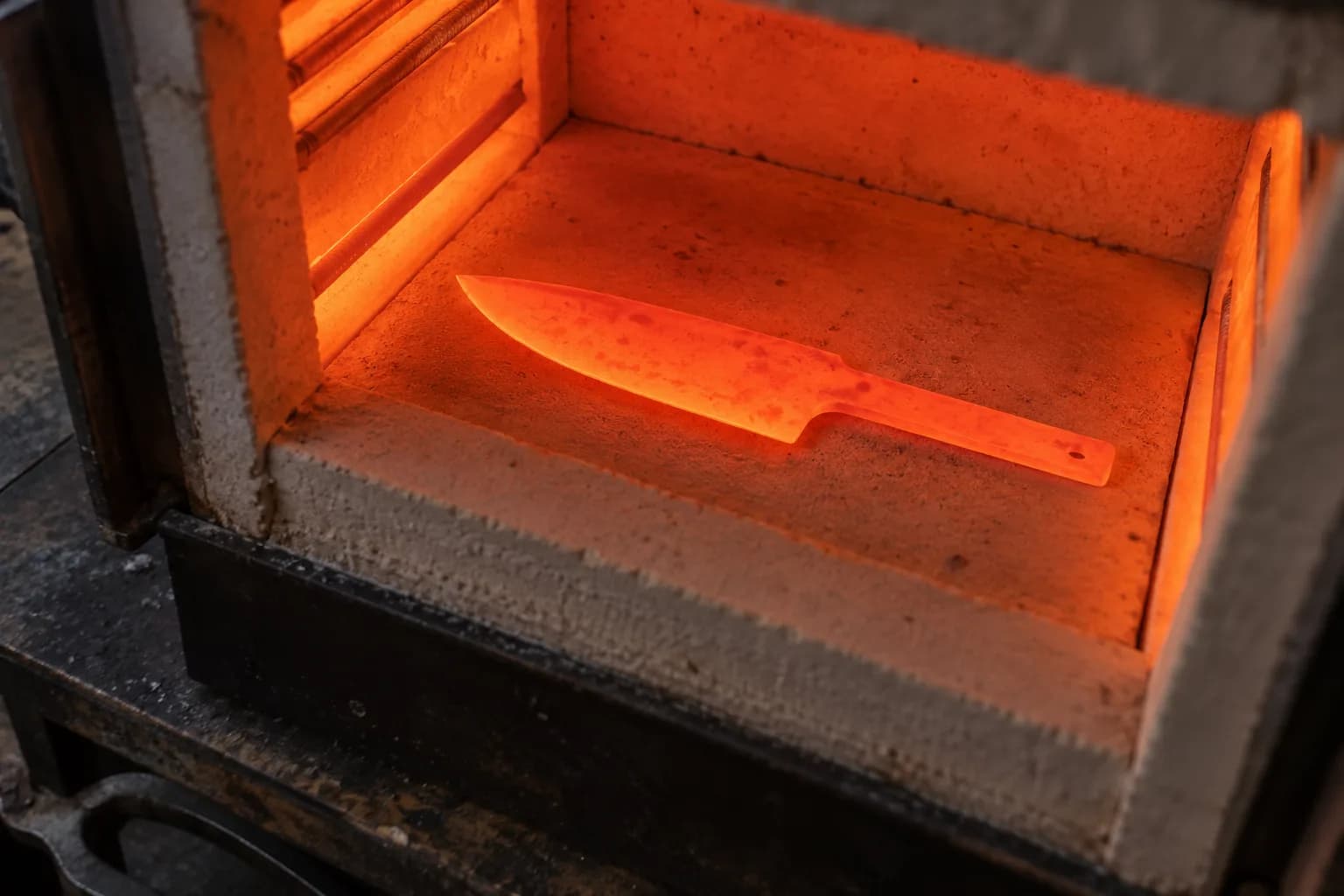
| Heat treat | Austenitize 1500°F, 10–15 min soak (1475–1550°F window; avoid 1450°F and 1600°F+). Parks 50 or AAA both reach full hardness. Temper 2×2h anywhere in 300–450°F — hardness/toughness trade is linear with no tempered-martensite embrittlement in that range. ~58–60 HRC at a 400°F temper; forge heat treating works well thanks to decent hardenability. | Austenitize at approximately 1525 F, holding 10-20 minutes depending on stock thickness (for forge heat treating, heat to just past nonmagnetic and no hotter). The steel is difficult to overheat thanks to its carbon and vanadium balance, making it forgiving for less precise setups. Quench in a medium-speed oil (fast oils also work well with no toughness penalty observed). Temper twice, 2 hours each cycle, in the 300-450 F range; 350-400 F is the recommended sweet spot for most knives, yielding roughly 60-61 HRC with a strong toughness-hardness balance. Avoid tempering above 450 F, which risks tempered martensite embrittlement. | Both forgiving, one slightly more so. 8670: 1500°F soak, fast-or-medium oil, linear 300–450°F temper with no embrittlement trough — nearly foolproof. 80CrV2 wants a touch more precision (around 1550°F and a proper soak) to dissolve its chromium and earn its high-hardness capability. Forge heat treating suits both; 8670 forgives a bigger miss. |
|---|
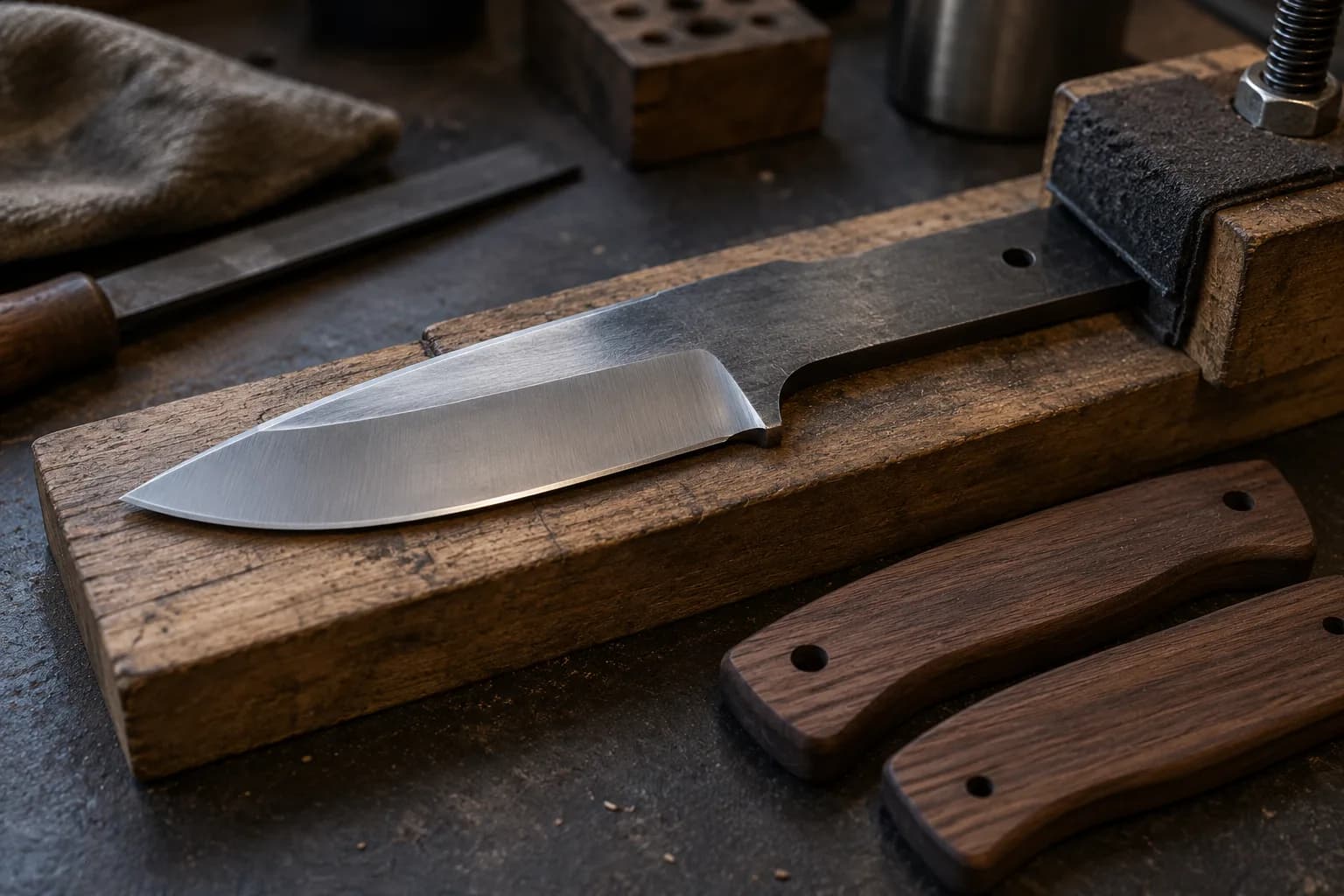
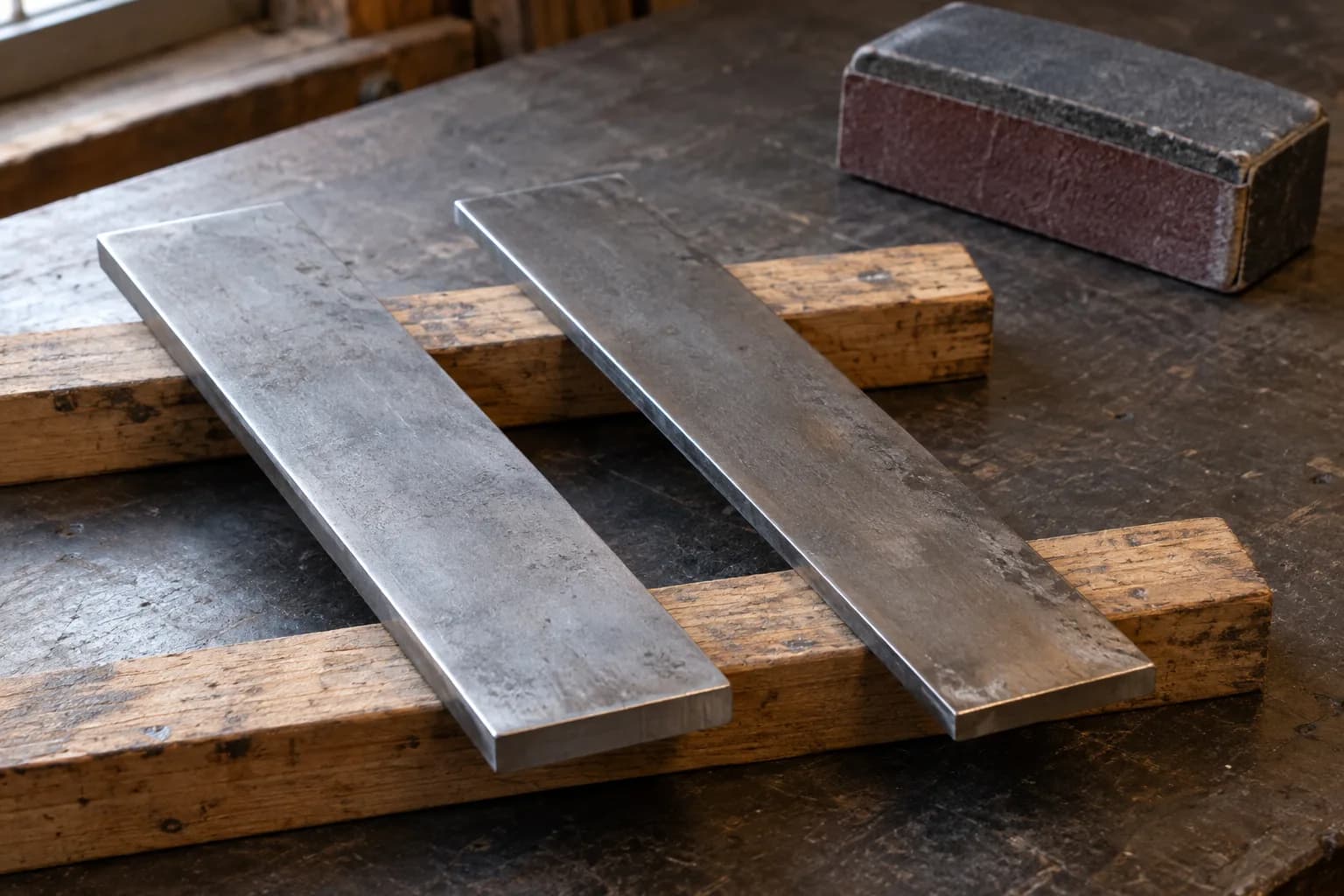
| Grinding | 5/5A pleasure. Annealed 8670 grinds, drills and files like the band-saw stock it is, forges smoothly, and its thin common bar sizes (often ~0.080–0.125 inch) mean less hogging to start with. Belts last, files bite, nothing tears. | 5/5Very easy to grind, similar to other simple high-carbon steels like 1084 and 5160. A good choice for makers who want fast, low-effort stock removal or forging. | Both grind like friendly carbon steels with no carbide surprises. 8670 commonly ships thin (band-saw heritage), which saves hogging on smaller blades; 80CrV2 comes in a fuller range of knife-sized flats. On the belt you will not tell them apart. |
|---|