
Abrasives
Belt Buyer’s Guide: Which Abrasives to Actually Buy
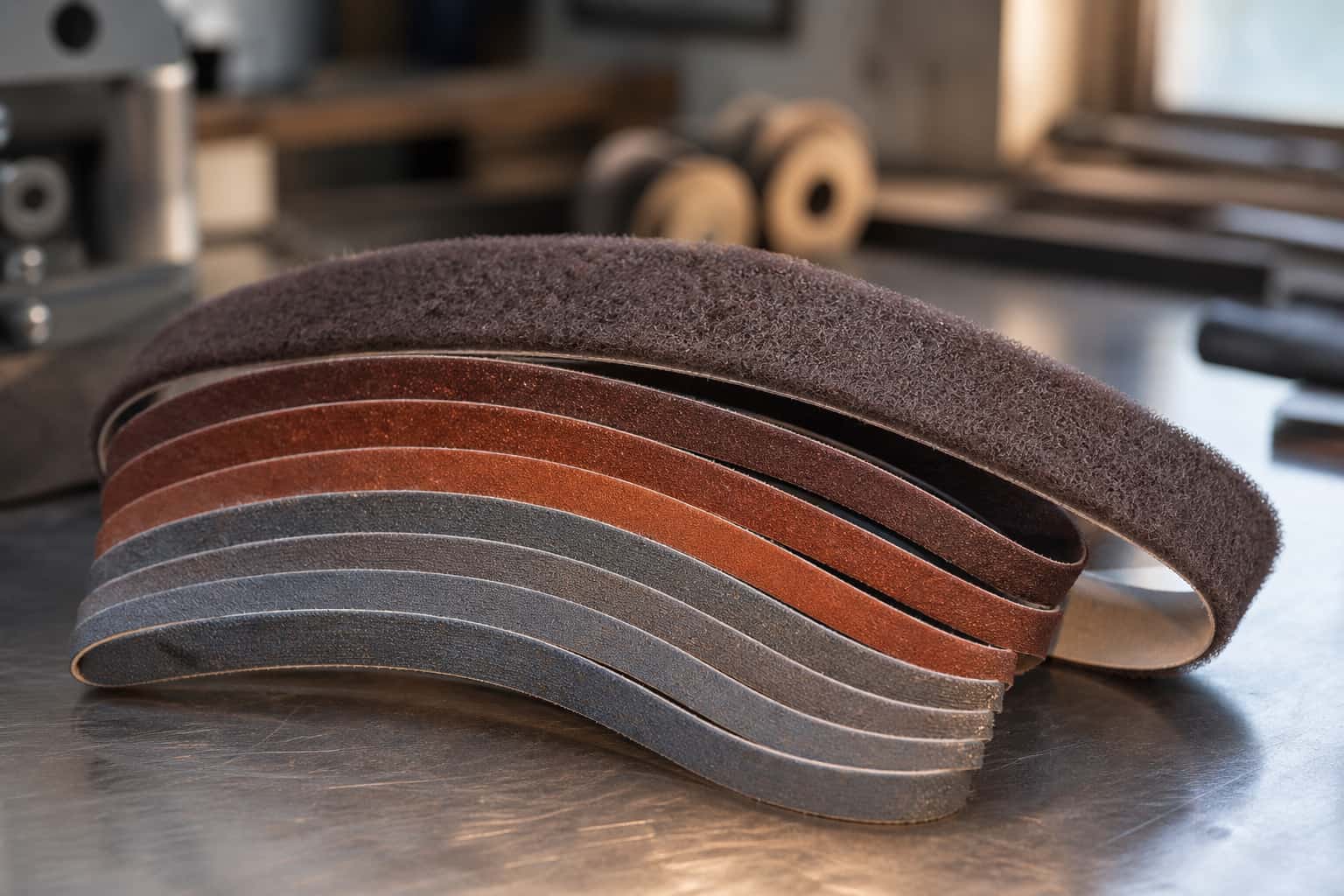
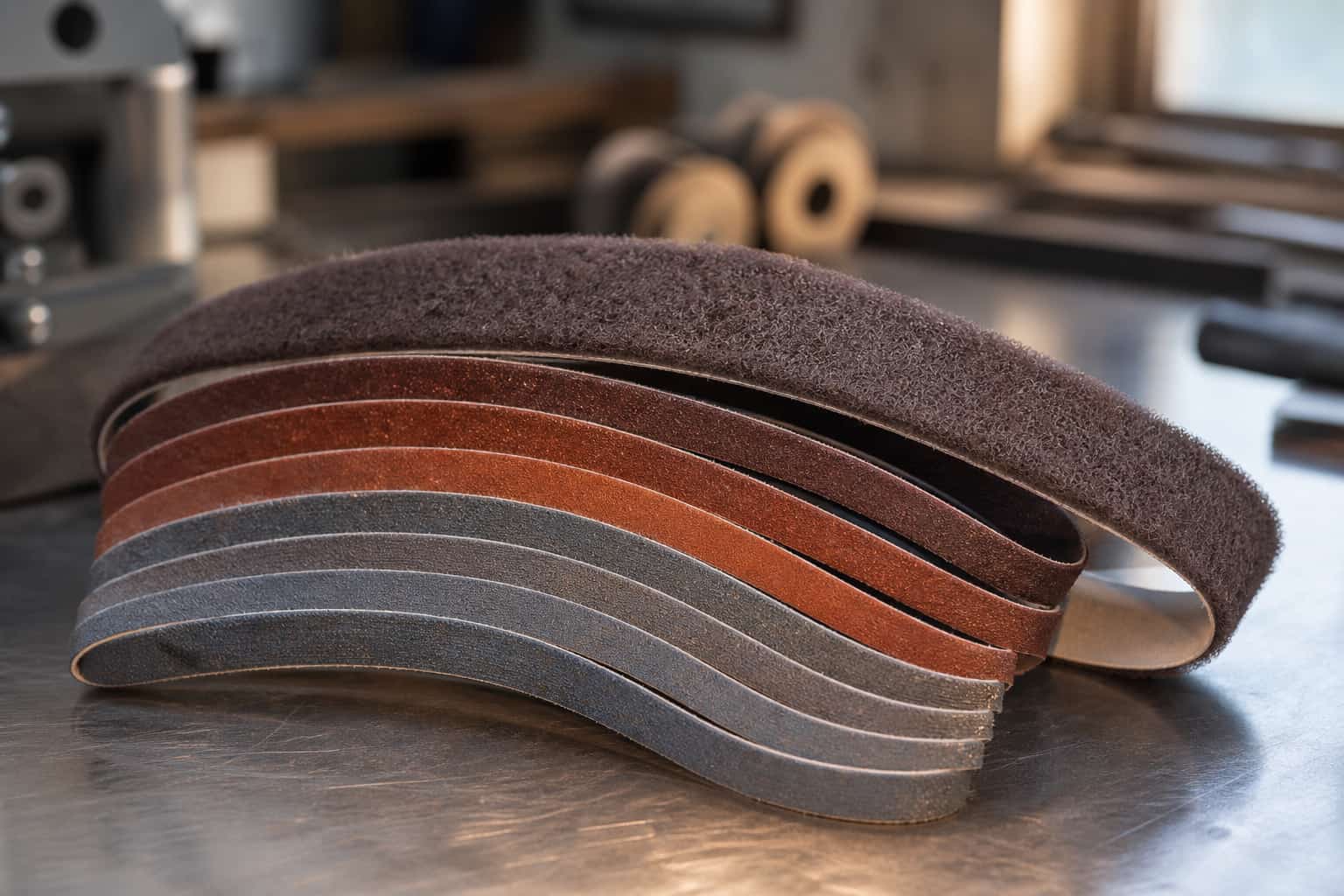
Belts are the single biggest recurring cost in this hobby, and buying the wrong ones wastes money twice: once on belts that wear out fast, and again on…
Abrasives
How to grind and sharpen 8670 knife steel: belt grits, thin-stock technique, heat limits, convex edges for choppers, and fast field sharpening.
2 min readWritten by Rich LinvilleFree to read
8670 might be the most cooperative steel a 2×72 ever meets. It arrives thin, grinds clean, tolerates heat-treat improvisation, and sharpens on anything abrasive. The technique notes here are short because the steel genuinely does not need much — the few that exist are about thin stock and hard use.
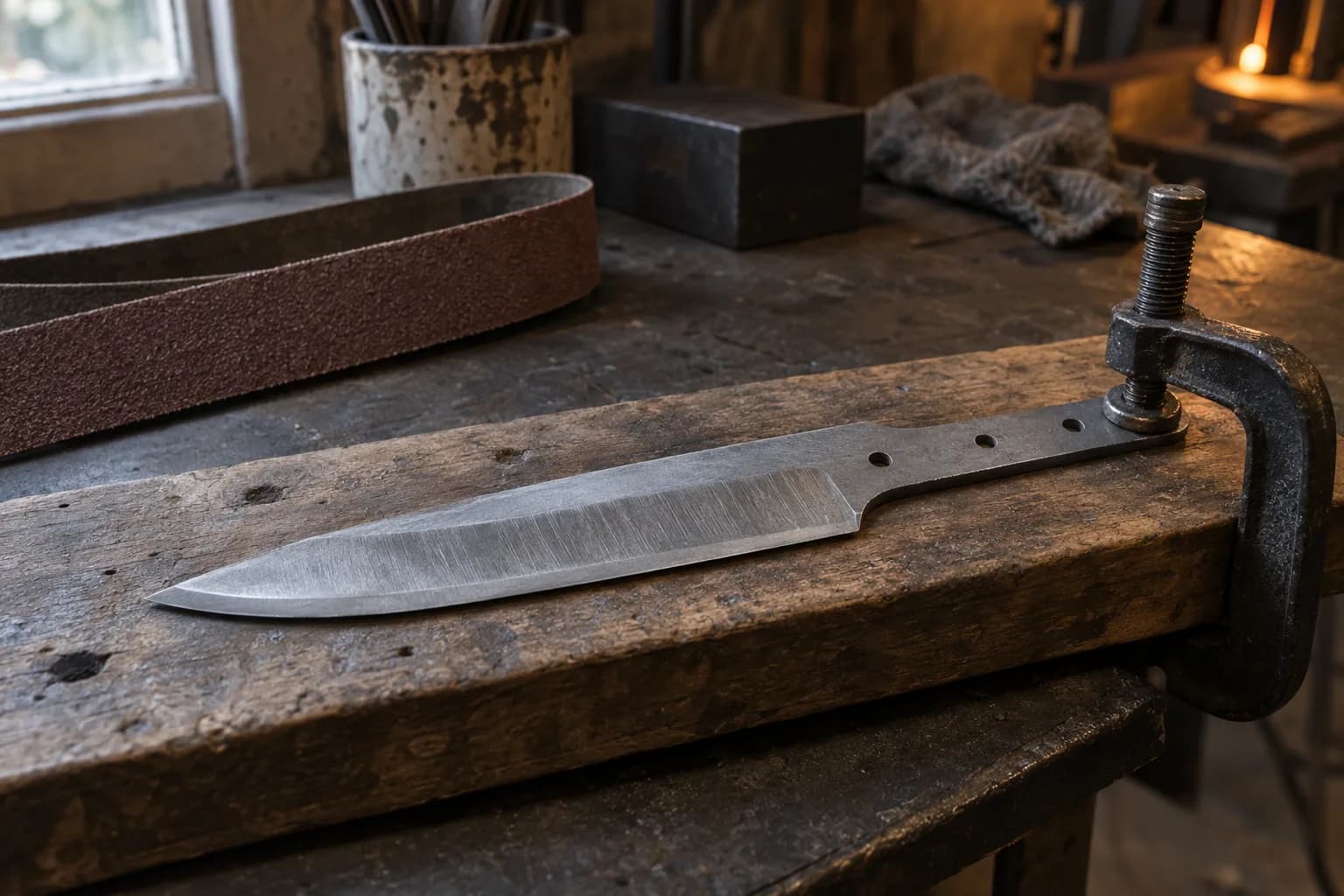
Fast and clean with anything sharp — 36–60 grit ceramics for shaping, though on common 0.080–0.125 inch stock a 60 grit start often suffices; there is simply less metal to move. Thin stock flexes: support it against the platen with even pressure or the bevel walks, and mind that thin sections heat quickly even annealed. Drill everything before heat treat as always, and leave the edge a bit thicker than you would on a slicer — these blades usually meet batons.
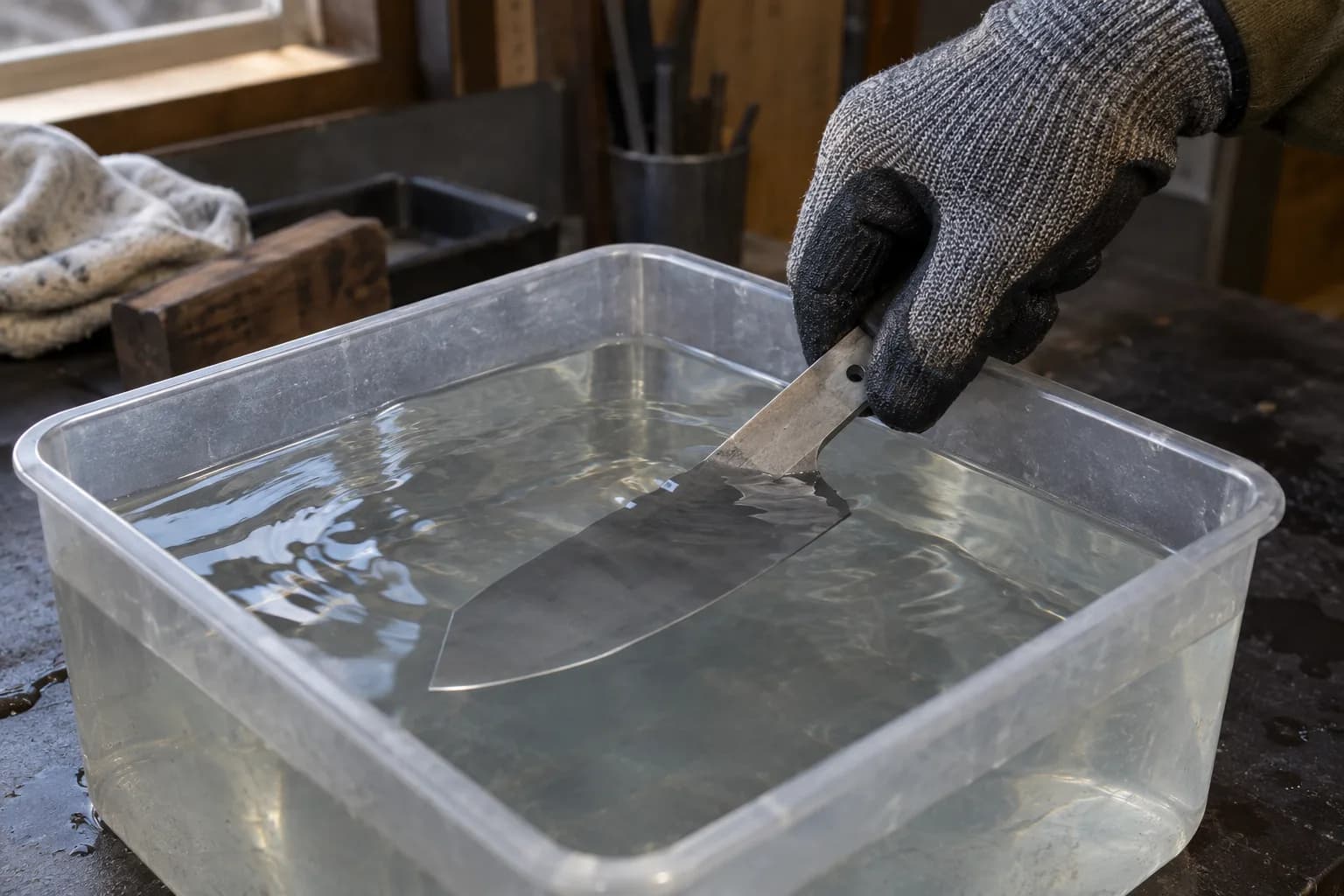
At 58–60 HRC, 8670 stays polite: no hard carbides tearing at belts, predictable sparks, honest feedback. The usual rules — sharp belts, light pressure, frequent water — protect a temper that in the 400°F range has more margin than razor steels but still is not infinite. Thin stock remains the real heat risk: less mass means faster temperature rise, so pass cadence matters more than pressure. Variable speed earns its keep here; slow the belt for finish passes.
Most 8670 builds are choppers, and choppers love convex edges. The slack belt section puts one on in minutes: 220 grit, light passes, let the belt’s natural give roll the bevel. A convex edge backs 8670’s bend-not-break toughness with geometry that resists deformation in wood contact — the combination is most of why the steel owns its niche. Full geometry logic in our edge geometry guide.
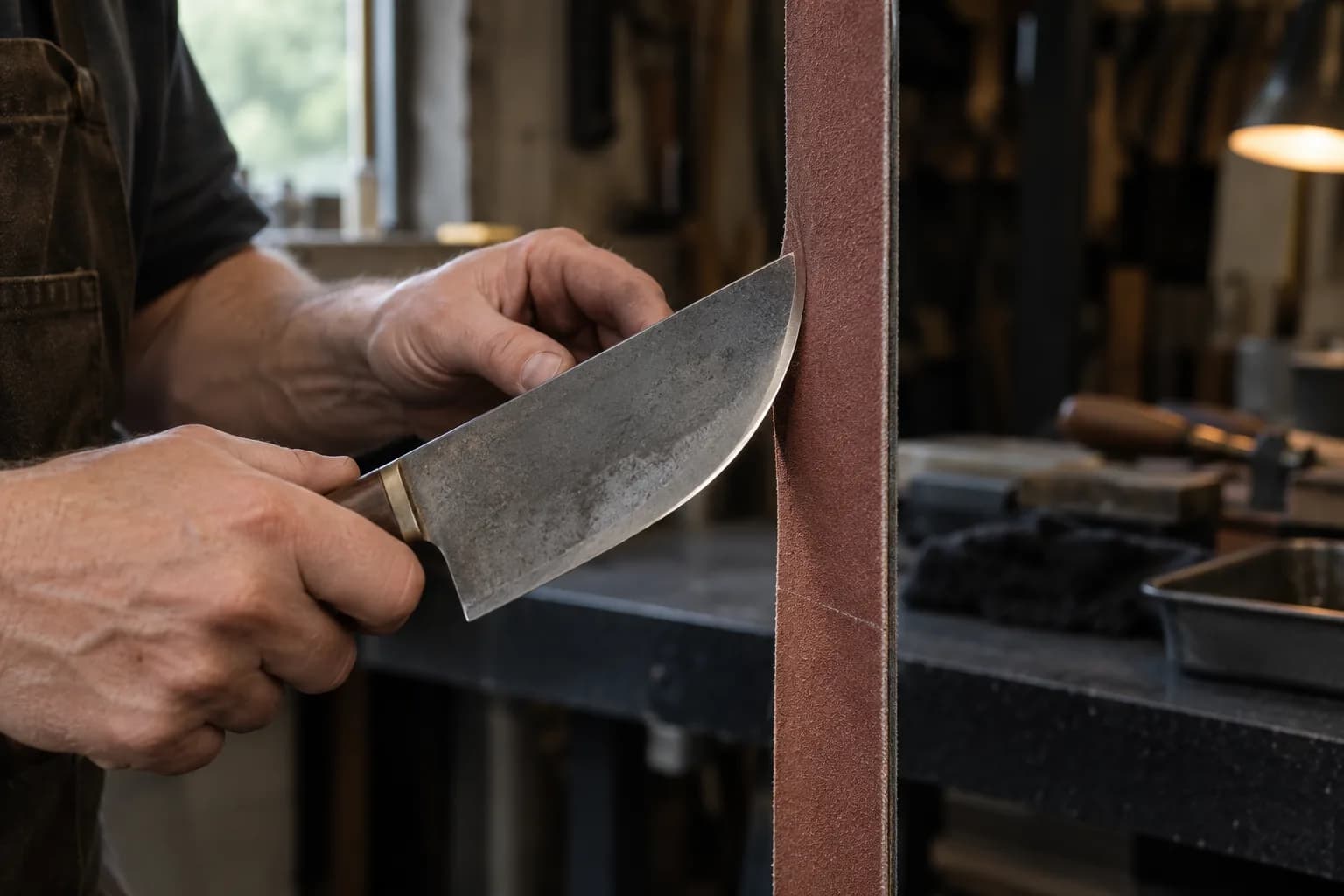
Nothing exotic: aluminium oxide, ceramic, sandpaper on a mousepad for convex edges, a file in a genuine pinch — 8670’s low wear resistance means everything cuts it, which in the field is exactly the point. It dulls faster than alloyed steels and returns faster too. A few strokes on a pocket stone mid-task beats carrying a powder-steel blade you cannot touch up. See How to Sharpen a Knife for progressions.
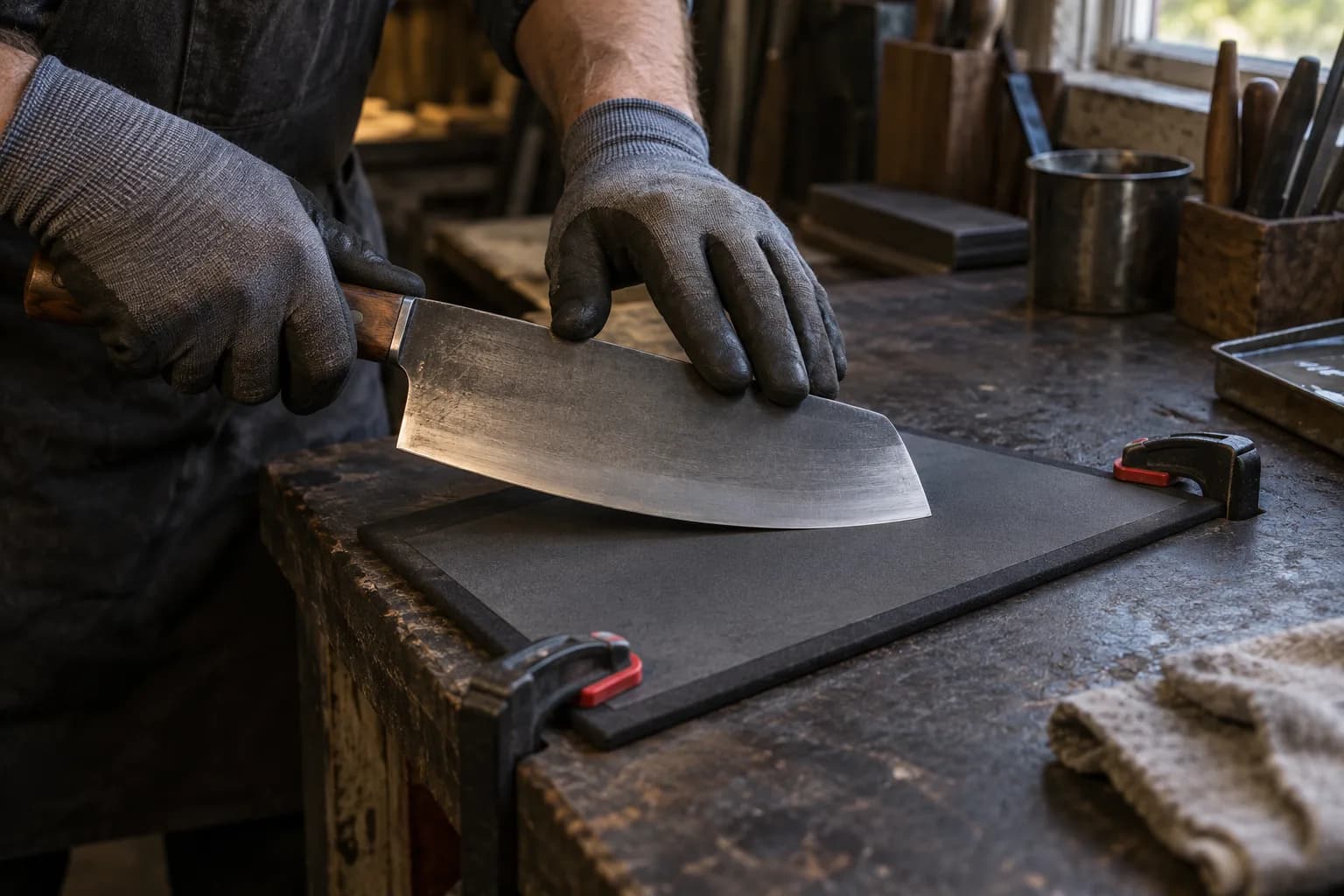
60 grit ceramic start on thin stock (36 for thick), 120–220 refinement, 220 slack-belt convexing for choppers, 400 only if the finish warrants it — working 8670 blades rarely justify mirror work. Spend the belt budget on fresh coarse ceramics; this steel rewards sharpness over grit count. Details: Belt Buyer’s Guide.
Keep reading
Three more from the same bench.
Belts are the single biggest recurring cost in this hobby, and buying the wrong ones wastes money twice: once on belts that wear out fast, and again on…
Sharpening is where knifemaking gets humbled: you can grind a flawless blade and still hand someone a knife that won’t slice paper. The good news …
Spend a week on any knifemaking forum and you’ll see the question: “Can I make a knife out of this old file / leaf spring / saw blade?” It’s one of the…
Same bench
I machine the parts, hand-assemble, track and test Torus grinders in Sterling, Illinois. Most orders ship in seven to ten business days from time of order.
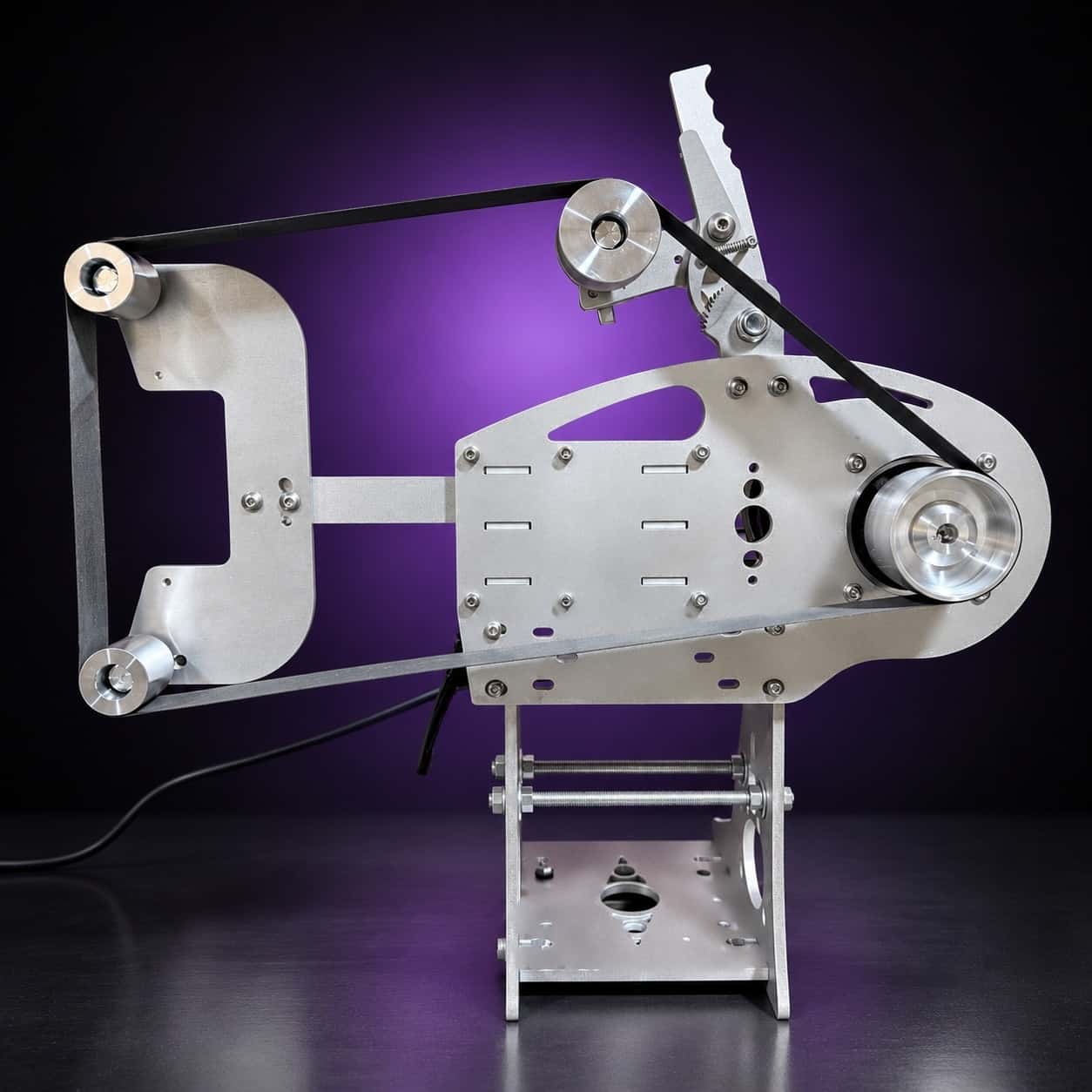
Current dual-axis platform with a fiber-laser-cut 6061 chassis and single-knob tracking.
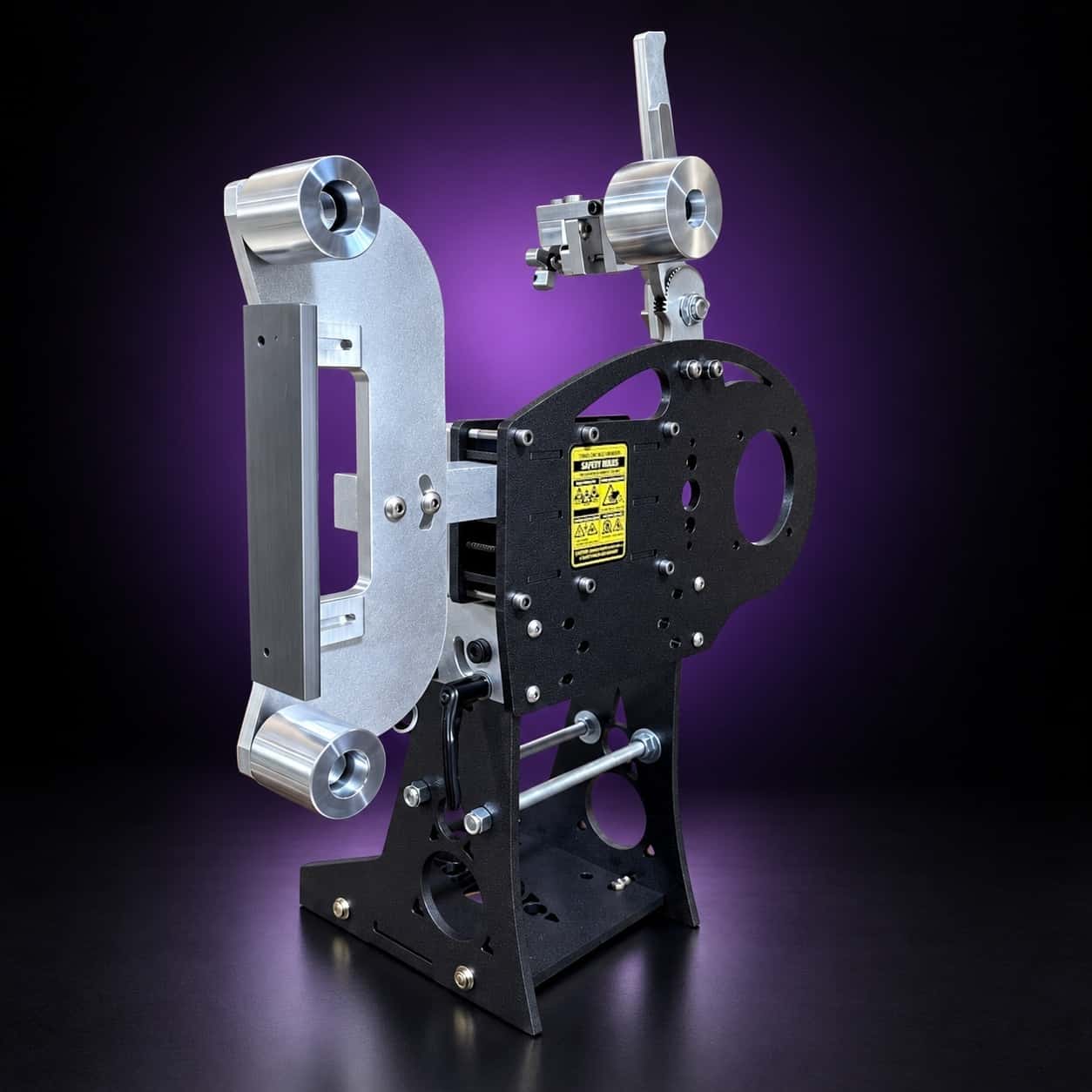
Current dual-axis platform with a steel chassis, more mass and less vibration.
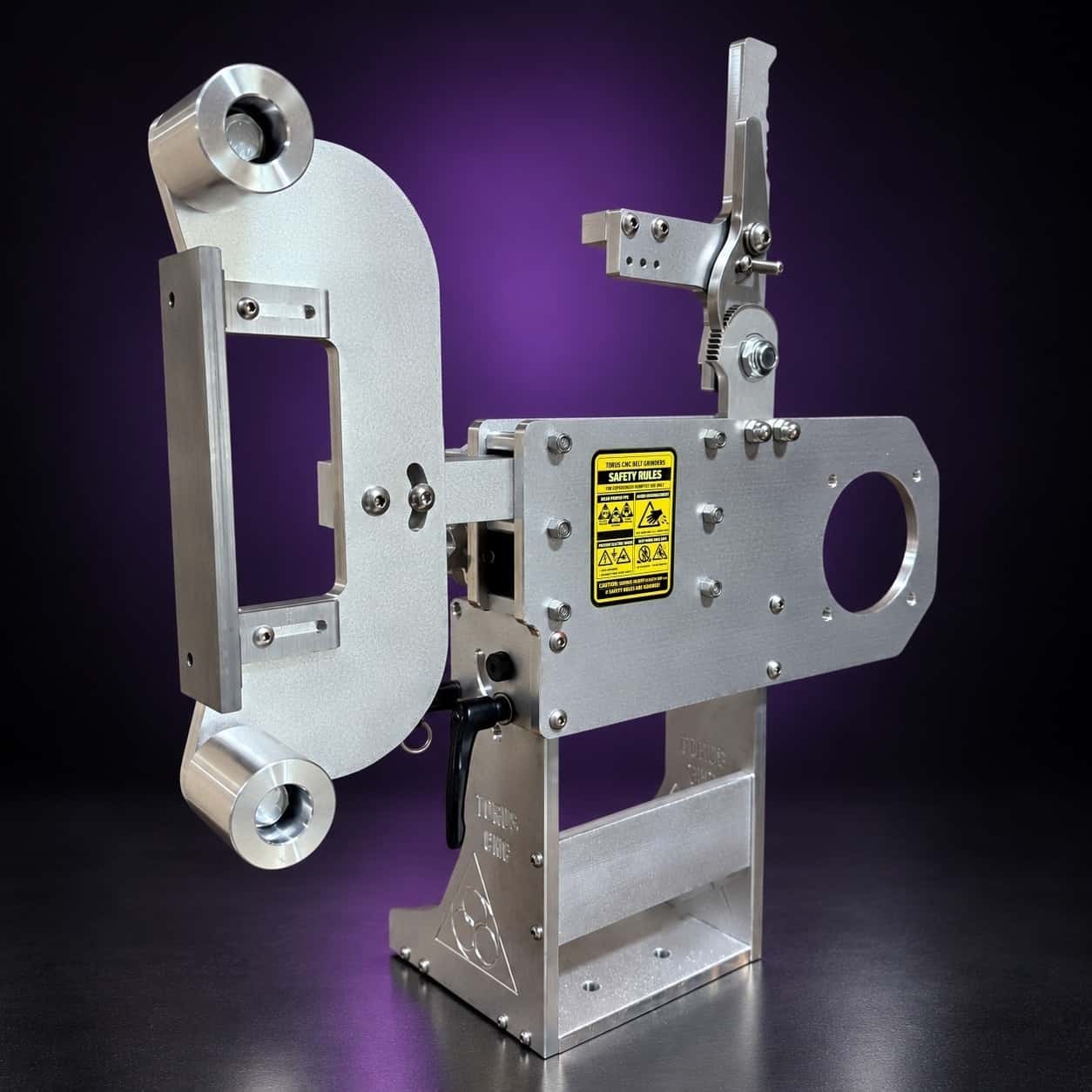
Prior-design aluminum chassis, 90-degree tilt and 1.5-inch tooling arms.
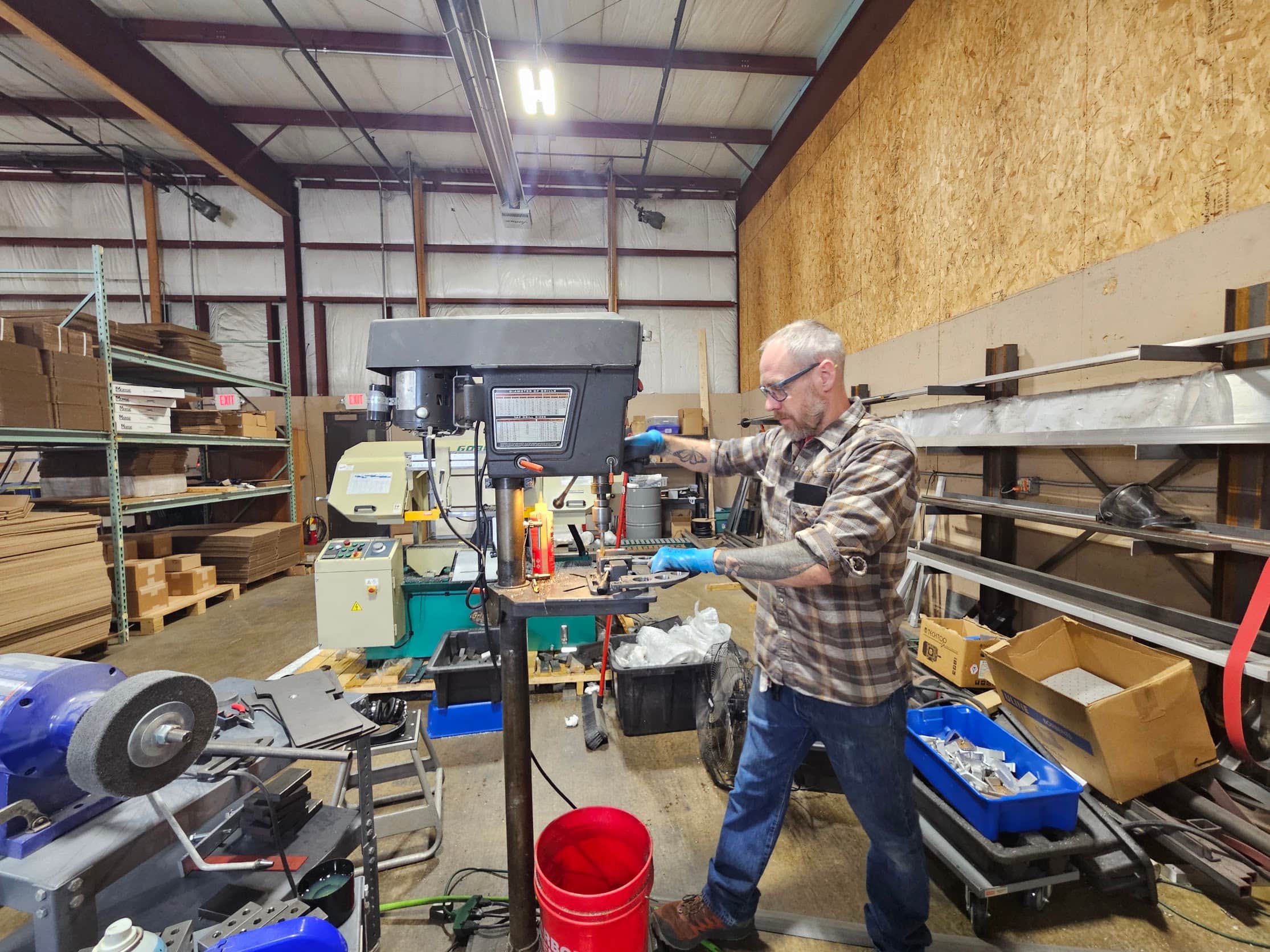
One-man shop
I answer my own email. Tell me the steel, the machine and what it is doing, and I will tell you what I would try next.