
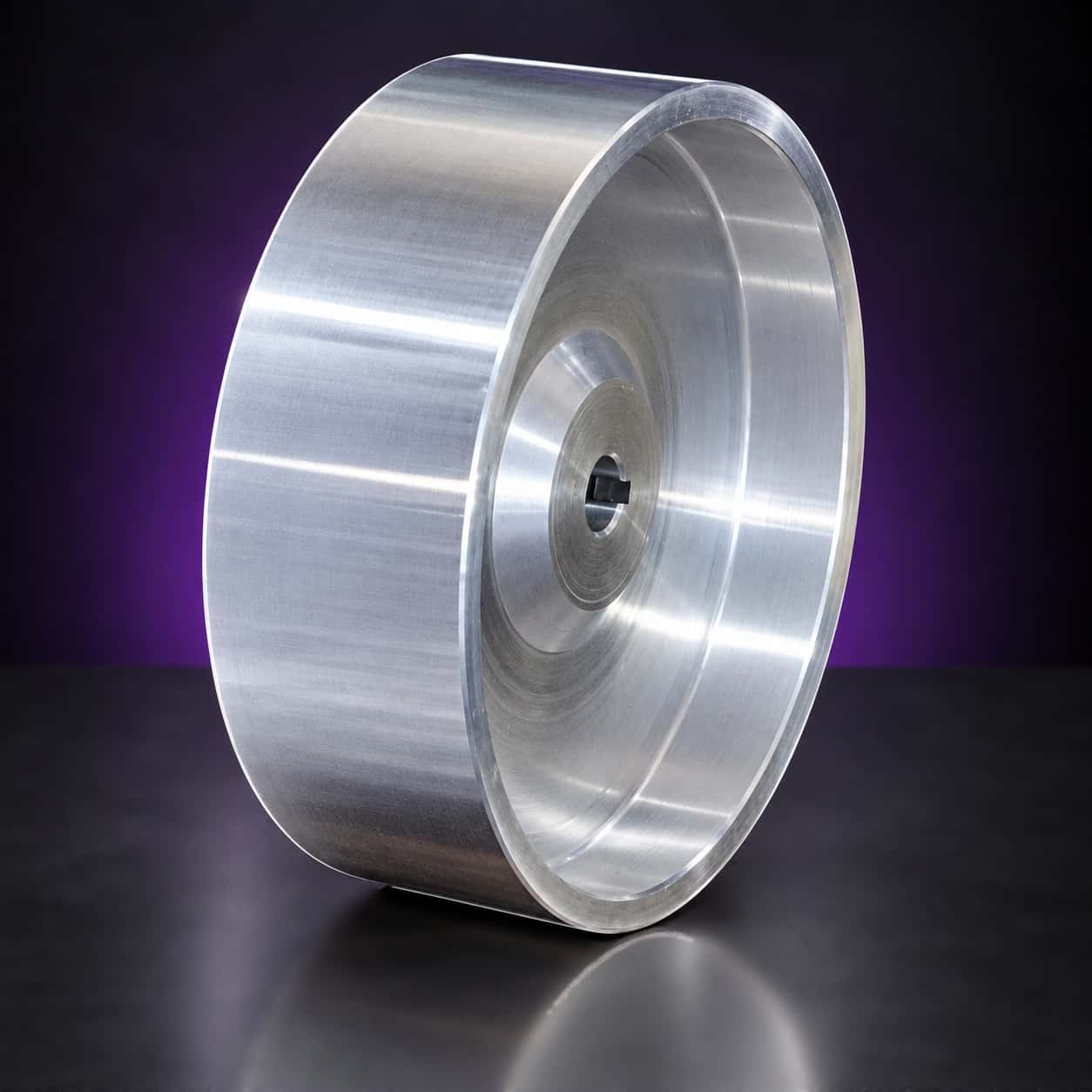
Reference chart
Belt Speed by Task Chart (SFPM)
Set your VFD by the job: working SFPM ranges for hogging, bevel grinding, hardened steel, handles and leather, with percentages for a direct-drive 2x72 setup.
Live tool
Enter length, width and thickness to get a steel bar's weight in pounds and ounces at 0.284 lb per cubic inch. Useful for blanks, bar orders and sword math.
Run it
Steel weighs 0.284 pounds per cubic inch, and that one number answers a surprising amount of shop math: what a blade blank weighs, what the bar order will cost to ship, whether the anime sword is possible. Enter dimensions, read pounds.
Your numbers
The arithmetic
Carbon and alloy blade steels all sit within about 1% of 0.284 lb/in³ — close enough that one number serves 1084, 5160, AEB-L and MagnaCut alike. Aluminum (6061) runs about 0.098 lb/in³ — roughly 35% of steel — which is the entire Nova-versus-Nebula conversation in one density comparison. Titanium sits near 0.163, brass near 0.307.
Estimate finished blade weight (blank weight minus roughly what your grind removes — a full flat grind takes off around a third of a blank’s weight); sanity-check sword builds before the steel order; compare shipping weights on bar stock; and settle every forum argument about giant fictional weapons with arithmetic instead of adjectives.
Browse more tools in the Calculators section.
More shop math
Eight tools, all free, all running in the page.
Set your VFD by the job: working SFPM ranges for hogging, bevel grinding, hardened steel, handles and leather, with percentages for a direct-drive 2x72 setup.

Find your 2x72's surface speed in SFPM from drive wheel diameter and motor RPM, with optional VFD frequency, and see how hard a belt cuts and how hot it runs.

Turn stock thickness, edge thickness and bevel angle into the scribe height for a flat grind, with notes on reading the answer and using it at the machine.
Same bench
Speed, angle and pressure only mean something on a grinder that holds its setting. I machine the parts, hand-assemble, track and test Torus grinders in Sterling, Illinois.

Current dual-axis platform with a fiber-laser-cut 6061 chassis and single-knob tracking.

Current dual-axis platform with a steel chassis, more mass and less vibration.

Prior-design aluminum chassis, 90-degree tilt and 1.5-inch tooling arms.
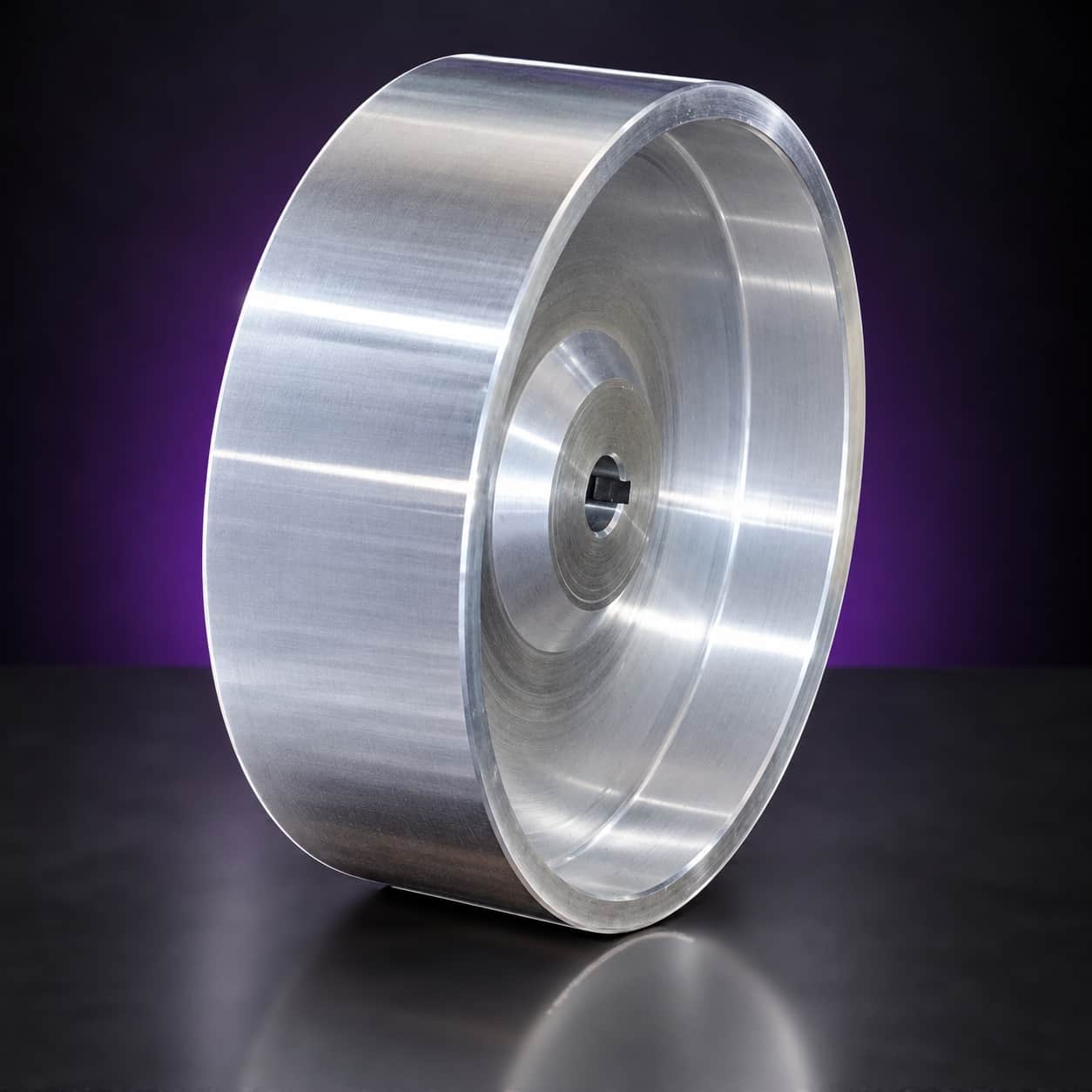
One-man shop
Send me your wheel size, motor and VFD details so I can compare them with the belt-speed calculation.