
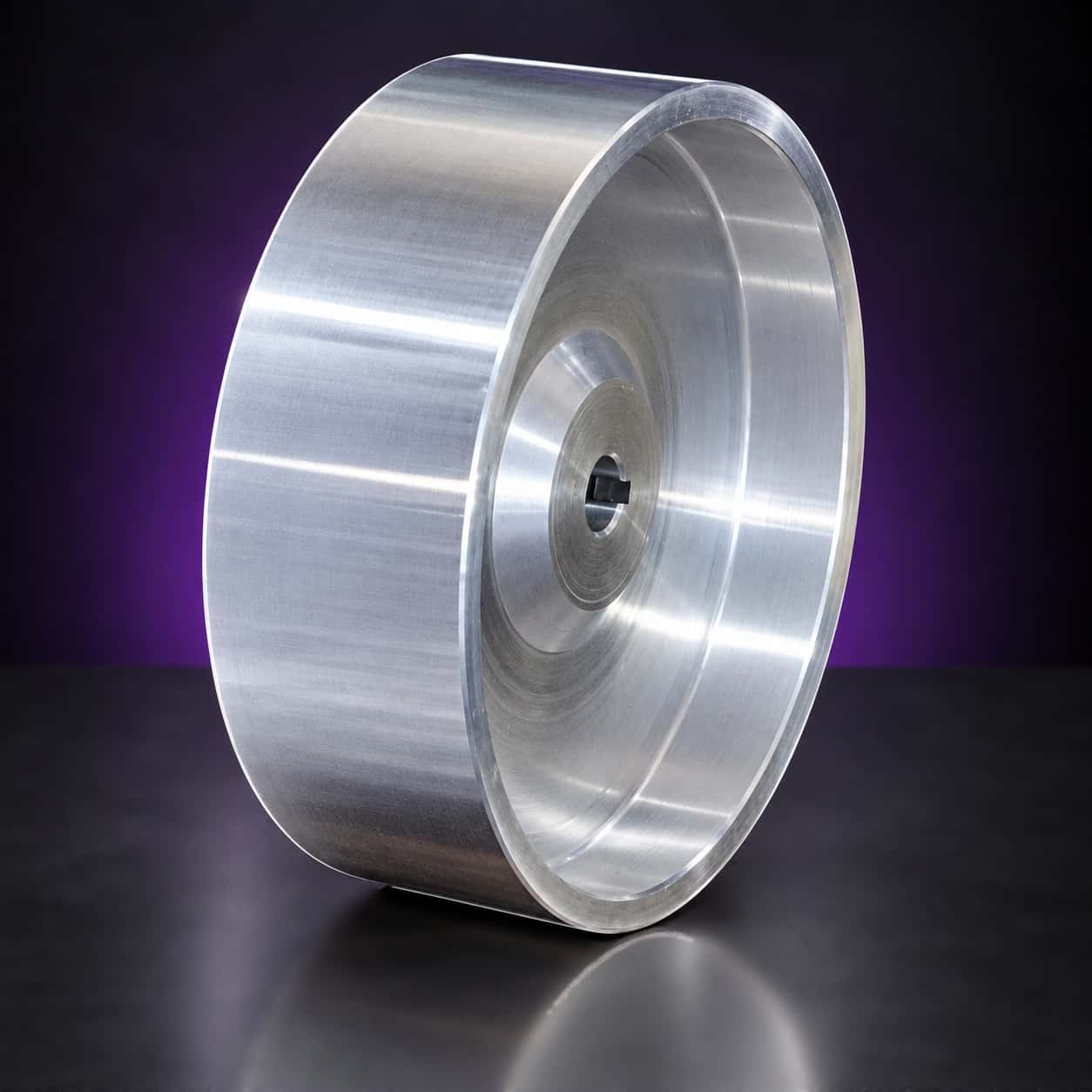
Reference chart
Belt Speed by Task Chart (SFPM)
Set your VFD by the job: working SFPM ranges for hogging, bevel grinding, hardened steel, handles and leather, with percentages for a direct-drive 2x72 setup.
Live tool
Enter spine thickness and blade width to find the honing angle built into a straight razor, per side and inclusive, with guidance against the classic targets.
Run it
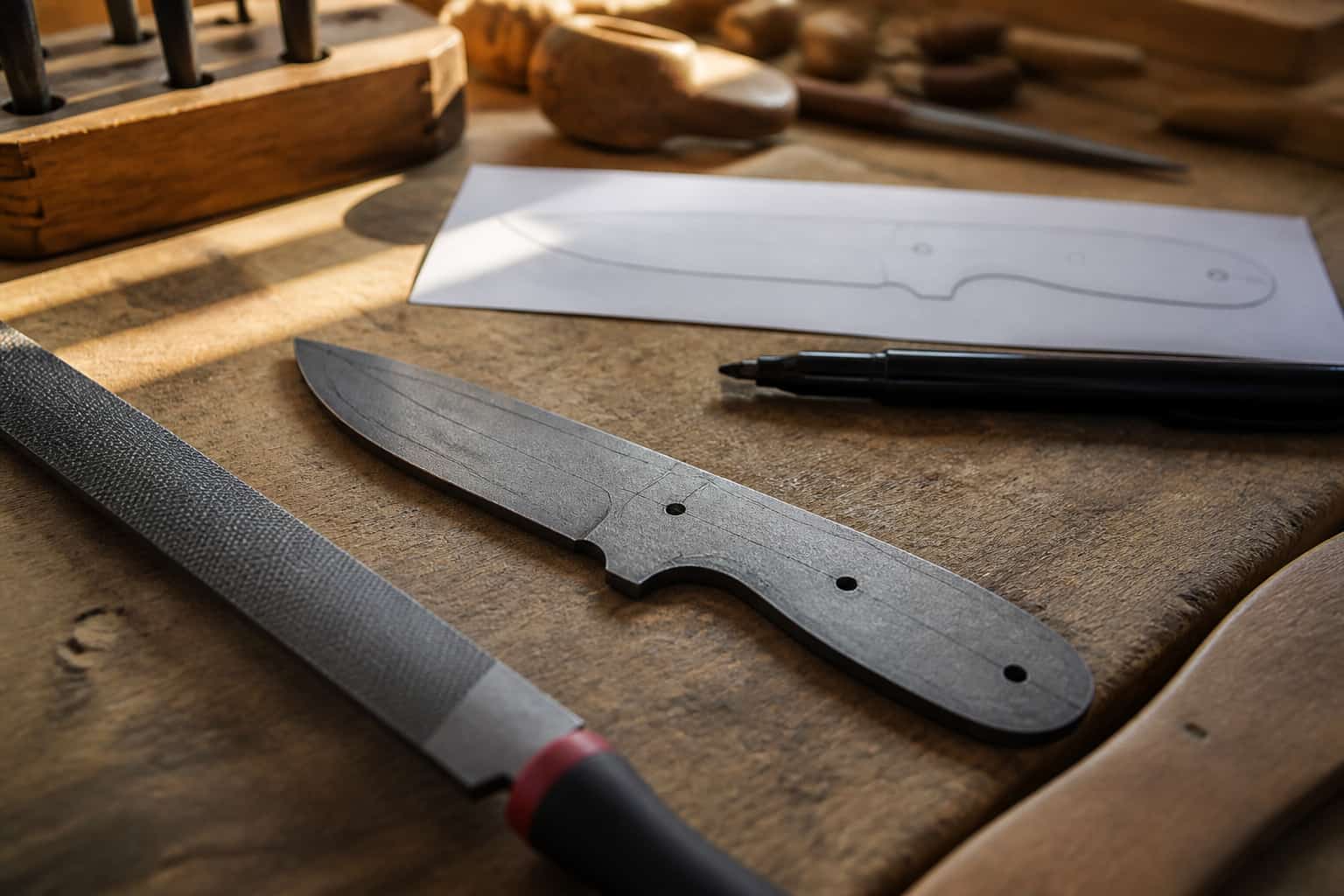
A straight razor’s edge angle is not chosen at the stones — it is built into the blade: honing flat on the spine, the spine thickness and blade width fix the angle forever. This calculator does the trigonometry: enter both measurements and read the angle per side, with guidance against the classic targets.
Your numbers
The arithmetic
Honing on the spine forms a triangle: half the spine thickness is the rise, the blade width is the hypotenuse. Angle per side = arcsin(half the spine ÷ width). The classical proportion — spine about one quarter of blade width — lands at the traditional 7–8° per side; see Straight Razor Geometry for why that ratio rules the design stage.
Design first: pick the width, multiply by roughly 0.25, and that is your spine before grinding. Check honing reality second: tape on the spine (a common protective habit) adds thickness and raises the angle slightly — add the tape to the spine number to see by how much. For knives honed on their spine (some traditional single-bevel work), the same math applies; for normal knives, angles come from the bevel-angle chart instead.
Browse more tools in the Calculators section.
More shop math
Eight tools, all free, all running in the page.
Set your VFD by the job: working SFPM ranges for hogging, bevel grinding, hardened steel, handles and leather, with percentages for a direct-drive 2x72 setup.

Find your 2x72's surface speed in SFPM from drive wheel diameter and motor RPM, with optional VFD frequency, and see how hard a belt cuts and how hot it runs.

Turn stock thickness, edge thickness and bevel angle into the scribe height for a flat grind, with notes on reading the answer and using it at the machine.
Same bench
Speed, angle and pressure only mean something on a grinder that holds its setting. I machine the parts, hand-assemble, track and test Torus grinders in Sterling, Illinois.

Current dual-axis platform with a fiber-laser-cut 6061 chassis and single-knob tracking.

Current dual-axis platform with a steel chassis, more mass and less vibration.

Prior-design aluminum chassis, 90-degree tilt and 1.5-inch tooling arms.
One-man shop
Send me your wheel size, motor and VFD details so I can compare them with the belt-speed calculation.