

Beginner Guides
2×72 Belt Grinder Brands Compared: The Honest Field Guide
Full disclosure, before anything else: this is Torus CNC’s site — we build three of the grinders compared below. Here’s how we’ve kept this honest: every…
Troubleshooting
Work back from what it is doing to what caused it, then to the fix that addresses the cause. Nothing here needs a sign-up.
The flow
Causes first, then the quick checks, the fix, prevention and the stop-work point.
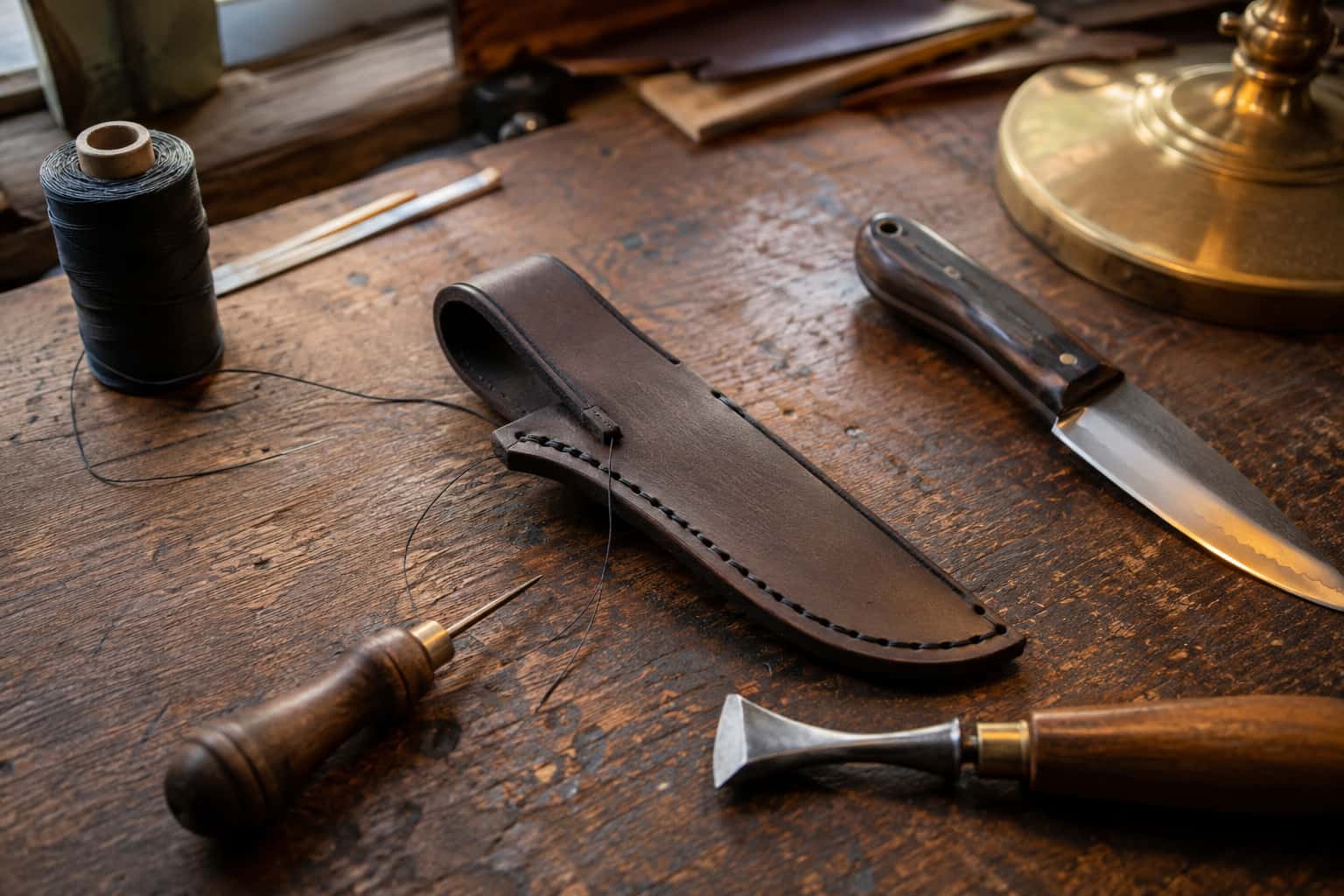
Over-conditioning — the most common modern cause: oil and conditioner soften the fibers that wet-forming stiffened, and the molded memory sags (the care guide's less-is-more rule exists for this). A soaking (rain, creek, wash) that partially re-cased the leather and let it relax. Ordinary wear: thousands of draws burnishing and stretching the contact points. Heat (car dashboards mold leather AWAY from fit as happily as toward it). Or the original form was shallow — molded soft with fingers only, never boned, so there was little mechanical grip to lose.
Find where grip should live: the boned lines at guard and handle swell — are they visibly softened and rounded? Flex the sheath body: floppy overall means oil or soak damage; stiff-but-loose means wear at contact points only. Smell and feel for over-oiling (soft, greasy hand).
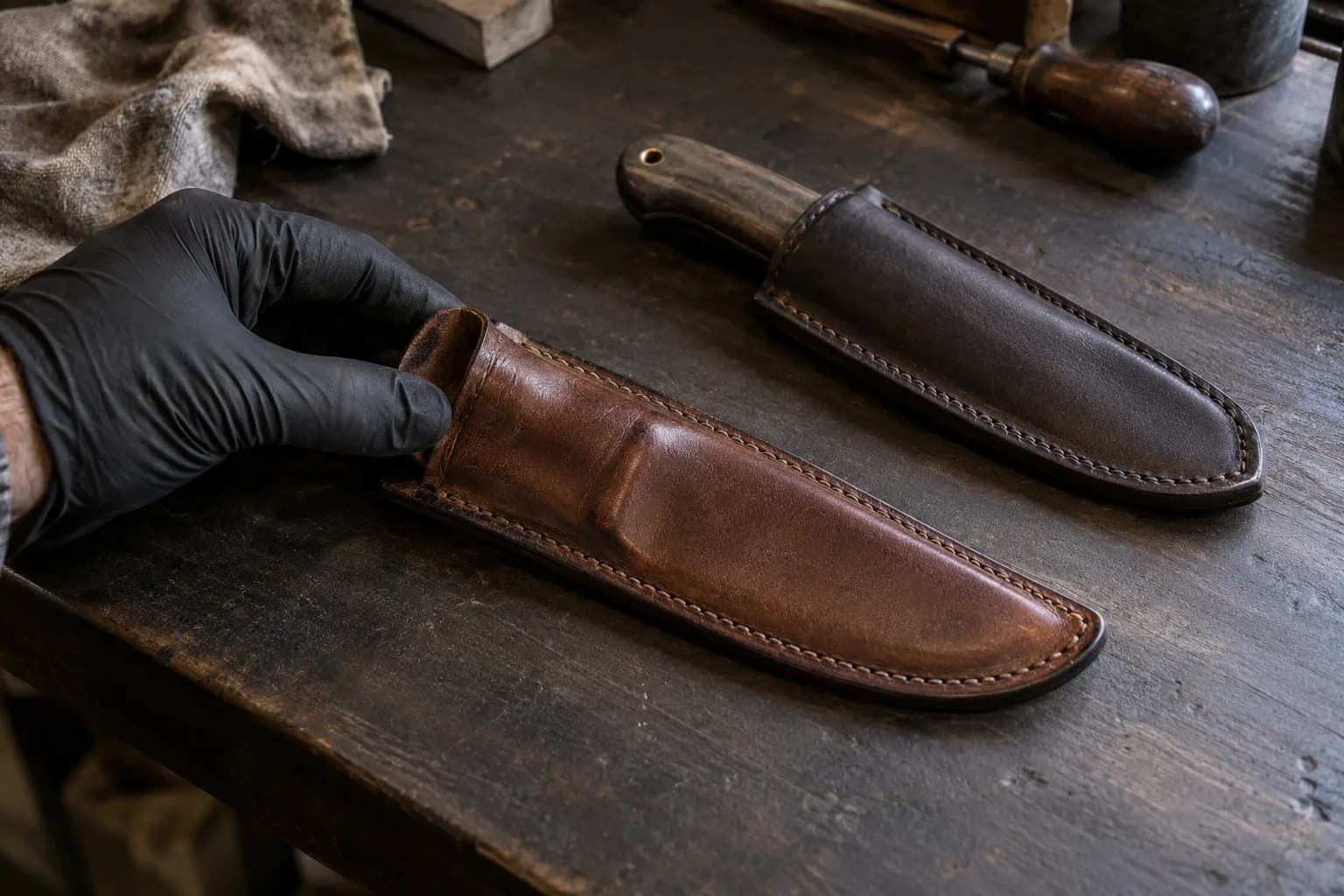
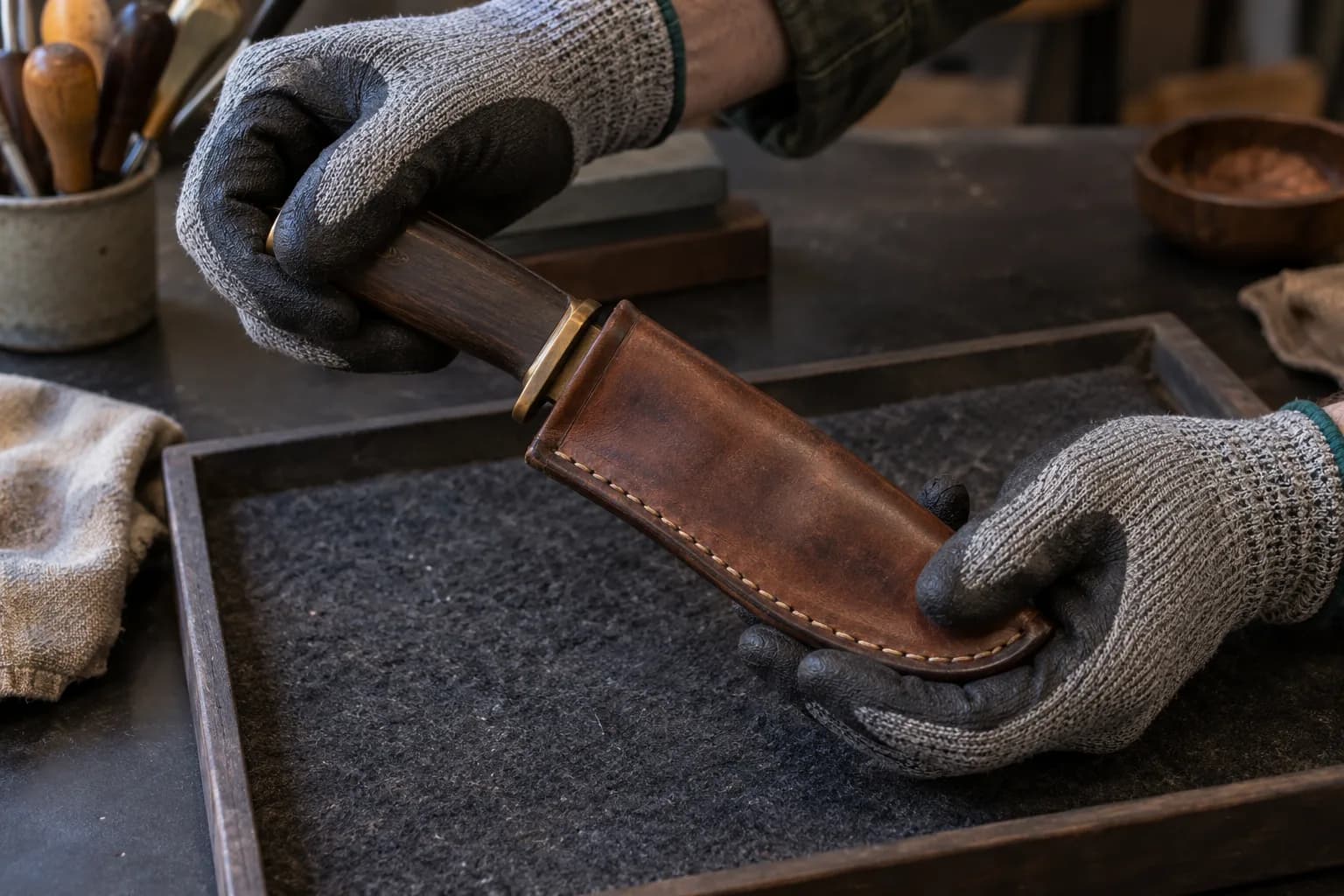
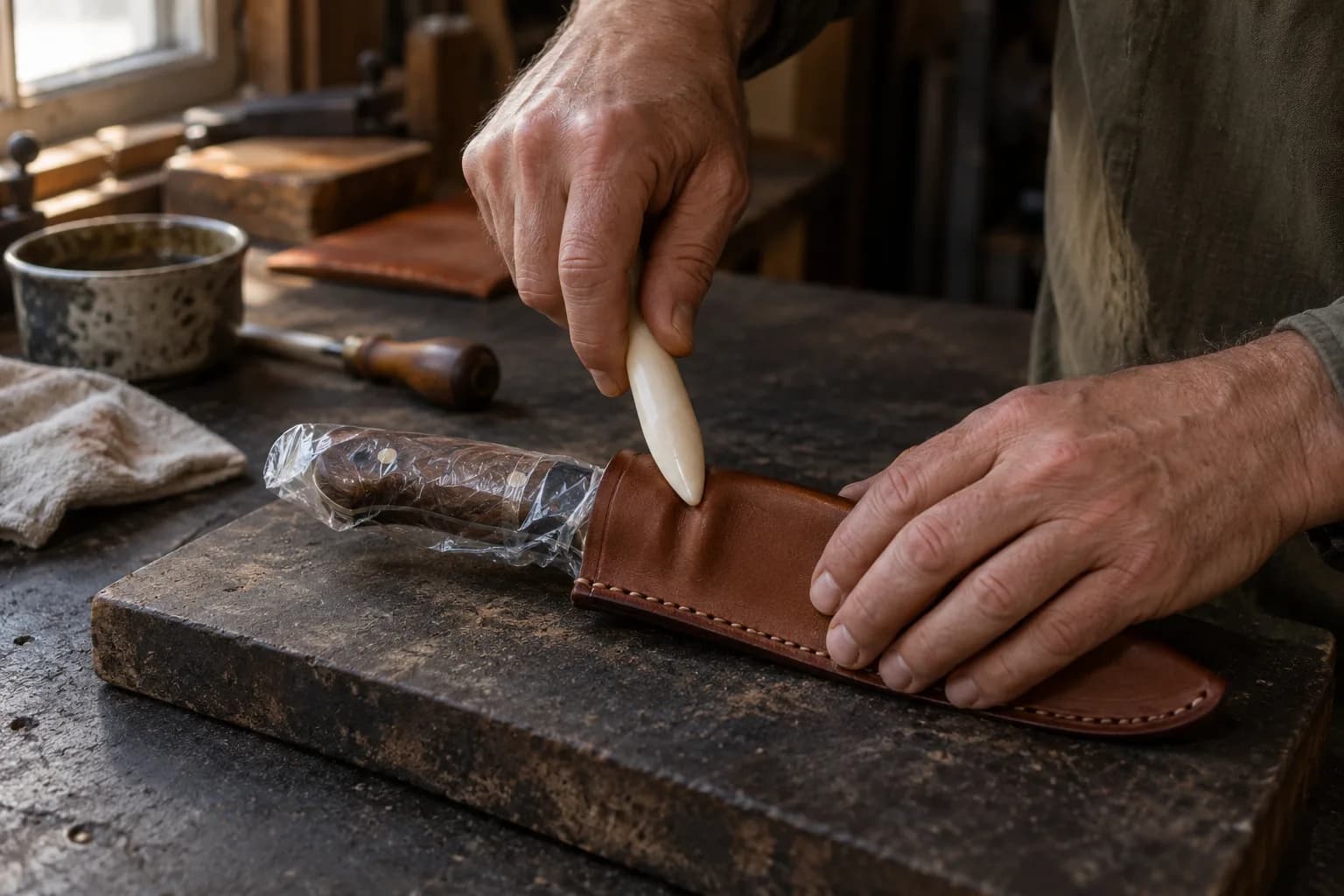
Re-wet-form: the original process repeats — case the sheath (evenly damp, not soaked), insert the plastic-wrapped knife, re-bone the retention lines HARD at guard and swell, air dry fully with the knife in place, per Wet Forming. This restores most sheaths completely. Over-oiled leather re-forms weaker — do the re-form, then accept a firmer top coat (resolene) to lock what stiffness remains. Chronic or hard-carry cases: add mechanical retention honestly — a snap strap over the guard, or on horizontal/dangler carry where friction was always the wrong sole plan (the styles guide's rule), a strap from the start.
Condition sparingly and never soak a formed sheath in oil. Re-bone crisp lines at every re-form. Keep formed sheaths off dashboards and radiators. Shake-test seasonally and re-form at the first looseness — a five-minute touch-up beats a lost knife.
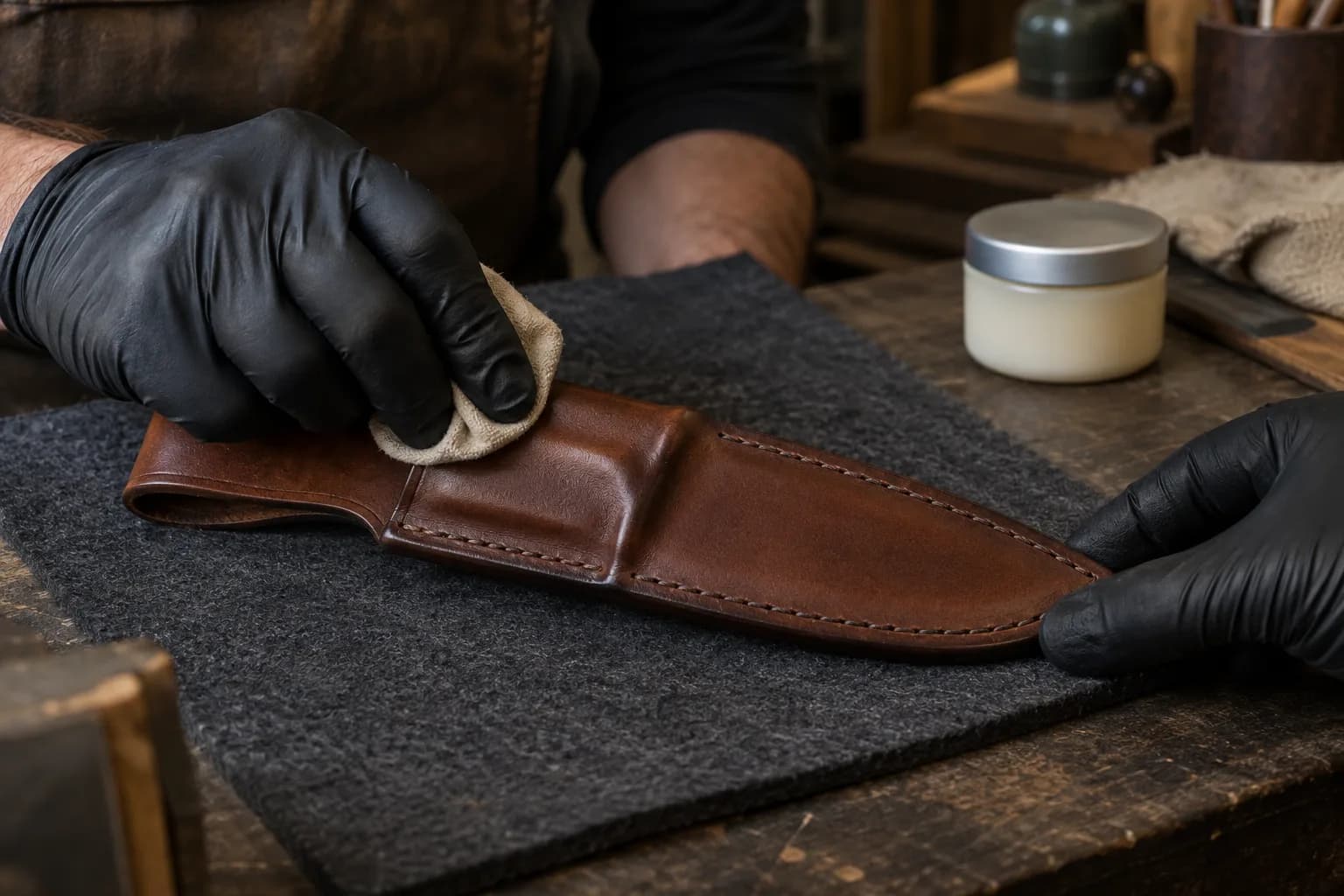
If the leather has gone truly limp — chrome-tan-soft, no body to hold a form — retire it: fiber structure does not regenerate, and a floppy sheath around a sharp blade is a hazard, not an heirloom. Cut the next one from firm 8-9 oz veg-tan and let this one keep car keys.
Keep reading
The long-form version of the fix above, written from the same bench.
Full disclosure, before anything else: this is Torus CNC’s site — we build three of the grinders compared below. Here’s how we’ve kept this honest: every…

Comics run on invented metals — adamantium, vibranium, the whole periodic table of plot — and the fastest way to appreciate real metallurgy is to audit…
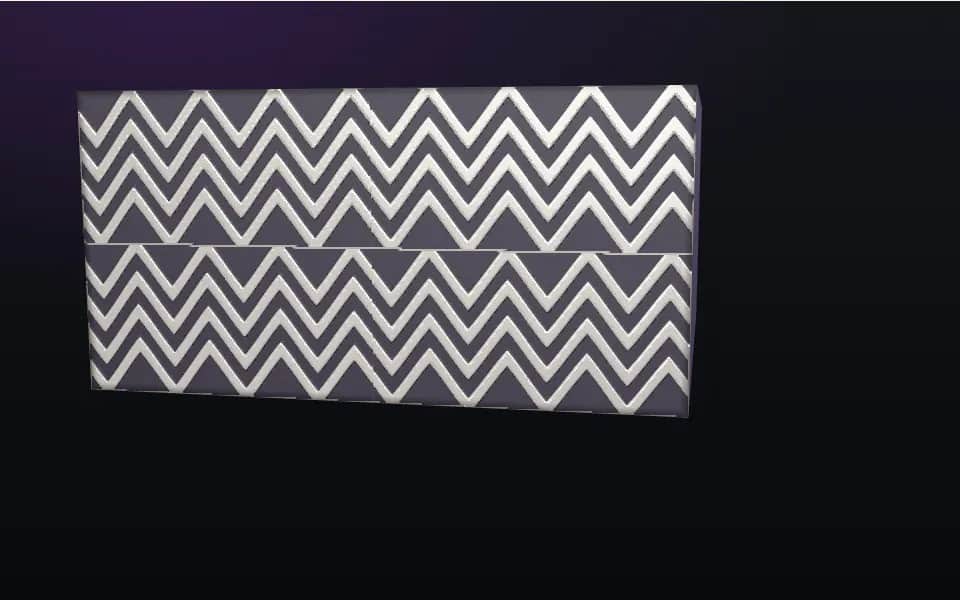
Past the ladder, twist, and raindrop lies the territory where damascus becomes composition: patterns built by controlling the layers in three dimensions…
Same bench
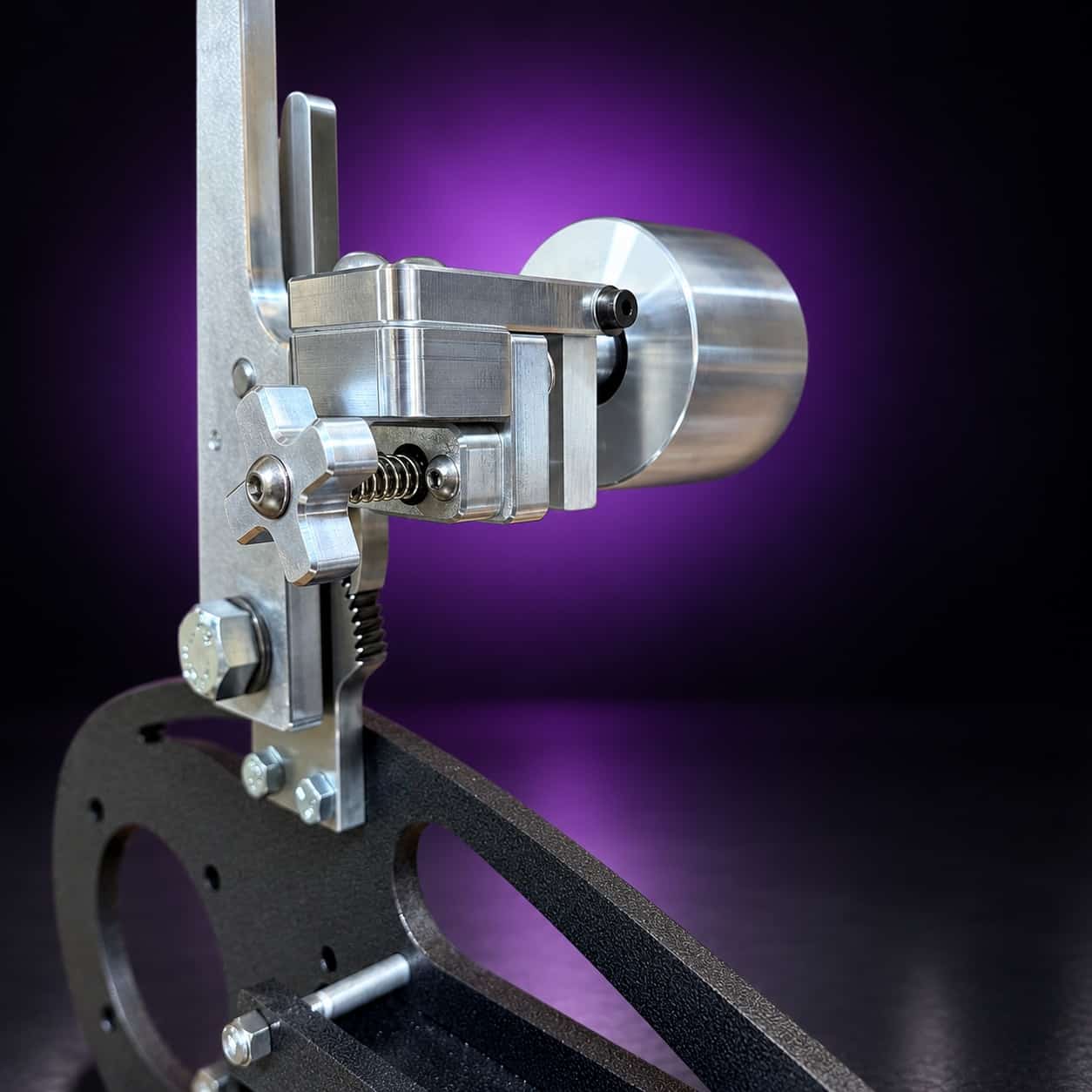
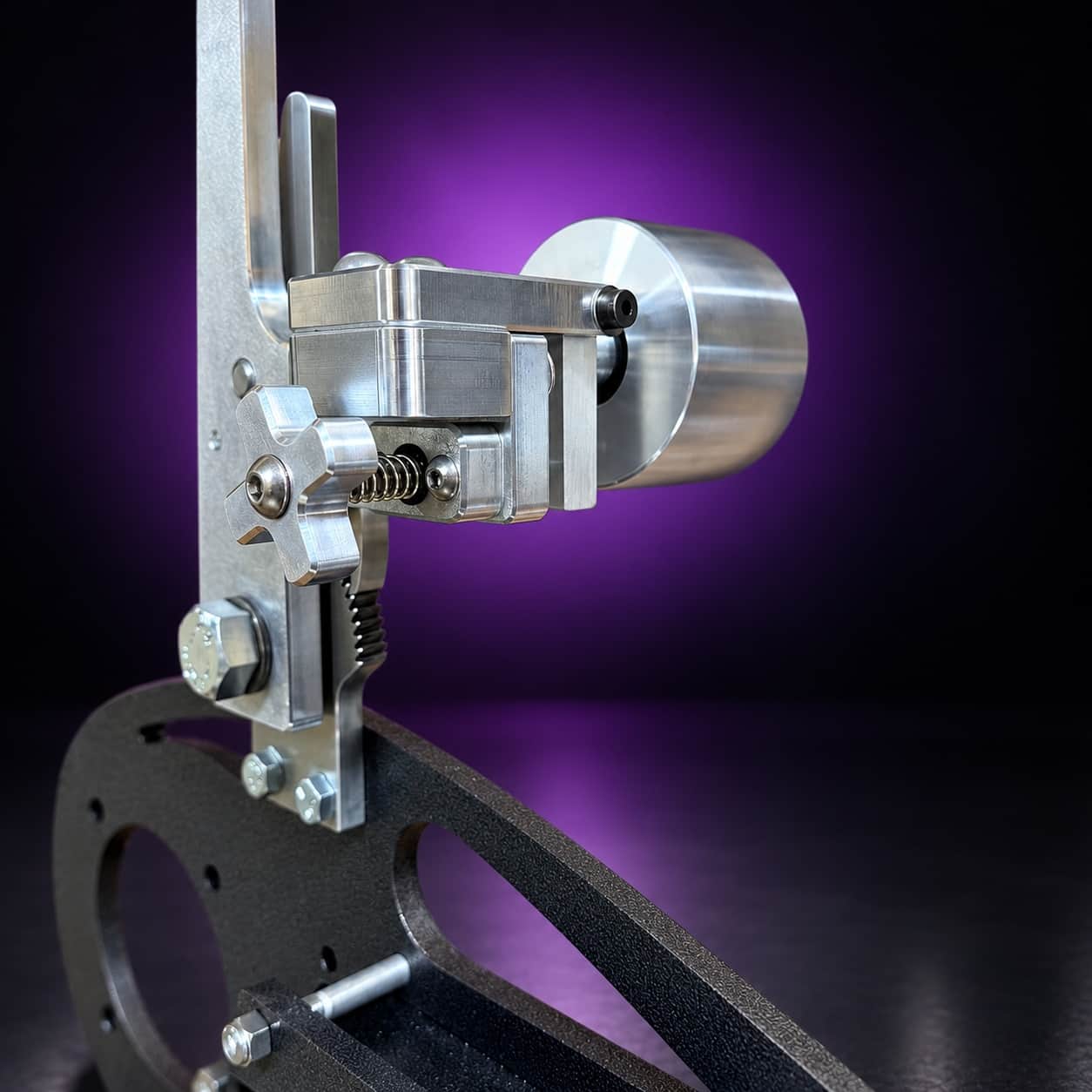
Flex, a soft platen or a tracking knob that will not hold can show up as a bad grind. I machine the parts, hand-assemble, track and test each Torus grinder in Sterling, Illinois.

Current dual-axis platform with a fiber-laser-cut 6061 chassis and single-knob tracking.

Current dual-axis platform with a steel chassis, more mass and less vibration.

Prior-design aluminum chassis, 90-degree tilt and 1.5-inch tooling arms.
One-man shop
Send me a photo and describe what happened before it went wrong. Include the machine, belt and steel when they are relevant.