
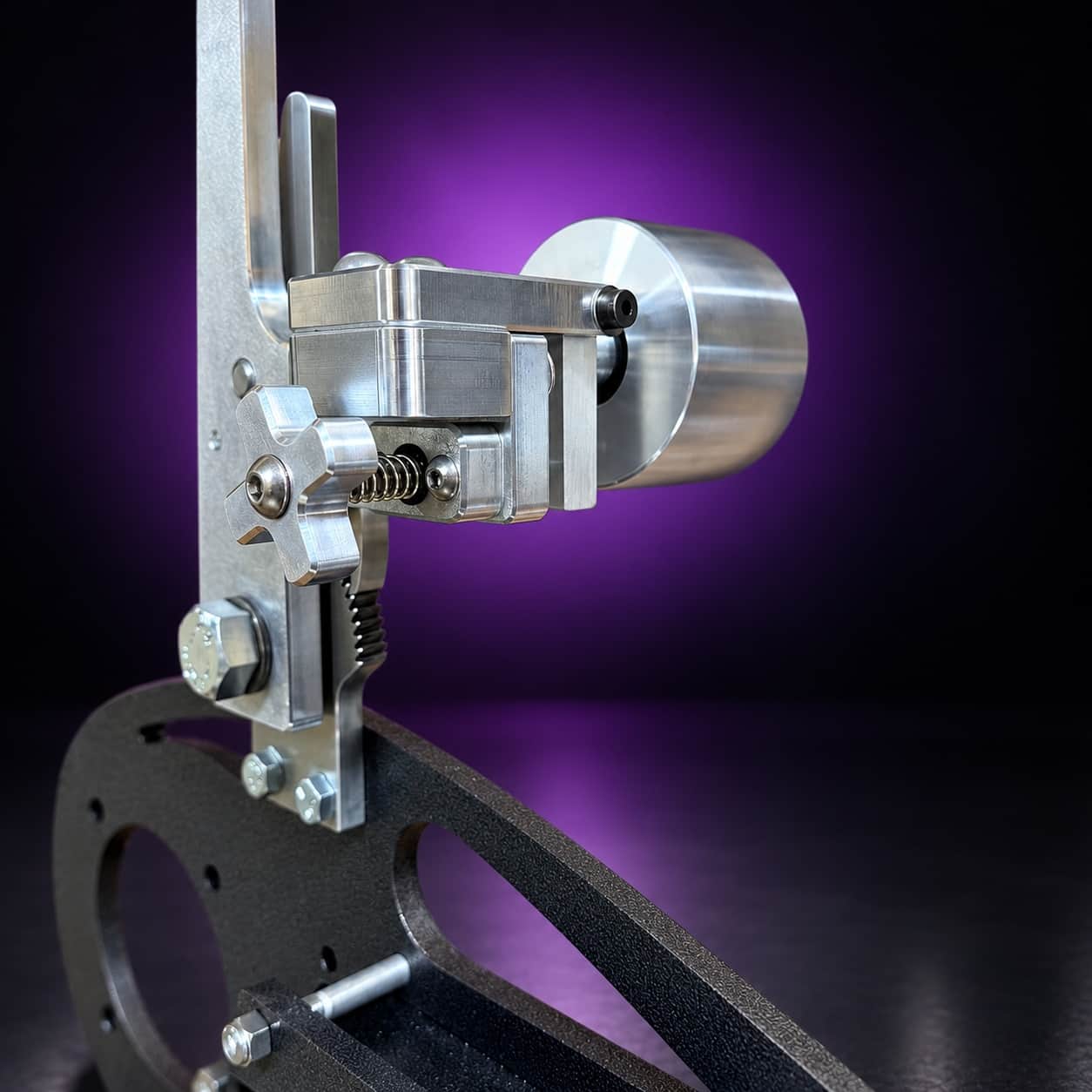
Nebula dual-axis tracking assembly: star knob, spring and idler wheel, close-up, on black with a purple glow

Troubleshooting

Blade Edge Chipping During Normal Use

Work back from what it is doing to what caused it, then to the fix that addresses the cause. Nothing here needs a sign-up.
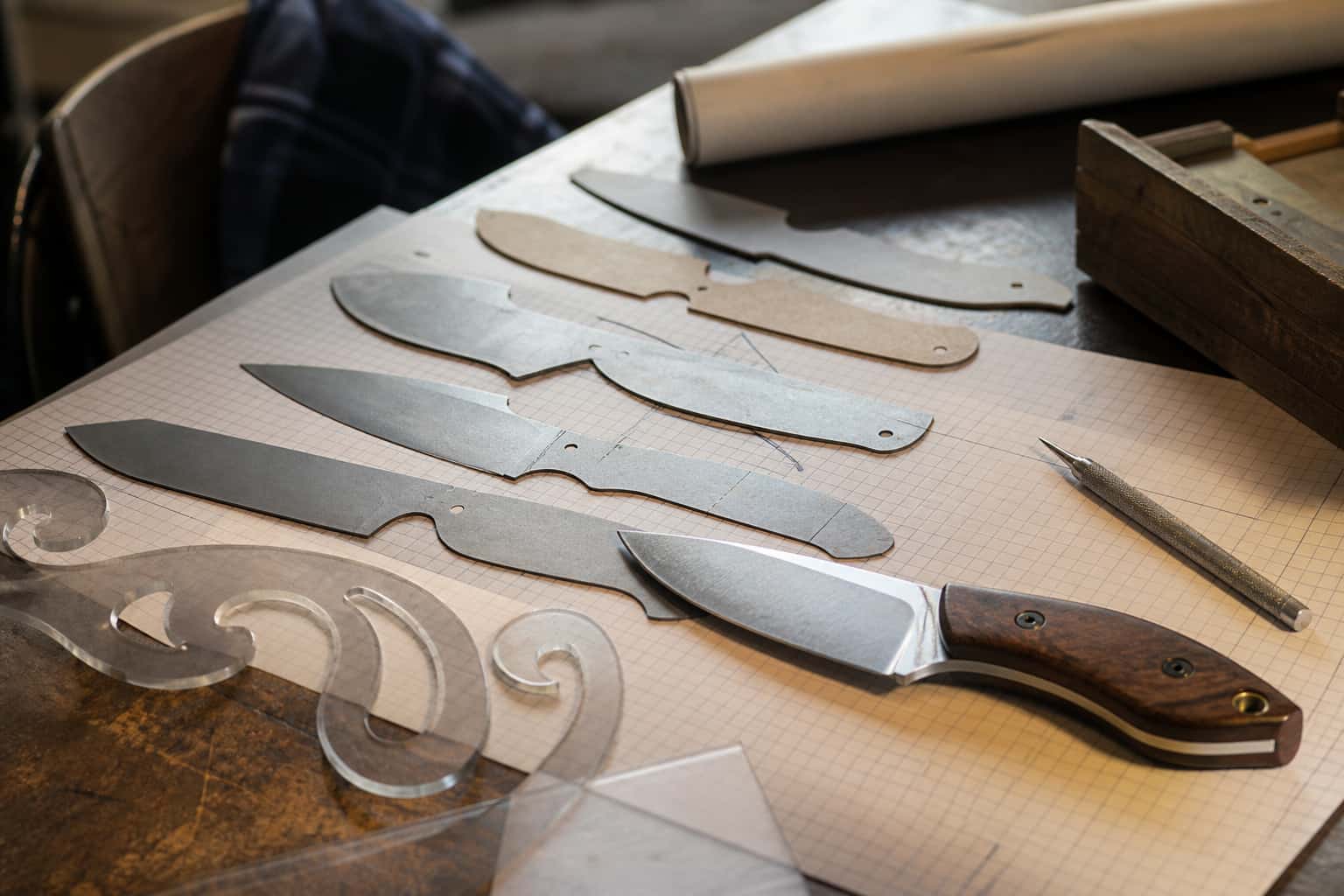
Knife blade design in a working knife shop
If a symptom appears mid-job, put the work down and check it before continuing.
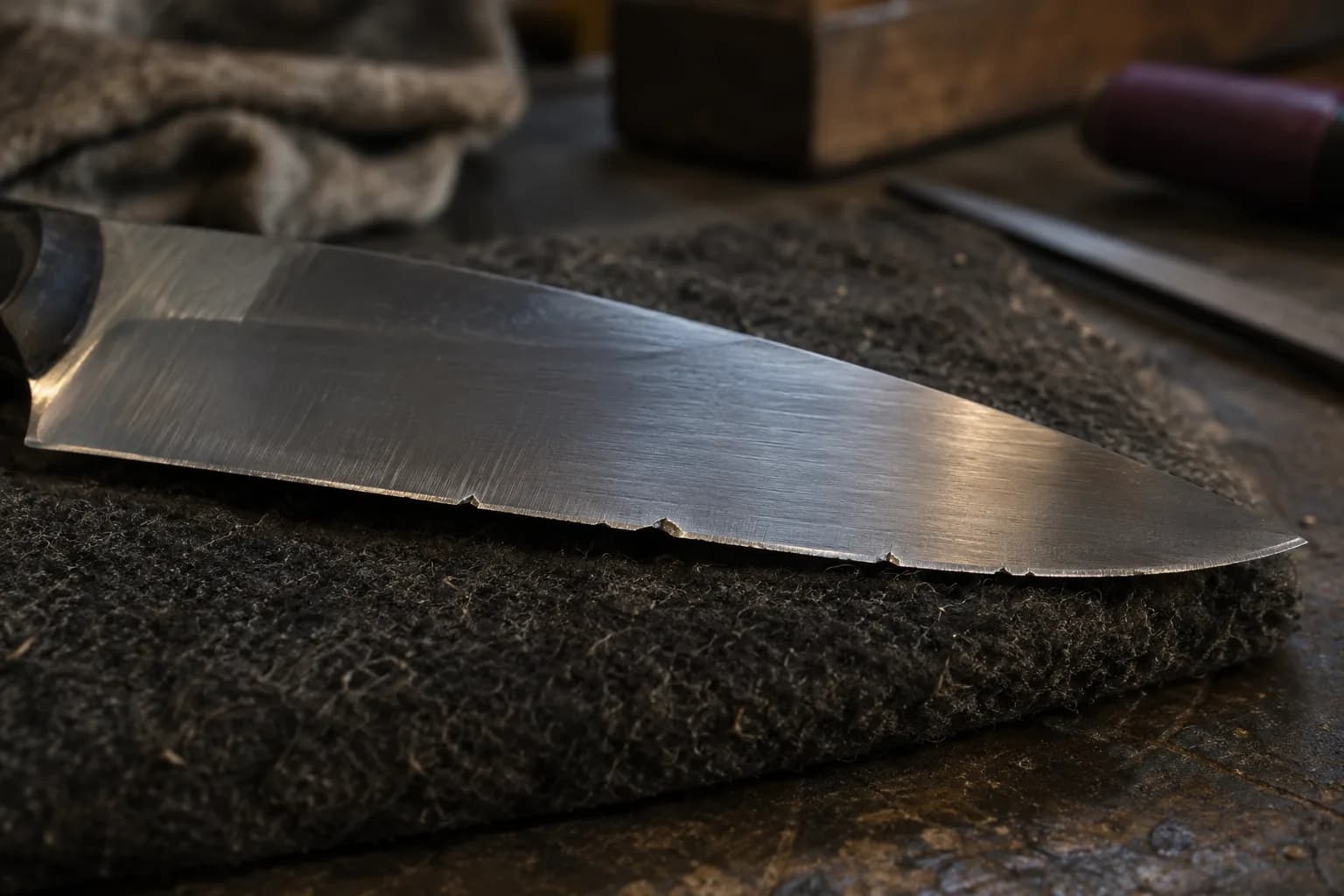
Finished knife blade resting on a dark felt pad, with several small irregular chips missing along its cutting edge.

The flow

Work it in this order

Causes first, then the quick checks, the fix, prevention and the stop-work point.
  1. Likely causes

    • The blade was heat treated too hard for the steel or the intended use, trading away too much toughness for edge retention
    • The final edge angle is too thin or too acute for the task the knife is actually being used for
    • Untempered or under-tempered steel left dangerously brittle, even if it tested hard enough on a file test
    • The steel itself has lower toughness than the use case demands, see Choosing Steel by Application for matching steel to task
    • Grain coarsened during heat treat from overheating, reducing toughness independent of the hardness reading
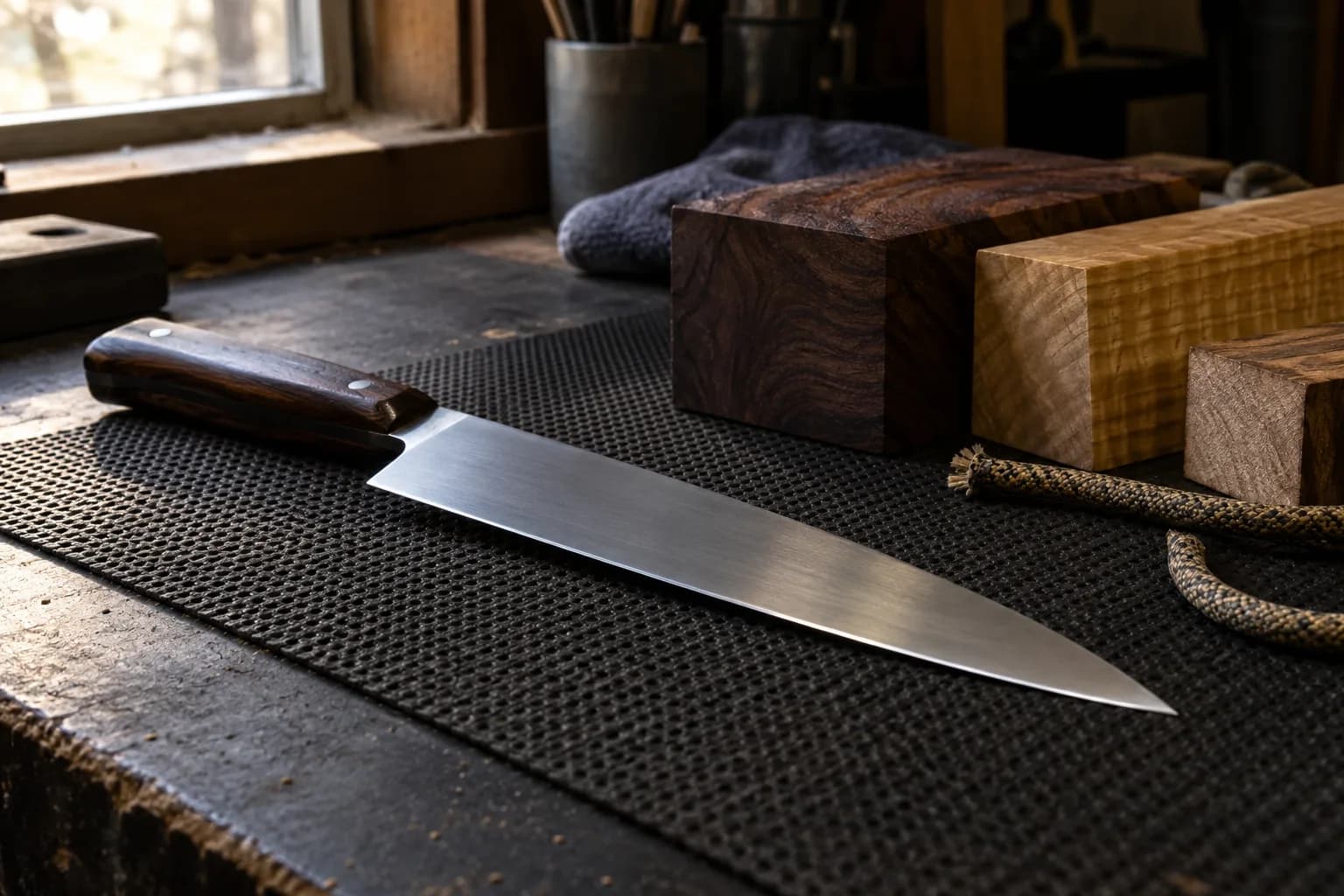
Thin slicer knife with a rosewood handle rests on a mesh bench pad beside hardwood blocks and a length of frayed paracord.
  1. Quick checks

    • Confirm the blade was fully tempered after quench, not just hardened, skipping temper is a common and serious cause of edge chipping
    • Check the edge angle against what's appropriate for the task, a very thin edge angle on a steel/use combination that needs more support will chip
    • Review the heat-treat cycle used against the steel's actual published recipe, confirm temperatures and times weren't guessed
  2. Fixes

    • If tempering was skipped or under-done, the blade needs to be re-tempered, this alone often resolves chipping without needing a full re-hardening cycle
    • If the edge angle is too thin for the task, reprofile to a slightly more obtuse angle to add support behind the edge
    • If the steel and hardness combination is fundamentally mismatched to the use case, the blade may need to be re-heat-treated to a slightly lower target hardness
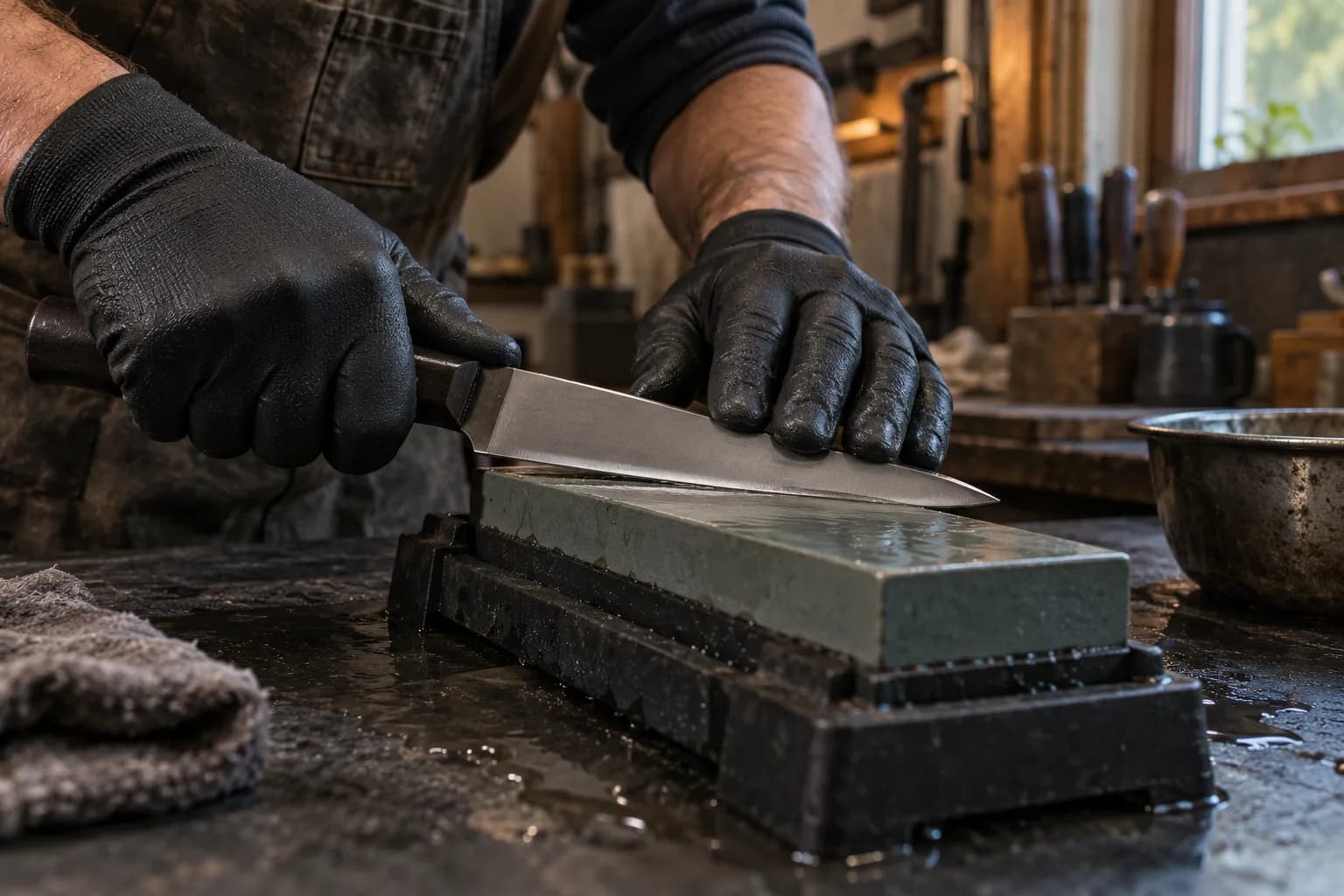
Gloved hands hold a knife edge against a wet bench stone seated in a nonslip holder during a reprofile pass.
  1. Prevention

    • Always temper immediately after quenching, never skip or delay this step
    • Match hardness target and edge angle to the actual use case, see Why Hardness Matters for the tradeoffs involved
    • Verify heat-treat temperatures with a reliable thermometer or calibrated kiln rather than estimating
    • Choose steel with adequate toughness for the intended use before committing to a build
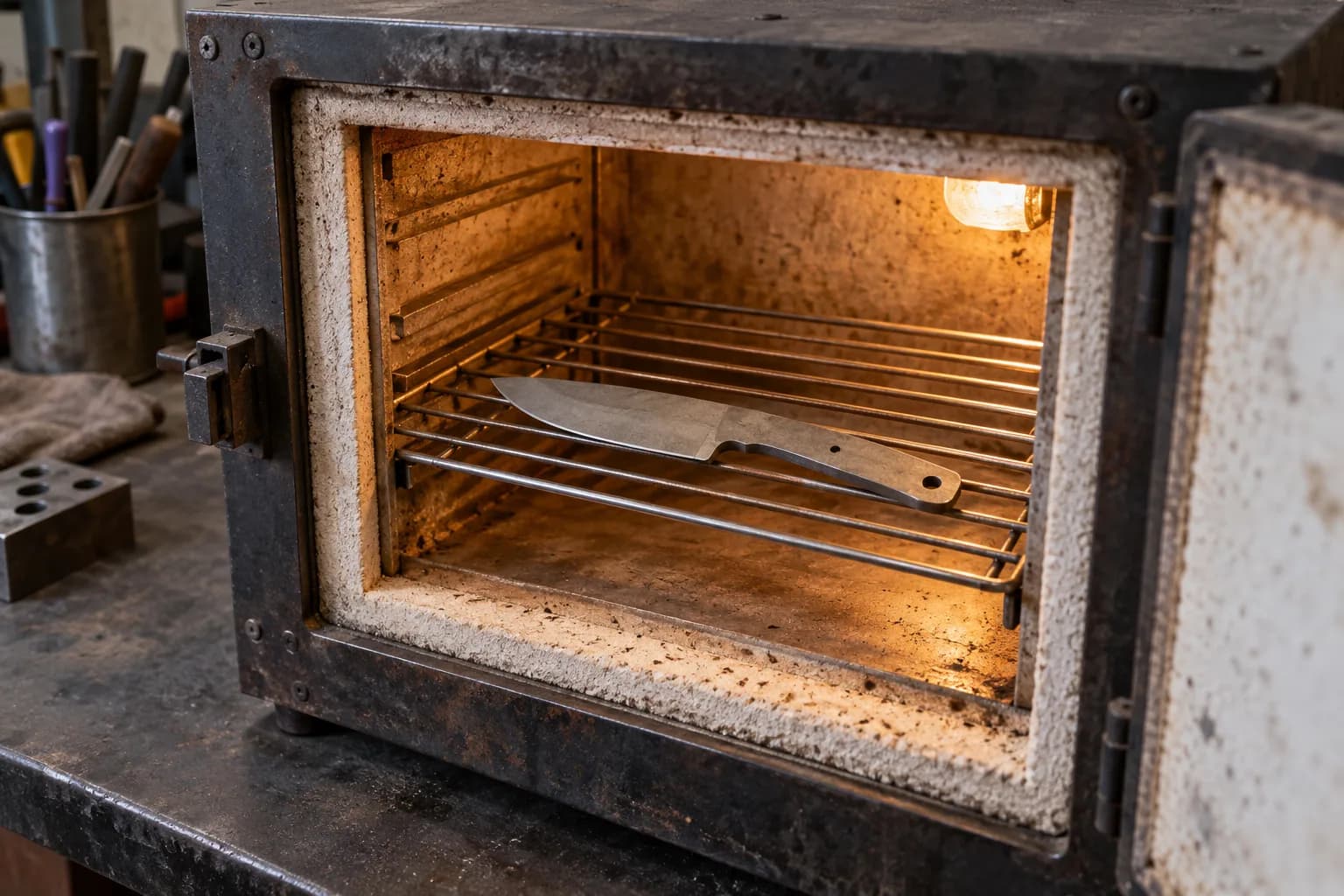
Gray hardened knife blank with a tang hole lying on a wire rack inside an open, lamp-lit workshop tempering oven.
  1. When to stop

    If chipping is happening under genuinely normal, light use rather than any hard or unusual stress, stop using the blade for real tasks and address the heat treat before continuing, this points to a real structural problem with the blade, not just an edge-maintenance issue.

Keep reading

Guides that cover the cause

The long-form version of the fix above, written from the same bench.

Same bench

When the machine is the cause

Flex, a soft platen or a tracking knob that will not hold can show up as a bad grind. I machine the parts, hand-assemble, track and test each Torus grinder in Sterling, Illinois.
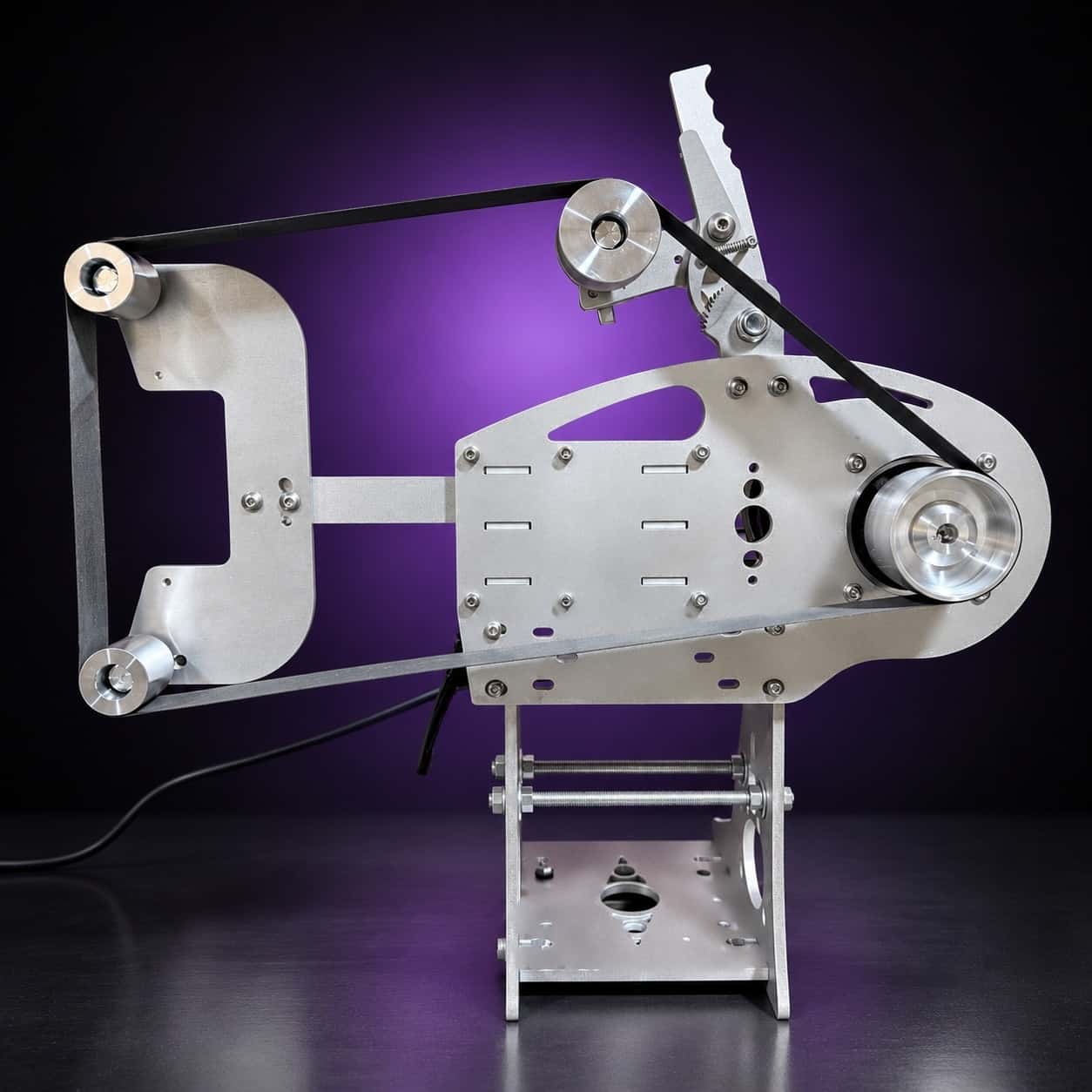
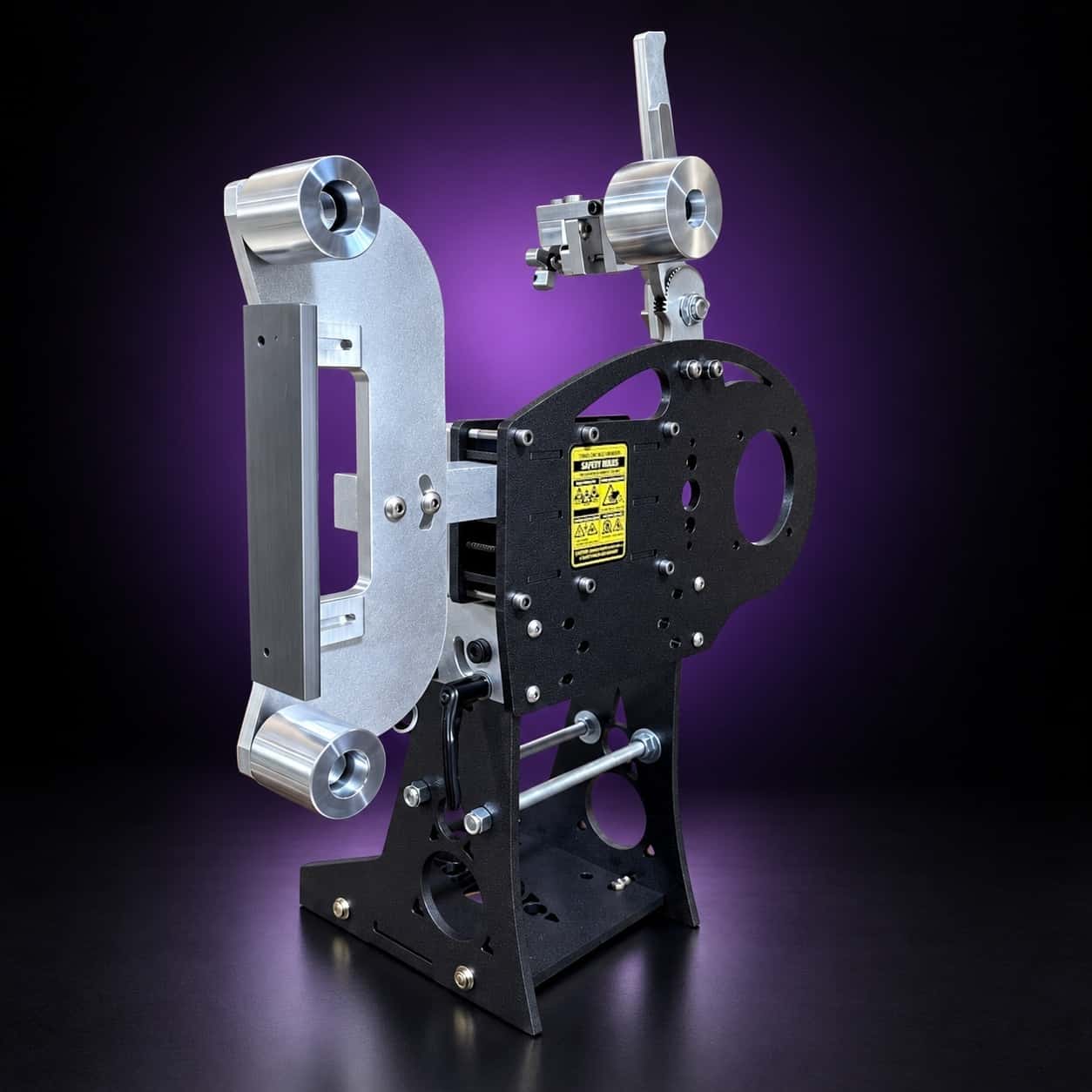
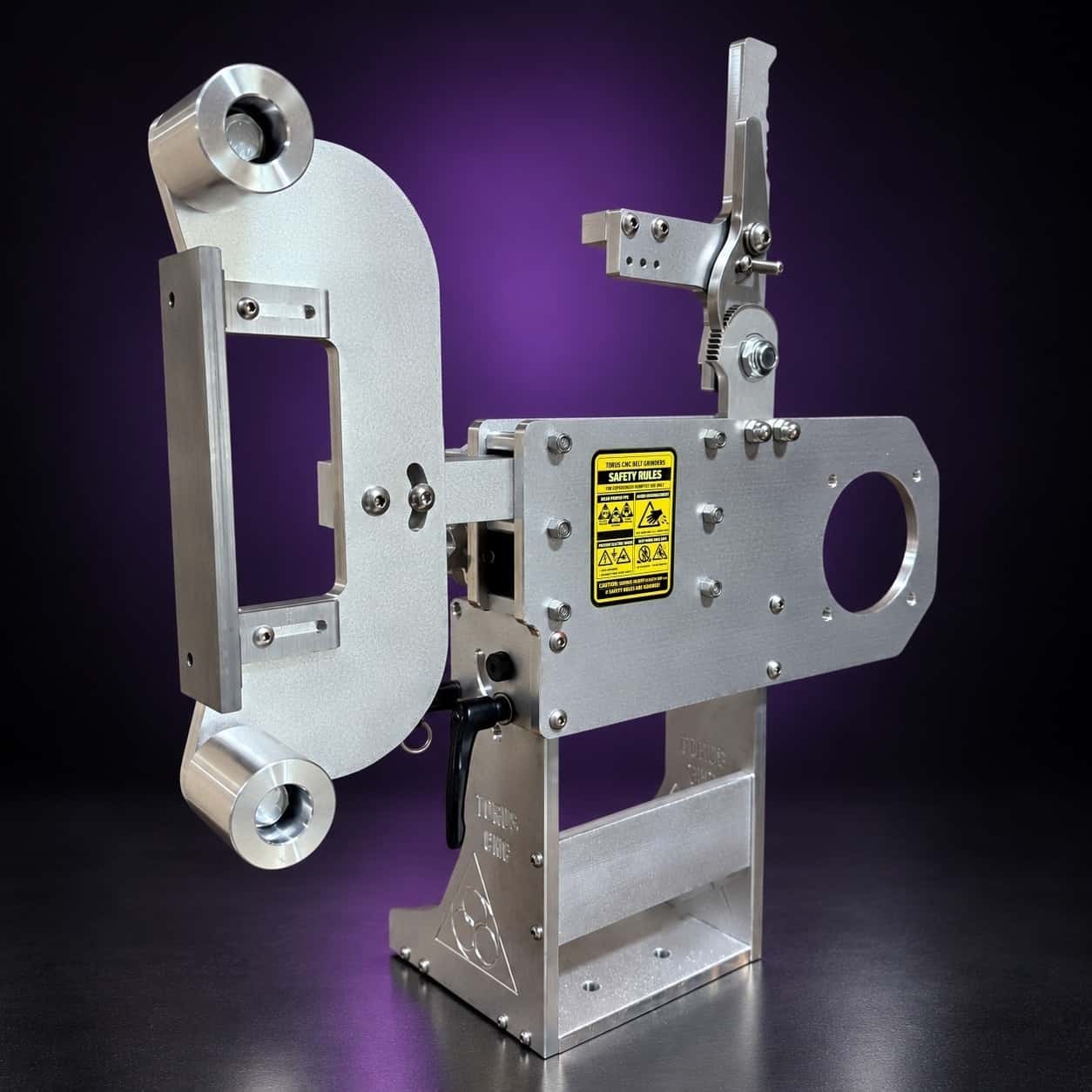
  • Classic aluminum 2x72 grinder, side view with flat-platen tool arm and yellow Safety Rules label, on black with a purple glow

    Torus 2×72 Classic Aluminum Belt Grinder

    Prior-design aluminum chassis, 90-degree tilt and 1.5-inch tooling arms.
    Starts at$995View

One-man shop

Not sure which cause you have?

Send me a photo and describe what happened before it went wrong. Include the machine, belt and steel when they are relevant.