

Beginner Guides
2×72 Belt Grinder Brands Compared: The Honest Field Guide
Full disclosure, before anything else: this is Torus CNC’s site — we build three of the grinders compared below. Here’s how we’ve kept this honest: every…
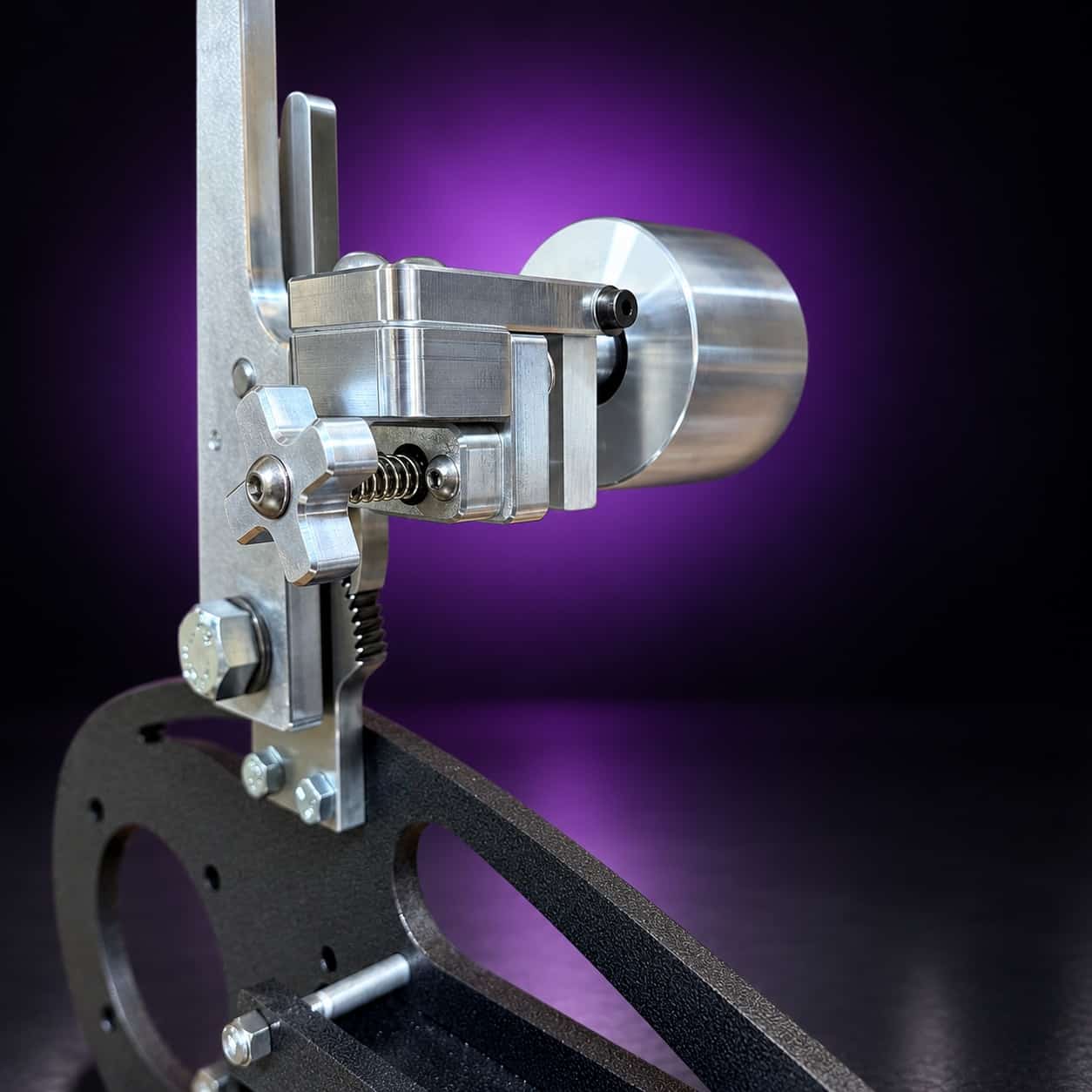
Troubleshooting
Work back from what it is doing to what caused it, then to the fix that addresses the cause. Nothing here needs a sign-up.

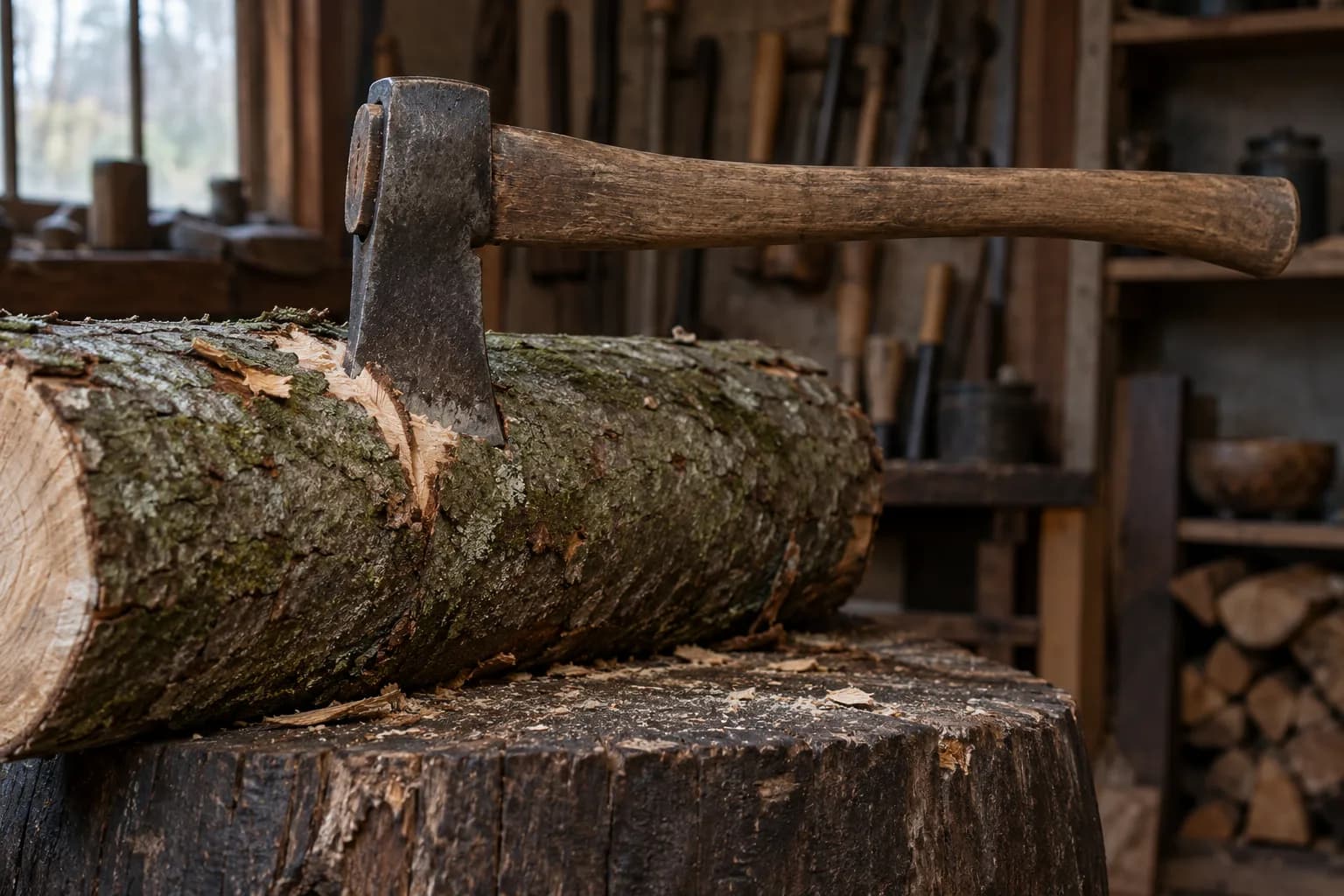
The flow
Causes first, then the quick checks, the fix, prevention and the stop-work point.
Sticking: cheeks too thin and flat for the wood — the head penetrates like a knife and wedges like one; classic with lean felling profiles in soft green wood, and with vintage heads whose cheeks wore hollow through decades of filing (see Axe Geometry). Bouncing: the reverse — splitting-grade wedge cheeks or a too-obtuse edge asked to fell; or a rolled, dull edge; or dense seasoned hardwood that simply out-hards a lazy angle. Wrong-axe-for-job explains most of both: felling geometry sent splitting and vice versa.
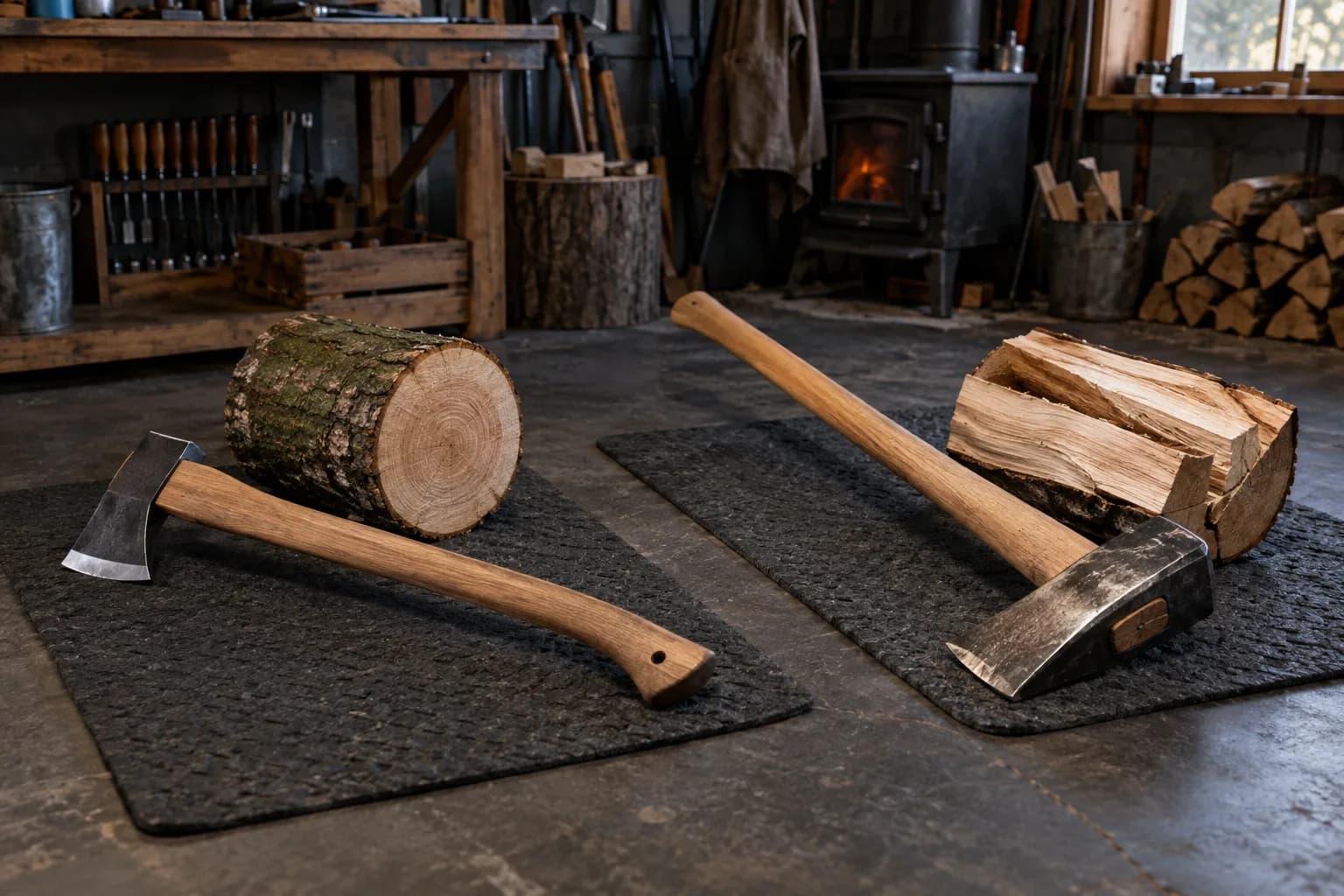
Watch one careful swing: deep-and-jammed = penetration exceeding relief (thin cheeks); shallow-chip-and-ring = relief exceeding penetration (fat cheeks or dull edge). Straightedge across the cheeks — hollow behind the bit means worn-in stick. Thumb the edge for rolls and flats. Then ask the honest question: is this axe's pattern even meant for this wood?
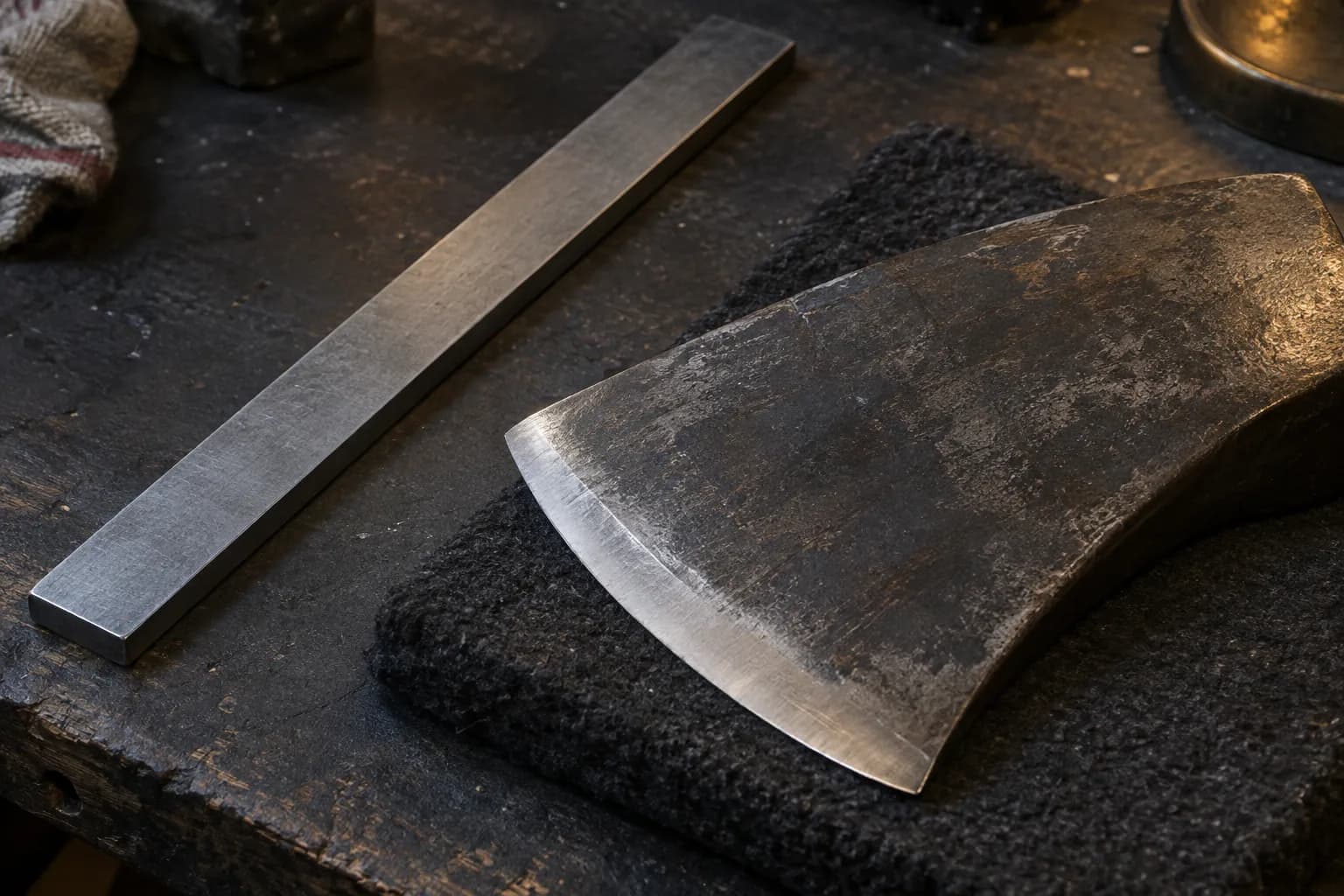
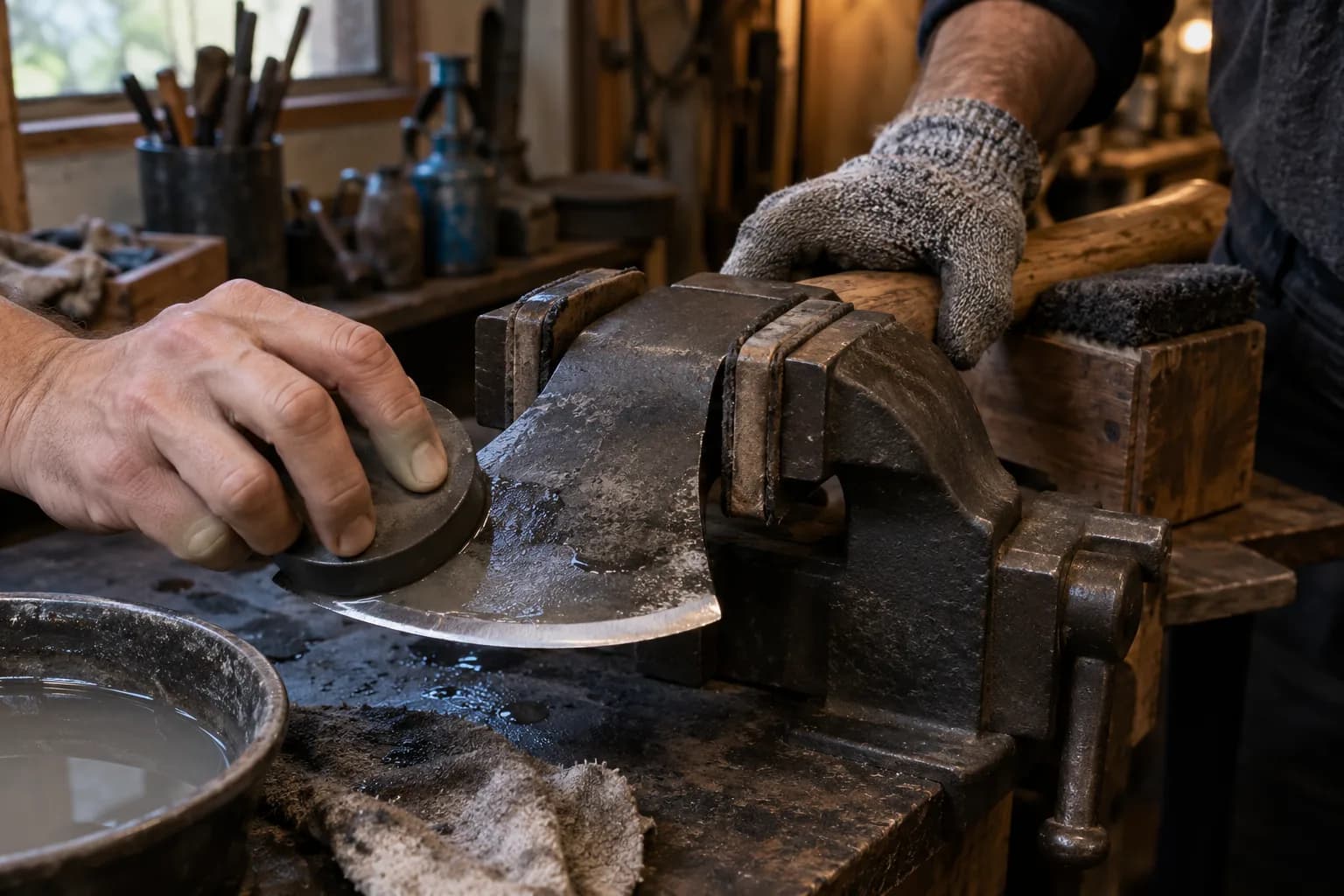
Match or modify. If the axe is simply miscast for the job, swap axes and both symptoms vanish — the whole argument of the field guide. To fix a sticker: restore cheek convexity — build the high centerline back on the platen and slack belt (the restoration guide's most common regrind), so the head releases as it cuts. To fix a bouncer: sharpen first (a keen convex at 25-ish inclusive fixes most), then thin the cheeks gradually toward a felling profile if the pattern allows. Angled felling strokes (45 degrees to the grain) also cure half of sticking complaints — straight-in chops wedge in any geometry.
Buy the pattern for the actual wood. Maintain the convex at every sharpening instead of flattening it (Sharpening and Care), and check cheek profile yearly on working axes — geometry drifts one filing at a time.
Stop grinding when a regrind approaches the bit's hardened zone limits — an axe thinned past its hard case chips and folds forever after (see Bit Steels). And a bounce off a KNOT with a good edge is physics, not geometry: aim differently.
Keep reading
The long-form version of the fix above, written from the same bench.
Full disclosure, before anything else: this is Torus CNC’s site — we build three of the grinders compared below. Here’s how we’ve kept this honest: every…

Comics run on invented metals — adamantium, vibranium, the whole periodic table of plot — and the fastest way to appreciate real metallurgy is to audit…
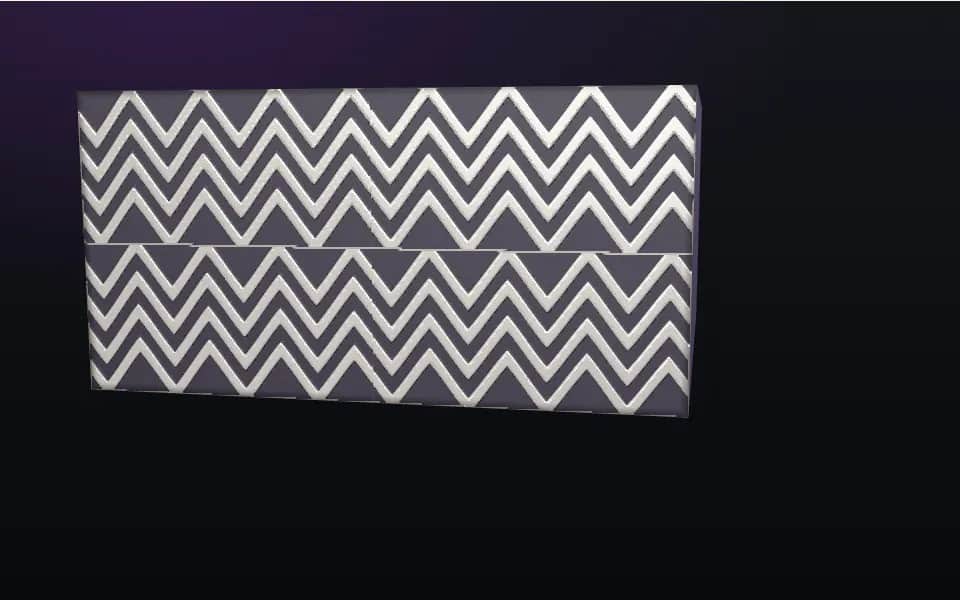
Past the ladder, twist, and raindrop lies the territory where damascus becomes composition: patterns built by controlling the layers in three dimensions…
Same bench
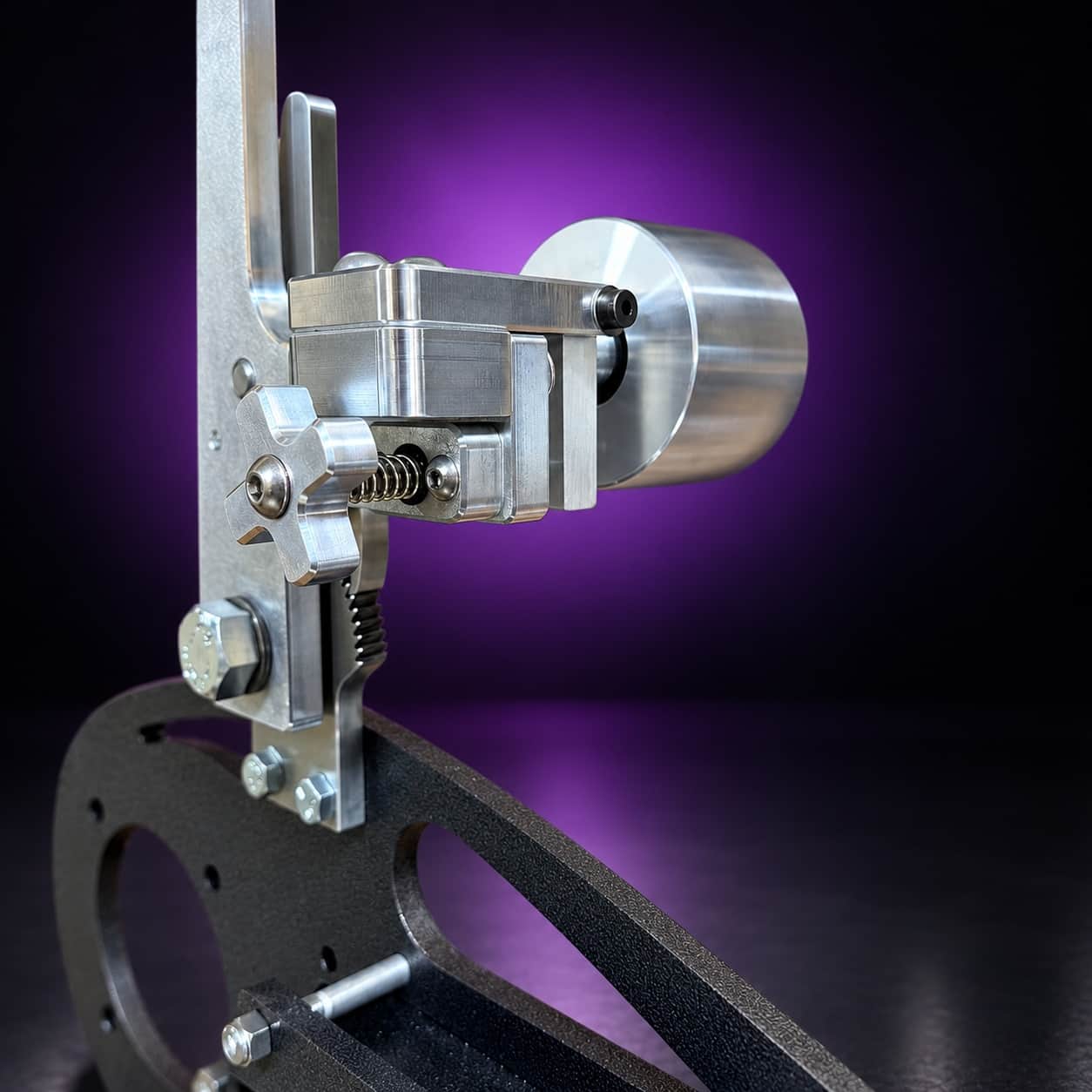
Flex, a soft platen or a tracking knob that will not hold can show up as a bad grind. I machine the parts, hand-assemble, track and test each Torus grinder in Sterling, Illinois.

Current dual-axis platform with a fiber-laser-cut 6061 chassis and single-knob tracking.

Current dual-axis platform with a steel chassis, more mass and less vibration.

Prior-design aluminum chassis, 90-degree tilt and 1.5-inch tooling arms.
One-man shop
Send me a photo and describe what happened before it went wrong. Include the machine, belt and steel when they are relevant.