
Beginner Guides
2×72 Belt Grinder Brands Compared: The Honest Field Guide
Full disclosure, before anything else: this is Torus CNC’s site — we build three of the grinders compared below. Here’s how we’ve kept this honest: every…
Troubleshooting
Work back from what it is doing to what caused it, then to the fix that addresses the cause. Nothing here needs a sign-up.
The flow
Causes first, then the quick checks, the fix, prevention and the stop-work point.
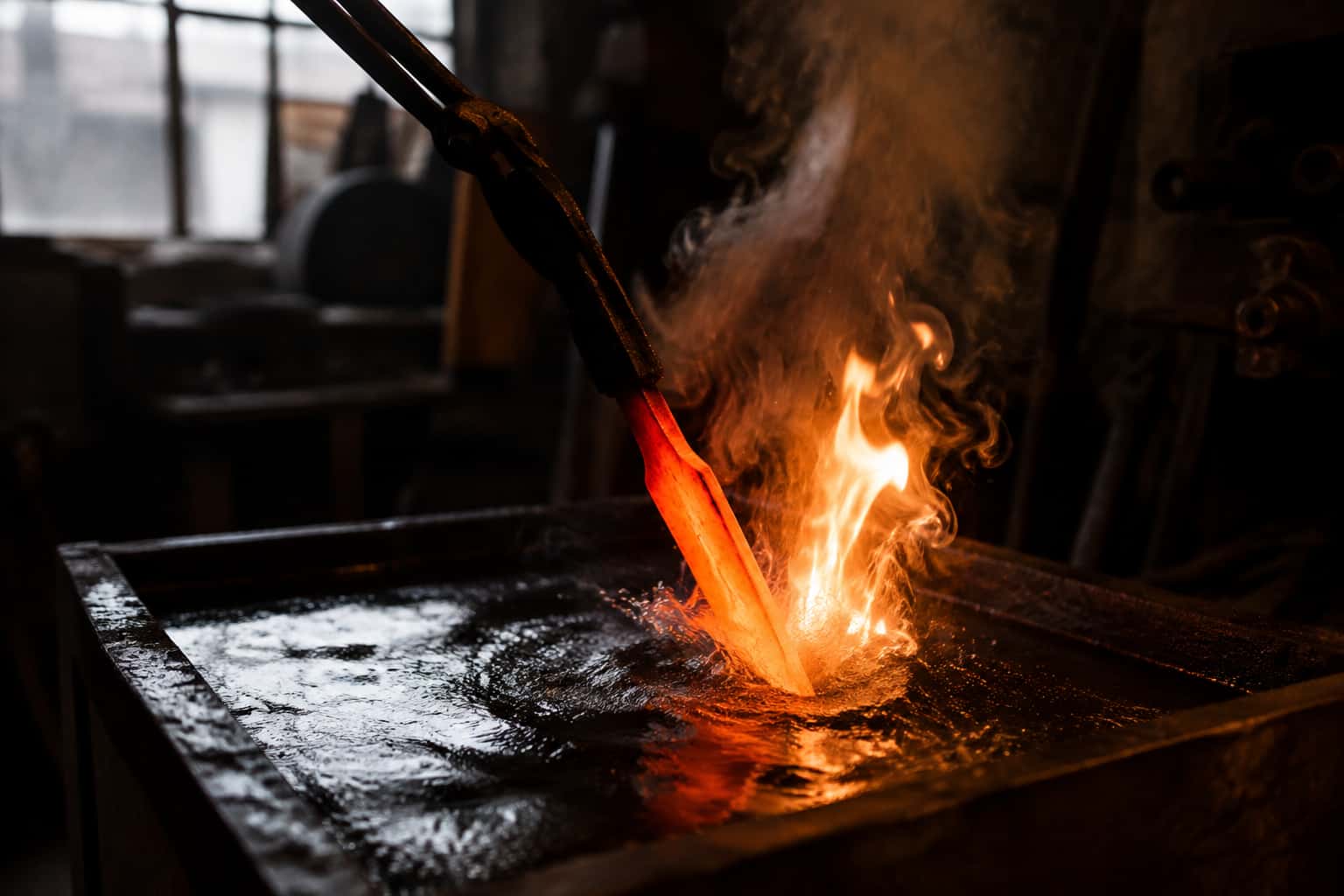
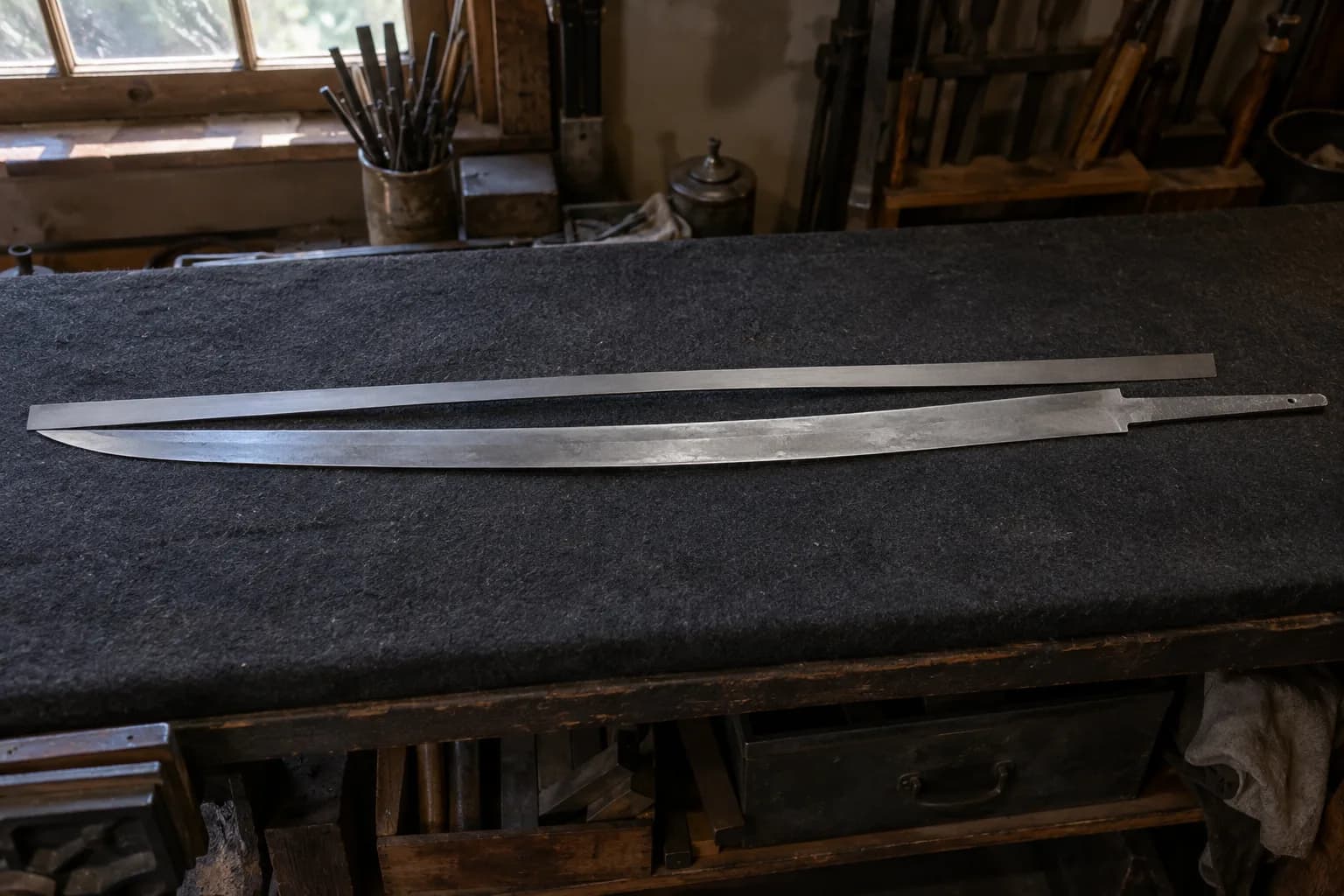
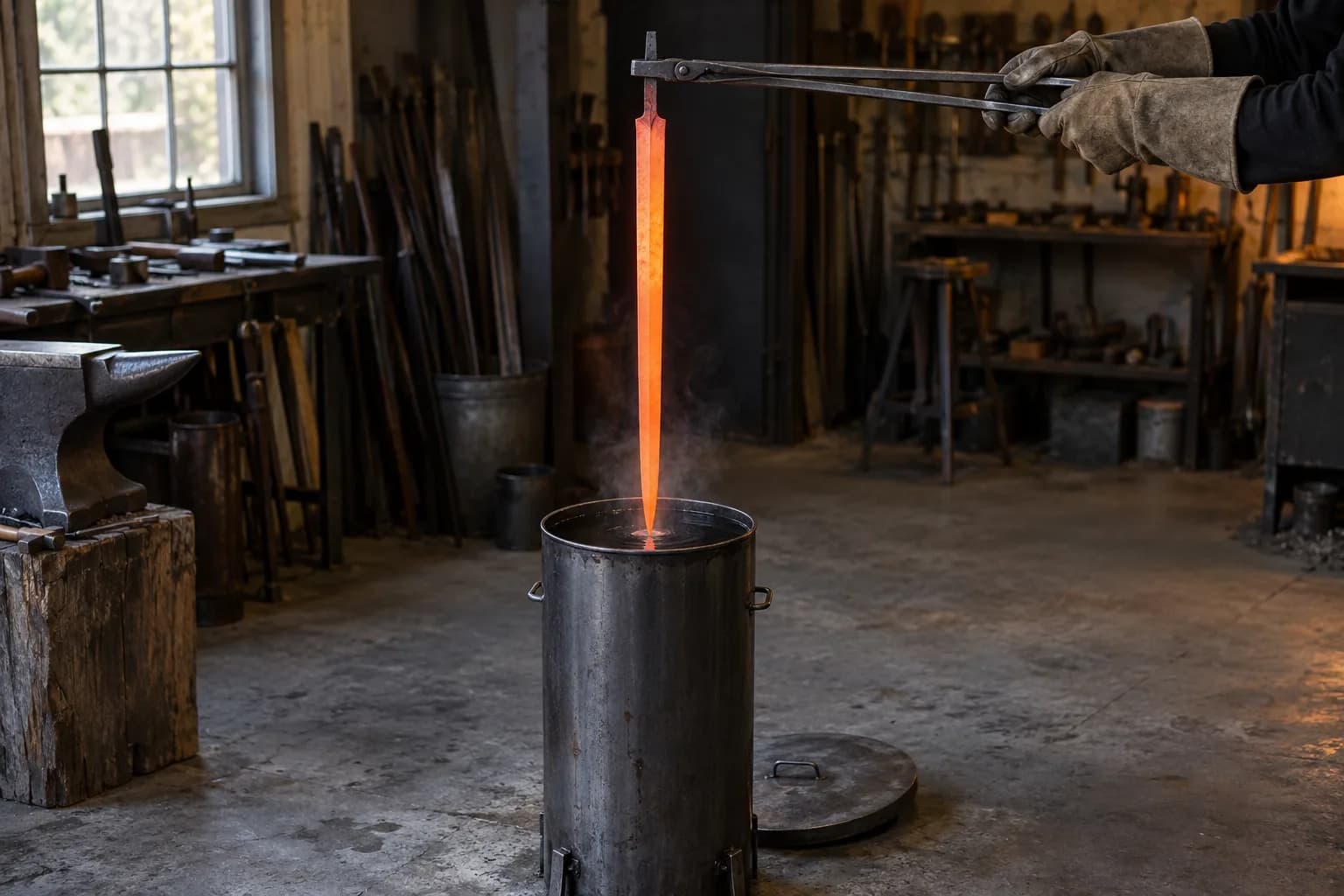
Uneven heat at austenitizing — one zone hotter than another is the king of long-blade warp; forges heat middles faster than tips. Uneven quench entry: tip-first hesitation, or a horizontal dunk cooling one face before the other. Ground-in stress: bevels ground far thinner on one side, or asymmetric geometry doing asymmetric shrinking. Prior forging stress never normalized out. Clay on one side only (deliberate in katana work — the sori curve IS controlled warp; unplanned everywhere else). Length simply multiplies every one of these: the same error that moves a hunter 1/32 inch moves a sword half an inch.
Roll the blade on a flat table and map the deflection: smooth single curve (fixable), long twist (harder), tight kink (worst). Check symmetry with calipers — thickness bias predicts warp direction. Recall the quench: which face or end cooled first?
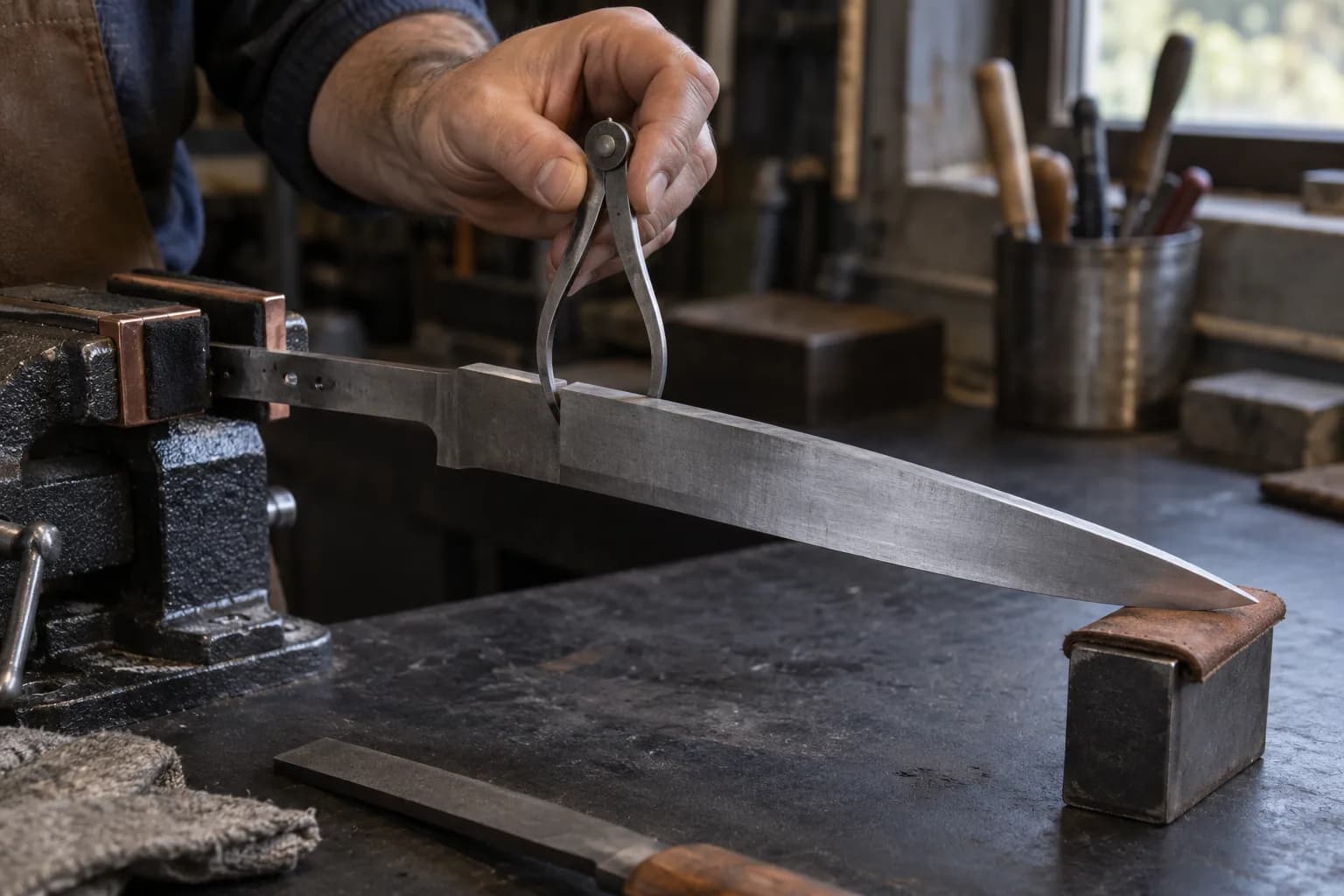
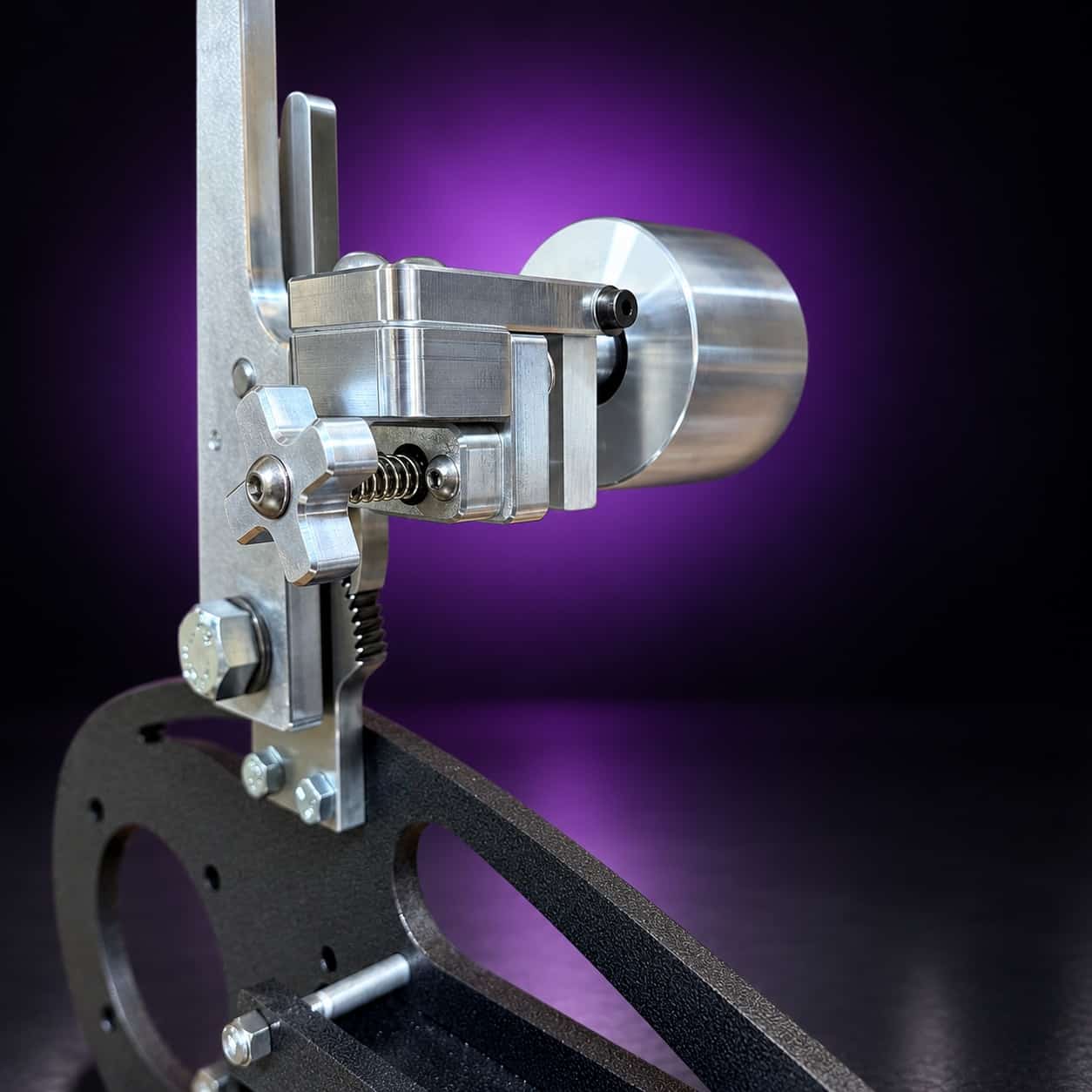
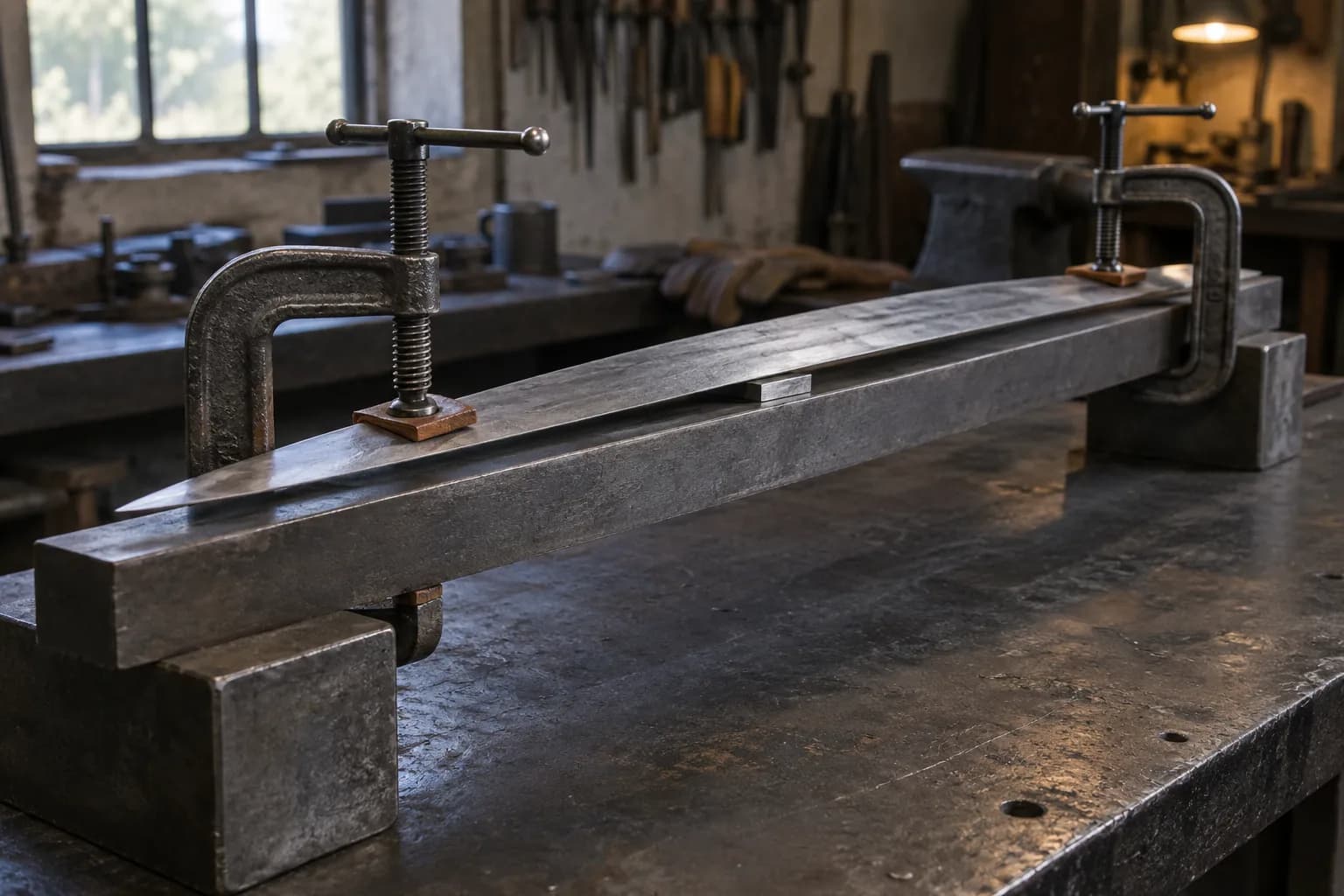
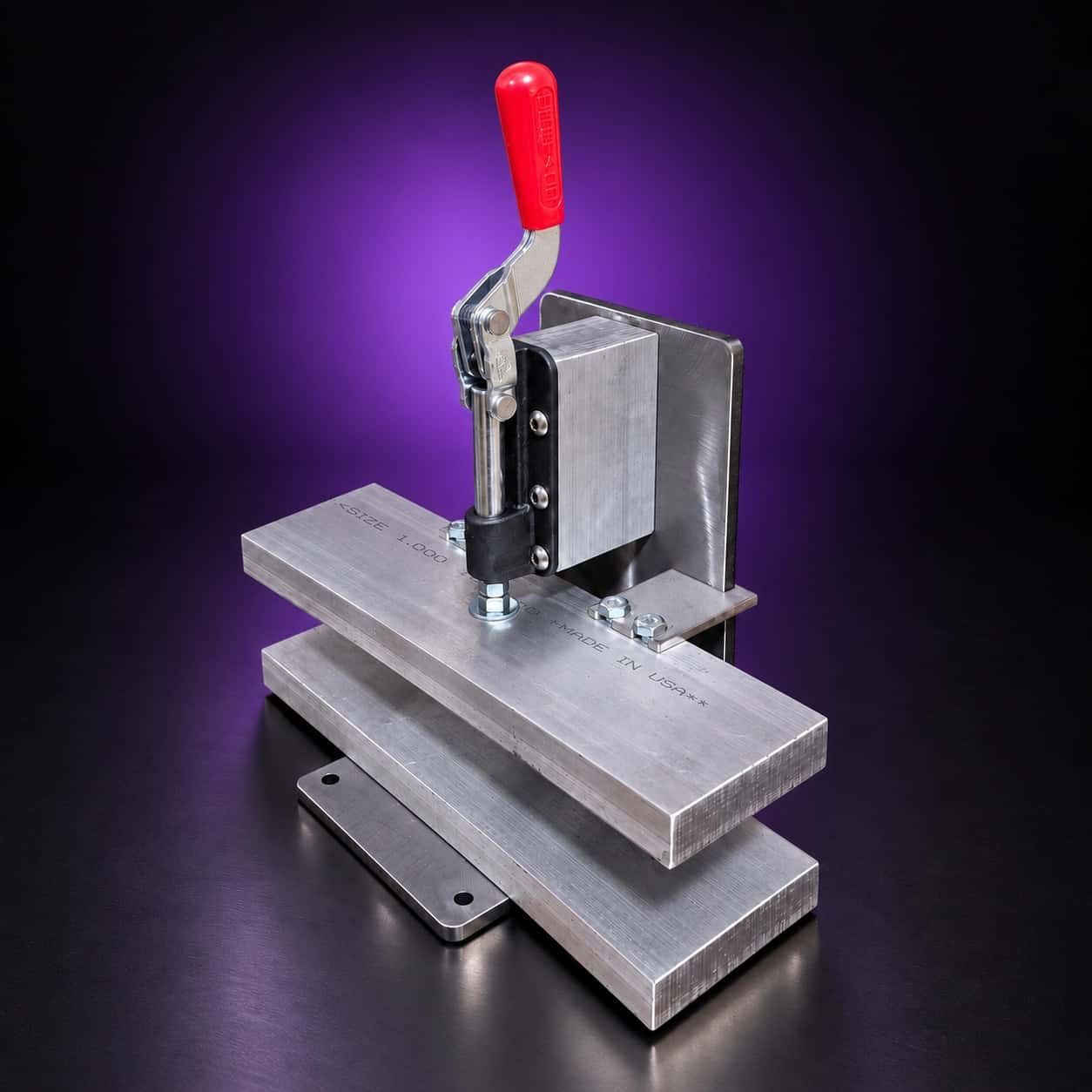
Three windows, in order of preference. HOT: straighten in the first seconds post-quench while above roughly 400°F — gloved flex over a wood block, checked against a straightedge, fast and remarkably effective. TEMPER: clamp the blade over-corrected against a straight bar or channel — or in a dedicated quench vise (the Quench Master 2500 clamps at up to 2,500 lb between 14-inch plates) — and run the temper cycles — the standard fix; two cycles at temper heat set most single curves. HARD (last resort): careful three-point flexing in a vise with rod fulcrums, over-bending past straight in small steps — works, and snaps blades for the impatient; eye protection and low expectations. Twists respond to clamped counter-twist at temper. A kinked or crack-suspect blade gets the file test and honest scrapping before more force. Full long-blade sequence in Your First Sword on a 2x72.
Even heat before speed: a long kiln, pipe forge, or patient pass technique until color is uniform in shade. Vertical tip-committed entry, agitation along the axis only. Symmetric grinding, normalize after forging, and leave long blades a touch thicker at quench — grinding to final after heat treat costs belts and saves straightening sessions.
Stop at any crack tick, any kink (bent-then-bent-back steel), or a third straightening attempt — cumulative cold work on hardened steel ends one way. A sword that fights every correction is announcing a stress pattern that will find its moment later; re-normalize and re-treat, or retire it honorably.
Keep reading
The long-form version of the fix above, written from the same bench.
Full disclosure, before anything else: this is Torus CNC’s site — we build three of the grinders compared below. Here’s how we’ve kept this honest: every…
Comics run on invented metals — adamantium, vibranium, the whole periodic table of plot — and the fastest way to appreciate real metallurgy is to audit…
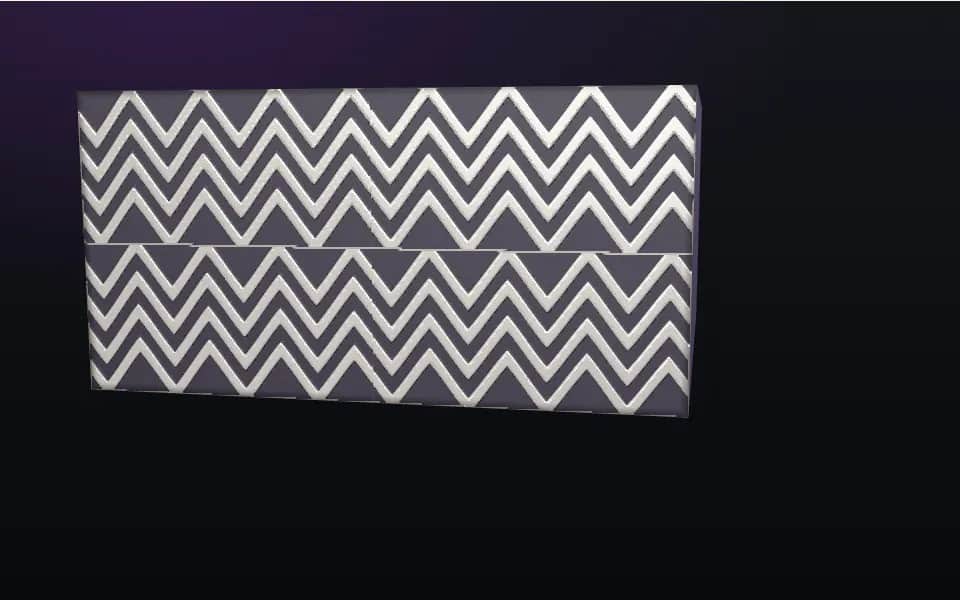
Past the ladder, twist, and raindrop lies the territory where damascus becomes composition: patterns built by controlling the layers in three dimensions…
Same bench
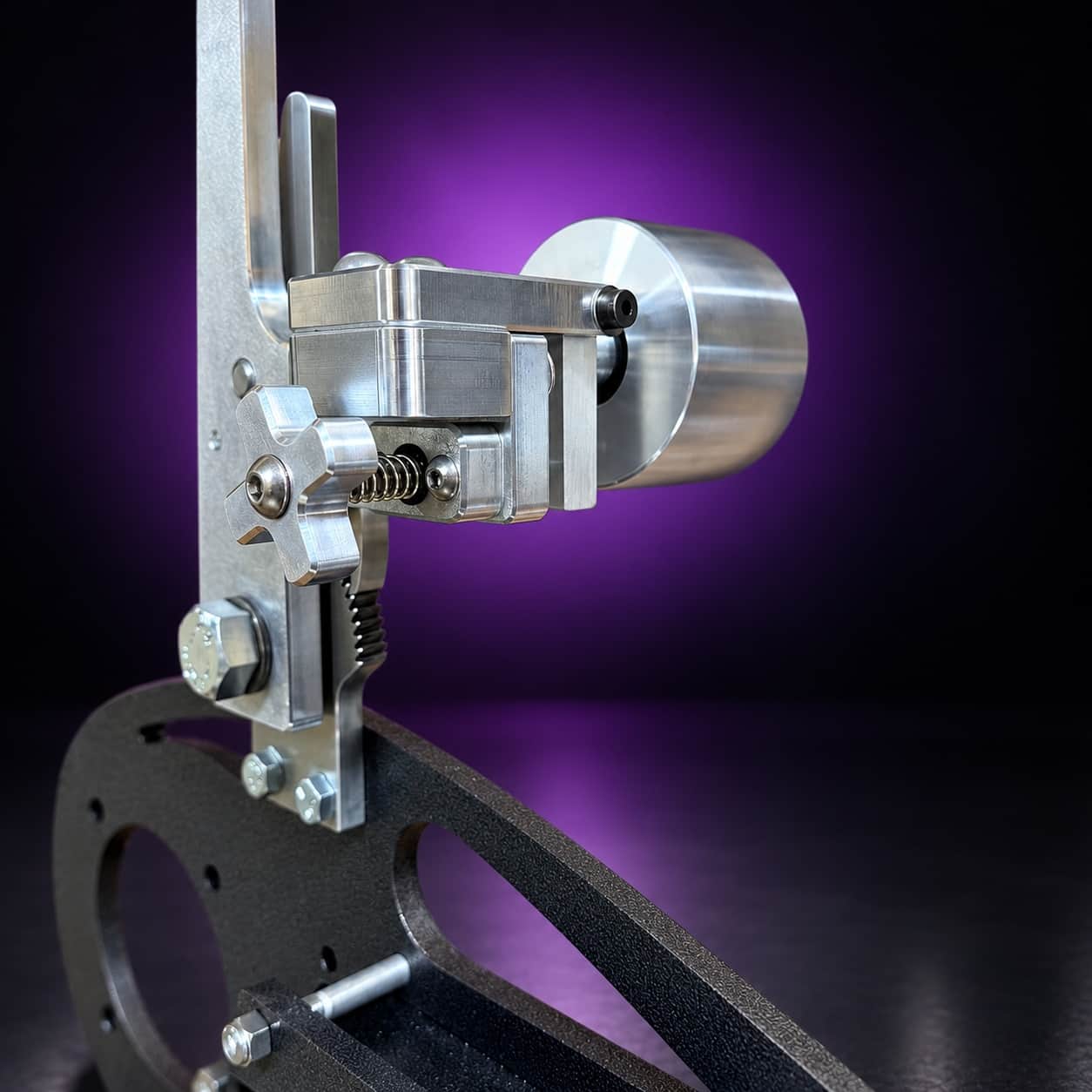
Flex, a soft platen or a tracking knob that will not hold can show up as a bad grind. I machine the parts, hand-assemble, track and test each Torus grinder in Sterling, Illinois.
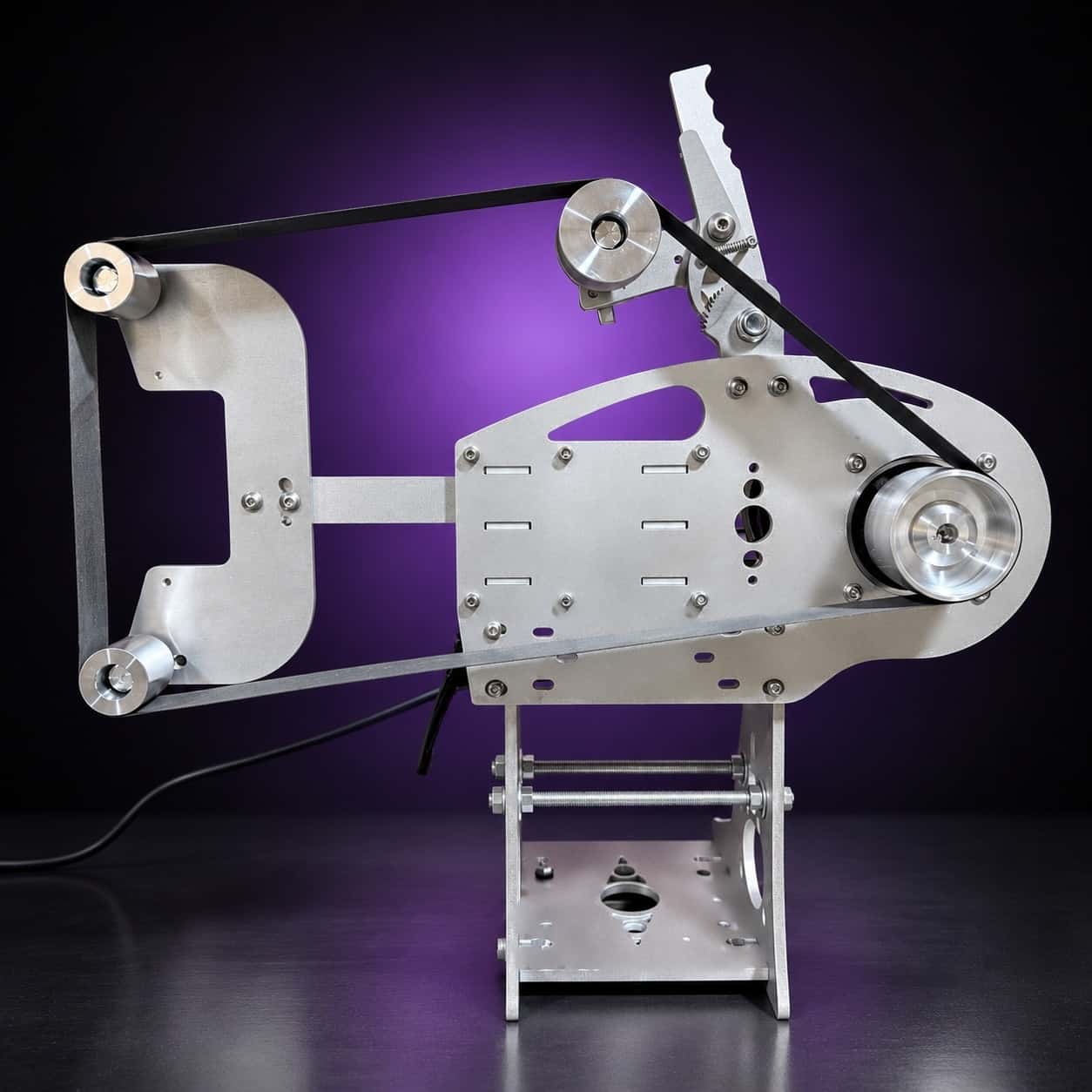
Current dual-axis platform with a fiber-laser-cut 6061 chassis and single-knob tracking.
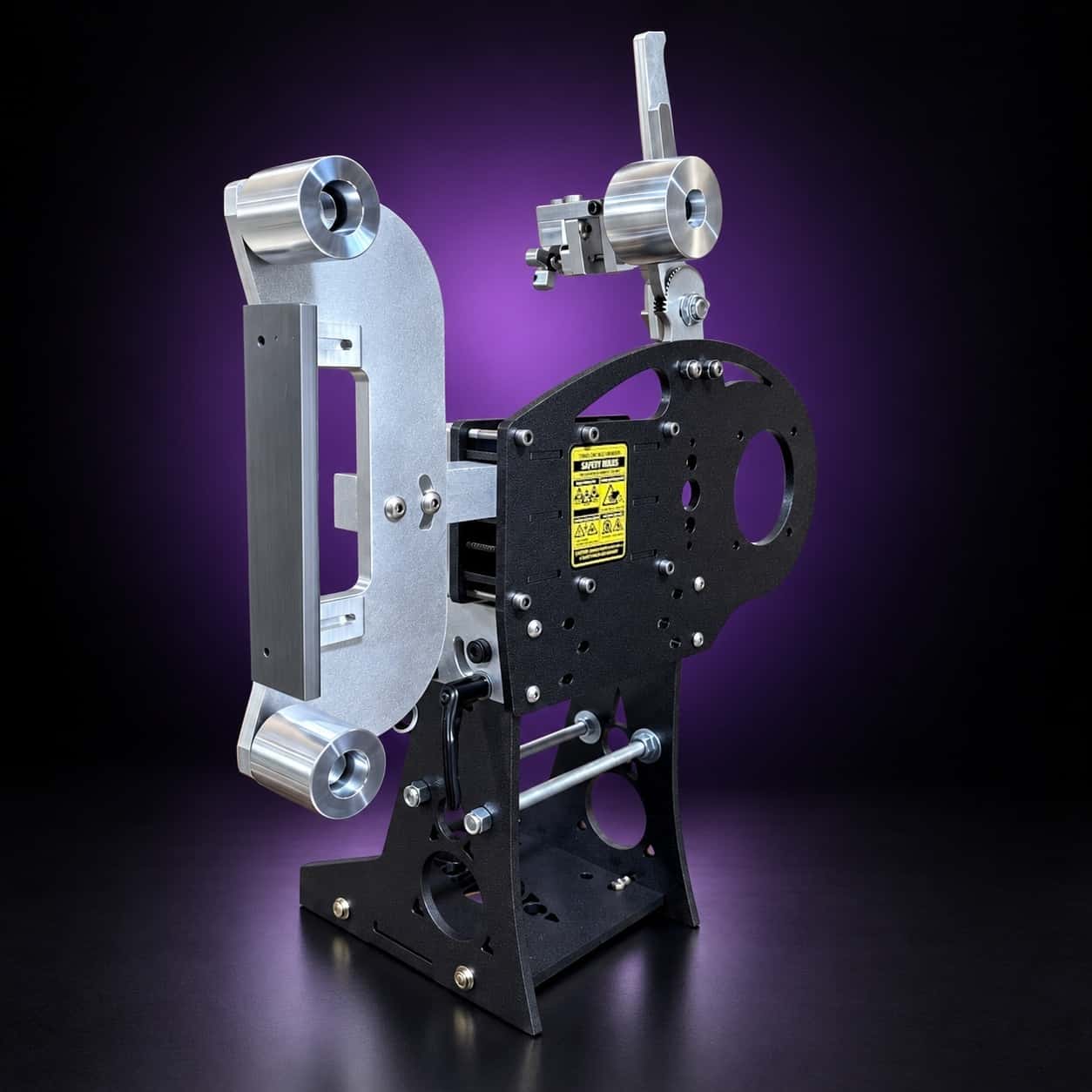
Current dual-axis platform with a steel chassis, more mass and less vibration.
One-man shop
Send me a photo and describe what happened before it went wrong. Include the machine, belt and steel when they are relevant.