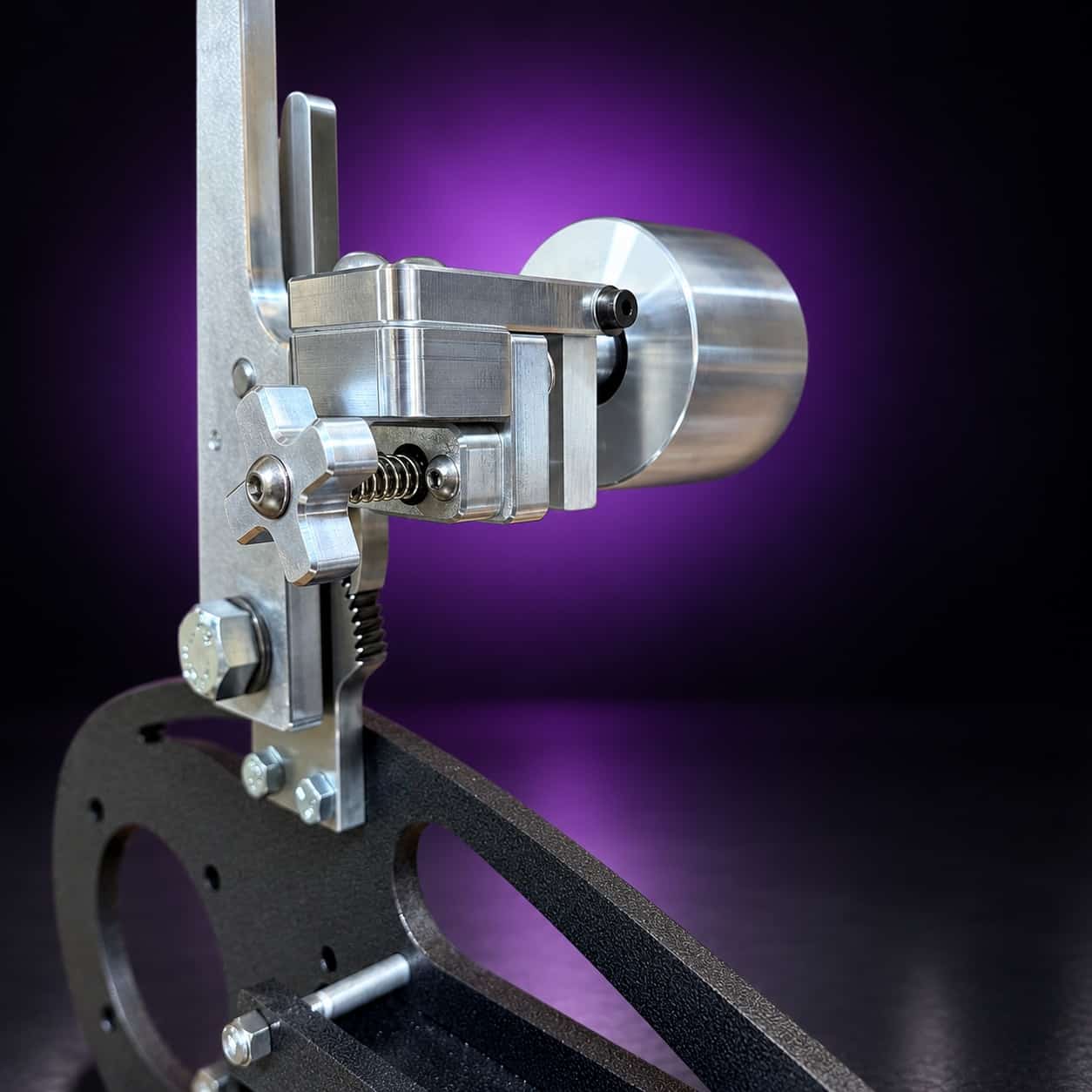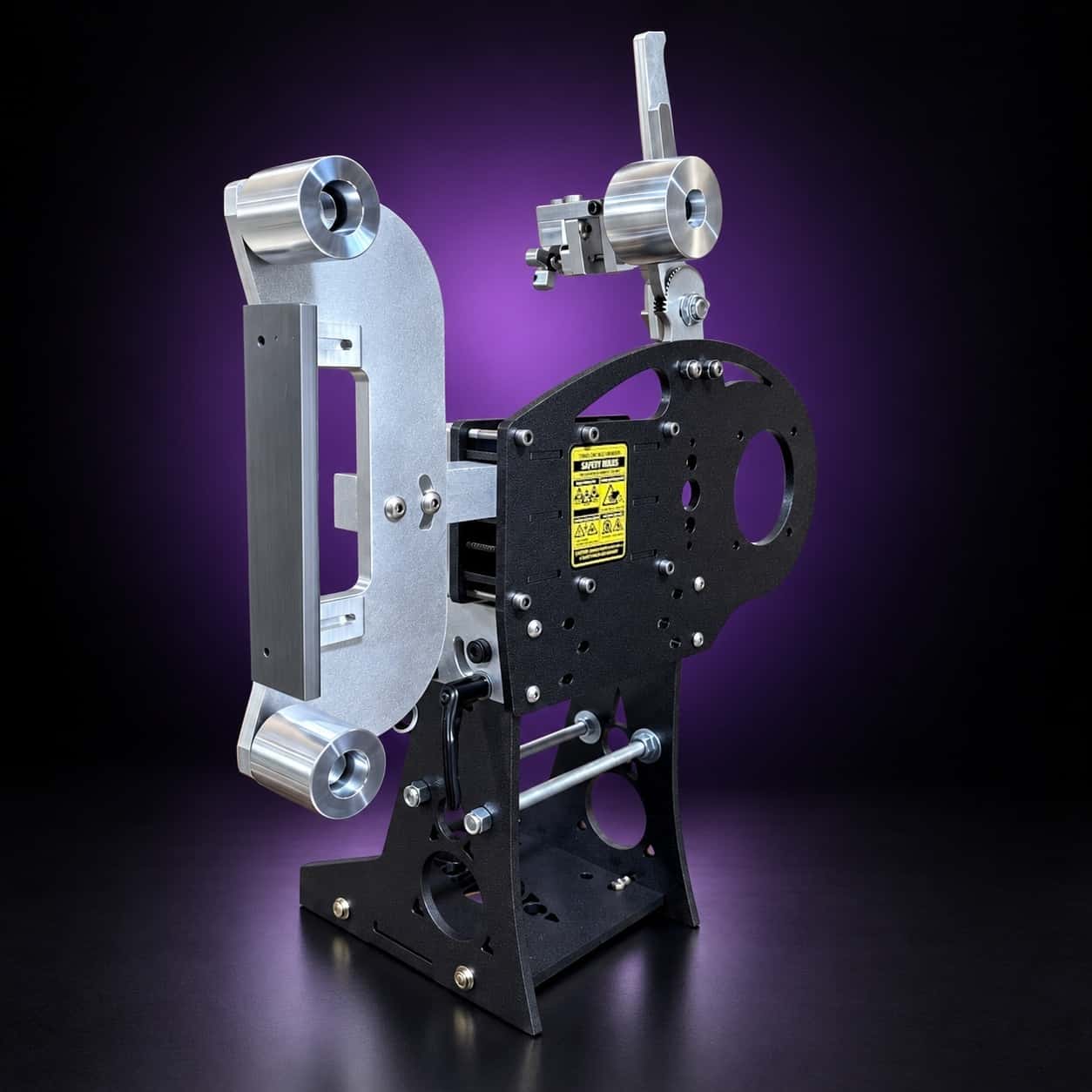

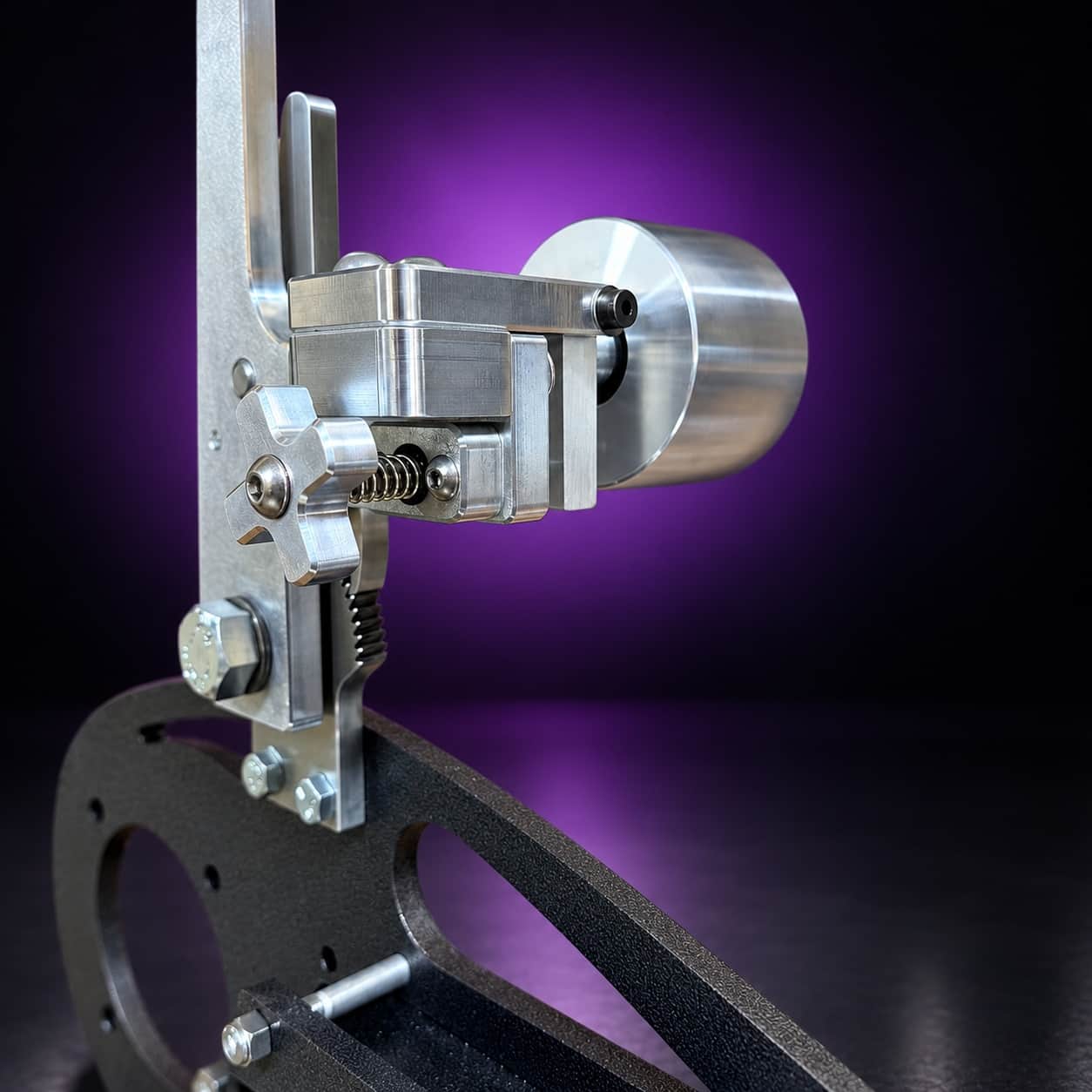
Nebula dual-axis tracking assembly: star knob, spring and idler wheel, close-up, on black with a purple glow

Troubleshooting

Uneven Hardness or Soft Spots After Heat Treat

Work back from what it is doing to what caused it, then to the fix that addresses the cause. Nothing here needs a sign-up.
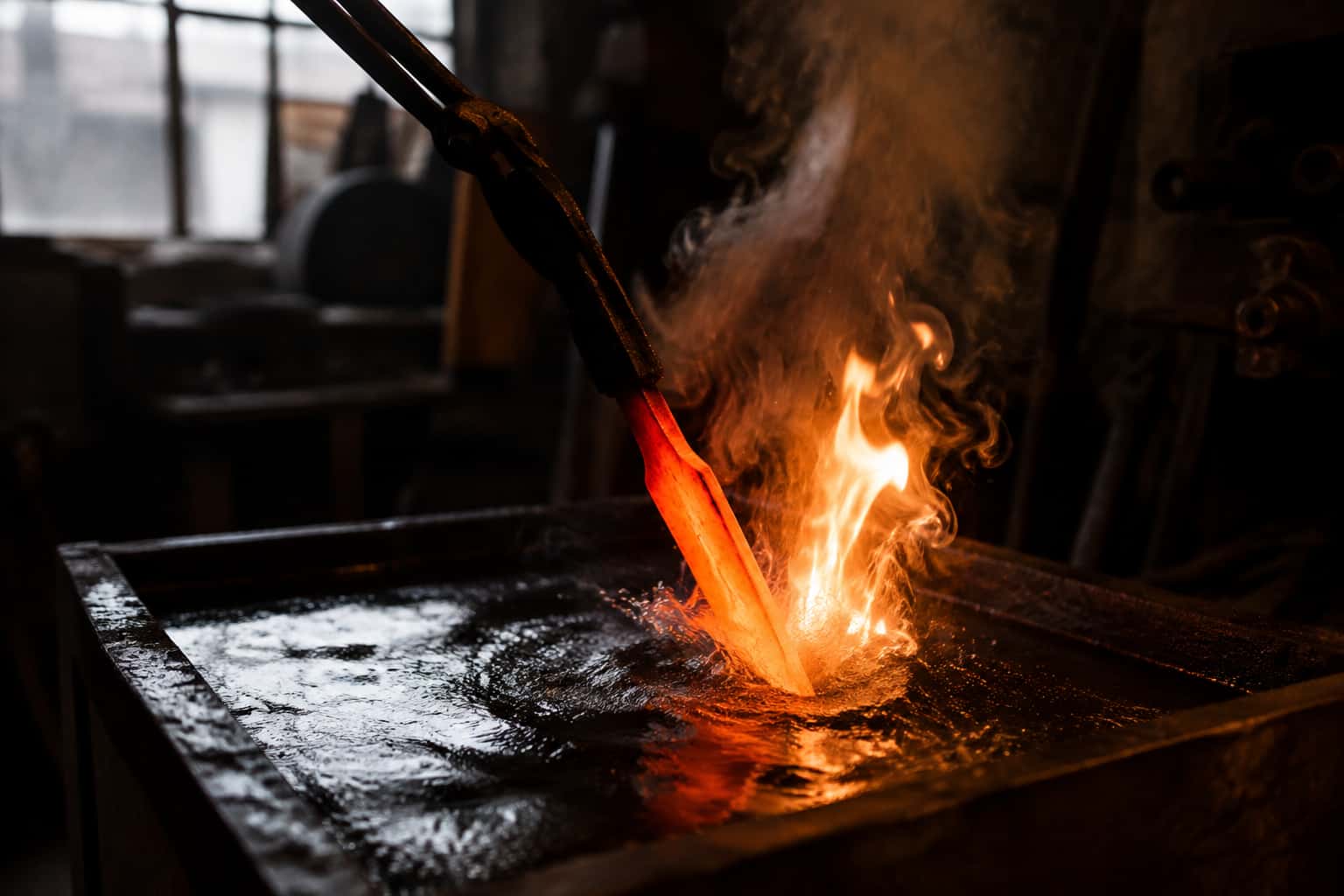
Knife steel heat treatment in a working knife shop
If a symptom appears mid-job, put the work down and check it before continuing.

The flow

Work it in this order

Causes first, then the quick checks, the fix, prevention and the stop-work point.
  1. Likely causes

    • Uneven heating during austenitizing, one part of the blade (often the tip, being thinner) reached temperature and held it while a thicker section didn't fully get there
    • Inconsistent quench contact, an air pocket, uneven agitation, or a section of the blade not fully submerging at the same time as the rest
    • Blade geometry itself, very thin and very thick sections of the same blade cool at meaningfully different rates in the same quench
    • An oven or forge with uneven internal temperature (hot spots and cool spots) rather than the blade actually being heated evenly
  2. Quick checks

    • Test hardness at multiple points along the blade, not just one spot, to map where the inconsistency actually is
    • Check whether the uneven area corresponds to a thickness change in the blade (tip vs. ricasso) or to equipment (a known cool spot in an oven or forge)
    • Review whether the blade was fully submerged and evenly agitated during the actual quench
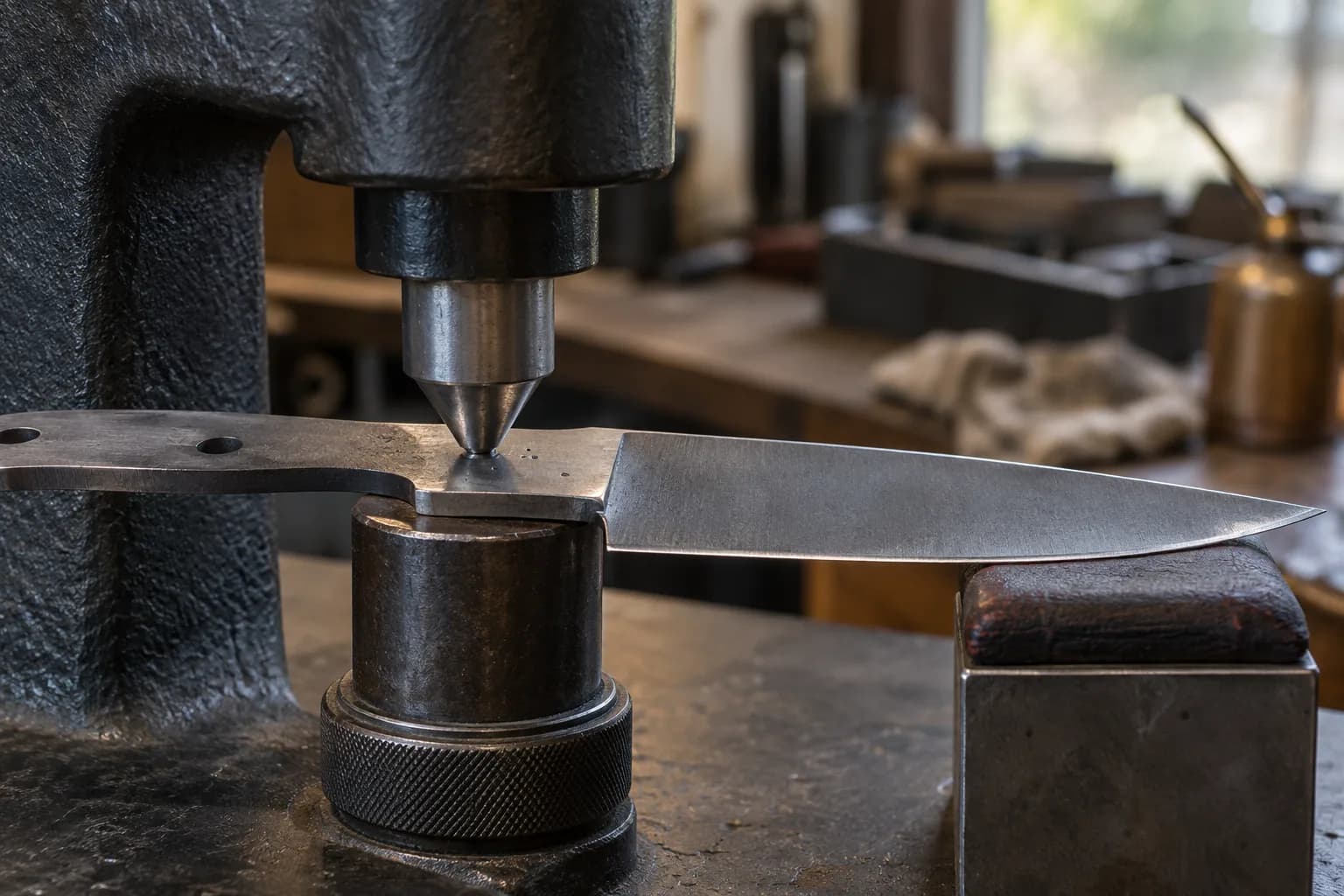
Rockwell tester indenter over a knife ricasso resting on the anvil, blade supported level on a padded block.
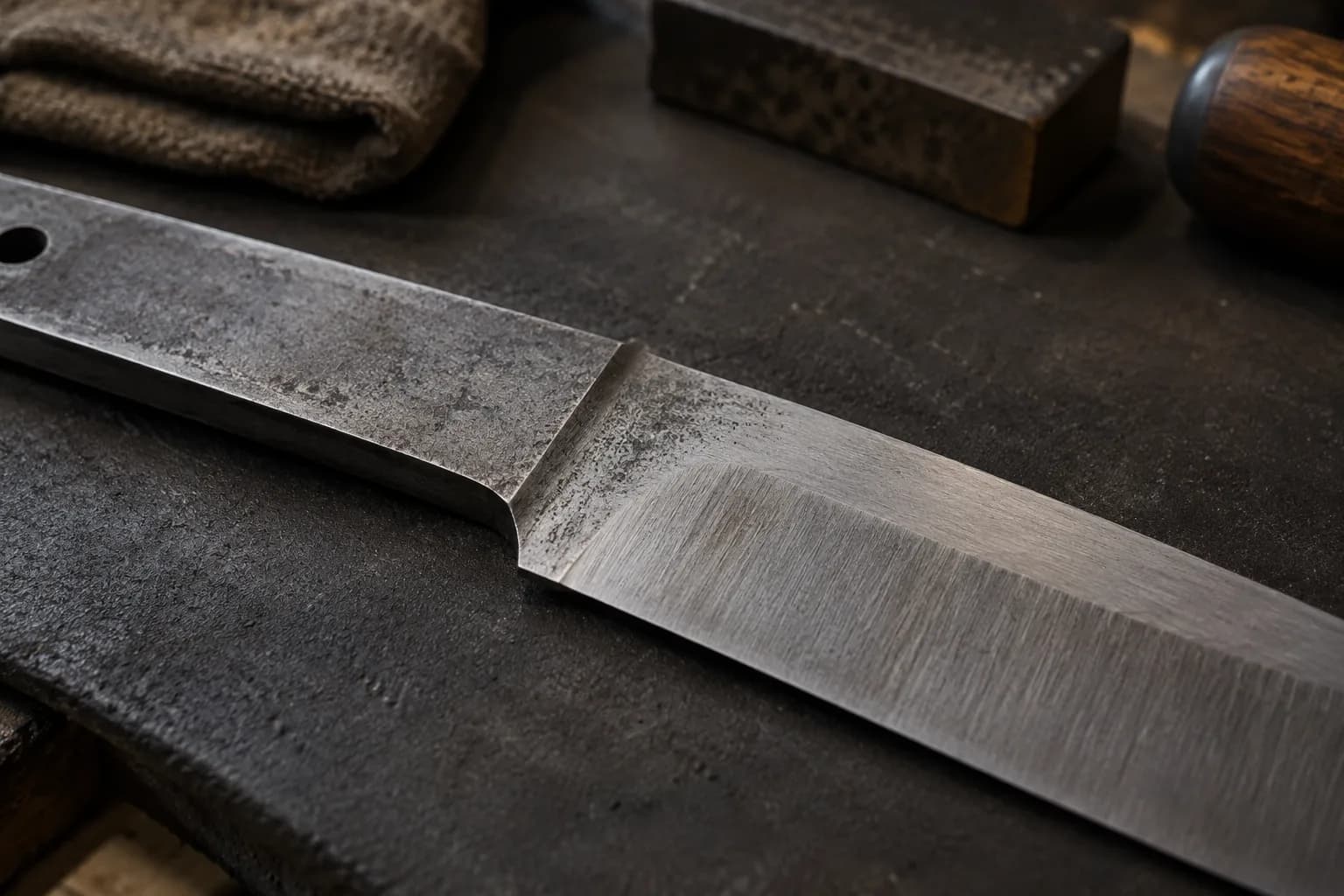
Cold knife blank lying flat on a dark pad, its rough thick ricasso stepping down to a ground bevel with fine scratch lines.
  1. Fixes

    • If caused by uneven equipment temperature, the blade generally needs to be renormalized and re-hardened with better temperature control, or in a different, more evenly-heated setup
    • If caused by inconsistent quench contact, re-austenitizing and requenching with full submersion and consistent agitation usually resolves it
    • Thin sections that always hardened fine while thick sections lag may need a longer soak at temperature before quenching, giving the thicker mass time to fully reach temperature throughout
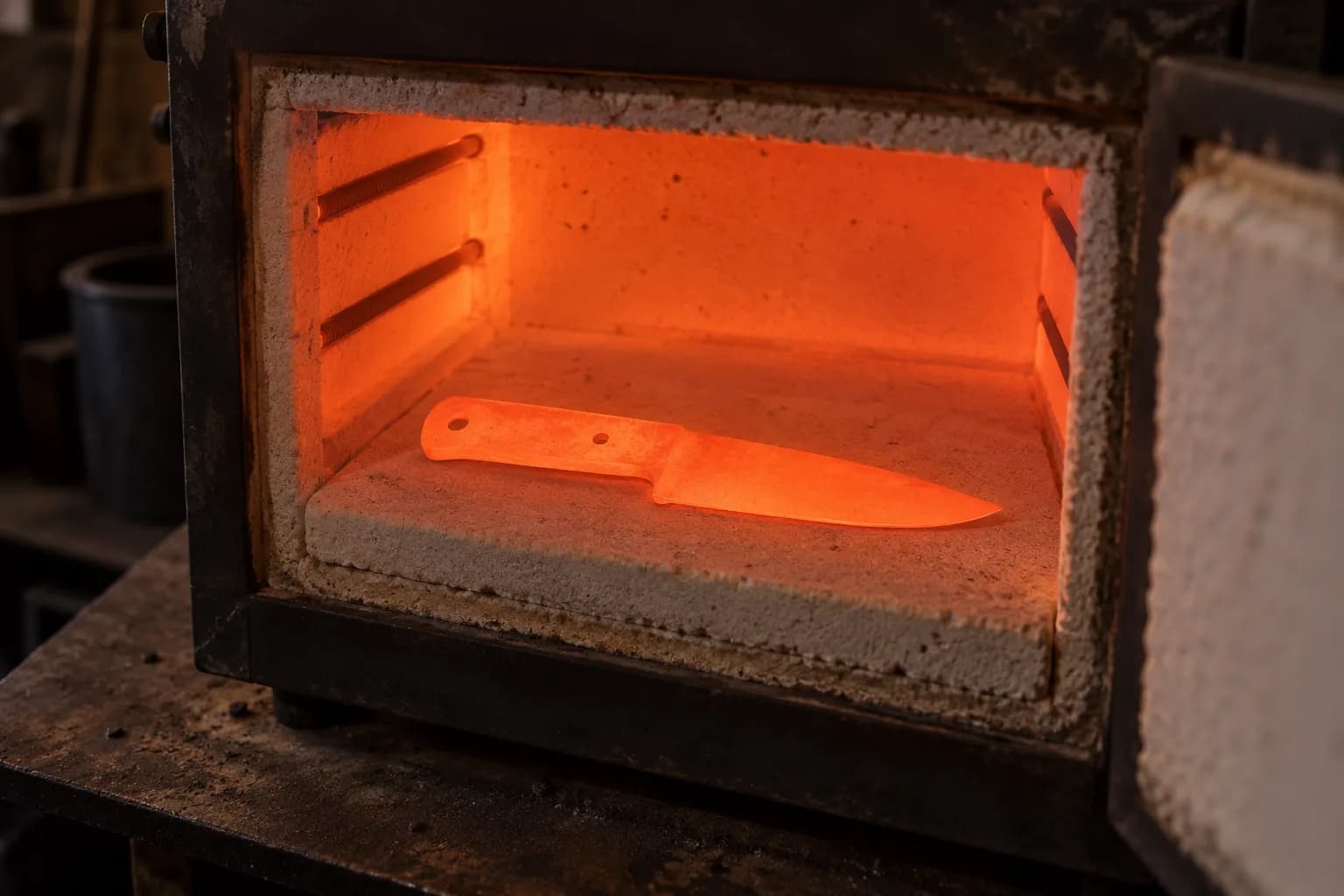
Knife blank lying flat on a ceramic floor plate inside an open heat-treat kiln, glowing evenly orange-red.
  1. Prevention

    • Use a thermometer or calibrated kiln controller rather than judging temperature by color or feel
    • Soak the blade at target temperature for the time specified in the steel's recipe, not just until it looks hot enough
    • Ensure full, even submersion and agitation during quench, no dead zones or partial dips
    • Know your oven or forge's actual hot and cool spots, and position the blade accordingly, or test with a spare piece of scrap steel first
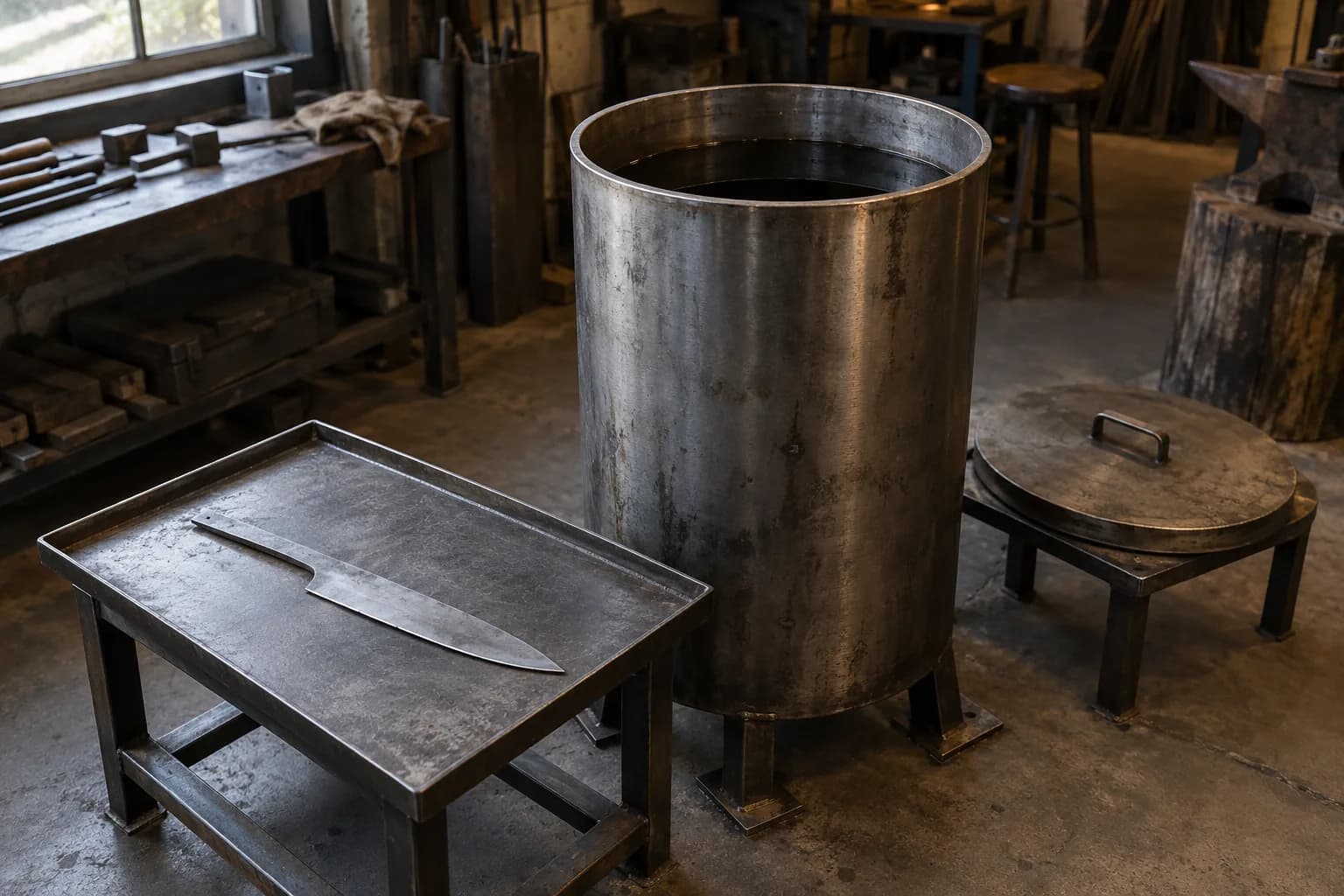
Gray knife blank on a steel tray beside a tall steel quench tank with dark oil, its lid on a separate stand
  1. When to stop

    A blade with meaningfully uneven hardness shouldn't be finished and used as-is, the soft section is a real weak point. Re-heat-treat it properly rather than working around the problem with grinding or design choices.

Keep reading

Guides that cover the cause

The long-form version of the fix above, written from the same bench.

Same bench

When the machine is the cause

Flex, a soft platen or a tracking knob that will not hold can show up as a bad grind. I machine the parts, hand-assemble, track and test each Torus grinder in Sterling, Illinois.
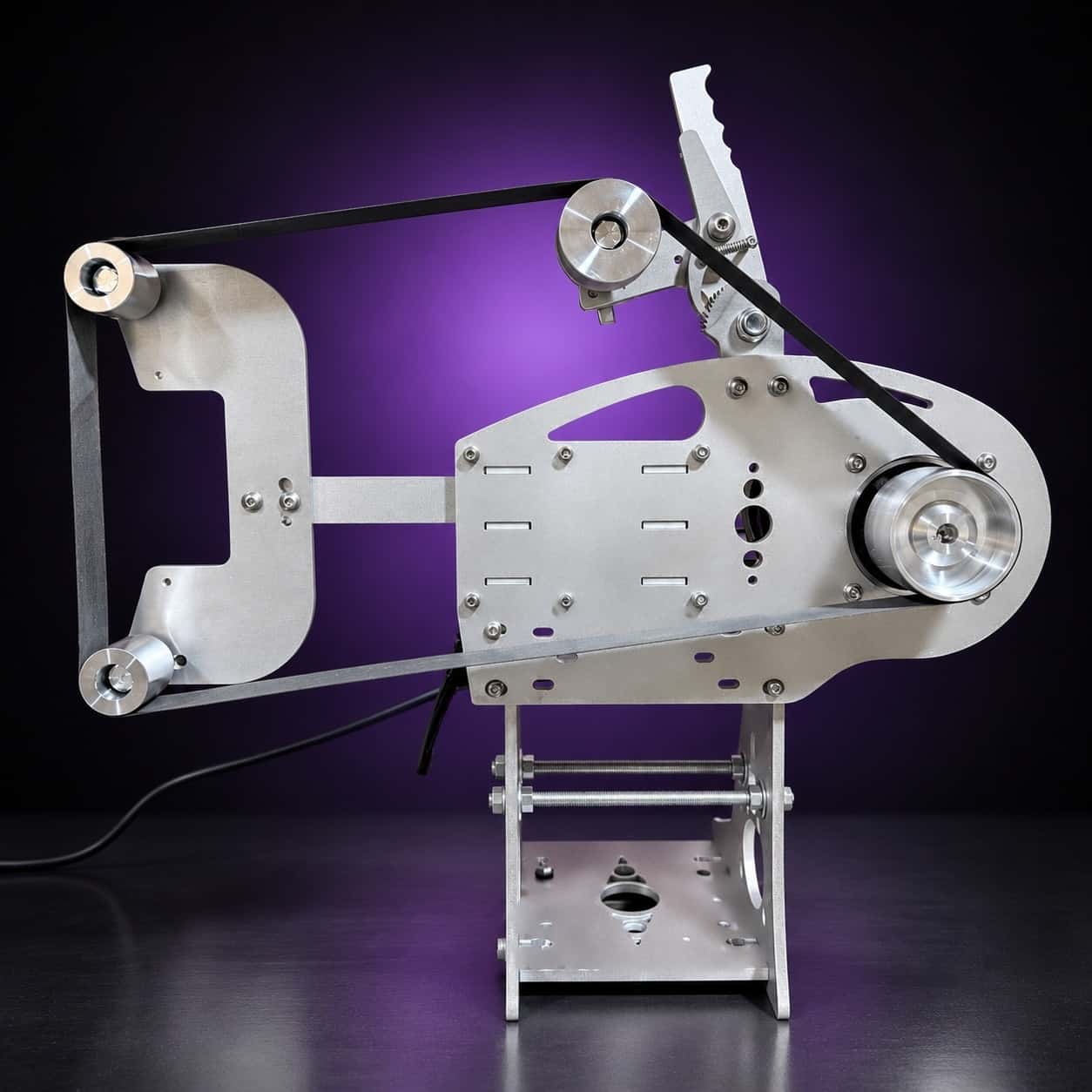
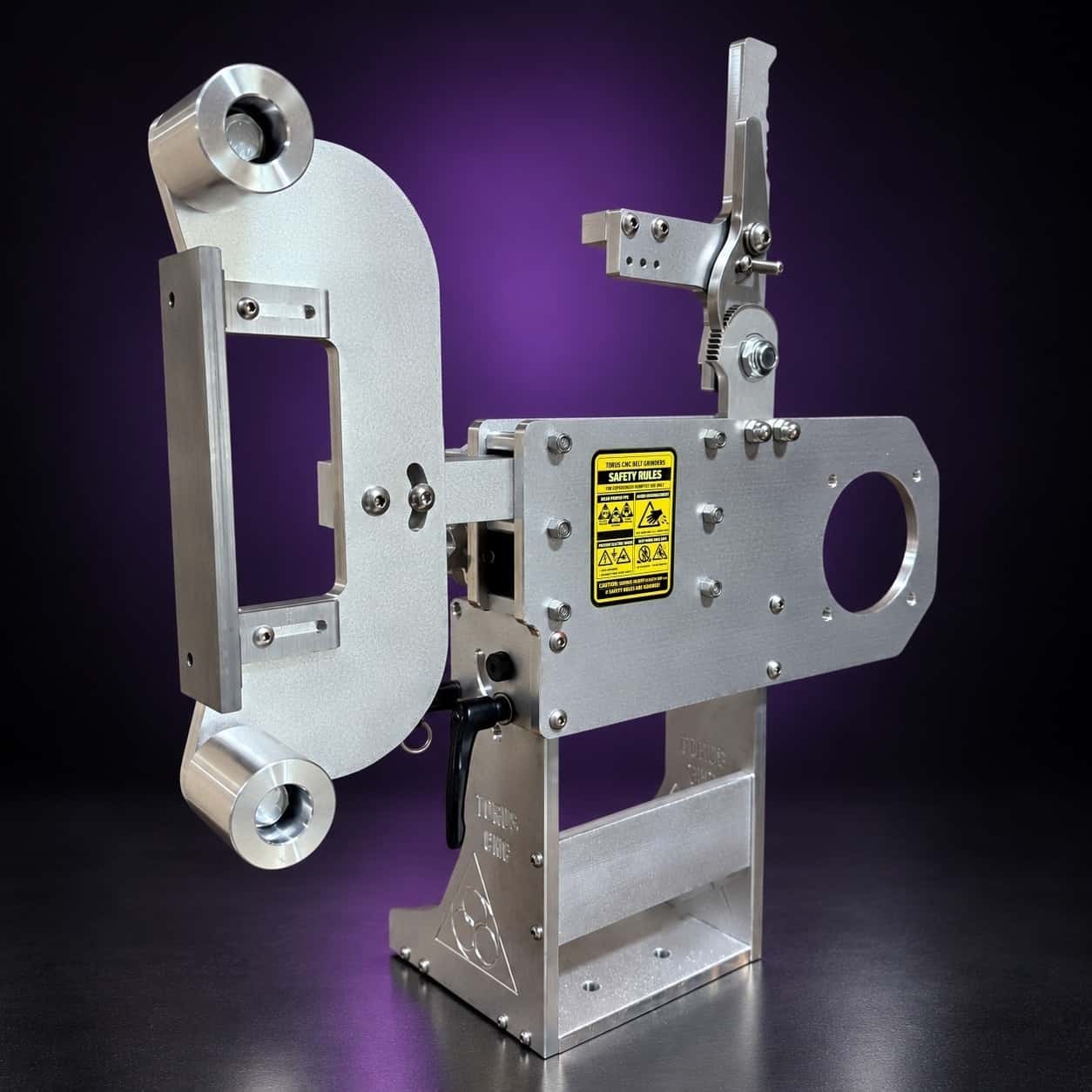
  • Classic aluminum 2x72 grinder, side view with flat-platen tool arm and yellow Safety Rules label, on black with a purple glow

    Torus 2×72 Classic Aluminum Belt Grinder

    Prior-design aluminum chassis, 90-degree tilt and 1.5-inch tooling arms.
    Starts at$995View

One-man shop

Not sure which cause you have?

Send me a photo and describe what happened before it went wrong. Include the machine, belt and steel when they are relevant.