
Beginner Guides
2×72 Belt Grinder Brands Compared: The Honest Field Guide
Full disclosure, before anything else: this is Torus CNC’s site — we build three of the grinders compared below. Here’s how we’ve kept this honest: every…
Troubleshooting
Work back from what it is doing to what caused it, then to the fix that addresses the cause. Nothing here needs a sign-up.
The flow
Causes first, then the quick checks, the fix, prevention and the stop-work point.
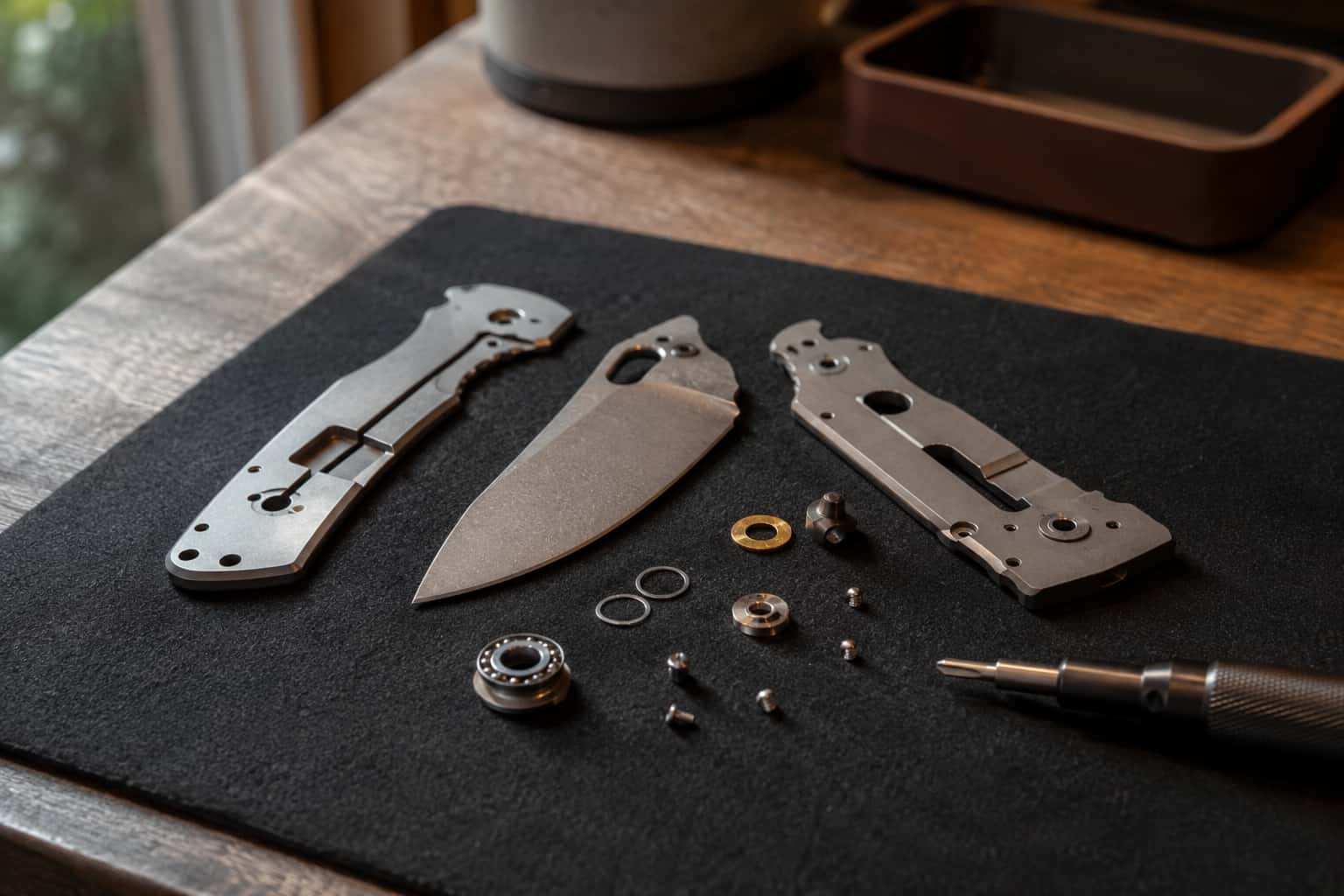
Two different diseases sharing symptoms. SIDE-TO-SIDE play is the pivot stack: pivot tension backed off, washers worn or never flattened, tang flats burred, or a stretched cheap pivot. LOCK ROCK (the click-seat under pressure) is the lock interface: a lock face fitted at too little contact or too steep an angle on a liner or frame lock, a worn or sloppy notch on a lockback, or early engagement that never bedded flat. VERTICAL play is stop geometry - stop pin or kick fit. New-build lock rock is almost always an unresolved lock-face fit; aged-in play is almost always the pivot loosening.
Sort the disease first: close the knife and wiggle the blade at the tang - play while CLOSED is pure pivot stack (the lock is not even engaged). Open, then press the spine gently: a click-and-seat is lock rock. Watch the lockbar as you press - does it slide deeper across the tang? Check pivot screw tension before anything structural.
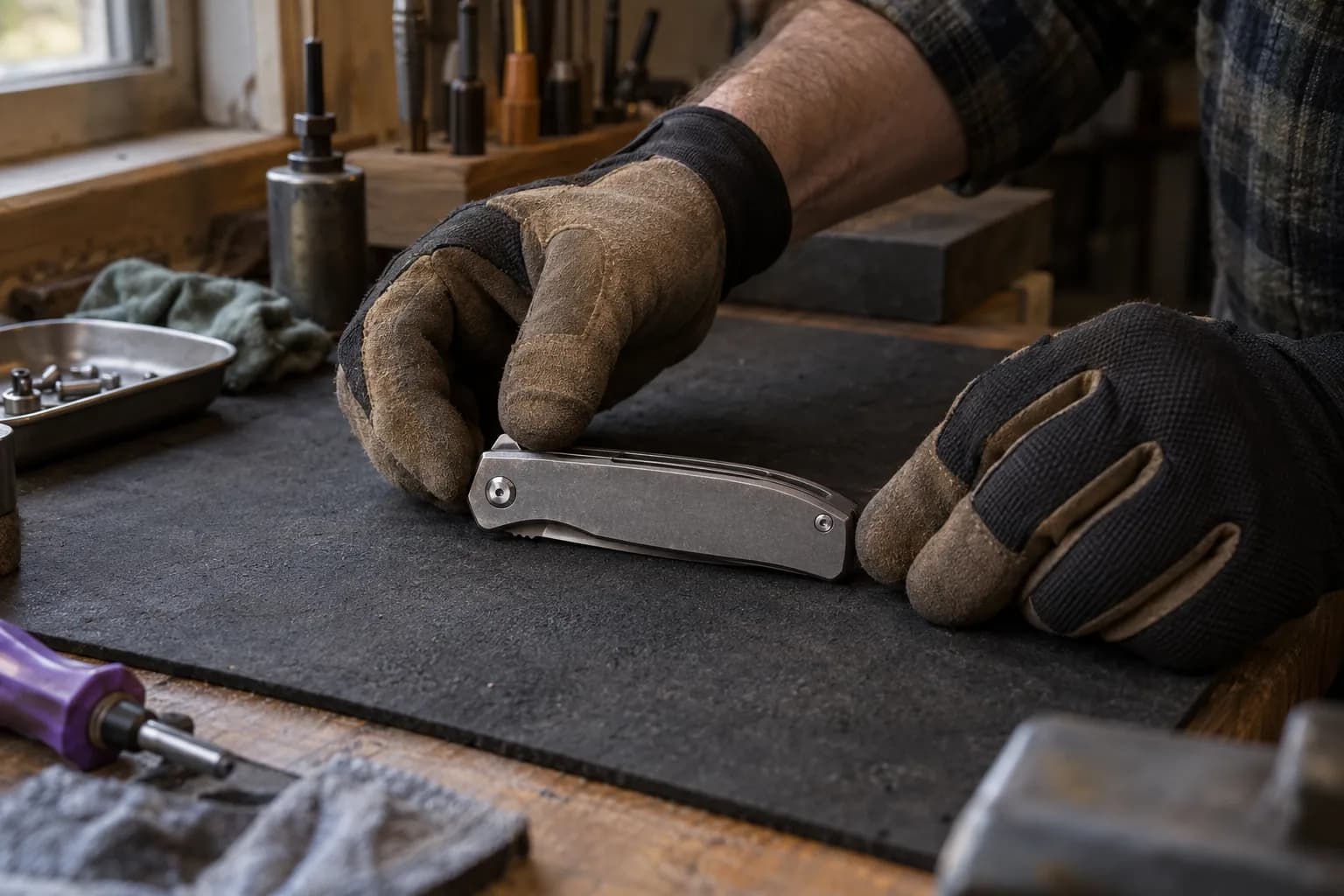
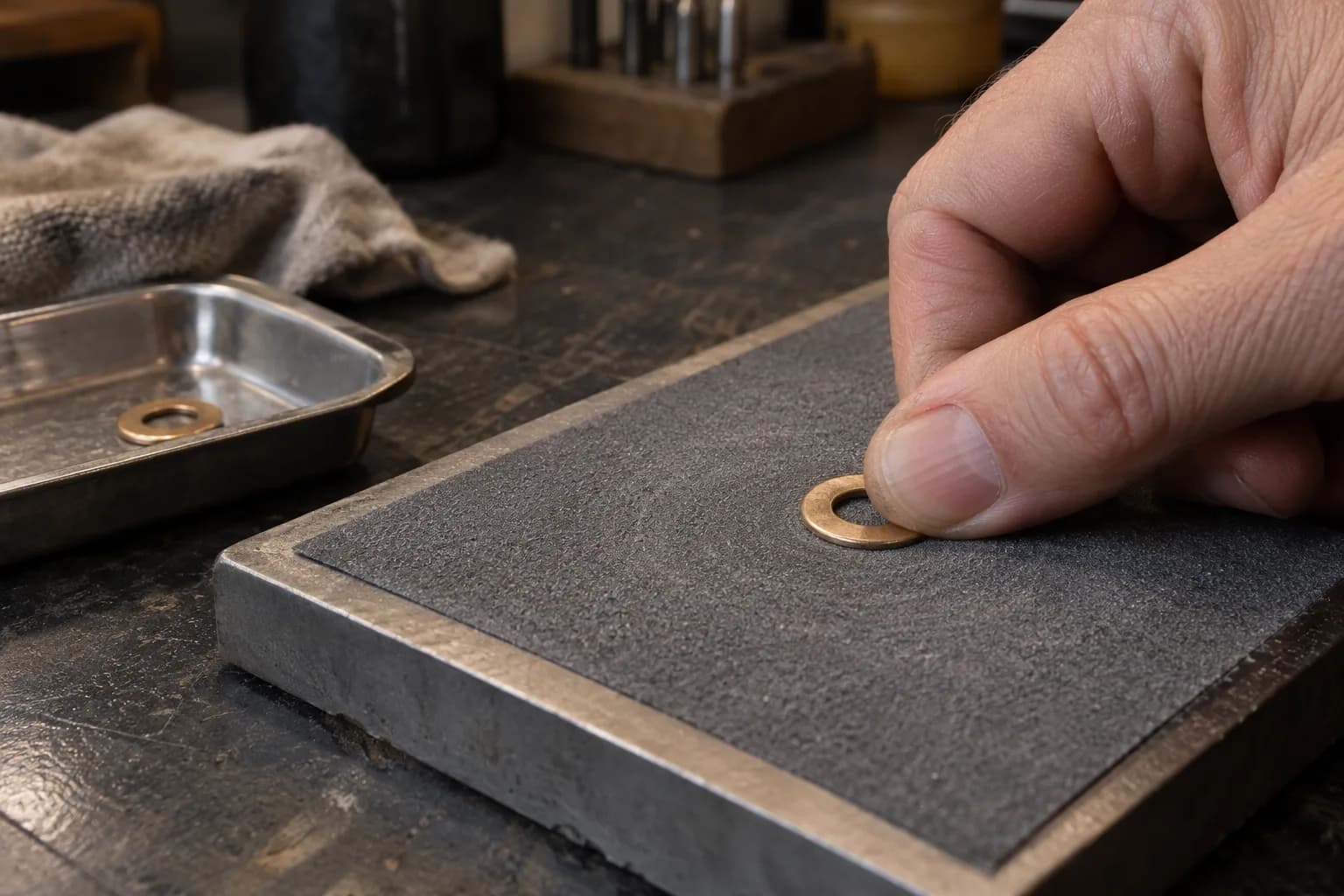
Pivot-stack play: tighten in eighth-turns to zero-play-free-drop, and if tension will not hold, disassemble - flatten and polish the washers, deburr the tang flats, replace a stretched pivot - per the tuning sequence. Lock rock on a liner/frame lock: re-fit the lock face by marker-blueing to flat bedded contact (a too-steep face gets re-ground shallower; engagement that starts past mid-tang means the face angle or bar length needs work); on a lockback, the notch-and-lug interface gets the same blueing treatment. Vertical play: address the stop pin fit or kick. The discipline: fix the pivot stack FIRST - lock symptoms diagnosed through a loose pivot are lies.
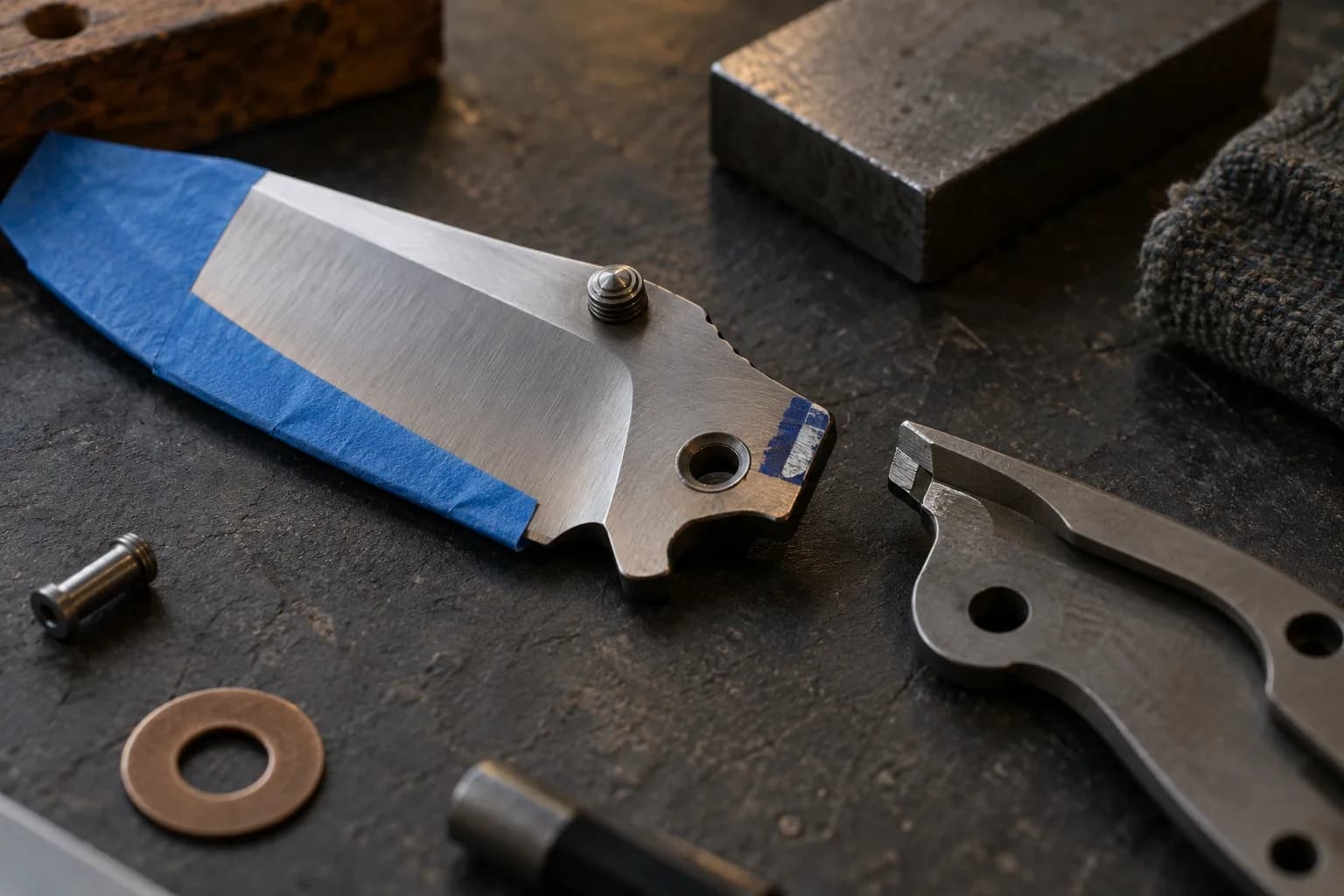
Fit lock faces by blueing at build time to 25-50% flat engagement. Flatten washers before first assembly. Thread-locker at proven-final tension. Fifty-cycle checks before any folder ships, and a re-check habit at every sharpening.
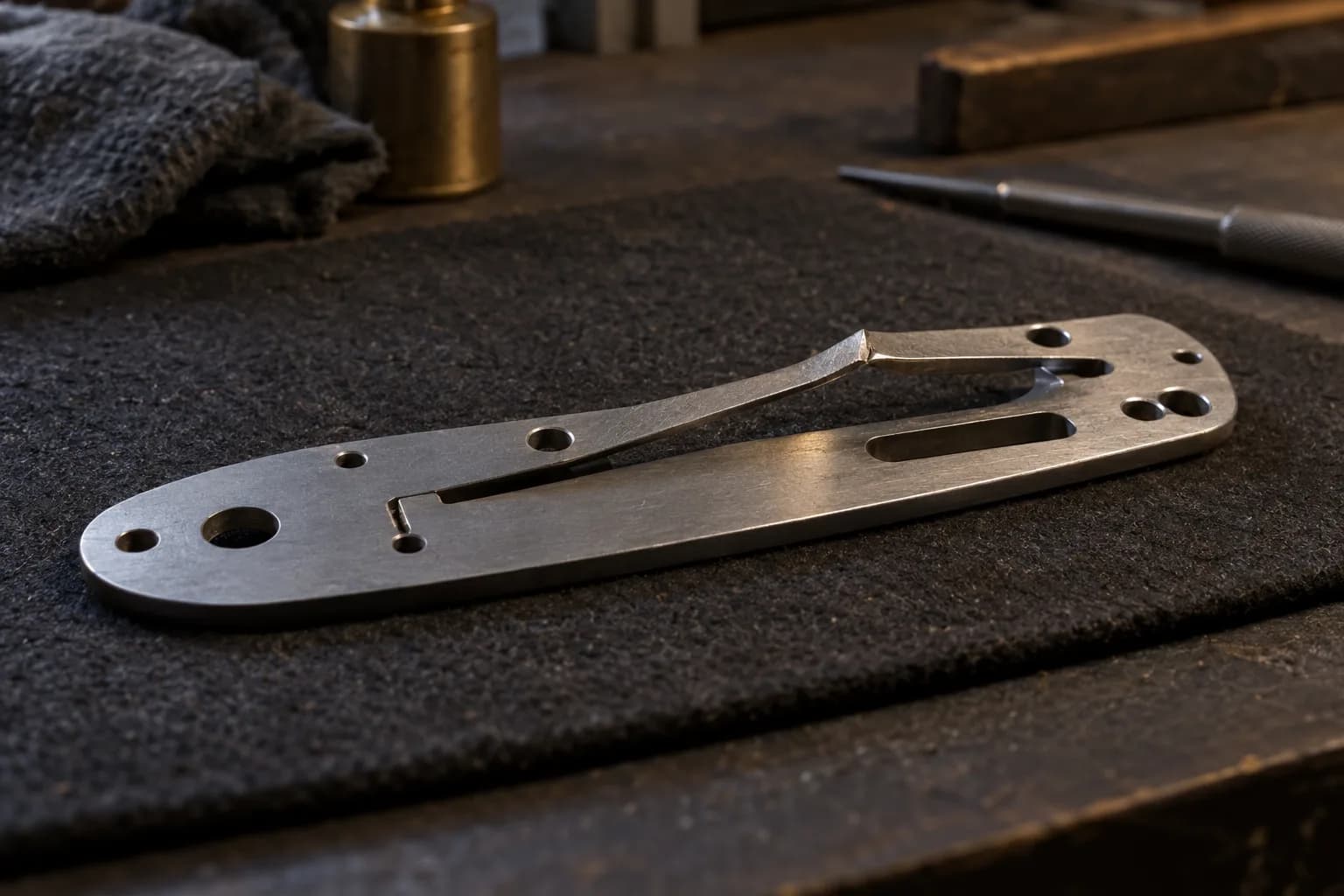
A lock that disengages under firm hand pressure is failed, not tunable - refit or retire. And a frame/liner lockbar bent past its spring range (from forcing or a drop) is a replacement, not an adjustment; spring steel remembers abuse.
Keep reading
The long-form version of the fix above, written from the same bench.
Full disclosure, before anything else: this is Torus CNC’s site — we build three of the grinders compared below. Here’s how we’ve kept this honest: every…
Comics run on invented metals — adamantium, vibranium, the whole periodic table of plot — and the fastest way to appreciate real metallurgy is to audit…
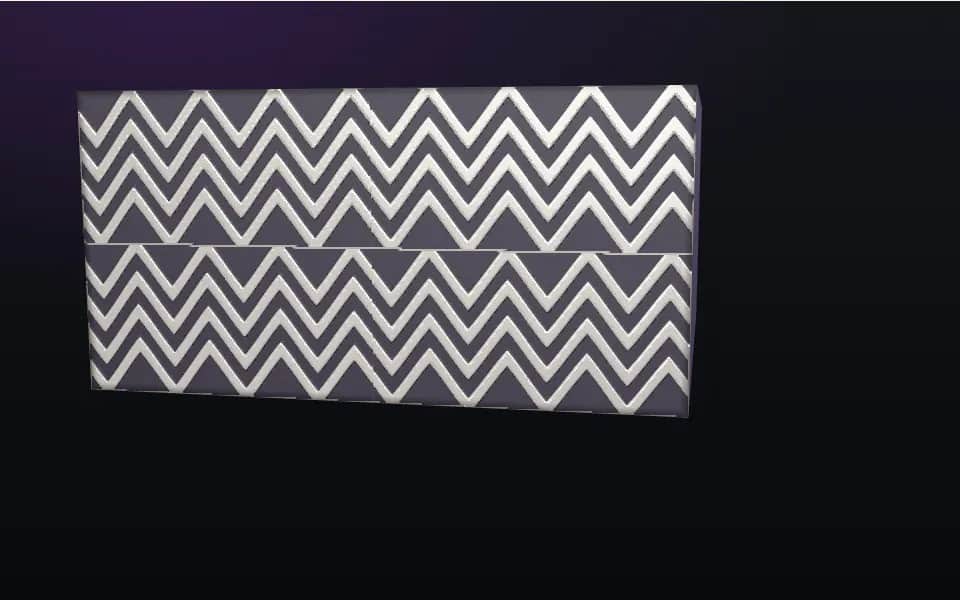
Past the ladder, twist, and raindrop lies the territory where damascus becomes composition: patterns built by controlling the layers in three dimensions…
Same bench
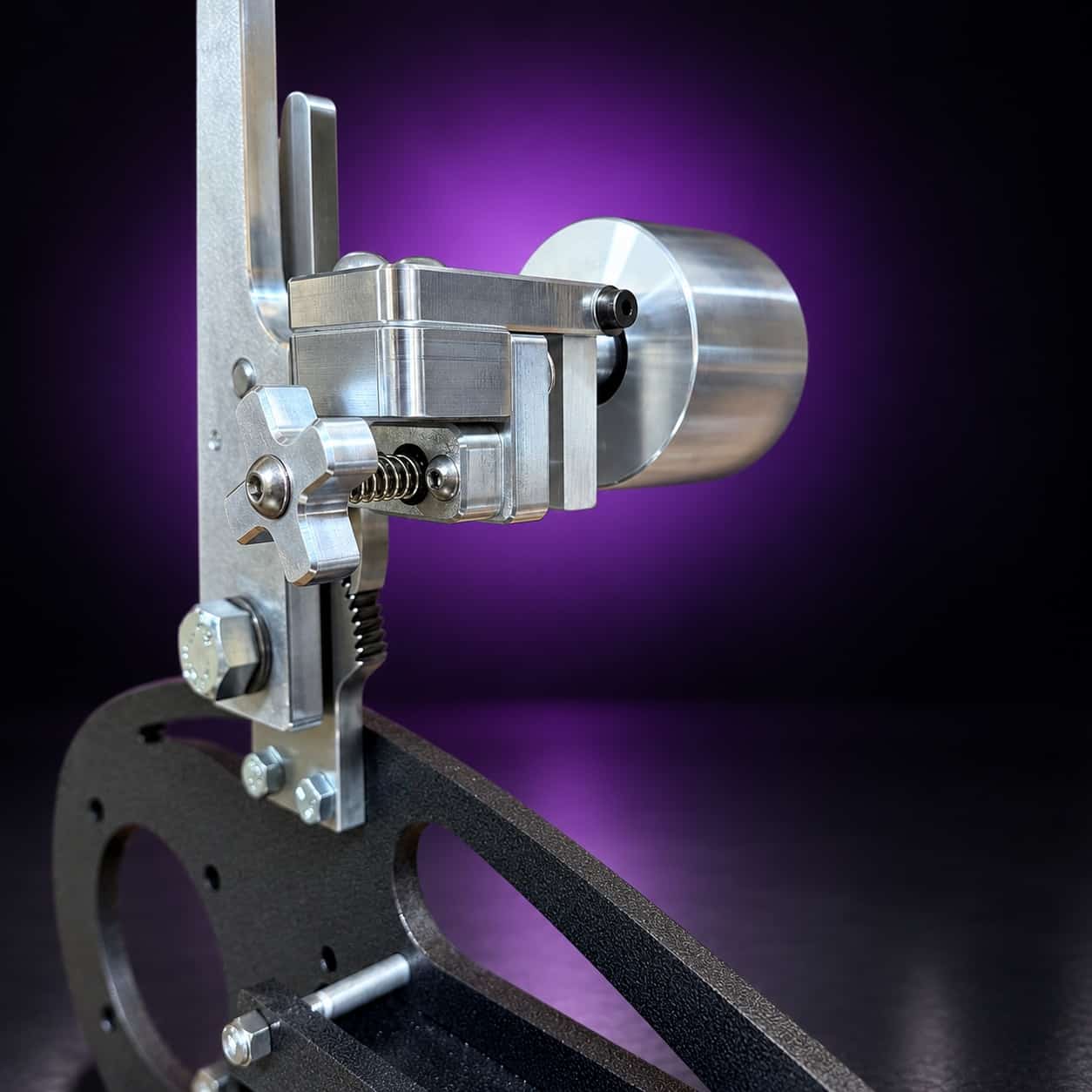
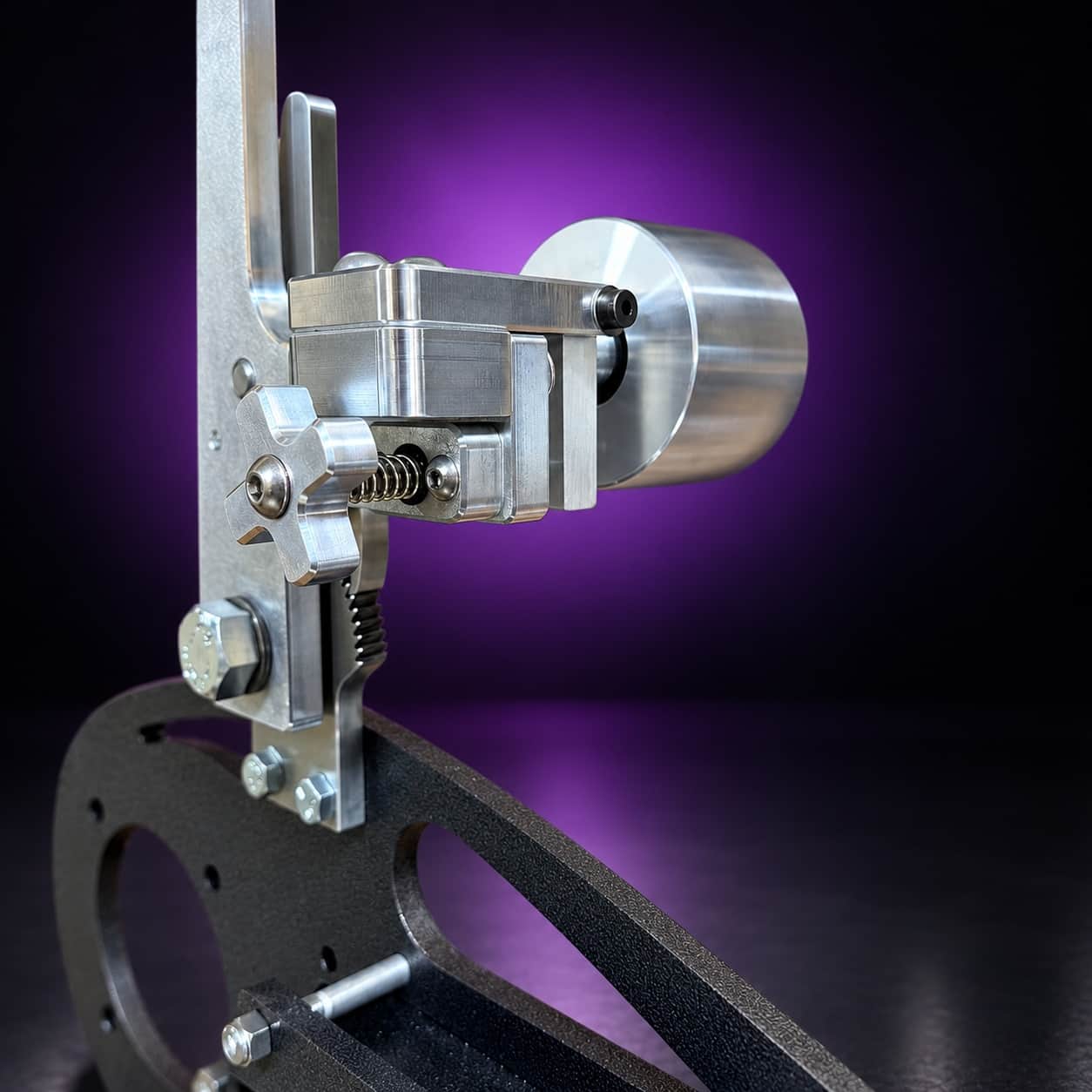
Flex, a soft platen or a tracking knob that will not hold can show up as a bad grind. I machine the parts, hand-assemble, track and test each Torus grinder in Sterling, Illinois.
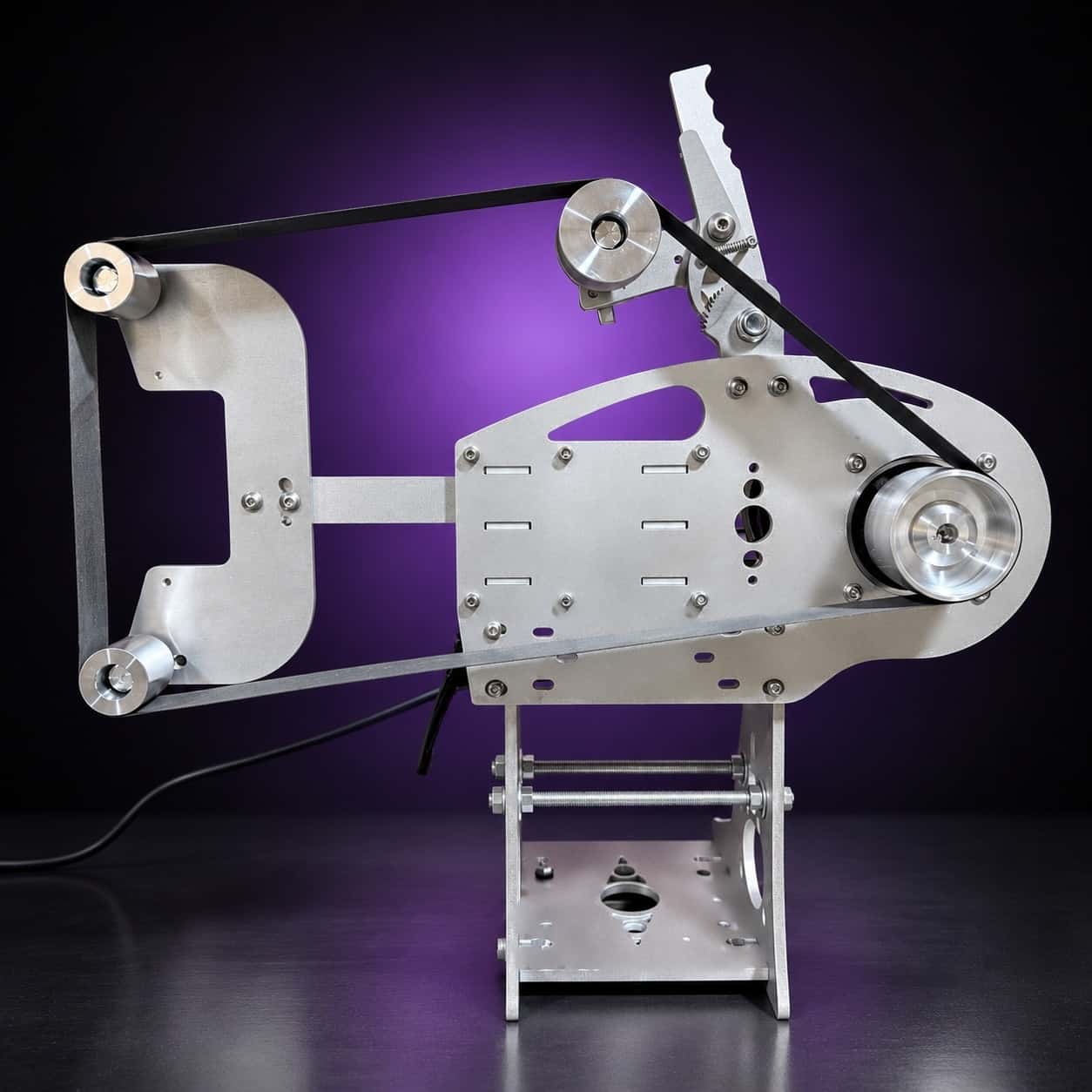
Current dual-axis platform with a fiber-laser-cut 6061 chassis and single-knob tracking.
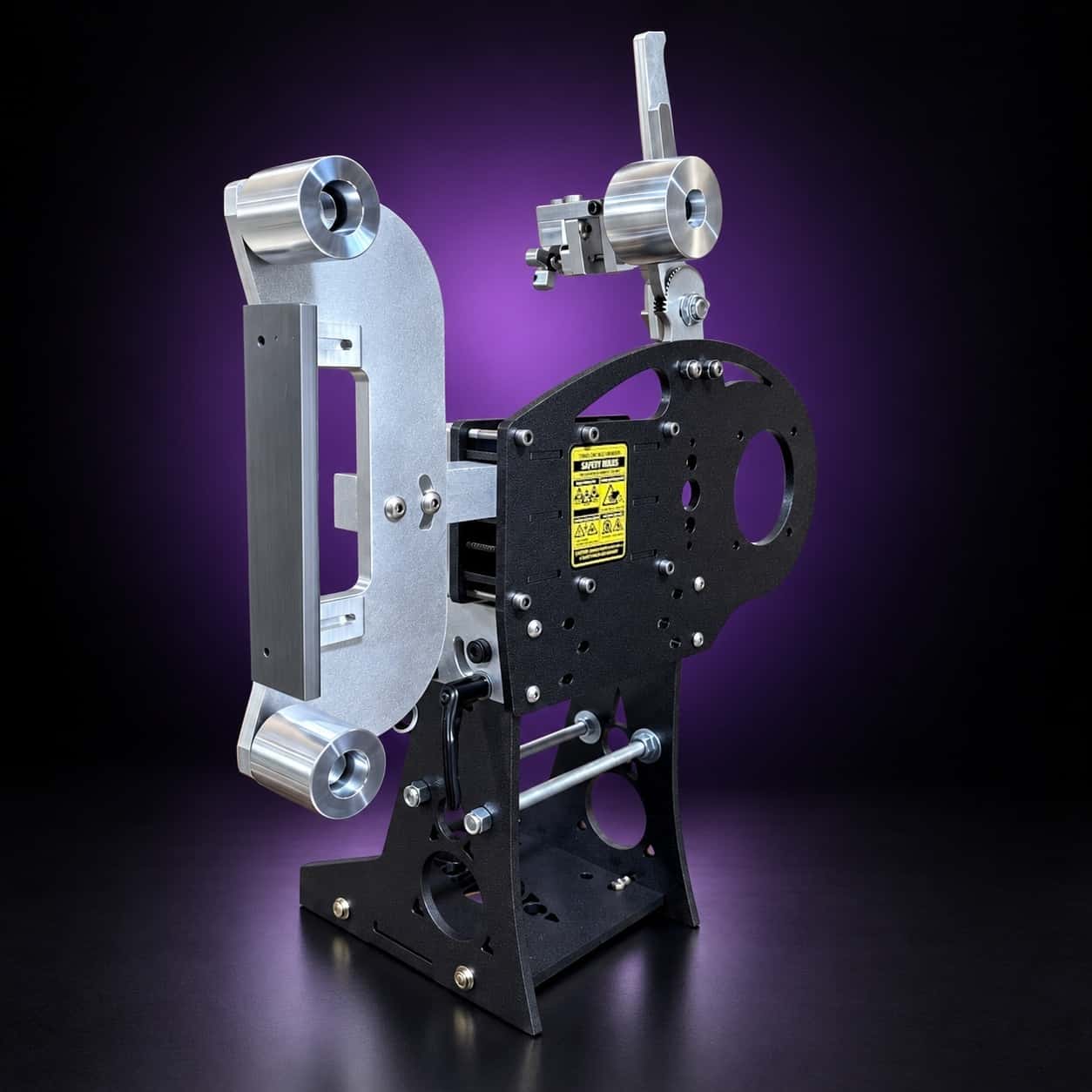
Current dual-axis platform with a steel chassis, more mass and less vibration.
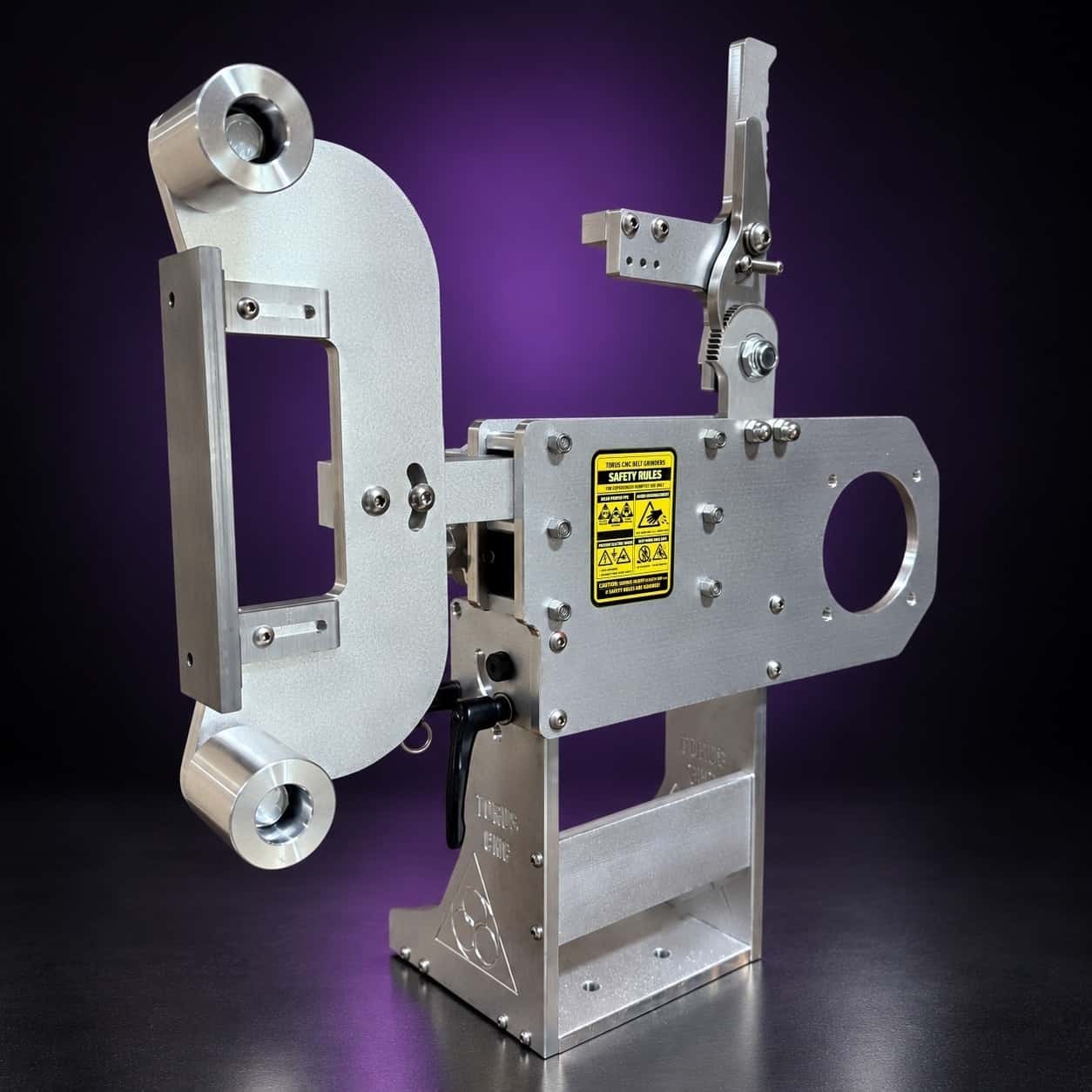
Prior-design aluminum chassis, 90-degree tilt and 1.5-inch tooling arms.
One-man shop
Send me a photo and describe what happened before it went wrong. Include the machine, belt and steel when they are relevant.