

Beginner Guides
2×72 Belt Grinder Brands Compared: The Honest Field Guide
Full disclosure, before anything else: this is Torus CNC’s site — we build three of the grinders compared below. Here’s how we’ve kept this honest: every…
Troubleshooting
Work back from what it is doing to what caused it, then to the fix that addresses the cause. Nothing here needs a sign-up.
The flow
Causes first, then the quick checks, the fix, prevention and the stop-work point.
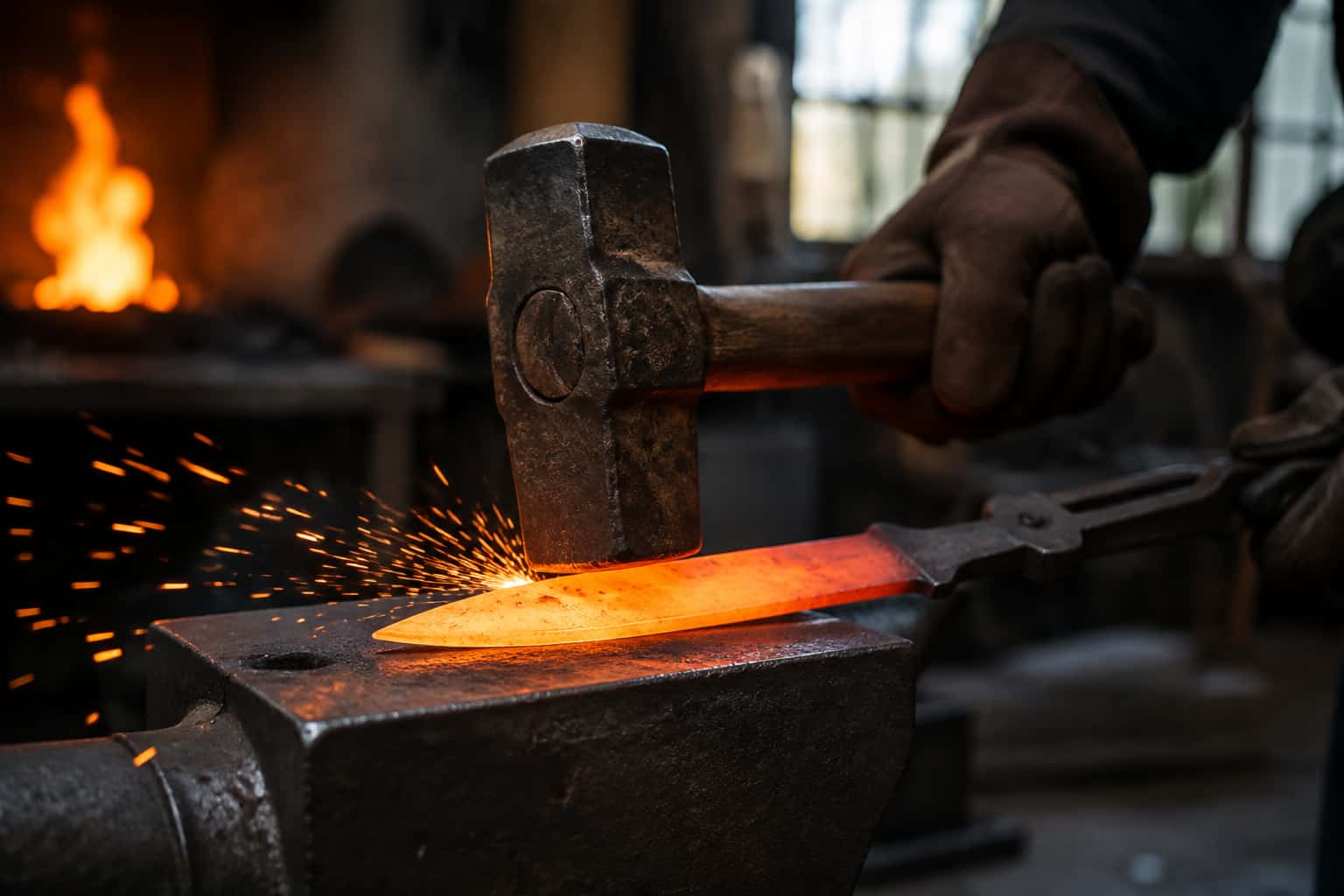
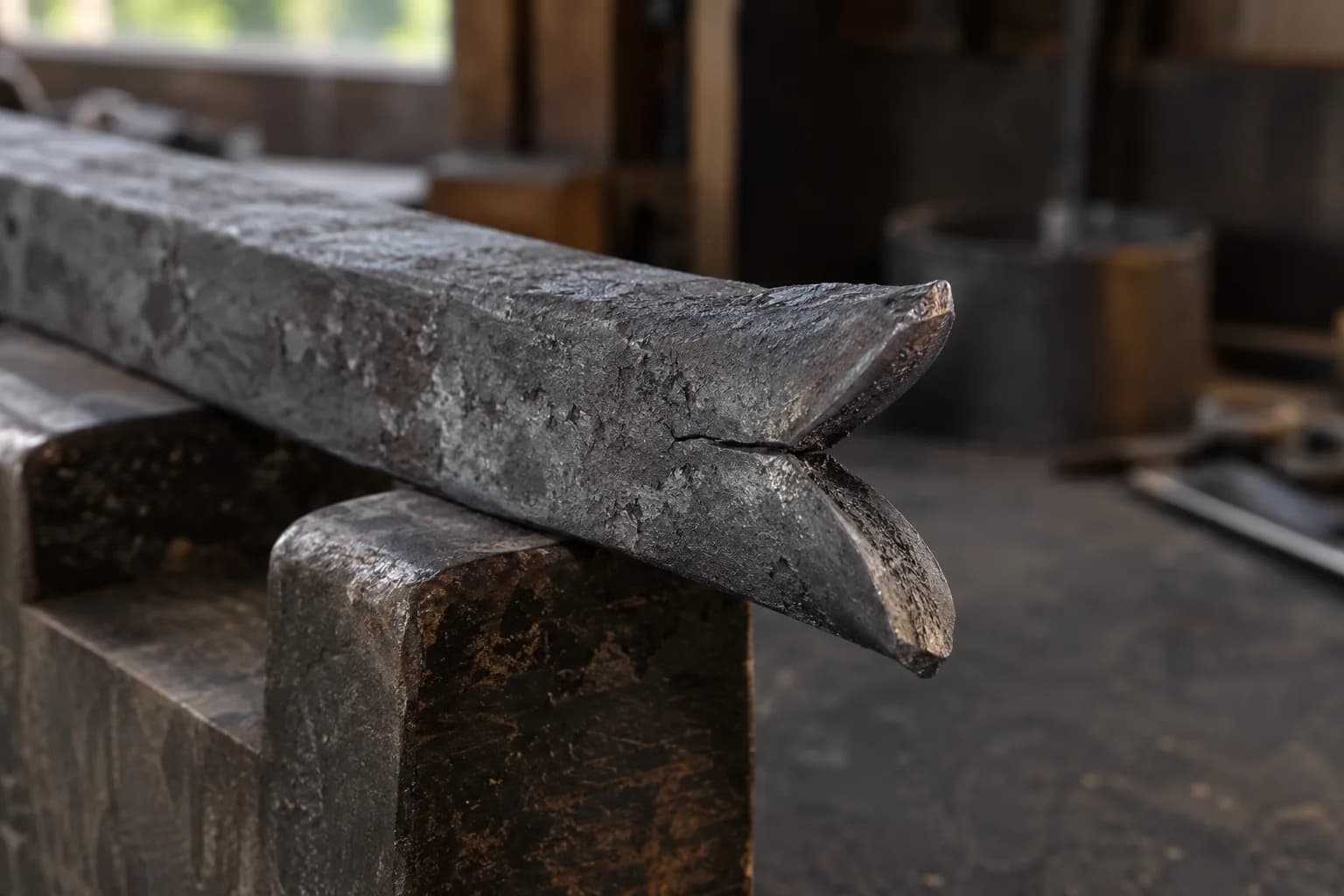
Blows too light for the stock size: light blows only move the surface, so the outside lengthens while the center lags, and the end face hollows until it tears. Contributing factors: wrong hammer angle, drawing with flats only on square stock, and working the very end of the bar while it is coolest.
Watch the baru2019s end face as you draw — cupping inward is the warning before the split. If your blows leave shallow surface prints on heavy stock instead of visibly moving the section, you are in fish-mouth territory.
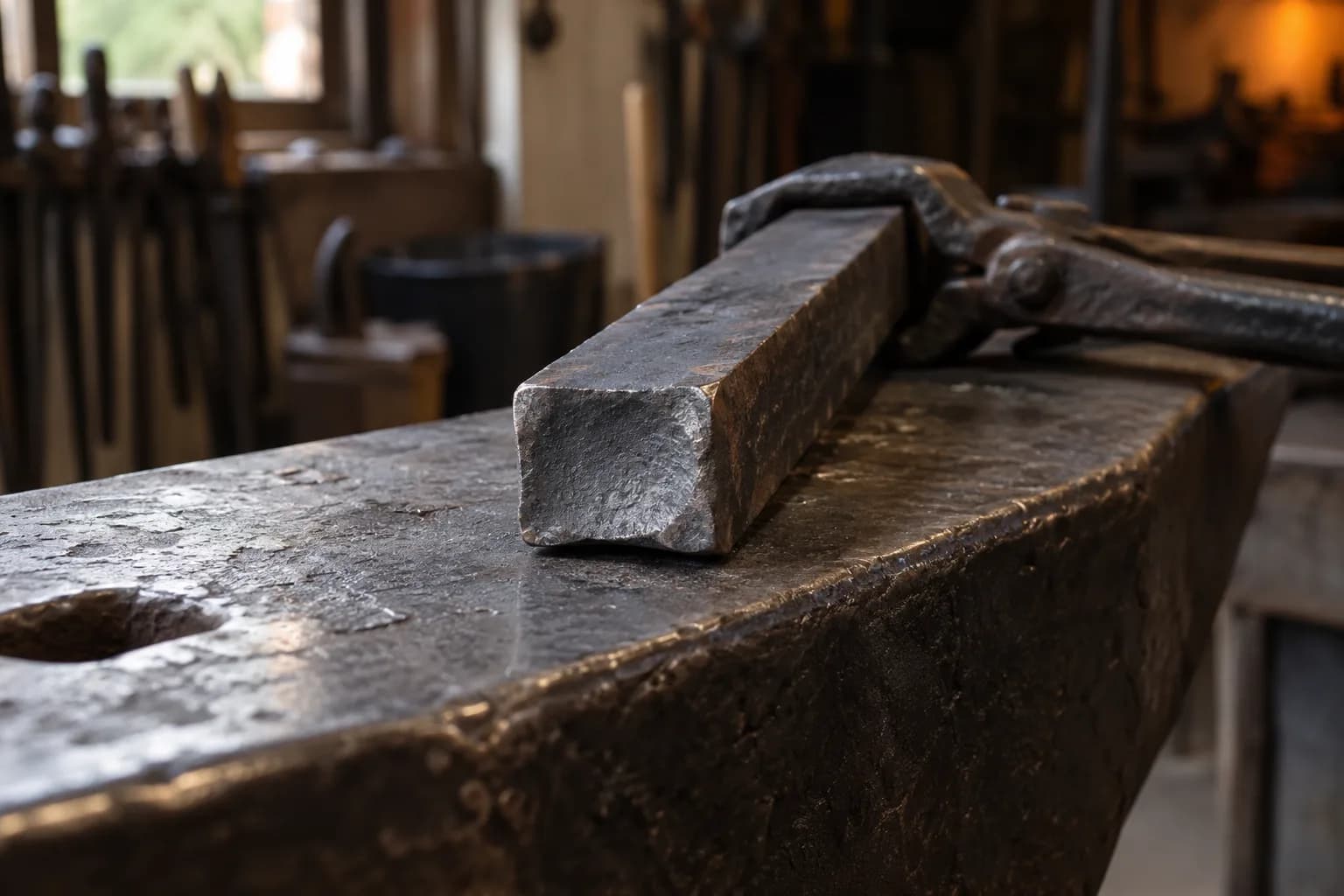
Cut or hot-cut the split end off completely, back to sound steel, before continuing — the split never forge-welds itself closed, and forging over it folds the tear inside the bar as a cold shut. Losing an inch of bar now beats losing the blade later.
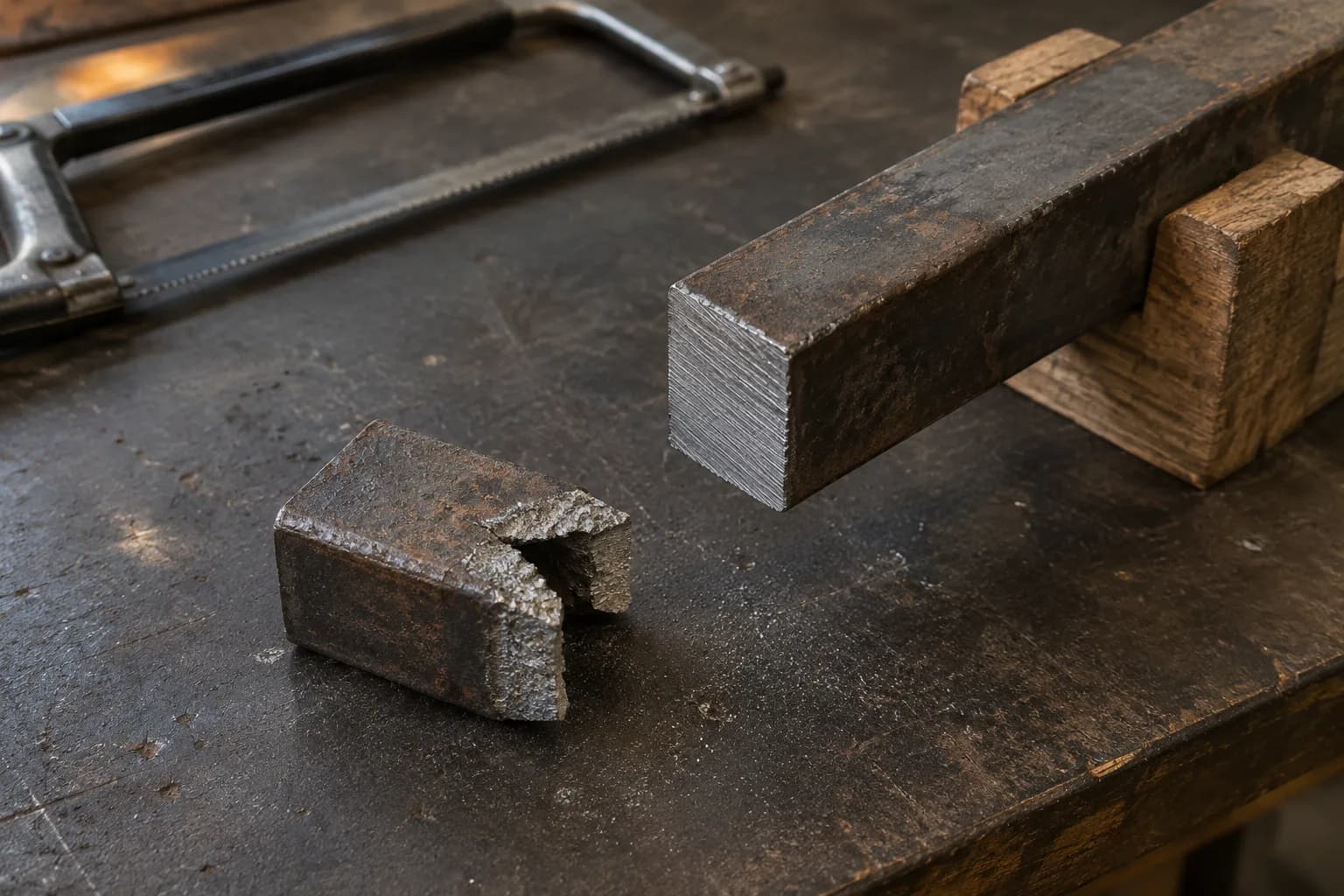
Strike hard enough for the stock — heavy sections need authoritative blows or a bigger heat (see hammer technique). Crown or chamfer bar ends before drawing so the center leads. Work at full forging heat, and leave the very end slightly proud, trimming it at the finish rather than forging it thin.
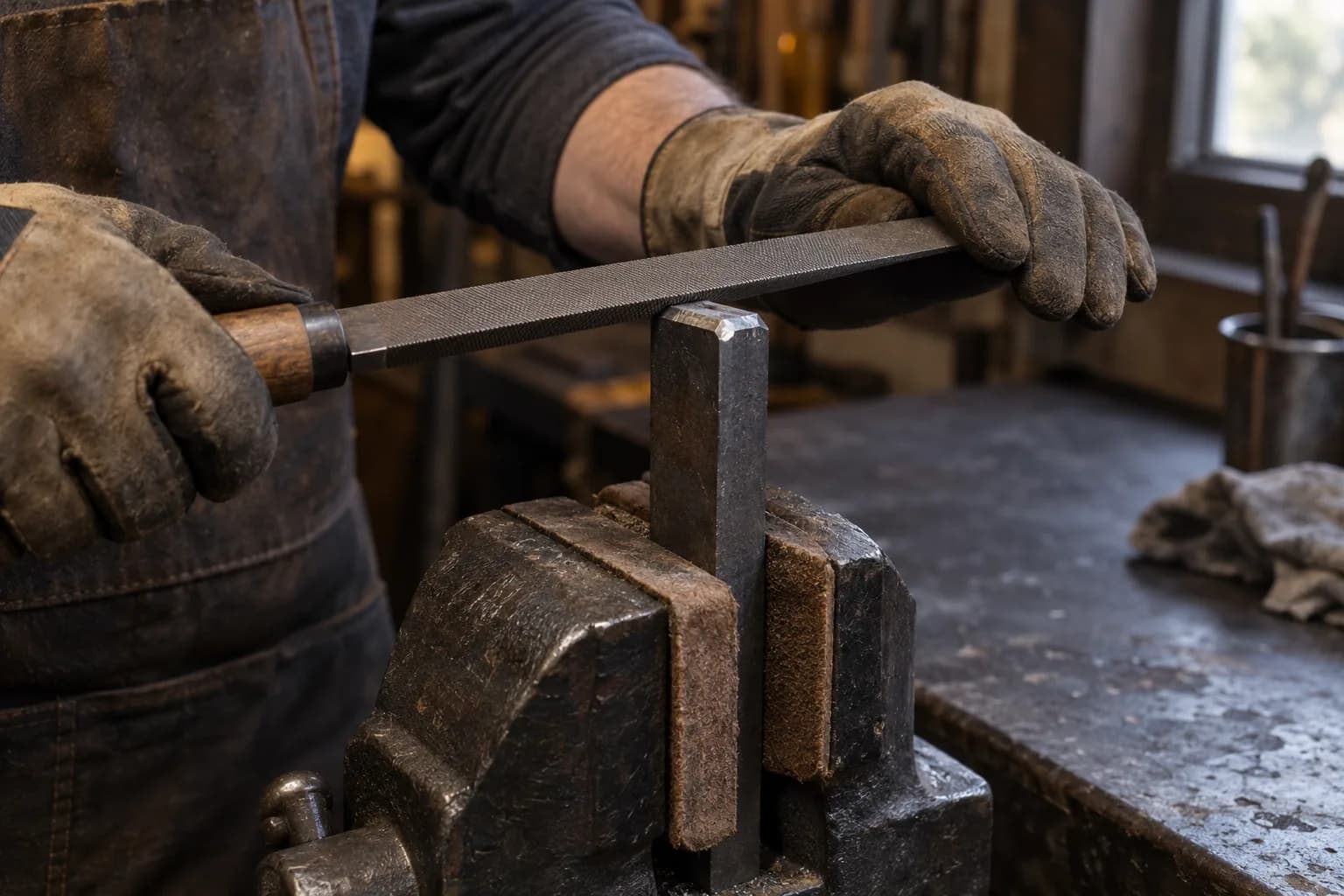
If the split has propagated into the length you meant to be blade, keep cutting back to fully sound steel no matter how much bar it costs. A trace of fish mouth left in the bar is a delamination waiting inside your finished blade.
Keep reading
The long-form version of the fix above, written from the same bench.
Full disclosure, before anything else: this is Torus CNC’s site — we build three of the grinders compared below. Here’s how we’ve kept this honest: every…

Comics run on invented metals — adamantium, vibranium, the whole periodic table of plot — and the fastest way to appreciate real metallurgy is to audit…
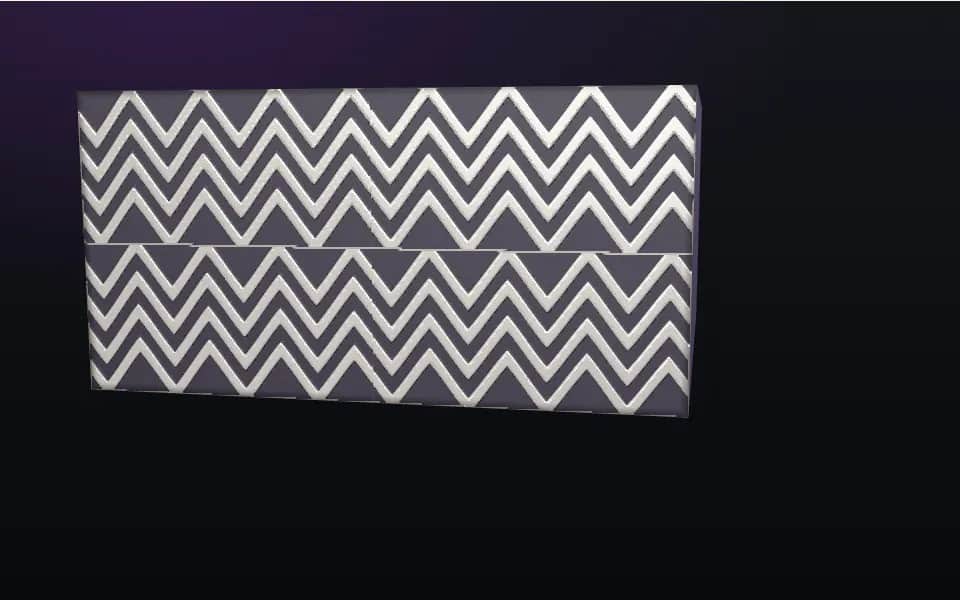
Past the ladder, twist, and raindrop lies the territory where damascus becomes composition: patterns built by controlling the layers in three dimensions…
Same bench
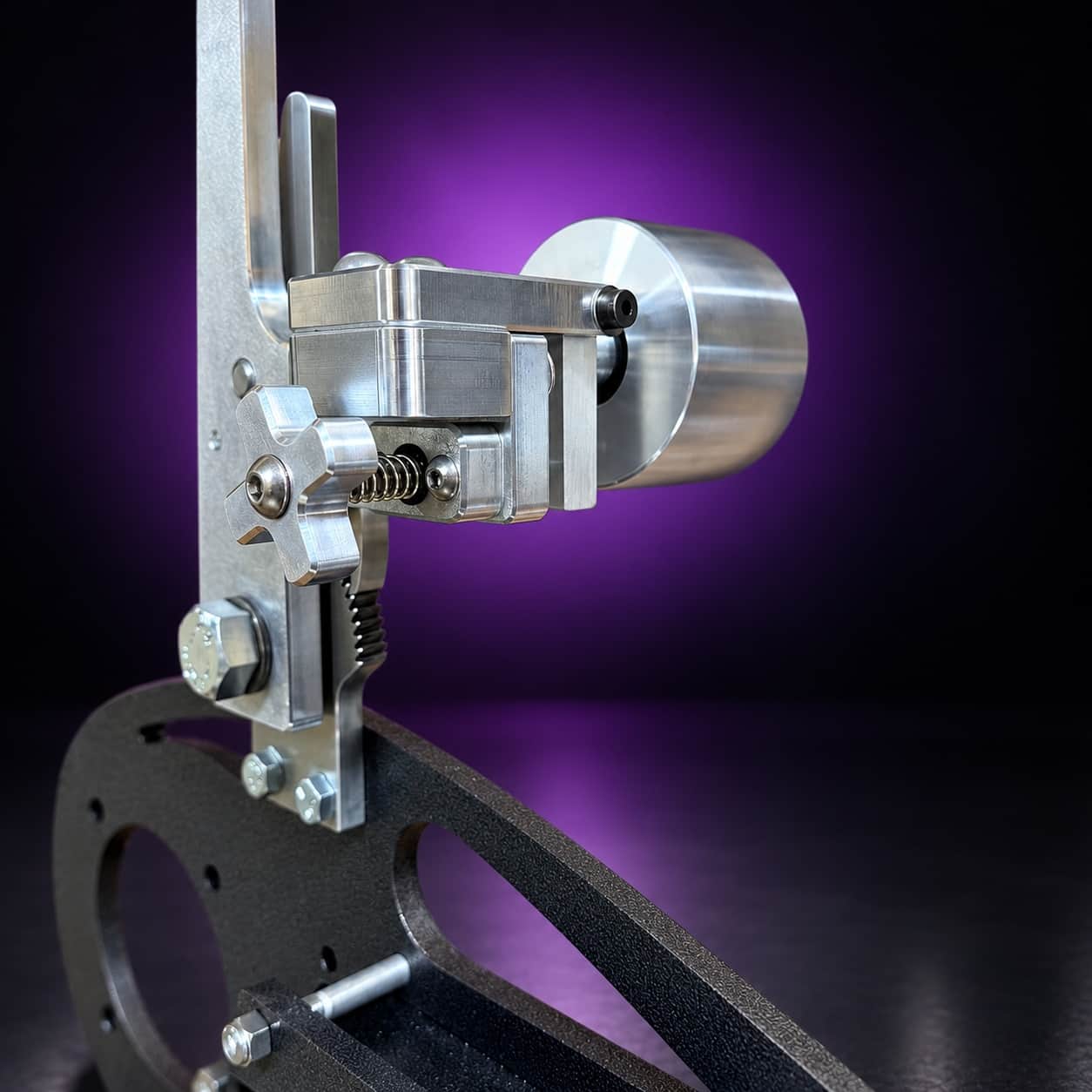
Flex, a soft platen or a tracking knob that will not hold can show up as a bad grind. I machine the parts, hand-assemble, track and test each Torus grinder in Sterling, Illinois.

Current dual-axis platform with a fiber-laser-cut 6061 chassis and single-knob tracking.

Current dual-axis platform with a steel chassis, more mass and less vibration.

Prior-design aluminum chassis, 90-degree tilt and 1.5-inch tooling arms.
One-man shop
Send me a photo and describe what happened before it went wrong. Include the machine, belt and steel when they are relevant.