
Beginner Guides
2×72 Belt Grinder Brands Compared: The Honest Field Guide
Full disclosure, before anything else: this is Torus CNC’s site — we build three of the grinders compared below. Here’s how we’ve kept this honest: every…
Troubleshooting
Work back from what it is doing to what caused it, then to the fix that addresses the cause. Nothing here needs a sign-up.
The flow
Causes first, then the quick checks, the fix, prevention and the stop-work point.
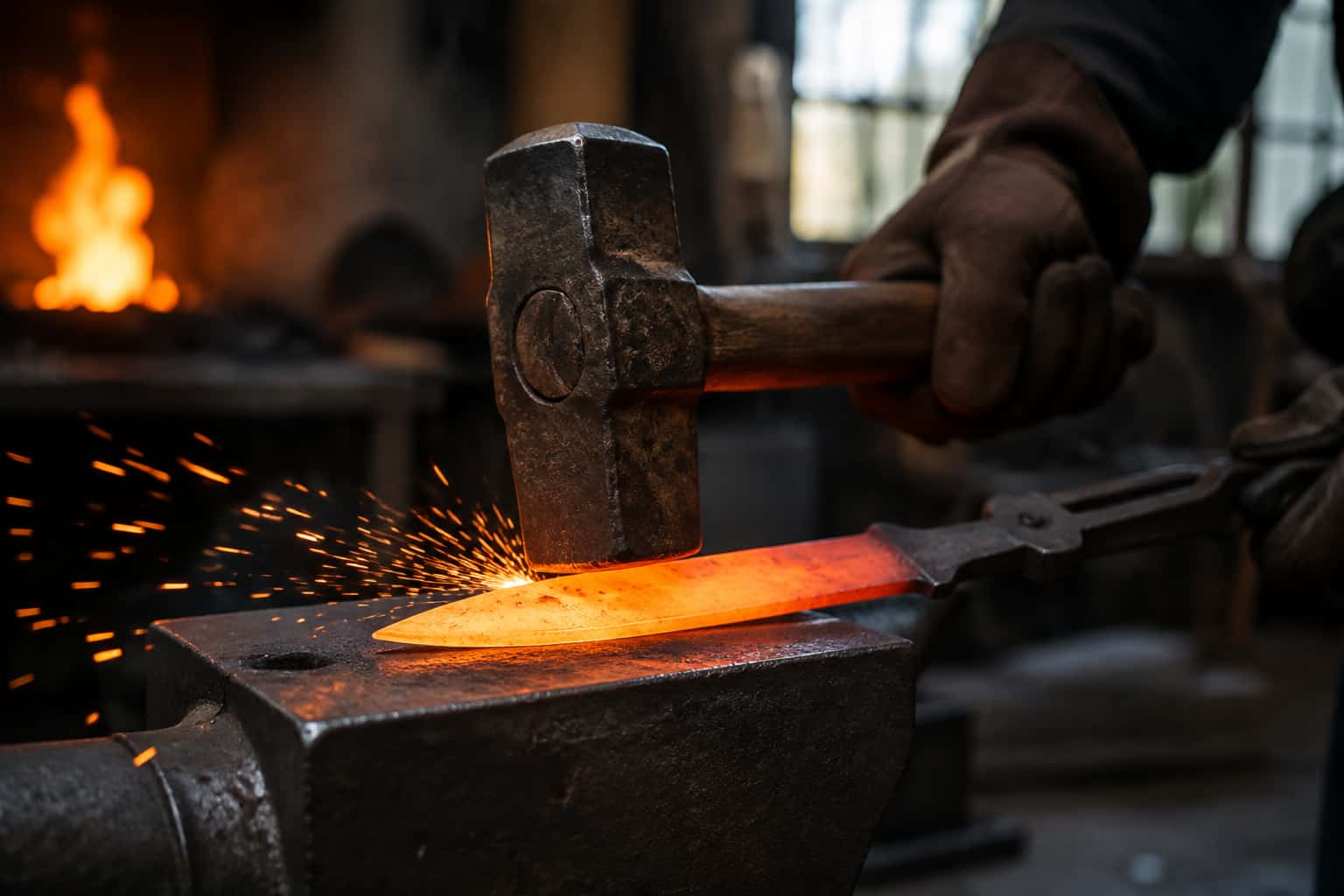
Forging below dull red (the number-one cause — cold steel tears instead of flowing). Burnt spots from welding-heat corners (steel that sparkled in the fire is dead). Accumulated forging stress never relieved by normalizing. Drastic cooling (hot bar on cold concrete or an impatient dunk). Or the steel itself — mystery scrap with fatigue history.
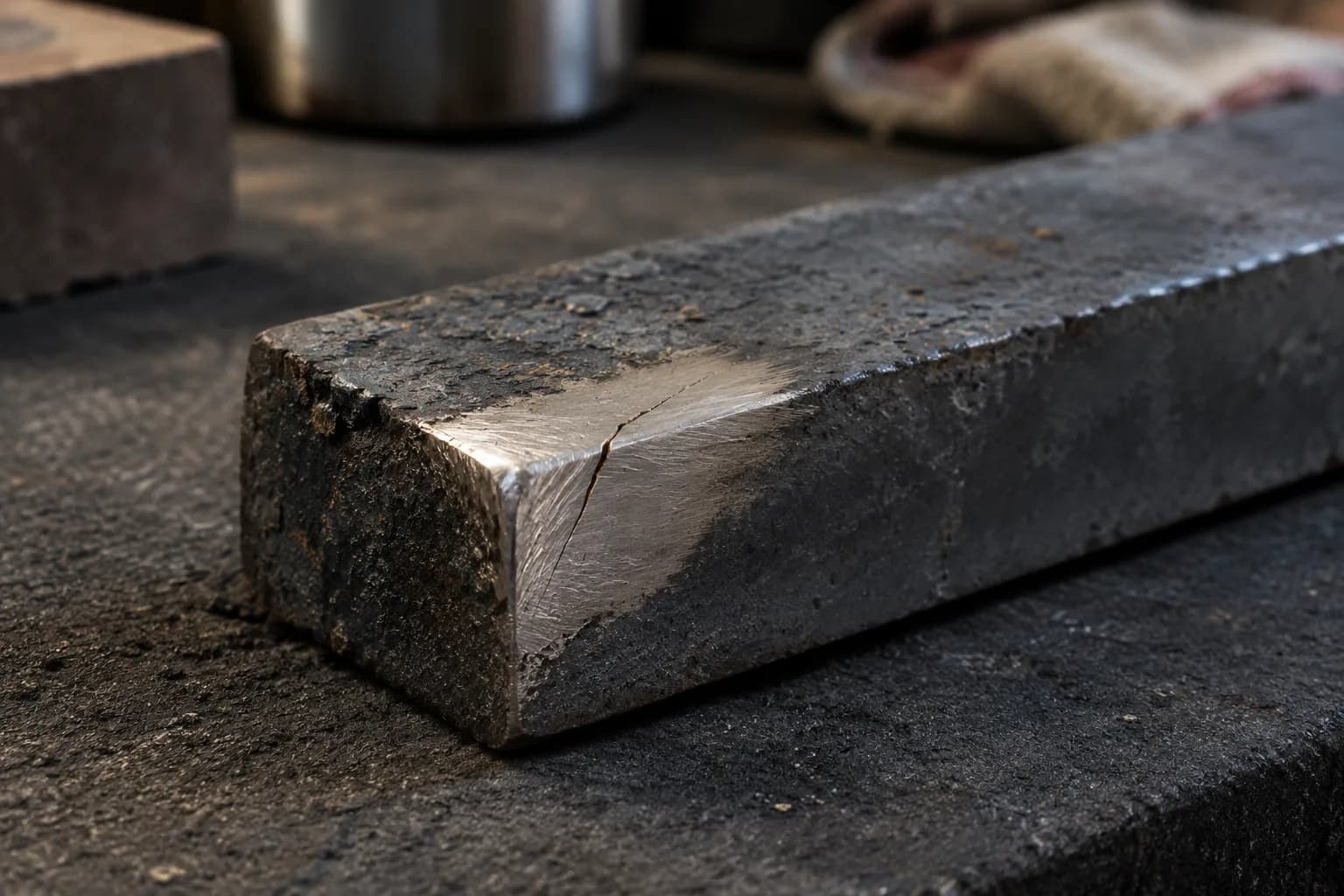
Grind a clean window and etch it — cracks show as sharp dark lines. Wipe with penetrating oil, wipe dry, and watch the crack weep it back out. A file dragged across a suspect line catches on a real crack. When in doubt, snap-test a coupon from the same bar and read the grain.
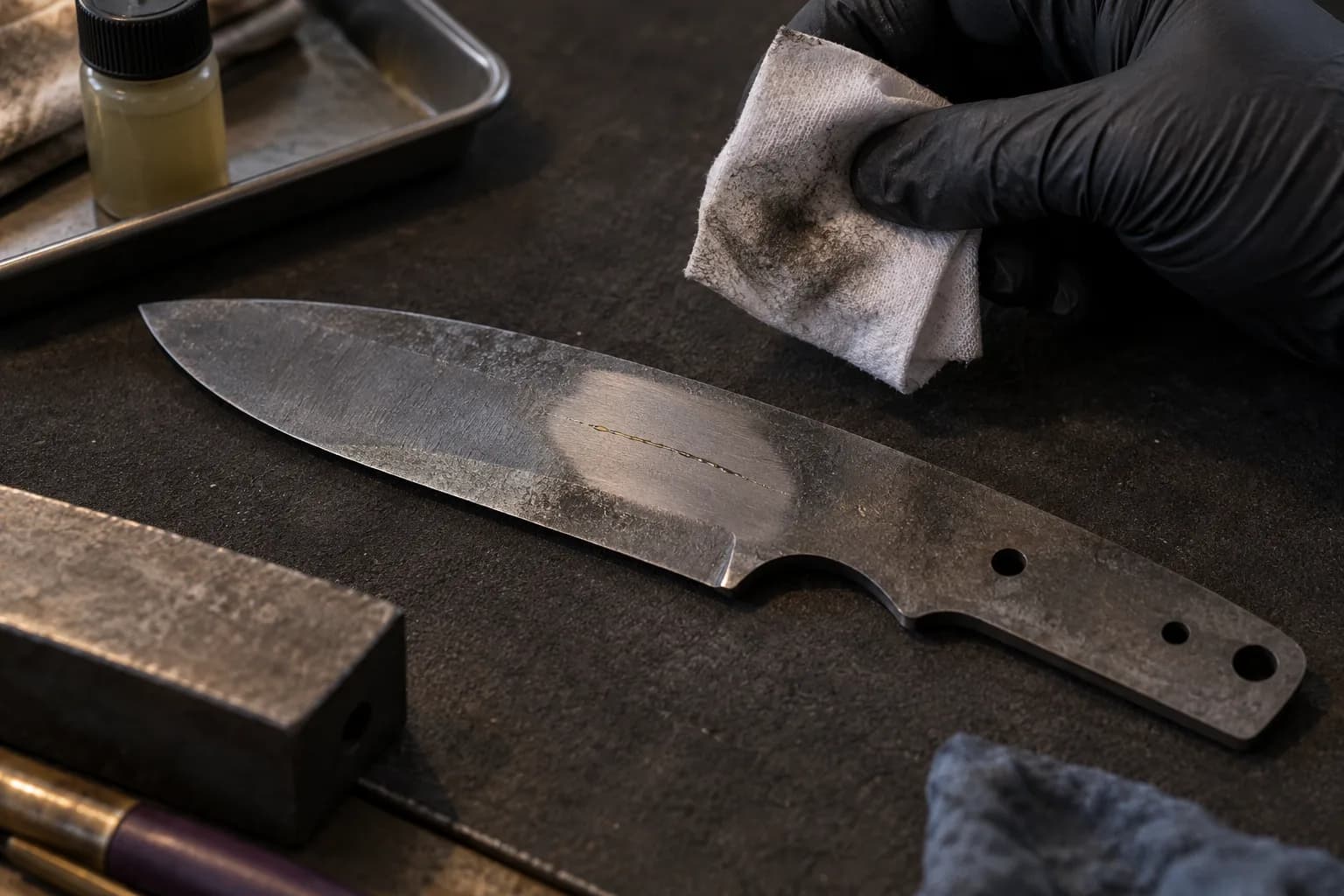
End and corner checks: cut back to sound steel and continue — this is routine, not failure. Cracks in the intended blade body: scrap it honestly. There is no fix that makes cracked steel trustworthy; steel is cheap and your name is not.
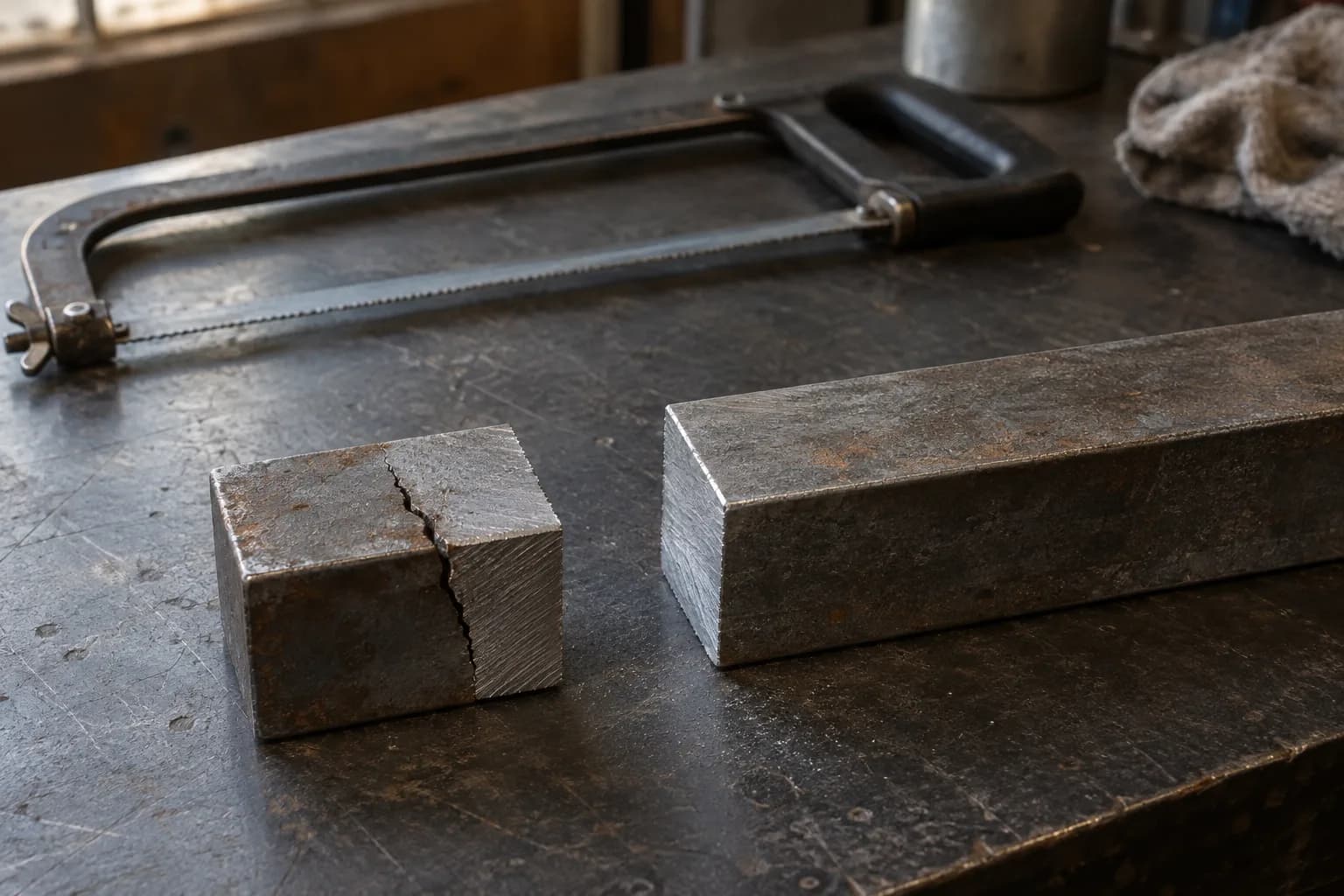
Stop hammering at dull red, always. Watch corners and thin sections at high heat — they overheat first. Normalize with descending thermal cycles after forging, cool in still air, and start from known steel. Most crack problems are the same three habits wearing different disguises.
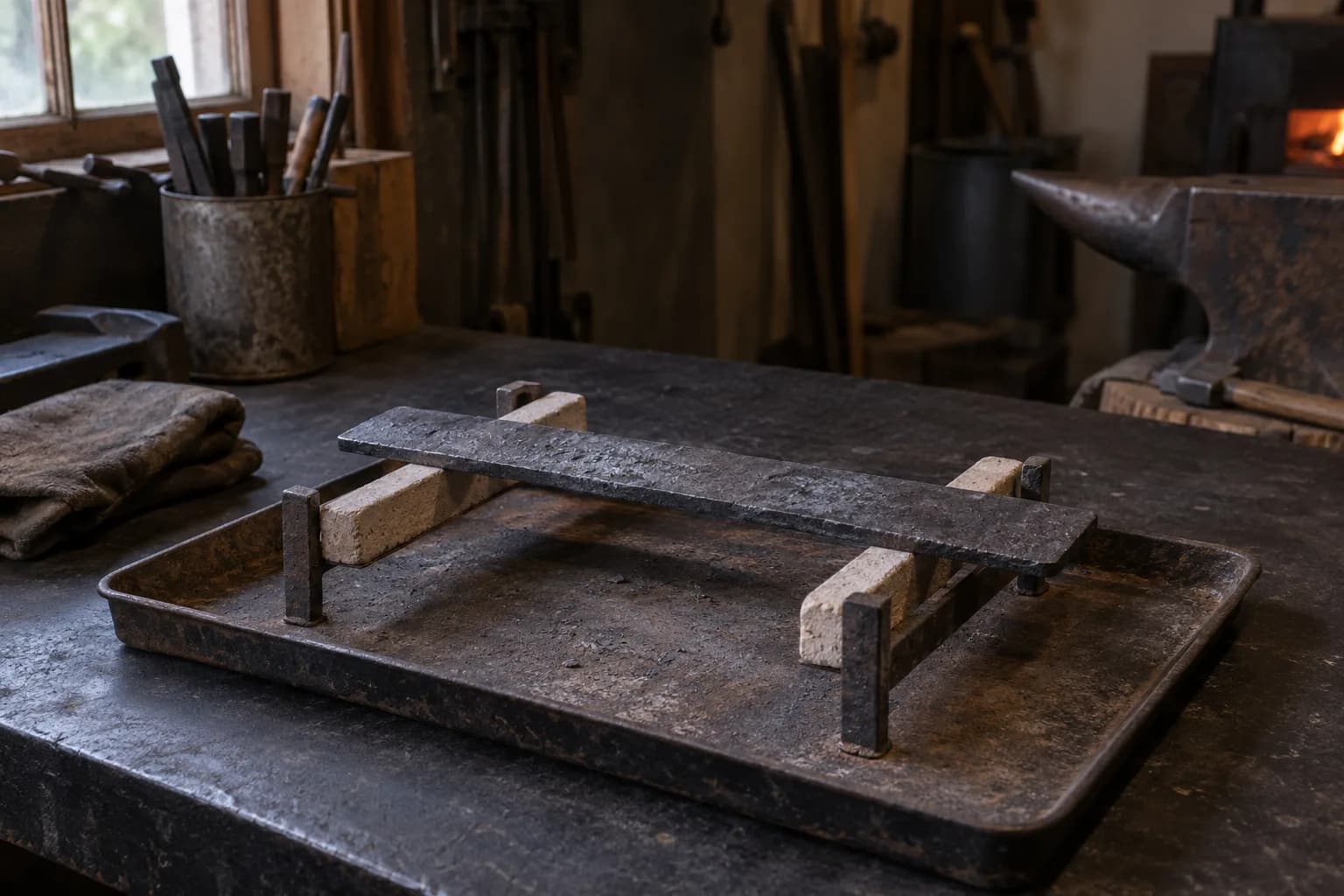
Any crack that survives grinding into the final blade envelope ends the blade — and remember the quench multiplies whatever cracks you carry into it. Cut back or start over before heat treat, never after.
Keep reading
The long-form version of the fix above, written from the same bench.
Full disclosure, before anything else: this is Torus CNC’s site — we build three of the grinders compared below. Here’s how we’ve kept this honest: every…
Comics run on invented metals — adamantium, vibranium, the whole periodic table of plot — and the fastest way to appreciate real metallurgy is to audit…
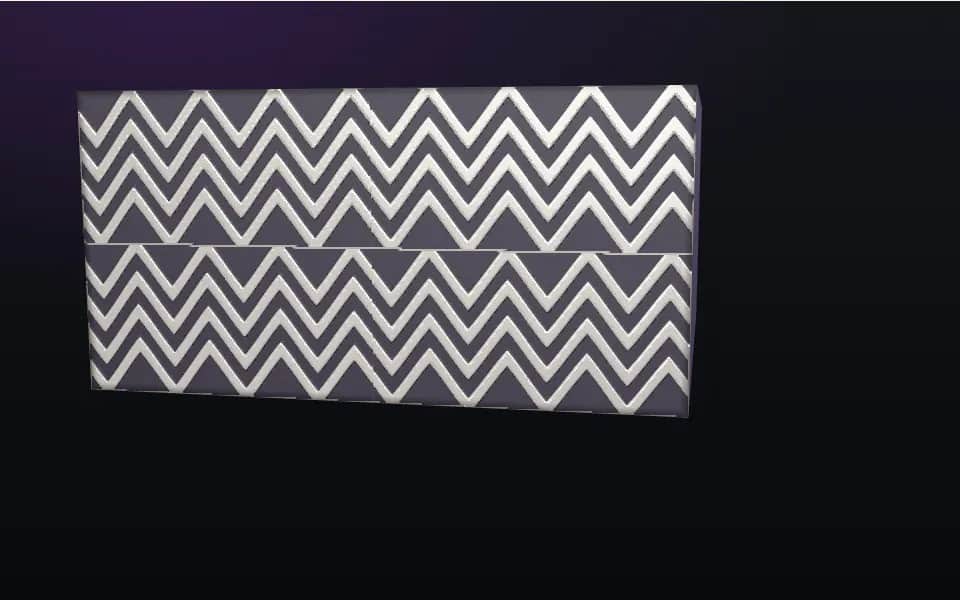
Past the ladder, twist, and raindrop lies the territory where damascus becomes composition: patterns built by controlling the layers in three dimensions…
Same bench
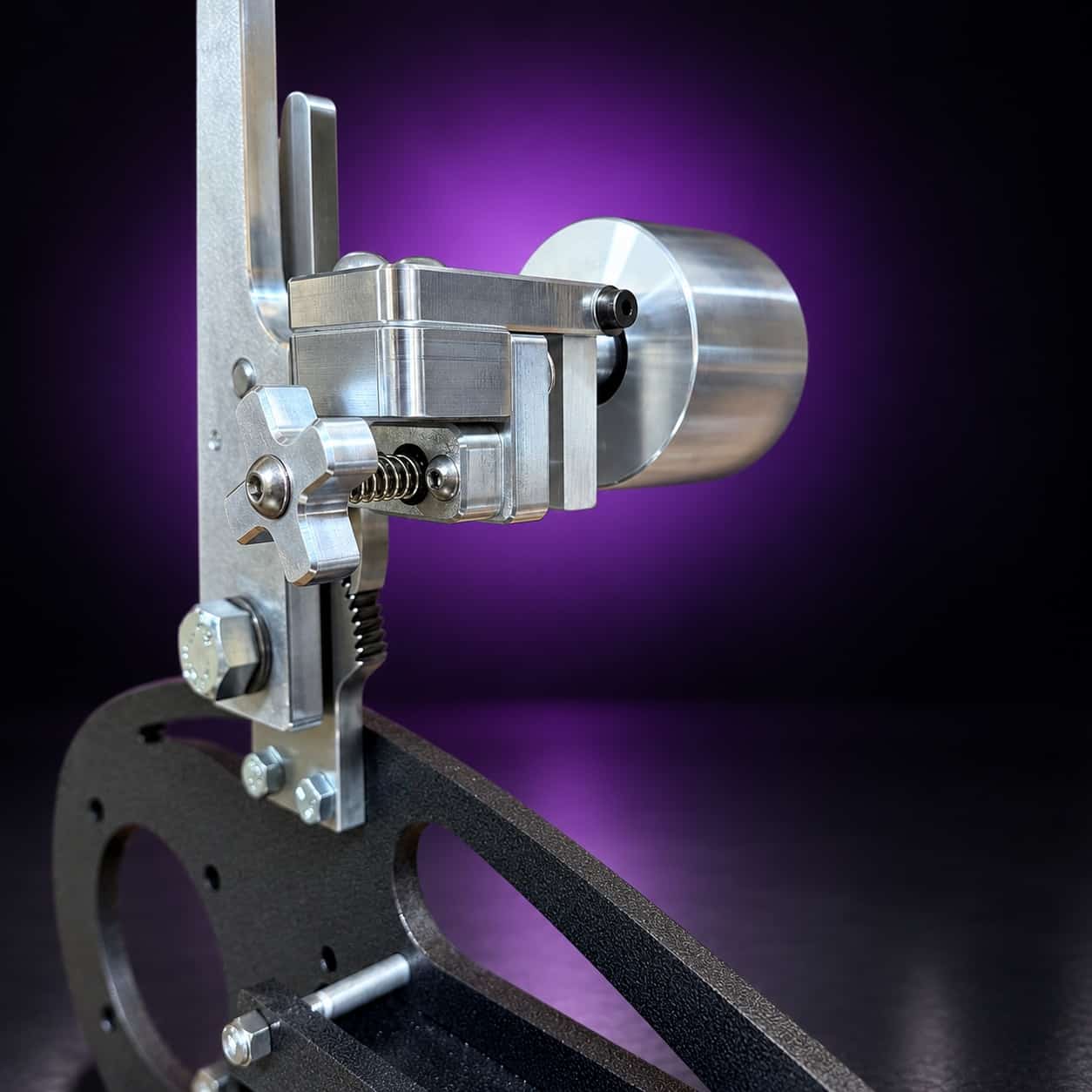
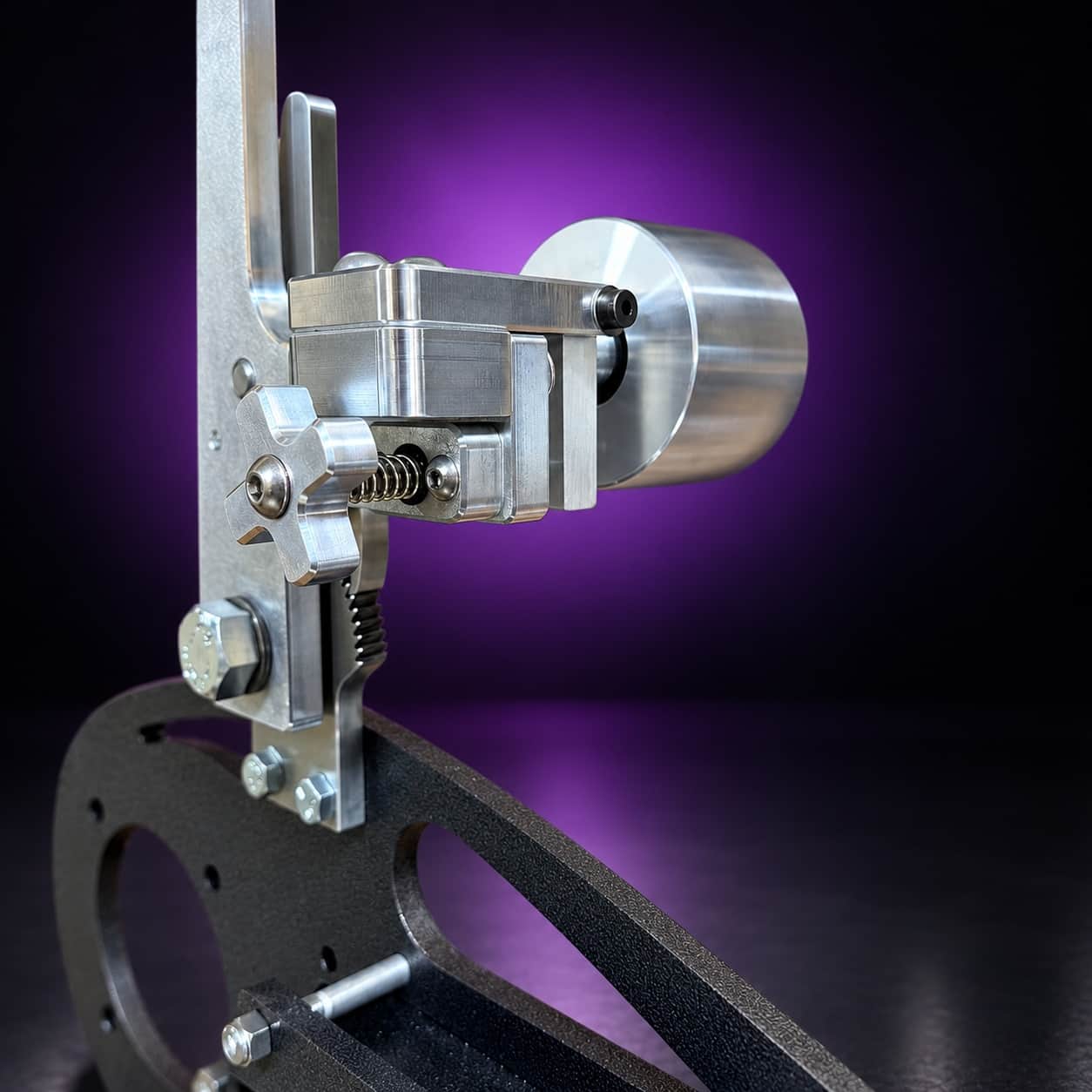
Flex, a soft platen or a tracking knob that will not hold can show up as a bad grind. I machine the parts, hand-assemble, track and test each Torus grinder in Sterling, Illinois.
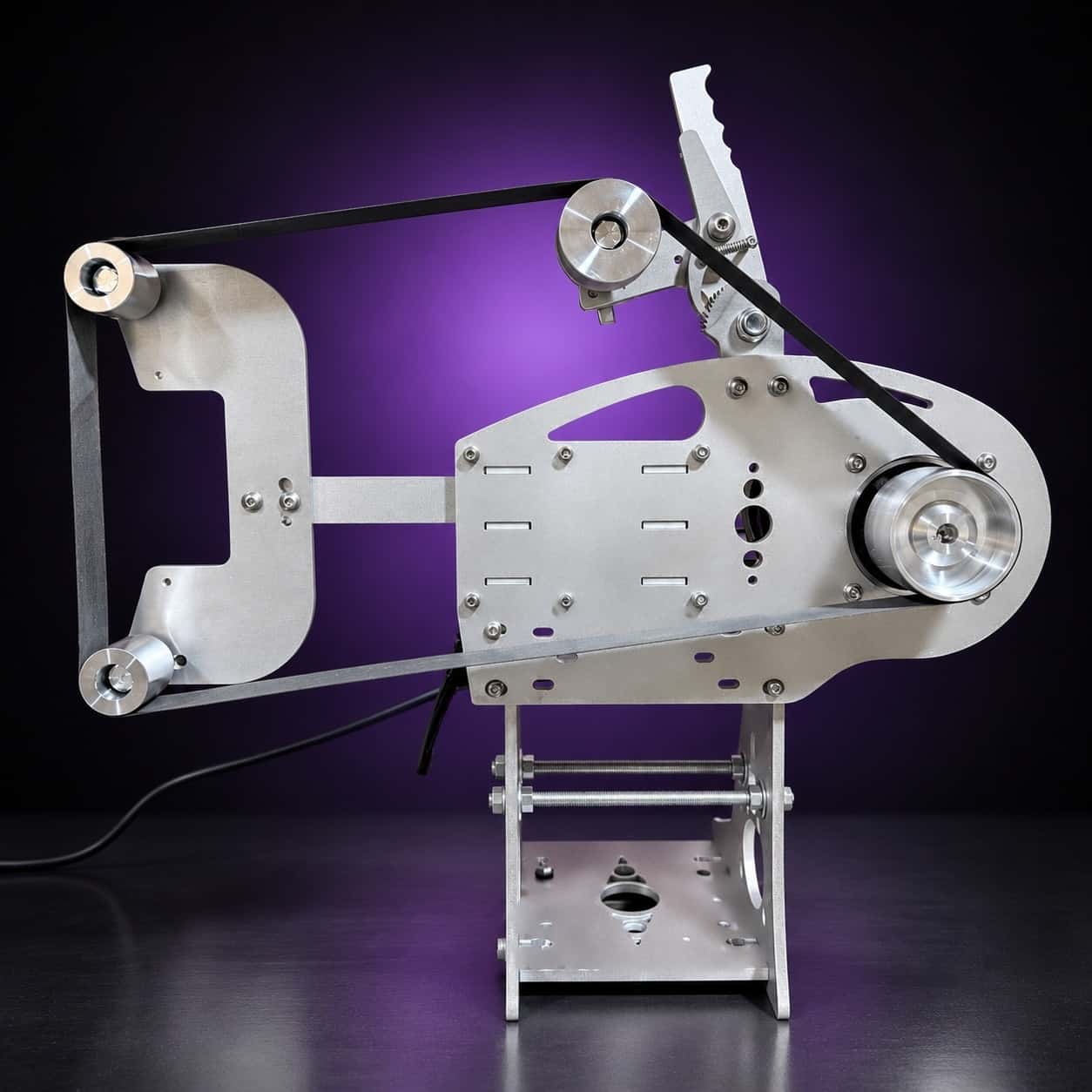
Current dual-axis platform with a fiber-laser-cut 6061 chassis and single-knob tracking.
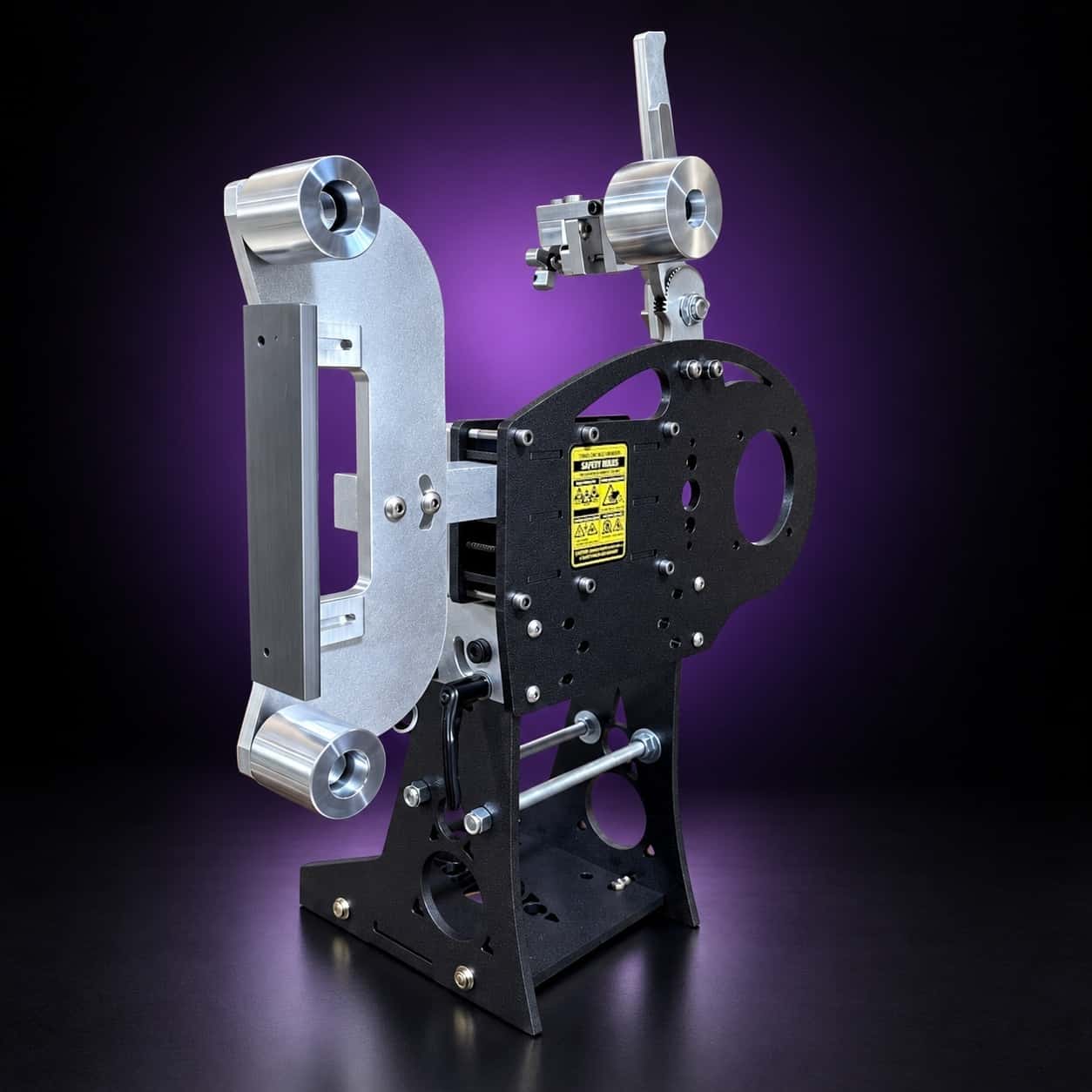
Current dual-axis platform with a steel chassis, more mass and less vibration.
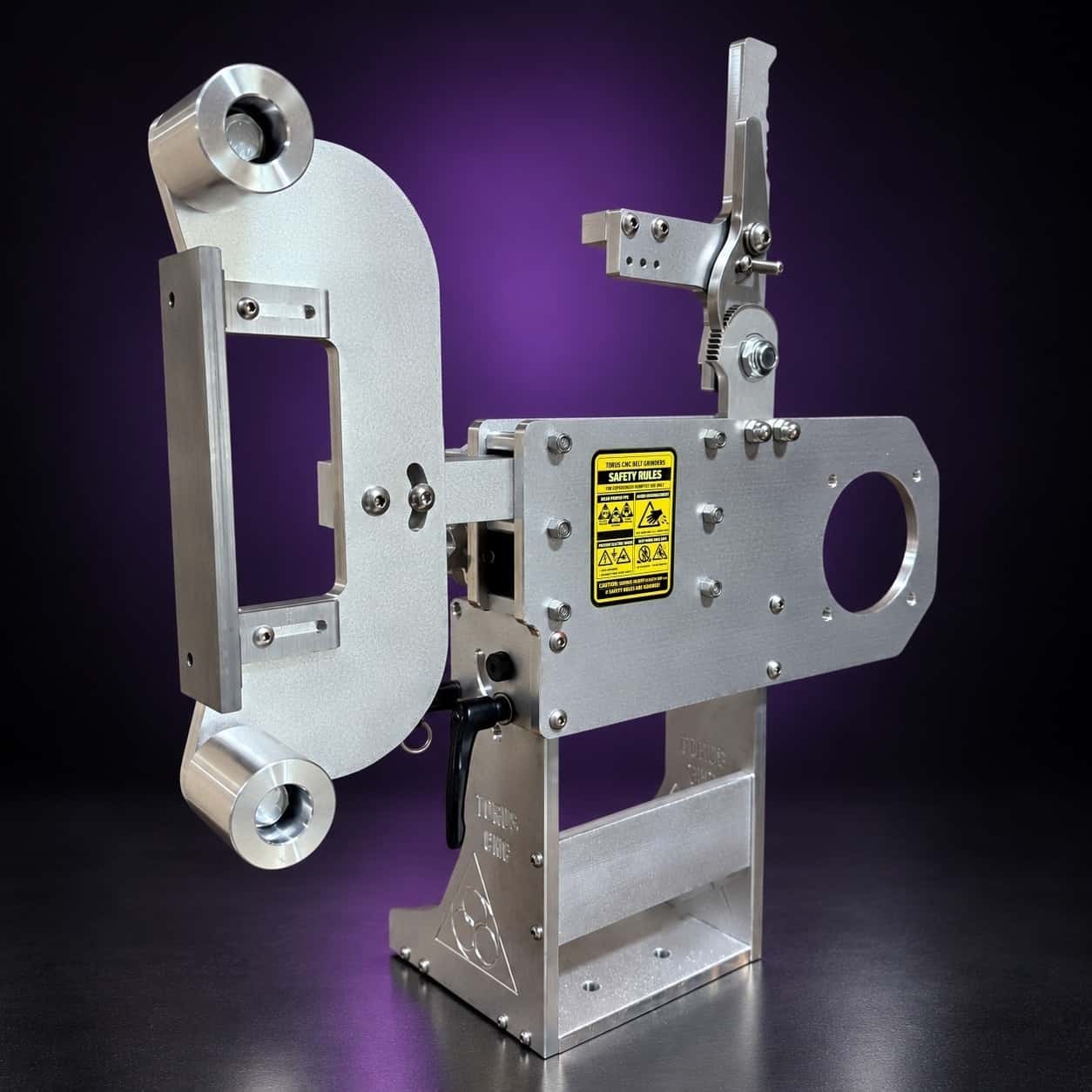
Prior-design aluminum chassis, 90-degree tilt and 1.5-inch tooling arms.
One-man shop
Send me a photo and describe what happened before it went wrong. Include the machine, belt and steel when they are relevant.