

Beginner Guides
2×72 Belt Grinder Brands Compared: The Honest Field Guide
Full disclosure, before anything else: this is Torus CNC’s site — we build three of the grinders compared below. Here’s how we’ve kept this honest: every…
Troubleshooting
Work back from what it is doing to what caused it, then to the fix that addresses the cause. Nothing here needs a sign-up.

The flow
Causes first, then the quick checks, the fix, prevention and the stop-work point.
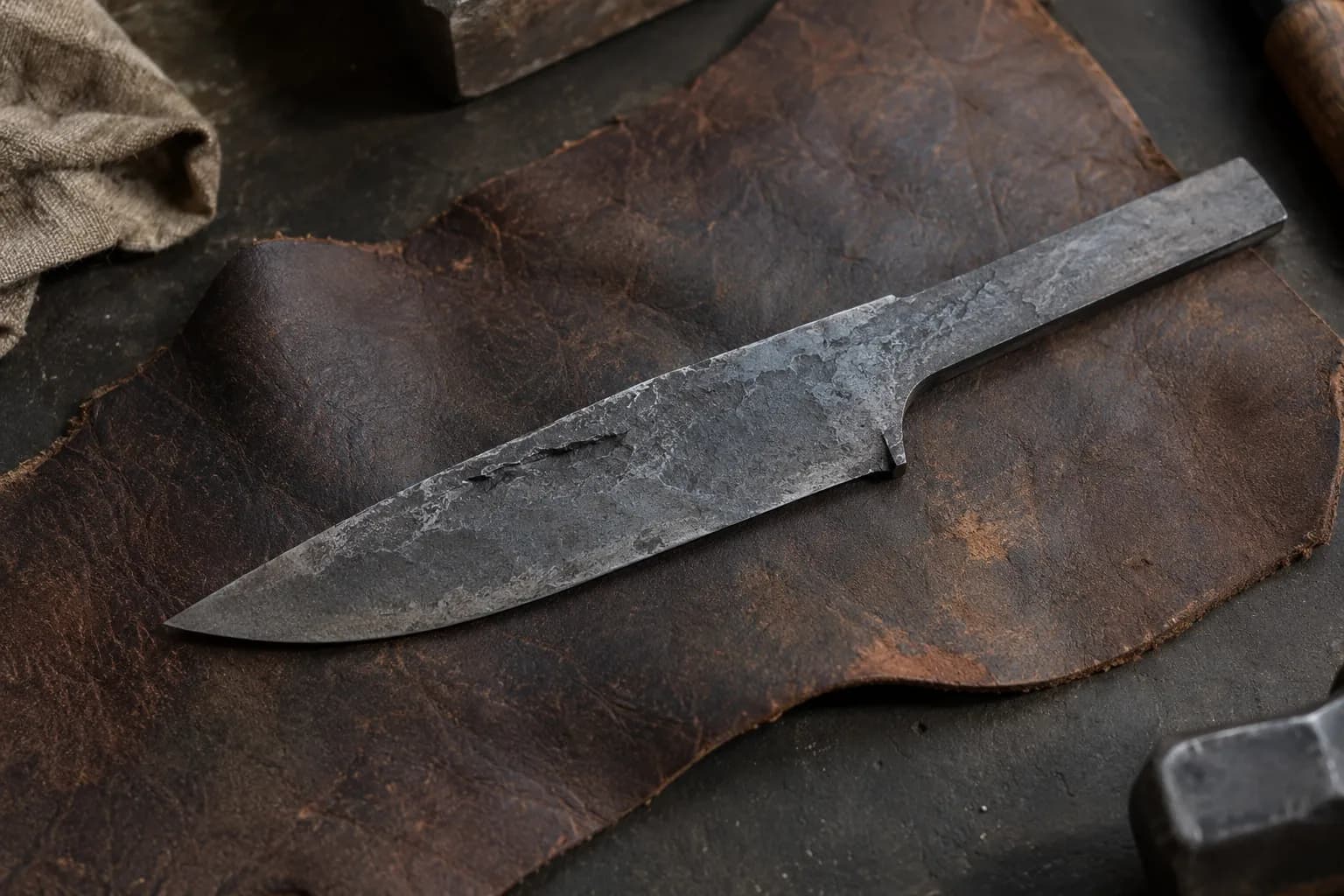
Steel folded over itself during forging: hammering below forging heat (dull red or cooler), sharp bar corners folding over during drawing, over-thinning one facet before rotating the bar, or scale hammered into the surface between heats. The fold traps oxide, so the two surfaces touch but never weld.
Grind a shallow window across the line: a scratch disappears evenly, a cold shut stays as a defined seam. Check the ends of the line — rounded, folding ends suggest a shut; sharp tips running from the edge or a hole suggest a quench crack instead. An etch (even vinegar) makes the seam jump out.
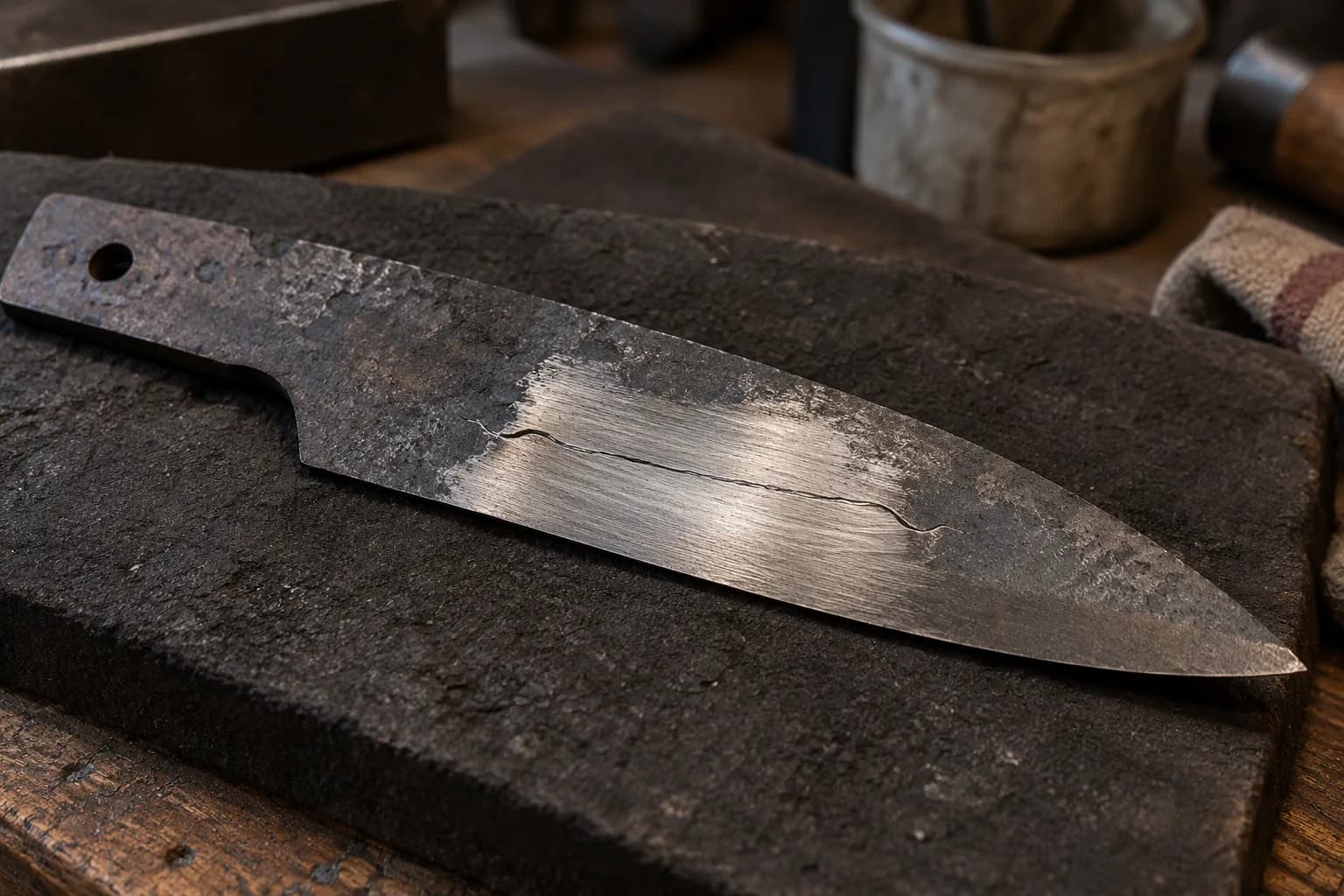
Shallow shut with thickness to spare: grind past it completely and confirm with an etch — on a 2x72 this is a two-minute diagnosis. Deep shut with forging stock left: cut or grind back to sound steel and re-forge. A shut that reaches the final edge or bevel envelope is not fixable — see below.
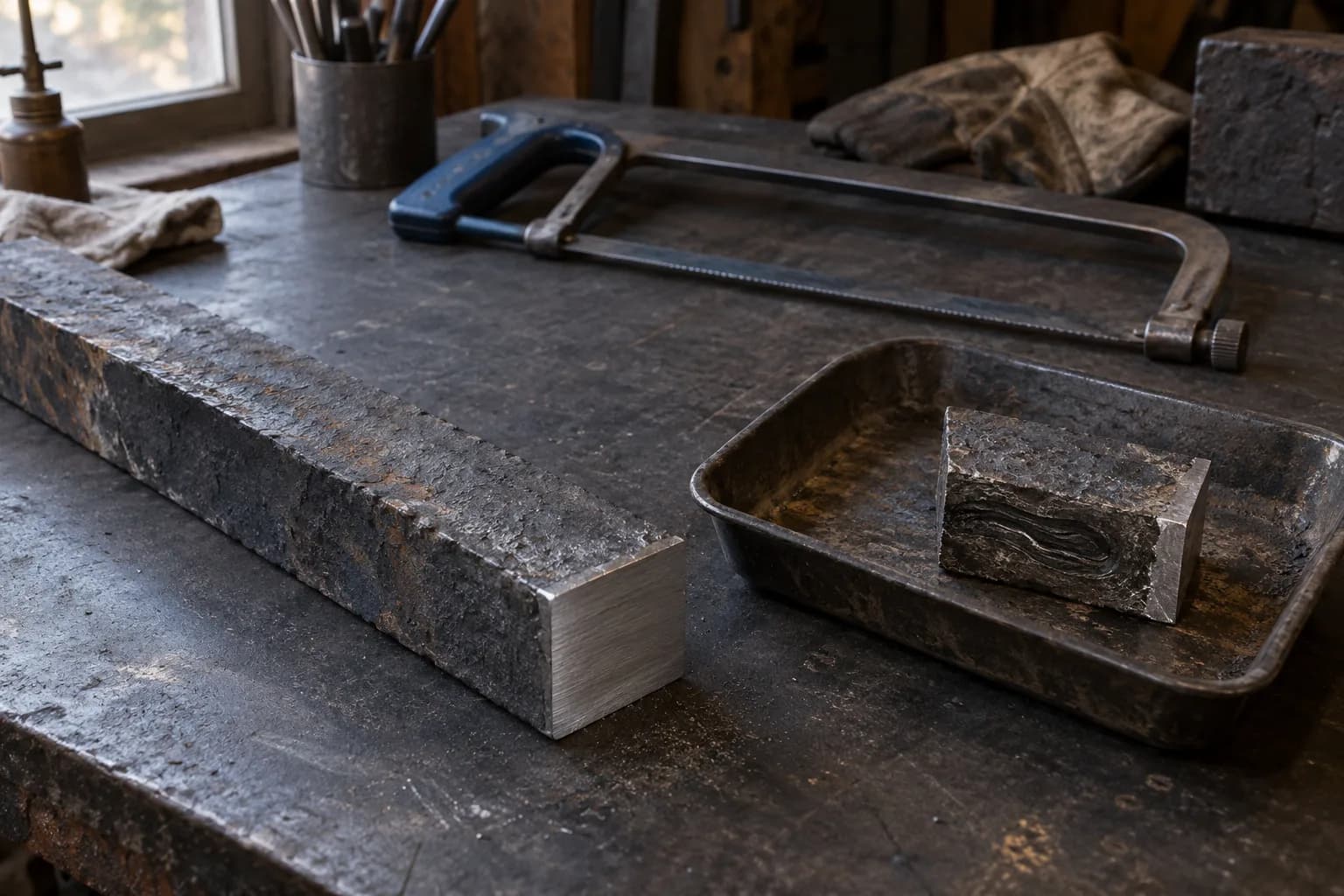
Stop hammering at dull red — cold steel folds instead of flowing. Keep bar corners lightly radiused while drawing. Rotate evenly instead of over-thinning one side (the same discipline as bevel forging). Wire-brush scale between heats, and build hammer accuracy so blows land flat, not on edges.
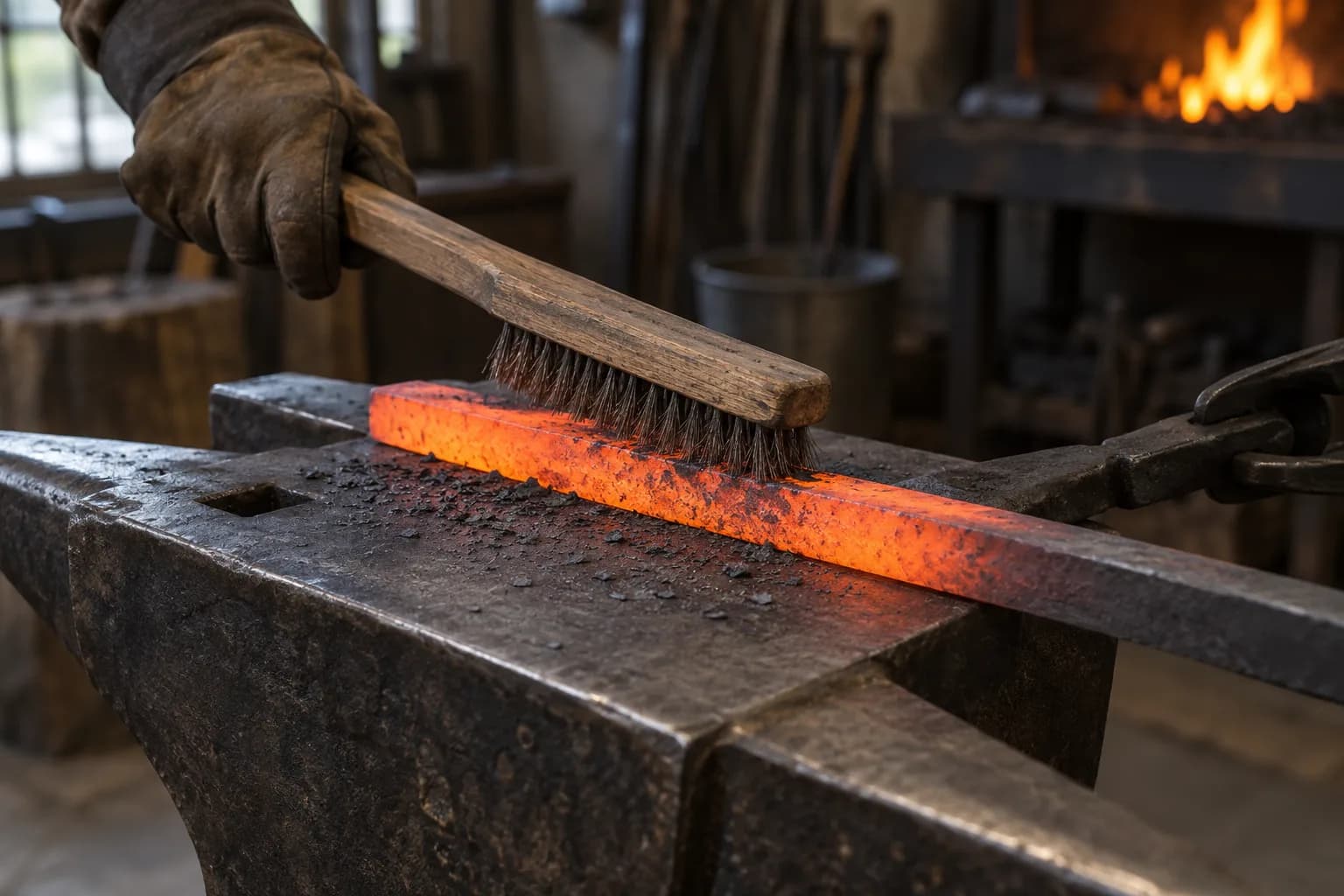
If the seam intersects the final edge or survives into the finished blade envelope, scrap the blade. A cold shut is a stress riser: hardened and put to work, it is where the blade will crack. Never harden or sell a blade with a known shut in the working zone — steel is cheaper than reputation.
Keep reading
The long-form version of the fix above, written from the same bench.
Full disclosure, before anything else: this is Torus CNC’s site — we build three of the grinders compared below. Here’s how we’ve kept this honest: every…

Comics run on invented metals — adamantium, vibranium, the whole periodic table of plot — and the fastest way to appreciate real metallurgy is to audit…
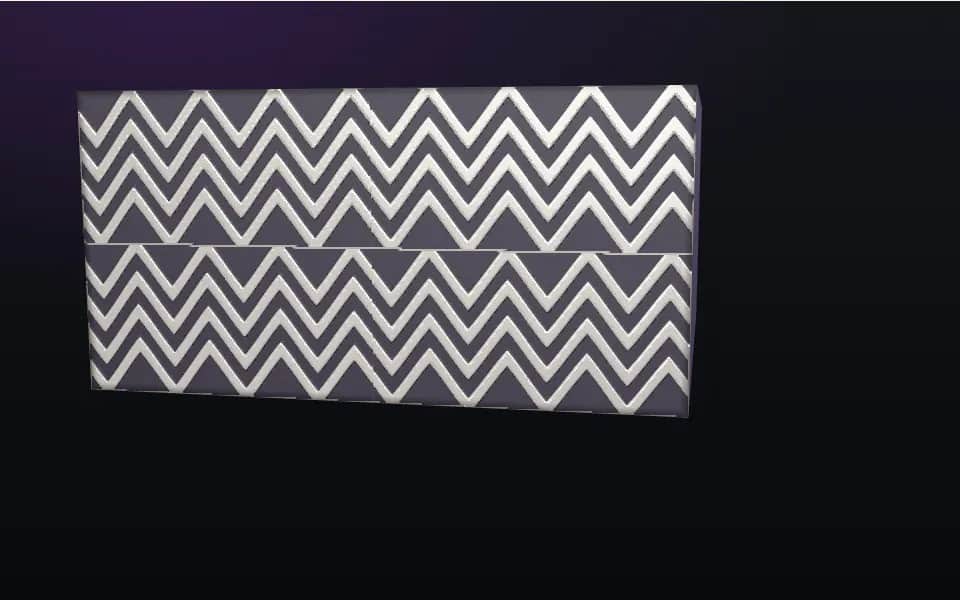
Past the ladder, twist, and raindrop lies the territory where damascus becomes composition: patterns built by controlling the layers in three dimensions…
Same bench
Flex, a soft platen or a tracking knob that will not hold can show up as a bad grind. I machine the parts, hand-assemble, track and test each Torus grinder in Sterling, Illinois.
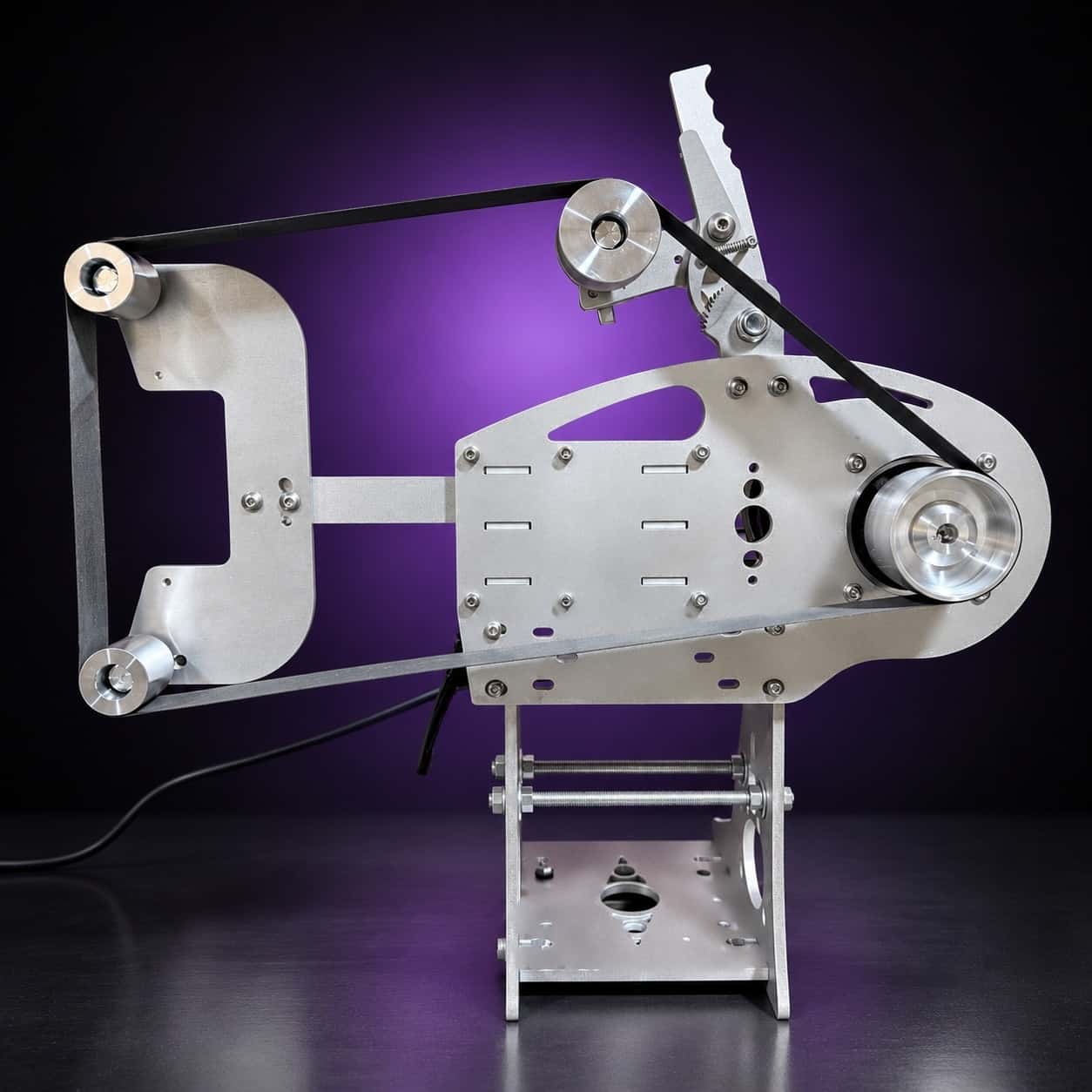
Current dual-axis platform with a fiber-laser-cut 6061 chassis and single-knob tracking.
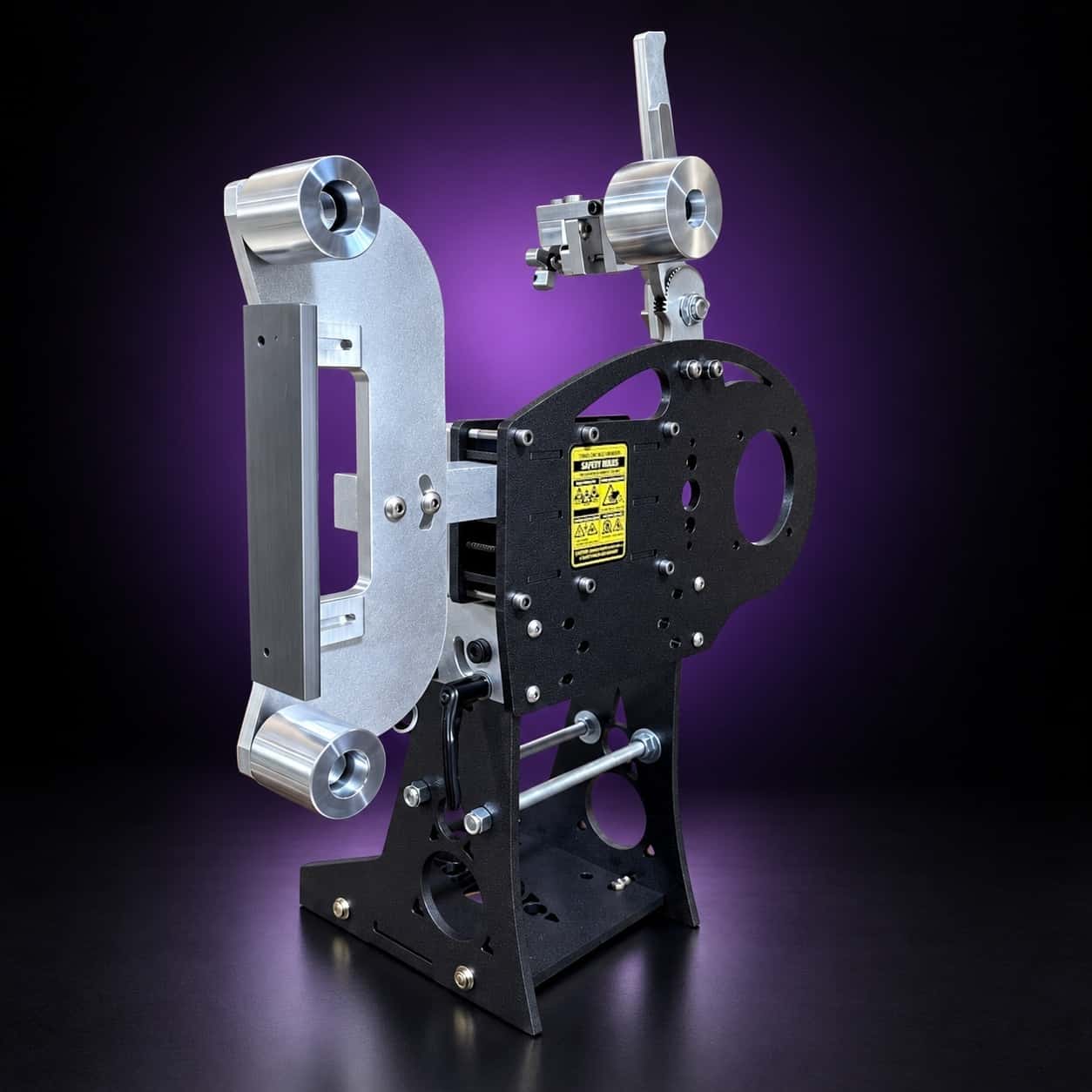
Current dual-axis platform with a steel chassis, more mass and less vibration.
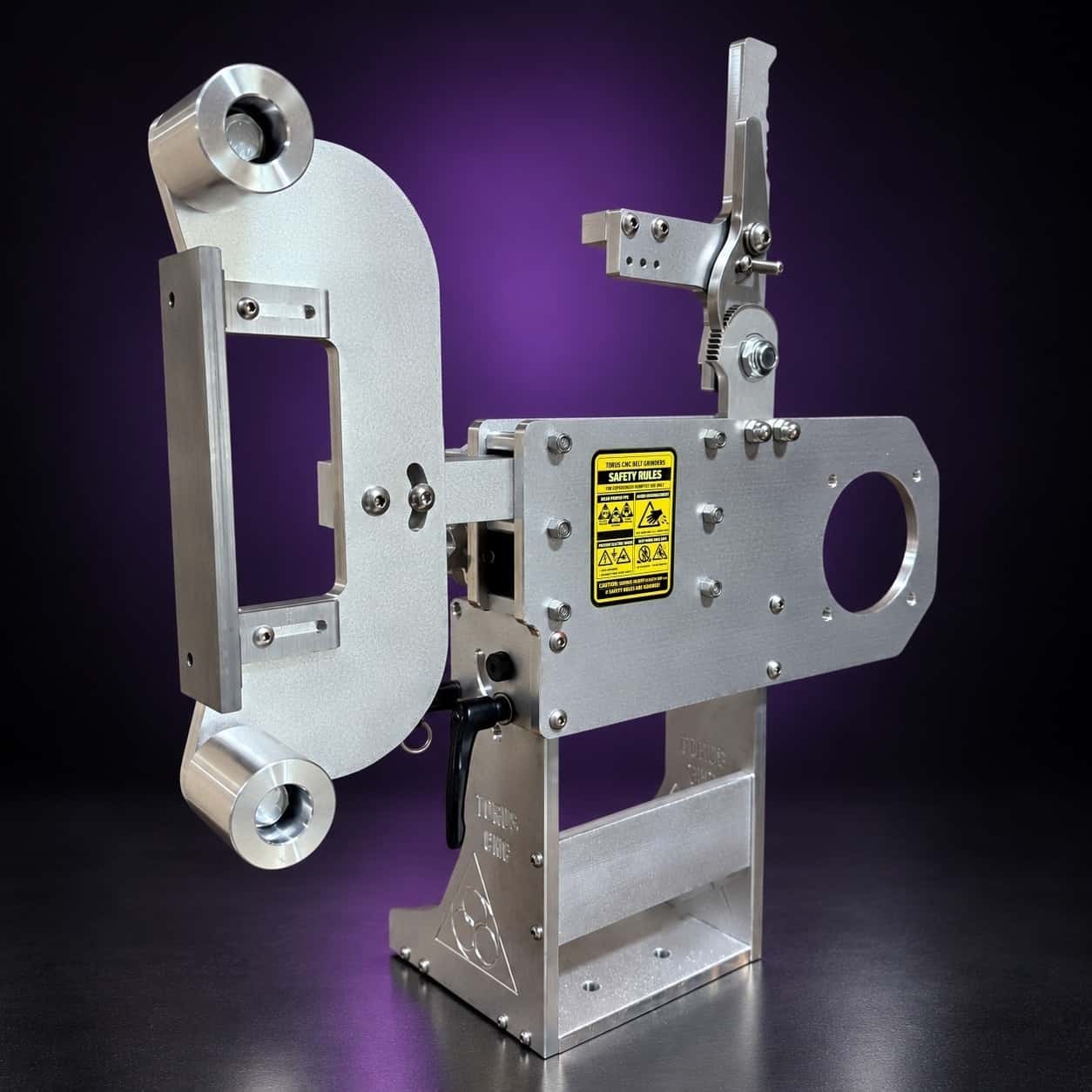
Prior-design aluminum chassis, 90-degree tilt and 1.5-inch tooling arms.
One-man shop
Send me a photo and describe what happened before it went wrong. Include the machine, belt and steel when they are relevant.