
Beginner Guides
2×72 Belt Grinder Brands Compared: The Honest Field Guide
Full disclosure, before anything else: this is Torus CNC’s site — we build three of the grinders compared below. Here’s how we’ve kept this honest: every…
Troubleshooting
Work back from what it is doing to what caused it, then to the fix that addresses the cause. Nothing here needs a sign-up.

The flow
Causes first, then the quick checks, the fix, prevention and the stop-work point.
Heat concentrating faster than steel can shed it: thin cross-sections (edges, tips) have nowhere to send the heat. Dull, glazed or loaded belts rubbing instead of cutting (the top cause — worn abrasive converts pressure to pure heat). Too much speed for hardened work, too much pressure chasing a worn belt, dwelling at plunges and tips, or dry-grinding a near-finished bevel that needed water every pass. Premium hard steels raise the stakes, not the temperature — a 66 HRC ApexUltra edge blues exactly like 1084 and costs five times more to re-treat.
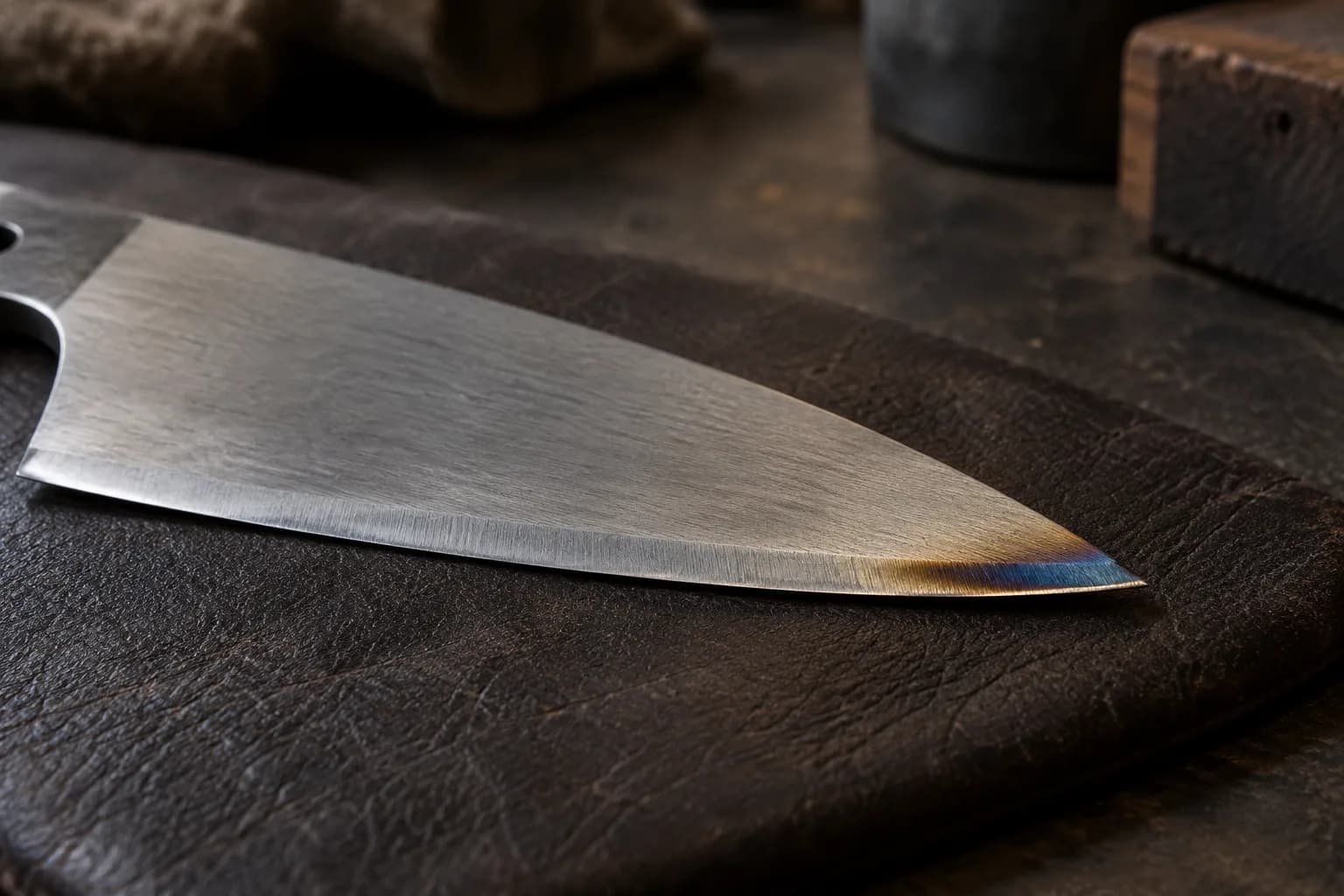
Read the color like a temper chart, because it IS one: pale straw = roughly 400°F touched, bronze/purple = 500s, blue = 550-600°F — compare against your tempering temperature. The killer detail: color shows the SURFACE's peak; a thin edge likely saw it through the full cross-section. Check how localized it is — a tip kiss versus three inches of blue edge are different verdicts.
Be honest about the math. Color BELOW or at your temper temperature (light straw on a 400°F-tempered blade): cosmetic — sand it out and continue. Color meaningfully above (purple/blue anywhere near the working edge): that zone is over-tempered soft, and grinding the color off does not restore the hardness — the choice is (a) grind PAST the affected depth if geometry allows (a kissed tip often grinds away entirely), (b) live with a soft spot on a user blade and tell the truth about it, or (c) re-heat-treat: re-normalize, re-quench, re-temper — the only real restoration, detailed in the heat treat guide. For a customer blade, (c) is the answer.
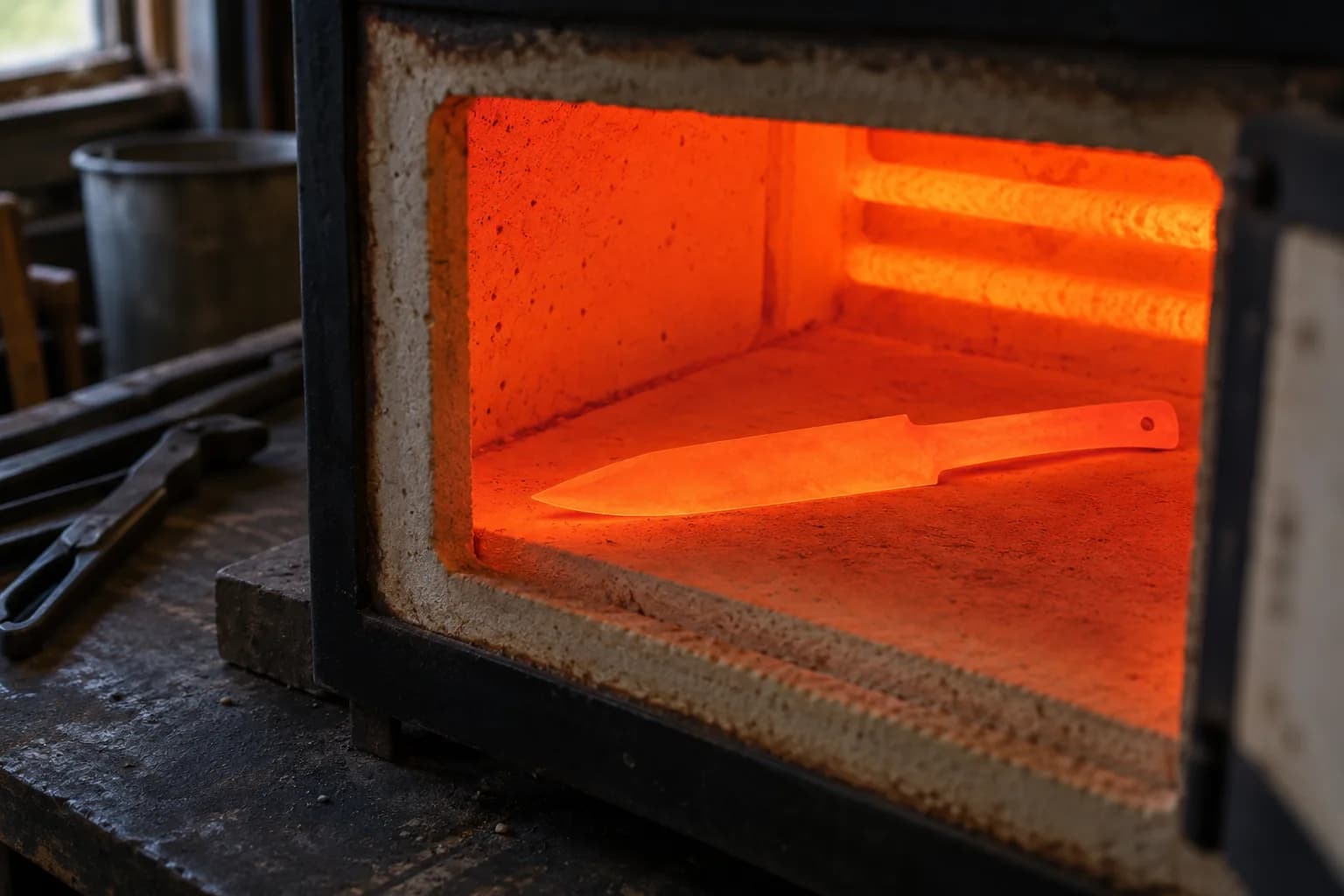
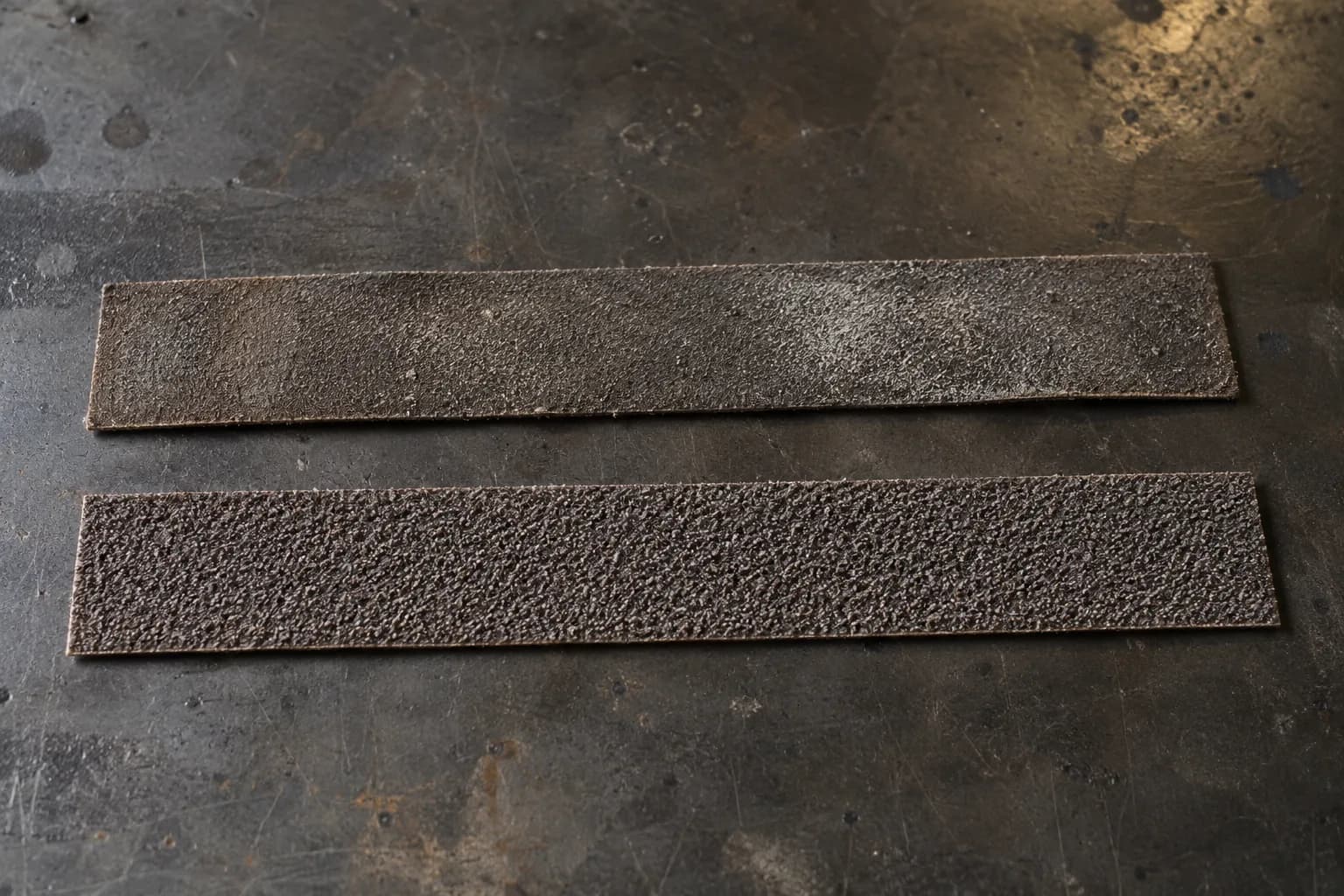
Fresh sharp belts and the discipline to bin worn ones — belts are cheaper than heat treats. Slow the machine for hardened work (variable speed is exactly this insurance), lighten pressure, keep the blade moving, dunk on cadence, and grind post-HT edges with bare fingers on the spine — flesh is the best over-temperature alarm ever fitted to a grinder. Leave edges 0.030 thick through heat treat so finish grinding has thermal mass to work with.
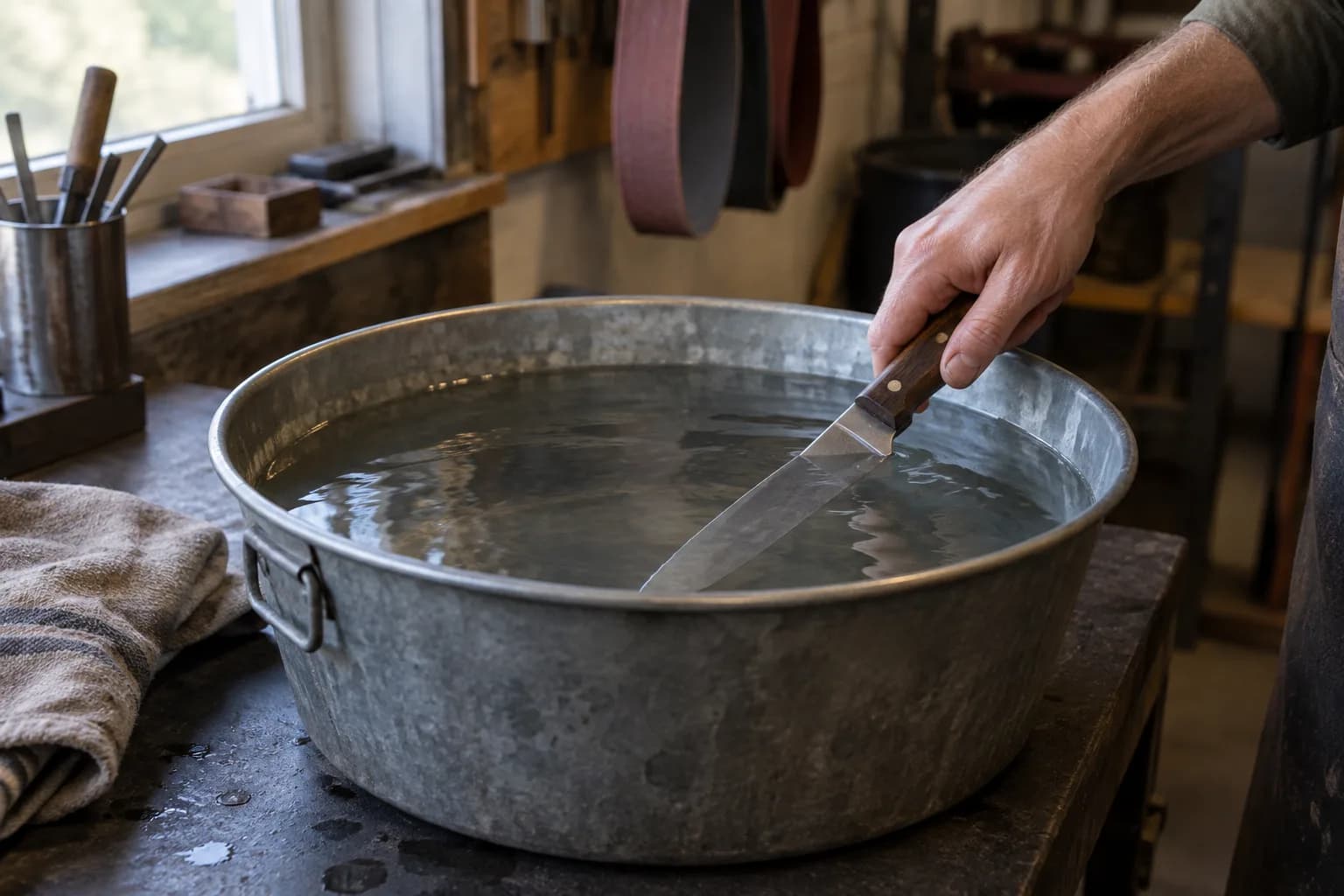
Three blues on the same blade is the machine talking: stop grinding and fix the setup — belt, speed, technique — before feeding it more steel. And blue INSIDE a finished sharpened edge means stop selling: test hardness honestly before that blade leaves the shop.
Keep reading
The long-form version of the fix above, written from the same bench.
Full disclosure, before anything else: this is Torus CNC’s site — we build three of the grinders compared below. Here’s how we’ve kept this honest: every…
Comics run on invented metals — adamantium, vibranium, the whole periodic table of plot — and the fastest way to appreciate real metallurgy is to audit…
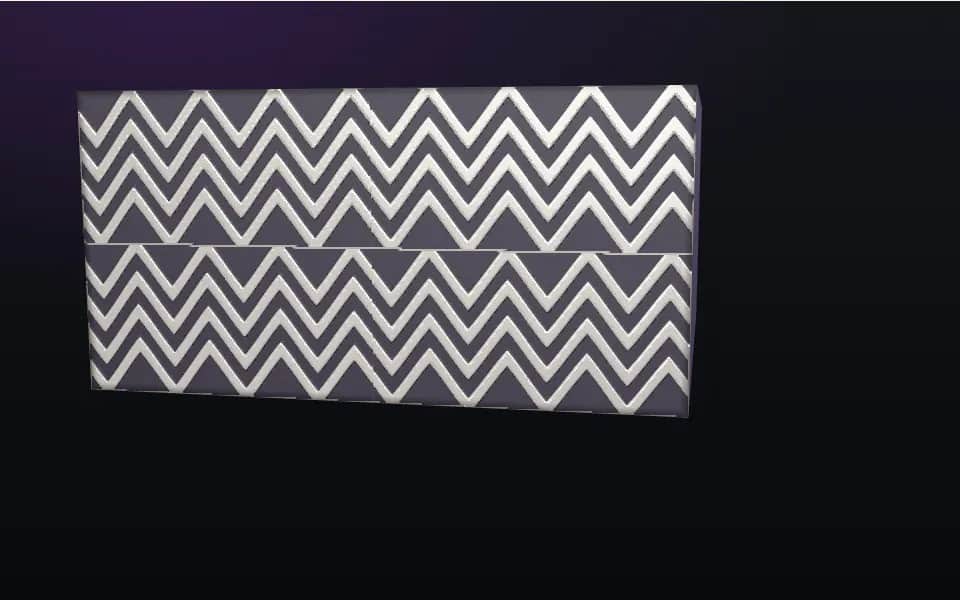
Past the ladder, twist, and raindrop lies the territory where damascus becomes composition: patterns built by controlling the layers in three dimensions…
Same bench
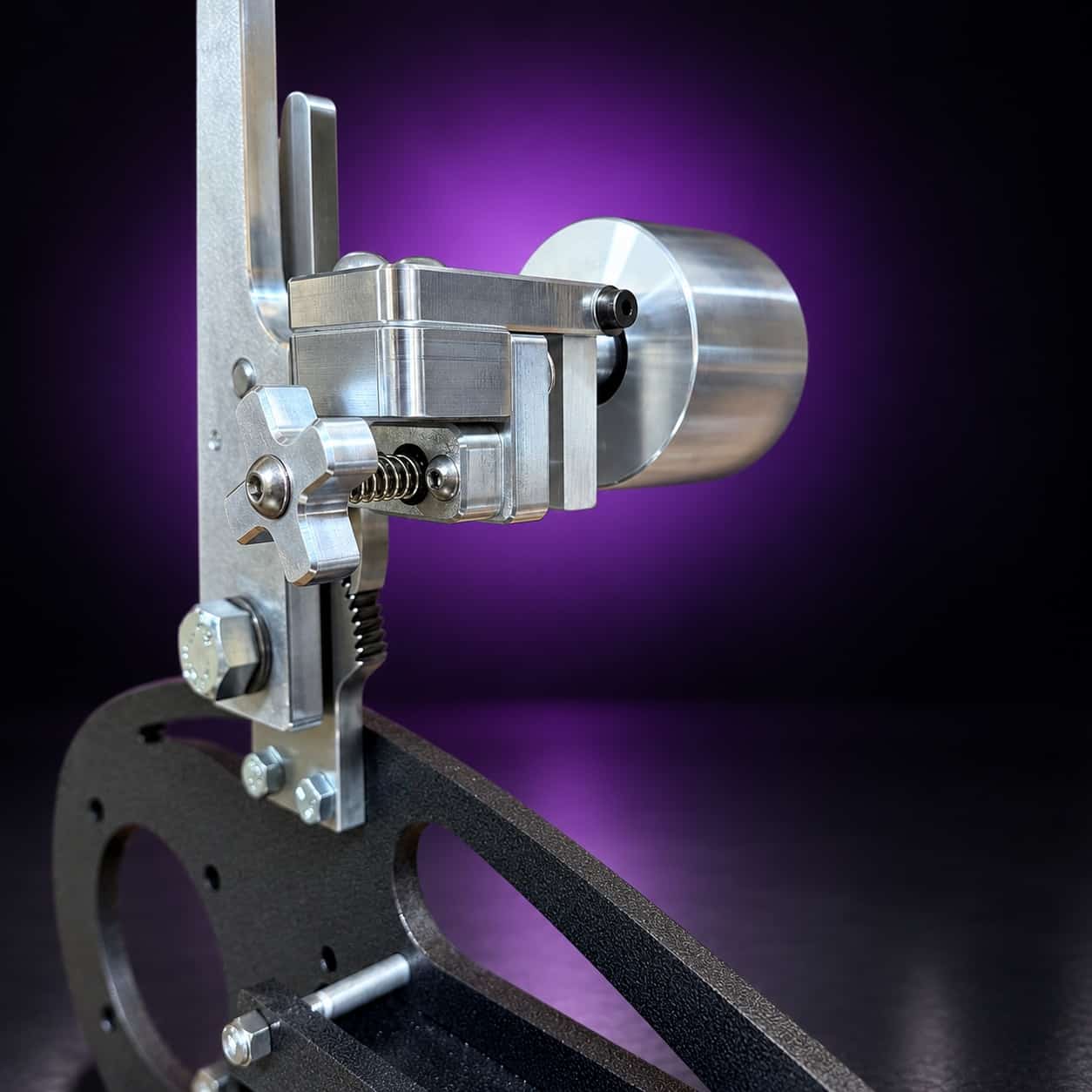
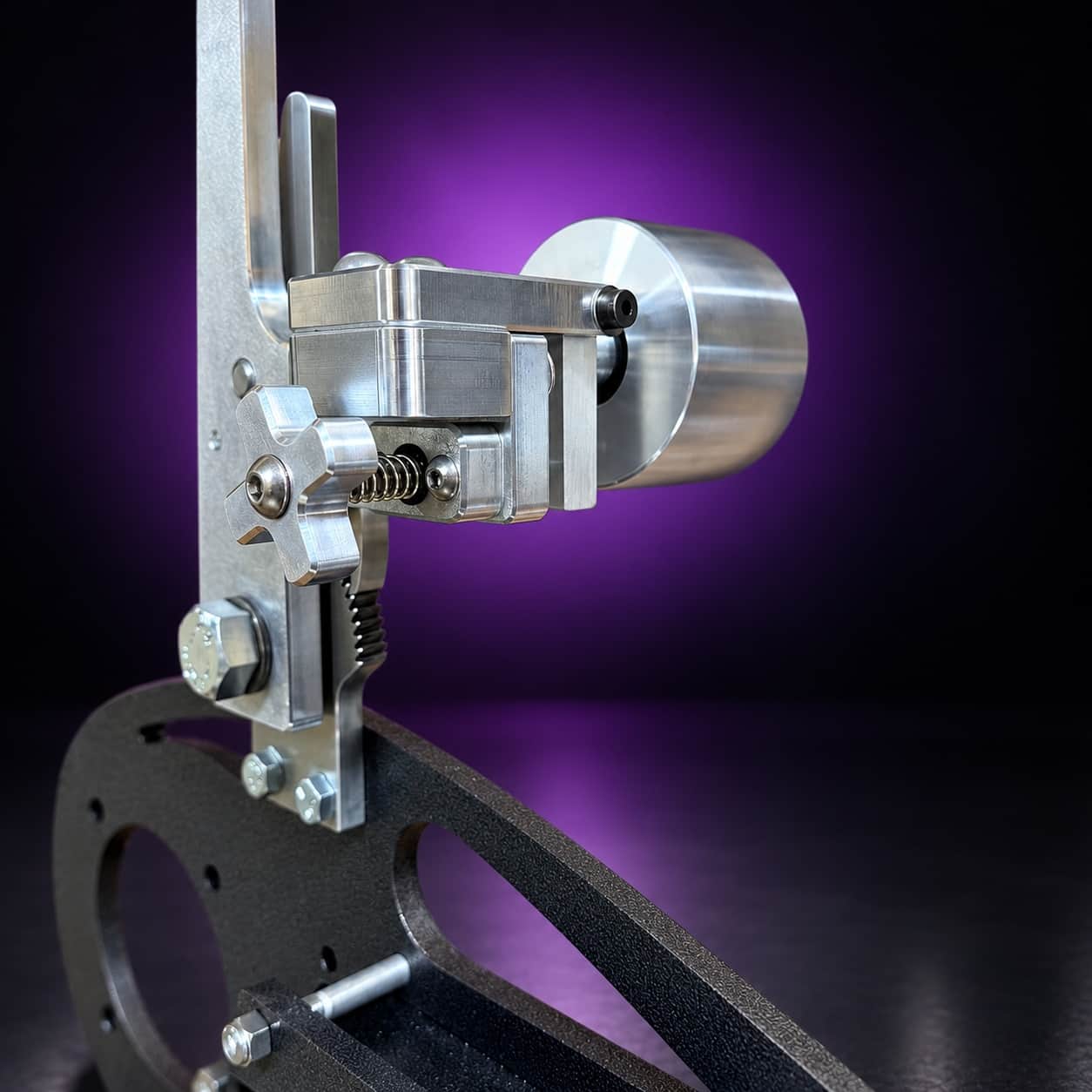
Flex, a soft platen or a tracking knob that will not hold can show up as a bad grind. I machine the parts, hand-assemble, track and test each Torus grinder in Sterling, Illinois.

Current dual-axis platform with a fiber-laser-cut 6061 chassis and single-knob tracking.

Current dual-axis platform with a steel chassis, more mass and less vibration.

Prior-design aluminum chassis, 90-degree tilt and 1.5-inch tooling arms.
One-man shop
Send me a photo and describe what happened before it went wrong. Include the machine, belt and steel when they are relevant.