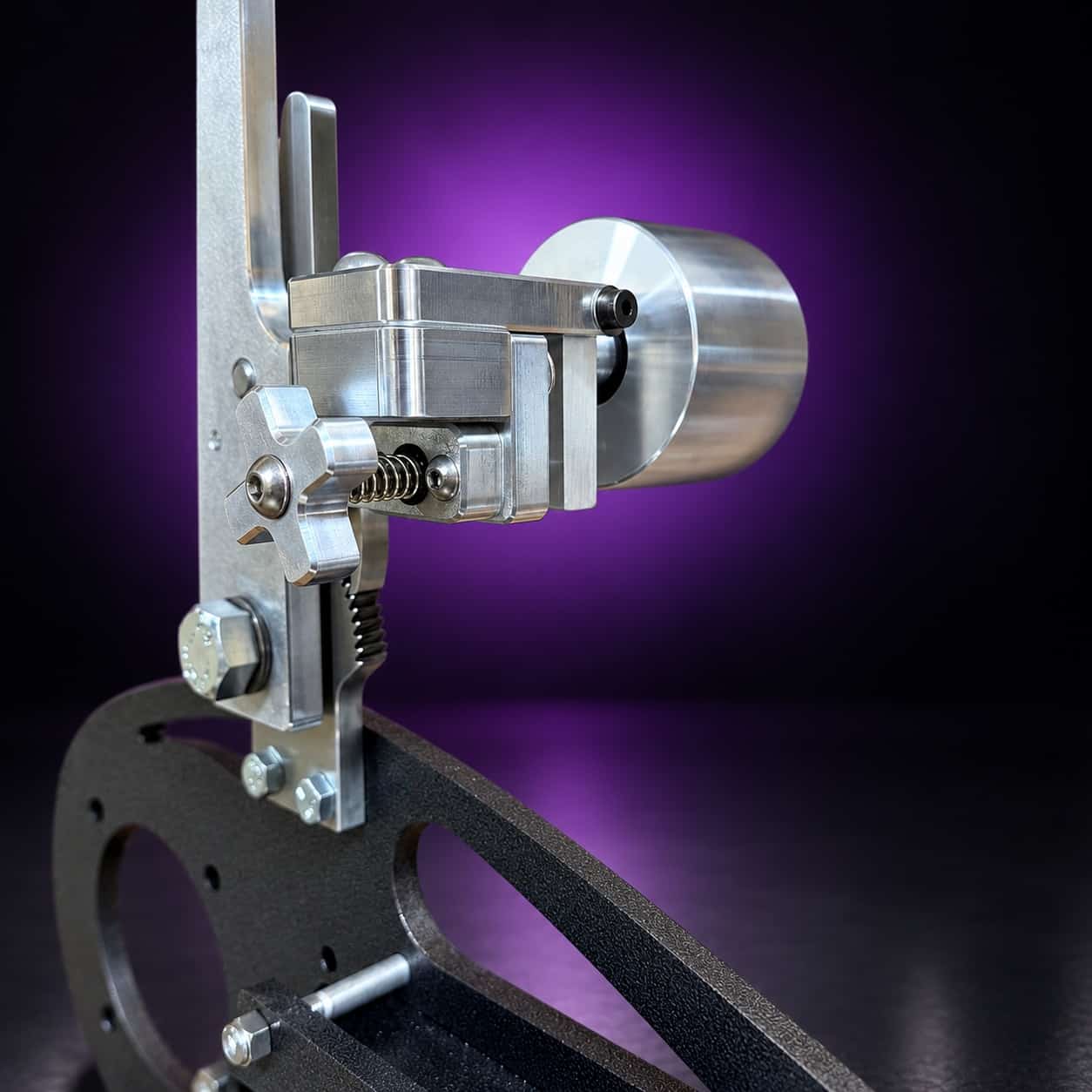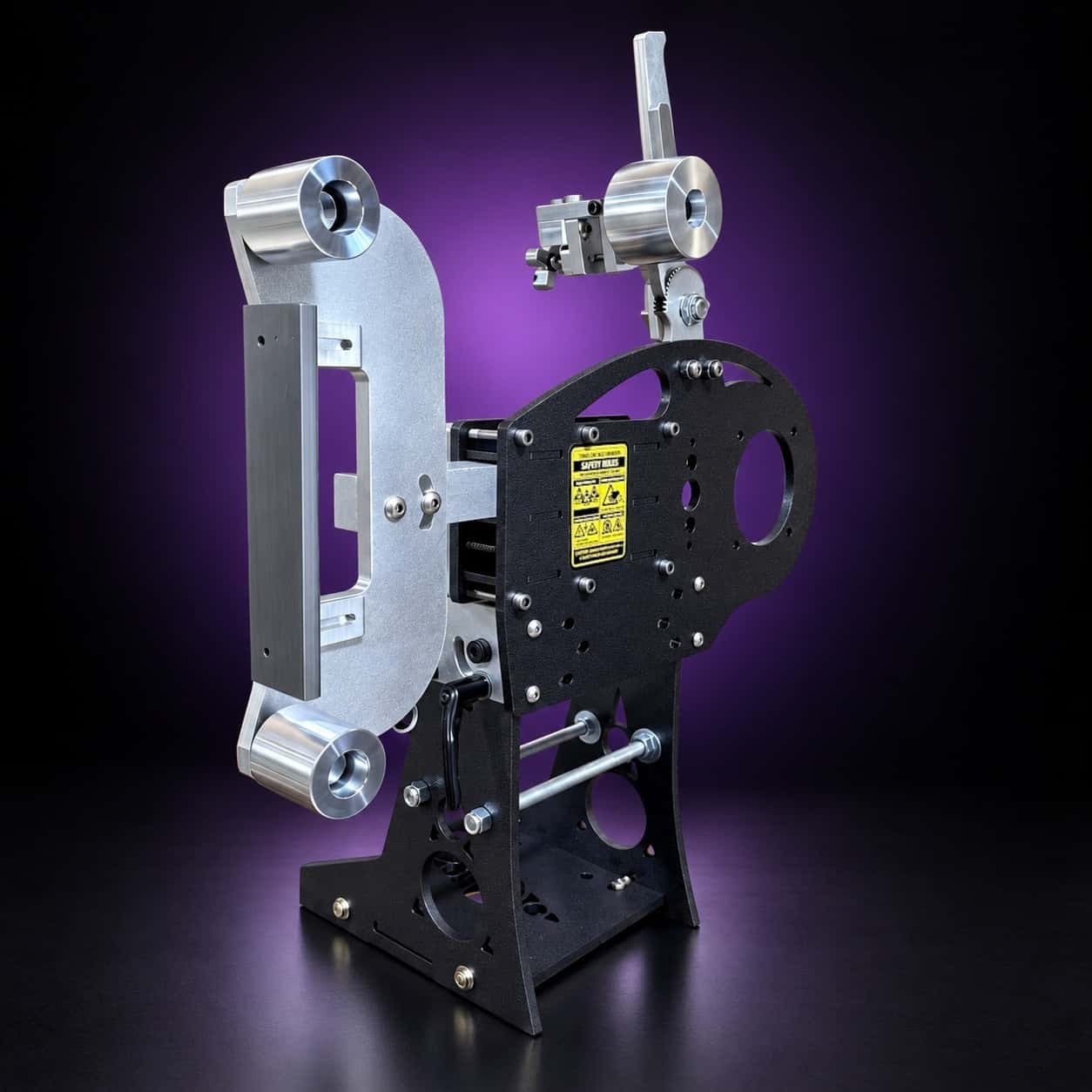
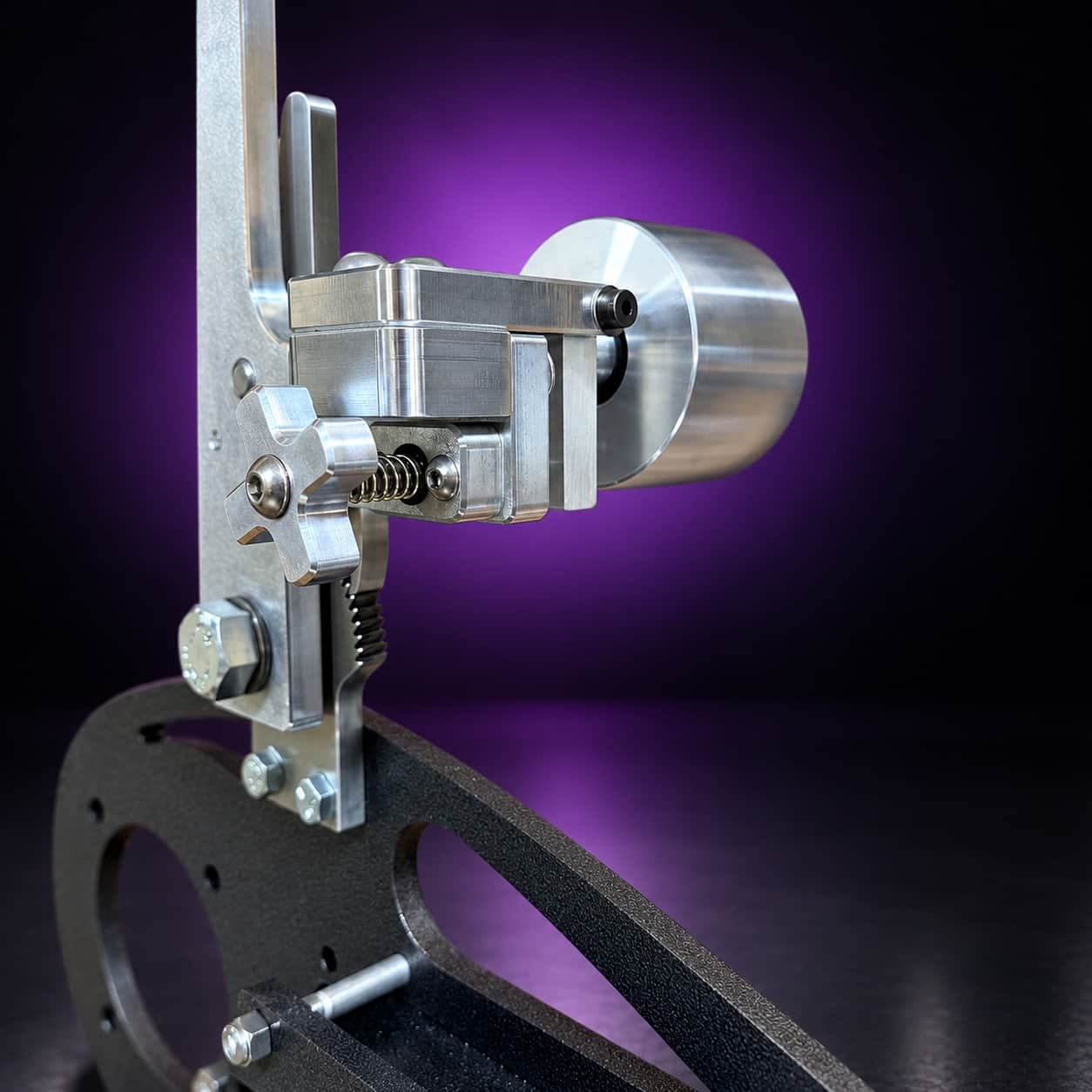
Nebula dual-axis tracking assembly: star knob, spring and idler wheel, close-up, on black with a purple glow

Troubleshooting

Blade Won’t Take a Sharp Edge

Work back from what it is doing to what caused it, then to the fix that addresses the cause. Nothing here needs a sign-up.
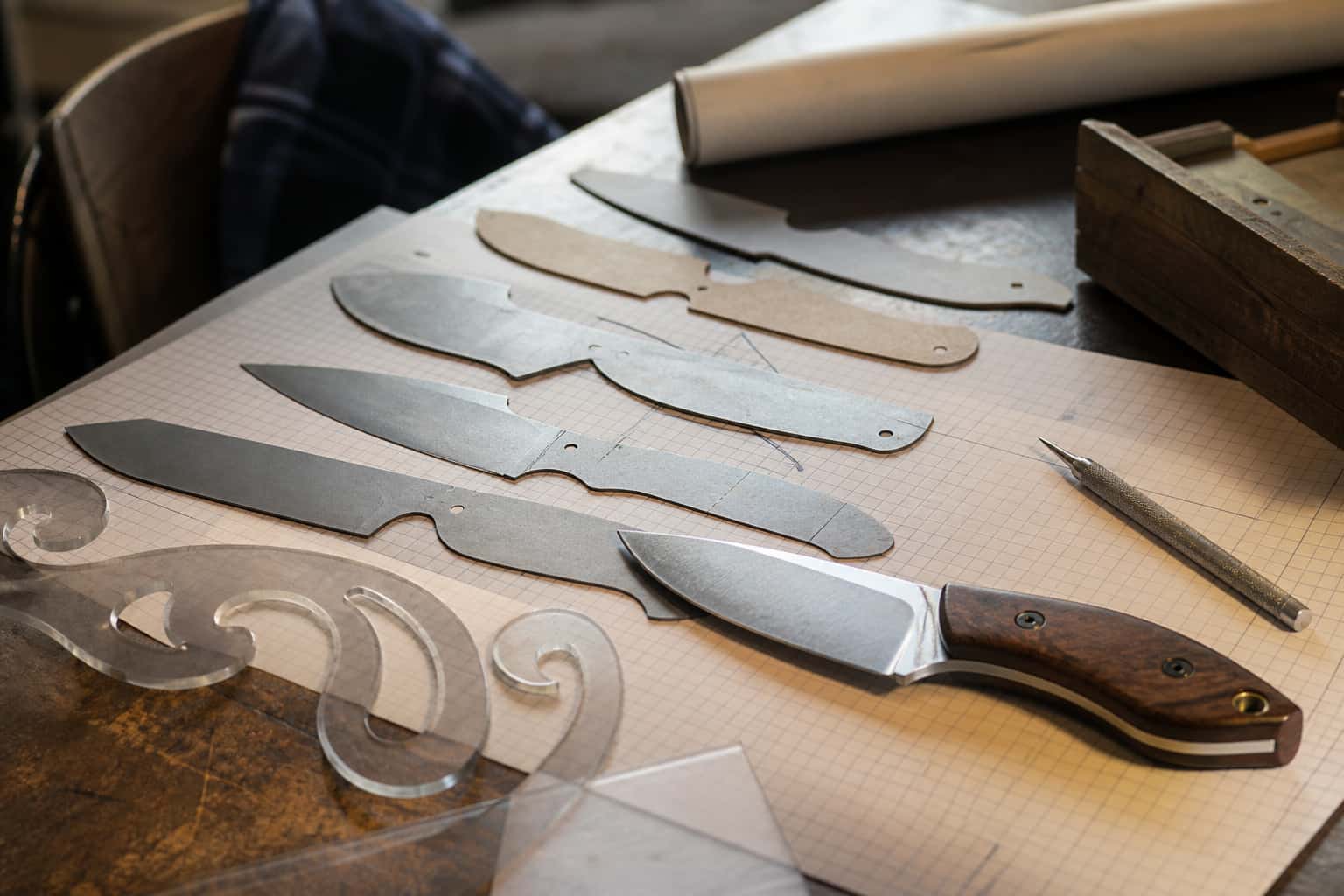
Knife blade design in a working knife shop
If a symptom appears mid-job, put the work down and check it before continuing.
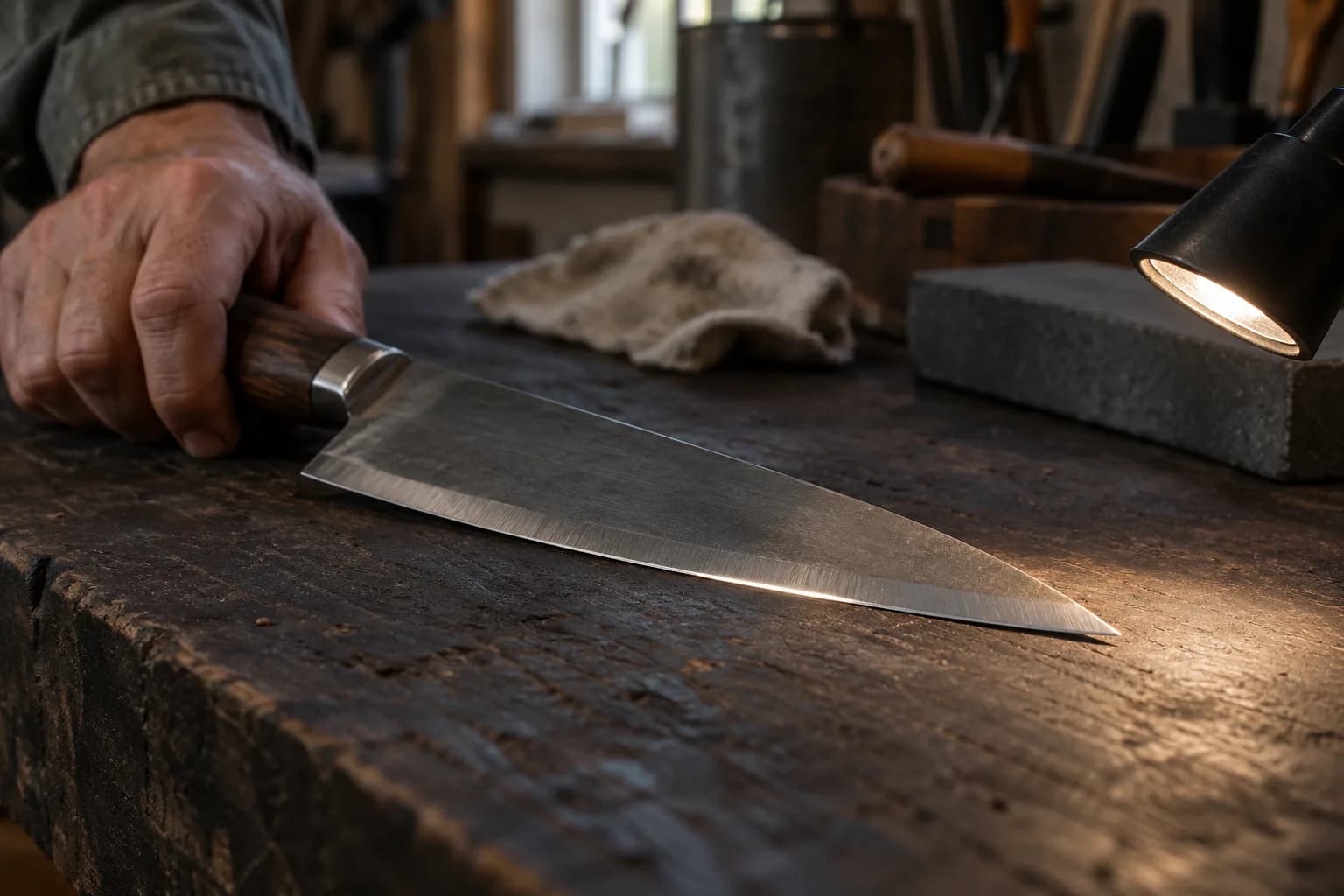
Kitchen knife on a dark bench, hand on the handle, a lamp raking a bright line along the edge bevel

The flow

Work it in this order

Causes first, then the quick checks, the fix, prevention and the stop-work point.
  1. Likely causes

    • The edge was overheated during grinding or sharpening, drawing the temper back out of just that thin section (look for blue or straw discoloration along the edge)
    • The blade didn't reach full hardness during heat treat in the first place
    • The edge angle is inconsistent from stroke to stroke, so a true apex never fully forms
    • A stubborn burr is being flipped back and forth between the sides instead of actually being removed
    • The abrasive being used is too worn, or too coarse for the alloy's carbide structure, to actually refine the edge
  2. Quick checks

    • Look closely at the edge under good light for blue or straw discoloration, a sign of localized overheating
    • Do a file test on the blade body away from the edge to confirm overall hardness is where it should be
    • Run a fingernail or thumb test (carefully) along the edge to feel for a burr instead of a true apex
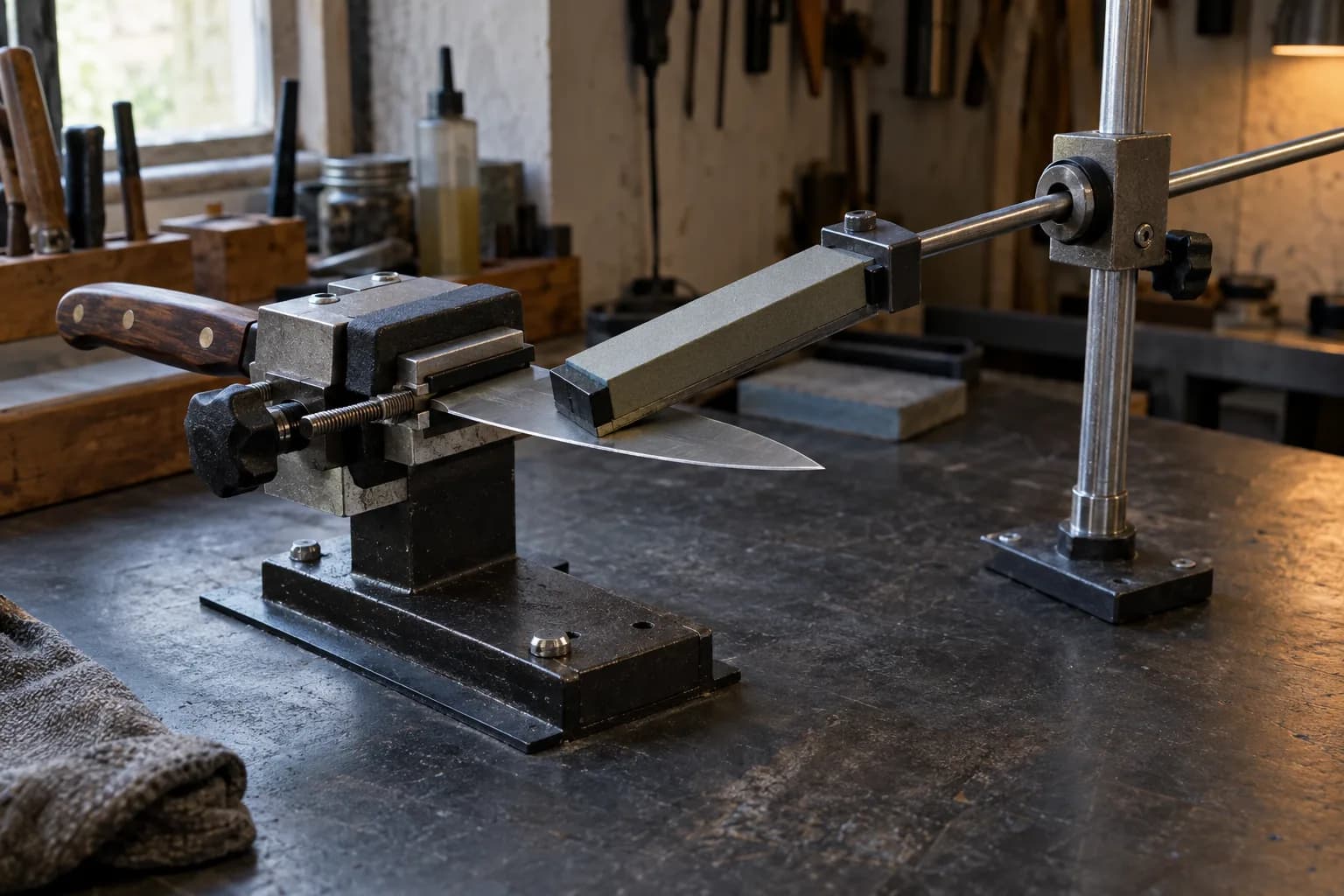
    • Check whether the sharpening angle is being held consistently, a guided system removes this variable
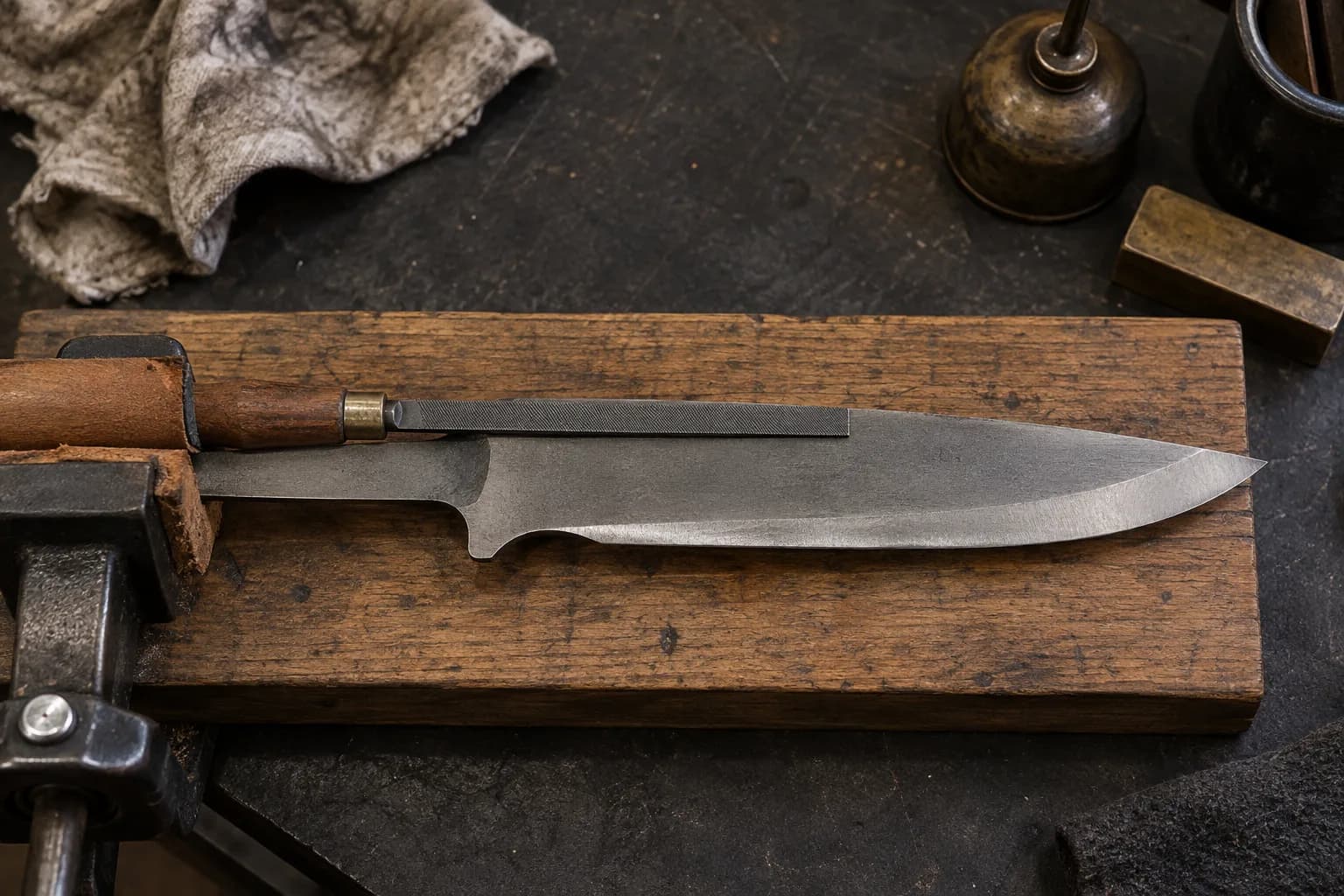
Fine file lying along the spine of a bevel-ground knife blank clamped at the tang on a worn wooden board
  1. Fixes

    • If the edge shows heat discoloration, that section needs to be re-heat-treated, sharpening alone can't fix a drawn temper
    • If overall hardness tested low, the blade needs a full re-heat-treat cycle, see the Heat Treating Guide
    • Alternate light strokes evenly on both sides to fully remove a burr rather than just moving it back and forth
    • Switch to a sharper or more appropriate abrasive for the steel, diamond or CBN for high-vanadium steels
    • Use a guided sharpening system while building consistent freehand angle control
Knife clamped in a bench vise with a flat abrasive stone on a guide rod touching its edge, pivot post at right.
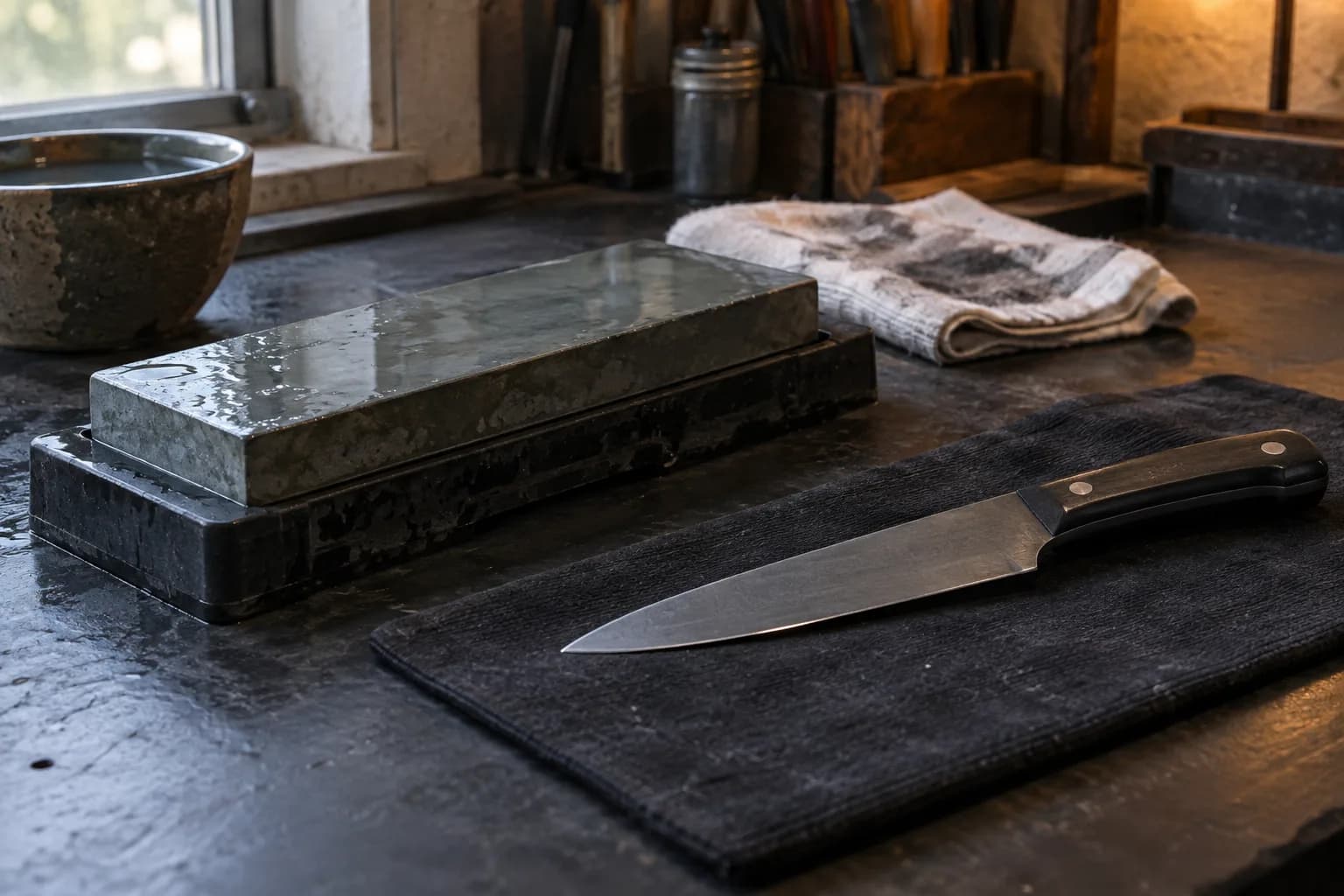
Utility knife lying on a dark pad beside a wet fine sharpening stone in a holder and a slurry-stained cloth
  1. Prevention

    • Use frequent water-quench passes and light pressure while grinding near the final edge to avoid overheating it
    • Confirm hardness with a file or Rockwell test right after heat treat, before investing more time finishing
    • Finish sharpening with light, even, alternating strokes specifically to remove the burr, not just form it
  2. When to stop

    If the edge keeps overheating despite light passes and frequent cooling, stop and let the blade fully cool before continuing rather than pushing through, repeated overheating can soften a wider section than expected.

Keep reading

Guides that cover the cause

The long-form version of the fix above, written from the same bench.

Same bench

When the machine is the cause

Flex, a soft platen or a tracking knob that will not hold can show up as a bad grind. I machine the parts, hand-assemble, track and test each Torus grinder in Sterling, Illinois.
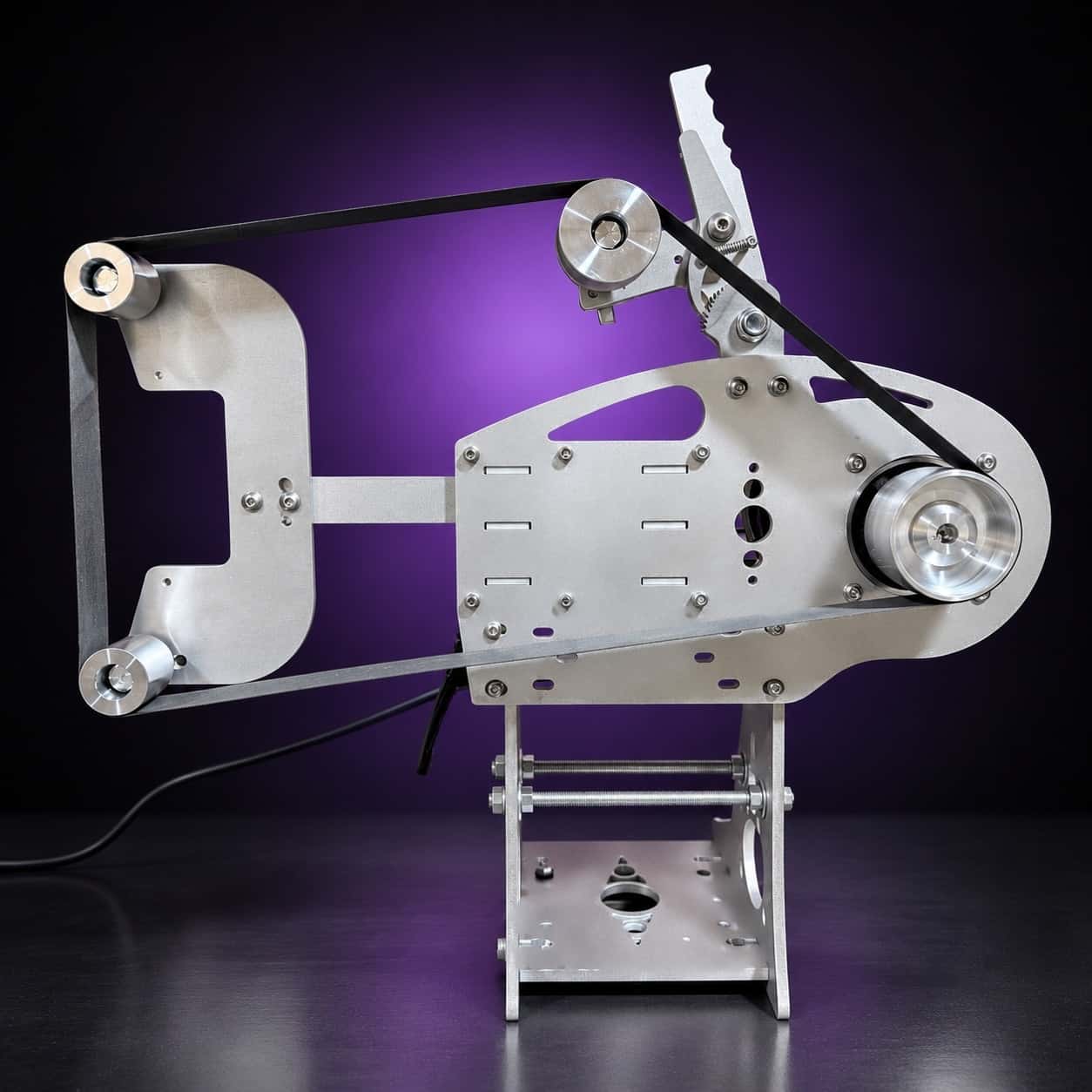
  • Nebula 2x72 grinder, front three-quarter view: aluminum arm, black plate, Safety Rules label, on black with a purple glow
    Limited release · 3 remain

    Torus Nebula 2x72 - Corvus Edition

    Current dual-axis platform with a steel chassis, more mass and less vibration.

    These are the last Nebula chassis available until the next release. Once this run sells out, availability pauses until the next run is ready.

    Next release: 10 more chassis expected Nov 17–Nov 24 (3–4 weeks from Oct 27).
    Starts at$1,495View
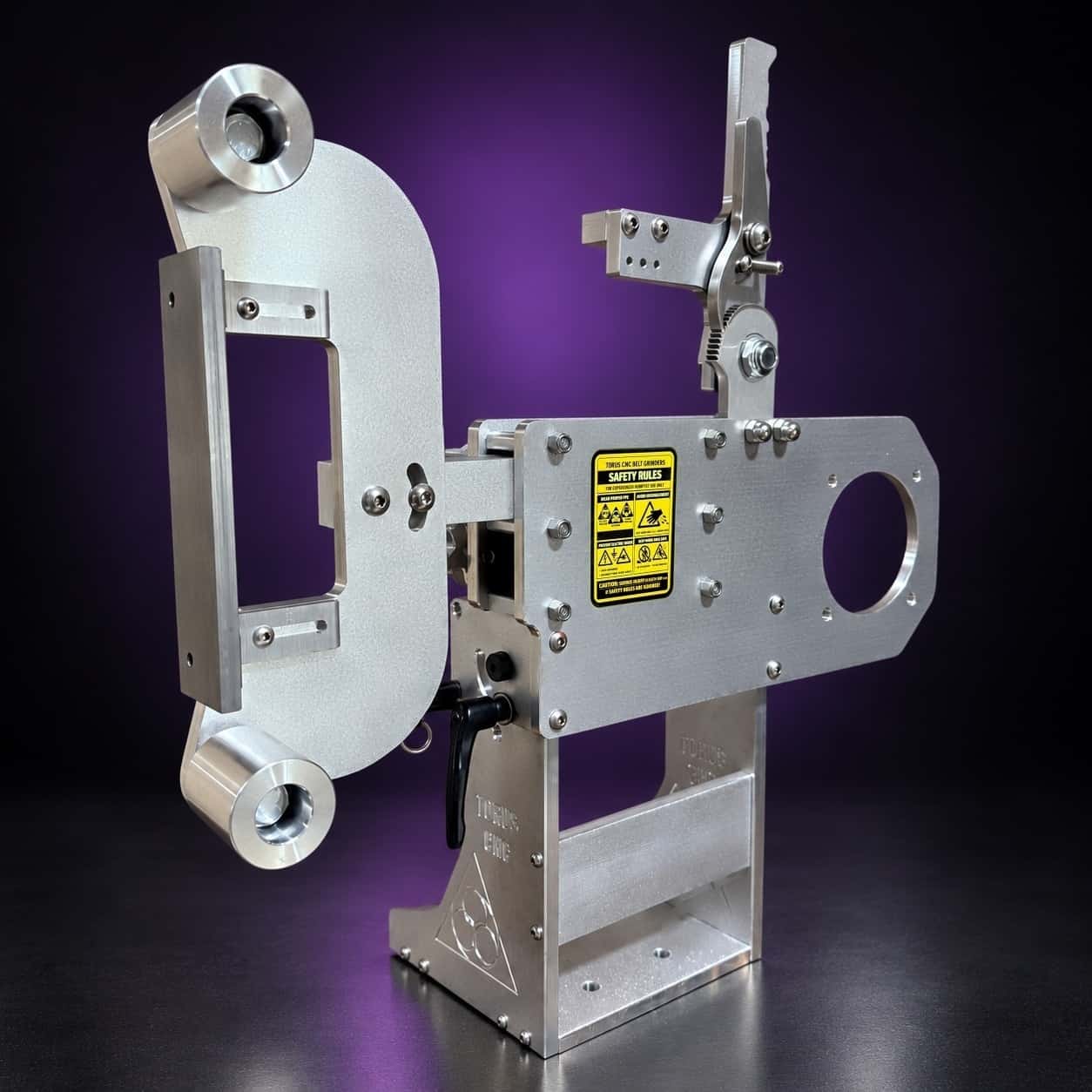
  • Classic aluminum 2x72 grinder, side view with flat-platen tool arm and yellow Safety Rules label, on black with a purple glow

    Torus 2×72 Classic Aluminum Belt Grinder

    Prior-design aluminum chassis, 90-degree tilt and 1.5-inch tooling arms.
    Starts at$1,095View

One-man shop

Not sure which cause you have?

Send me a photo and describe what happened before it went wrong. Include the machine, belt and steel when they are relevant.