
Swords
Sword Anatomy: A Maker’s Field Guide
Before the types, the vocabulary. Every sword — katana or claymore, gladius or rapier — is the same short list of parts negotiating the same physics: a…
Swords
Curved swords won by turning blows into drawing cuts: the shamshir, talwar, kilij and European sabers, plus the blade geometry makers can borrow.
2 min readWritten by Rich LinvilleFree to read
Half the world’s swords curve, and the reason is one piece of physics: a curved edge meeting a target does not chop, it SLICES — the blade’s arc converts a blow into a drawing cut that parts material far more efficiently than straight impact. Put that behavior on horseback, where the rider’s speed powers the draw automatically, and you have the family that ruled cavalry warfare for a thousand years.
A straight blade landing square delivers crush plus cut; a curved blade landing anywhere delivers cut-with-slide — the edge moves along the target through contact, the same reason a slicing kitchen stroke beats a press cut (same physics, smaller blade). The curve also carries follow-through: the blade exits the cut still moving, critical from a horse at speed where a stuck sword is a lost sword or a broken wrist.
The deep-curved Persian shamshir is the type specimen: radical arc, narrow blade, a dedicated drawing cutter with the thrust nearly abandoned. The Indian talwar pairs a moderate curve with its distinctive disc pommel; the Turkish kilij adds the yelman — a widened, often back-edged tip section that loads the last third with cutting mass. Under every variant runs the same doctrine: light, fast, curve-led cutting from horseback, frequently in legendary wootz crucible steel that gave these courts the best blade material on earth for centuries.
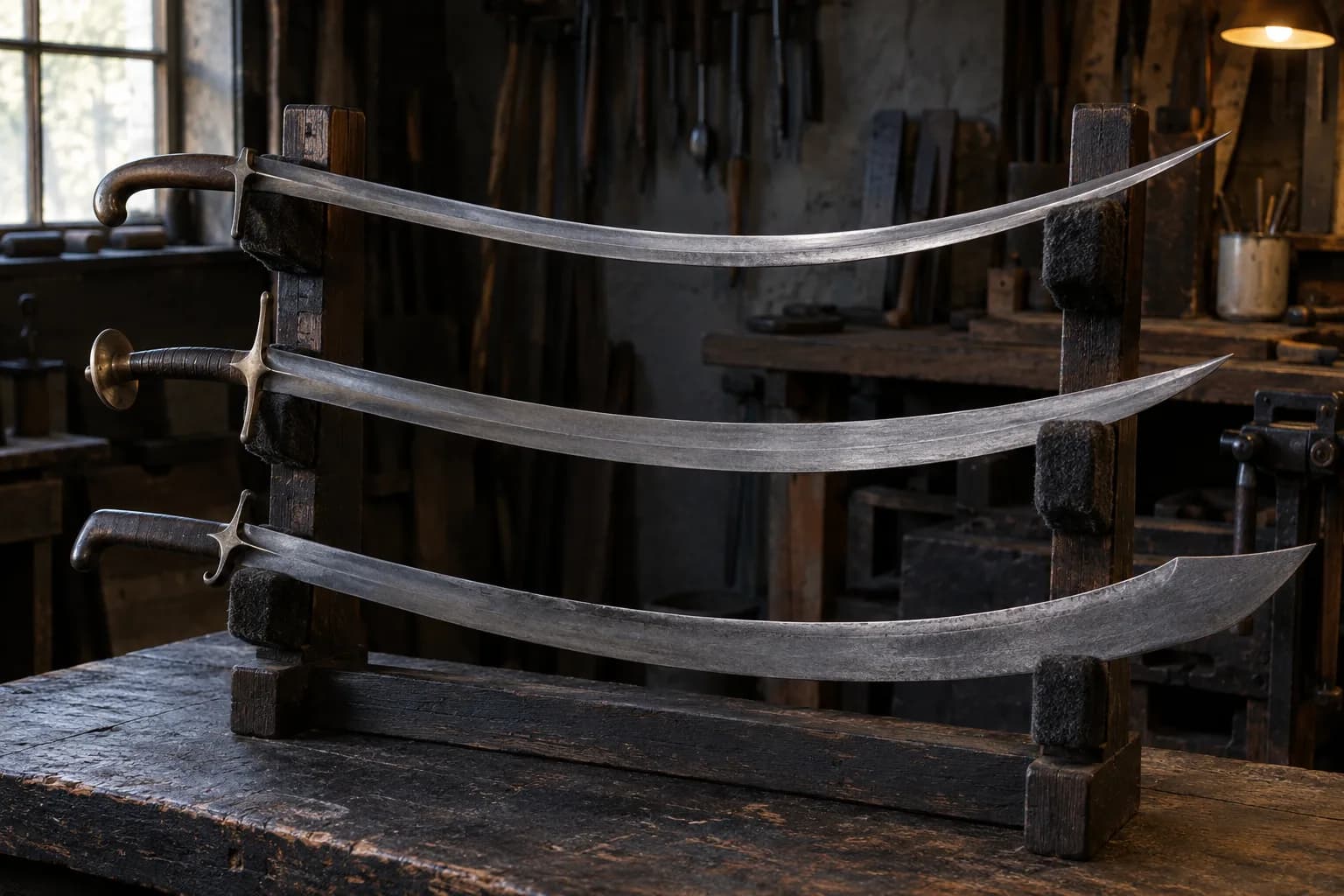
Europe met the curve through its eastern frontiers — Hungarian and Polish hussar sabers — and the pattern conquered every cavalry arm by the Napoleonic era. The British 1796 Light Cavalry saber is the famous example: broad, deeply curved, hatchet-pointed, and so effective in the cut that its wounds drove complaints; its heavy-cavalry counterpart and later patterns swung between cut and thrust doctrine for a century of committee arguments. Infantry and naval variants — the briquet, the cutlass — shortened the same idea for closer quarters.
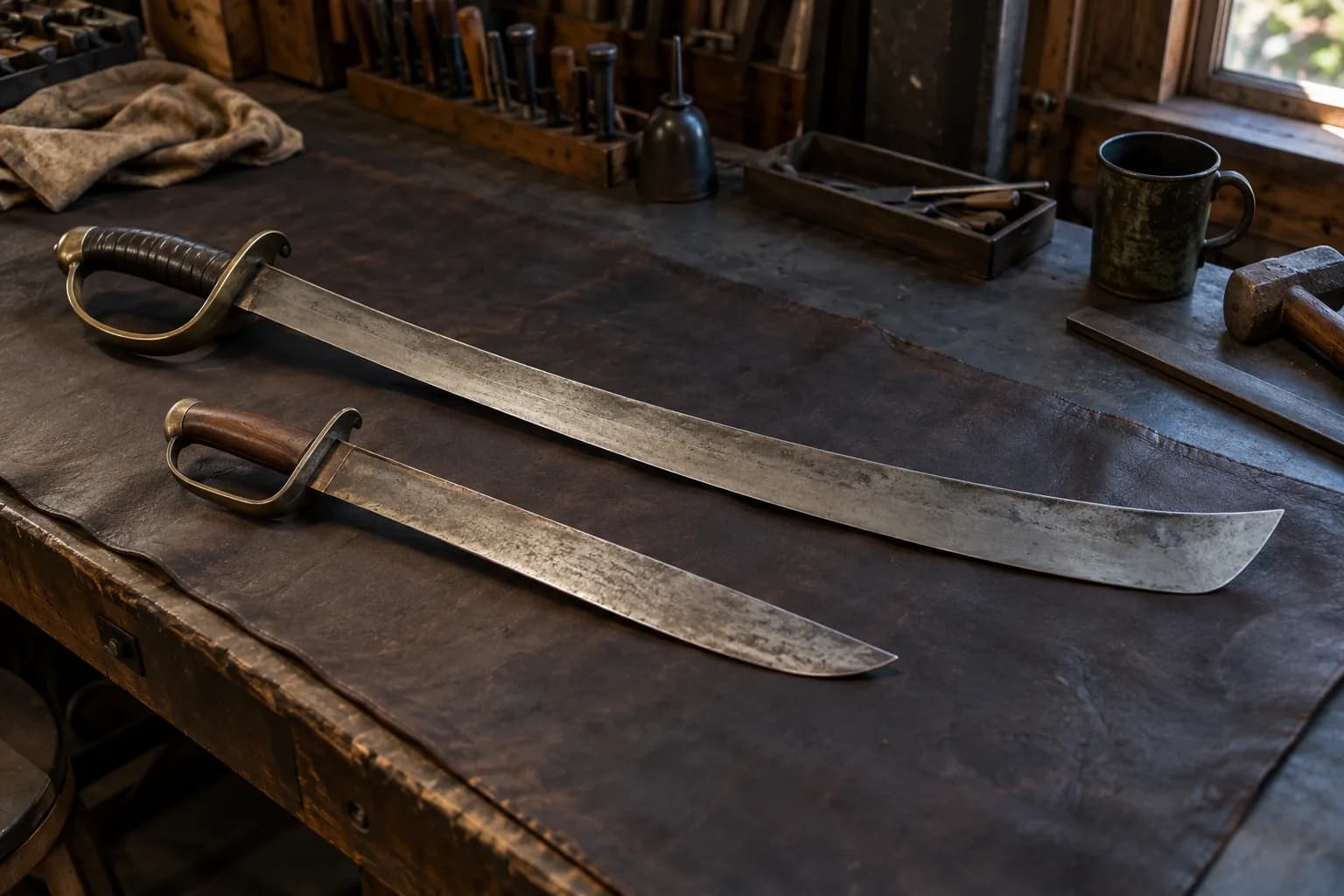
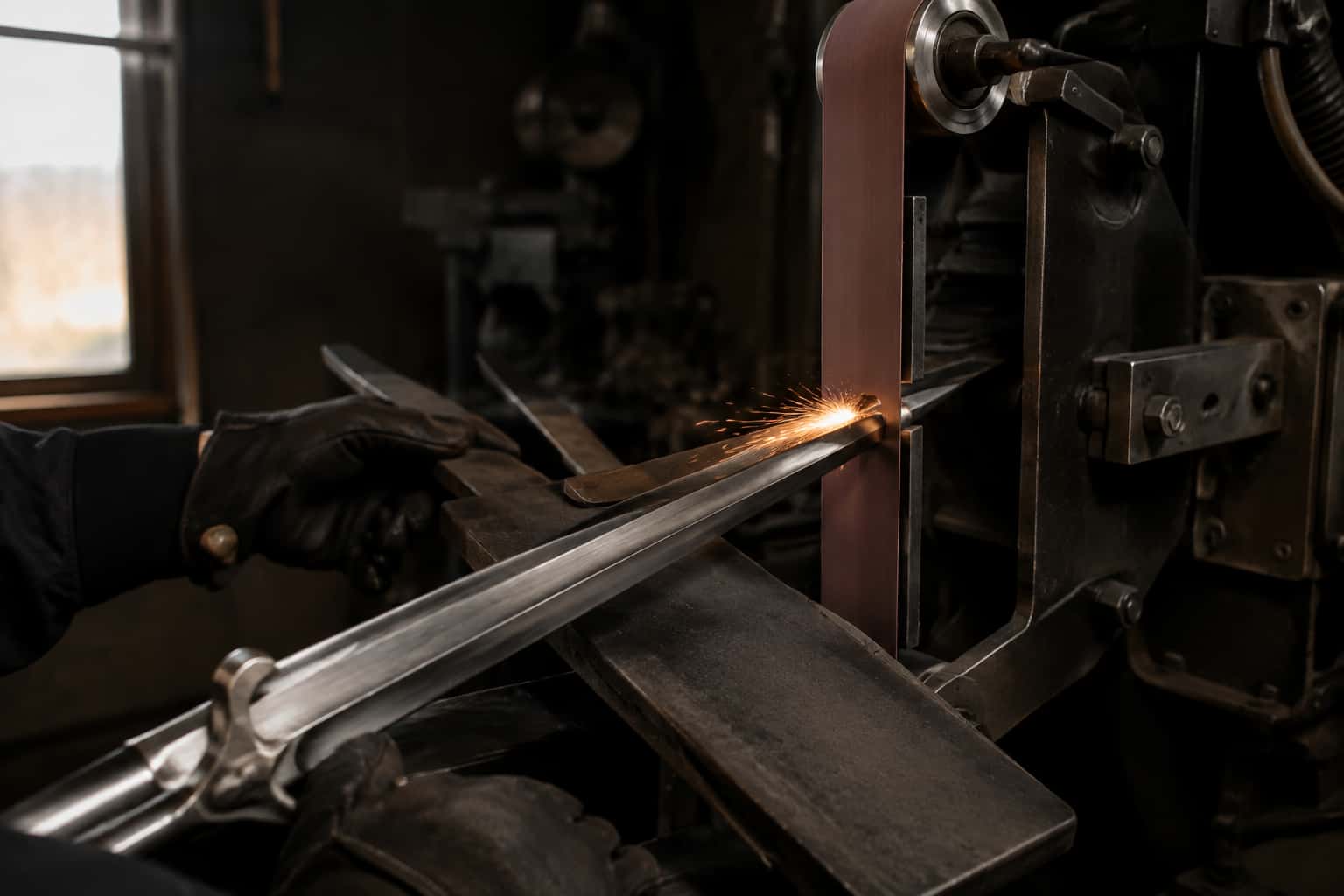
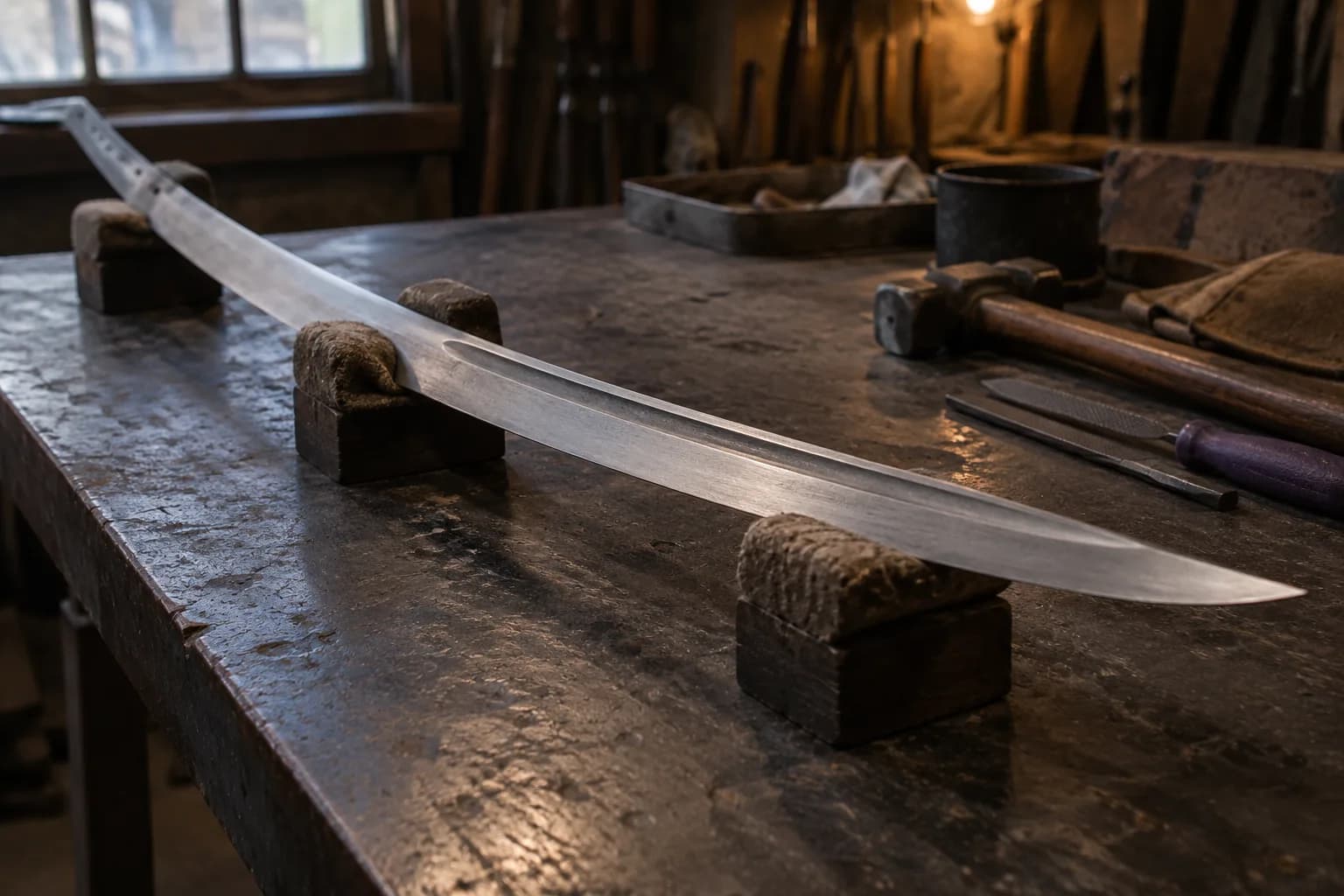
A saber is a lesson in curved-blade problems knife makers only meet in miniature. The curve must be forged or cut into the profile with the distal taper following the arc; wide fullers lighten the long blade; and the edge geometry often changes along the length — stouter at the forte, finer through the sweet spot, per the same zoning logic as a chopper’s. Grinding a curved bevel on a 2×72 means walking the arc through the platen contact in one smooth rotation — the skill transfers directly from skinner bellies, just sustained over feet. Spring steel, low-50s hardness, and a blade-heavy-but-lively balance finish the recipe, per Sword Steels.
Keep reading
Three more from the same bench.
Before the types, the vocabulary. Every sword — katana or claymore, gladius or rapier — is the same short list of parts negotiating the same physics: a…
No blade carries more mythology per inch than the katana — the folded-a-thousand-times, cuts-through-tanks legend machine. The real sword underneath is…
Swords begin as the first weapon designed purely for killing people — every earlier arm descends from a tool. The ancient world worked out most of the…
Same bench
I machine the parts, hand-assemble, track and test Torus grinders in Sterling, Illinois. Most orders ship in seven to ten business days from time of order.
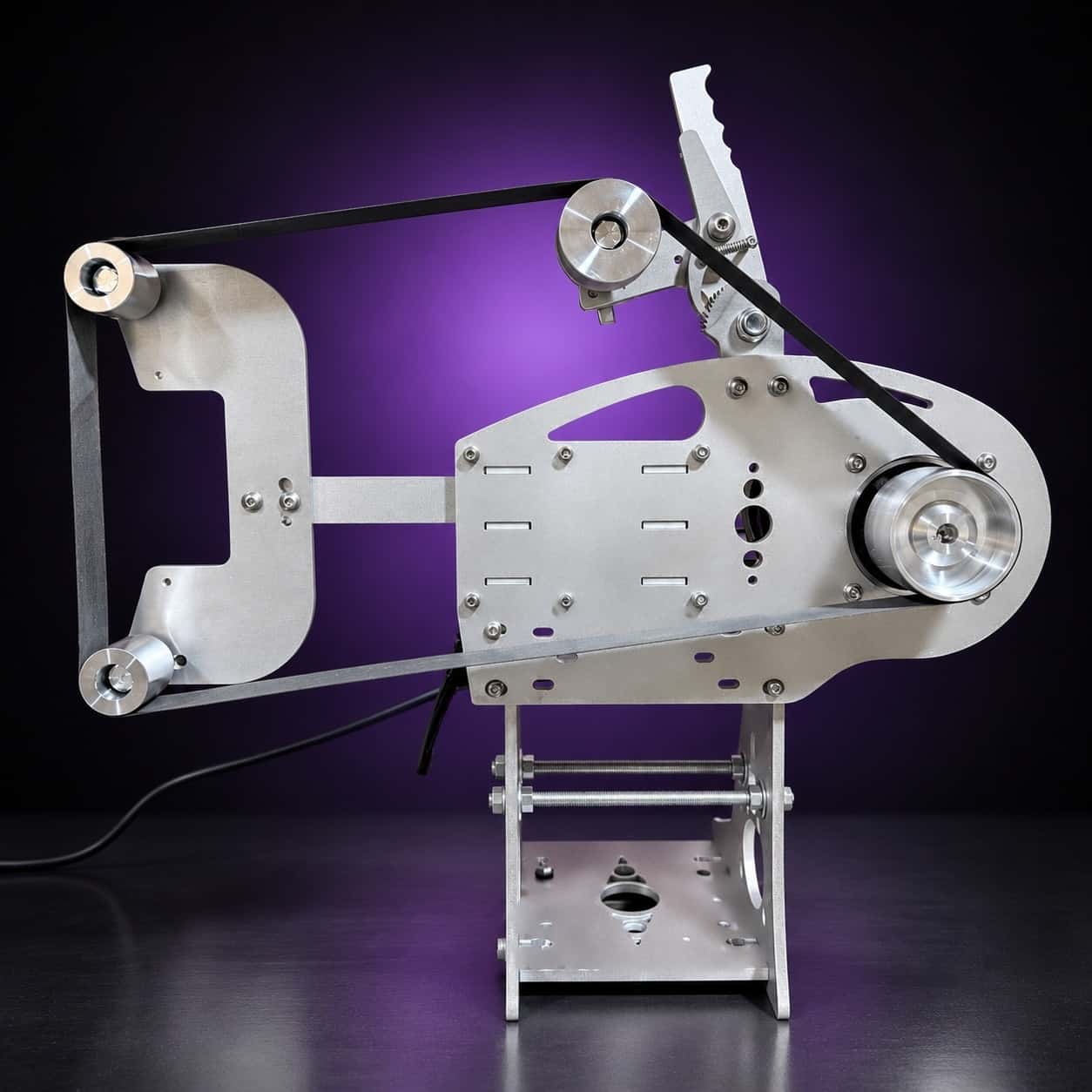
Current dual-axis platform with a fiber-laser-cut 6061 chassis and single-knob tracking.
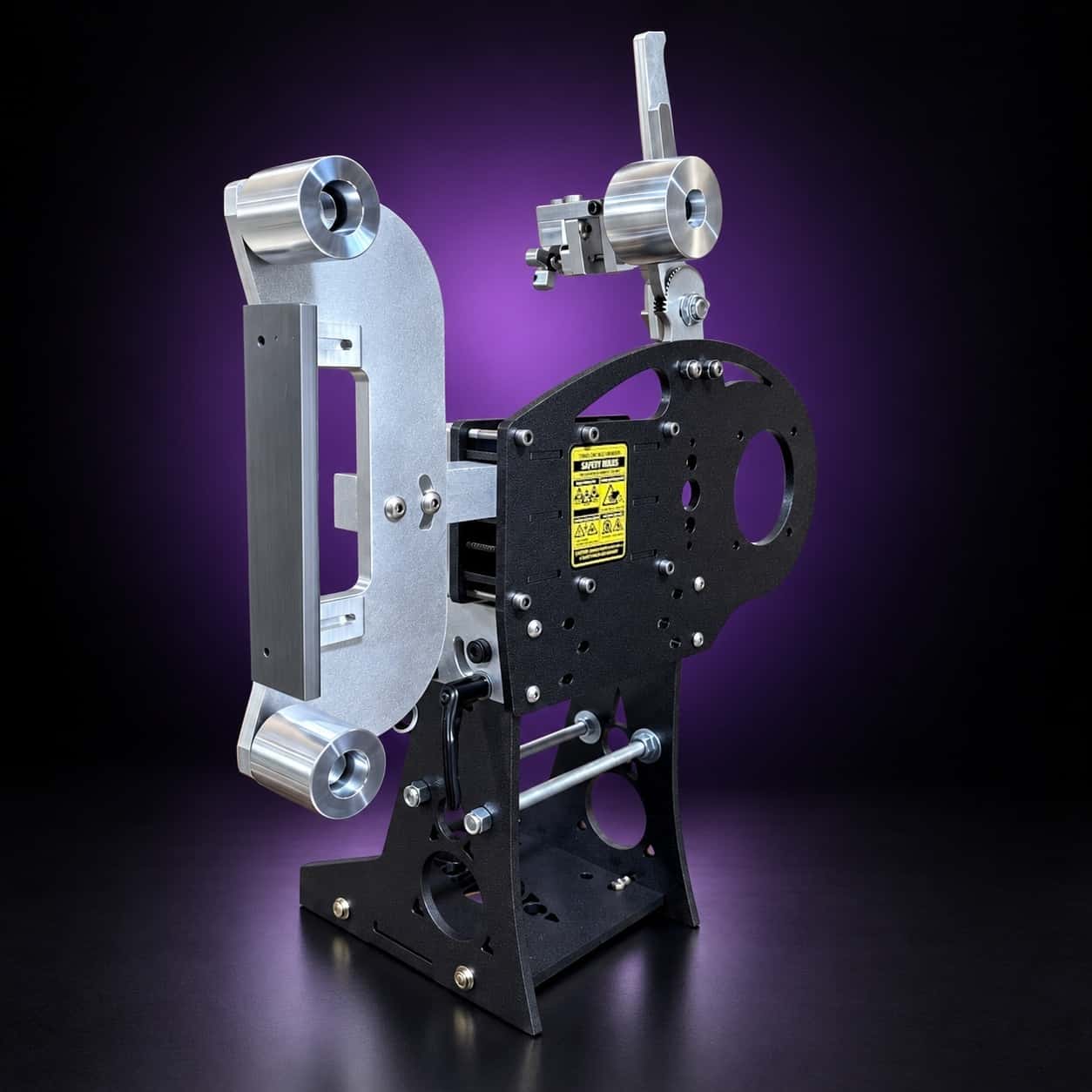
Current dual-axis platform with a steel chassis, more mass and less vibration.
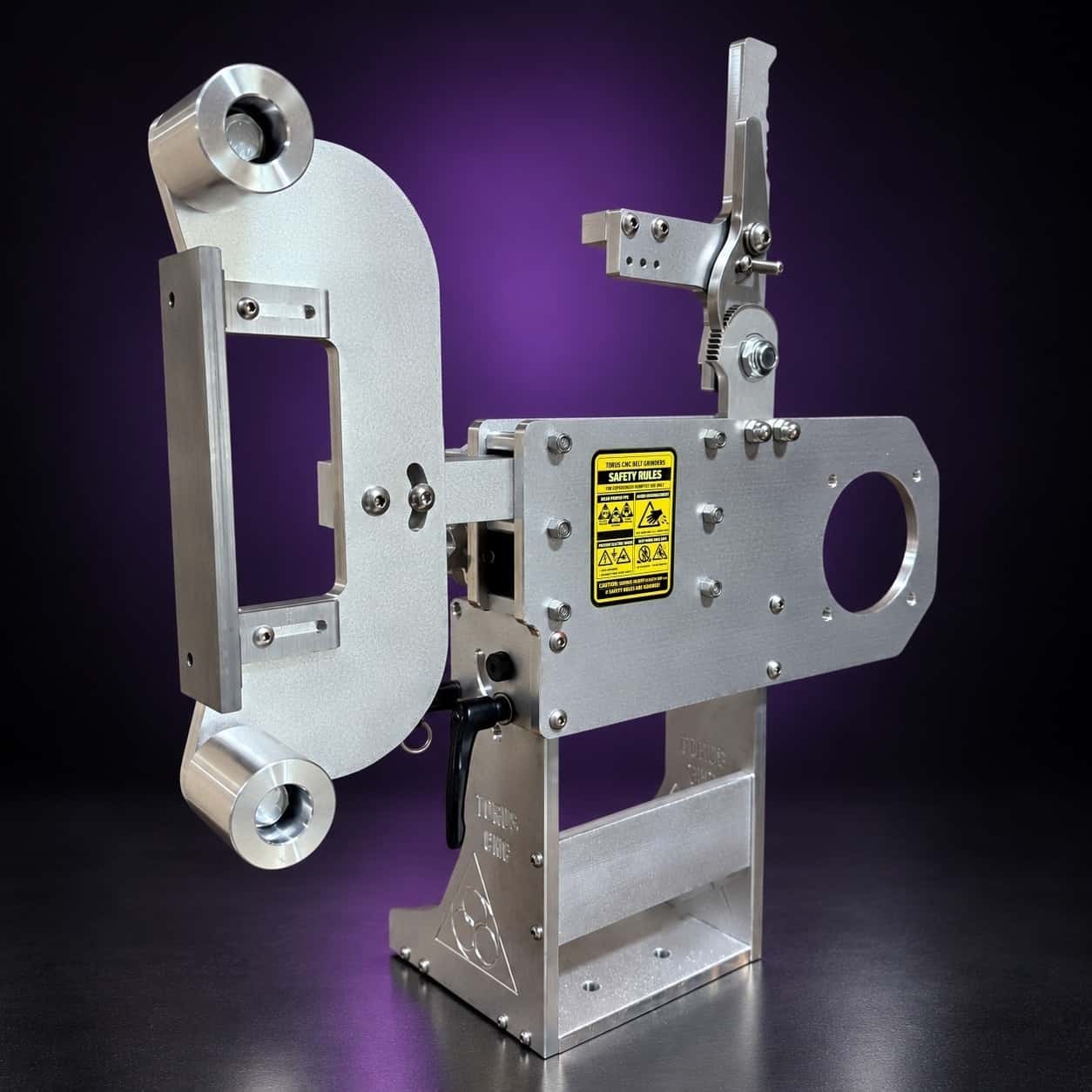
Prior-design aluminum chassis, 90-degree tilt and 1.5-inch tooling arms.
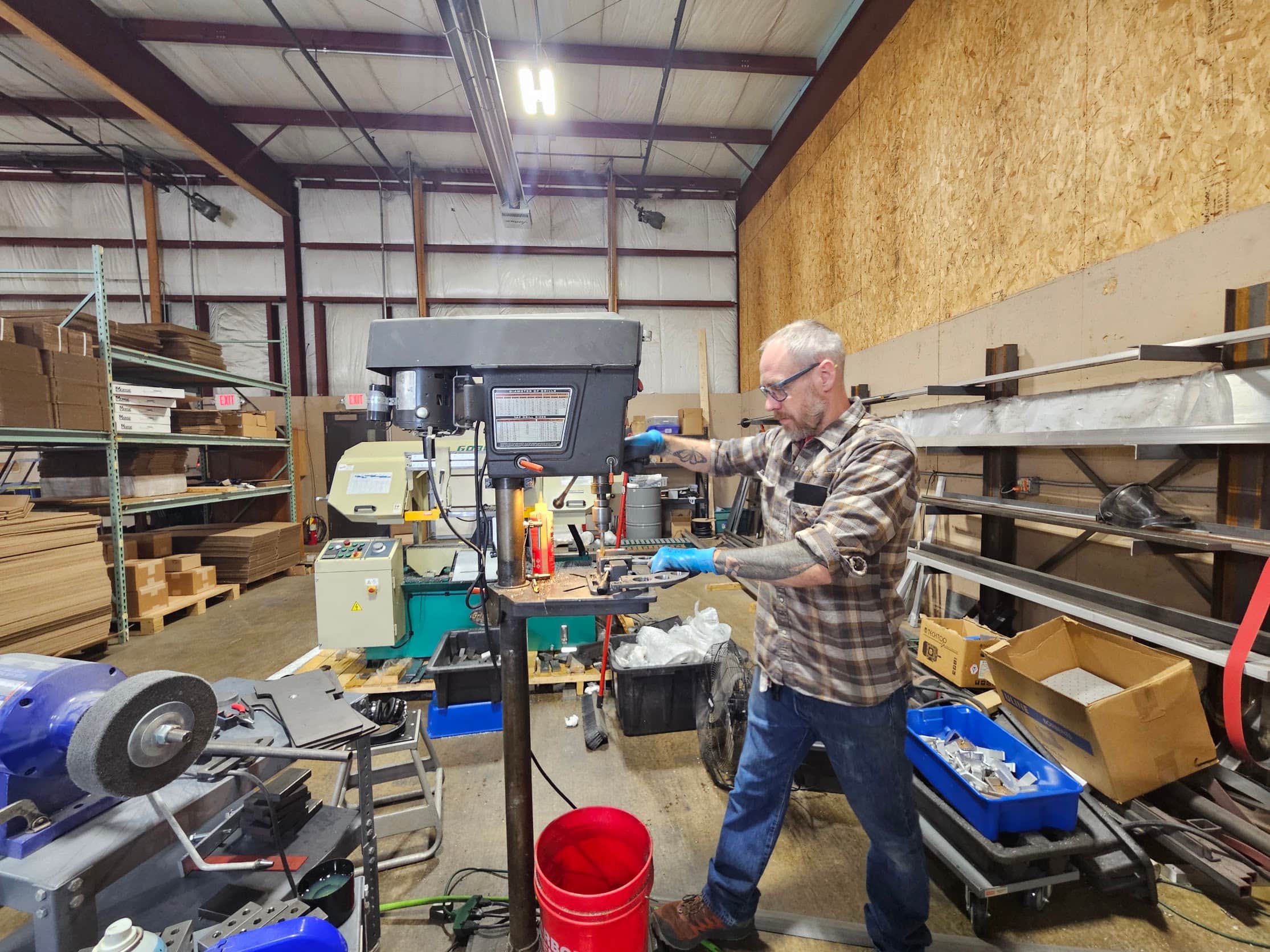
One-man shop
I answer my own email. Tell me the steel, the machine and what it is doing, and I will tell you what I would try next.