
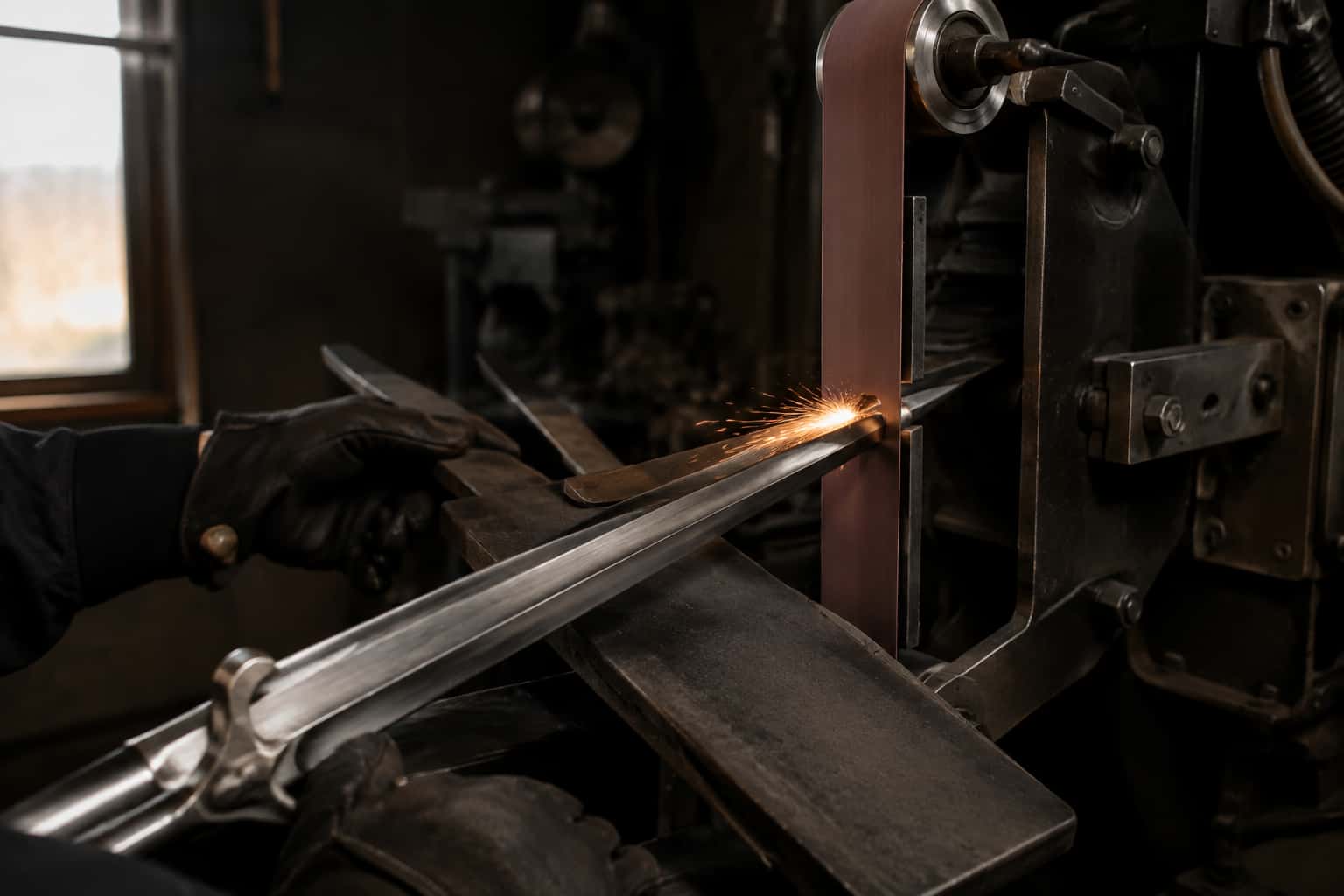
Swords
Sword Anatomy: A Maker’s Field Guide
Before the types, the vocabulary. Every sword — katana or claymore, gladius or rapier — is the same short list of parts negotiating the same physics: a…
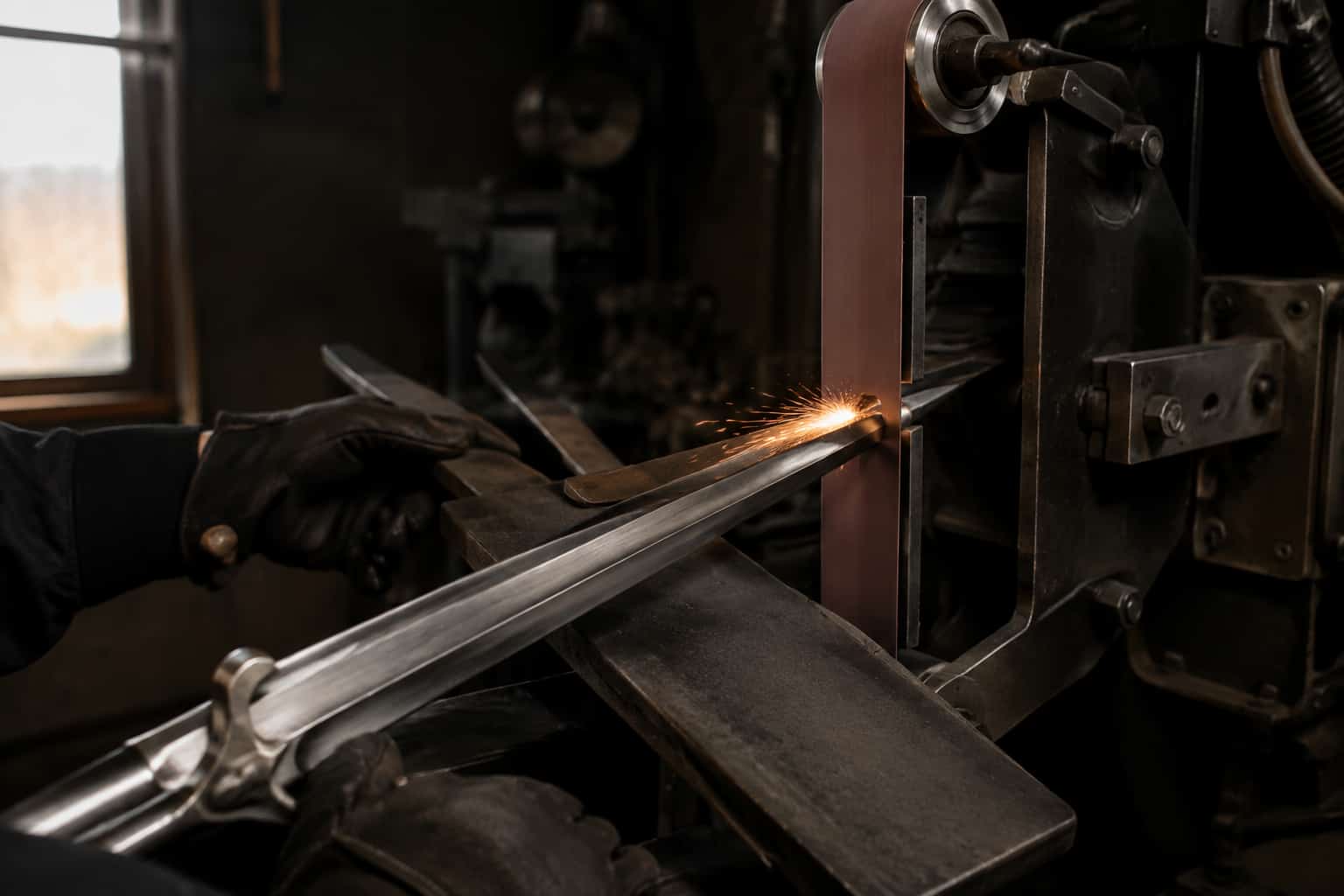
Swords
Ancient swords from bronze leaf blades and the khopesh through Greek xiphos and falcata to the Roman gladius and spatha - forms and lessons.
2 min readWritten by Rich LinvilleFree to read
Swords begin as the first weapon designed purely for killing people — every earlier arm descends from a tool. The ancient world worked out most of the forms the next three thousand years would refine, and the arc from bronze leaf blade to Roman gladius is the story of metallurgy dragging design behind it.
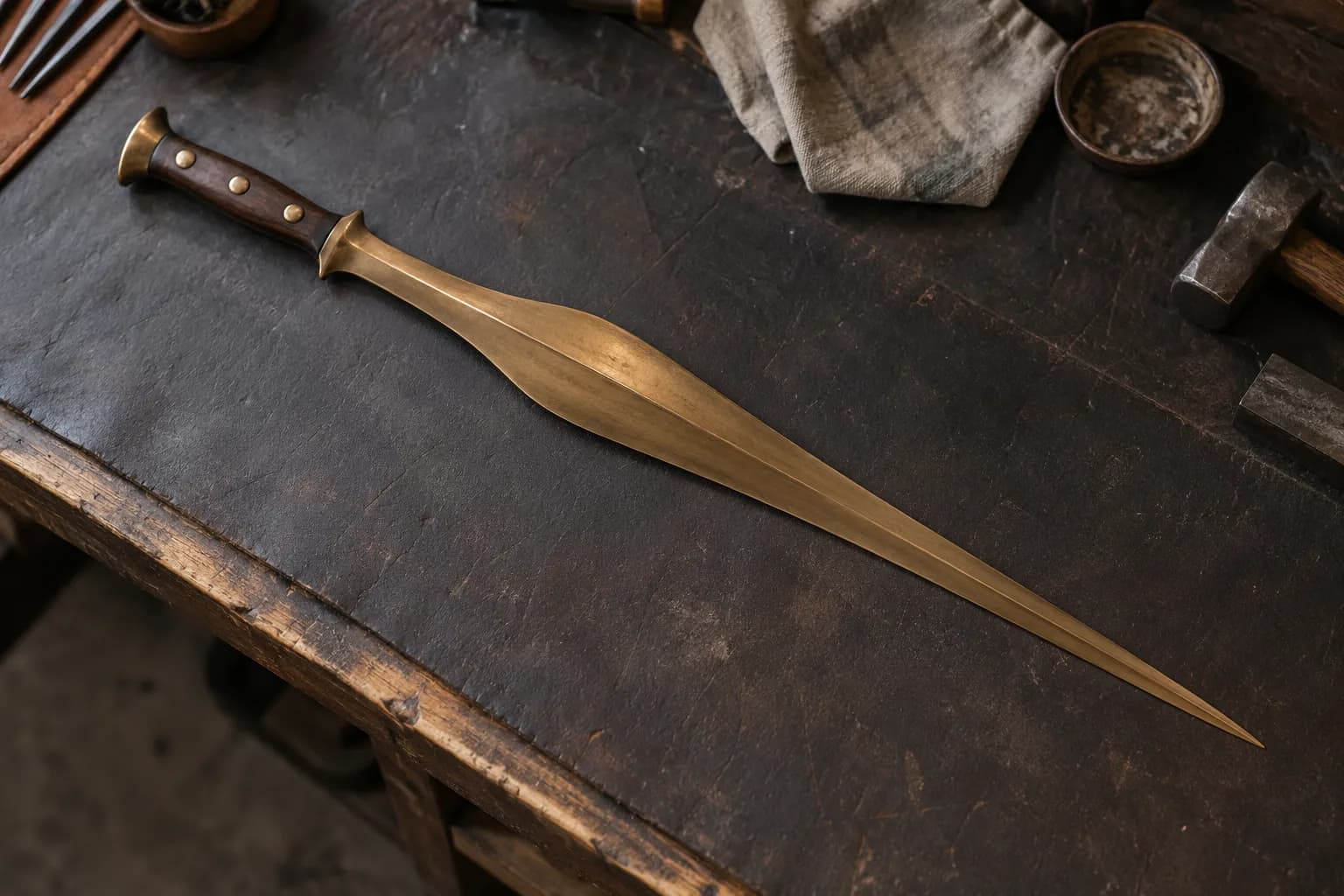
Around 1600 BC blades finally outgrew the dagger: cast bronze made the leaf-shaped sword — swelling toward the tip to load a cut, narrowing at the waist for balance — the Mediterranean standard for a millennium. Bronze work-hardens at the edge and casts into elegant forms, but long thin castings snap, keeping blades under two feet. The Egyptian khopesh — the sickle-sword — solved reach differently: a curved mass-forward chopper evolved from the axe, and effectively the first design admission that edge geometry and mass placement, not length, decide a cutter (a logic that survives in every modern chopper).
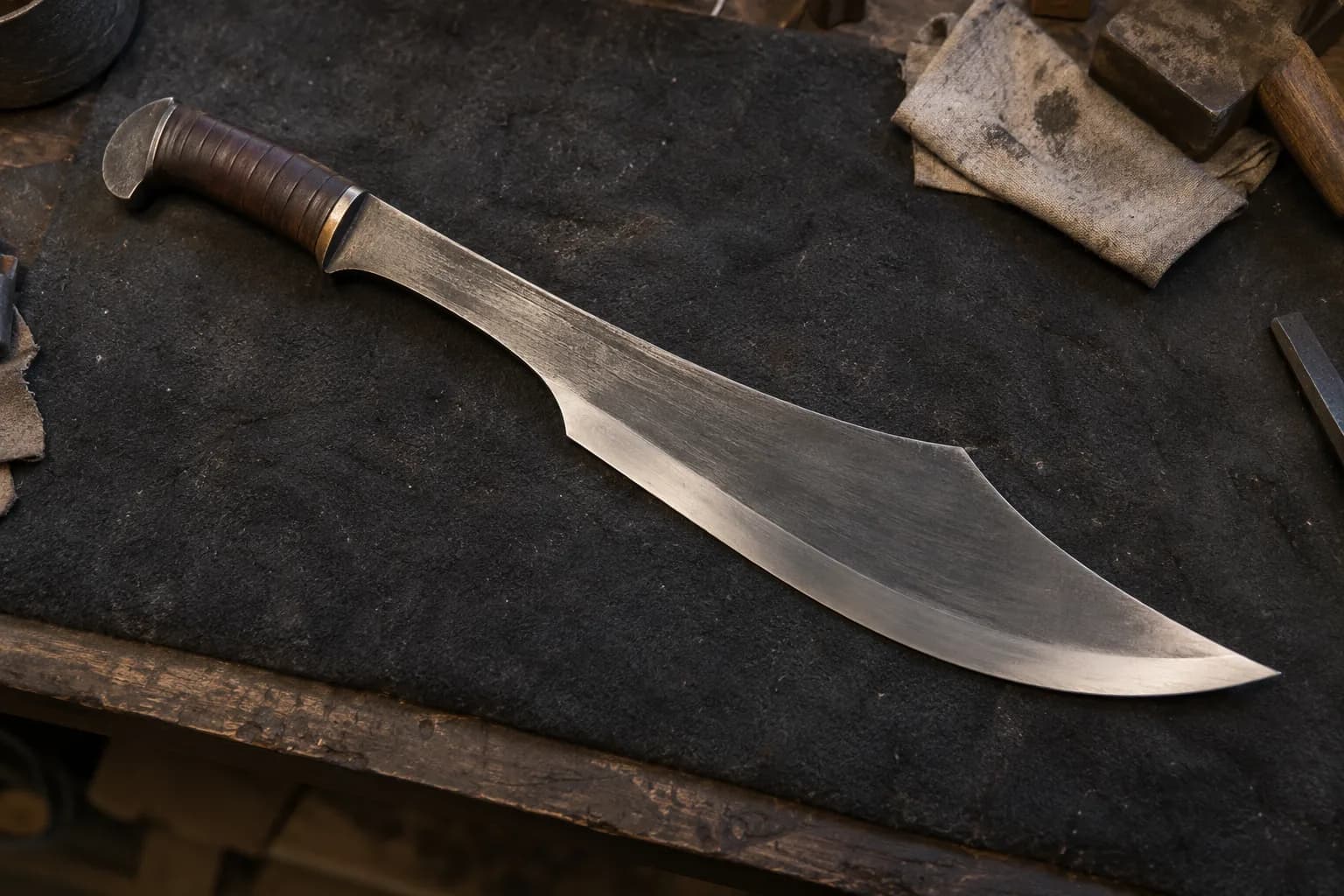
Iron did not arrive better than bronze — early iron was often worse — it arrived CHEAPER, once smelting spread. The Greek xiphos carried the leaf shape into iron and steel; the kopis and its Iberian cousin the falcata brought the forward-curved chopping blade to devastating refinement — single-edged, mass-forward, capable of shearing helmets, and the ancestor of every kukri-like recurve since. Hoplite doctrine kept swords secondary to the spear, a pattern nearly every ancient army repeats: the sword is the sidearm, the status object, and the last resort.
Rome adopted the short Spanish sword — gladius hispaniensis — and built the ancient world’s most effective infantry system around it: shield wall closes, scutum binds, and a two-foot, two-pound thrusting blade works underneath where long swords have no room. Waisted early patterns (Mainz) simplified into the straight-edged Pompeii type as production scaled to equip legions — design for manufacture, two thousand years early. The lesson under the doctrine: the gladius was short ON PURPOSE, matched to its system; the weapon and the method were one design.
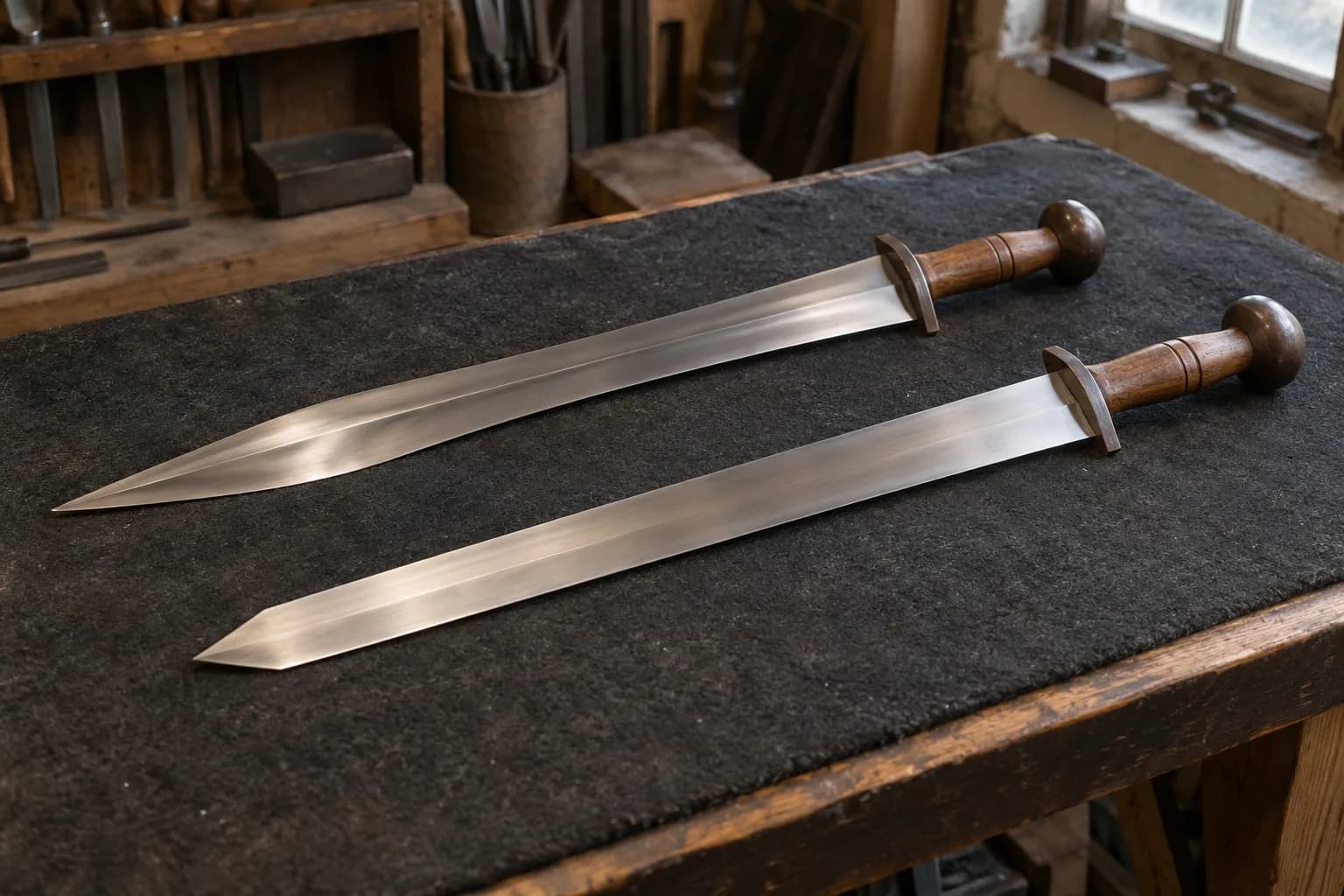
Cavalry needed reach, and the longer spatha — 27 to 33 inches — rode with Roman horsemen before infantry adopted it wholesale in the late empire as formations loosened. The spatha is the bridge sword: its proportions flow directly into the migration-era and Viking blades, and through them to the medieval arming sword and longsword. Rome’s exit is the sword’s origin story for medieval Europe.
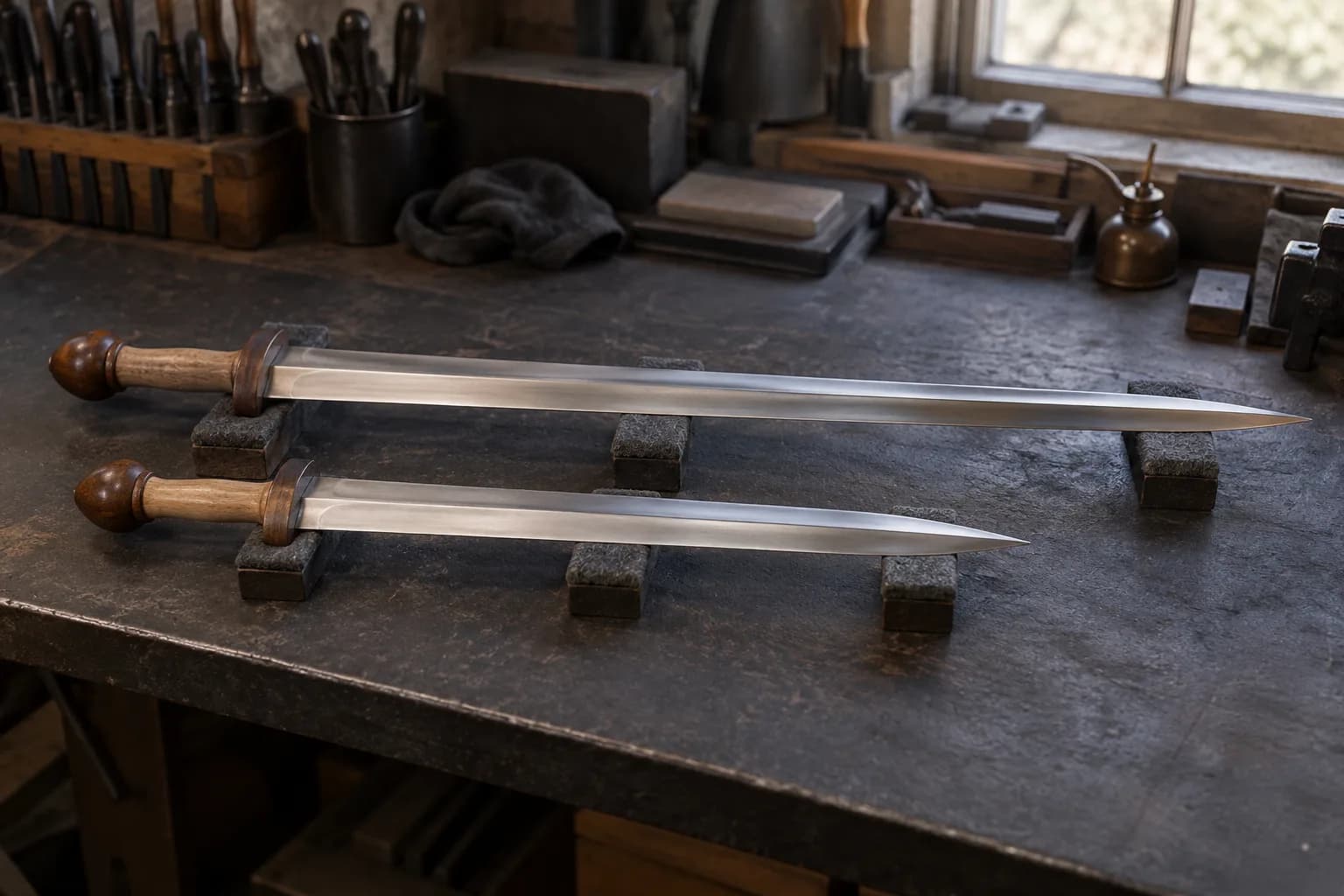
For makers, ancient patterns are approachable in the best way: gladius and xiphos lengths sit inside comfortable heat-treat and grinding range (a Pompeii gladius is functionally a very large double-edged knife), leaf blades teach profile-taper control like nothing else, and a falcata is a masterclass in mass-forward geometry. Spring steels from the sword steel guide at modest hardness serve them all; the bronze originals are their own casting hobby, and a fascinating one.
Keep reading
Three more from the same bench.
Before the types, the vocabulary. Every sword — katana or claymore, gladius or rapier — is the same short list of parts negotiating the same physics: a…
The Viking sword is where bladesmithing history gets genuinely mysterious: gorgeous pattern-welded blades giving way, at the top of the market, to a run…
The longsword is the European counterpart to the katana’s fame: the two-handed cruciform sword of the late medieval knight, the centerpiece of the German…
Same bench
I machine the parts, hand-assemble, track and test Torus grinders in Sterling, Illinois. Most orders ship in seven to ten business days from time of order.
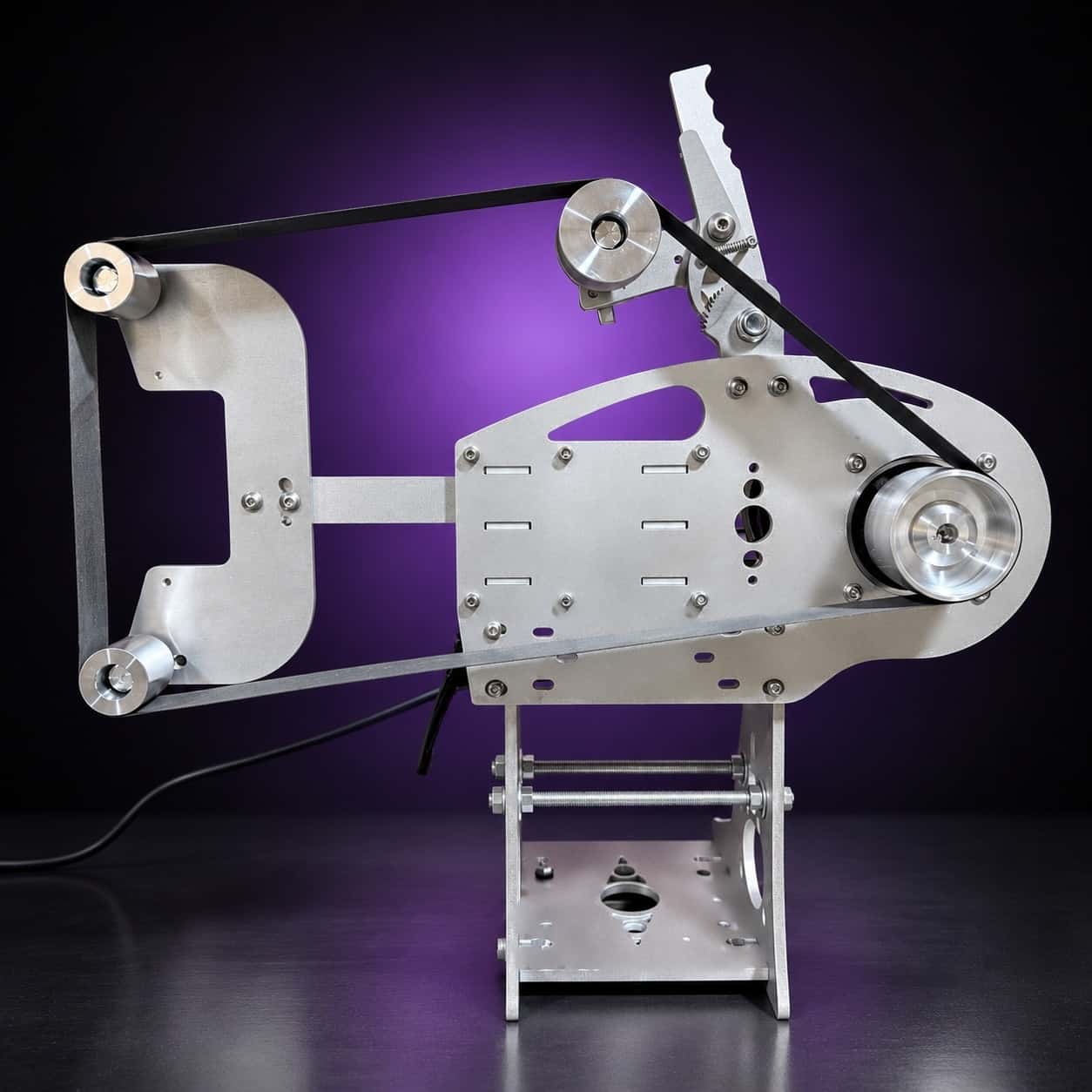
Current dual-axis platform with a fiber-laser-cut 6061 chassis and single-knob tracking.
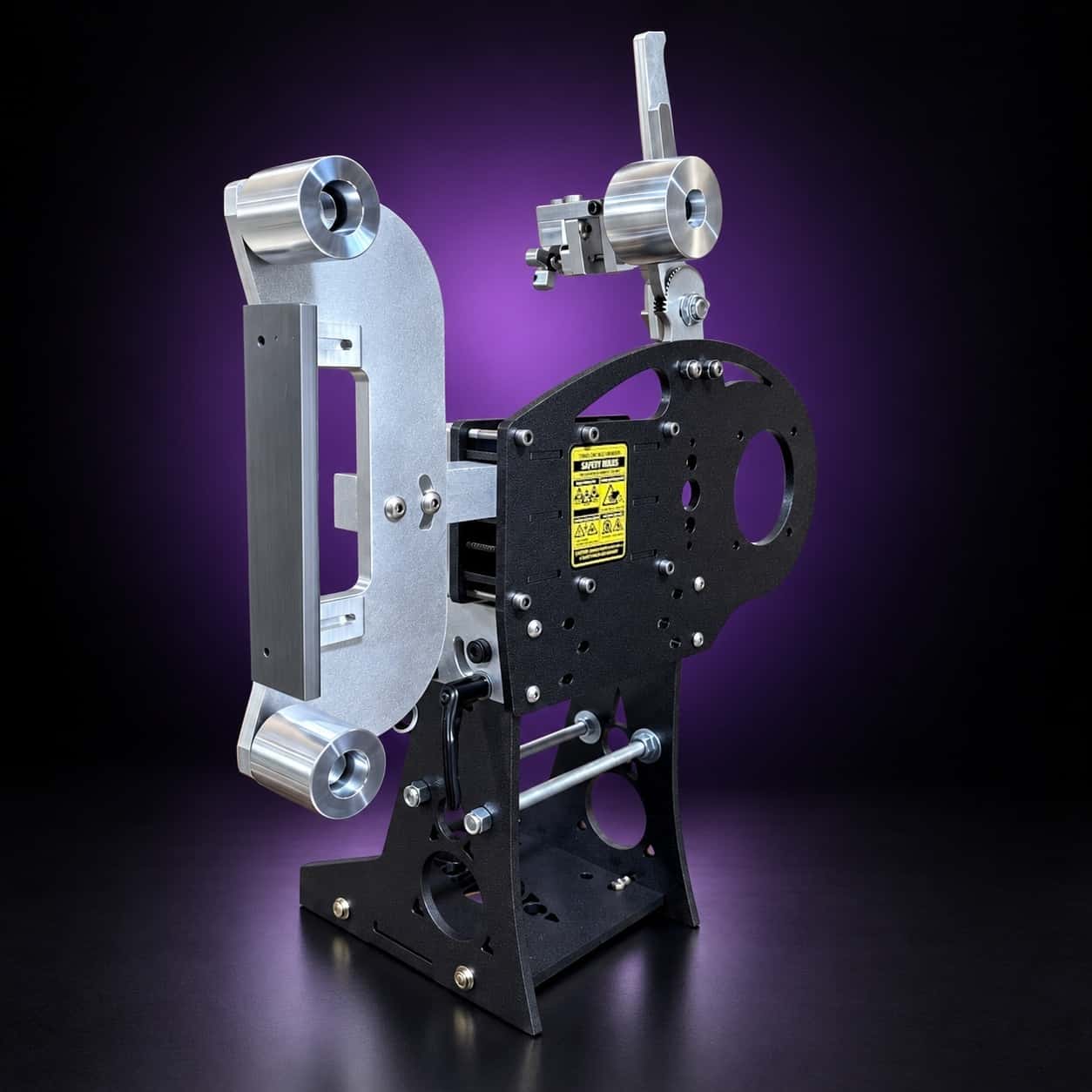
Current dual-axis platform with a steel chassis, more mass and less vibration.
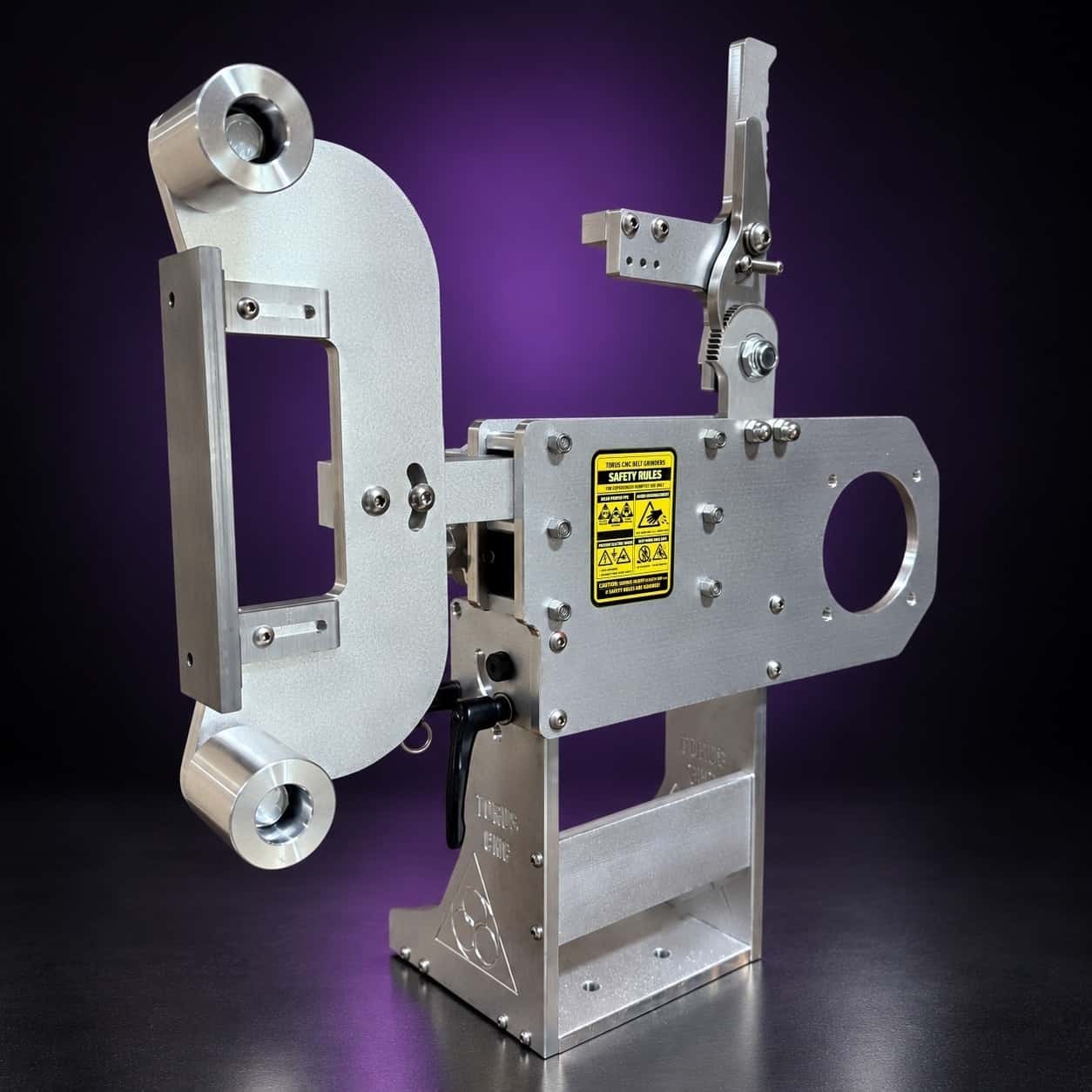
Prior-design aluminum chassis, 90-degree tilt and 1.5-inch tooling arms.
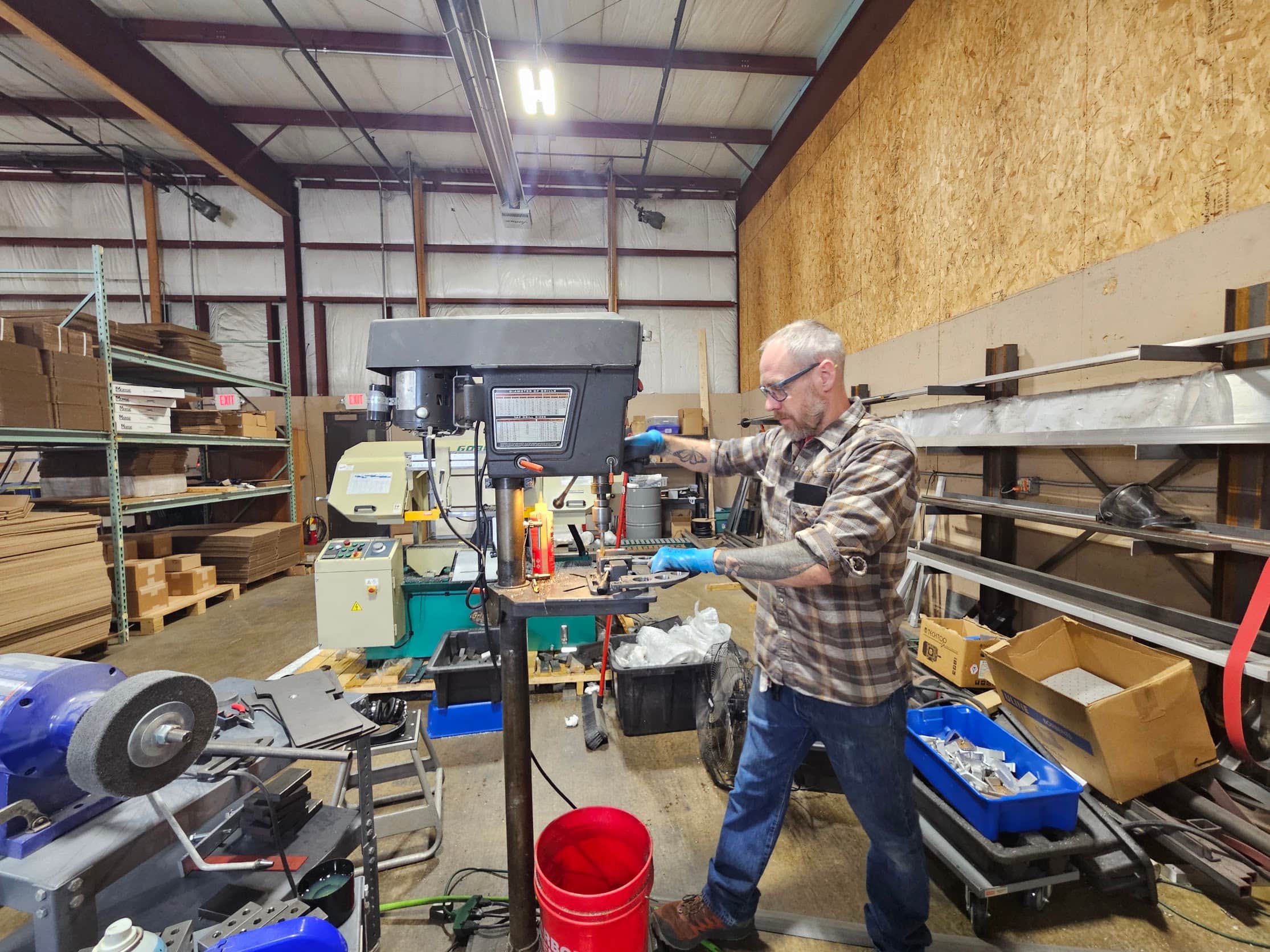
One-man shop
I answer my own email. Tell me the steel, the machine and what it is doing, and I will tell you what I would try next.