
Beginner Guides
Understanding Knife Steel Ratings
Every steel in the Knife Steel Database is rated 1-5 across four properties: toughness, edge retention, corrosion resistance, and machinability. Here’s…
Blade Design
Satin, mirror, stonewash and bead blast finishes compared for looks and upkeep, how corrosion and hamon fit in, and why satin suits a first knife.
3 min readWritten by Rich LinvilleFree to read
The final surface finish on a blade is more than cosmetic, it affects corrosion resistance, how scratches show up over time, and how much grinding and polishing work a build actually needs before it’s done.
A uniform, brushed-look finish created by sanding through a progression of grits in one consistent direction, typically finishing somewhere in the 400-600 grit range for a classic satin look. Satin is the most common working-knife finish: it hides minor scratches from use reasonably well, doesn’t show fingerprints as readily as a mirror polish, and takes meaningfully less time than a full mirror finish while still looking clean and intentional.
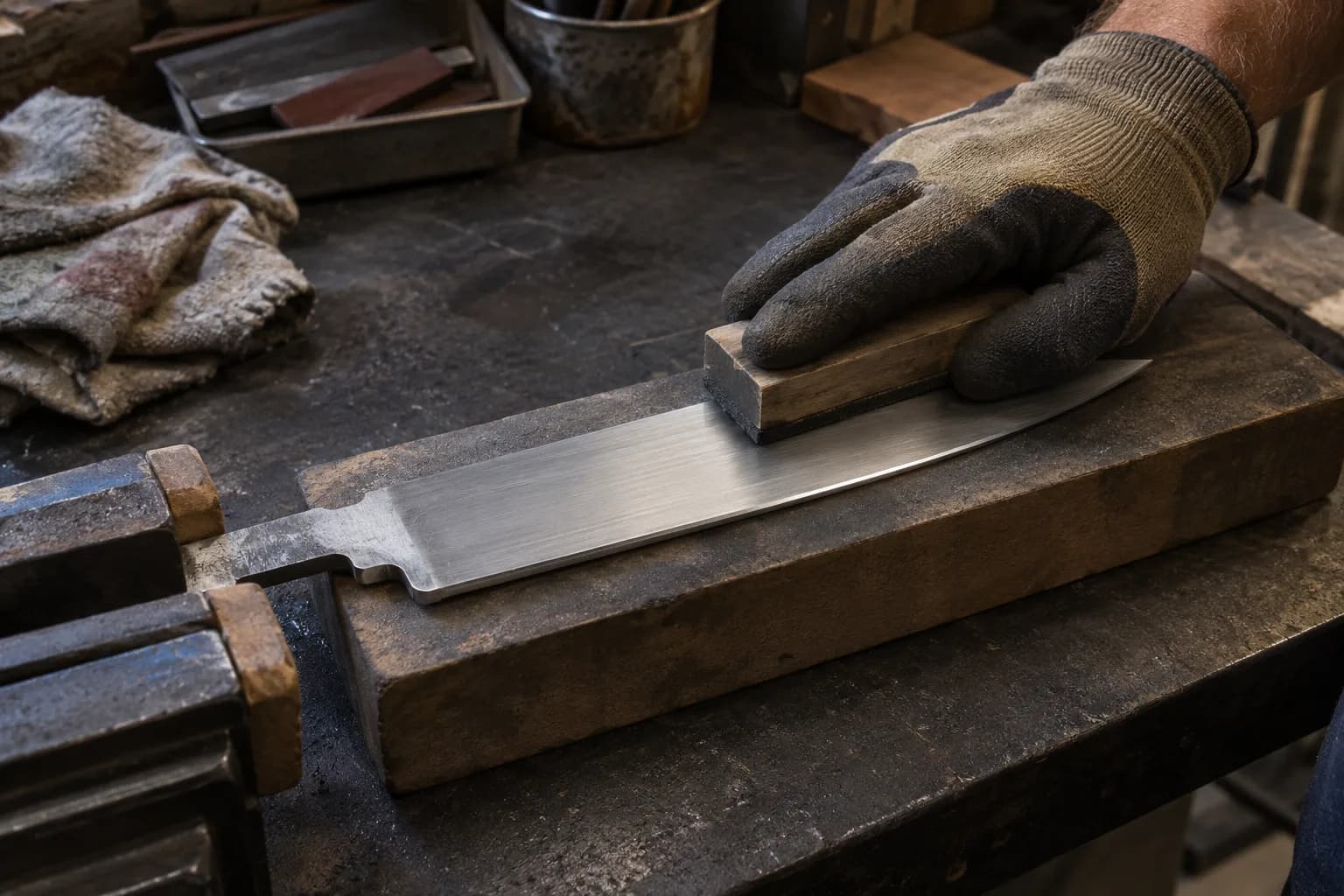
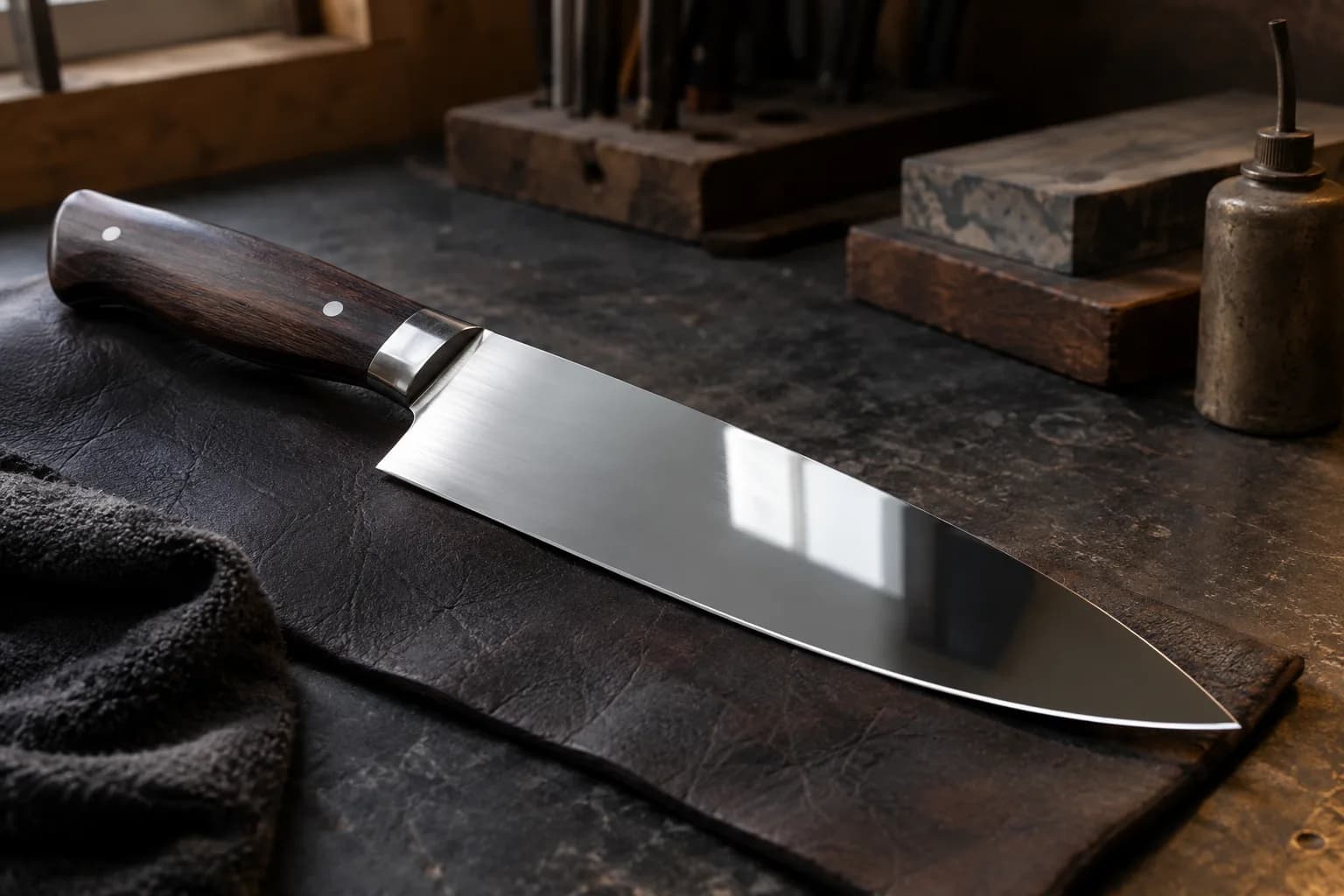
Taken through progressively finer grits and polishing compounds well beyond satin, up to a fully reflective, mirror-like surface. Mirror polish looks striking but shows every scratch, fingerprint, and smudge clearly, and takes considerably more time and a more careful process to achieve without leaving visible swirl marks or missed low spots. More common on display or collector-focused knives than hard daily users.
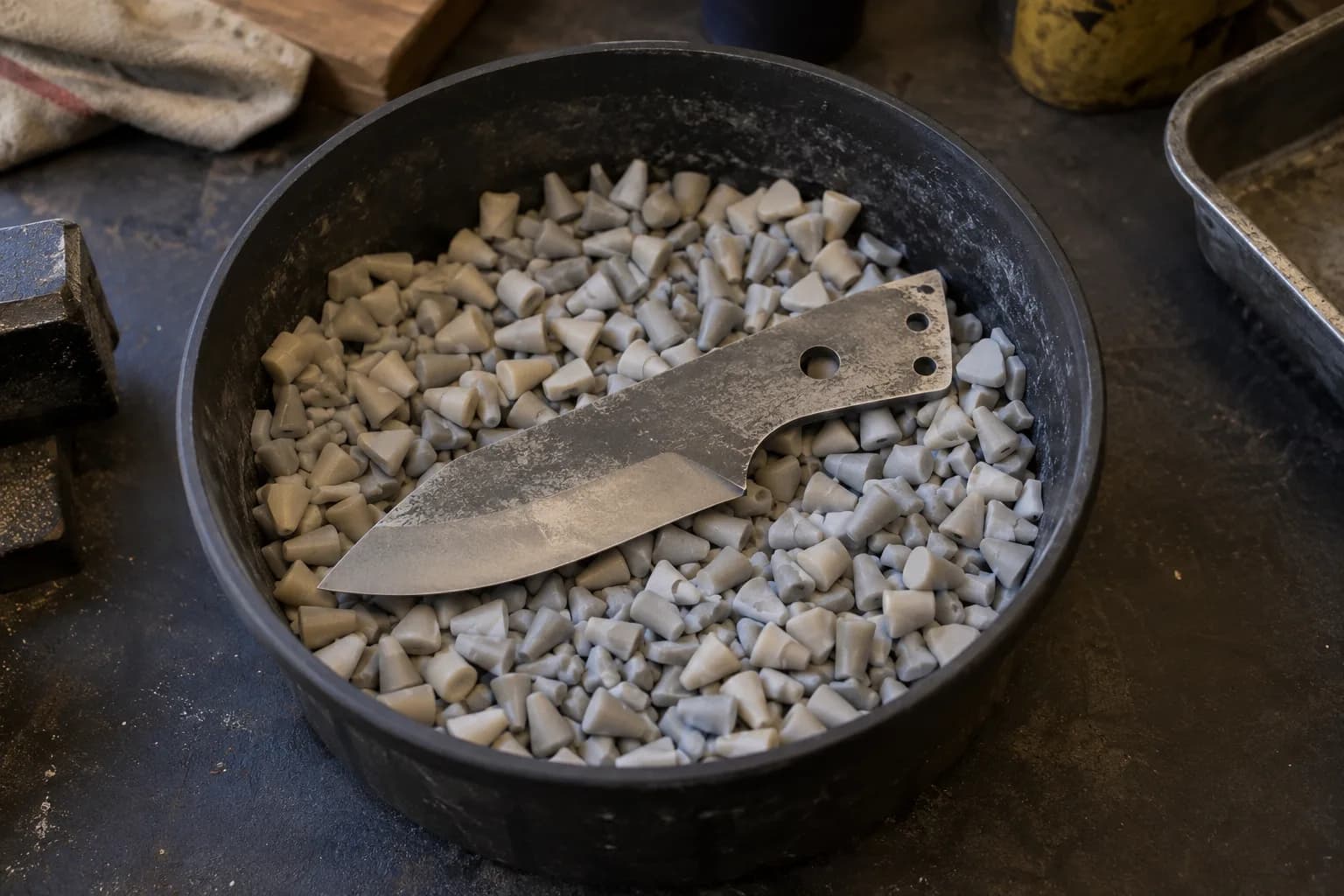
A tumbled, matte-textured finish created by tumbling the blade with abrasive media (traditionally stones, though synthetic media is common today), producing a randomized, slightly rough texture that hides scratches and fingerprints extremely well. Stonewash is popular on hard-use and tactical knives specifically because it’s low-maintenance in appearance, new scuffs from use blend into the existing texture instead of standing out.
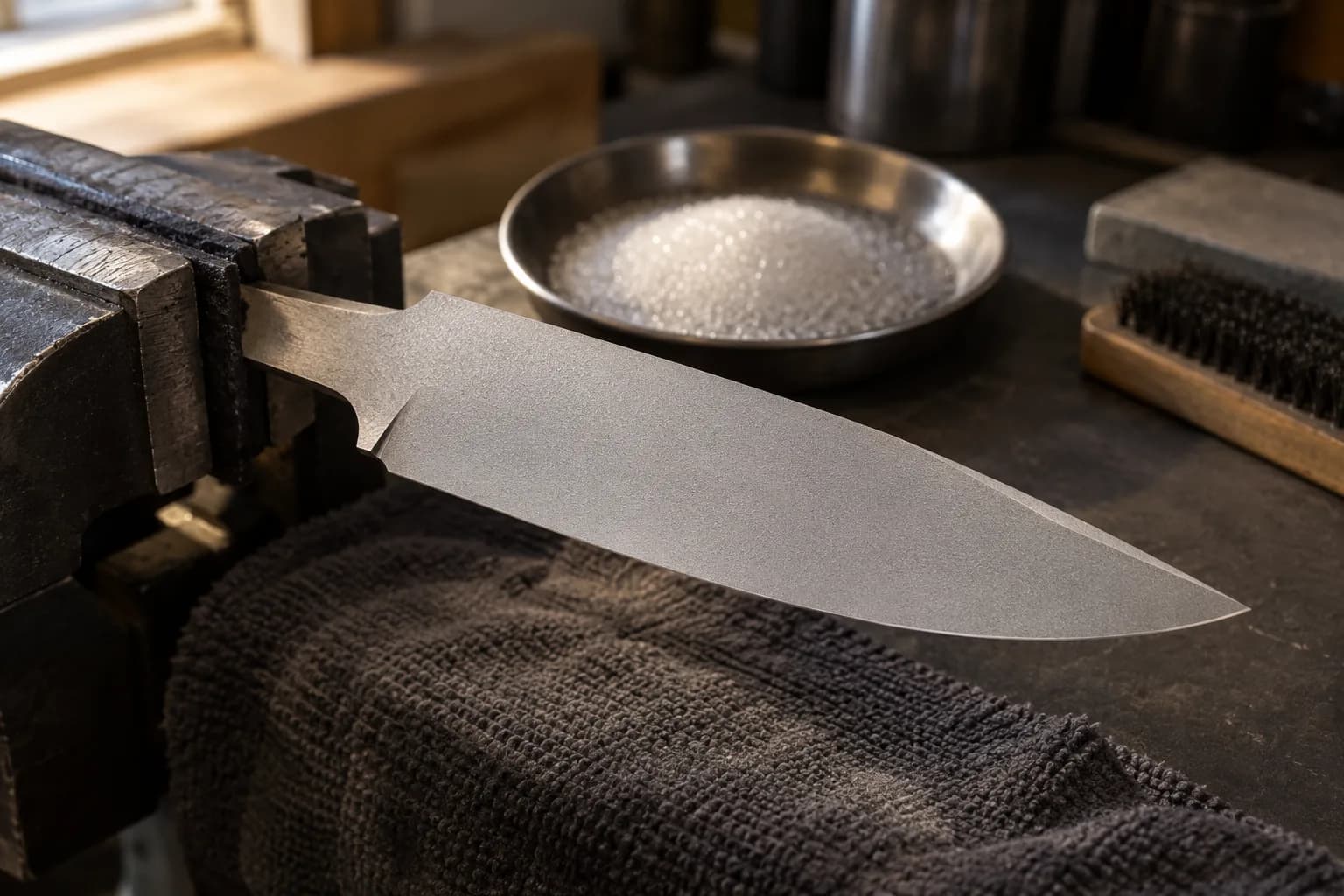
A matte, uniform finish created by blasting the surface with fine glass beads or similar media under pressure, giving a soft, non-reflective texture distinct from stonewash’s more randomized look. Bead blasting is relatively fast to apply evenly and gives a clean, modern, low-glare appearance often seen on tactical and modern EDC knives.
Satin and polished finishes can be achieved by hand (sanding with the belt grinder or by hand-sanding blocks) or with a buffing wheel and compound for the final polishing stages. Hand-rubbed finishes typically show a straighter, more consistent grain pattern; buffed finishes can achieve a higher shine faster but risk rounding over sharp lines (like a plunge line) if not controlled carefully.
A smoother, more polished surface generally resists corrosion slightly better than a rougher one, since there’s less surface texture for moisture to cling to, though the difference is secondary to the steel’s own corrosion resistance covered in Understanding Knife Steel Ratings. On a non-stainless carbon steel, finish quality doesn’t substitute for the oiling and care that steel needs regardless.
Blades with a hamon (see Differential Heat Treat and the Hamon) need a specific etching and polishing process to bring out the visible hardening line clearly, a standard satin or mirror finish alone won’t reveal it well. This is typically the last step after shaping is otherwise complete.
Satin. It’s more forgiving of minor inconsistencies than mirror polish, doesn’t require tumbling or blasting equipment like stonewash or bead blast, and is achievable with the same belt grinder and abrasives already used to shape the blade.
Not directly, sharpness comes from the edge geometry and final sharpening, not the finish on the rest of the blade. Finish is a separate, mostly cosmetic and maintenance-related choice from edge sharpness itself.
Yes, within reason, a satin blade can be taken to a mirror polish or stonewashed later, though each finish removes a small amount of material and changing finishes repeatedly isn’t ideal for maintaining sharp plunge lines and consistent geometry over time.
Keep reading
Three more from the same bench.
Every steel in the Knife Steel Database is rated 1-5 across four properties: toughness, edge retention, corrosion resistance, and machinability. Here’s…
The wavy line visible along a hamon-bearing blade isn’t decoration applied after the fact, it’s a direct visual record of which parts of the steel…
Belts are the single biggest recurring cost in this hobby, and buying the wrong ones wastes money twice: once on belts that wear out fast, and again on…
Same bench
I machine the parts, hand-assemble, track and test Torus grinders in Sterling, Illinois. Most orders ship in seven to ten business days from time of order.
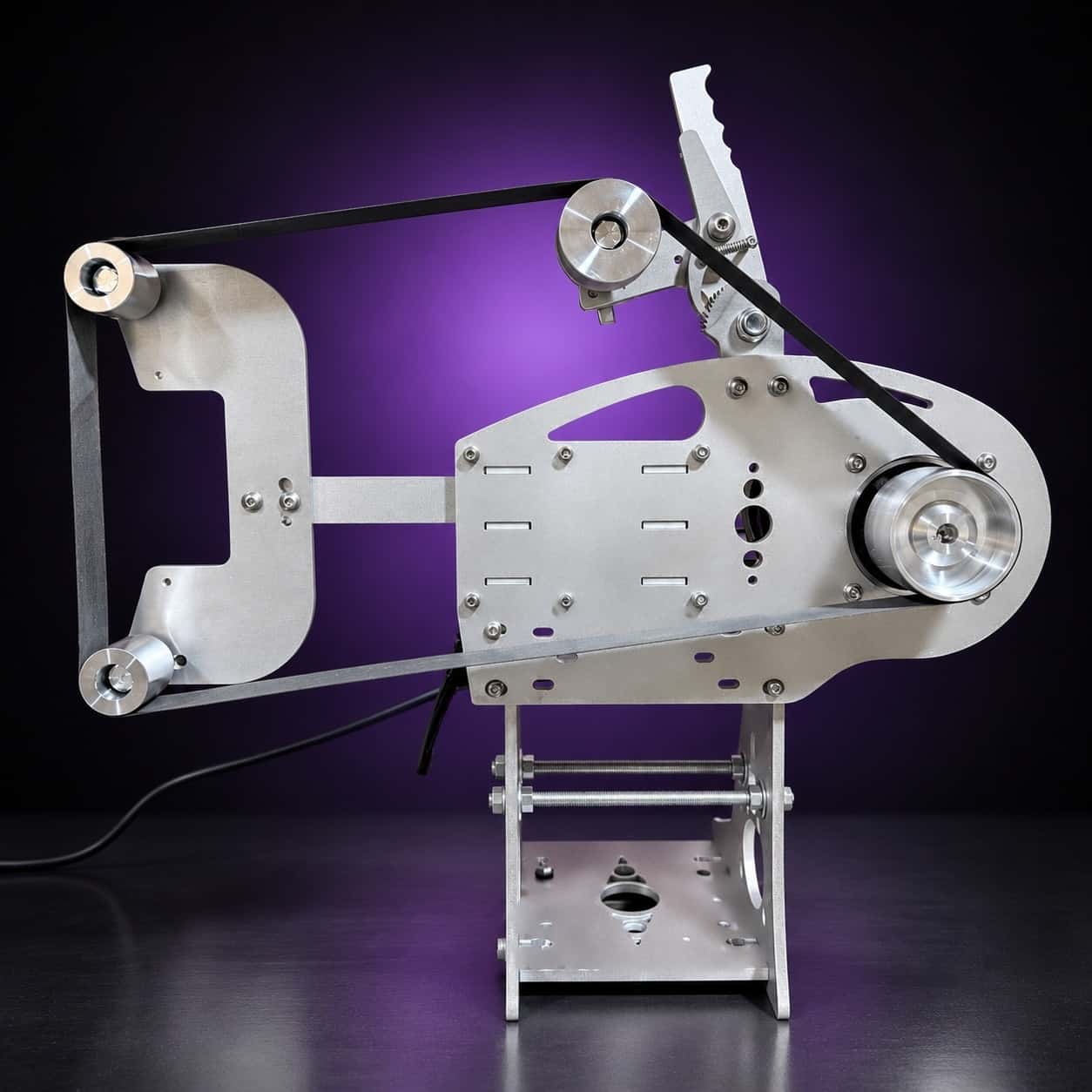
Current dual-axis platform with a fiber-laser-cut 6061 chassis and single-knob tracking.
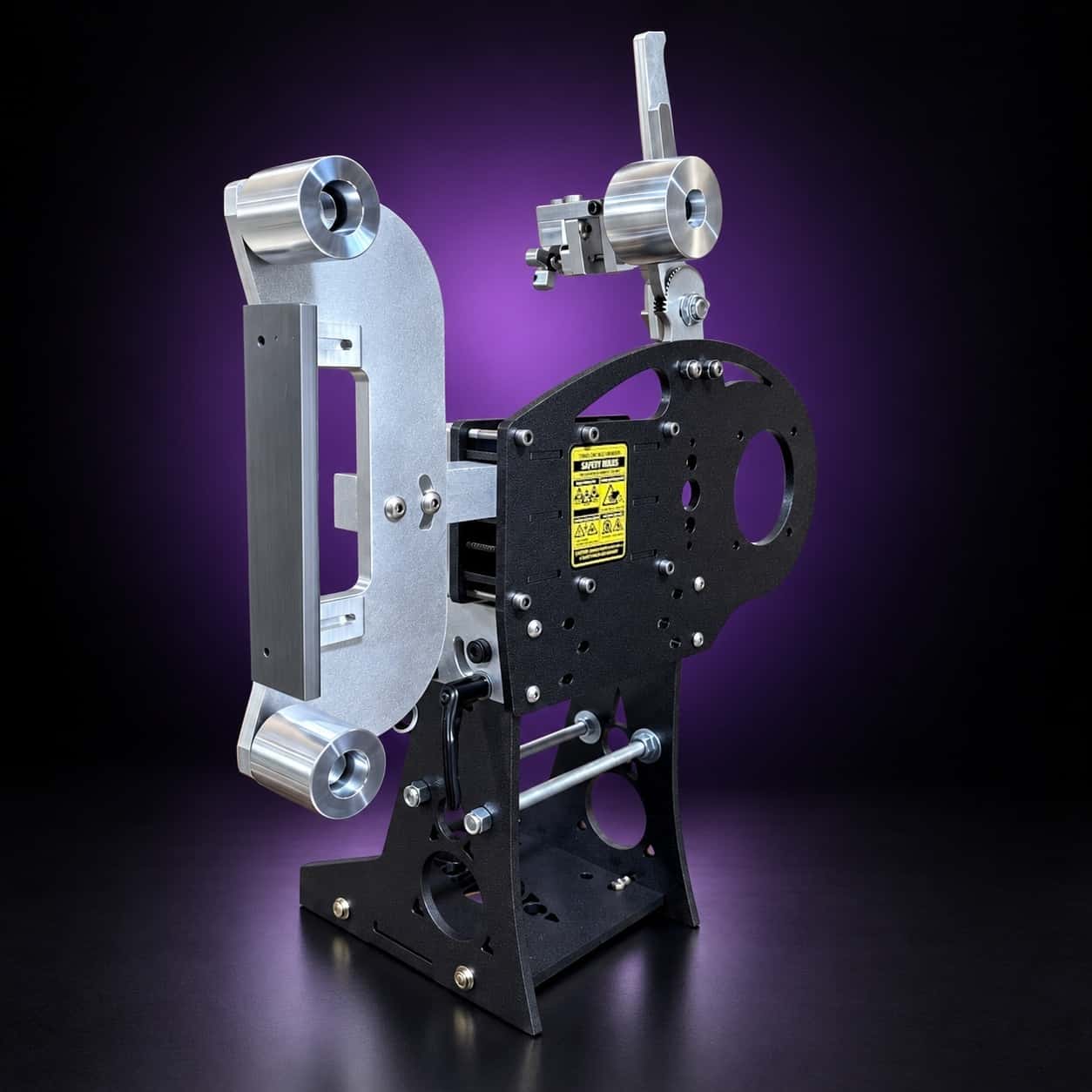
Current dual-axis platform with a steel chassis, more mass and less vibration.
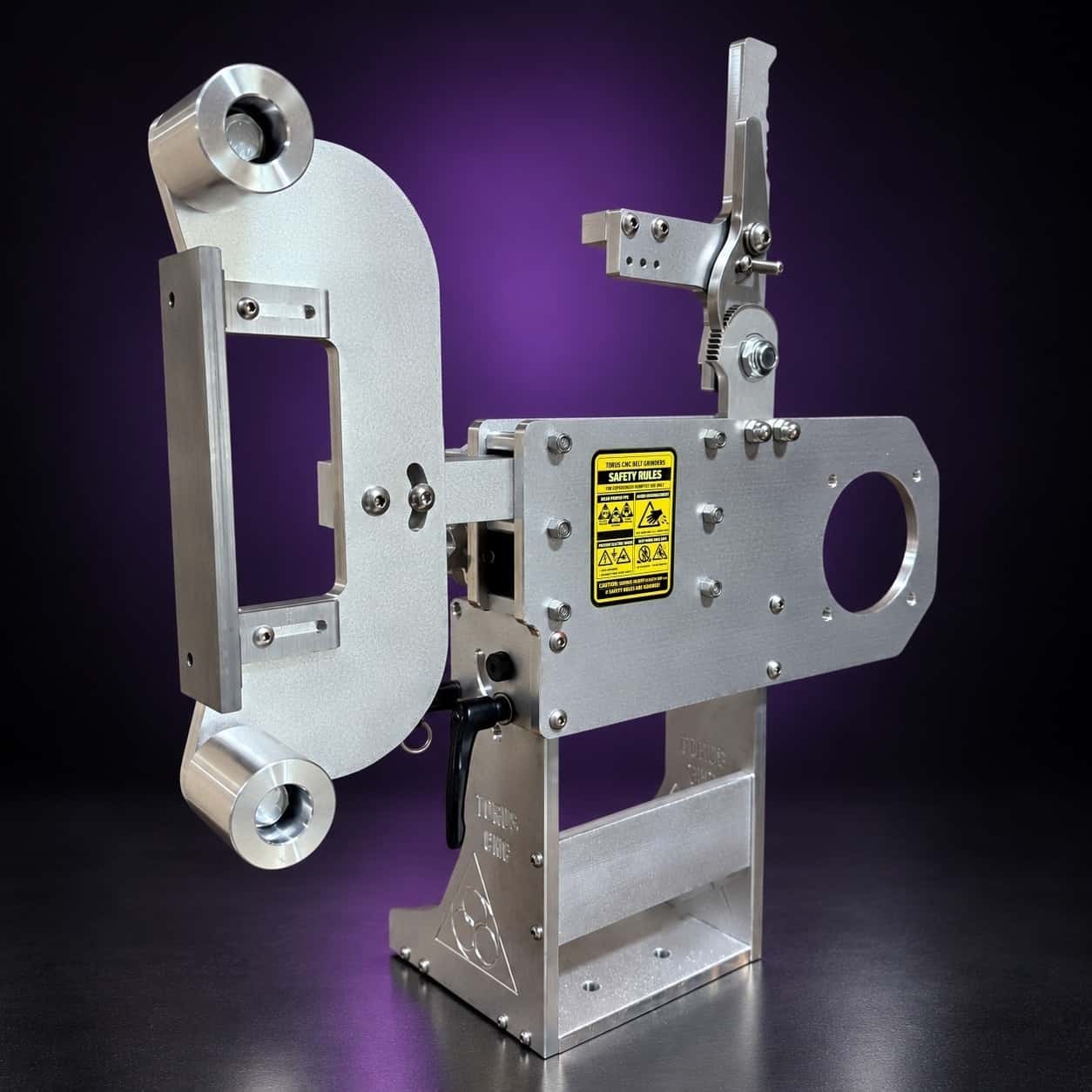
Prior-design aluminum chassis, 90-degree tilt and 1.5-inch tooling arms.
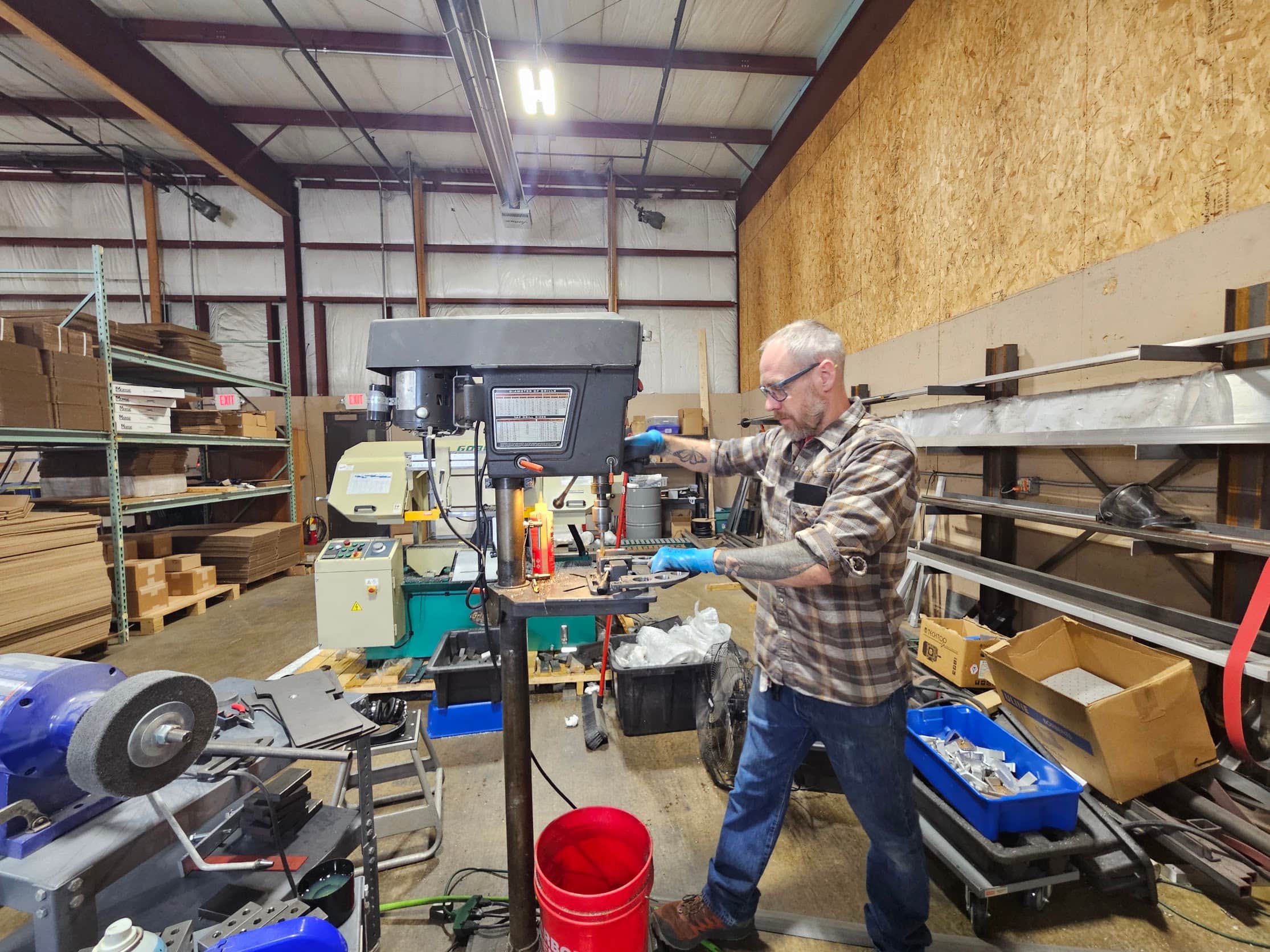
One-man shop
I answer my own email. Tell me the steel, the machine and what it is doing, and I will tell you what I would try next.