
Swords
Sword Anatomy: A Maker’s Field Guide
Before the types, the vocabulary. Every sword — katana or claymore, gladius or rapier — is the same short list of parts negotiating the same physics: a…
Swords
The longsword for real: a 33-40 inch two-hander of about 3 pounds, Oakeshott types, half-swording, and the steel, hardness and distal taper a maker needs.
2 min readWritten by Rich LinvilleFree to read
The longsword is the European counterpart to the katana’s fame: the two-handed cruciform sword of the late medieval knight, the centerpiece of the German and Italian fight books, and — thanks to HEMA’s revival — the historical sword modern people most often actually swing. It is also routinely misunderstood in the opposite direction from the katana: where the katana gets over-mythologized, the longsword gets dismissed as a crowbar. Real ones average three pounds and handle like fencing tools.
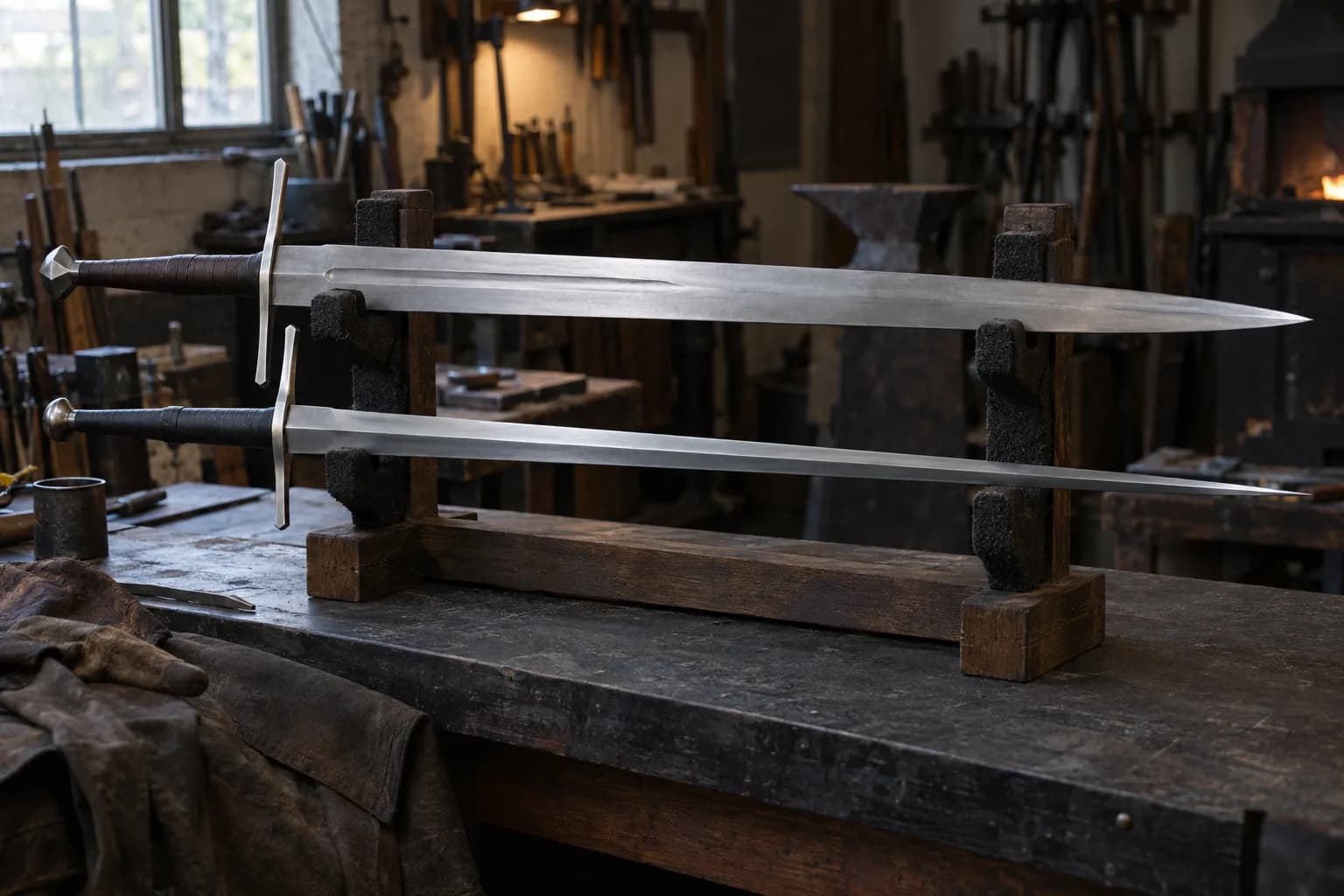
A hand-and-a-half to two-handed cruciform sword, blade 33 to 40 inches, in use roughly 1250–1550. The grip takes both hands (or one, mounted); the long crossguard defends and traps; the pommel counterweights and strikes. Oakeshott’s typology — the standard classification of medieval blades — tracks its evolution: broad flat-fullered cutters (Types XII, XIII) giving way to stiffer, more tapered diamond-section cut-and-thrust blades (XV, XVII, XVIII) as plate armor spread and thrusting at gaps mattered more than cleaving mail.
The fight books — Liechtenauer’s German tradition, Fiore’s Italian — show a sophisticated system: guards flowing into cuts, thrusts and windings; half-swording (a hand gripping the blade’s forte for spear-like precision against armor); pommel strikes; grappling. The sword was the sidearm and the fencing-school weapon; battlefield primacy belonged to lances, pollaxes and bows. Against plate it thrust at joints and visors — nothing hand-held cleaves hardened plate, whatever the movies vote.
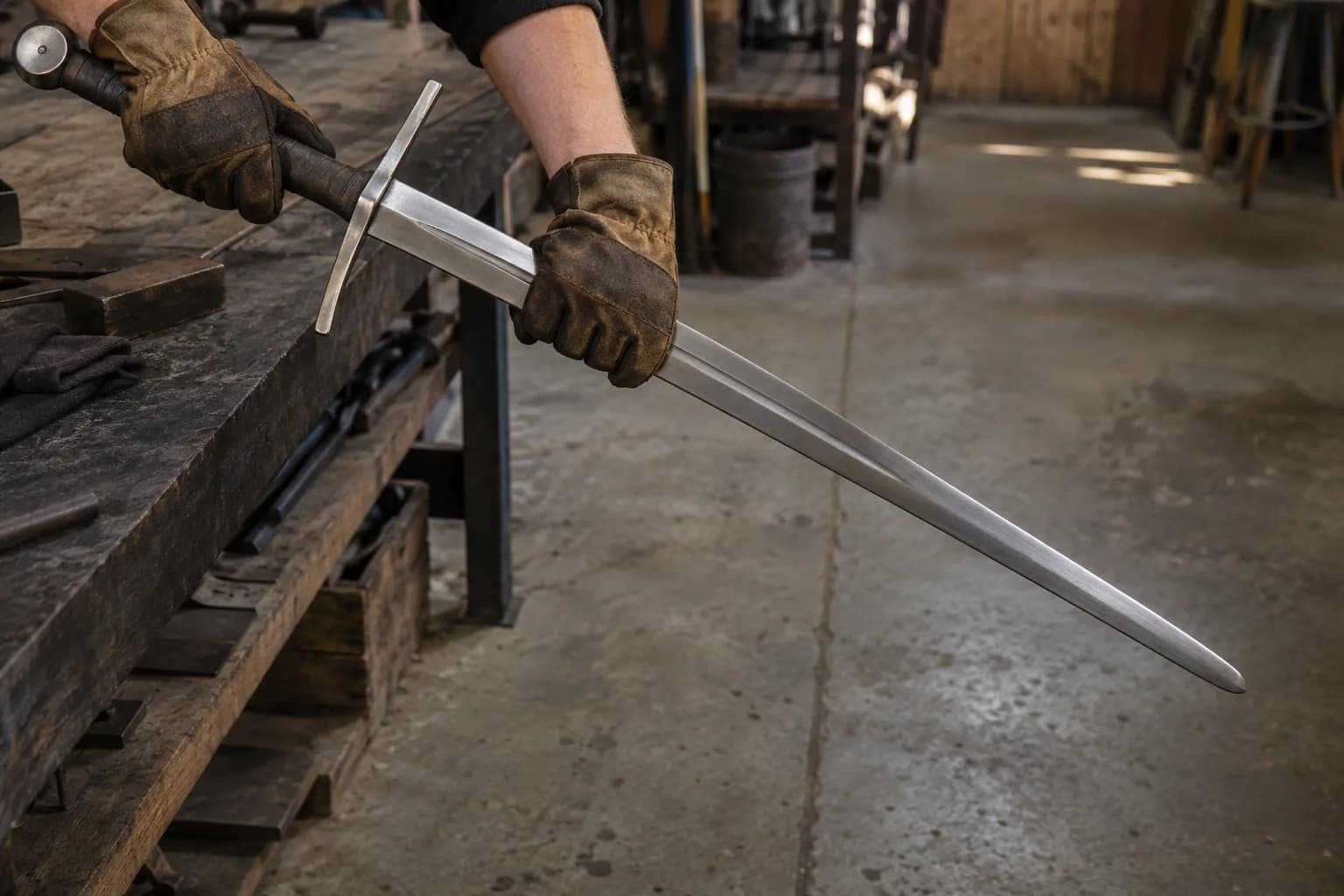
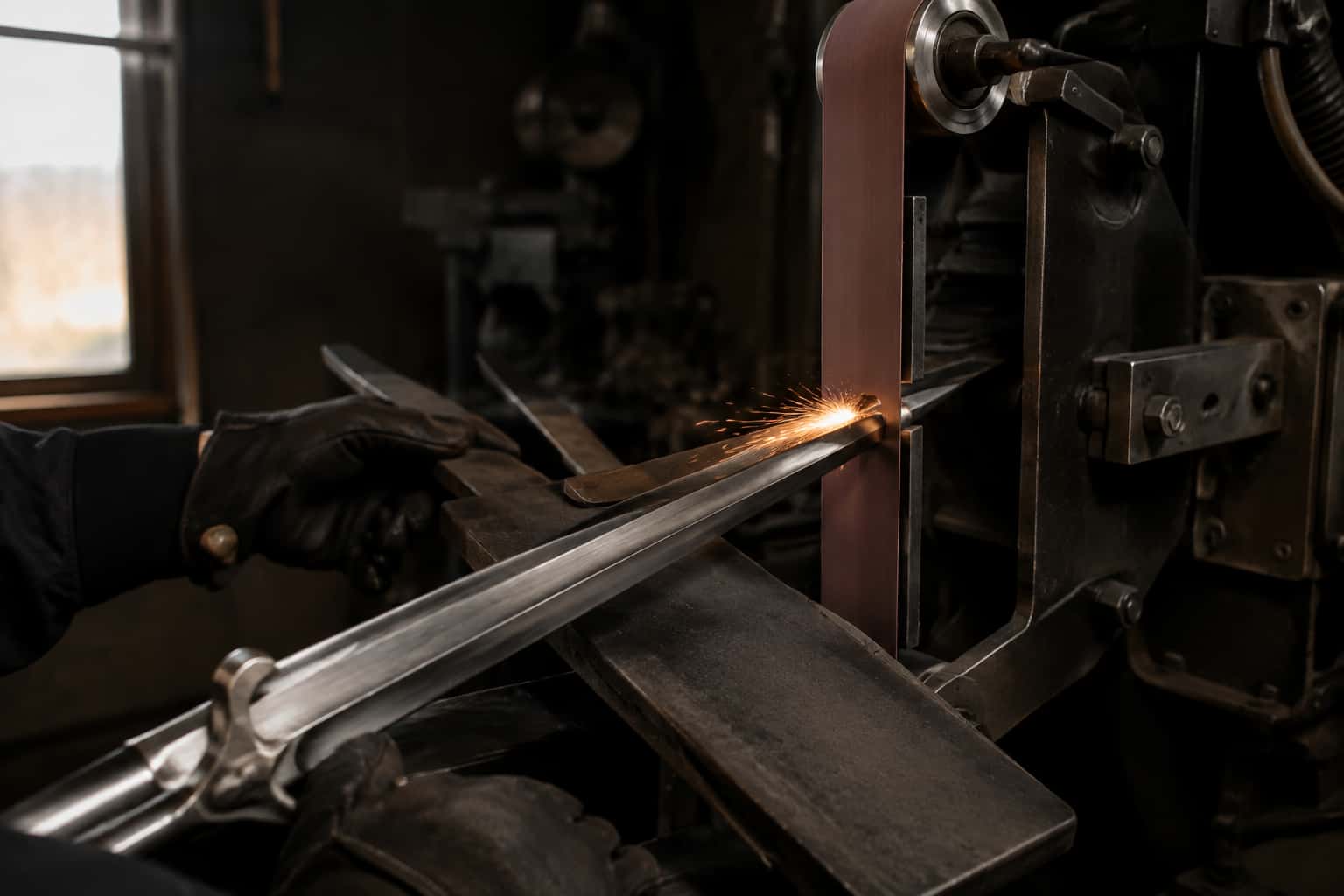
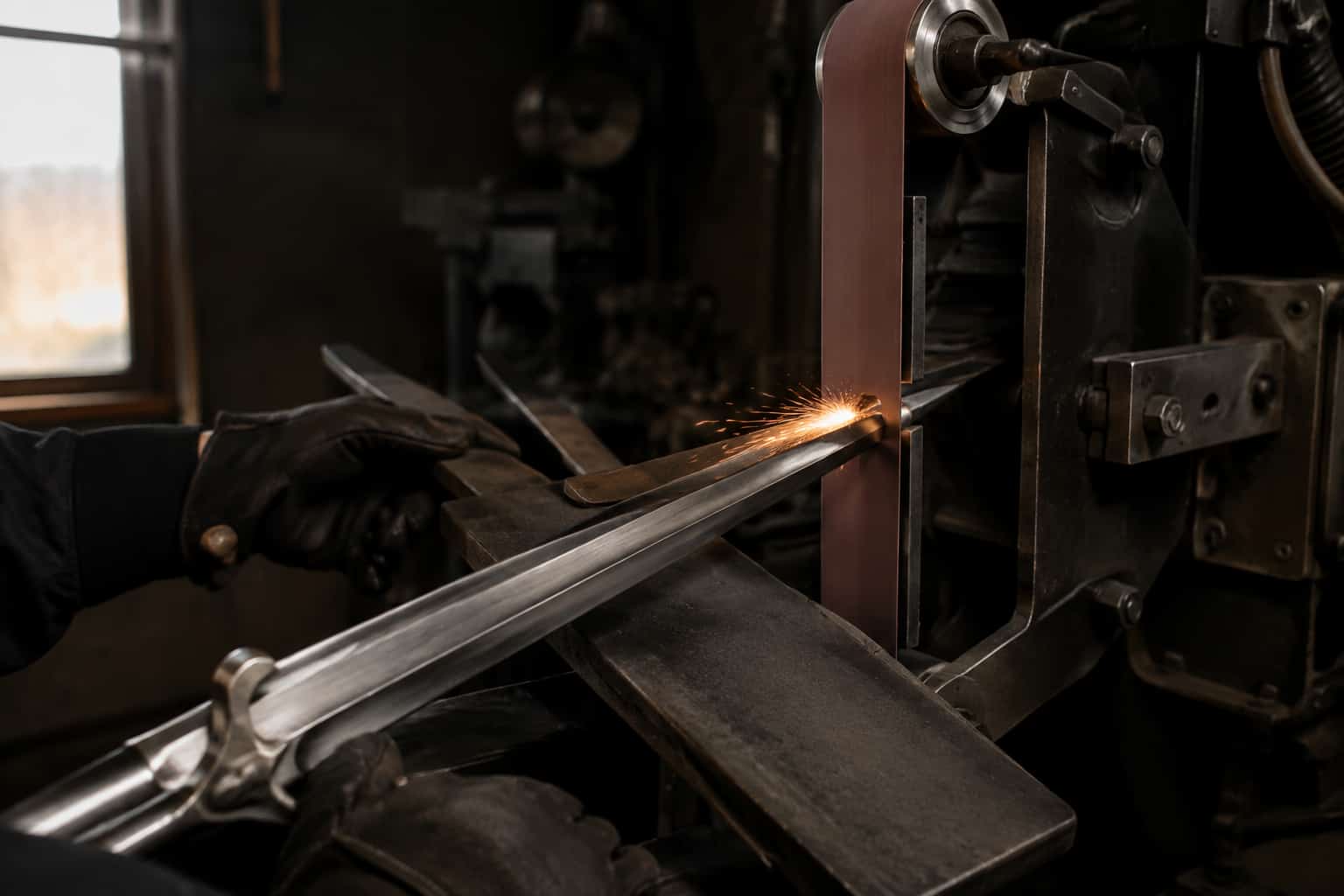
Museum longswords run 2.5 to 3.5 pounds — the twenty-pound sword is pure fiction. Balance sits two to four inches ahead of the guard, blade presence enough to cut, agility enough to fence. Distal taper does the work: many longswords halve their blade thickness from guard to point, which is why replicas without proper taper feel like the crowbar of legend while originals feel alive. That taper discipline — thickness fading continuously along feet of blade — is THE longsword grinding skill, same physics as knife distal taper at scale.
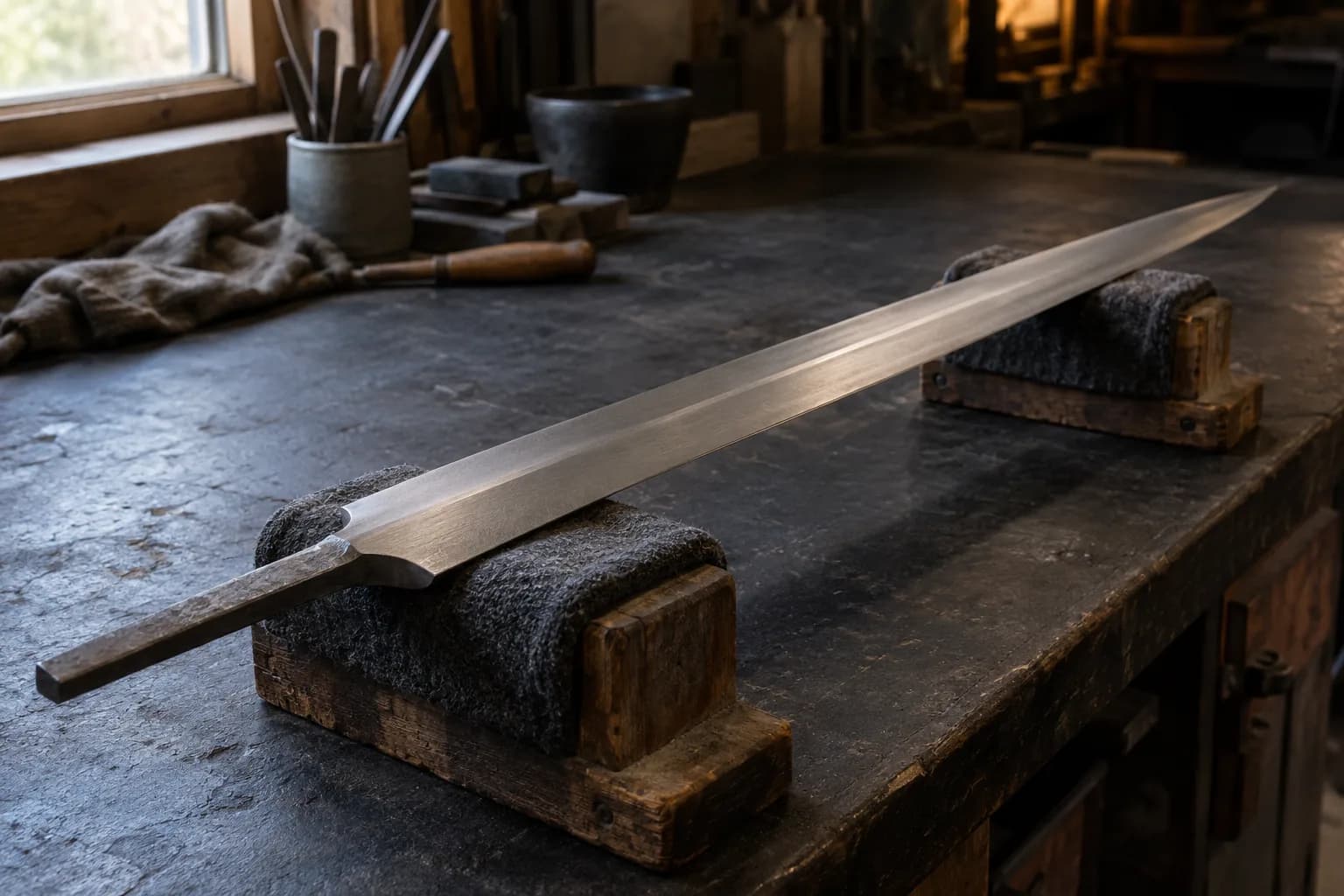
Spring-steel monosteel is the honest modern medium: 5160 or 9260 through-hardened to the low 50s HRC — a longsword wants spine-to-edge resilience, not knife hardness; see Sword Steels. Diamond or lenticular cross-section, fuller optional by type, hidden rod tang peened over the pommel (or the modern threaded concession), radiused shoulders as always. The guard and pommel are their own metalworking projects — mild steel, filed and slotted — and fitting them tight is half the difference between maker and manufacturer.
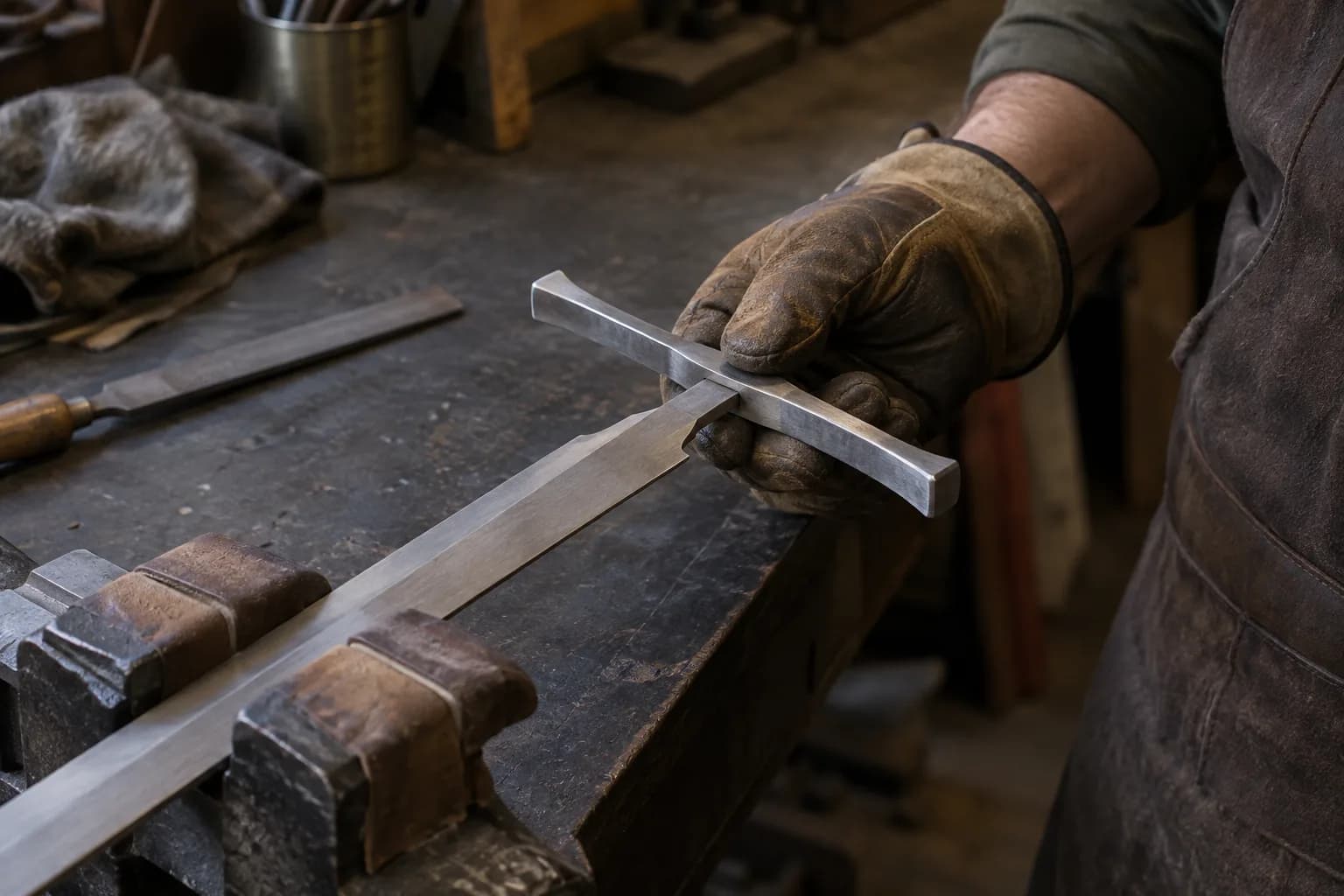
HEMA clubs fence with steel feders reconstructing the old systems; collectors chase Oakeshott types; and for makers the longsword is the great European test piece — every skill from forging to heat treat to hilt furniture, in one object your customers already dream about.
Keep reading
Three more from the same bench.
Before the types, the vocabulary. Every sword — katana or claymore, gladius or rapier — is the same short list of parts negotiating the same physics: a…

Two knives can share the same steel, grind type, and blade shape and still perform completely differently, because of stock thickness and how that…

No blade carries more mythology per inch than the katana — the folded-a-thousand-times, cuts-through-tanks legend machine. The real sword underneath is…
Same bench
I machine the parts, hand-assemble, track and test Torus grinders in Sterling, Illinois. Most orders ship in seven to ten business days from time of order.

Current dual-axis platform with a fiber-laser-cut 6061 chassis and single-knob tracking.

Current dual-axis platform with a steel chassis, more mass and less vibration.

Prior-design aluminum chassis, 90-degree tilt and 1.5-inch tooling arms.

One-man shop
I answer my own email. Tell me the steel, the machine and what it is doing, and I will tell you what I would try next.