
A non-stainless powder-metallurgy tool steel prized above nearly everything else for maximum toughness, ideal for hard-use, high-impact blades like choppers and camp knives.
- Toughness
- 5
- Edge retention
- 3
- Corrosion resistance
- 2
- Ease of grinding
- 3
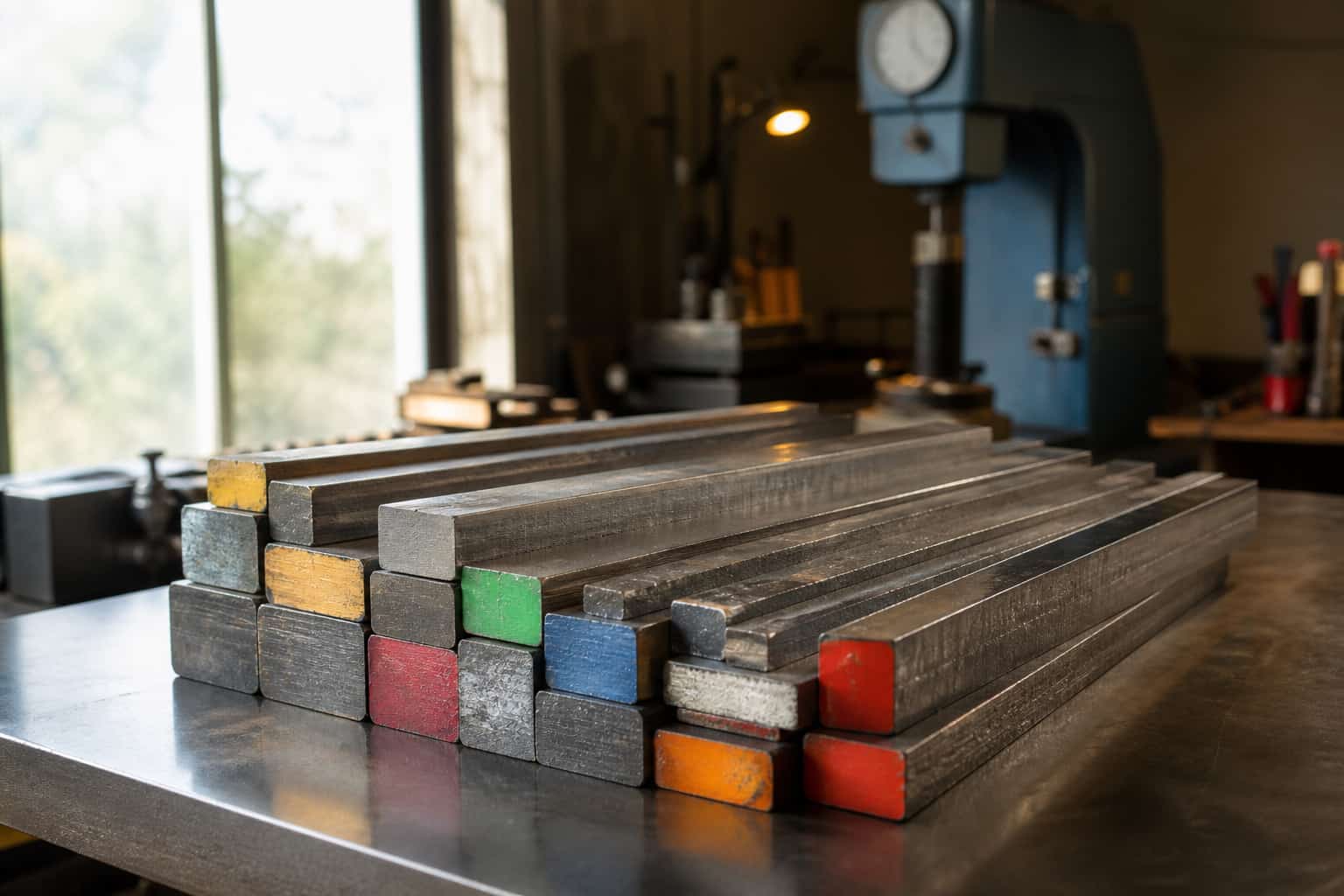
Steel matchup
CPM 3V and CPM CruWear, compared on the five things that decide a blade: toughness, edge retention, corrosion, heat treat and how each one grinds.
A non-stainless powder-metallurgy tool steel prized above nearly everything else for maximum toughness, ideal for hard-use, high-impact blades like choppers and camp knives.
A non-stainless powder-metallurgy tool steel balancing toughness noticeably better than D2 with wear resistance that approaches it, popular for hard-use folders and fixed blades that need to sharpen easily.
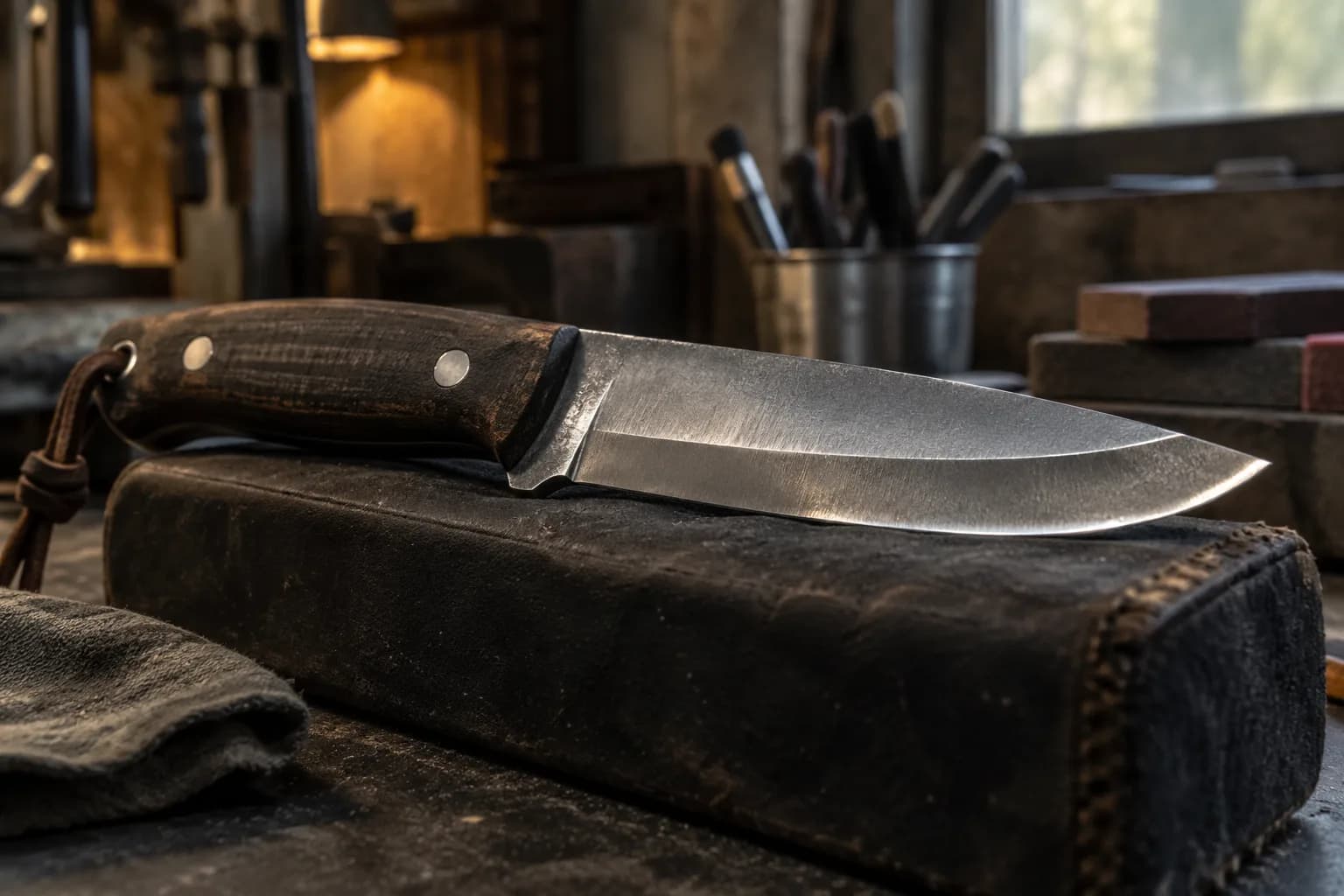
Dimension by dimension
Each steel's own note, its score out of five, and what separates the two in that one column. The higher score in a row is marked in purple.
| Dimension | CPM 3V | CPM CruWear | What separates them |
|---|---|---|---|
| Toughness | Exceptional. CPM 3V is widely regarded as one of the toughest knife steels available, significantly outperforming D2, CPM M4, and A2 in impact testing at comparable hardness. It is the standard reference point makers use when toughness is the top priority. | Notably tougher than D2, approaching A2 in impact testing, and significantly tougher than high-carbide stainless steels like S30V at comparable hardness. Not in the same class as CPM 3V, but a large step up from typical stainless tool steels. | CPM 3V holds a real edge here, widely regarded as one of the toughest knife steels available and the standard against which other tough tool steels are measured. |
| Edge retention | Moderate. 3V does not hold an edge as well as high-vanadium stainless steels like S35VN or S30V, but it outperforms D2 in CATRA edge-retention testing at 60 HRC. Edge retention takes a back seat to toughness in this steel's design. | Good, though behind high-vanadium stainless steels like S90V or M390. CruWear takes a keen edge easily and touches up fast, which many users prefer over outright maximum edge retention. | Essentially tied, with CruWear's tungsten and vanadium carbide structure giving it wear resistance that approaches 3V's despite the toughness gap. |
| Corrosion resistance | 3V is not a stainless steel (chromium content is below the roughly 12-13% stainless threshold), so it will develop surface rust without care. Testing shows it resists deep pitting better than plain carbon steels even after prolonged exposure, but it still needs the same basic oiling and drying routine as any carbon tool steel. | Not stainless. Chromium is intentionally kept below the roughly 10.5% stainless threshold so more of it is available to support toughness and carbide structure rather than corrosion resistance. Needs the same basic care as other carbon tool steels. | Tied. Neither steel is stainless, and both need the same regular oiling and drying as any carbon or low-chromium tool steel. |
| Heat treat | Crucible's standard recipe: preheat 1500-1550 F, austenitize at 1950 F for 30-45 minutes, air or plate quench, then triple temper at 1000-1050 F for 2 hours each cycle. This targets 58-60 HRC, and the unusually high temper temperature is a secondary-hardening effect specific to this steel. Many knifemakers instead use an alternative recipe that is simpler and popular in small shops: soak at 1975 F for 30 minutes, fast plate quench (optionally followed immediately by a cryo treatment), then triple 2-hour temper at 400 F. This reaches 60-61 HRC with no meaningful loss of toughness and avoids the need for a 1000 F+ capable oven cycle. | Crucible's recommended heat treatment: austenitize at 1950 F, quench (air or interrupted oil to control warping), then triple temper at 1000 F for at least 2 hours per cycle. This targets around 62 HRC. Double tempering is the minimum; triple tempering is recommended for full stress relief and dimensional stability. | Both use broadly similar high-temperature austenitizing and multiple-temper processes typical of premium tool steels, with neither being notably more forgiving than the other. |
| Grinding | Moderately demanding to grind due to fine, hard vanadium carbides, though less extreme than higher-vanadium stainless PM steels. Standard ceramic or zirconia belts handle it well. | Grinds comparably to other CPM tool steels in this class; moderate belt wear from vanadium and tungsten carbides. Ceramic or zirconia belts work well for stock removal. | Comparable. Both grind similarly and are noticeably easier to work than high-carbide steels like CPM M4 or D2. |
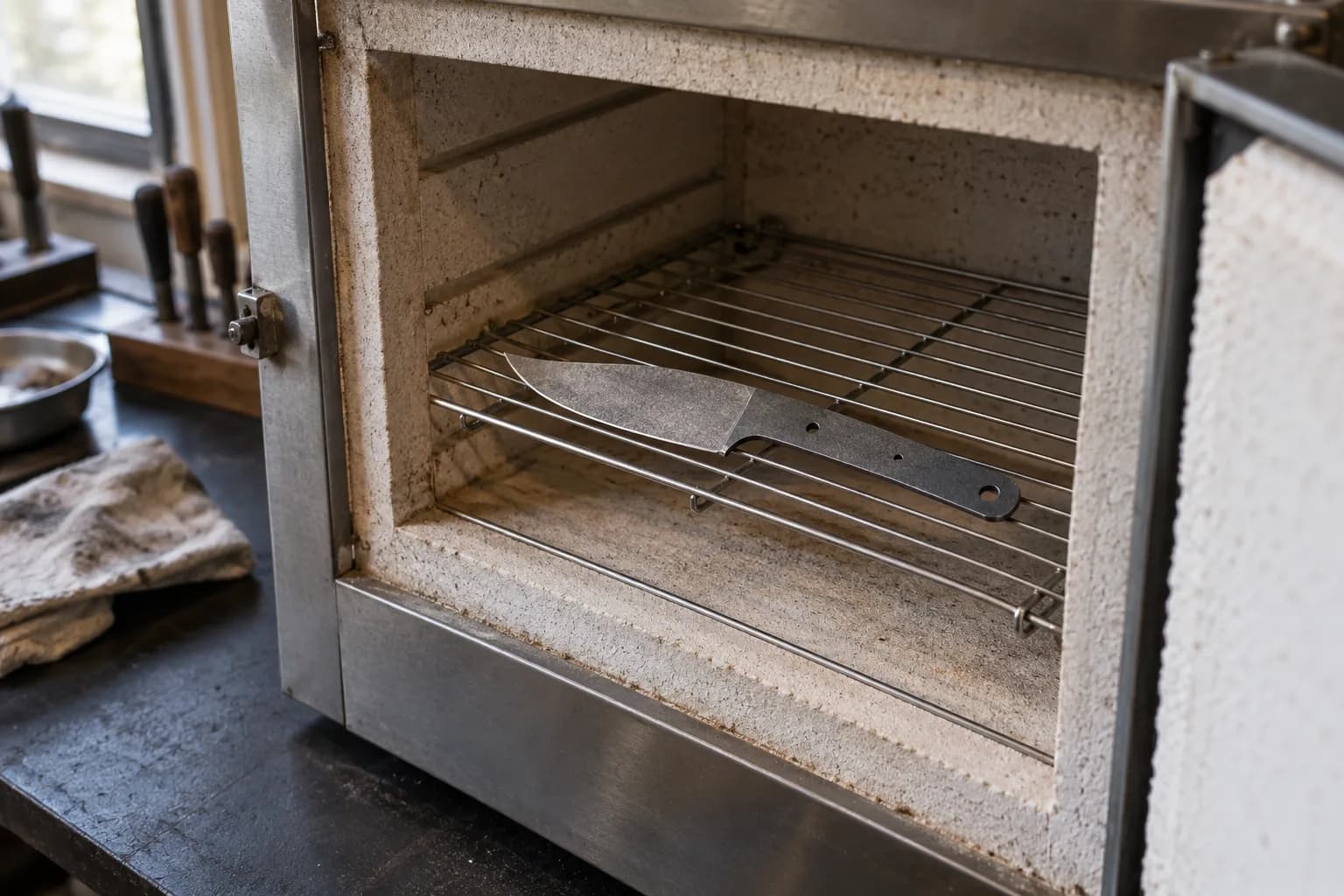
Best use
CPM 3V
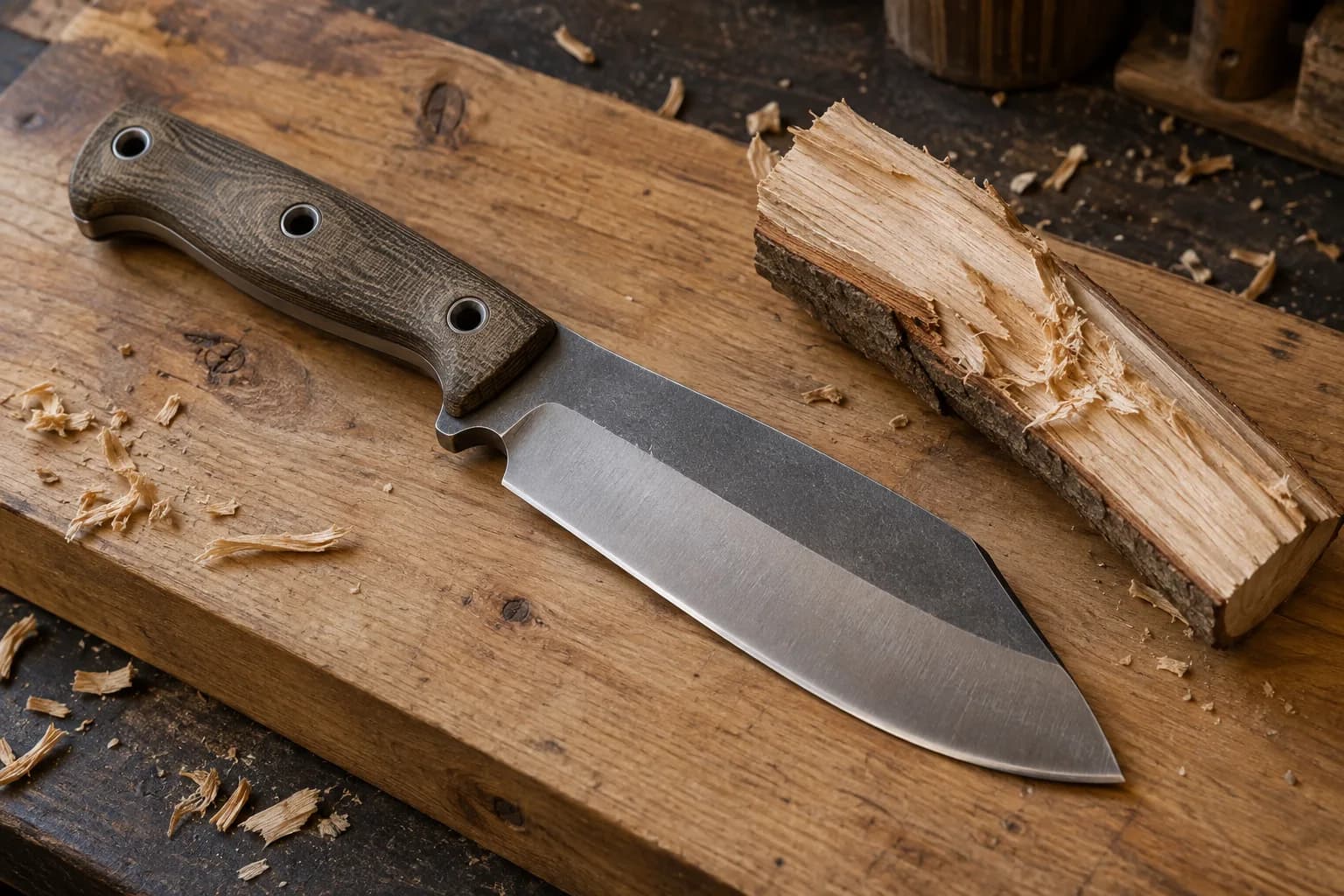
Choose CPM 3V when maximum toughness is the single top priority, such as choppers, camp knives, or hard-use fixed blades that see real abuse.
Open the CPM 3V referenceCPM CruWear
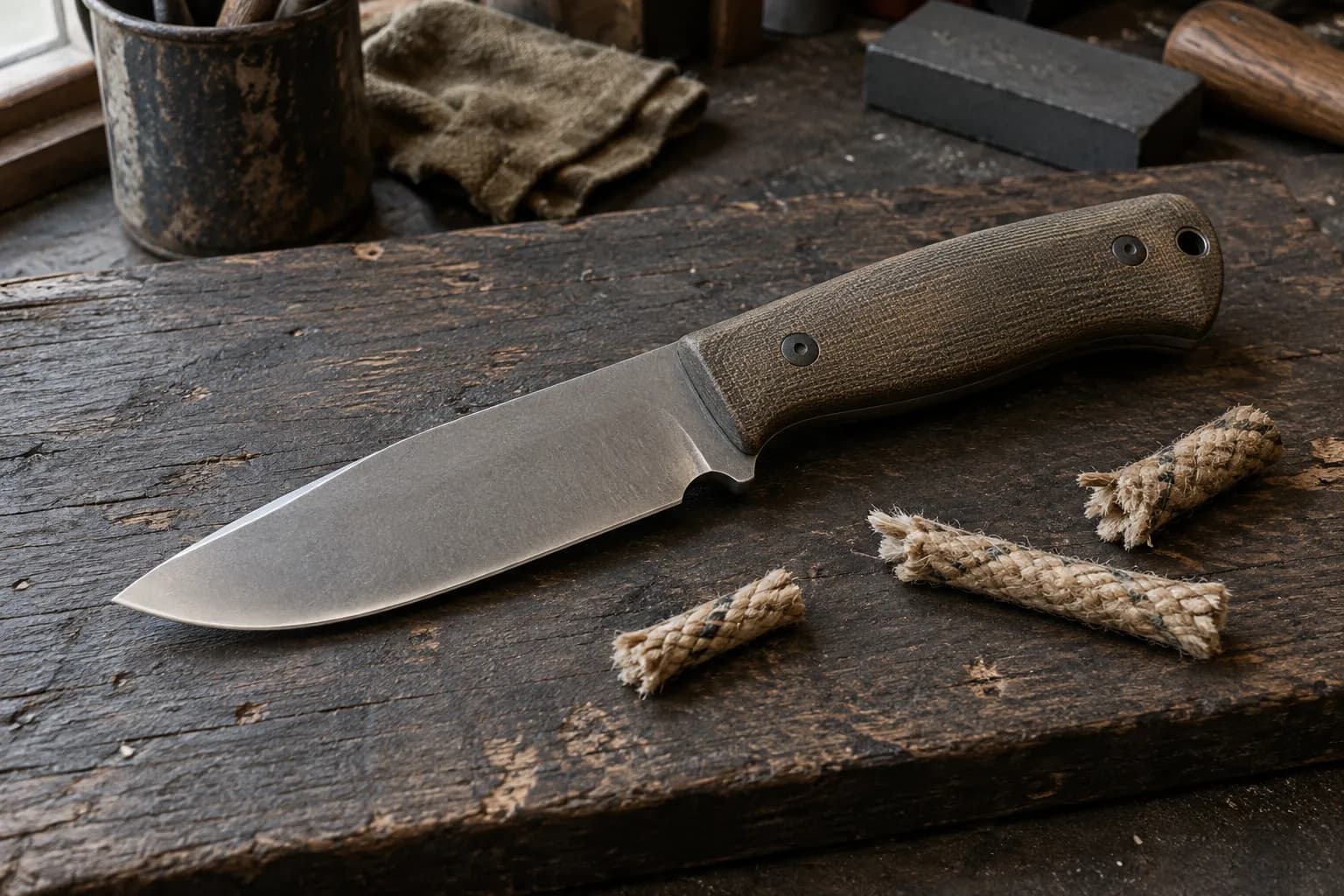
Choose CPM CruWear for a similar hard-use profile with a bit more wear resistance and edge retention.
Open the CPM CruWear reference
The long answer
CPM 3V and CPM CruWear are both prized as tough, non-stainless tool steels built for hard-use blades that need to survive impact without chipping. Both trade wear resistance for durability compared to high-carbide steels like D2 or CPM M4, and the two are frequently cross-shopped by makers building choppers, camp knives, and survival blades.
Keep comparing
Keep reading
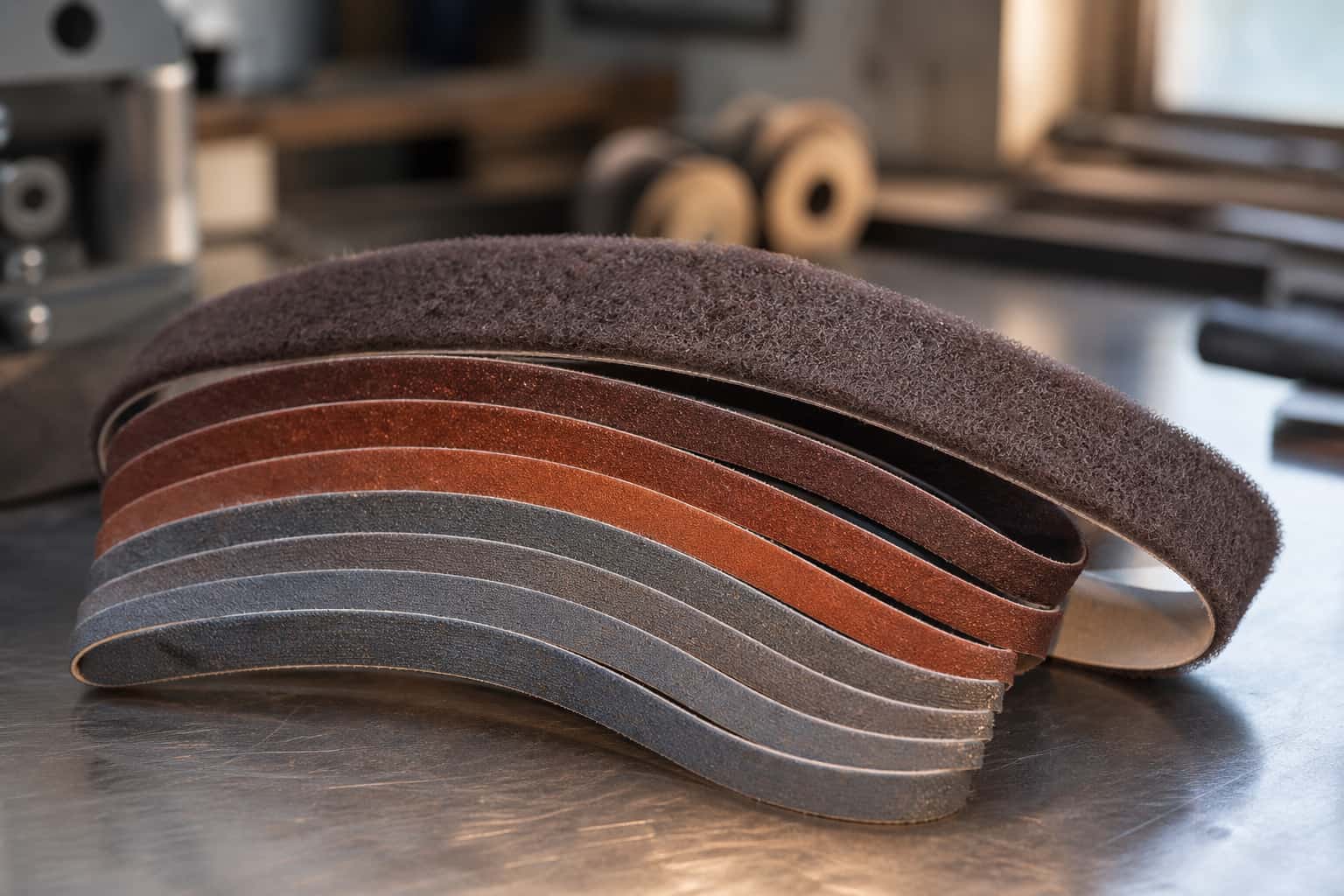
CPM 3V grinds in the moderate range, tougher on belts than simple carbon steels but noticeably easier than high-carbide steels like CPM M4 or D2. Its low…
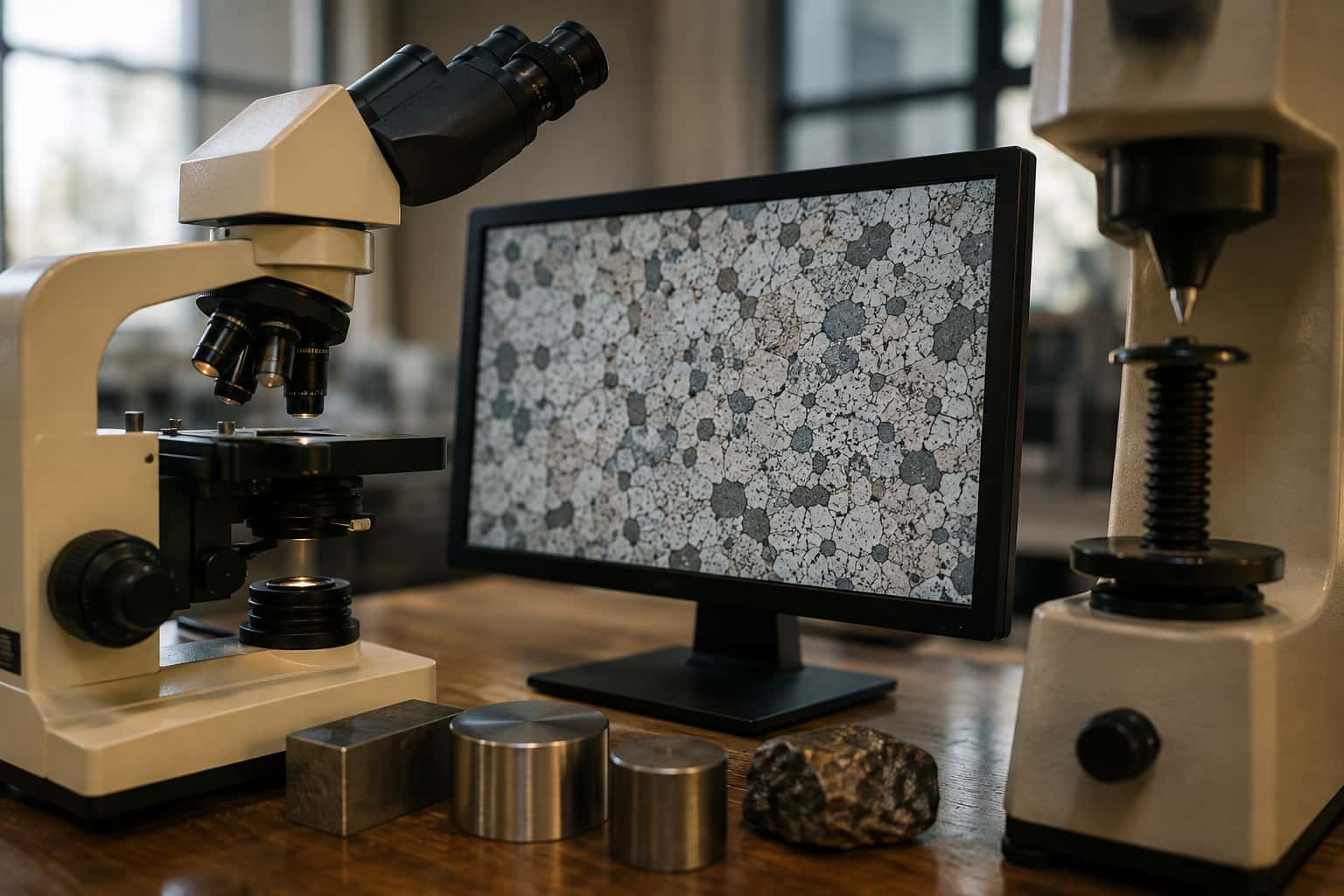
CPM CruWear sits in the moderately demanding range for grinding, tougher on belts than simple carbon steels but generally easier than the hardest-edged…
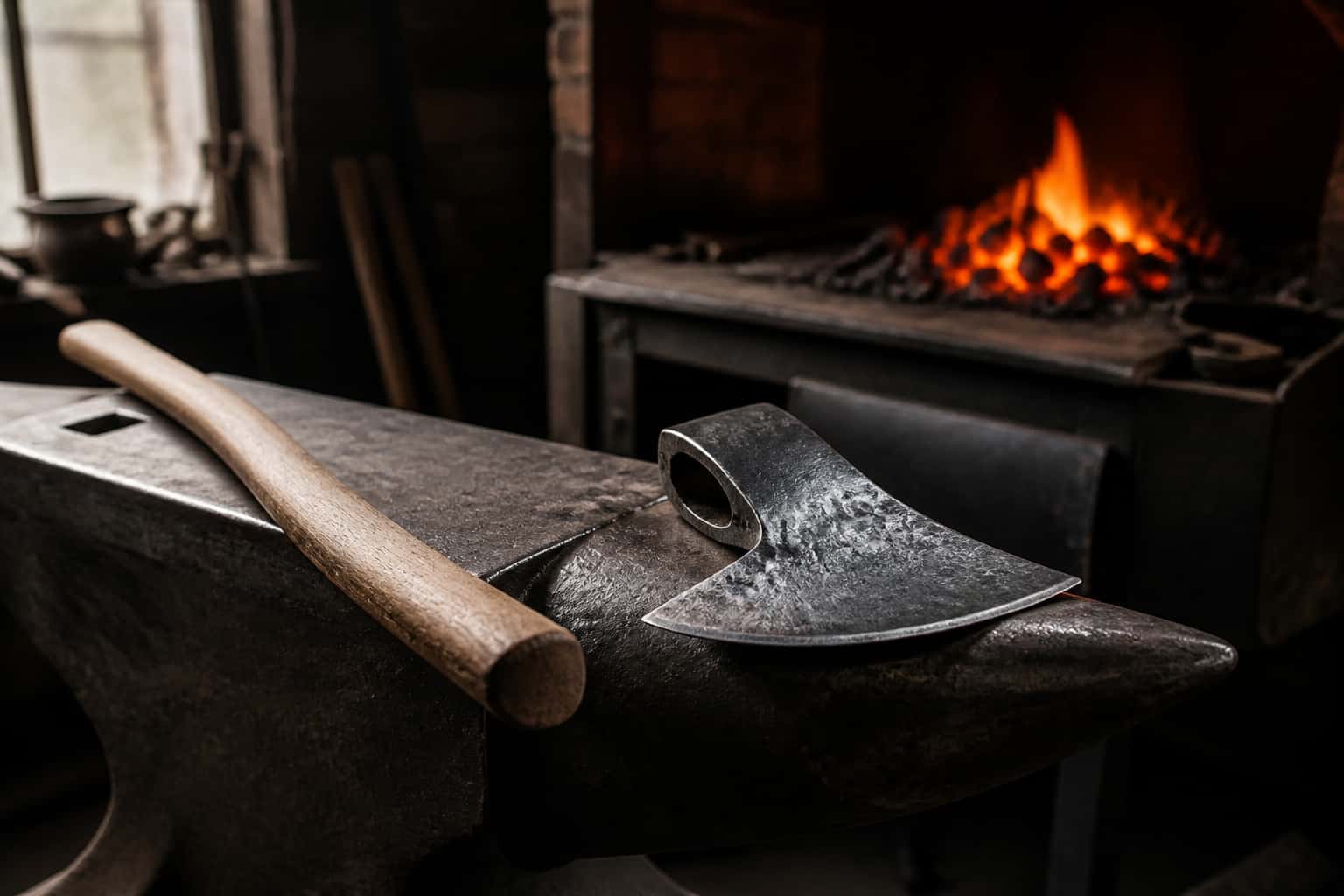
Every knife steel is iron plus a specific recipe of other elements, and each of those elements pulls the steel’s behavior in a particular direction…
Same bench
Whichever steel wins, the grind is only as flat as the platen behind it. I machine the parts, hand-assemble, track and test Torus grinders in Sterling, Illinois.
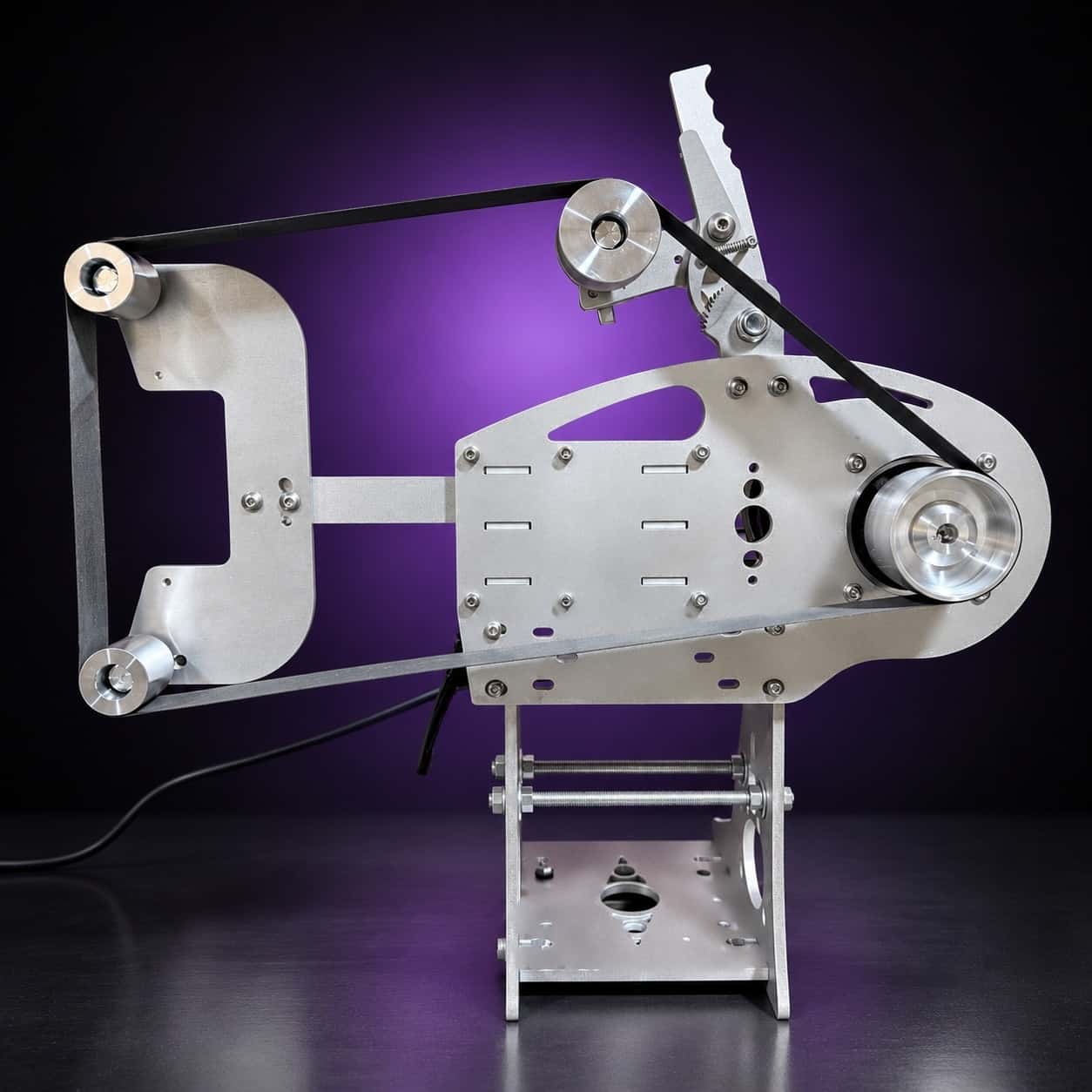
Current dual-axis platform with a fiber-laser-cut 6061 chassis and single-knob tracking.
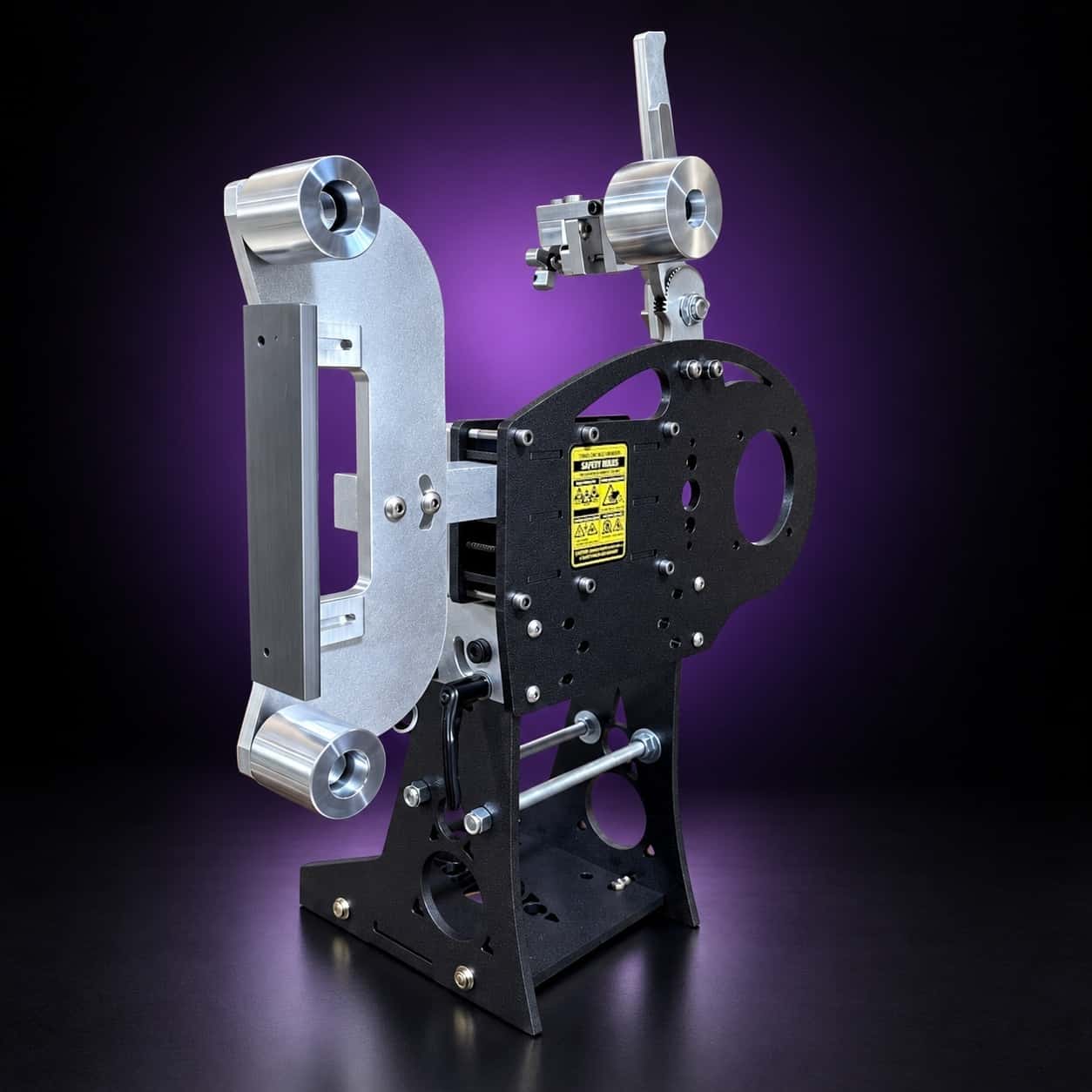
Current dual-axis platform with a steel chassis, more mass and less vibration.
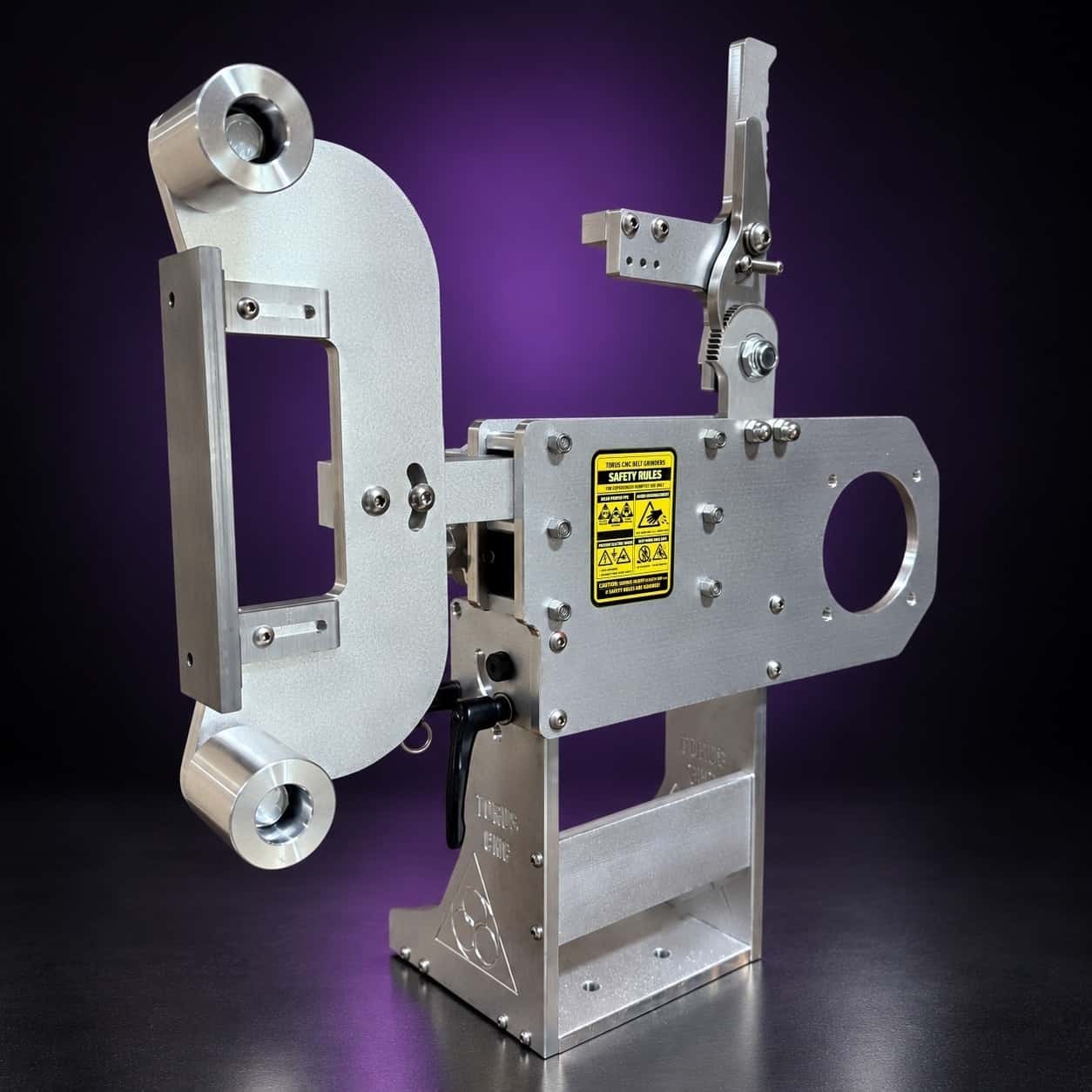
Prior-design aluminum chassis, 90-degree tilt and 1.5-inch tooling arms.
One-man shop
Tell me what the blade is for and how you heat treat, and I will tell you which of these I would put on the bench — including when the answer is neither.